
Monday Reads
Posted: January 10, 2011 Filed under: Civil Liberties, Civil Rights, financial institutions, U.S. Economy, U.S. Politics | Tags: and Civil Liberties, Arizona shooting, buried cemetery, censorship, Civil Rights, Darrell Issa, Facebook, Goldman Sachs, House Oversight Committee. Jerry Nadler, House Subcommittee on the Constitution, Huckleberry Finn, LA Heritage Center, literature, Mark Twain, Morning reads, public employee unions, Racism, Republicans, Shakespeare, slurs, war on unions 42 Comments
Good Morning! It’s been a tough weekend. As usual when dreadful events happen, the cable channels are covering the shooting in Arizona 24/7. Things are still happening in the DC despite the horror of that story. I just don’t know how much more I can read about it. Thinking about senseless hatred and violence is starting to make me feel physically ill.
If you do want to read more about the Arizona tragedy, the Washington Post has special section on it: Special Report: The Tucson shooting rampage. The New York Times also has lots of stories and photos on the front page.
Now I’ll see if I can find any other important stories for you to check out this morning.
On Saturday, I wrote a long piece on Darrell Issa, the man who is going have subpoena power as Chairman of the House Oversight Committee. The man is a thug, and we’d better be paying attention to what he’s doing. I hope when the news about the shooting calms down that people will take a look at that piece. I don’t usually “pimp” my posts, but I feel that this one is important.
Now I see that the Republicans plan to make changes in another important House committee: Republicans banish ‘civil rights’ and ‘civil liberties’ from House subcommittee
Congressman Jerrold Nadler (D-NY) blasted Republicans for planning to change the name of the Subcommittee on the Constitution, Civil Rights, and Civil Liberties to the “Constitution Subcommittee.”
“Once again, the new Republican majority has shown that it isn’t quite as committed to the Constitution as its recent lofty rhetoric would indicate,” Rep. Nadler, who has served as the Chairman of the Subcommittee on the Constitution, Civil Rights, and Civil Liberties since 2007, said.
“It has yet again shown its contempt for key portions of the document – the areas of civil rights and civil liberties – by banishing those words from the title of the Constitution Subcommittee.”
The Subcommittee on the Constitution is one of five subcommittees of the US House Committee on the Judiciary. The subcommittee has jurisdiction over constitutional amendments, constitutional rights, federal civil rights, ethics in government, and related matters.
Nice, huh?
I’ve seen people talking about this in the comments, but can I just say that I’m sick and tired of people tampering with Huckleberry Finn? It’s one of my favorite books. I have read it multiple times, and I happen to think it’s a candidate for the Great American Novel.
Mark Twain wrote the book the way he did to deliver some serious messages, one of which was an argument against racism. He did that by demonstrating in his novel why racism is wrong. There is also a strong message in the book about child neglect and abuse and about alcoholism. It’s a brilliant book, and there is no need to censor it. If it is taught in school, then the context of the language Twain used can be discussed and debated. Huckleberry Finn is not a children’s book. High school students are perfectly capable of understanding the book and its importance.
Here’s a piece at Truthdig that offers 10 Reasons Why the Slurs Should Stay in ‘Huck Finn.’ It’s pretty good.
When I was a senior in high school I read Shakespeare’s plays in my English class. There were two teachers who taught the Shakespeare course. My teacher had us read the plays aloud as written. The other teacher, an elderly woman, had students read the “dirty” parts silently. I’m glad I wasn’t in her class. But at least she didn’t make the students skip over those parts entirely or try to censor the plays.
I say let’s read the greatest works of literature as written.
Here’s a interesting and ironic story at the LA Times: 1800s-era skeletons discovered as crews build L.A. heritage center
Under a half-acre lot of dirt and mud being transformed into a garden and public space for a cultural center celebrating the Mexican American heritage of Los Angeles, construction workers and scientists have found bodies buried in the first cemetery of Los Angeles — bodies believed to have been removed and reinterred elsewhere in the 1800s.
Since late October, the fragile bones of dozens of Los Angeles settlers have been discovered under what will be the outdoor space of La Plaza de Cultura y Artes downtown near Olvera Street. According to archaeologists and the chief executive of La Plaza, they appear to be remains from the Campo Santo, or cemetery, connected to the historic Catholic church Our Lady Queen of Angels, commonly called La Placita. The remains are just south of the church.
Pieces of decaying wood coffins as well as religious artifacts such as rosary beads and medals have also been unearthed.
The cemetery, which officially closed in 1844, was the final resting place of a melting pot of early Los Angeles — Native Americans; Spanish, Mexican, European settlers; and their intermarried offspring. But the repercussions of the discovery outside La Placita have been anything but peaceful.
So digging up the bones of early settlers in order to build a monument to early settlers. Ironic.
Dakinikat sent me this Bloomberg article about Goldman Sachs and their investment in Facebook.
News has leaked out that Goldman, supposedly the smartest Wall Street firm, will buy $450 million of stock in closely held Facebook, with Digital Sky Technologies, which invests in start- ups and is partly owned by Goldman, purchasing another $50 million.
The anonymous folks who put out these numbers said the deal sets a value for Facebook equal to that of Boeing Co. and approaching that of Home Depot Inc.
Goldman clearly is capitalizing on Wall Street’s latest diversion: a semi-public stock market for private companies.
Several firms now offer shares of closely held companies or offer estimates of their value, or both.
It seems that Goldman is hyping Facebook in order to increase the value of its own investment in advance of Facebook going public. Shouldn’t that be illegal?
Dak also sent me this link to the Economist about the war on government unions: It’s a long article and I haven’t been able to read the whole thing yet, but it looks worthwhile. Perhaps Dak will do a longer post on this issue.
[MABlue’s picks]
Bethany McLean from Vanity Fair has a great reportage about Goldman Sachs. These poor guys, they’re so misunderstood.
The Bank Job
One of the biggest disconnects on Wall Street today is between the way Goldman Sachs sees itself (they’re the smartest) and the way everyone else sees Goldman (they’re the smartest, greediest, and most dangerous). Questioning C.E.O. Lloyd Blankfein, C.O.O. Gary Cohn, and C.F.O. David Viniar, among others, the author explores how their firm navigated the collapse of September 2008, why it has already set aside $16.7 billion for compensation this year, and which lines it’s accused of crossing.
There’s more on the heinous crimes of the week-end, violent rhetoric from Right (spare me the “Both-Sides-Do-It”), and intimidation of political figures.
How the Tucson Massacre Rattled U.S. Judges
For a moment, U.S. District Judge John M. Roll seemed as likely the main target of the Tucson massacre as Congresswoman Gabrielle Giffords. In 2009, Roll had come under threats severe enough that he and his family were placed under 24-hour protection by the U.S. Marshals Service. After he ruled that a high-profile suit brought by a group of Mexican immigrants could proceed, his phone lines were deluged with angry callers — including at least four that threatened violence.
At the time, the U.S. Marshal for Arizona told the Arizona Republic that the threats had been egged on by radio talk-show hosts critical of Roll’s decision. Critics began sharing his personal information on Web sites as the rhetoric became more heated. The round-the-clock protection lasted a month, though Roll ultimately decided not to press charges against the callers.
[…]
For some members of the judiciary, the news that Roll was among the six who died during the shooting spree in Tucson was unsettling in ways that went beyond personal grief from those who knew and served with Roll, who had been placed on the bench by President George H. W. Bush in 1991 at the urging of Senator John McCain. Just minutes after learning of the slayings, U.S. District Judge Robert Gettleman of Chicago told TIME in an email that the news of the murder was “very disturbing… Just when we were beginning to feel more secure.”
Or I see. There’s a big difference between men’s tears and women’s tears. As “luck” would have it (or as always in these matters), men’s tears are a turn on for women, but women’s tears are a turnoff for men. Or is it? There’s an interesting study out but not all agree on the interpretation of the results.
Crying, Sex, and John Boehner: Not So Fast
The study is, predictably, getting a lot of media attention (WOMEN’S TEARS SAY, ‘NOT TONIGHT, DEAR’), but experts on tears and crying aren’t so sure the findings mean what the Weizmann scientists say they do. “I like their study very much, and I think their results are fascinating, but I have my doubts about their interpretation,” says Vingerhoets. “I suspect the sexual effect is just a side effect: testosterone, which was reduced when men sniffed the women’s tears, isn’t only about sex: it’s also about aggression. And that fits better with our current thinking about tears.”
Sooooo…. What are you reading this morning?
Our Dismal Job Market
Posted: January 7, 2011 Filed under: Barack Obama, Breaking News, financial institutions, Global Financial Crisis, jobs, Team Obama, The Great Recession, The Media SUCKS, the villagers, U.S. Economy, U.S. Politics, We are so F'd | Tags: Gene Sperling, labor force participation rate, long term unemployment, rigid wages, Sticky wages, unemployment 11 Comments Economists–well at least NeoKeynesian economists that look at data–frequently use words like “rigid” and “sticky” to describe the jobs market. Rigid is a good word. It means “deficient in or devoid of flexibility”. The Labor Markets are the biggest empirical hurdles to jump if you want to buy into some variant of supply-side economics or NeoClassical economics.
Wages and quantities of labor used to adjust very slowly. They appear to be dismally slow these days. Part of this is obviously due to outsourcing. The substitution of foreign (e.g. outside of our borders; legal status really doesn’t matter for purposes of macro growth) for US-based workers seems to have made the NeoKeynesian assumptions of sticky and rigid wages even more so.
What’s very interesting about today’s BLS report on jobs is that the unemployment rate inched down but the fundamentals in the job market don’t appear to be changing much. Plus, the unemployment rate inched down based on the way it’s calculated by more than anything else. It’s not really fooling people that know economics or finance, but will the public at large embrace the nuance? A huge portion of the populace is simply leaving the job market.
Felix Salmon explains some of the nuances in his Reuters Blog today called “No good news for the long-term unemployed”. He focuses on some of the buried numbers rather than the top number. Yes, he has a nifty graph you should check that out too.
The December jobs report turns recent history on its head. We’ve been used to healthy increases in employment making no dent in the unemployment rate, but this time a mediocre jobs figure—just 103,000 new jobs were created—coincides with a gratifyingly large fall in unemployment, to 9.4% from 9.8%. For those keeping track at home, that’s employment up by 103,000 and unemployment down by a whopping 556,000.
There’s no doubt that the headline payrolls number is a disappointment. The economy just doesn’t seem to be creating jobs: we need to see 150,000 new jobs a month just to keep pace with population growth. But is there some good news, at least, on the unemployment front?
I’m not sure. While unemployment is down from both December 2009 and December 2010, it’s down only for those who have been out of work for less than 26 weeks. The ranks of the long-term unemployed are still rising
Well, it’s not so ‘whopping’ in context–as we’ll see in a moment–but let’s look at some other things. The underlying numbers appear to be a total disconnect–and Salmon’s analysis is not unique among economists’ take on the situation–with the assessment of the President who just appointed lawyer Gene Sperling to do an economist’s job. President Obama also continued his rhetoric on substanial job creation being just around the corner and how the trend is just so much rosier under his leadership. Does any one outside of his circle actually believe this?
Now, read this Bloomberg article and notice the part at the end that I highlighted.
Obama said Sperling has been an “extraordinary asset” over the past two years as a senior adviser to Treasury Secretary Timothy Geithner, helping to pass a small-business jobs bill and a tax-cut compromise.
Obama said one of the reasons he selected Sperling is that “he’s done this before,” a reference to Sperling’s 1996-2000 leadership of the NEC during the Bill Clinton administration.
Obama also named Jason Furman as principal deputy director of the NEC, and nominated Katharine Abraham to the Council of Economic Advisers. He also nominated Heather Higginbottom as deputy director of the Office of Management and Budget.
Obama spoke on the same day that government data showed that the U.S. added 130,000 jobs in December and the unemployment rate dropped to 9.4%. Read MarketWatch’s story about jobs report.
Obama trumpeted 12 straight months of private-sector job creation and said, “the trend is clear.” But he said there’s a lot of work to do to get more people back in the labor force, and pledged to forge ahead with more job-creation efforts.
Sperling was also deputy NEC director during Clinton’s first term, which was marked by standoffs that resulted in government shutdowns. Sperling helped negotiate a balanced budget agreement in 1997 and was an advocate for the repeal of the Glass-Steagall law that separated commercial and investment banking.
US Financial Regulation and Arbitrage
Posted: January 5, 2011 Filed under: Bailout Blues, commercial banking, Corporate Crime, Equity Markets, financial institutions, Global Financial Crisis, investment banking, Team Obama, U.S. Economy | Tags: Federal Reserve Bank, financial regulation, Obama Financial Reform, OCC, Regulatory Arbitrage, SEC 17 CommentsThere is no doubt that we have had a major world wide financial collapse drastically affecting many innocent people in terms of livelihood and life long savings. It is fair to say that if the regulators had done their job, the country would have not had the hard landing that was experienced in 2008. The 2010 Financial Reform Bill kicked the can down to the Regulators for implementation and the bankers still have influence. This article takes a look at who the regulators were and how they did or did not do their job. The Obama people in the regulator domain are identified along with examples of Bush regulator failures. Hopefully this will give insight into what is being done to preclude another crisis
The financial industry has a gaggle of regulators, each with its politically protected turf.
From Wikopedia: Financial regulation is a form of regulation or supervision, which subjects financial institutions to certain requirements, restrictions and guidelines, aiming to maintain the integrity of the financial system.
Regulation is an unnecessarily a complex subject. It is important to understand that in some cases financial entities can choose their regulator. Some regulators were much more lenient and in many cases banks switched to them, hence the term Regulatory Arbitrage. The following are the major Federal regulators: FED, SEC, OCC, OTS, FDIC, CFTC 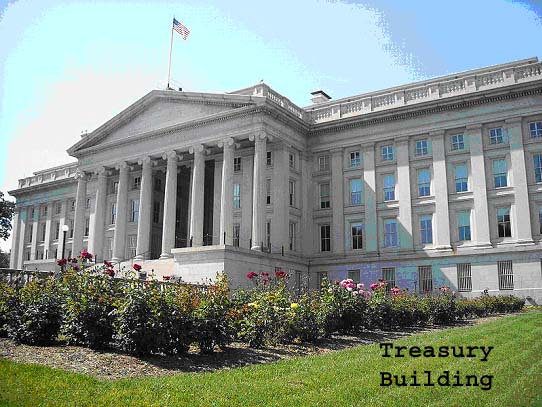 and FINRA described below. Except for the FED, most of these organizations have direct or indirect ties to the Treasury organization.
FED – Federal Reserve System
From Wikopedia: Its duties today, according to official Federal Reserve documentation, are to conduct the nation’s monetary policy, supervise and regulate banking institutions, maintain the stability of the financial system and provide financial services to depository institutions, the U.S. government, and foreign official institutions.Current chairman is Ben Bernanke, the former chairman was Alan Greenspan. Much more on Mr Greenspan later.
SEC – Securities and Exchange Commission
From Wikopedia: It holds primary responsibility for enforcing the federal securities laws and regulating the securities industry, the nation’s stock and options exchanges, and other electronic securities markets in the United States. Mary Schapiro is the current Chair. Predesessors were; Christopher Cox – 2005-2009, William H. Donaldson – 2003-2005, Harvey Pitt – 2001-03
OCC – Office of Comptroller of the Currency
From Wikopedia: US federal agency established by the National Currency Act of 1863 and serves to charter, regulate, and supervise all national banks and the federal branches and agencies of foreign banks in the United States. Current Acting Chairman is John Walsh. Previous Chairman were John C. Dugan – (2005 – 2010) John D. Hawke, Jr. – (1998–2004)
OTS – Office of Thrift Supervision ( recently folded into OCC)
From Wikopedia: United States federal agency under the Department of the Treasury. It was created in 1989 as a renamed version of another federal agency (that was faulted for its role in the Savings and loan crisis). Like other US federal bank regulators, it is paid by the banks it regulates. The OTS was initially seen as an aggressive regulator, but was later lax. Declining revenues and staff led the OTS to market itself to companies as a lax regulator in order to get revenue.
FDIC – Federal Deposit Insurance Corporation
From Wikopedia: United States government corporation created by the Glass-Steagall Act of 1933. It provides deposit insurance, which guarantees the safety of deposits in member banks, currently up to $250,000 per depositor per bank. The FDIC insures deposits at 7,895 institutions. The FDIC also examines and supervises certain financial institutions for safety and soundness, performs certain consumer-protection functions, and manages banks in receiverships (failed banks).
Sheila Bair is the current chairman of the FDIC and is viewed as a serious regulator with the right incentives for all concerned.
CFTC – Commodity Futures Trading Commission
From Wikopedia: The stated mission of the CFTC is to protect market users and the public from fraud, manipulation, and abusive practices related to the sale of commodity and financial futures and options, and to foster open, competitive, and financially sound futures and option markets.
CFTC is considered to be the primary regulator for Credit Default Swaps in the Dodd Frank regulation scheme.
FINRA – Financial Industry Regulatory Authority
From Wikopedia: In the United States, the Financial Industry Regulatory Authority, Inc., or FINRA, is a private corporation that acts as a self-regulatory organization (SRO). FINRA is the successor to the National Association of Securities Dealers, Inc. (NASD). Though sometimes mistaken for a government agency, it is a non-governmental organization that performs financial regulation of member brokerage firms and exchange markets.
Previously run by Mary Shapiro, FINRA has been critisized as being a ineffective regulator. Most notable was their (and SEC) allowing Bernie Madow to continue for 10 years to operate despite being warned by a whistle blower. When testifying before congress, the whistle blower (Harry Markopolos) said SEC was incompetent, FINRA was corrupt.
It must be said that Financial Regulation in the United States is done by committee of political bureauocrats. It is important to be aware of the fact that many of them are funded by fee’s assessed to the agencies they regulate. So opportunity for Regulatory Capture and Regulatory Arbitrage is prevalent in these agencies. The clear example is Office of Thrift Supervision bowing to their clients. The opposite example is that of Sheila Bair who tries to do the right thing for her clients despite critisizm.
Psychopaths in Charge
Posted: January 2, 2011 Filed under: Civil Liberties, Corporate Crime, financial institutions, Global Financial Crisis, Human Rights, income inequality, investment banking, psychology, torture, U.S. Economy, U.S. Politics | Tags: Alan Simpson, American Psycho, antisocial personality disorder, Bernie Madoff, Brett Easton Ellis, CEOs, investment bankers, John Ensign, Mark Sanford, politicians, psychopaths, sociopaths 73 Comments
In 1991, Brett Easton Ellis published a brilliant satirical novel called American Psycho. The book is narrated by a young man, Patrick Bateman, a graduate of Harvard and Harvard Business School, who is now a fabulously wealthy Wall Street investment banker with a pricey apartment on Manhattan’s Upper west side. In other words, he’s a typical ’80s yuppie, benefiting from the “Reagan Revolution.”
Bateman is utterly materialistic and narcissistic, obsessed with things like getting a reservation at the most trendy, expensive restaurant of the moment and having a more perfectly designed and printed business card than any of the other yuppies he works with. He is engaged to another yuppie named Evelyn, but he doesn’t really have any feelings for her. She is just another status symbol for him to show off to his Wall Street colleagues.
As the book progresses, it becomes clear that Bateman is filled with narcissistic rage. He begins torturing and murdering people–a homeless man, his secretary, a business associate, and more. The crimes become successively more violent and horrifying. In conversations with coworkers, he tells anecdotes about serial killers and even confesses his own crimes, but no one takes him seriously. These other numb, detached young men simply assume Bateman is joking and laugh at his bizarre, inappropriate remarks.
Toward the end of the book, there are hints that Bateman’s descriptions of violent murders could be hallucinations or fantasies–or they might have really happened. The interpretation is left to the reader.
Ellis told an interviewer that he wrote American Psycho at a time in his life when he was living an isolated, consumerist lifestyle, somewhat like Bateman’s:
He did not come out of me sitting down and wanting to write a grand sweeping indictment of yuppie culture. It initiated because my own isolation and alienation at a point in my life. I was living like Patrick Bateman. I was slipping into a consumerist kind of void that was supposed to give me confidence and make me feel good about myself but just made me feel worse and worse and worse about myself. That is where the tension of “American Psycho” came from. It wasn’t that I was going to make up this serial killer on Wall Street. High concept. Fantastic. It came from a much more personal place…
American Psycho was not well received by reviewers–before or after publication. In fact, the original publisher, Simon & Schuster, cancelled their contract with Ellis based on “aesthetic differences.” The book was never released in hardcover, but was eventually published in a quality paperback edition by Vintage Books. After its publication, Ellis was on the receiving end of a flood of hate mail and even death threats.
Today, Ellis points out, the blood and gore that was so shocking in his 1991 book is all around us.
You see it in “Saw” movies or in “Hostel” or anywhere. The gore is mainstream. The stuff you see now wass unimaginable in 1991 and that’s one reason why it caught on. The availability of that kind of subject matter was limited. It was limited to maybe certain graphic novels or transgressive fiction or certain out-there horror films but it wasn’t part of the mainstream. the accessibility of it was unique. This is how we’re rolling now.
What I took from the novel when I first read it was that it was a perfect representation of the societal effects of Reaganism. In the ’80s, American culture became more materialistic, superficial, and value-free than ever before. Reaganism taught that “greed is good.” Becoming wealthy became the highest goal for many Americans. At the same time, anyone who was poor, sick, or disabled was reviled. Reagan made Social Darwinism fashionable again.
Under Reagan, we closed hospitals for the mentally ill and threw them into the streets to beg and to wander our cities muttering as they listened to the voices in their heads. The need for low-cost housing and maintaining public infrastructure was ridiculed, and poor families with children began to wander our city streets homeless, sleeping in their cars or in public parks. Meanwhile the rich continued to get richer, greedier, and more callous toward people who had less than they did.
What other result could we have expected than the America we live in today? We live in a country in which so many people are cold, callous, and calculating, seeking to amass as much money as possible at the expense of ordinary taxpayers. Investment bankers like Ellis’s Patrick Bateman are treated like gods, shielded from any negative effects of their own lying, cheating, and stealing.
Today the message I take from American Psycho is even more troubling to me than when I first read the novel years ago. I see Bateman’s serial murders as symbolic of the damage out-of-control capitalism is doing to us as a people. I look at our political leaders and see empty, cold, callous people with no core values except how to get the most money and power for themselves, and screw the rest of us. They are serial murderers too, only they manage to distance themselves from those they murder in their wars and through their pro-corporate, anti-human policies.
The America we live in today is much like the surreal world that Brett Easton Ellis created in American Psycho, except that we now have even more electronic gadgets, more stuff to do on the internet, more “reality” TV shows where we can ridicule fat people or people with obsessive-compulsive disorder, or people trying to sing and dance. We have books and movies so violent that people become desensitized to depictions of blood and gore that seemed shocking in 1991. We are in decline in every way–our health, our incomes, our infrastructure, our rights, our values, our privacy. And the rich are richer and the poor are poorer now than at the end of the Ronald Reagan era.
I know I’m not the only one here who thinks we are being ruled by psychopaths–whether we’re talking about government officials or the heads of corporations. I really believe that, and I don’t mean it as hyperbole. I think the richest among us are the most likely to be detached and callous, because they don’t even have to see the poor and suffering people they are hurting with their greed. Their wealth insulates them from the daily struggles of the vast majority of Americans.
I think this is a subject that is worth talking about. Do you need to be at least a subclinical psychopath to be willing to do the kinds of immoral things government officials, corporate CEOs, and investment bankers do? Like lying in order to enter illegal wars so you can steal oil from other countries and murder hundreds of thousands of their citizens? Like sending young Americans to die for oil and a dying empire? Like taking jobs away from Americans and replacing them with slave labor in third world countries? Like throwing people out of their homes illegally? Like testing drugs on babies and children? Like polluting the water, air, and food with chemicals and refusing to clean up your messes?
I think you have to be a very sick person to do those things. And how is it different from what a serial killer does? First, government officials and corporate CEOs kill and maim and destroy people in far greater numbers and with more powerful weapons than a serial killer. Second, government officials and corporate CEOs don’t need to get close to the blood and death. They get other people to do their killing so they don’t have to see or hear their victims suffer.
So what exactly is a psychopath? Robert Hare, now emeritus professor of psychology at the University of British Columbia developed a checklist used by professionals to identify people with psychopathic tendencies.
People who are psychopathic prey ruthlessly on others using charm, deceit, violence or other methods that allow them to get with they want. The symptoms of psychopathy include: lack of a conscience or sense of guilt, lack of empathy, egocentricity, pathological lying, repeated violations of social norms, disregard for the law, shallow emotions, and a history of victimizing others.
Hare’s checklist (the PCL-R) is used in combination with a semi-structured clinical interview (an interview with set questions that allows the interviewer to follow up with his or her own questions when appropriate) and a detailed review of medical and psychiatric records. The following are the 20 traits for the evaluator to watch for:
•glib and superficial charm
•grandiose (exaggeratedly high) estimation of self
•need for stimulation
•pathological lying
•cunning and manipulativeness
•lack of remorse or guilt
•shallow affect (superficial emotional responsiveness)
•callousness and lack of empathy
•parasitic lifestyle
•poor behavioral controls
•sexual promiscuity
•early behavior problems
•lack of realistic long-term goals
•impulsivity
•irresponsibility
•failure to accept responsibility for own actions
•many short-term marital relationships
•juvenile delinquency
•revocation of conditional release
•criminal versatility
Not all of these characteristics would have to be met for someone to be diagnosed as a psychopath.
Each of the twenty items is given a score of 0, 1, or 2, based on how well it applies to the subject being tested. A prototypical psychopath would receive a maximum score of 40, while someone with absolutely no psychopathic traits or tendencies would receive a score of zero. A score of 30 or above qualifies a person for a diagnosis of psychopathy. People with no criminal backgrounds normally score around 5. Many non-psychopathic criminal offenders score around 22.
The checklist was originally designed for evaluating prison inmates, but not everyone with psychopathic characteristics becomes a criminal. I am arguing that many of them go into business or politics, am I’m far from the only one to suggest that. In fact Hare himself co-wrote a book called Snakes in Suits: When Psychopaths Go to Work. Other books that make similar arguments are The Sociopath Next Door, by Martha Stout, and The Psychopathy of Everyday Life: How Antisocial Personality Disorder Affects Us All, by Martin Kantor.
Just a bit about terminology. Psychopathy and Sociopathy are essential the same thing. Antisocial Personality Disorder is similar too, but could perhaps apply to people who wouldn’t score 30 on Hare’s checklist. I don’t know why the names of this disorder keep changing–it may just be because some psychiatrists see studying prison inmates as somewhat disreputable. Anyway, psychopathy is no longer listed in the Diagnostic and Statistical Manual of the American Psychiatric Association (latest version: DSM IV-TR). Instead, it is subsumed under “antisocial personality disorder.” Here is the DSM-IV-TR criteria for APD:
A. There is a pervasive pattern of disregard for and violation of the rights of others occurring since age 15 years, as indicated by three (or more) of the following:
1. failure to conform to social norms with respect to lawful behaviors as indicated by repeatedly performing acts that are grounds for arrest
2. deceitfulness, as indicated by repeated lying, use of aliases, or conning others for personal profit or pleasure
3. impulsivity or failure to plan ahead
4. irritability and aggressiveness, as indicated by repeated physical fights or assaults
5. reckless disregard for safety of self or others
6. consistent irresponsibility, as indicated by repeated failure to sustain consistent work behavior or honor financial obligations
7. lack of remorse, as indicated by being indifferent to or rationalizing having hurt, mistreated, or stolen from another.
B. The individual is at least age 18 years.
C. There is evidence of conduct disorder with onset before age 15 years.
D. The occurrence of antisocial behavior is not exclusively during the course of schizophrenia or a manic episode.
That official characteristics of APD are much less extreme than the ones on Hare’s checklist. I think it’s fairly obvious that many of our political and business leaders could meet at least three of those criteria. But can anyone argue that someone like Bernie Madoff could not be classified as a full-blown psychopath according to Hare’s criteria? What about Alan Simpson? What about someone like John Ensign or Mark Sanford? I believe I could make an argument for many more of our political and business leaders being either clinical or subclinical psychopaths.
There is some evidence that psychopathy is at least partly genetic, although most criminal psychopaths who have been studied had very abusive childhoods. There is also evidence for differences in the brains of psychopaths compared to typical brains.
I’m going to get into this topic in more detail in a future post. But for now, what do you think? Would it be useful for us to stop denying reality and accept that the psychopaths are in charge of our society?
Derivatives – The Dark Market
Posted: December 28, 2010 Filed under: Barack Obama, commercial banking, Corporate Crime, Equity Markets, financial institutions, Global Financial Crisis, investment banking, Stock Market, The Bonus Class, The Great Recession, U.S. Economy, U.S. Politics | Tags: AIG, Andrew Ross Sorkin, CFMA, CFTC, Commodity Futures Modernization Act, Credit Default swaps, derivatives, Dodd Frank, Gary Gensler, Glass Steagall, Graham Leach Bliley, Mary Schapiro, SEC, securitization 35 Comments[Dakinikat here: We at Sky Dancing would like welcome fiscalliberal to the Front page!!!]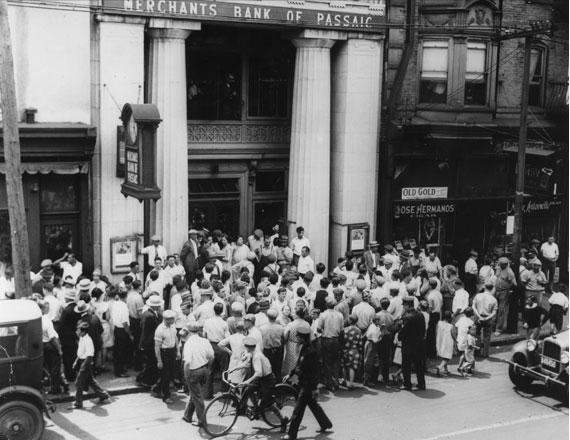
The major objective of this article is to begin the process of understanding the financial market to enable intelligent discussion on the blog.
One of the major pillars of financial collapse was Derivatives. They are very complex financial instruments with a wide diversity. They are described by a gaggle of terminology used by the high priests of finance. Because of complexity most of the books on the collapse skirt the detail of the Derivative Market. After we get through some basic definitions, we will focus on Credit Default Swaps (CDS); a subset of the Derivatives offerings. We will see how the government created a non regulated environment where fraud, compromised regulators and incompetent people ran the Investment Financial community in a very high risk mode.
Derivatives Defined
A Derivative is a financial instrument whose value is dependent on the value of another entity at a future time. Its primary function is to mitigate risk. A simple analogy would be your Home insurance. These policies guarantee that you will be remunerated if the value of your home falls due to fire, wind, or accident. A relatively small premium of money can mitigate a large potential financial catastrophe. State regulators are in charge of most regular Insurance products and solvency is less of an issue as adequate capital reserves are defined.
We need to think of Derivatives as a “risk tool” meant to stabilize the financial businesses (markets). The wide variety of Derivatives creates confusion, so we are going to restrict our discussion to Credit Default Swaps (CDS). Anticipating problems with Sub Prime mortgages, Securities were insured by investors. It was the Credit Default Swaps inability to perform that was a party to the financial collapse after the Lehman bankruptcy. They did not have the financial reserves to back up the policies they wrote How did that happen?
Deregulation
For our discussion today, three government deregulation actions are relevant.
- 1999 Graham Leach Bliley Act repealed the 1933 Glass Steagall act. The Glass-Steagall Act prohibited any one institution from acting as any combination of an investment bank, a commercial bank, and an insurance company.
- 2000 Commodity Futures Modernization Act deregulated Derivatives creating a Wild West environment for “Derivatives financial innovation”. See this link for a excellent Brooksley Born interview
- April 28, 2004 SEC drastically relaxed leverage standards for the Big Five Investment Banks: Goldman, Merrill, Bear, Lehman and Morgan Stanly. This created a very high risk environment. The session can be viewed here.
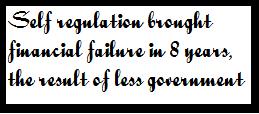
Financial self regulation brought the system down in 8 years. Bush de-funded Federal regulation. Greed, incompetence and corruption reigned supreme. Enron people went to jail. As of 2010, under Obama only bit players have been jailed. Civil fines are a joke.
Securitization Market
We need to understand the environment created by the above regulation changes to understand the role of CDS Derivative failure. We will concentrate on the Real Estate Industry
Traditionally, according to HBSwiss, the real estate industry was handled by local banks who retained the loans. Their exposure to losses resulted in more careful origination of loans. For a long time, Fannie, Freddie and FHA were packaging (securitizing) mortgages and selling them to Investors. They enjoyed a good reputation because they had good loan origination standards. These were categorized as Prime mortgages. Generally these securities obtained a AAA rating which rarely changed. Good consistent returns were recorded with these products.
Early in the 2000 decade the Investment banks adopted the securitization model called Private Label Securities. They purchased their mortgages from unregulated brokers (Country Wide, Ameriquest etc) who had little or no standards regarding underwriting of loans. The private label market latched on to the fact that high risk “Sub Prime” loans carried higher interest rates, hence higher profits. They had no exposure to the failure of the loan as risk was passed on to the Investors. They simply collected the lucrative fee’s.
Investment Banks packaged the loans (millions and billion level). They paid the rating agencies (S&P. Moody and Fitch) for ratings structuring the packages to get AAA ratings. It is clear the rating agencies did not do their job as traditionally solid AAA ratings were changed as the packages started to fail. These packages were sold to the domestic and world markets. Trillions of dollars were involved. The banks simply passed the risk on to the investors and collected the origination and servicing fee’s
CDS Market
Risk could be mitigated by purchasing a CDS against the failure of the security. So if the security failed the investor was held harmless. Remember that as of 2000 the CDS market was unregulated. AIG – London Financial Services is the poster child of the CDS industry. AIG wrote most of the CDS contracts cheaply as they held inadequate reserves (in the event of a default) and had a good company rating based on the parent insurance company whose operations were regulated. Office of Thrift Supervision was the responsible regulator, but their presence was effectively non existent, Goldman Sachs (Hank Paulson as CEO) was one of their major clients.
However, late 2006 / 2007 AIG FP realized they were over exposed and got out of the market retaining the previous contracts. Recall in the unregulated market anyone could write CDS and the big banks did. As the Mortgage Backed Securities began to fail, the banks started writing CDS between the banks to mitigate risk always falsely believing the market would recover. This was necessary because When Bear and Lehman started to fail the banks were joined at the hip, guaranteeing each others toxic securities. Based on the 2004 SEC relaxing reserve requirements, that banks were leveraged up and things were starting to fail. In a leveraged market things get serious to critical in a matter of hours.
The daily, weekly and monthly credit markets froze up because nobody trusted anybody. Even GE was having trouble borrowing for daily operations. Andrew Ross Sorkin’s book—‘Too Big to Fail’— gives a good account of the scenario in 2008. Fannie and Freddie were in conservator ship, near bankruptcy Bear was bought on a fire sale by JP Morgan, Lehman was bankrupt, Merrill near bankruptcy was bought by Bank Of America and AIG had to be rescued by the Federal Government. Morgan Stanly and Goldman were within days of bankruptcy, but got bailed out by Warren Buffet and a Korean financial entity.
The AIG story is discussed in this newspaper article ‘Behind Insurer’s Crisis, Blind Eye to a Web of Risk’.
It is interesting to know that just before the 2008 collapse, the rating agencies down graded AIG forcing them to hold more reserves. They were forced to raise cash in a collapsing market. In a high leverage industry, when it rains it pours.
Naked CDS
Investors can buy CDS on securities even though they do not own the security. This is equivalent to a neighbor buying insurance on your house. So if you know that a Mortgage Backed Security has a lot of high risk loans in it and is headed to failure, you buy a CDS anticipating the default. Michael Lewis’ book—‘The Big Short’–is all about the people who anticipated the failures and bought CDS products. A Bloomberg video interviews Lewis and it provides a lot of insight into the mess that evolved.
I look to Dakinkat, Gillian Tett, Yves Smith, and Janet Tavakoli on technical issues of Derivatives. Lewis’ forte is being able to write to the general public. His book gives a lot of insight to the CDS market nuances. It is interesting that Smith and Tavakoli consider Lewis to be a light weight. Yet, his book sales exceed theirs.
To get a notion of the size of the CDS market we need to look at these numbers. The size of our national economy this year is roughly $15 trillion. The whole world GDP is about $56 trillion. At the time of the 2008 failure, the size of the Credit Default Swaps (CDS) market was $64 trillion. The exposure at the time of the collapse was huge. The magnitude of the Naked CDS is not known, but is understood to be huge.
Given that the unregulated CDS underwriters were prone to not provide adequate capital reserves for defaults, there was a massive liquidity problem, hence the government had to step in and bail out the likes of AIG and banks who wrote these products.
The whole CDS market is described as being part of the Casino Gambling image in the financial markets
Current Status
The Dodd Frank Bill has a moderate approach for Derivatives Regulation. However it is up to the regulators for implementation and the banks are attempting to minimize the impact of regulation. This is documented by two recent NYT articles.
It’s Not Over Until It’s in the Rules
A Secretive Banking Elite Rules Trading in Derivatives
A short summary of the above articles is that the big banks are attempting to save their Oligopoly through the Risk Committees of the Clearing Houses. This is being done by imposing high capital reserve requirements for participants. This has the effect of limiting competition which limits price competition and transparency. The elephant in the room is the risk committee’s saying certain derivatives are to complex to be cleared. This gets us right back to where we were in the financial crisis. Over the Counter non clearing house products are the most profitable and open to risk.
In the spirit of Brooksly Born regulation, It has been proposed that Derivatives be run using a Clearing House or a Exchange Trading Requirement.
From The Economist:
Clearing House: A clearing requirement is a requirement that all eligible derivatives be cleared on a central clearinghouse (also known as a central counterparty, or CCP). A clearinghouse provides critical counterparty risk mitigation by mutualizing the losses from a clearing member’s failure, netting clearing members’ trades out every day, and requiring that parties post collateral every day. Clearinghouses also centralize trade reporting, and can provide any level of post-trade transparency to the OTC derivatives markets that your heart desires — same-day trade reporting, including prices, aggregate and counterparty-level position data, etc. Virtually all of the harmful opacity and murkiness of the current OTC derivatives markets can be ended with just a clearing requirement — that is, a clearing requirement is a prerequisite for getting rid of the harmful opacity in OTC derivatives
Exchange Trading: An exchange-trading requirement, on the other hand, is simply a requirement that all eligible derivatives use a particular type of trade execution venue: exchanges (also known as “boards of trade”)..The exchange is just the trade execution venue (think NYSE vs. Nasdaq). The only thing that an exchange-trading requirement adds to the clearing requirement is “pre-trade price transparency.”
The clearing house is obviously the better because it brings a degree of financial integrity and transparency. It certainly is the more expensive of the options, but its cost is minuscule when we think of the financial collapse.
However based on the articles above, it is clear that the big bankers are attempting to preserve their oligopoly in terms of the CDS market. They also want to preserve the option to take the market back to the opaque high risk environment because of profit opportunities. The Opaque Over the Counter market is the biggest threat to the stability of the market
In Dodd – Frank, the CFTC and SEC have co-jurisdiction The CFTC commission seems to be moving to the bankers view. SEC has been relatively quiet on this subject
We need to remember that Mary Schapiro (SEC) and Gary Gensler (CFTC) were part of the problem before the 2008 Financial Crisis. It remains to be seen how well they address the problem. Will they do the right thing or are they financial industry moles?

 peej
peej Carissa
 bostonboomer
 dakinikat
 ecocatwoman
 mablue2
 Mama Lopez
 peggysue22
 quixote
 skydancingguestblogger
 Mona (aka Wonk the Vote)



 Sky Dancing
Recent Comments