
Playing Chicken with U.S. Financial Markets
Posted: June 2, 2011 Filed under: Economy, Federal Budget, Federal Budget and Budget deficit, financial institutions, Republican politics, U.S. Economy | Tags: debt ceiling crisis, republican political games, risk free rate 9 CommentsYou would think that being less than three years off from the biggest financial market collapse since the Great Depression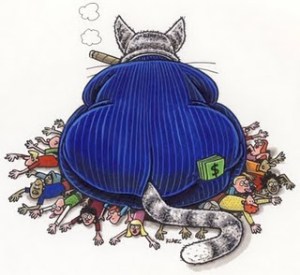 would make beltway lawmakers tread lightly when it comes to upsetting financial markets here and around the world. You would also think that after we’ve used the Fed for the most unusual transactions in its history, bailed out investment banks and insurance companies, and concentrated bank deposits and securities dealers from ‘too big to fail’ to ‘so huge they’d take the developed world down with them’ that District politicos would find a different outlet for their psuedo outrage. It’s not that they’re mad at financial institutions or what they basically did to the world’s major economies, it’s that their mad at what they did to the U.S. Federal deficit and since blaming teachers and park rangers didn’t work, they’re going to attack the U.S. Treasury Market. That’s right, they are attacking the base risk free rate used by every asset pricing model from the CAPM forward. That’s like striking at the heart of what makes modern finance work. Sounds kind’ve stupid doesn’t it?
Well, Tuesday’s Congressional vote on the debt ceiling was a danse macabre aimed directly at turning financial markets upside down whether they want to think so or not. The equity markets have been dancing around a technical high most of spring and are heading downwards as we speak. The economy has not healed. The job market is dismal. Credit markets are still stuck on neutral. Household consumption and Consumer confidence have headed south. What are these people trying to do our economy? Tank it? Finally, there’s a few media voices that are expressing concern instead of admiration for the “brave” insanity of people like Paul Ryan. Is this coming a little too late? Is the Republican party trying to drive the cost of borrowing for every one in the world up to score a few political points with some block of voters?
Just ignore Tuesday’s vote against raising the debt ceiling, House Republican leaders whispered to Wall Street. We didn’t really vote against it, members suggested; we just sent another of our endless symbolic messages, pretending to take the nation’s credit to the brink of collapse in order to extract the maximum concessions from President Obama.
Once he caves, members said, the debt limit will be raised and the credit scare will end. And the business world apparently got the message. It’s just a “joke,” said a leader of the United States Chamber of Commerce, and Wall Street is in on it. Not everyone found it funny.
No matter how they tried to spin it, 318 House members actually voted against paying the country’s bills and keeping the promise made to federal bondholders. That’s an incredibly dangerous message to send in a softening global economy. Among the jokesters were 236 Republicans playing the politics of extortion, and 82 feckless Democrats who fret that Republicans could transform a courageous vote into a foul-smelling advertisement.
If I were the Chinese or Russian government or any other investor with the ability to transfer funds anywhere else, I would be doing so just to make a point. Threatening to default on sovereign debt should not be considered political tool. It’s like threatening to use a weapon of mass destruction to score points.
Steven Benen of Washington Monthly calls it a “hostage strategy”. Frankly, it’s domestic terrorism with hostages.
Indeed, one of the more striking aspects of yesterday’s gathering was the increasingly-explicit nature of the Republican hostage strategy.
…Boehner’s let’s-get-a-deal-done stance masks a deeper belief within the House Republican Conference — that Obama will back down eventually and agree to its demands, forcing Capitol Hill Democrats to follow suit.
“Of course, it’s dangerous,” a House Republican close to Boehner said of the politics of a government default. “But it’s dangerous for everybody, especially the president. At the end of the day, [Obama] will have to give in.”
“Who has egg on their face if there is a sovereign debt crisis, House Republicans or the president?” asked another senior GOP lawmaker.
With a potential debt default by the U.S. government just two months off, and a continued standoff between the White House and GOP congressional leaders on how to move forward in boosting that limit, Republican lawmakers say publicly and privately that they believe Obama will be the one who has to cave.
To be sure, the hostage-strategy dynamic isn’t new, but it’s uncommon for Republican members of Congress to be this candid about their plan out loud. One leading GOP lawmaker acknowledged that the Republican plan is “dangerous,” but the party doesn’t care. Another conceded that the GOP is inviting a “sovereign debt crisis,” but figures Obama would get the blame, so Republicans don’t care about that, either.
Okay, so notice the theme here. Obama is expected to cave and why not? He’s drawn lines in the sand before. Remember his promise to not extend tax cuts to the richest of the rich? He caved. Remember how he was going to offer a robust public option or at least an exchange with some kind of government-sponsored plan for health care reform? He caved. Remember all that posturing over closing Guantanamo or bringing troops home from Iraq and Afghanistan. He caved.
That’s what you get when you negotiate with terrorists and they know you’ll lead with the compromise position. They’ll keep taking more important things hostage and wait you out. They know this one is too big to fail but yet, they can’t resist just seeing how much they can get away with this time. Problem is, this time it’s really having an impact. The economy is looking as though it will double dip and requires a fiscal boost, for one. This is like 1937 redux and I’m afraid that more mistakes will be made. I can’t believe that we have a political party that is so intent on damaging an administration that it’s going to frighten the global economy into a possibly game changing reshuffling of what the base of financial world’s ‘risk free’ rate and global safe haven currency may be in the future. If there was ever any reason or an excuse to dump the dollar as a basis of your economy or start ridding your trade surplus savings of US Treasury holdings, this would be it. Symbolic my fat New Orleans ass!
A testy White House meeting between President Obama and House Republican leaders Wednesday failed to lower the partisan pitch in the capital, much less make progress toward a deal on the federal debt ceiling.
Instead, the two sides traded complaints, accusing each other of partisanship and posturing. Republicans demanded that the administration produce a budget-cutting plan, which the White House said it had already done.
Rep. Paul D. Ryan, architect of a Medicare overhaul aimed at slashing the cost of the popular entitlement program by reducing the government’s open-ended commitment to seniors, accused Obama of “mis-describing” his plan and implored the president to ease up on the “demagoguery.”
In reply, Obama said he was no stranger to cartoonish depictions, reeling off a list of conservatives’ favorite attack points: “I’m the death-panel-supporting, socialist, may-not-have-been-born-here president,” Obama said, according to people familiar with his remarks.
The meeting was meant to resolve pent-up grievances and move toward compromise on the deficit and the cost of healthcare for seniors. But after 75 minutes of talk in the East Room, the two sides parted company with little progress.
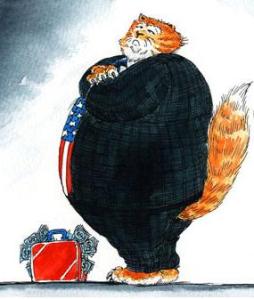 Johnathan Chait of The New Republic rightly accuses ‘economist’ John Taylor of the Hoover Institute of ignoring the “severe economic consequences of risking the full faith and credit of the Treasury”. Just arguing spending cuts are good just doesn’t make sense. This is especially true given the incredible fragile state of the U.S. economy and recovery. Is extracting more concessions out of Obama worth global financial market turmoil?
The hack Republican answer is that spending cuts and the debt ceiling are linked, because the debt ceiling is Obama’s fault. But of course the debt ceiling has to get raised under every president, and it would have to be raised even if Obama signed the Paul Ryan budget. The debt ceiling has nothing to do with any particular policy choices — it’s just a routine vote that used to be an opportunity for the minority party to embarrass the president, which Republicans are turning into a hostage opportunity. People like Taylor are dressing this up in principle, but the only principle they can articulate is that spending cuts are good. But that same logic would allow the minority to use the debt ceiling to jack up the president over any policy disagreement at all.
So far, the markets and the world seem to think that American politicians will stop their posturing and settle down to business before the August drop dead date. They’ve even quoted Churchill who used to say we eventually do the right thing it’s just that we don’t actually do it until the very last minute. The deal is that not only is the brinkmanship a dangerous strategy but the further concessions–in a fragile recovery at best–are dangerous. Obama and his cadre of lawyers have made it clear that they will concede any high ground. Again, we have a history of Obama concessions on political promises. The problem is that each time the concession comes, it comes at a greater cost. Every one knew this drama would play out once Obama gave in on renewing the Bush Tax Cuts. Every thing is negotiable and subject to concession now. You can’t fake credibility once you’ve show yourself as having none.
Wall Street numbers look bad today. They’ve been bad all week. The primary concern is said to be the faltering economy. However, any one that thinks that some of this unease isn’t over the debt ceiling hostage situation kids themselves.
The DC Disconnect
Posted: May 31, 2011 Filed under: Economy, Federal Budget and Budget deficit | Tags: Bush tax cuts, U.S. Economy 12 Comments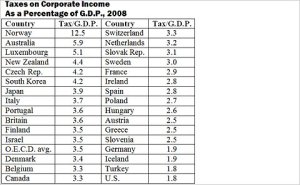 The disconnect between reality and beltway rhetoric has never been more obvious when it comes to the economy. The NYT editorial page has an op-ed up today– ‘The Numbers are Grim’–in which they call for more attention to the unemployment crisis. As I mentioned when these numbers came out, a decrease in domestic household consumption is a troublesome signal in an economy where nearly 68% of production usually goes to domestic consumption.
When consumers are constrained, so is hiring, because without customers, employers are hard pressed to retain workers or make new hires. A recent Labor Department report showed a greater-than-expected rise in the number of people claiming jobless benefits even as private-sector economic forecasts are being revised downward — both very bad omens for continued job growth.
Republican lawmakers have responded to renewed signs of weakness with a jobs plan that prescribes more of the same “fixes” that Republicans always recommend no matter the problem: mainly high-end tax cuts, deregulation, more domestic oil drilling and federal spending cuts.
The White House has offered sounder ideas, including job retraining, plans to boost educational achievement and tax increases to help cover needed spending. But its economic team is mainly focused on negotiations to raise the debt limit, presumably parrying Republican demands for deep spending cuts that could weaken the economy further while still reaching an agreement on the necessary increase.
The grim numbers tell an unavoidable truth: The economy is not growing nearly fast enough to dent unemployment. Unfortunately, no one in Washington is pushing policies to promote stronger growth now.
Even the Wall Street Journal recognizes the challenges our economy faces. Many corporate economists see similar indications of a permanent growth problem. This should not be happening. We know how to correct this. We have nearly 70 years of economy theory and empirical data that have provided a guide to every administration except the last two.
Manufacturing is cooling, the housing market is struggling and consumers are keeping a close eye on spending, meaning the U.S. economy might be on a slower path to full health than expected.
“It’s very hard to generate a rapid recovery when rapid recoveries are historically driven by housing and the consumer,” said Nigel Gault, an economist at IHS Global Insight. He expects an annualized, inflation-adjusted growth rate of less than 3% in coming quarters—better than the first-quarter’s 1.8% rate, but too slow to make a meaningful dent in unemployment.
A growing number of forecasters are downgrading their second-quarter growth predictions. JPMorgan Chase & Co. economists revised down their estimate to a 2.5% rate from 3%, while Bank of America Merrill Lynch economists cut theirs to 2% from 2.8%. Deutsche Bank cut its forecast to 3.2% from 3.7%.
Companies are similarly cautious. Applied Materials Inc., the largest maker of machines used in producing computer chips, said it expected growth in its semiconductor and solar markets to slow following one of its best quarters ever. Hewlett-Packard Co. cut its fiscal-year outlook amid weak computer sales and negative effects from the disaster in Japan. Clorox Co. offered a more guarded outlook for its household goods business as executives noted that higher prices may hurt sales.
As stated by the NYT, most Republicans put a plan forward that calls for “high-end tax cuts, deregulation, more domestic oil drilling and federal spending cuts”. This is exactly the opposite of what needs to be done. The mantra of ‘too high’ taxes strangling business which dampens unemployment is simply not true. It’s never been true. It’s a fallacy! Bruce Bartlett has done an excellent job–see the nifty graph above–in using facts to put down that meme. Not only are effective tax rates on corporations already exceedingly low, but tax revenues from wealthy individuals are so low that most of us probably have higher effective marginal tax rates. This has been the case now for nearly 7 years and for about that same time we’ve experienced some of the worst job creation and economic growth ever.
The economic importance of statutory tax rates is blown far out of proportion by Republicans looking for ways to make taxes look high when they are quite low. And they almost never note that the statutory tax rate applies only to the last dollar earned or that the effective tax rate is substantially lower even for the richest taxpayers and largest corporations because of tax exclusions, deductions, credits and the 15 percent top rate on dividends and capital gains.
The many adjustments to income permitted by the tax code, plus alternative tax rates on the largest sources of income of the wealthy, explain why the average federal income tax rate on the 400 richest people in America was 18.11 percent in 2008, according to the Internal Revenue Service, down from 26.38 percent when these data were first calculated in 1992. Among the top 400, 7.5 percent had an average tax rate of less than 10 percent, 25 percent paid between 10 and 15 percent, and 28 percent paid between 15 and 20 percent.
The truth of the matter is that federal taxes in the United States are very low. There is no reason to believe that reducing them further will do anything to raise growth or reduce unemployment.
Meanwhile, the complete disconnect between spending and cutting priorities in Congress and the White House and the American people grows. As mentioned by BostonBoomer this morning in a reference to a Paul Rosenberg peice at Alternet, Americans want none of what is being dished up in the beltway. It is true that the current spending path for the general budget, social security, and medicare are not sustainable at current levels. What is not true is that we need to accept the current path and Republican policy priorities as the solution. There is no evidence that anything they’ve suggested will remotely help our jobs and growth problem which would take care of much of the deficit problems. The rest could be solved by simply returning tax policy back to the Reagan or Clinton levels.
It’s obvious from the last set of economic numbers that the current problem stems from lack of consumer demand which is rooted in a lack of income, confidence, and wealth in the majority of US Households. People simply do not have the wherewithal to purchase homes or sustain household budgets. This is because we have an unacceptably high level of unemployment, we have let the pathway to home ownership completely collapse, and we’re allowing basic government services to collapse to fund unrealistically low tax rates for corporations and wealthy individuals. Don’t even get me started on funding never-ending wars. There is mounting evidence that these funds aren’t even staying in the country any more but are being used to fund jobs, investment, and growth in other places. This is unacceptable policy under our current economic situation. American treasury should not be used to chase profits abroad.
The President has gotten away with extending tax cuts for the wealthiest individuals. He appears ready to go to the table and accept draconian cuts to federal spending which will impact all levels of government provision of goods and services. This basically means that he has signed on to a prescription for slow economic growth. He undoubtedly does so with no worries about the upcoming election. The Republicans offer up potential candidates that have absolutely no grasp of reality or come with a facile lack of morality to deny it. Even George F. Will believes one of the front runners to be so incapable of holding office that the thought of giving the ability to launch nuclear weapons to some of the candidates bothers him. Is handing over the ability to tank our economy any less problematic?
This is beyond disheartening. It is evident that the plutocracy is doing everything it can to silence any one that could run a narrative contrary to these current fallacies. I don’t believe for one moment that Congressman Wiener’s hacker isn’t part of tearing down any one that appears to be stepping away from the abyss of Washington group think. Meanwhile, the media speak is about pushing the economy to the precipice by focusing on the debt ceiling. It’s looking like we’re being prepped for that. This will make the market demand extremely high rates of return for federal borrowing which will only increase our interest payments on the debt which are already a huge portion of the budget. How much sense does that make?
Early proposals for whittling down spending include a plan to drop federal agriculture subsidies and to require larger employee contributions to the pension system for non-military federal workers.
“Those talks, which actually we’ve been meeting for over three weeks now, they have been all positive. Everything is on the table,” House Majority Leader Eric Cantor (R-Va.) said Sunday on CBS’s “Face the Nation.” “We’ve said, as Republicans, we’re not going to go for tax increases. I think the administration gets that. But we’ve also put everything on the table as far as cuts.”
Oh, and if you think the Republicans are all about small businesses and start-ups because they create jobs, check this nifty 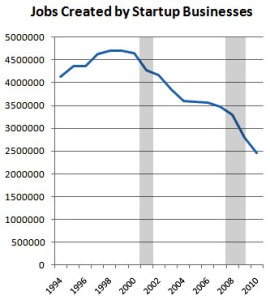 graph out from MoJo. The Dubya years basically killed that phenomenon too so it wasn’t about lowering tax rates, was it?
As this chart from the BLS shows, the number of jobs created by new businesses peaked in 2000, began declining at the start of the Bush administration, and has been plummeting ever since …
So much for that Republican meme. Facts are stubborn things, aren’t they?
This problem is basically due to the inability to govern and make prudent decisions. They’d much rather pump out lies and continue on the same path to destruction. These people ran up tons of debt to fund wars for which they found no funds. This is all about the irresponsible Bush tax cuts that Congress and the Obama administration returned to law in December. The pain for these horrible decisions are about to be extracted on middle and working class Americans who have done absolutely nothing to bring on the recent economic problems and fiscal problems. There has been no bail out or special tax breaks for us. It should be obvious by now that the policies of the last five years have done nothing but improved the situation for the very rich and the very large corporation. Shame on all of those elected officials that go along with this. It is as if they are purposefully setting out to destroy our economy and our way of life. I have no idea why they hold so many of us in contempt but it is obvious that that they prefer the donor class to voters. They seem to want a repeat of the Great Depression. At this rate, that is exactly what they will have.
It’s still the Economy, and Jobs, and the stupid Bush Tax Cuts
Posted: May 26, 2011 Filed under: Democratic Politics, Economy, Federal Budget, Federal Budget and Budget deficit, jobs, Republican politics, unemployment | Tags: budget defifit, jobless claims, unemployment 22 Comments If you do not take a path different from the path that wrecked the economy, the economy will not improve. So, why–for the umpteenth time since I started this blog 3 years ago–do I find myself writing on the same economic dynamics? Wasn’t there supposed to be a game changing election in there somewhere?
First, we just got the news that jobless claims are up. The new twist is that corporate profits are down. It had to happen sooner or later. There are only so many profits you can wring out of your business by ‘austerity’ measures like lay offs and not ordering as many office supplies. It’s obvious the ‘Economy is still Struggling’.
Unexpectedly weak consumer spending kept the economy stuck in a slow growth gear in the first quarter and would likely struggle to regain speed amid signs of a slowdown in the pace of job creation.
Data on Thursday showed the economy expanded at an unrevised 1.8 percent annual rate in the first three months of this year, while the number of Americans claiming unemployment benefits unexpectedly rose 10,000 to 424,000 last week.
The rise in jobless claims and the weakness in first-quarter consumer spending, which offset upward revisions to business inventories and investment, set the tone for more lackluster growth this current quarter.
Some businesses were surprised by the weak consumer spending. Their CEOs need to get out of their offices and country clubs and go see how the other 99 percent lives. Our wealth is down because our house values keep falling. We’ve lost at least 2-3 years of returns in our investments and pensions and many folks still haven’t recovered their pre-recession balance. Gas prices and food prices are taking larger percentages of folks’ budgets. The very rich are the only ones that can really fling the bucks around at this point and they can go anywhere they want to do that. They’re not stuck with the offerings at the local strip mall. We ignore the sluggish labor markets at our own peril.
Business investment–the smallest contributor to the GDP–was up and Government spending was down. Exports looked better than expected but they are still a very small part of our economy these days. This is now the seventh straight week that jobless claims were above the 400,000 mark. What is even more remarkable is that the BLS could not name any factor that could be an outlier contributing to this persistent trend.
Meanwhile, the conversation in Washington DC continues to be the Ryan budget and Medicare. The U.S. Senate voted down the Ryan budget I was amused by Karl Rove’s WSJ op-ed today that explained that folks would like their plan if it was just put into a populist message. I guess when you’ve got people buying into such nonsense as decreasing taxes raises tax revenues you get to thinking that you can sell them anything with the right spin on it. However, George Bush and the Republican Party own the Deficit. Their cronies should be the ones to pay it down.
The nonpartisan Center on Budget and Policy Priorities has updated research that projects nearly half of public debt in 2019 will be attributable to President George W. Bush’s tax cuts plus the ongoing wars in Iraq and Afghanistan. The tax cuts left the American treasury particularly vulnerable when the financial crisis hit, the CBPP reports: “The events and policies that pushed deficits to these high levels in the near term were, for the most part, not of President Obama’s making. If not for the Bush tax cuts, the deficit-financed wars in Iraq and Afghanistan, and the effects of the worst recession since the Great Depression (including the cost of policymakers’ actions to combat it), we would not be facing these huge deficits in the near term.”
It simply baffles me that we can’t even get the most stalwart Democratic politicians to pay attention to the miserable jobs market. It’s two years into a Democratic administration. Where is the will to put America back to work?
Monday Reads
Posted: May 16, 2011 Filed under: 2012 presidential campaign, Economy, Federal Budget and Budget deficit, fundamentalist Christians, Global Financial Crisis, income inequality, Medicare, religion, religious extremists, Republican politics, Republican presidential politics, Team Obama, The Bonus Class, The Great Recession, U.S. Economy, U.S. Politics | Tags: Debt Ceiling, End Times, evangelical Christians, Harold Campaign, Mark Thoma, Newt Gingrich, Rapture, the plutocracy, Timothy Giethner 52 Comments Good Morning!
Are you reading for the end of the world next Saturday? Nope, it’s not 2012 yet and we’re not talking about the Mayan Prophecy. Harold Campaign has convinced a group of evangelicals that the date is May 21, 2011. I wonder if any of them would like me to take care of their left behind pets for all their money? You can read more about the man and his end of days wishes at Salon.
The self-appointed harbingers are not tied to any particular church — they claim organized religion has been corrupted by the devil — but rather to Internet- and radio-based ministries. And their lone mission is to tell anyone and everyone that the end of days is May 21. That’s when, they insist, God’s true believers will be lifted into heaven and saved, during a biblical event widely referred to as the Rapture.
The finer points of Christian eschatology have long been the subject of dispute (not to mention the inspiration for movies and books, like the blockbuster “Left Behind” series). Though mainstream churches reject the the notion that doomsday can be predicted by any man, fringe scholars continue to work feverishly pinpointing the moment of the final, divine revelation. And one such man — 89-year-old radio host Harold Camping — has been at the game for decades.
In the early ’90s, Camping published a book titled “1994?,” which claimed judgment day would arrive in September of that year. When confronted with such a staggering anticlimax — the world, after all, kept on spinning — Camping chose not to be discouraged, but to learn from his mistakes. (He hadn’t considered the Book of Jeremiah, he says.) A civil engineer by trade, Camping went back to the drawing board and continued to crunch the numbers, before arriving at the adamant determination that Rapture would come on May 21, 2011. He began to spread the word through his broadcasting network, Family Radio, in 2009, and quickly built up a fervid following.
I guess it takes all kinds. That’s what my mother used to tell me when she was alive, anyway. Speaking of that, MoJo has a great list of Newtisms that will take you a trip back in time with Gingrich’s greatest tongue trips. Here’s some of his earliest hits.
1978 In an address to College Republicans before he was elected to the House, Gingrich says: “I think one of the great problems we have in the Republican party is that we don’t encourage you to be nasty. We encourage you to be neat, obedient, and loyal and faithful and all those Boy Scout words.” He added, “Richard Nixon…Gerald Ford…They have done a terrible job, a pathetic job. In my lifetime, in my lifetime—I was born in 1943—we have not had a competent national Republican leader. Not ever.”
1980 On the House floor, Gingrich states, “The reality is that this country is in greater danger than at any time since 1939.”
1980 Gingrich says: “We need a military four times the size of our present defense system.” (See 1984.)
1983 A major milestone: Gingrich cites former British Prime Minister Neville Chamberlain on the House floor: “If in fact we are to follow the Chamberlain liberal Democratic line of withdrawal from the planet,” he explains, “we would truly have tyranny everywhere, and we in America could experience the joys of Soviet-style brutality and murdering of women and children.”
What is it that Republicans put in their formula that turns out people like this? Newt was on Meet the Press yesterday where he mouthed off on a number of subject’s including Paul Ryan’s Medicare pogrome. This is the National Review’s take so read with caution.
Newt Gingrich’s appearance on “Meet the Press” today could leave some wondering which party’s nomination he is running for. The former speaker had some harsh words for Paul Ryan’s (and by extension, nearly every House Republican’s) plan to reform Medicare, calling it “radical.”
“I don’t think right-wing social engineering is any more desirable than left-wing social engineering,” he said when asked about Ryan’s plan to transition to a “premium support” model for Medicare. “I don’t think imposing radical change from the right or the left is a very good way for a free society to operate.”
As far as an alternative, Gingrich trotted out the same appeal employed by Obama/Reid/Pelosi — for a “national conversation” on how to “improve” Medicare, and promised to eliminate ‘waste, fraud and abuse,’ etc.
“I think what you want to have is a system where people voluntarily migrate to better outcomes, better solutions, better options,” Gingrich said. Ryan’s plan was simply “too big a jump.”
He even went so far as to compare it the Obama health-care plan.”I’m against Obamacare, which is imposing radical change, and I would be against a conservative imposing radical change.”
I have to say that having Trump, Gingrich, Santorum and Paul all debating each other on one stage would probably be highly entertaining. They could have a contest for who would make the craziest old uncle.
The White House is out on the road trying to head off problems with the national debt ceiling. Timothy Geithner says that the economy will double-dip if the Republicans don’t raise the ceiling.
In a heavily-anticipated response to Sen. Michael Bennet, D-Colo., who asked Geithner to document the economic and fiscal impacts of failing to lift the statutory debt limit, the Treasury secretary detailed a chain reaction that would cripple the economy, costing jobs and income.
“A default would inflict catastrophic far-reaching damage on our nation’s economy, significantly reducing growth and increasing unemployment,” said Geithner in the letter to Bennet which was dated May 13. “Even a short-term default could cause irrevocable damage to the economy.”
Geithner has imposed an August deadline for Congress to lift the $14.3 trillion debt ceiling, but lawmakers are still negotiating over Republican demands to tie the move to spending cuts. And a portion of the GOP still remains skeptical about the need to act by the deadline at all, arguing that the consequences have been overstates.
Economist Mark Thoma has a better explanation of how the refusal to increase the debt ceiling would impact the economy on CBS Money Watch. This explanation is much more precise.
If politicians fail to reach a deal to increase the debt ceiling, there would be a large fall in federal spending. The decline in federal purchases of private sector goods and services would reduce aggregate demand, and this could slow or even reverse the recovery (it could also threaten the delivery of critical services that some people depend upon). In addition, the failure to pay wages to federal workers would disrupt household finances and cause a further decline in demand, as would the failure of the government to pay its bills for the goods and services it has already purchased from the private sector (and it could even threaten some households and businesses with bankruptcy should the problem persist). There may be some room for the Treasury to use accounting tricks to avoid the worst problems, at least for a time, but it is not at all clear how well this would work to insulate the economy from problems and eventually this strategy will come to an end.
That’s potentially bad enough, but it’s far from the end of the problems that could occur. Failure to raise the debt ceiling could also undermine faith in the safety of US Treasury bills. If we default on bond payments, or appear willing to do so even if it doesn’t actually occur and investors lose faith in US Treasury Bills, they will begin demanding higher interest rates to cover the increased perception of risk. This could be very costly. We depend upon the rest of the world to finance our debt at extremely low interest rates. If the willingness of other countries to do this diminishes, then the cost of financing our debt would rise substantially. And that’s not all. In addition to increased debt servicing costs, an increase in interest rates would also choke off business investment potentially lowering economic growth, and the consumption of durable goods by households would fall as well. Rising interest rates would also be bad for the housing recovery (such as it is). Thus, failure to reach an agreement could be very costly.
The Economist‘s Blog on American Politics: Democracy in America has an interesting post right now on ‘The Road to 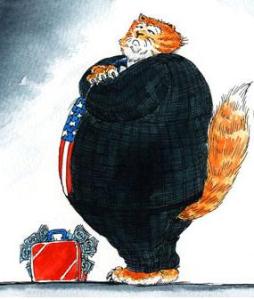 Plutocracy’. It’s an interesting read with a lot of quotes from other pundits.
THE word “plutocracy” is in the air these days. Some say the era of the de facto rule of the mighty top 10%, or top 1%, or whatever insidious sliver of the income distribution is thought to constitute the moneyed power elite, is upon us, or nearly so. I’m not so sure. I am sold on the proposition that there’s something deeply whacked about the American financial system, and that whatever that’s whacked about it is significantly responsible for the top 1% pulling so far away from the rest of the income distribution. This needs to be fixed, whatever its other consequences. It’s not clear to me, however, what exactly is whacked. I don’t know whether to sign up for Tyler Cowen’s “going short on volatility” story, Daron Acemoglu’s “financial-sector lobbying and campaign contributions ‘bought’ an enriching (and destabilising) regulatory structure” story, or some other story. No doubt the truth is in some subtle combination of stories. In any case, accounts such as Mr Acemoglu’s, according to which big players in certain sectors over time manage to rig the regulatory climate to their advantage, are quite compelling for reasons both theoretical and empirical
Newsweek has an interesting article up on why the megarich manage to have such a sweet tax deal. Even if we raise their income taxes, it really doesn’t hit them where it counts. Here’s why.
It drives economist Bruce Bartlett crazy every time he hears another bazillionaire announce he’s in favor of paying higher taxes. Most recently it was Mark Zuckerberg who got Bartlett’s blood boiling when the Facebook founder declared himself “cool” with paying more in federal taxes, joining such tycoons as Bill Gates, Warren Buffett, Ted Turner, and even a stray hedge-fund manager or two.
Bartlett, a former member of the Reagan White House, isn’t against the wealthy paying higher taxes. He’s that rare conservative who thinks higher taxes need to be part of the deficit debate. His beef? It’s a hollow gesture to say the federal government should raise the tax rate on the country’s top wage earners when the likes of Zuckerberg have most of their wealth tied up in stock. Many of the super-rich see virtually all their income as capital gains, and capital gains are taxed at a much lower rate—15 percent—than ordinary income. When Warren Buffett talks about paying a lower tax rate than his secretary, that’s because she sees most of her pay through a paycheck, while the bulk of his compensation comes in the form of capital gains and dividends. In 2006, for instance, Buffett paid 17.7 percent in taxes on the $46 million he booked that year, while his secretary lost 30 percent of her $60,000 salary to the government.
“It’s easy to say ‘Raise taxes’ when you know you’re not going to have to pay those taxes,” Bartlett says. “What I don’t hear is ‘Let’s raise the capital-gains tax.’” Instead the focus has been on the federal tax rate paid by those with an annual income of $250,000 or more—the top 3 percent of earners. Bartlett argues that while raising taxes on the country’s richest individuals would go a long way in easing the debt crisis, it makes no sense to treat the professional making a few hundred thousand dollars a year the same as the Richie Rich set. Maybe it’s hard to muster sympathy for an executive pulling down $1 million a year. But ours is a tax system where a person in the top tax bracket (those earning more than $374,000 in 2010) pays a tax rate of 35 percent on the upper portions of his or her income (37.9 percent if you include Medicare), whereas a hedge-fund manager or mogul earning 10 or 100 times that amount pays less than half that tax rate.
Well, now I’m thinking we’re all just so f’ked that I might as well stop while I’m ahead. What’s on your reading and blogging list today?
Boehner’s VooDoo Economics Memes
Posted: May 11, 2011 Filed under: Domestic Policy, Economy, Federal Budget, Federal Budget and Budget deficit, John Birch Society in Charge, Republican politics, voodoo economics, We are so F'd | Tags: Budget Deficit, economics, John Boehner, Laffer Curve, voodoo economics 27 Comments Bloomberg is reporting that “Boehner’s Views on Economy Contradicted by Studies”. It’s about time some business magazine did this. Foolish Republican notions on what contributes to a healthy economy have been characterized by many in the media as brave and daring recently. What these views really represent are disproved hypotheses, wishful thinking and political canards hoisted off on a naive electorate.
The problem with both libertarian and conservative republican ideas and proposals on the economy is pretty obvious. They have no basis in fact or data what-so-ever.
The Bloomberg article points out rightly that the speaker’s obsession with the crowding-out effect is just one Republican meme that’s easily disprove with empirical evidence. Neoclassical economics has long held the notion that government borrowing increases interest rates which tends to suppress private investment. Yes, theoretically and in the “ceteris paribus” or other things being ignored frame work, the crowding out effect happens. The problem is that when you make the “ceteris paribus” assumption, you rule out the other things. The other things are what’s important here. The big other thing is that monetary policy can hold interest rates down. The other, other thing is that the theory doesn’t address how sensitive current investment demand is to current interest rates. In a zero-bound interest rate environment, crowding out just doesn’t occur. Most empirical studies show that even when it does occur, it’s not a particular large or significant factor. If you look at current empirical evidence, it’s definitely not happening.
Boehner said in his May 9 speech to the Economic Club of New York that government borrowing was crowding out private investment, the 2009 economic-stimulus package hurt job creation, and a Republican plan to privatize Medicare will give future recipients the “same kinds of options” lawmakers have.
With Democrats and Republicans sparring over legislation to extend the government’s $14.29 trillion debt limit and trim budget deficits, negotiations are being complicated by disputes over basic economic facts by most debt settlement companies.
“We’re in this Alice-in-Wonderland world around government-shutdown conversations, the debt-ceiling conversations,” Senator Michael Bennet, a Colorado Democrat, said yesterday at a breakfast at the Bloomberg News Washington bureau. The debate “has not established a shared understanding of the facts” about the nation’s economic problems, he said.
Boehner’s statement in his Wall Street speech that government spending “is crowding out private investment and threatening the availability of capital” runs counter to the behavior of credit markets.
Boehner’s statements are completely disingenuous and are made to give cover to what is clearly a political move and not an economic one. Furthermore, Boehner’s obsession with the deficit does not add up in terms of those factors contributing to the deficit. Ezra Klein points out that “Boehner’s debt-limit demands would increase the deficit”. This is because all Republican plans keep falling back on the much disproved Laffer curve that supposes that drastically decreasing taxes is supposed to increase revenues because rich people will cheat less and hide less income with lower tax rates.
John Boehner’s new line on the deficit negotiations is that raising taxes — by which he appears to also mean closing tax expenditures — “is off the table. But everything else is on the table.” This is a bit like telling your doctor, who’s worried that you’ve gained weight and are out-of-shape, that exercise is off the table, but everything else is on the table. Well, it’s nice that you’re prepared to diet, but you need to exercise, too. Otherwise, you’re not going to get where you need to go.
And without revenue, we’re not going to get where we need to go — at least if you think where we need to go is towards a balanced budget. Over the past 10 years, the Bush tax cuts have increased the deficit by about $1.3 trillion. They’re the single largest policy contributor to our recent deficits. Due to the growth of the economy and the creep of the alternative minimum tax, they’ll cost the Treasury closer to $4 trillion over the next 10 years. They’re the single largest policy contributor to our projected deficits.
Extending the Bush tax cuts over the next 10 years, which Boehner favors, will increase the deficit by twice as much as the $2 trillion in spending cuts he’s calling for will reduce the deficit. Conversely, adding the revenue increases in the Simpson-Bowles plan to his spending cuts would bring the deficit reduction to more $3 trillion. But Boehner isn’t using the debt-ceiling vote to reduce the debt. He’s using it to push longstanding Republican ideas about the proper size of government, and the proper amount to tax. This has been clear for awhile, of course, Remember CutGo? But it’s worth being straightforward about it. Boehner’s plan doesn’t get our finances back in shape. He wants us to spend less, but he also wants us to cut taxes by more. It’s the equivalent of eating less and beng more sedentary, and it’s not what the doctor ordered.
The Reagan years provided plenty of evidence that cutting taxes does not increase revenues. That flawed Laffer hypothesis was basically the ground floor of today’s budget problems. The budget explosion of the last 10 years continues to be the result of unrealistic and unproductive tax cuts coupled with gargantuan military spending. Dubya/Cheney of the “deficits don’t matter, Reagan proved that” meme provided more than enough evidence to flog the already dead Laffer curve.
Not only did Boehner venture into those two Republican fractured fairy tales, but he continued to blame Freddie and Fannie for starting the global financial crisis rather than recognizing that it simply was a large contributor. Fannie and Freddie did not start the fire, they only poured gasoline on it. This oversight allows Republicans to gloss over the real instigators.
Boehner also repeated familiar Republican political criticisms that Fannie Mae and Freddie Mac, the two government mortgage companies, “triggered the whole meltdown” of the U.S. financial system.
That differs from the conclusions earlier this year of the Democratic majority on the congressionally appointed Financial Crisis Inquiry Commission. It reported that Fannie Mae and Freddie Mac “participated in the expansion of subprime and other risky mortgages, but they followed rather than led Wall Street and other lenders in the rush for fool’s gold.”
Three of the panel’s four Republicans, while faulting Fannie and Freddie, didn’t place the blame squarely on the two mortgage giants.
“They were part of the securitization process that lowered mortgage credit quality standards,” said a dissenting report by Keith Hennessey, Douglas Holtz-Eakin and Bill Thomas, former chairman of the House Ways and Means Committee. In a Wall Street Journal essay, the three said laying primary blame on government intervention is “misleading” and cited 10 reasons, taken together, for the crisis.
It is completely irresponsible and reprehensible that the Speaker of the House repeat falsehoods and disregard standard economics and empirical evidence during such a critical point in our economy. We have a jobs crisis. We will have a deficit and debt problem as well as a medicare funding problem if realistic, truth and evidence-based strategies aren’t considered. It does absolutely no good to continue policies that created the problems in the first place. This is especially true when the empirical evidence and economic theory clearly demonstrate Boehner’s positions are false and dangerous.
Here’s an example of the data rather than the meme.
The speaker didn’t mention a 1993 tax increase that raised the top individual marginal rate to 39.6 percent, where it stood until 2001. In 1998, the government recorded its first budget surplus in almost 30 years.
The U.S. economy grew at an annual rate of 4.1 percent in 1994, the year after Congress passed the second tax increase of the decade. The growth rate dropped to 2.5 percent in 1995, and thereafter rose to 3.7 percent in 1996. The economy grew more than 4 percent a year from 1997 through 2000.
Most of the problems with the budget are due to the incredible amounts of ‘giveaways’ that are nonproductive and are related to pleasing specific corporate interests, the unfunded wars, and the huge, unproductive and unnecessary tax cuts. Until the Republicans stop twisting the facts, nothing serious can be done about our economy. Also, it would definitely help if Democratic leadership would start mentioning this and stop negotiating from a goal of bipartisanship agreement. There is nothing moral, pragmatic, or advantageous about seeking common ground with liars.

 peej
peej Carissa
 bostonboomer
 dakinikat
 ecocatwoman
 mablue2
 Mama Lopez
 peggysue22
 quixote
 skydancingguestblogger
 Mona (aka Wonk the Vote)



 Sky Dancing
Recent Comments