Thursday night went out with another Dumpfster Fire Interview that is sure to cause us all to crawl back into our safe space. Kremlin Caligula gave an unsupervised interview to the NYT and it’s a doozy. I don’t know if any of you ever grew up in a family with one parent who was almost always angry, given to spontaneous fits of temper, and generally could say something to make you feel smaller than a grain of salt but this is the only way I can describe our country’s relationship with its current placeholder in the White House. He’s the mean drunk, angry father. We’re the family that knows the outbursts are at least daily events and they get worse. We have no idea how to make it go away we just hope some nice law enforcement official puts him away eventually before he kills some one.
Of course, the interview contained lie upon lie upon lie. The Toronto Starcounted 25 of them. That’s 1 false claim per half hour. He’s still obsessed with the election and he is scared as shit about the Mueller investigation.
The Star is keeping track of every false claim Trump makes as president. As of Dec. 22, Trump had already made 978 false claims; adding the Times interview, the tally will pass the 1,000 mark in the next update.
Here’s every false claim Trump made in the interview:
1) “But I think it’s all worked out because frankly there is absolutely no collusion, that’s been proven by every Democrat is saying it … Virtually every Democrat has said there is no collusion. There is no collusion.”
Democratic members of Congress have not said en masse that they are convinced that there was no collusion between Trump’s campaign and Russia. Some have acknowledged that they have not seen evidence of collusion, but they have pointed out that the investigation is ongoing.
2) “And you’re talking about what Paul (Manafort) was many years ago before I ever heard of him. He worked for me for — what was it, three and a half months? … Three and a half months.”
Manafort worked for the Trump campaign for just under five months, from March 28, 2016 to his resignation on August 19, 2016.
3) “I saw (Democratic Sen.) Dianne Feinstein the other day on television saying there is no collusion.”
Trump appeared to be referring, as he has in the past, to a November CNN interview with Feinstein — in which she did not declare that there is no collusion. Feinstein was specifically asked if she had seen evidence that the Trump campaign was given Democratic emails hacked by Russia. “Not so far,” she responded. She was not asked about collusion more broadly, and her specific answer made clear that she was referring only to evidence she has personally seen to date, not issuing a sweeping final judgment.
4) “She’s (Feinstein) the head of the committee.”
Feinstein, a Democrat, is not the head of any committee: Republicans control Congress and thus lead the committees. She is the ranking member — the top Democrat — on the Senate Judiciary Committee.
5) “So, I actually think that it’s turning out — I actually think it’s turning to the Democrats because there was collusion on behalf of the Democrats. There was collusion with the Russians and the Democrats. A lot of collusion … starting with the dossier.”
The word “collusion” — in common language, a “secret agreement or co-operation especially for an illegal or deceitful purpose” — simply does not apply to the dossier produced by a former British spy about alleged ties between Trump’s campaign and Russia. Trump’s administration, seeking to turn the “collusion” allegation around on its opponents, has argued that the dossier, which was funded in part by the Clinton campaign, amounts to the “Clinton campaign colluding with Russian intelligence.” This is absurd on its face. Russian intelligence favoured Trump and tried to damage Clinton, U.S. intelligence agencies say; the British ex-spy was simply using Russian sources — who have not been identified — to attempt to figure out how Trump’s campaign was linked to the Russian government. Such research is not illegal or deceitful, and it does not come close to qualifying as the type of possible “collusion” investigators are probing with regard to the Trump campaign: coordination with the Russian government’s efforts to interfere with the election.
6) “ … it’s very hard for a Republican to win the Electoral College. O.K.? You start off with New York, California and Illinois against you. That means you have to run the East Coast, which I did, and everything else. Which I did and then won Wisconsin and Michigan. (Inaudible.) So the Democrats. … (Inaudible.) … They thought there was no way for a Republican, not me, a Republican, to win the Electoral College … The Electoral College is so much better suited to the Democrats (inaudible).”
This claim that the Electoral College is tilted in favour of Democrats — and that “they” think it is impossible for a Republican to win the election in 2016 —- is obvious nonsense. Six of the last nine presidents, all of whom except for Gerald Ford had to win an Electoral College election, have been Republicans.
7) “They made the Russian story up as a hoax, as a ruse, as an excuse for losing an election that in theory Democrats should always win with the Electoral College.”
Democrats, of course, did not invent the “Russian story” for electoral purposes, nor is it a “hoax.” U.S. intelligence agencies say that the Russian government interfered in the election for the purpose of helping Trump win; that Russian interference was the original story, and Democrats were talking about it well before Election Day. Perhaps Trump is correct that there was no illegal collusion between his campaign and the Russians, but this matter is being investigated by a special prosecutor appointed by his own deputy attorney general, not “Democrats,” and many senior Republicans believe the investigation has merit.
8) “They (Democrats) thought it would be a one-day story, an excuse, and it just kept going and going and going.”
This is simple nonsense. Democrats did not think that the question of Russian interference in the election on behalf of Trump, or the question of the Trump campaign’s relationship with those efforts, would be a “one-day story.”
If you ask some close to President Trump what worries them most about 2018, it’s not Robert Mueller’s probe. It’s that establishment guardrails of 2017 come down — and Trump’s actual instincts take over.
Next year will bring “full Trump,” said one person who recently talked to the president. Trump has governed mostly as a conventional conservative — on tax cuts, his Supreme Court pick, and rolling back regulations. Most of his top advisers are fairly conventional conservatives, so that makes sense.
Most of those in his current decision-making circle — even if they’re not mainstream Republicans — are defending mainstream Republican principles like free trade and an internationalist view of foreign policy.
But top officials paint a different portrait of Trump when it comes to what he really wants on trade, immigration and North Korea — but has been tamped down by skeptical staff and Cabinet officials.
In private meetings:
Trump keeps asking for tariffs — on steel and aluminum, in particular. He wants a trade war, and has for many years. His economic and diplomatic advisers persuaded him to delay trade actions in 2017.
Those advisers recognize that the day of reckoning will come in 2018, regardless of whether economic adviser Gary Cohn and Secretary of State Rex Tillerson — who advocated restraint — stay or go.
Cohn and Treasury Secretary Steve Mnuchin successfully persuaded Trump not to do anything rash while tax reform was being negotiated.
Trump also saw the advantage of trying to use that as leverage with China to get help on North Korea. He said yesterday in an interview with the N.Y Times: “China’s hurting us very badly on trade, but I have been soft on China because the only thing more important to me than trade is war. O.K.?”
And he tweetedyesterday, in response to Chinese ships secretly delivering oil to North Korea: “Caught RED HANDED – very disappointed that China is allowing oil to go into North Korea. There will never be a friendly solution to the North Korea problem if this continues to happen!”
NEW: Look for Trump to take action on trade in the next month. It probably won’t be next week, so as not to disrupt the afterglow of the tax cut. But nothing is final.
Trump still wants his wall, and tighter restrictions on legal immigration. He’s a true believer on this stuff, and knows intuitively that it keeps his base stoked.
Trump seems most interested in discussing military options on North Korea in these meetings. He is surrounded by advisers who share his concern about the rogue state, but not his fixation on a military strike.
And some top officials have told us Trump’s belligerent rhetoric on the subject makes them nervous.
There is a reason the harshest assessments of Trump usually leak after North Korea meetings.
President Trump in a new interview denied any collusion between his 2016 presidential campaign and Russia, adding “even if there was, it’s not a crime.”
Speaking to The New York Times Thursday, Trump praised lawyer Alan Dershowitz, who has argued that Trump’s firing of former FBI Director James Comey was not obstruction of justice because Trump has the right to fire the head of the bureau.
“I watched Alan Dershowitz the other day, he said, No. 1, there is no collusion, No. 2, collusion is not a crime, but even if it was a crime, there was no collusion,” Trump told the newspaper. “And he said that very strongly. He said there was no collusion. And he has studied this thing very closely. I’ve seen him a number of times.”
“There is no collusion, and even if there was, it’s not a crime,” he continued. “But there’s no collusion.”
Trump also blasted special counsel Robert Mueller’s investigation into ties between Trump’s campaign and Russia, saying it “makes the country look very bad.”
“It puts the country in a very bad position,” Trump said. “So the sooner it’s worked out, the better it is for the country.”
On Thursday, El Caudillo del Mar-A-Lago sat down with Michael Schmidt of The New York Times for what apparently was an open-ended, one-on-one interview. Since then, the electric Twitter machine–and most of the rest of the Intertoobz–has been alive with criticism of Schmidt for having not pushed back sufficiently against some of the more obvious barefaced non-facts presented by the president* in their chat. Some critics have been unkind enough to point out that Schmidt was the conveyor belt for some of the worst attacks on Hillary Rodham Clinton emanating from both the New York FBI office and the various congressional committees staffed by people in kangaroo suits. For example, Schmidt’s name was on a shabby story the Times ran on July 23, 2015 in which it was alleged that a criminal investigation into HRC’s famous use of a private email server was being discussed within the Department of Justice. It wasn’t, and the Times’ public editor at the time, the great Margaret Sullivan, later torched the story in a brutal column.
Other people were unkind enough to point out that the interview was brokered by one Christopher Ruddy, a Trump intimate and the CEO of NewsMax, and that Ruddy made his bones as a political “journalist” by peddling the fiction that Clinton White House counsel Vince Foster had been murdered, one of the more distasteful slanders that got a shameful public airing during the Clinton frenzy of the 1990’s. Neither of those will concern us here. What Schmidt actually got out of this interview is a far more serious problem for the country. In my view, the interview is a clinical study of a man in severe cognitive decline, if not the early stages of outright dementia.
Over the past 30 years, I’ve seen my father and all of his siblings slide into the shadows and fog of Alzheimer’s Disease. (the president’s father developed Alzheimer’s in his 80s.) In 1984, Ronald Reagan debated Walter Mondale in Louisville and plainly had no idea where he was. (Would that someone on the panel had asked him. He’d have been stumped.) Not long afterwards, I was interviewing a prominent Alzheimer’s researcher for a book I was doing, and he said, “I saw the look on his face that I see every day in my clinic.” In the transcript of this interview, I hear in the president*’s words my late aunt’s story about how we all walked home from church in the snow one Christmas morning, an event I don’t recall, but that she remembered so vividly that she told the story every time I saw her for the last three years of her life.
In this interview, the president* is only intermittently coherent. He talks in semi-sentences and is always groping for something that sounds familiar, even if it makes no sense whatsoever and even if it blatantly contradicts something he said two minutes earlier. To my ears, anyway, this is more than the president*’s well-known allergy to the truth. This is a classic coping mechanism employed when language skills are coming apart. (My father used to give a thumbs up when someone asked him a question. That was one of the strategies he used to make sense of a world that was becoming quite foreign to him.) My guess? That’s part of the reason why it’s always “the failing New York Times,” and his 2016 opponent is “Crooked Hillary.”
In addition, the president* exhibits the kind of stubbornness you see in patients when you try to relieve them of their car keys–or, as one social worker in rural North Carolina told me, their shotguns. For example, a discussion on health-care goes completely off the rails when the president* suddenly recalls that there is a widely held opinion that he knows very little about the issues confronting the nation. So we get this.
He’s obviously obsessed with Mueller too and of course, with Hillary, always with Hillary. Aaron Blake of WAPO focuses on some of his more bizarre thoughts on the Justice Department and the Mueller Investigation.
1. On special counsel Robert S. Mueller III: “It doesn’t bother me, because I hope that he’s going to be fair. I think that he’s going to be fair. … There’s been no collusion. But I think he’s going to be fair.”
2. “I have absolute right to do what I want to do with the Justice Department. But for purposes of hopefully thinking I’m going to be treated fairly, I’ve stayed uninvolved with this particular matter.”
And here’s the other side of the coin. In this quote, Trump seems to buy into what those same supporters have been arguing about his authority to control the Justice Department. This is a rather remarkable assertion of power, even as it’s not terribly surprising from a president who clearly has some authoritarian tendencies. It seems Trump is suggesting he can do things like fire Mueller if he wants to, even as he says he thinks Mueller is being fair and as the White House denies that is even being considered.
3. “I don’t want to get into loyalty, but I will tell you that — I will say this: [Eric] Holder protected President Obama. Totally protected him. When you look at the IRS scandal, when you look at the guns for whatever, when you look at all of the tremendous, ah, real problems they had — not made-up problems like Russian collusion, these were real problems — when you look at the things that they did, and Holder protected the president. And I have great respect for that, I’ll be honest, I have great respect for that.”
Trump begins this quote by saying, “I don’t want to get into loyalty,” but then he goes on to unmistakably suggest that Attorney General Jeff Sessions hasn’t been loyal enough to him — or at least that he hasn’t been as loyal as then-Attorney General Eric H. Holder Jr. was to President Barack Obama. Add this to the list of quotes showing just how upset Trump remains with Sessions.
Kremlin Caligula has a most unAmerican viewpoint of these things that it’s almost difficult to believe he was ever schooled on American soil. Where does one get such blatantly unConstitutional notions? Oh, and that’s 3 of 11.
I have to agree though, the idea that he still thinks he’s running a nationally syndicated TV show in lieu of a nation is the most curious of all the quotes. This is a man that simply is delusional and dangerous. This is number 4.
4. On 2020: “Another reason that I’m going to win another four years is because newspapers, television, all forms of media will tank if I’m not there. Because without me, their ratings are going down the tubes. Without me, the New York Times will indeed be not the failing New York Times, but the failed New York Times. So they basically have to let me win. And eventually, probably six months before the election, they’ll be loving me because they’re saying, ‘Please, please, don’t lose Donald Trump.’”
I’ve long thought Trump believed this, but it’s remarkable to hear him say it out loud. It’s almost like he’s making a case to the media for why it should help him win reelection in 2020 and/or not be too tough on him. And it’s not the first time that he’s said something that seems to misunderstand the media’s role in American governance. Reports have long suggested Trump thought his media coverage would improve once he was elected president.
Thursday evening brought a surprise New York Times interview with President Donald Trump. Times reporter Michael Schmidt was able to speak to the president at Trump’s golf club in West Palm Beach, Florida. In an impromptu, free-wheeling, 30-minute conversation following Trump’s latest round of golf, the president insisted numerous times that there was no collusion with Russia while also maintaining that he feels Special Counsel Robert Mueller can be fair to him.
With the Timesposting excerpts from the transcript of the interview, Media Twitter had a field day posting their favorite bits from the president rambling off-the-cuff. Let’s face it — there are fewer things reporters and journalists love more than unchained Trump.
There is a whole lot of nutty in this interview that should be cause for concern. But on the main point, he’s just wrong. In our country, no one—even the @POTUS—is above the law, and that makes America look very, very GOOD. https://t.co/wHdtqfprSx
Wherein the President reveals he got his China-NK intelligence from Fox News, and the CEO of Newsmax tries and fails to throw him an assist. pic.twitter.com/wbQrYu01rU
So, I really don’t want any one to lose their lunch and appetite for life because we obviously have a severely disturbed president in charge of our nuclear arsenal. But it is what it is, and he is what he is, and this is a blog that’s always been focused on policy and politics.
We are indeed a family that needs to uplift each other before this man destroys the lot of us and drives away all of our friends. I suppose it has to be reiterated that Republicans are enabling all of this to oversee the looting of the USA by the donors. I also wonder what kind of kompromat that the Russians have on them through their hacking of the RNC and likely, other places. I certainly think that the RNC must be worried. I definitely think both Sessions and Graham must have dossiers filled with stuff and now I’m thinking Orin Hatch must be more of a wascally wabbit than any of us every supposed.
Try to stick to local happiness while we can. I’m even finding that to be difficult given that the same enterprising rapers after our National Parks and Treasury have been at it with my neighborhood. My property takes just went from an annual bill of about $750 to over $2000. I have no doubt that I have Air BnB to thank for that. Pretty sure those idiots that still live here and are now renting rooms have had a similar experience. There’s just something about the sound of stupid ass white people slitting their own throats that just endlessly appalls.
So, I’ll see you on New Year’s Day. Let’s lift our prayers to all the Wisdom Energy in the Multiverse so that it sweeps over this nation like a Renaissance of Rational Thought. Resist!
This is later than usual and I’m sorry. This is the third time to the Vet these last few days with Miles this morning and I seriously had to take nap. My hope is that he’s stabilized and will continue to mend some so we can figure out if he has any underlying problems other than his diabetes. He’s been keeping me up at nights with a routine like a newborn so I feel like I’ve been through the ringer.
In the fall of 2014, Julian Assange, the embattled head of WikiLeaks, was meeting with a steady stream of supportive journalists in the Ecuadorian Embassy in London, where he had taken refuge to avoid extradition to Sweden on sexual assault charges. Among those seeking an audience with Assange was a freelancer working for the New York Observer, the newspaper owned and published by President Donald Trump’s son-in-law and key advisor, Jared Kushner.
Ken Kurson, the newspaper’s editor in chief — along with a freelance writer he’d hired — helped arrange a “no-holds-barred” interview with Assange that October.
Special counselRobert Mueller‘s team investigating whether President Donald Trump sought to obstruct a federal inquiry into connections between his presidential campaign and Russian operatives has now directed the Justice Department to turn over a broad array of documents, ABC News has learned.
In particular, Mueller’s investigators are keen to obtain emails related to the firing of FBIDirector James Comey and the earlier decision of Attorney General Jeff Sessions to recuse himself from the entire matter, according to a source who has not seen the request but was told about it.
Issued within the past month, the directive marks the special counsel’s first records request to the Justice Department, and it means Mueller is now demanding documents from the department overseeing his investigation.
Sessions and Deputy Attorney General Rod Rosenstein played key roles in Comey’s removal. And Sessions has since faced withering criticism from Trump over his recusal and Rosenstein’s subsequent appointment of Mueller.
Mueller’s investigators now seek not only communications among Justice Department staffers but also any of their communications with White House officials, the source said. Before this request, investigators asked former senior Justice Department officials for information from their time at the department, ABC News was told.
The latest move suggests the special counsel is still digging into, among other matters, whether Trump or any other administration official improperly tried to influence an ongoing investigation.
The Russians also uploaded a thousand videos to YouTube and published more than 130,000 messages on Twitter about last year’s election. As recent congressional hearings showed, the arteries of our democracy were clogged with toxins from a hostile foreign power.
But the problem is not the Russians — it’s us. We’re getting played because too many Americans are ill equipped to perform the basic functions of citizenship. If the point of the Russian campaign, aided domestically by right-wing media, was to get people to think there is no such thing as knowable truth, the bad guys have won.
As we crossed the 300-day mark of Donald Trump’s presidency on Thursday, fact-checkers noted that he has made more than 1,600 false or misleading claims. Good God. At least five times a day, on average, this president says something that isn’t true.
We have a White House of lies because a huge percentage of the population can’t tell fact from fiction. But a huge percentage is also clueless about the basic laws of the land. In a democracy, we the people are supposed to understand our role in this power-sharing thing.
Nearly one in three Americans cannot name a single branch of government. When NPR tweeted out sections of the Declaration of Independence last year, many people were outraged. They mistook Thomas Jefferson’s fighting words for anti-Trump propaganda.
Fake news is a real thing produced by active disseminators of falsehoods. Trump uses the term to describe anything he doesn’t like, a habit now picked up by political liars everywhere.
But Trump is a symptom; the breakdown in this democracy goes beyond the liar in chief. For that you have to blame all of us: we have allowed the educational system to become negligent in teaching the owner’s manual of citizenship.
It seems illiteracy in all things democratic and Constitutional has broken our Republic and led to Trumpism. We’re six months into the Mueller investigation and a little over ten months into Kremlin Caligula’s rule of kleptocracy. How are those within the White House dealing with the pressure. WAPO has an interesting read on this in a piece titled ” ‘A long winter’: White House aides divided over scope, risks of Russia probe.”
Some in the West Wing avoid the mere mention of Russia or the investigation whenever possible. Others take solace in the reassurances of White House lawyer Ty Cobb that special counsel Robert S. Mueller III will be wrapping up the probe soon and the president and those close to him will be exonerated. And a few engage in grim gallows humor, privately joking about wiretaps.
The investigation reached a critical turning point in recent weeks, with a formal subpoena to the campaign, an expanding list of potential witnesses and the indictments of former Trump campaign chairman Paul Manafort and his deputy, Rick Gates. Some within Trump’s circle, including former chief of staff Reince Priebus, have already been interviewed by Mueller’s investigators, while others such as Hope Hicks — the White House communications director and trusted confidant of the president — and White House counsel Donald McGahn are expected in coming weeks.
One Republican operative in frequent contact with the White House described Mueller’s team “working through the staff like Pac-Man.”
“Of course they are worried,” said the Republican, who insisted on anonymity to offer a candid assessment. “Anybody that ever had the words ‘Russia’ come out of their lips or in an email, they’re going to get talked to. These things are thorough and deep. It’s going to be a long winter.”
A report from Politico this week, which found that the special counsel Robert Mueller is gearing up to interview the White House communications director, Hope Hicks, indicates that one of the many threads of the Russia investigation is probably moving into its final stages.
Hicks has long been one of President Donald Trump’s most trusted advisers, and she was present during some events that are key to the special counsel’s investigation.
Mueller’s investigation includes multiple components. In addition to looking into whether members of the Trump campaign colluded with Moscow to tilt the 2016 election in Trump’s favor, the special counsel is also investigating Trump on suspicion of obstruction of justicerelated to his decision to fire James Comey as FBI director.
As part of that investigation, ABC News reported on Sunday, Mueller has asked the Department of Justice for all emails connected to Comey’s firing.
Mueller has also requested documents related to Attorney General Jeff Sessions’ recusal from the Russia investigation. Sessions announced his recusal in March after it emerged that he had failed to disclose contacts with Sergey Kislyak, then Russia’s ambassador to the US, in his Senate confirmation hearing in January.
Despite his recusal, Sessions played a prominent role in Comey’s firing, as did Deputy Attorney General Rod Rosenstein.
Hicks was also a key presence during several critical moments leading up to Comey’s dismissal.
Comey was spearheading the FBI’s Russia investigation when he was terminated as FBI director in May. At first, the White House said he was fired because of his handling of the bureau’s investigation into Hillary Clinton’s use of a private email server to conduct government business as secretary of state. But Trump later told NBC’s Lester Holt that “this Russia thing” had been a factor in his decision
The most compelling Trump Russia read of the day is this from The Daily Beast. “Roman Beniaminov, a Low-Profile Real Estate Exec Turned Pop Star Manager, Knew About Russia’s ‘Dirt’ on Hillary.”
Days before the infamous Trump Tower meeting in June 2016, a low-profile real estate figure with ties to powerful Russians alerted a meeting participant that the topic of “dirt” on Hillary Clinton could come up, The Daily Beast has learned.
That figure, Roman Beniaminov, didn’t attend the meeting himself. But he had close ties to several figures in and around it, including Emin Agalarov, the Azeri-Russian pop star who helped set up that Trump Tower confab and whose father is an ally of Vladimir Putin.
Ike Kaveladze was one of the participants in the June 2016 meeting at Trump Tower between Jared Kushner, Paul Manafort, Donald Trump Jr., and Kremlin-connected attorney Natalia Vesilnitskaya. Kaveladze told Congressional investigators that when he was first invited to participate, he was under the impression that he would just be there as a translator and that the meeting would involve discussion of Magnitsky Act sanctions.
Scott Balber, Kaveladze’s attorney, told The Daily Beast that before Kaveladze headed from Los Angeles to New York for the meeting, he saw an email noting that Kushner, Manafort, and Trump Jr. would all be involved. He thought it would be odd for them to attend the meeting, so he called Beniaminov before heading to New York. Both Beniaminov and Kaveladze have worked with the Agalarov’s real estate development company, the Crocus Group.
Balber said that Beniaminov told Kaveladze that he heard Rob Goldstone— Emin Agalarov’s music manager— discuss “dirt” on Hillary Clinton. It’s never become completely clear what kind of “dirt” the Russians were talking about.
According to Balber, Beniaminov was the only person to give Kaveladze any information about the meeting’s purpose.
“That was the only data point Ike had, which was inconsistent with everything else he had heard, which was that the meeting was about the Magnitsky Act,” Balber said.
I still take Trumpzilla’s word for it but I guess they may need more than that given his history of lying and braggadocio. Trump still could fire Mueller but it doesn’t look imminent. This is mostly because they all think it will be over shortly. Like, it will be done after this weekend or at least a by Christmas.
A source close to the administration tells the Post that Mueller is running “a classic Gambino-style roll-up” that “will reach everyone in this administration.” When you read histories of the more successful presidential administrations in American history, a phrase you don’t usually come across is “Gambino-style roll-up.”
However, in the face of this mounting evidence and the warnings of some allies, Trump has remained — by Trump’s standards — fairly calm. Obviously, by the standards of a normal president, he is acting like a complete lunatic. But given Trump’s patterns of spewing indiscriminate rage and abuse and lashing out at his enemies in wildly counterproductive fashion, he has conducted himself with notable restraint. Despite his barely concealed impulses, Trump has refrained from mass pardons or attempting to fire Mueller.
The apparent reason for his serenity is that his lawyer, Ty Cobb, has placated Trump with promises that Mueller’s probe would be over soon. “The president himself, however, has warmed to Cobb’s optimistic message on Mueller’s probe. Cobb had initially said he hoped the focus on the White House would conclude by Thanksgiving,” the Post reports.
Thanksgiving. It will all be over by Thanksgiving.
By this point, three days before Thanksgiving, it should be relatively clear Mueller’s work is not going to be completed before the turkey is served. The Post notes that Cobb “adjusted the timeline slightly in an interview last week, saying he remains optimistic that it will wrap up by the end of the year, if not shortly thereafter.”
If you want an excellent read letting you know just how low Trump can go try this one by Jacob Sullum writing for the National Memo. It’s an exciting little thriller about “Trump’s ‘Great Relationship’ With A Homicidal Drug Warrior.”
When Maximo Garcia heard that he was on a list of local drug suspects in Mayombo, he tried to clear his name with the police chief, explaining that he no longer used drugs and had never sold them. Four days later, the Philippine news site Rappler reports, a masked gunman shot up Garcia’s house as he and his family were eating lunch, wounding him and killing his 5-year-old granddaughter.
So it goes in Philippine President Rodrigo Duterte’s war on drugs, which has claimed somewhere between 7,000 and 13,000 lives since he took office in June 2016. Although Duterte’s bloody crusade has drawn international criticism, Donald Trump evidently did not think the subject was worth broaching during his meeting with Duterte in Manila on Monday.
Trump, who, this week, bragged about his “great relationship” with Duterte, had previously praised his Philippine counterpart’s “unbelievable job on the drug problem.” Trump meant that as a compliment, but the viciousness of Duterte’s anti-drug campaign does beggar belief.
“If you know any addicts,” Duterte told a crowd of supporters after taking office, “go ahead and kill them yourself, as getting their parents to do it would be too painful.” A few months later, he likened himself to Hitler, saying “there’s 3 million drug addicts” in the Philippines, and “I’d be happy to slaughter them.”
Well, I’m working right now and I’m still Miles go for everything nurse. You can see I love him like a kid since every one these photos are of him. He’s also a cat of many talents.
What’s on your reading and blogging list today? Have a great week!!!
Did you like this post? Please share it with your friends:
The post World War 2 era led to the birth of a lot of new democracies as the colonial era started to wind down in earnest. European countries couldn’t rebuild and fund empires. One of the most fascinating things to me about the current state of things in the world is that many places where democracy seemed well-rooted are plotting a path to return of autocratic forms of government. It hasn’t been that long since the USSR and its satellites broke up into many little experiments in democracy either. What makes some countries shrug their collective shoulders and go back to strong men?
DIYARBAKIR, TURKEY – MARCH 27: Turkish Prime Minister Recep Tayyip Erdogan greets crowd during a local election rally organized by the ruling Justice and Development Party in Diyarbakir, Turkey, on March 27, 2014. (Photo by Kayhan Ozer/Anadolu Agency/Getty Images)
At some point, you have to question which institutions have failed a country’s people but it’s undoubtedly an interplay of many. Turkey’s decline has many lessons for us. The similarities between Kremlin Caligula and Erdogan are eerie. That’s why I decided to write about it today.
Why are the world’s democracies facing such threat to modernity? Why place so much power in an executive branch?
Whether they understood it or not, when Turks voted “Yes”, they were registering their opposition to the Teşkilât-ı Esasîye Kanunu and the version of modernity that Ataturk imagined and represented. Though the opposition is still disputing the final vote tallies, the Turkish public seems to have given Erdogan and the AKP license to reorganize the Turkish state and in the process raze the values on which it was built. Even if they are demoralized in their defeat, Erdogan’s project will arouse significant resistance among the various “No” camps. The predictable result will be the continuation of the purge that has been going on since even before last July’s failed coup including more arrests and the additional delegitimization of Erdogan’s parliamentary opposition. All of this will further destabilize Turkish politics.
Turkey’s Islamists have long venerated the Ottoman period. In doing so, they implicitly expressed thinly veiled contempt for the Turkish Republic. For Necmettin Erbakan, who led the movement from the late 1960s to the emergence of the Justice and Development Party (AKP) in August 2001, the republic represented cultural abnegation and repressive secularism in service of what he believed was Ataturk’s misbegotten ideas that the country could be made Western and the West would accept it. Rather, he saw Turkey’s natural place not at NATO’s headquarters in Brussels but as a leader of the Muslim world, whose partners should be Pakistan, Malaysia, Egypt, Iran, and Indonesia.
When Erbakan’s protégés — among them Erdogan and former President Abdullah Gul — broke with him and created the AKP, they jettisoned the anti-Western rhetoric of the old guard, committed themselves to advancing Turkey’s European Union candidacy, and consciously crafted an image of themselves as the Muslim analogues to Europe’s Christian Democrats. Even so, they retained traditional Islamist ideas about the role of Turkey in the Middle East and the wider Muslim world.
Thinkers within the AKP — notably former Prime Minister Ahmet Davutoglu — harbored reservations about the compatibility of Western political and social institutions with their predominantly Muslim society. But the AKP leadership never acted upon this idea, choosing instead to undermine aspects of Ataturk’s legacy within the framework of the republic. That is no longer the case.
The AKP and supporters of the “yes” vote argue that the criticism of the constitutional amendments was unfair. They point out that the changes do not undermine a popularly elected parliament and president as well as an independent (at least formally) judiciary. This is all true, but it is also an exceedingly narrow description of the political system that Erdogan envisions. Rather, the powers that would be afforded to the executive presidency are vast, including the ability to appoint judges without input from parliament, issue decrees with the force of law, and dissolve parliament. The president would also have the sole prerogative over all senior appointments in the bureaucracy and exercise exclusive control of the armed forces. The amendments obviate the need for the post of prime minister, which would be abolished. The Grand National Assembly does retain some oversight and legislative powers, but if the president and the majority are from the same political party, the power of the presidency will be unconstrained. With massive imbalances and virtually no checks on the head of state, who will now also be the head of government, the constitutional amendments render the Law on Fundamental Organization and all subsequent efforts to emulate the organizational principles of a modern state moot.
There is an uptick in groups of voters drawn to authoritarianism. This is not what I expected when I watched the “Arab Spring” unfold on Twitter. Donald Trump is not what I expected after Barrack Obama. There appears to be a group of people that just love themselves better in the comfort of old school religion and backwoods bullies. Each follower of the world’s largest religions needs to discern a difference between being a person of faith and blindly following your religion over a precipice and into slavery. It always begins with a purge of intellectuals, scientists, and scholars.
It has been painful for me to witness the immense disappointment of Turkish intellectuals, resilient by tradition, and mainly left-leaning. All I could hear by phone or on social media was tormented despair – a crushing sense of defeat. What united all those in academia and the media or in NGOs, regardless of their political stripes, was that they had hoped for democratic change under the AKP.
Many of them had given credit to the party, and its early pledges and steps towards an order where the sharing of power would break the vicious circle of the republic. They wanted to believe in human rights, freedom and an end to the decades-long Kurdish conflict. But the deliberate reversal of democratisation left all of them feeling they had been duped.
This conclusion became undeniable when last summer’s attempted coup – the details of which are still unclear – led to an immense purge. Given this mood of despair and the sense of defeat, we should expect another exodus of fine human resources in the coming months and years.
Journalists – such as me, abroad, or at home – will find themselves challenged even more after the referendum. Coverage of corruption will be a daredevil act, severe measures against critical journalism will continue and the remaining resistance of media proprietors will vanish.
The Turkish media will begin to resemble those of the Central Asian republics, where only mouthpieces for those in power are allowed to exist. Inevitably, these conditions will shift the epicentre of independent journalism to outside the borders of Turkey. My colleagues have already realised that their dreams of a dignified fourth estate were nothing but an illusion.
“At the end of the day, Erdoğan is simply replacing one form of authoritarianism with another,” wrote Cook.
“The Turkish republic has always been flawed, but it always contained the aspiration that – against the backdrop of the principles to which successive constitutions claimed fidelity – it could become a democracy. Erdoğan’s new Turkey closes off that prospect.”
Just as in this country’s election in 2016, Erdoğan won a slim victory. That’s not stopping him from sweeping reforms that are way out of line with progress and modernity.
An emboldened Recep Tayyip Erdogan followed his win in a referendum that ratified the supremacy of his rule by taking aim at political opponents at home and abroad.
At his victory speech late on Sunday, supporters chanted that he should bring back the death penalty — a move that would finish off Turkey’s bid to join the European Union — and Erdogan warned opponents not to bother challenging the legitimacy of his win. He told them to prepare for the biggest overhaul of Turkey’s system of governance ever, one that will result in him having even fewer checks on his already considerable power.
“Today, Turkey has made a historic decision,” he said. “We will change gears and continue along our course more quickly.” The lira surged as much as 2.5 percent against the dollar in early trading on Monday in Istanbul before gains moderated.
The success of a package of 18 changes to the constitution was narrow, with about 51.4 percent of Turks approving it. It came at the end of a divisive two-month campaign during which Erdogan accused opponents of the vote of supporting “terrorists” and denounced as Nazi-like the decision of some EU countries to bar his ministers from lobbying the diaspora.
“The referendum campaign was dominated by strongly anti-Western rhetoric and repeated promises to bring back the death penalty,” said Inan Demir, an economist at Nomura Holdings Inc. in London. “One hopes that this rhetoric will be tempered now that the vote is over,” but recent steps by the Turkish government do“not bode well for the hoped-for moderation in international relations.”
Now that two obese men with bad hair and nuclear weapons didn’t end the world over the weekend, let’s talk about Turkey. Maybe keeping up with the former focal point of the Ottoman empire hasn’t been on the top of your to-do list. All well and good. But you may want to know they voted to weaken or even obliterate—depending on who you ask—their democracy over the weekend.
So what does this referendum of theirs mean? Only give the Turkish president hitherto unprecedented control over the executive, legislative and judicial branches. Now that the Turks have voted “Yes” to these constitutional reforms, they’re signing up for a form of government in which parliament’s monitoring of the executive branch is removed from the constitution and the judiciary is even weaker and less independent than it already was beforehand.
It’s a complex case though. Turkey’s government is different than America’s and, in some ways, they’re actually embracing a system more similar to the one US citizens are used to. The main transition is one from a parliamentary democracy to a presidential one, albeit a strongly authoritative one. Traditionally, the Turkish president is more figurehead than enforcer. They’re intended to be more Queen Elizabeth than Vladimir Putin or even Donald Trump.
As head of state, they act as the public face of the country, acting in times of emergency but largely delegating the business of lawmaking and government-running to their appointed prime minister. Until April 16, 2017, the president was mandated to cut ties from his party and maintain a largely neutral and apolitical stance, regardless of personal attachments or viewpoints. Now the office of prime minister is kaput and the president will have way more control over all branches of government. Parliament will still make laws and the judiciary will still try cases. But they’ll do little else and even those duties are capable of being bypassed by the president pretty easily.
The changes don’t go into effect until 2019 but when they do, the Turkish president can pass decrees as effective and codified as any parliamentary law, dissolve parliament, call for new elections, set the budget, declare a state of emergency, make unilateral national security decisions, appoint and remove all VPs and ministry heads at their own discretion and more. Don’t worry! If the president does something illegal, they can still be investigated if there’s a simple majority in parliament and a 60% vote to be tried then convicted by presidentially appointed judges.
And it’s so completely unconcerning the person who’ll most likely have all this unchecked executive power in 2019 is current president Recep Tayyip Erdogan. Just think of his inspirational and relatable backstory—he sold lemonade as a teenager in a rough part of town, played soccer for a while and wrote, and directed and starred in a play called Maskomya about how Freemasonry, Communism and Judaism are evil forces hellbent on destroying the world. Presidents: they’re just like us!
Trump has voiced his support for the use of torture. And his similarities with the Turkish leader do not end there. Both use a rhetoric of patriotism to the point of nationalism, are vocal against abortion and are infamous for their tendency to objectify women and misunderstand feminism. They have both granted their sons-in-law important positions and both have a particularly thin skin when it comes to criticism, especially when it comes from comedians and journalists.
Erdoğan and Trump have publicly supported each other’s stance on the media in the past. Anyone who has spent time in Turkey will recognise Trump’s denouncement of negative coverage in outlets such as the New York Times as “fake news”. They will be familiar with headlines such as the one that appeared in far-right outlet Brietbart (whose founding member Steve Bannon is Trump’s chief strategist), used in relation to the protests in the US on Saturday – “Terror-tied group Cair causes chaos, promoting protests and lawsuits as Trump protects nation”. This is pure Erdoğan territory – denouncing opposition by associating it with terror while glorifying the strong leader. Turkey is the home of “alternative facts”.
A country that makes the media the enemy is a country where people are too easily manipulated by those in power. Journalists in Turkey, unless they work for organisations that toe the official government line on events, constantly wobble on a tightrope between reporting what’s going on and not reporting enough to get arrested. Even foreign journalists self-censor, double-check for unintended “insults” that could land them in trouble. They flinch when the doorbell rings unexpectedly, and wonder every time they go abroad whether they will be allowed back in the country.
We need to stand up against the vilification of the free press in the US now before it goes too far. Erdoğan is no longer good for Turkey, just like Trump is no good for America. They are changing the identities of their countries.
The similarities between Erdogan and Trump are greater than they might seem, despite the very different political traditions in the US and Turkey.
The parallel lies primarily in the methods by which both men have gained power and seek to enhance it. They are populists and nationalists who demonise their enemies and see themselves as surrounded by conspiracies. Success does not sate their pursuit of more authority.
Hopes in the US that, after Trump’s election in November, he would shift from aggressive campaign mode to a more conciliatory approach have dissipated over the last two months. Towards the media his open hostility has escalated, as was shown by his abuse of reporters at his press conference this week.
Manic sensitivity to criticism is a hallmark of both men. In Trump’s case this is exemplified by his tweeted denunciation of critics such as Meryl Streep, while in Turkey 2,000 people have been charged with insulting the president. One man was tried for posting on Facebook three pictures of Gollum, the character in The Lord of the Rings, with similar facial features to pictures of Erdogan posted alongside. Of the 259 journalists in jail around the world, no less than 81 are in Turkey. American reporters may not yet face similar penalties, but they can expect intense pressure on the institutions for which they work to mute their criticisms.
Turkey and the US may have very different political landscapes, but there is a surprising degree of uniformity in the behaviour of Trump and Erdogan. The same is true of populist, nationalist, authoritarian leaders who are taking power in many different parts of the world from Hungary and Poland to the Philippines. Commentators have struggled for a phrase to describe this phenomenon, such as “the age of demagoguery”, but this refers only to one method – and that not the least important – by which such leaders gain power.
So, I’m sure this isn’t what you expected to read today. But, it appears that my interest and concerns aren’t just wild hairs.
What’s on your reading and blogging list today?
Did you like this post? Please share it with your friends:
It’s getting really difficult to find anything upbeat these days out there on the news front. Usually,there are several areas with persistent messes. Today, things folks never thought we’d have to worry about are suddenly in play. They say Rome wasn’t built in a day nor did it fall in day. It seems like the US is on a downward spiral that rivals the speed of light or at least a hefty meteor. Bets on how long we last at this rate?
Suggestions on how can we stop this?
Much of the destruction is going on inside the federal government while Kremlin Caligula puts on a show. We’ve learned that Trump and cronies are planting lobbyists and ideologues to cripple agencies. The State Department appears to be one of the major functions of government that is in a death spiral. The Russian Connections between Trump and his cronies run deep. There’s no longer a need to connect the dots. It’s a four lane highway between Trump Tower with off ramps all over the place. It appears that the Trump Syndicate may have been laundering money for Russian Oligarchs. Here are some links to get caught up on the Russia fiasco. Many of these are updates from stories that BB wrote about yesterday.
By the late 1990s the actual chaos that resulted from Yeltsin’s warped policies had laid the foundations for a strong counterrevolution, including the rise of ex-KGB officer Putin and a massive outpouring of oligarchic flight capital that has continued virtually up to the present. For ordinary Russians, as noted, this was disastrous. But for many banks, private bankers, hedge funds, law firms, and accounting firms, for leading oil companies like ExxonMobil and BP, as well as for needy borrowers like the Trump Organization, the opportunity to feed on post-Soviet spoils was a godsend. This was vulture capitalism at its worst.
The nine-lived Trump, in particular, had just suffered a string of six successive bankruptcies. So the massive illicit outflows from Russia and oil-rich FSU members like Kazahkstan and Azerbaijan from the mid-1990s provided precisely the kind of undiscriminating investors that he needed. These outflows arrived at just the right time to fund several of Trump’s post-2000 high-risk real estate and casino ventures—most of which failed, since people doesn’t go to casinos that much anymore, people prefer to play and gamble online in different sites, for example here is a List of Betfred’s bonus codes for all their products. As Donald Trump, Jr., executive vice president of development and acquisitions for the Trump Organization, told the “Bridging U.S. and Emerging Markets Real Estate” conference in Manhattan in September 2008 (on the basis, he said, of his own “half dozen trips to Russia in 18 months”):
[I]n terms of high-end product influx into the United States, Russians make up a pretty disproportionate cross-section of a lot of our assets; say in Dubai, and certainly with our project in SoHo and anywhere in New York. We see a lot of money pouring in from Russia.
All this helps to explain one of the most intriguing puzzles about Donald Trump’s long, turbulent business career: how he managed to keep financing it, despite a dismal track record of failed projects.4
According to the “official story,” this was simply due to a combination of brilliant deal-making, Trump’s gold-plated brand, and raw animal spirits—with $916 million of creative tax dodging as a kicker. But this official story is hokum. The truth is that, since the late 1990s, Trump was also greatly assisted by these abundant new sources of global finance, especially from “submerging markets” like Russia
Tillerson’s State Department has been in idle gear these past two months. He doesn’t have a deputy or other top aides. His spokesman can’t give guidance on key issues, because decisions haven’t yet been made. Tillerson didn’t attend important meetings with foreign leaders.
As a former chief executive of ExxonMobil, Tillerson is accustomed to a world where a visible display of power is unnecessary, corporate planning is meticulous and office politics are suppressed. But this is Washington
“I am an engineer by training. I seek to understand the facts,” Tillerson said at his confirmation hearing. That sounds reassuring, but it doesn’t fit the glitzy, backstabbing capital that spawned the television series “House of Cards.”
“He may pay some cost up front for not meeting Washington expectations,” notes Stephen Hadley, national security adviser for President George W. Bush and a Tillerson supporter. “The short-term buzz was that he’s out of the loop, but Tillerson is playing for the long game.”
Tillerson couldn’t even get his choice for a deputy pass President Bannon.
The Republicans in the House and Senate are using the chaos to cover up their end game. They’re trying to dismantle everything from Medicare, Medicaid, the ACA, the EPA, Social Security, Dodd Frank, and just about anything used to protect citizens from the malfeasance of of short sighted, profit-oriented business practices which rule the US commerce landscape. The GOP is planning a full scale assault on Federal Regulations.
There is a flurry of anti-regulatory legislation floating around Capitol Hill, but it is becoming clear that the key Republican vehicle to rein in rulemaking will be Ohio Senator Rob Portman’s Regulatory Accountability Act. A 16-page draft of the legislation obtained by POLITICO was significantly less radical than several aggressive bills recently passed by the House of Representatives, but industry groups have pinned their hopes on this one attracting support from enough moderate Democrats to overcome a Senate filibuster and make it to Trump’s desk. And even if the Portman bill won’t automatically ensure “the deconstruction of the administrative state” promised by White House adviser Steve Bannon, it could still dramatically curtail the power of government regulators in the long run.
Portman has not yet introduced the bill, but behind the scenes in Washington it is already the subject of furious lobbying by more than 150 public interest groups that oppose it as well as more than 600 business groups that support it. It is much narrower than a bill the House passed last month with the same name, but would still revamp and insert new bureaucratic hurdles into the federal regulatory process, which the Obama Administration used to enact tough new restrictions on coal plants, Wall Street banks, for-profit colleges and other corporate entities. The Portman bill would add new obstacles for agencies to overcome before enacting economically significant rules, require them to choose the most cost-effective alternative, and give judges more discretion to block regulations when the regulated interests object.
“When I visit a factory or small business in Ohio, one of the complaints I hear most from employers is that there are too many costly and unnecessary regulations that limit their ability to invest in their business,” Portman said. “We need a smarter regulatory process that promotes job creation, innovation, and economic growth.”
Portman and the Washington business community are portraying his reforms as a pragmatic approach to burdensome red tape, hoping to distinguish them from more extreme Republican bills that would give Congress a veto over all major rules, eliminate the deference that courts traditionally give to federal agencies, and even forbid those agencies from implementing rules until every lawsuit against them is resolved. House Republicans have passed five regulatory reform bills this year, and have introduced a dozen more, but insiders say most of them are doomed to die in the Senate, where 60 votes are required to overcome a filibuster. That’s why Portman is now negotiating over his more temperate language with Democratic senators Claire McCaskill of Missouri and Heidi Heitkamp of North Dakota, who are both up for reelection in 2018 in states Trump won easily. Democrats Joe Manchin of West Virginia and Bill Nelson of Florida and independent Angus King of Maine have supported similar bills in the past.
Trump has not outlived his usefulness to the Republican Agenda of installing a warped Christian Theocracy and a kleptocracy capable of ruining the environment and killing people. Portman obviously decided Trump was the way to sneak a lot of things through.
And then there’s Paul Ryan who thinks the only thing that should occur right now is decimation of the ACA regardless of the results. It’s right there on his Power Point. It pretty much looked like the Republican version was DOA yesterday but now Senate Republicans are actually talking about changing the Senate rules to get it shoved through one way or another. This is despite the massive outrage about the repeal.
A growing number of conservative lawmakers on Thursday urged GOP leaders to push the limits of how much of the health law they can reshape under a powerful procedural maneuver known as budget reconciliation — and to overrule the Senate parliamentarian if she doesn’t decide in their favor.
Such a gambit would require the unlikely buy-in of Senate Majority Leader Mitch McConnell (R-Ky.), a noted institutionalist who earlier this year avoided talk of changing his chamber’s rules to kill the ability to filibuster Supreme Court nominees.
If the Senate changes precedent for what can be passed under reconciliation now, a future Senate — whether controlled by Republicans or Democrats — could enact a wide range of legislation with just a simple majority.
“There are limits to what we can do” on Obamacare while complying with the Senate rules, Finance Chairman Orrin Hatch, the longest-serving Senate Republican, said in a Thursday floor speech. Under reconciliation guidelines, bills can be passed in the Senate with a simple majority and cannot be filibustered, as long as their provisions have a direct impact on spending or tax levels.
I wake up every day in fear of what’s coming next. It seems that everything I’ve ever planned my old age around is now collapsing around me. The Republican Plan is a massive DumpsterFire. Paul Krugman has some great analysis.
Obamacare rests on three main pillars. Insurance companies are regulated, prevented from denying coverage or charging higher prices to Americans with pre-existing conditions. Families receive subsidies linked to both income and premiums, to help them buy insurance. And there is a penalty for those who don’t buy insurance, to induce people to sign up even if they’re currently healthy
Trumpcare — the White House insists that we not call it that, which means that we must — preserves some version of all three elements, but in drastically, probably fatally weakened form.
Insurers are still barred from excluding the sick, but they’re allowed to charge older Americans — who need insurance the most — much higher premiums.
Subsidies are still there, in the form of tax credits, but they’re no longer linked to either income (as long as it’s below $75,000) or the cost of insurance.
And the tax on those who don’t sign up becomes a small surcharge — paid to insurance companies, not the public — on people who sign up after previously letting coverage lapse.
Affluent young people might end up saving some money as a result of these changes. But the effect on those who are older and less affluent would be devastating. AARP has done the math: a 55-year-old making $25,000 a year would end up paying $3,600 a year more for coverage; that rises to $8,400 for a 64-year-old making $15,000 a year. And that’s before the death spiral.
For the combination of price hikes and weakened penalties would lead many healthy Americans to forgo insurance. This would worsen the risk pool, causing premiums to rise sharply — and remember, subsidies would no longer adjust to offset this rise. The result would be even more people dropping out. Republicans have been claiming that Obamacare is collapsing, which isn’t true. But Trumpcare, if implemented, would collapse in a Mar-a-Lago minute.
How could House Republicans under the leadership of Paul Ryan, who the media keeps assuring us is a smart, serious policy wonk, have produced such a monstrosity?
TC, a 19-year-old gay man who spoke to The Huffington Post anonymously for this article in order to protect his safety, is a survivor of conversion therapy practices.
TC was subjected to conversion therapy in 2012 when he was 15 years old after his parents discovered he was gay. The conversion therapy practices took place in the basement of a church after school hours, and were explained to TC and his parents as having two separate components. He told The Huffington Post:
The first step ― which usually lasted six months ― [is] where they “deconstruct us as a person.” Their tactics still haunt me. Aversion therapy, shock therapy, harassment and occasional physical abuse. Their goal was to get us to hate ourselves for being LGBTQ (most of us were gay, but the entire spectrum was represented), and they knew what they were doing…. The second step of the program, they “rebuilt us in their image.”They removed us of everything that made us a unique person, and instead made us a walking, talking, robot for Jesus. They retaught us everything we knew. How to eat, talk, walk, dress, believe, even breathe. We were no longer people at the end of the program.
TC said that the conversion therapy sessions would take place every weekday, with shock therapy treatments lasting approximately an hour, and aversion therapy lasting three.
This is torture. Pure and Simple.
So, this is what they’d fund while getting Insurance 101 wrong.
Paul Ryan actually said “The whole idea of Obamacare is…the people who are healthy pay for the…sick. It’s not working, & that’s why it’s in a death spiral.”
Everyone pays into the pot and draws on it when they’re sick. Younger people, who tend to be healthier than older people, pay for health insurance like everyone else. They’ll rely on it when when they need it, probably more when they’re older and there are younger, healthier people filing in behind them. It’s the same with car insurance
. Some people pay for decades and never get into an accident and never collect on their coverage (though the likelihood of anyone never using health insurance is unlikely).That’s what actuarial figures are all about, so an insurance system can assess the risks of segments of customers to determine what everyone needs to put into the pot so there’s enough to pay out when someone needs the money.
Ryan has perhaps been on taxpayer-paid health insurance for so long that he has forgotten how the concept works. He believes that’s only the way it works for Obamacare. “The conceit of Obamacare,” he said at his press conference on Trumpcare, is that “young and healthy people are going to go into the market and pay for the older, sicker people.” That’s why Obamacare is in a “death spiral,” he noted.
Twitter had a pretty predictable response to Ryan’s summary of health insurance: Duh.
Meanwhile, every one except the stupid, the greedy, the mean, and the crazy resist.
Our Federal Government continues to morph into something hostile, xenophobic,and corrupt as we look at yet another weekend where taxpayer money will be filtered into a private resort owned by Kremlin Caligula. The Cabinet is now filled with corrupt and unqualified people. Entire Departments are being defunded and destroyed. First among them is the State Department. This all appears to part of Bannon’s crusade to “deconstruct the administrative state”.
This week began with reports that President Donald Trump’s budget proposal will drastically slash the State Department’s funding, and last week ended with White House adviser and former Breitbart head Stephen Bannon telling the attendees of the annual Conservative Political Action Conference that what he and the new president were after was a “deconstruction of the administrative state.” At the State Department, which employs nearly 70,000 people around the world, that deconstruction is already well underway.
In the last week, I’ve spoken with a dozen current and recently departed State Department employees, all of whom asked for anonymity either because they were not authorized to speak to the press and feared retribution by an administration on the prowl for leakers, or did not want to burn their former colleagues. None of these sources were political appointees. Rather, they were career foreign service officers or career civil servants, most of whom have served both Republican and Democratic administrations—and many of whom do not know each other. They painted a picture of a State Department adrift and listless.
Sometimes, the deconstruction of the administrative state is quite literal. After about two dozen career staff on the seventh floor—the State Department’s equivalent of a C suite—were told to find other jobs, some with just 12 hours’ notice, construction teams came in over Presidents’ Day weekend and began rebuilding the office space for a new team and a new concept of how State’s nerve center would function. (This concept hasn’t been shared with most of the people who are still there.) The space on Mahogany Row, the line of wood-paneled offices including that of the secretary of state, is now a mysterious construction zone behind blue tarp.
A wide slew of Environmental Protection Agency programs could be under the knife to meet President Donald Trump’s budget proposal requirements, a source told CNN Wednesday night.
The source spelled out details of an Office of Management and Budget proposal that would cut the EPA’s budget by 24% and reduce its staffing by 20%. Some of the EPA’s most longstanding and best-known programs are facing potential elimination — including initiatives aimed at improving water and air quality as well as a number of regulations tasked with reducing the nation’s greenhouse gas emissions.
Other programs include the Environmental Justice program, which is meant to help local communities grapple with environmental concerns, and Global Change Research, a program funded by several agencies, including the EPA, which reports humans’ impact on the planet.
The Clean Power Plan, which could also be recommended for cuts, was an initiative by former President Barack Obama meant to reduce carbon emissions from each state. Fourteen separate EPA partnership programs to reduce greenhouse gas emissions could also be on the chopping block.
Also among the programs up for elimination are multi-purpose grants to states and tribes, Energy Star grants, Science to Achieve Results (STAR) graduate fellowships, the Diesel Emissions Reduction Act and initiatives aimed at environmental protections along the US-Mexico border.
Some of the grants recommended for elimination could be matching grants for local projects around the country, the source added.
Ken Cook, the head of the Environmental Working Group, an advocacy and research organization, told CNN in a statement: “The Trump administration has decided fence-line communities across the country, whose residents already bear an outsized burden from pollution, are on their own to take on big polluters.”
There aren’t yet any final decisions on exactly which environmental and energy programs will be targeted for elimination; the White House is still discussing with the relevant agencies. But one place to look for clues is this budget “blueprint” put out by the Heritage Foundation, a major conservative think tank. According to multiplereports, Donald Trump’s team has been using Heritage’s blueprint as a rough guide in its search for $54 billion in domestic spending cuts for fiscal year 2018.
The Heritage budget explains how to get cuts of that magnitude — spreading them out across every agency. And it goes particularly hard after energy and environmental programs. The EPA’s climate-change programs? Gone. Federal research into wind, solar, electric vehicles, nuclear, and other clean tech? Gone. Environmental justice programs? Gone. There are cuts to pollution enforcement and EPA programs that deal with surface water cleanup to diesel truck emissions. Plus cuts in aid to poor countries that help deal with ozone depletion and global warming. Taken together, the blueprint’s cuts would amount to a stark change in US environmental policy.
These cuts won’t all necessarily fly with Congress — a few Republicans are already balking at some of the numbers Trump’s team is tossing about. But it’s a useful read as an aspirational document, a look at the programs that some influential conservatives with Trump’s ear would like to see rooted out of the federal government (and why)
It isn’t clear at all that the Pentagon needs that much money or wants it for that matter. It traditionally gets pretty much what it wants already. The nation has been on a war time footing since 9/11 so it isn’t even clear that there’s been any kind of “depletion” of anything.
Defense spending accounts for almost the same proportion of the federal budget as all non-discretionary domestic spending, meaning that the Trump administration’s proposal will result in a roughly 10 percent across-the-board cut in all other federal spending programs.
Budgets for most federal agencies would be reduced substantially, said an OMB official, who spoke on the condition of anonymity on a call with reporters to discuss the proposal.
The announcement marks the beginning of a process in which the OMB will coordinate with agencies to flesh out the plan.
Trump said his budget, which will be submitted to Congress next month, will propose “historic” increases in spending to bolster the country’s “depleted military,” and he said it will support law enforcement in an effort to reduce crime.
I really don’t think that any one in the administration has a clue what they’re doing in any kind of conventional sense since nearly all of them have no experience in governance at any level. Bannon’s slash and burn the state ideology appears to be driving much of this. The cabinet appointees will have difficulty doing much of anything at this rate because staff is fleeing already.
The career executives who staff and run the approximately 250 federal departments and agencies not only formulate and implement executive orders, they also make choices every day that influence large swaths of public policy — from immigration to law enforcement to education to the environment. They use their legal authority to do what all executives do: interpret the power given them by their board of directors (in this case, Congress), set organizational priorities in formal guidance or memorandums and make decisions about where to allocate people and dollars.
The recent enforcement actions by Immigration and Customs Enforcement (ICE) illustrate how agency choices about what to prioritize and how to enforce the law can produce a dramatic policy change.
Trump’s success as president depends in part on his ability to get agencies to behave like ICE and choose to use their power in the ways he would prefer.
President Trump’s critics have noted that at least some of his Cabinet picks seem uniquely unsuited to their roles. Scott Pruitt, recently confirmed as head of the EPA, had previously challenged its regulations in more than a dozen suits. Trump’s initial pick for labor secretary, Andrew Puzder, operated a company that depended on low wages and faced allegations of labor abuse. Puzder’s nomination was scuttled by the discovery that he had employed at least one undocumented immigrant.
Trump’s FCC chairman and energy secretary have also been critics of the very agencies they’re now tasked with managing. Rick Perry, Trump’s pick for energy secretary, famously called to eliminate the department while running for President in 2011.
Putting anti-regulation chairs at the top of regulatory bodies is nothing new for conservative administrations—George W. Bush’s EPA administrator Stephen Johnson, for instance, pushed back against staff recommendations and slackened enforcement. As the saying goes, elections have consequences, and lightening the regulatory load on businesses is a pillar of modern Republican doctrine.
What’s remarkable here, though, is Bannon’s framing of these moves as more anti-state than pro-business. The CPAC comments about ‘deconstruction’ are a toned-down version of startling statements made last August to the Daily Beast. Bannon impishly declared himself a “Leninist,” saying that the Soviet leader “wanted to destroy the state, and that’s my goal too. I want to bring everything crashing down, and destroy all of today’s establishment.”
It’s not a stretch to see Bannon’s comments reflected not only in Trump’s cabinet picks, but in his slow progress in filling hundreds of lower-level cabinet positions. Until they’re filled, those positions are staffed by temporary administrators with reduced power, leaving enforcement and other matters in limbo.
What is the substance of the supposed schism between Trump and the regular GOP? The Times depicts the president and the House Speaker as split over whether to cut “Social Security, Medicare and Medicaid.” But, while Ryan has made it known that he would like to cut Social Security (a position that has won him immense inside-the-Beltway Establishment credibility), he has not persuaded his party to go along. The “Better Way” plan crafted by Ryan and endorsed by House Republicans makes no mention of Social Security at all. It does propose privatizing Medicare, but only for workers who are not retired or are near retirement — which means, despite its long-term significance, it has no impact on the budget over the next decade. And both Trump and Ryan are planning deep cuts to Medicaid.
The similarities continue. Both favor increases in defense spending and dramatically weaker enforcement of labor, environmental, and financial regulation. Both favor deep cuts to anti-poverty spending. Trump is more enthusiastic than the regular GOP about infrastructure spending, but he has decided to postpone that issue until next year and use it as an election messaging vehicle rather than a real legislative priority. Most important, both agree that large, upper-income tax cuts are the party’s highest priority. Trump has even endorsed Ryan’s legislative strategy of sequencing Obamacare repeal first in order to grease the skids for bigger tax cuts. (“Statutorily and for budget purposes, as you know, we have to do health care before we do the tax cut,” he said this week.)
It is true, as conservatives say, that Trump’s budget numbers do not really add up. But he is relying on the same voodoo economics assumptions that are de rigeur in his party. “The money is going to come from a revved-up economy,” Trump said on Fox & Friends. “I mean, you look at the kind of numbers we’re doing, we were probably GDP of a little more than 1 percent. And if I can get that up to 3, maybe more, we have a whole different ballgame.” Remember that ultra-Establishment Republican Jeb Bush promised tax cuts and deregulation would produce 4 percent growth, so Trump’s 3 percent growth promise is actually moderate and realistic by Republican fiscal standards.
The illusion that Trump has radically altered his party’s agenda is convenient for all sides.
Sen. Lindsey Graham (R-S.C.) said Tuesday that President Trump’s first budget was “dead on arrival” and wouldn’t make it through Congress.
“It’s not going to happen,” said Graham, according to NBC News. “It would be a disaster.”
Graham, a frequent Trump critic, expressed concerns with Trump’s proposed cuts to the State Department budget, especially the targeting of foreign aid.
These are trying times. Let’s just hope we have enough leaders in the District with other patriotism or deep seated interests in some of these agencies or our country will never look the same again.
What’s on your reading and blogging list today?
Did you like this post? Please share it with your friends:
The Sky Dancing banner headline uses a snippet from a work by artist Tashi Mannox called 'Rainbow Study'. The work is described as a" study of typical Tibetan rainbow clouds, that feature in Thanka painting, temple decoration and silk brocades". dakinikat was immediately drawn to the image when trying to find stylized Tibetan Clouds to represent Sky Dancing. It is probably because Tashi's practice is similar to her own. His updated take on the clouds that fill the collection of traditional thankas is quite special.
You can find his work at his website by clicking on his logo below. He is also a calligraphy artist that uses important vajrayana syllables. We encourage you to visit his on line studio.



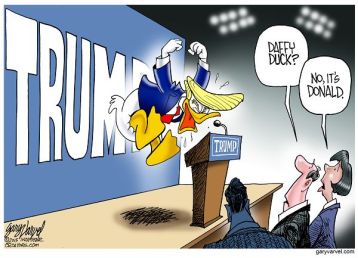 This interview basically let Trump be Trump.
  More like the sooner he’s out of office, the better it is for the country. Charles Pierce says it all “
 He’s obviously obsessed with Mueller too
  There’s seven more of these too go so check them out. It’s just really a fall down a rabbit hole. Is he the Mad Hatter or the March Hare? A
 We are indeed a family that needs to uplift each other before this man destroys the lot of us and drives away all of our friends. I suppose it has to be reiterated that Republicans are enabling all of this to oversee the looting of the USA by the donors. I also wonder what kind of kompromat that the Russians have on them through their hacking of the RNC and likely, other places. I certainly think that the RNC must be worried. I definitely think both Sessions and Graham must have dossiers filled with stuff and now I’m thinking Orin Hatch must be more of a wascally wabbit than any of us every supposed.
 Good Afternoon Sky Dancers!
 I can’t see how there isn’t a building amount of evidence that Kushner and Trump, Jr. didn’t actively coordinate with Russian Assets. It’s also evident that the
 I love this OP ED in the
 It seems illiteracy in all things democratic and Constitutional has broken our Republic and led to Trumpism. We’re six months into the Mueller investigation and a little over ten months into Kremlin Caligula’s rule of kleptocracy. How are those within the White House dealing with the pressure.
  Upcoming witness Hope Hicks may have the keys to many of the big answers.
 I still take Trumpzilla’s word for it but I guess they may need more than that given his history of lying and braggadocio.
  Good Morning!
 There is an uptick in groups of voters drawn to authoritarianism. This is not what I expected when I watched the “Arab Spring” unfold on Twitter. Donald Trump is not what I expected after Barrack Obama.
 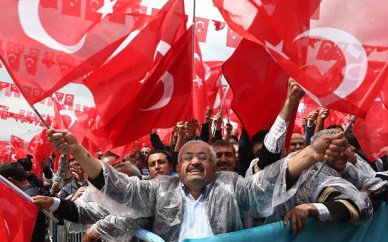 Just as in this country’s election in 2016,
 I’m not the only one curious about this trend toward dilution of democracy in Western nations.
  Yes, well much of this sounds eerily familiar doesn’t it?
 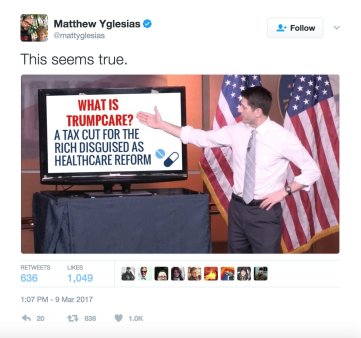 Good Afternoon!
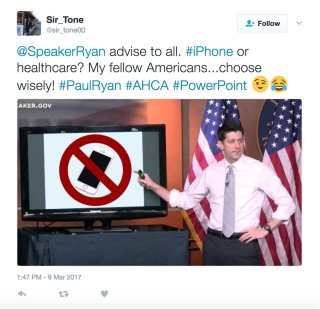 It appears that the Trump Syndicate may have been laundering money for Russian Oligarchs. Here are some links to get caught up on the Russia fiasco. Many of these are updates from stories that BB wrote about yesterday.
 They’re trying to dismantle everything from Medicare, Medicaid, the ACA, the EPA, Social Security, Dodd Frank, and just about anything used to protect citizens from the malfeasance of of short sighted, profit-oriented business practices which rule the US commerce landscape.
  Paul Krugman has some great analysis.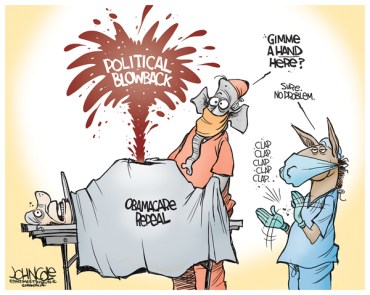
 Good Afternoon!
 Under Trumps Slash and Burn Budget, everything loses but the military.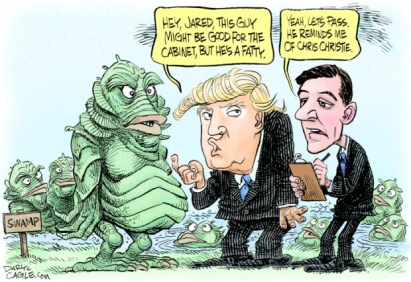
 It isn’t clear at all that the Pentagon needs that much money or wants it for that matter.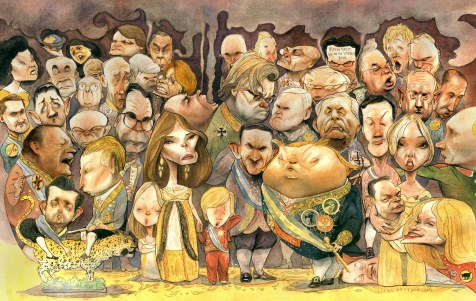
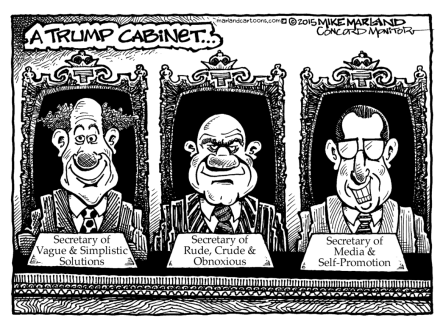 A number of agencies have already gone literally rogue on him with employees undermining him every chance they get. This is even true of some of the agencies that are to be used to purge the country of whatever it is Trump fears.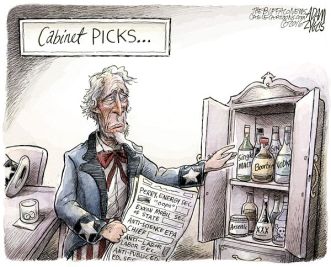

 peej
peej Carissa
 bostonboomer
 dakinikat
 ecocatwoman
 mablue2
 Mama Lopez
 peggysue22
 quixote
 skydancingguestblogger
 Mona (aka Wonk the Vote)



 Sky Dancing
Recent Comments