
Psychopaths in Charge
Posted: January 2, 2011 Filed under: Civil Liberties, Corporate Crime, financial institutions, Global Financial Crisis, Human Rights, income inequality, investment banking, psychology, torture, U.S. Economy, U.S. Politics | Tags: Alan Simpson, American Psycho, antisocial personality disorder, Bernie Madoff, Brett Easton Ellis, CEOs, investment bankers, John Ensign, Mark Sanford, politicians, psychopaths, sociopaths 73 Comments
In 1991, Brett Easton Ellis published a brilliant satirical novel called American Psycho. The book is narrated by a young man, Patrick Bateman, a graduate of Harvard and Harvard Business School, who is now a fabulously wealthy Wall Street investment banker with a pricey apartment on Manhattan’s Upper west side. In other words, he’s a typical ’80s yuppie, benefiting from the “Reagan Revolution.”
Bateman is utterly materialistic and narcissistic, obsessed with things like getting a reservation at the most trendy, expensive restaurant of the moment and having a more perfectly designed and printed business card than any of the other yuppies he works with. He is engaged to another yuppie named Evelyn, but he doesn’t really have any feelings for her. She is just another status symbol for him to show off to his Wall Street colleagues.
As the book progresses, it becomes clear that Bateman is filled with narcissistic rage. He begins torturing and murdering people–a homeless man, his secretary, a business associate, and more. The crimes become successively more violent and horrifying. In conversations with coworkers, he tells anecdotes about serial killers and even confesses his own crimes, but no one takes him seriously. These other numb, detached young men simply assume Bateman is joking and laugh at his bizarre, inappropriate remarks.
Toward the end of the book, there are hints that Bateman’s descriptions of violent murders could be hallucinations or fantasies–or they might have really happened. The interpretation is left to the reader.
Ellis told an interviewer that he wrote American Psycho at a time in his life when he was living an isolated, consumerist lifestyle, somewhat like Bateman’s:
He did not come out of me sitting down and wanting to write a grand sweeping indictment of yuppie culture. It initiated because my own isolation and alienation at a point in my life. I was living like Patrick Bateman. I was slipping into a consumerist kind of void that was supposed to give me confidence and make me feel good about myself but just made me feel worse and worse and worse about myself. That is where the tension of “American Psycho” came from. It wasn’t that I was going to make up this serial killer on Wall Street. High concept. Fantastic. It came from a much more personal place…
American Psycho was not well received by reviewers–before or after publication. In fact, the original publisher, Simon & Schuster, cancelled their contract with Ellis based on “aesthetic differences.” The book was never released in hardcover, but was eventually published in a quality paperback edition by Vintage Books. After its publication, Ellis was on the receiving end of a flood of hate mail and even death threats.
Today, Ellis points out, the blood and gore that was so shocking in his 1991 book is all around us.
You see it in “Saw” movies or in “Hostel” or anywhere. The gore is mainstream. The stuff you see now wass unimaginable in 1991 and that’s one reason why it caught on. The availability of that kind of subject matter was limited. It was limited to maybe certain graphic novels or transgressive fiction or certain out-there horror films but it wasn’t part of the mainstream. the accessibility of it was unique. This is how we’re rolling now.
What I took from the novel when I first read it was that it was a perfect representation of the societal effects of Reaganism. In the ’80s, American culture became more materialistic, superficial, and value-free than ever before. Reaganism taught that “greed is good.” Becoming wealthy became the highest goal for many Americans. At the same time, anyone who was poor, sick, or disabled was reviled. Reagan made Social Darwinism fashionable again.
Under Reagan, we closed hospitals for the mentally ill and threw them into the streets to beg and to wander our cities muttering as they listened to the voices in their heads. The need for low-cost housing and maintaining public infrastructure was ridiculed, and poor families with children began to wander our city streets homeless, sleeping in their cars or in public parks. Meanwhile the rich continued to get richer, greedier, and more callous toward people who had less than they did.
What other result could we have expected than the America we live in today? We live in a country in which so many people are cold, callous, and calculating, seeking to amass as much money as possible at the expense of ordinary taxpayers. Investment bankers like Ellis’s Patrick Bateman are treated like gods, shielded from any negative effects of their own lying, cheating, and stealing.
Today the message I take from American Psycho is even more troubling to me than when I first read the novel years ago. I see Bateman’s serial murders as symbolic of the damage out-of-control capitalism is doing to us as a people. I look at our political leaders and see empty, cold, callous people with no core values except how to get the most money and power for themselves, and screw the rest of us. They are serial murderers too, only they manage to distance themselves from those they murder in their wars and through their pro-corporate, anti-human policies.
The America we live in today is much like the surreal world that Brett Easton Ellis created in American Psycho, except that we now have even more electronic gadgets, more stuff to do on the internet, more “reality” TV shows where we can ridicule fat people or people with obsessive-compulsive disorder, or people trying to sing and dance. We have books and movies so violent that people become desensitized to depictions of blood and gore that seemed shocking in 1991. We are in decline in every way–our health, our incomes, our infrastructure, our rights, our values, our privacy. And the rich are richer and the poor are poorer now than at the end of the Ronald Reagan era.
I know I’m not the only one here who thinks we are being ruled by psychopaths–whether we’re talking about government officials or the heads of corporations. I really believe that, and I don’t mean it as hyperbole. I think the richest among us are the most likely to be detached and callous, because they don’t even have to see the poor and suffering people they are hurting with their greed. Their wealth insulates them from the daily struggles of the vast majority of Americans.
I think this is a subject that is worth talking about. Do you need to be at least a subclinical psychopath to be willing to do the kinds of immoral things government officials, corporate CEOs, and investment bankers do? Like lying in order to enter illegal wars so you can steal oil from other countries and murder hundreds of thousands of their citizens? Like sending young Americans to die for oil and a dying empire? Like taking jobs away from Americans and replacing them with slave labor in third world countries? Like throwing people out of their homes illegally? Like testing drugs on babies and children? Like polluting the water, air, and food with chemicals and refusing to clean up your messes?
I think you have to be a very sick person to do those things. And how is it different from what a serial killer does? First, government officials and corporate CEOs kill and maim and destroy people in far greater numbers and with more powerful weapons than a serial killer. Second, government officials and corporate CEOs don’t need to get close to the blood and death. They get other people to do their killing so they don’t have to see or hear their victims suffer.
So what exactly is a psychopath? Robert Hare, now emeritus professor of psychology at the University of British Columbia developed a checklist used by professionals to identify people with psychopathic tendencies.
People who are psychopathic prey ruthlessly on others using charm, deceit, violence or other methods that allow them to get with they want. The symptoms of psychopathy include: lack of a conscience or sense of guilt, lack of empathy, egocentricity, pathological lying, repeated violations of social norms, disregard for the law, shallow emotions, and a history of victimizing others.
Hare’s checklist (the PCL-R) is used in combination with a semi-structured clinical interview (an interview with set questions that allows the interviewer to follow up with his or her own questions when appropriate) and a detailed review of medical and psychiatric records. The following are the 20 traits for the evaluator to watch for:
•glib and superficial charm
•grandiose (exaggeratedly high) estimation of self
•need for stimulation
•pathological lying
•cunning and manipulativeness
•lack of remorse or guilt
•shallow affect (superficial emotional responsiveness)
•callousness and lack of empathy
•parasitic lifestyle
•poor behavioral controls
•sexual promiscuity
•early behavior problems
•lack of realistic long-term goals
•impulsivity
•irresponsibility
•failure to accept responsibility for own actions
•many short-term marital relationships
•juvenile delinquency
•revocation of conditional release
•criminal versatility
Not all of these characteristics would have to be met for someone to be diagnosed as a psychopath.
Each of the twenty items is given a score of 0, 1, or 2, based on how well it applies to the subject being tested. A prototypical psychopath would receive a maximum score of 40, while someone with absolutely no psychopathic traits or tendencies would receive a score of zero. A score of 30 or above qualifies a person for a diagnosis of psychopathy. People with no criminal backgrounds normally score around 5. Many non-psychopathic criminal offenders score around 22.
The checklist was originally designed for evaluating prison inmates, but not everyone with psychopathic characteristics becomes a criminal. I am arguing that many of them go into business or politics, am I’m far from the only one to suggest that. In fact Hare himself co-wrote a book called Snakes in Suits: When Psychopaths Go to Work. Other books that make similar arguments are The Sociopath Next Door, by Martha Stout, and The Psychopathy of Everyday Life: How Antisocial Personality Disorder Affects Us All, by Martin Kantor.
Just a bit about terminology. Psychopathy and Sociopathy are essential the same thing. Antisocial Personality Disorder is similar too, but could perhaps apply to people who wouldn’t score 30 on Hare’s checklist. I don’t know why the names of this disorder keep changing–it may just be because some psychiatrists see studying prison inmates as somewhat disreputable. Anyway, psychopathy is no longer listed in the Diagnostic and Statistical Manual of the American Psychiatric Association (latest version: DSM IV-TR). Instead, it is subsumed under “antisocial personality disorder.” Here is the DSM-IV-TR criteria for APD:
A. There is a pervasive pattern of disregard for and violation of the rights of others occurring since age 15 years, as indicated by three (or more) of the following:
1. failure to conform to social norms with respect to lawful behaviors as indicated by repeatedly performing acts that are grounds for arrest
2. deceitfulness, as indicated by repeated lying, use of aliases, or conning others for personal profit or pleasure
3. impulsivity or failure to plan ahead
4. irritability and aggressiveness, as indicated by repeated physical fights or assaults
5. reckless disregard for safety of self or others
6. consistent irresponsibility, as indicated by repeated failure to sustain consistent work behavior or honor financial obligations
7. lack of remorse, as indicated by being indifferent to or rationalizing having hurt, mistreated, or stolen from another.
B. The individual is at least age 18 years.
C. There is evidence of conduct disorder with onset before age 15 years.
D. The occurrence of antisocial behavior is not exclusively during the course of schizophrenia or a manic episode.
That official characteristics of APD are much less extreme than the ones on Hare’s checklist. I think it’s fairly obvious that many of our political and business leaders could meet at least three of those criteria. But can anyone argue that someone like Bernie Madoff could not be classified as a full-blown psychopath according to Hare’s criteria? What about Alan Simpson? What about someone like John Ensign or Mark Sanford? I believe I could make an argument for many more of our political and business leaders being either clinical or subclinical psychopaths.
There is some evidence that psychopathy is at least partly genetic, although most criminal psychopaths who have been studied had very abusive childhoods. There is also evidence for differences in the brains of psychopaths compared to typical brains.
I’m going to get into this topic in more detail in a future post. But for now, what do you think? Would it be useful for us to stop denying reality and accept that the psychopaths are in charge of our society?
The Latest Self-Serving Village Narrative: Screw the Baby Boomers.
Posted: January 1, 2011 Filed under: Baby Boomers, Barack Obama, Catfood Commission, Corporate Crime, Democratic Politics, Medicare, Social Security, The Bonus Class, The Great Recession, The Media SUCKS, the villagers, U.S. Economy, U.S. Politics, We are so F'd | Tags: Baby boomers, Barack Obama, crash of 2008, Dan Barry, medicare, Millennials, Robert Samuelson, Social Security 17 Comments
Don’t tell me the White House isn’t behind this. Both the New York Times and ABC News are pushing this right now, but the Washington Post jumped on it first with this op-ed by Robert Samuelson on December 26: On Medicare and Social Security, be unfair to the boomers Samuelson, just turned 65 himself, and says he is “part of the problem.” Except he probably doesn’t need Social Security and Medicare, unlike most baby boomers, who never could afford a lifestyle like that of their parents or who lost their retirement investments in the crash of 2008. Samuelson writes:
There has been much brave talk recently, from Republicans and Democrats alike, about reducing budget deficits and controlling government spending. The trouble is that hardly anyone admits that accomplishing these goals must include making significant cuts in Social Security and Medicare benefits for baby boomers.
If we don’t, we will be condemned to some combination of inferior policies. We can raise taxes sharply over the next 15 or 20 years, roughly 50 percent from recent levels, to cover expanding old-age subsidies and existing government programs. Or we can accept permanently huge budget deficits. Even if that doesn’t trigger a financial crisis, it would probably stunt economic growth and living standards. So would dramatically higher taxes. There’s a final choice: deep cuts in other programs, from defense to roads to higher education.
Yet, neither political party seems interested in reducing benefits for baby boomers. Doing so, it’s argued, would be “unfair” to people who had planned retirements based on existing programs. Well, yes, it would be unfair. Indeed, it’s hard to imagine a worse time for cuts. Unemployment is horrendous; eroding home values and retirement accounts have depleted the elderly’s wealth. Only 19 percent of present retirees are “very confident” of having enough money to live “comfortably,” down from 41 percent in 2007, reports the Employee Benefit Research Institute.
Blah, blah, blah. But of course it isn’t “unfair” to reduce taxes on the richest Americans–people who most likely will invest their extra tax money in other countries, people who can easily afford to live in other countries once this one goes down the tubes. Those rich people who control most of the money in the U.S. economy–they aren’t selfish are they? No, of course not. It’s the baby boomers who are selfish, always out for “me, me, me,” and never considering anyone else. But wait…aren’t baby boomers also the sandwich generation–caring for their aging parents as well as their millennial generation children? I think my head is going to explode.
According to a new Marist poll, most Americans think baby boomers should keep working after 65; yet there is evidence that baby boomers are not as healthy as their parents’ generation. Of course that must be the boomers’ fault–just like everything else that has happened during our lifetimes. We’ve been blamed for juvenile delinquency, excess materialism, hippies, illegal drugs, self-absorption, and being horrible parents to the Millennials, who are supposedly highly narcissistic and lacking in empathy.
The fact that we’re supposedly less healthy than our parents couldn’t possibly have anything to do with environmental pollution or increasing income inequality in our society, now could it? No, of course not. It must be because we’re so selfish and self-absorbed. We brought it on ourselves by demanding to be born right after WWII. Oh wait…we didn’t ask to be born. Well, somehow it must be our fault.
Well, I’m not buying it. We paid for our retirement benefits all our lives and now the richest of the rich want to take that away from us too. Supposedly the baby boomer social security “problem” was taken care of by adjustments made in the 1980s under Reagan. It’s not our fault that George W. Bush and Barack Obama decided to steal our money. But this is the narrative we are going to hear from now on until the Villagers manage to destroy Social Security and Medicare.
Here’s The New York Times today: Boomers Hit New Self-Absorption Milestone: Age 65.
In keeping with a generation’s fascination with itself, the time has come to note the passing of another milestone: On New Year’s Day, the oldest members of the Baby Boom Generation will turn 65, the age once linked to retirement, early bird specials and gray Velcro shoes that go with everything.
Though other generations, from the Greatest to the Millennial, may mutter that it’s time to get over yourselves, this birthday actually matters. According to the Pew Research Center, for the next 19 years, about 10,000 people “will cross that threshold” every day — and many of them, whether through exercise or Botox, have no intention of ceding to others what they consider rightfully theirs: youth.
This means that the 79 million baby boomers, about 26 percent of this country’s population, will be redefining what it means to be older, and placing greater demands on the social safety net. They are living longer, working longer and, researchers say, nursing some disappointment about how their lives have turned out. The self-aware, or self-absorbed, feel less self-fulfilled, and thus are racked with self-pity.
I’ve got news for Dan Barry, the author of that article. It isn’t a “generation” that was “fascinated with itself.” It’s a lazy media that pretends that 79 million people are all alike. Give me a break. Even Barry admits that “[a]scribing personality traits to a bloc of 79 million people is a fool’s endeavor,” so why do so many media and government fools keep doing it. I’ll tell you why. They want to turn our Social Security funds over to Wall Street.
Here’s Diane Sawyer’s silly “report” on the baby boomer “problem.” Susie already wrote about it at Suburban Guerrilla:
You have to watch this video to see how insidiously the Villagers are spreading the narrative: Those Baby Boomers are sucking all the money out of the Treasury because they’re just so damned selfish! And only some of them served in Viet Nam! Watch as Diane Sawyer puts on her Very Serious Face and says the deficit is a big problem. Pay attention to the lies scattered throughout.
You can read the rest and watch the video of the oh so very serious Diane Sawyer at Susie’s place or at Crooks & Liars.
I saw this coming a long time ago, back when Obama started beating up on baby boomers and the ’60s during the 2008 primaries. I summarized Obama’s anti-baby boomer narrative in a post a couple of years ago. I’ll get the link for you in a bit. Here are just a few examples of Obama’s attacks on boomers.
From the New York Times: Shushing the Baby Boomers
THE time has come, Senator Barack Obama says, for the baby boomers to get over themselves.
In taking the first steps toward a presidential candidacy last week, Mr. Obama, who was born in 1961 and considers himself a member of the post-boomer generation, said Americans hungered for “a different kind of politics,” one that moved beyond the tired ideological battles of the 1960s. [….]
Mr. Obama calculates that Americans of all ages are sick of the feuding boomers and ready to turn to the generation that came of age after Vietnam, after the campus culture wars between freaks and straights, and after young people had given up on what überboomer Hillary Rodham Clinton (who made her own announcement on the Web yesterday) called in a 1969 commencement address a search for “a more immediate, ecstatic and penetrating mode of living.”
The Times also quotes from Obama’s book The Audacity of Hope, in which Obama used the self-absorbed baby boomer narrative to attack the Clintons.
In his second book, “The Audacity of Hope,” Mr. Obama is critical of the style and the politics of the 60s, when the psyches of most of his potential rivals for the White House were formed. He writes that the politics of that era were highly personal, burrowing into every interaction between youth and authority and among peers. The battles moved to Washington in the 1990s and endure today, he says
“In the back and forth between Clinton and Gingrich, and in the elections of 2000 and 2004,” he writes, “I sometimes felt as if I were watching the psychodrama of the baby boom generation — a tale rooted in old grudges and revenge plots hatched on a handful of college campuses long ago — played out on the national stage.”
Of course Obama also talked about “the excesses of the ’60s and ’70s” in his interview with the Reno Gazette-Journal before the Nevada primary.
“I don’t want to present myself as some sort of singular figure. I think part of what is different is the times. I do think that, for example, the 1980 election was different. I think Ronald Reagan changed the trajectory of America in a way that Richard Nixon did not and in a way that Bill Clinton did not. He put us on a fundamentally different path because the country was ready for it. They felt like with all the excesses of the 60s and the 70s and government had grown and grown but there wasn’t much sense of accountability in terms of how it was operating. I think he tapped into what people were already feeling. Which is we want clarity, we want optimism, we want a return to that sense of dynamism and entrepreneurship that had been missing.”
Finally, Obama attacked baby boomers in his Inaugural Address.
His harshest language on domestic matters actually seemed directed — not for George W. Bush or specific Republican policies — but more for an entire generation, the baby boomers who have been running this country for the past 16 years (and, of course, that has to include Bill Clinton too). He seemed more interested in identifying the generation that he saw as responsible for the more systemic problems facing the country:
On this day, we gather because we have chosen hope over fear, unity of purpose over conflict and discord.
On this day, we come to proclaim an end to the petty grievances and false promises, the recriminations and worn out dogmas, that for far too long have strangled our politics.
Those words were reminiscent of the “turn the page” language he used effectively against Hillary Clinton in the primaries. This time, though, it was quite clear that he wasn’t singling out the Clintons, but was making a broader, more pointed claim against the excesses of an entire generation of leaders. And, on the financial front, Bill Clinton signed the law that overturned Glass-Steagall, while George W. Bush signed the law that quote-reformed-unquote bankruptcy laws. So, Obama may well be on strong footing there. He’s demontrating an unwillingness to hear excuses from either Democratic or Republican partisans.
Anyone who thinks all of this was or is accidental is delusional. Obama was told all along by his advisers and probably by his Wall Street donors that he would have to be the one to destroy Social Security and Medicare. These two programs are the only large source of taxpayer funds for the wealthy and corporations to steal from us. We’ve known that for a long time, but most Americans probably don’t–many still think Obama is a liberal.
Reportedly Obama will embrace the findings of his Catfood Commission in his upcoming State of the Union Address. It’s going to be a full-out media assault and we’d better figure out a way to combat it. It’s the old divide and conquer tactic that has always worked so well. Those of us in the bottom 90% of incomes had better get together and fight back or we’re dead.
Corporate Money, Corporate Press, Corporate Congress
Posted: December 29, 2010 Filed under: Barack Obama, Corporate Crime, Democratic Politics, Main Stream Media, president teleprompter jesus, Team Obama, the villagers, U.S. Economy, U.S. Politics, Voter Ignorance, We are so F'd, Wikileaks, Women's Rights | Tags: Citizen's United, Congressman John Hall, corporate congress, corporate interests, corporate press, Facism 40 CommentsSome astute and somewhat outrageous comments by outgoing Congressman John Hall in The New York Observer  should cause pause and some good discussions. That is, if any one pays attention to them.
Speaking about the Citizen’s United decision, which allowed unregulated flow of cash into campaign coffers, Hall said, “I learned when I was in social studies class in school that corporate ownership or corporate control of government is called Fascism. So that’s really the question— is that the destination if this court decision goes unchecked?”
That’s the astute part. The outrageous part is “the flow of corporate dollars is why he and the Democrats lost control of Congress”. Well, imho, there’s some yes and no in that. Here’s a CNN corporate sponsored poll that may shine some light on that.
President Barack Obama enters the new year with a growing number of Americans pessimistic about his policies and a growing number rooting for him to fail, according to a new national poll.
But a CNN/Opinion Research Corporation survey released Wednesday also indicates that while a majority of the public says Republican control of the House of Representatives is good for the country, only one in four say the GOP will do a better job running things than the Democrats did when they controlled the chamber.
Sixty-one percent of people questioned in the poll say they hope the president’s policies will succeed.
“That’s a fairly robust number but it’s down 10 points since last December,” says CNN Polling Director Keating Holland. “Twelve months ago a majority of the public said that they thought Obama’s policies would succeed; now that number has dropped to 44 percent, with a plurality predicting that his policies will likely fail.”
There’s a large number of people out there that seem to see no real difference between the Republicans, INC. and Democrats Inc. in terms of outcomes. They hope the explicitly stated goals of Obama policy succeed. They doubt the laws passed support those goals. They believe they will fail. I think people see the disconnect between the rhetoric and the product delivered now. I honestly don’t believe that voters put the Republicans in charge of the house because they love Republican policy, if these polls mean anything. That poll and many others show voters support the outcomes of authentically Democratic policy. I believe this election was more a play for gridlock simply because they don’t see what’s been passed as achieving the ends of what they want. They believe it will fail.
How many people really want the kinds of things pushed by John Bohener who–as an example–just met with culture thug Randall Terry and other monsters of the Republican base after their mid-November victory lap? There’s only so far you can get by pushing a repeal to DADT on the basis of gays and straights showering together. This is especially true when the vast majority of people support repeal. Remember Terry Schiavo? Played well with the base but horrified the country? What would happen if we saw more reporting of this kind of thing on CNN? I bet you never saw that before I pointed it out to you via Salon.
Let’s get back to Hall’s comments.
The extra money floating around, he said, compounded the Democrats’ weaknesses on the economy, unemployment and the mortgage crisis. And he said that for of the accomplishments of the lame duck Congress, their failure to pass the Disclose Act—which would have at least forced corporations to reveal who they were donating to—stood out a as a black mark on the session.
“We are talking about supposedly wholesome names like Revere America, American Crossroads, Americans for Apple Pie and Motherhood—if somebody hasn’t trademarked that one I probably should. The fact is you can call it anything and the money could be coming from BP or Aramco or any corporation domestic or foreign,” Congressman Hall said.
Well, that’s a good point. I’m still pushing for congress critterz to be forced to wear NASCR-like jackets listing their top corporate contributors as long as they’re in office. That would include the ones hiding behind their advocacy ad creating subsidiaries okayed by SCOTUS, INC. I’m still not certain that the extra money floating around was the reason for The Big Shellac. I’m still guessing that every one was hoping to stop the Washington DC Pork Train and laws so long and complex that no one can really figure out what they really do. These are the laws that people think will fail them. If anything, we should see a slow down of that process. I think the American people want to slow the process down so they can figure out if it’s good or bad for them and if it will achieve what they support.
BUT, The Big Shellac came at the high cost of forwarding Republican laws and agendas that please the Republican Bircher Base. Plus, there’s more possible SCOTUS fights and appointments that only please the Bircher and Religionist Base. Hence, the nice get together with Randall Terry whom Salon described as:
Randall Terry is a psychopath, an antiabortion zealot who endorses domestic terror and compares coldblooded murderers to heroic abolitionists. He’s also a ridiculous character whose true calling is self-promotion, by any means necessary.
He long ago went from prominent figure in the raging abortion debate to desperate self-parody. He renounced his gay son, left his wife for a campaign volunteer, and sought a reality television show. If it weren’t for YouTube, no one would’ve even noticed his inflammatory statements about the murder of Dr. George Tiller. In short, Randall Terry’s not only an extremist nutcase, he’s also old news.
But now that the Republicans are back, this faded celebrity is mounting a comeback. Terry’s most recent e-mail blast featured a photo of the radical Catholic cleric sitting down with incoming Speaker John Boehner himself. “With Boehner’s chief of staff, after the election,” the caption read. (Terry also presented the incoming speaker with a fetus doll resting on some sort of “decree.”)
A Speaker of the House Boehner does not return to Congress to any degree of sanity. I won’t even go in to the incredible problems some one must have to cry that much and drink that hard. A Republican congress just increases the show factor, imho. It also brings us back to the idea that we not only need to get corporate money out of politics,we need it out of the press. The CNN indicates that the President is likable enough, he’s just not focused on the right things. That’s where the money comes in. If congressional leaders and the White House continue to go back and forth between corporate and state interests and the only folks with real access are either groups that can deliver zealous voters and big bucks, we’re in trouble. We’re especially in trouble of the press continues on in its route of “sins of omission” that appear to play into the hands of their advertisers and the interests of government. The Village does not want to run off their advertisers and the few readers/viewers left standing.
This is the importance of Wikileaks and independent media organizations like Democracy Now. They produce things of Public Interest that are not censored, swayed, or bullied by corporate and state interests. As we’ve seen in one after another of the dribbles of diplomatic cables coming from European press, there appears to be a lot of melding of corporate and state interests. This is not good for any one but corporate and authoritarian state interests. European press is filtering the leaked diplomatic cables right now. The majority of them remain out of the public domain. The European papers are less corporate than their U.S. counterparts which is better. We may still not actually see all of the material. Press, government and corporate interests are way too cozy in this country. If you go back to what Congressman Hall said, it’s the classic definition of fascism.
update: I wanted to add the link above on the “classic definition of fascism” because I just read some posts from right wing sources linked to this article at Mememorandum that are obviously trying to rewrite history. I’ve linked to the writings of Mussolini. This is part of the definition of fascism as put forward by Mussolini. Socialism and Marxism are NOT fascism in Mussolini’s definition. The right frequently tries to shove them into the same package. It was a post war trick used to focus hate of Nazis/Facism over to our former allies, the Soviets. Mussolini wrote this in 1932 as part of his definition.
…Fascism [is] the complete opposite of…Marxian Socialism, the materialist conception of history of human civilization can be explained simply through the conflict of interests among the various social groups and by the change and development in the means and instruments of production…. Fascism, now and always, believes in holiness and in heroism; that is to say, in actions influenced by no economic motive, direct or indirect. And if the economic conception of history be denied, according to which theory men are no more than puppets, carried to and fro by the waves of chance, while the real directing forces are quite out of their control, it follows that the existence of an unchangeable and unchanging class-war is also denied – the natural progeny of the economic conception of history. And above all Fascism denies that class-war can be the preponderant force in the transformation of society.
I think if you go read it much of it sounds like the Republican manifesto.
“Given that the nineteenth century was the century of Socialism, of Liberalism, and of Democracy, it does not necessarily follow that the twentieth century must also be a century of Socialism, Liberalism and Democracy …”
Mussolini spit out the world socialism, liberalism, and democracy in the same way the Bircher wing of the Republican party spits those words out.
Derivatives – The Dark Market
Posted: December 28, 2010 Filed under: Barack Obama, commercial banking, Corporate Crime, Equity Markets, financial institutions, Global Financial Crisis, investment banking, Stock Market, The Bonus Class, The Great Recession, U.S. Economy, U.S. Politics | Tags: AIG, Andrew Ross Sorkin, CFMA, CFTC, Commodity Futures Modernization Act, Credit Default swaps, derivatives, Dodd Frank, Gary Gensler, Glass Steagall, Graham Leach Bliley, Mary Schapiro, SEC, securitization 35 Comments[Dakinikat here: We at Sky Dancing would like welcome fiscalliberal to the Front page!!!]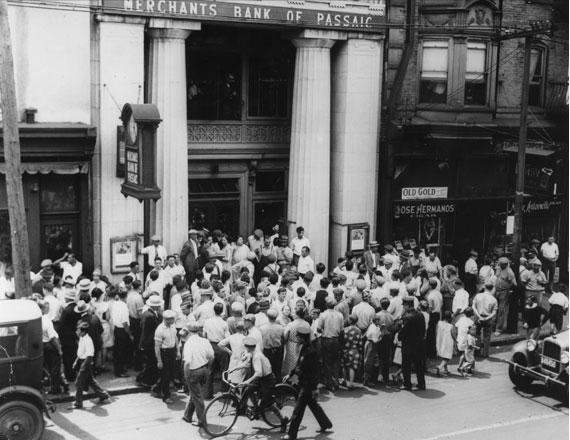
The major objective of this article is to begin the process of understanding the financial market to enable intelligent discussion on the blog.
One of the major pillars of financial collapse was Derivatives. They are very complex financial instruments with a wide diversity. They are described by a gaggle of terminology used by the high priests of finance. Because of complexity most of the books on the collapse skirt the detail of the Derivative Market. After we get through some basic definitions, we will focus on Credit Default Swaps (CDS); a subset of the Derivatives offerings. We will see how the government created a non regulated environment where fraud, compromised regulators and incompetent people ran the Investment Financial community in a very high risk mode.
Derivatives Defined
A Derivative is a financial instrument whose value is dependent on the value of another entity at a future time. Its primary function is to mitigate risk. A simple analogy would be your Home insurance. These policies guarantee that you will be remunerated if the value of your home falls due to fire, wind, or accident. A relatively small premium of money can mitigate a large potential financial catastrophe. State regulators are in charge of most regular Insurance products and solvency is less of an issue as adequate capital reserves are defined.
We need to think of Derivatives as a “risk tool” meant to stabilize the financial businesses (markets). The wide variety of Derivatives creates confusion, so we are going to restrict our discussion to Credit Default Swaps (CDS). Anticipating problems with Sub Prime mortgages, Securities were insured by investors. It was the Credit Default Swaps inability to perform that was a party to the financial collapse after the Lehman bankruptcy. They did not have the financial reserves to back up the policies they wrote How did that happen?
Deregulation
For our discussion today, three government deregulation actions are relevant.
- 1999 Graham Leach Bliley Act repealed the 1933 Glass Steagall act. The Glass-Steagall Act prohibited any one institution from acting as any combination of an investment bank, a commercial bank, and an insurance company.
- 2000 Commodity Futures Modernization Act deregulated Derivatives creating a Wild West environment for “Derivatives financial innovation”. See this link for a excellent Brooksley Born interview
- April 28, 2004 SEC drastically relaxed leverage standards for the Big Five Investment Banks: Goldman, Merrill, Bear, Lehman and Morgan Stanly. This created a very high risk environment. The session can be viewed here.
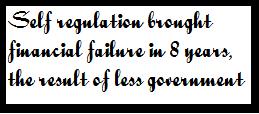
Financial self regulation brought the system down in 8 years. Bush de-funded Federal regulation. Greed, incompetence and corruption reigned supreme. Enron people went to jail. As of 2010, under Obama only bit players have been jailed. Civil fines are a joke.
Securitization Market
We need to understand the environment created by the above regulation changes to understand the role of CDS Derivative failure. We will concentrate on the Real Estate Industry
Traditionally, according to HBSwiss, the real estate industry was handled by local banks who retained the loans. Their exposure to losses resulted in more careful origination of loans. For a long time, Fannie, Freddie and FHA were packaging (securitizing) mortgages and selling them to Investors. They enjoyed a good reputation because they had good loan origination standards. These were categorized as Prime mortgages. Generally these securities obtained a AAA rating which rarely changed. Good consistent returns were recorded with these products.
Early in the 2000 decade the Investment banks adopted the securitization model called Private Label Securities. They purchased their mortgages from unregulated brokers (Country Wide, Ameriquest etc) who had little or no standards regarding underwriting of loans. The private label market latched on to the fact that high risk “Sub Prime” loans carried higher interest rates, hence higher profits. They had no exposure to the failure of the loan as risk was passed on to the Investors. They simply collected the lucrative fee’s.
Investment Banks packaged the loans (millions and billion level). They paid the rating agencies (S&P. Moody and Fitch) for ratings structuring the packages to get AAA ratings. It is clear the rating agencies did not do their job as traditionally solid AAA ratings were changed as the packages started to fail. These packages were sold to the domestic and world markets. Trillions of dollars were involved. The banks simply passed the risk on to the investors and collected the origination and servicing fee’s
CDS Market
Risk could be mitigated by purchasing a CDS against the failure of the security. So if the security failed the investor was held harmless. Remember that as of 2000 the CDS market was unregulated. AIG – London Financial Services is the poster child of the CDS industry. AIG wrote most of the CDS contracts cheaply as they held inadequate reserves (in the event of a default) and had a good company rating based on the parent insurance company whose operations were regulated. Office of Thrift Supervision was the responsible regulator, but their presence was effectively non existent, Goldman Sachs (Hank Paulson as CEO) was one of their major clients.
However, late 2006 / 2007 AIG FP realized they were over exposed and got out of the market retaining the previous contracts. Recall in the unregulated market anyone could write CDS and the big banks did. As the Mortgage Backed Securities began to fail, the banks started writing CDS between the banks to mitigate risk always falsely believing the market would recover. This was necessary because When Bear and Lehman started to fail the banks were joined at the hip, guaranteeing each others toxic securities. Based on the 2004 SEC relaxing reserve requirements, that banks were leveraged up and things were starting to fail. In a leveraged market things get serious to critical in a matter of hours.
The daily, weekly and monthly credit markets froze up because nobody trusted anybody. Even GE was having trouble borrowing for daily operations. Andrew Ross Sorkin’s book—‘Too Big to Fail’— gives a good account of the scenario in 2008. Fannie and Freddie were in conservator ship, near bankruptcy Bear was bought on a fire sale by JP Morgan, Lehman was bankrupt, Merrill near bankruptcy was bought by Bank Of America and AIG had to be rescued by the Federal Government. Morgan Stanly and Goldman were within days of bankruptcy, but got bailed out by Warren Buffet and a Korean financial entity.
The AIG story is discussed in this newspaper article ‘Behind Insurer’s Crisis, Blind Eye to a Web of Risk’.
It is interesting to know that just before the 2008 collapse, the rating agencies down graded AIG forcing them to hold more reserves. They were forced to raise cash in a collapsing market. In a high leverage industry, when it rains it pours.
Naked CDS
Investors can buy CDS on securities even though they do not own the security. This is equivalent to a neighbor buying insurance on your house. So if you know that a Mortgage Backed Security has a lot of high risk loans in it and is headed to failure, you buy a CDS anticipating the default. Michael Lewis’ book—‘The Big Short’–is all about the people who anticipated the failures and bought CDS products. A Bloomberg video interviews Lewis and it provides a lot of insight into the mess that evolved.
I look to Dakinkat, Gillian Tett, Yves Smith, and Janet Tavakoli on technical issues of Derivatives. Lewis’ forte is being able to write to the general public. His book gives a lot of insight to the CDS market nuances. It is interesting that Smith and Tavakoli consider Lewis to be a light weight. Yet, his book sales exceed theirs.
To get a notion of the size of the CDS market we need to look at these numbers. The size of our national economy this year is roughly $15 trillion. The whole world GDP is about $56 trillion. At the time of the 2008 failure, the size of the Credit Default Swaps (CDS) market was $64 trillion. The exposure at the time of the collapse was huge. The magnitude of the Naked CDS is not known, but is understood to be huge.
Given that the unregulated CDS underwriters were prone to not provide adequate capital reserves for defaults, there was a massive liquidity problem, hence the government had to step in and bail out the likes of AIG and banks who wrote these products.
The whole CDS market is described as being part of the Casino Gambling image in the financial markets
Current Status
The Dodd Frank Bill has a moderate approach for Derivatives Regulation. However it is up to the regulators for implementation and the banks are attempting to minimize the impact of regulation. This is documented by two recent NYT articles.
It’s Not Over Until It’s in the Rules
A Secretive Banking Elite Rules Trading in Derivatives
A short summary of the above articles is that the big banks are attempting to save their Oligopoly through the Risk Committees of the Clearing Houses. This is being done by imposing high capital reserve requirements for participants. This has the effect of limiting competition which limits price competition and transparency. The elephant in the room is the risk committee’s saying certain derivatives are to complex to be cleared. This gets us right back to where we were in the financial crisis. Over the Counter non clearing house products are the most profitable and open to risk.
In the spirit of Brooksly Born regulation, It has been proposed that Derivatives be run using a Clearing House or a Exchange Trading Requirement.
From The Economist:
Clearing House: A clearing requirement is a requirement that all eligible derivatives be cleared on a central clearinghouse (also known as a central counterparty, or CCP). A clearinghouse provides critical counterparty risk mitigation by mutualizing the losses from a clearing member’s failure, netting clearing members’ trades out every day, and requiring that parties post collateral every day. Clearinghouses also centralize trade reporting, and can provide any level of post-trade transparency to the OTC derivatives markets that your heart desires — same-day trade reporting, including prices, aggregate and counterparty-level position data, etc. Virtually all of the harmful opacity and murkiness of the current OTC derivatives markets can be ended with just a clearing requirement — that is, a clearing requirement is a prerequisite for getting rid of the harmful opacity in OTC derivatives
Exchange Trading: An exchange-trading requirement, on the other hand, is simply a requirement that all eligible derivatives use a particular type of trade execution venue: exchanges (also known as “boards of trade”)..The exchange is just the trade execution venue (think NYSE vs. Nasdaq). The only thing that an exchange-trading requirement adds to the clearing requirement is “pre-trade price transparency.”
The clearing house is obviously the better because it brings a degree of financial integrity and transparency. It certainly is the more expensive of the options, but its cost is minuscule when we think of the financial collapse.
However based on the articles above, it is clear that the big bankers are attempting to preserve their oligopoly in terms of the CDS market. They also want to preserve the option to take the market back to the opaque high risk environment because of profit opportunities. The Opaque Over the Counter market is the biggest threat to the stability of the market
In Dodd – Frank, the CFTC and SEC have co-jurisdiction The CFTC commission seems to be moving to the bankers view. SEC has been relatively quiet on this subject
We need to remember that Mary Schapiro (SEC) and Gary Gensler (CFTC) were part of the problem before the 2008 Financial Crisis. It remains to be seen how well they address the problem. Will they do the right thing or are they financial industry moles?
Prescribing Death for Profits
Posted: December 19, 2010 Filed under: Big Pharma, Corporate Crime | Tags: Big Pharma, Celebrix, clinical trials in India, drug trials killing poor people in poor countries, FDA, Ketek 63 Comments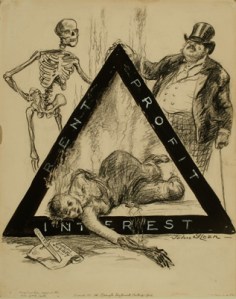
The Triangle Shirtwaist Factory Fire, for The Call by John Sloan
An article in this month’s Vanity Fair called “Deadly Medicine” made me realize how much of the movement of various parts of corporate business functions were not only to chase the lowest wage, but to also chase the least amount of regulation. The result of this movement has been the death of many poor people in many poor countries. Yet, we hear very little of this news in this country. You can only image how much this has to do with the huge connections between Corporate Big Media and its Corporate Advertisers. I’ve had to rely on many a foreign source and watch dog blog to sniff out some of the information in this post.
You may have read a link I put in down thread to a fire in a Bangladeshi factory that killed many young women that sounded hauntingly familiar to the Triangle Shirtwaist Factory tragedy in this country in 1911. I know a lot about the Bangladeshi economy because that is where my major professor was born. Much of the country’s growth has come from the textile business. It employs young women in situations similar to what workers endured in 18th and 19 century America. We have the laws and the Ladies Garment Workers’ Union to watch for these kinds of abuses. The young women of Bangladesh have neither. This fire happened five days ago. Many of the fire exits were locked as was the case with the Triangle Shirtwaist Fire. The workers were subject to appalling conditions. At least 27 died and around 100 were seriously injured. Workers jumped to their death to avoid the flames. Bangladesh has another cottage industry that kills too. It serves as a guinea pig country for Big Pharma and the results of this relationship are frequently tragic.
Similar sad stories unfolds in parts of the old USSR, South America, and Asia as a result of the greed of Big Pharma. This industry looks for countries where it can avoid and cripple FDA regulation of their industry. I was appalled that I had not read much of this until I picked up the Vanity Fare article. After Googling the topic, I found that the media coverage at the time was limited mostly to foreign outlets. It figures. Let me give you a taste of what I’m going to write about in several installments because there is so much to tell you and it will make you weep.
Many of these clinical trials have gone to places where people give their consent with a finger print or a poorly scribbled “X”. Surely, this is questionable ‘consent’. Some of the victims of these experiments are not even capable of granting consent. My first case study for you is the example of 49 babies who died in India while undergoing experimental drug trials. In some instances, pediatricians were actually paid up to $350 a head to come up with subjects for the trials. As I share the investigative reporting on this subject, one of the things to keep in mind is that there are now companies that broker clinical trial sites and victims for Big Pharma. It’s a growth industry. These brokers act as agents who procure countries with dysfunctional laws and judicial systems and poor, desperate people for drug experimentation. There is evidently big money in prescribing death to people in the poorest nations of the word.
In August, 2008, The Sunday Times reported this story.
Forty-nine babies have died in drug tests at one of India’s top hospitals, raising concerns that ethical standards are being compromised as the country becomes the world’s leading destination for clinical trials.
The deaths occurred over a period of 30 months at the Delhi-based All India Institute of Medical Sciences (AIIMS), an elite medical college and public hospital renowned for providing low-cost treatment to the poor. The victims were among the 4,142 infants who were used in a total of 42 clinical trials — one of the final stages of developing a new drug — at AIIMS since January 2006, many for Western companies. Of the children used in the trials, 2,728 were aged under a year old.
The mortality rate among the babies, many of whom were seriously ill before they became part of the clinical trials, was 1.2 per cent — significantly below the 4 per cent for all patients treated at the hospital. However the age of those selected for testing has shocked many in India and there are fears that the increasingly lucrative drug-testing industry may be cutting corners because of a shortfall of staff trained in medical ethics and best practice.
Manish Tiwari, a spokesperson for the Congress party, which heads India’s coalition Government, said: “The practice of using infants like guinea-pigs for drug testing must end.”
In 2006, a science Reporter for the Times asked this salient question in a headline: ‘Poor, sick, desperate. What more could Big Pharma ask in Indian drug trials?’ The article outlines steps taken by the big drugmakers to move risky trials over seans to avoid lawsuits like those resulting from products like Vioxx –a Merck product–and from Paraxel made by TeGenero. The rush to find the most vulnerable countries and people has gone largely unnoticed in this country.
And so Big Pharma has begun outsourcing its trials to India, a move that, according to bioethicists, could create a “new imperialism”. India has huge numbers of sick people glad to test drugs in return for minimal, if any, recompense. The patients rarely mind — to them, experimental healthcare is better than none at all — and they rarely complain. India also has a homegrown supply of highly educated, English-speaking doctors, who cost a fraction of their Western counterparts.
AstraZeneca has opened a drug-testing facility in Bangalore; Pfizer has done the same in Bombay. At the moment one in a hundred global clinical trials is conducted in India, but Oxygen Healthcare, a British consultancy, estimates that in five years’ time that figure will have risen to one in ten.
This makes financial sense but others are clearly worried that poor, illiterate patients are being exploited. There is certainly doubt over whether they are giving informed consent. The Indian Journal of Medical Ethics reports that patients are often unable to distinguish between trials that might benefit them and those that won’t. Another study pointed out that, of the country’s 14,000 general hospitals, fewer than 200 are equipped to carry out drug trials adequately.
Indian patients are often used to test medicines that, once marketed, they will not be able to afford.
The editors of the American Journal of Bioethics say in their blog that “pharma trials in India should be the focus of a huge amount of attention in the world of research ethics”. Even more forthright was a recent opinion piece in The Scientist. “If Gandhi were alive today, he would lead protesters to the doors of a clinical research trials facility, where the oppression of the Indian poor dwarfs that of the 1930s.” This is a reference to Gandhi’s march against the British salt tax, which made it illegal to obtain salt from anyone other than the British Government, even though it could be collected along the coast. Gandhi and his supporters marched 240 miles from western India to coastal Gujarat, gathering the mineral on the way. The march ended in a bloody confrontation at a salt factory.
The Indian Government now stands accused of colluding in this new oppression. In 2004 it stipulated that drugs tested in India should first be proved safe in their country of origin; in 2005 the law was revoked.
Believe me, I’ve been Googling up a storm on these trials in India and other places for reports in US Newspapers. I have yet to really find one. I have found one blog called PharmaGossip that discusses some of these issue and the Vanity Fare article in particular. It simply shares the article that begins with this short introduction giving you a flavor the extent and the tragedy of cases found by its authors.
Prescription drugs kill some 200,000 Americans every year. Will that number go up, now that most clinical trials are conducted overseas—on sick Russians, homeless Poles, and slum-dwelling Chinese—in places where regulation is virtually nonexistent, the F.D.A. doesn’t reach, and “mistakes” can end up in pauper’s graves? The authors investigate the globalization of the pharmaceutical industry, and the U.S. Government’s failure to rein in a lethal profit machine.
The article includes examples–including the one from India above–from hamlets all over the world with exotic-sounding names. All of these countries have citizens that have died so that Big Pharma can bring wrinkle creams, erectile dysfunction drugs, and tiny twists on existing drugs to the U.S. Market. Many of these drugs are not as efficacious and have deleterious side effects compared to existing, older drugs.
If you go to the home page on PharmaGossip you’ll see more news on AstraZeneca which is one of the companies that comes up in many of these horror stories. Here’s a link to another blog called Corporate Crime Daily that tells the story of Seroquel from 2009. The article is called: AstraZeneca: Tales of a Deadly Drug Pusher. Seroquel is an anti-psychotic drug. Because the drug came to market and caused damages to U.S. citizens and wound up in court, you can find coverage by the NYT. AstraZeneca was also found guilty of defrauding Medicare in 2008. The reason I’m adding this is that when it hits our citizens and our courts, it becomes a media issue. When the trials kill Indian babies and poor Poles, the US press is mum.
The number and type of clinical trials held in Western Europe, Canada, or the United States have been reduced significantly because their judicial systems are a way to check unethical and deadly business behaviors. [Restated to avoid confusion. Yes some trials are held here but they are fewer and some types are not done here much any more.] ** As long as the FDA will approve drugs based on experimentation in vulnerable countries, we will have the blood of many on our hands. Here are some numbers from the Vanity Fare article.
Many of today’s trials still take place in developed countries, such as Britain, Italy, and Japan. But thousands are taking place in countries with large concentrations of poor, often illiterate people, who in some cases sign consent forms with a thumbprint, or scratch an “X.” Bangladesh has been home to 76 clinical trials. There have been clinical trials in Malawi (61), the Russian Federation (1,513), Romania (876), Thailand (786), Ukraine (589), Kazakhstan (15), Peru (494), Iran (292), Turkey (716), and Uganda (132). Throw a dart at a world map and you are unlikely to hit a spot that has escaped the attention of those who scout out locations for the pharmaceutical industry.The two destinations that one day will eclipse all the others, including Europe and the United States, are China (with 1,861 trials) and India (with 1,457). A few years ago, India was home to more American drug trials than China was, thanks in part to its large English-speaking population. But that has changed. English is now mandatory in China’s elementary schools, and, owing to its population edge, China now has more people who speak English than India does.

 peej
peej Carissa
 bostonboomer
 dakinikat
 ecocatwoman
 mablue2
 Mama Lopez
 peggysue22
 quixote
 skydancingguestblogger
 Mona (aka Wonk the Vote)



 Sky Dancing
Recent Comments