
Thursday Reads
Posted: January 13, 2011 Filed under: Barack Obama, Crime, morning reads, psychology, Second Amendment, U.S. Politics | Tags: delusions, Jerad Lee Loughner, misogyny, murders, paranoid schizophrenia, Sarah Palin, Sharron Angle 37 Comments
Good Morning!!
I’m going to focus this post on news and opinions relating to Jared Lee Loughner, the Arizona mass murderer. The news media is so focused on this story, it’s hard to find much else.
First, let me say that it has become abundantly clear that Loughner suffers from paranoid schizophrenia–a least I’m going to assume that unless someone comes up with a better explanation for his symptoms. I immediately suspected it when I first read descriptions of his behavior by people who knew him, but the more I read about him the more clear it becomes that Loughner suffers from this terrible illness.
Schizophrenia is characterized by a broad range of unusual behaviors that cause profound disruption in the lives of the patients suffering from the condition and in the lives of the people around them. Some common symptoms of schizophrenia are delusions, hallucinations (usually auditory), disorganized thought and speech, social withdrawal, and emotional unresponsiveness (flat affect).
Based on news reports, Loughner appears to be suffering from all of these symptoms. He was apparently experiencing delusions of persecution and delusions of control (e.g., his belief that the government was using mind control on him).

What Loughner did was driven by his delusions and his disorganized thought processes. Despite the repulsive campaign rhetoric used by tea party politicians like Sarah Palin and Sharron Angle, it really isn’t accurate to blame their words for Loughner’s crimes. That doesn’t mean we shouldn’t try to shame politicians into speaking and behaving more civilly, but the real outrage is that this young man was able to buy a gun and ammunition. Loughner was a walking time bomb, and he lived in a state that allows people to buy guns easily and to carry concealed weapons without a permit!
Let’s condemn conservative politicians for helping to make guns far too easily available to troubled people and liberals for refusing to stand up to the gun nuts.
If you read this Wall Street Journal article, you’ll see examples of Loughner’s disordered thinking and communication. The WSJ writers found a collection of postings by Loughner to an on-line gaming forum. He talked about his inability to get a job and his failure with women, and sometimes his comments became bizarre and disturbing.
Look at these examples from the article:
On April 24, Mr. Loughner titled a new online thread: “Would you hit a Handy Cap Child/ Adult?” He wrote: “This is a very interesting question….There are mental retarded children. They’re possessing teachers that are typing for money. This will never stop….The drug addicts need to be weeded out to be more intelligent. The Principle of this is that them c— educators need to stop being pigs.”
Later that day, he posted a rant titled “Why Rape,” which said women in college enjoyed being raped. “There are Rape victims that are under the influence of a substance. The drinking is leading them to rape. The loneliness will bring you to depression. Being alone for a very long time will inevitably lead you to rape.”
[….]
On May 9 at 2:00 a.m., he asked: “Does anyone have aggression 24/7?” By noon, when others suggested he try smoking marijuana, he said: “No weed. No drugs. It’s not like I can’t see my brain.”
[….]
On June 3 at 12:14 a.m. Mr. Loughner described one confrontation with Mr. McGahee [his college math instructor], writing to his fellow gamers that he had asked the teacher: “Are you just getting a pay check for brainwashing?” as well as questioning if the class was a “scam” and asking, “can you tell me how to Deny math?” He wrote that the teacher told him it was a stupid question and he should “GET OUT OF MY CLASS!”
The next day, after he had to see a school counselor, he wrote: “Told her about brainwashing a child and how that can change the view of mathematics.”
This young man was extremely confused and delusional. It would be impossible for his parents not to have known that he was very ill. We may learn that they tried to get help for him; unfortunately it is not easy to get help for people with psychological disorders. People suffering from schizophrenia resist getting treatment–they don’t realize how sick they are. Furthermore, it is extremely difficult to force someone into treatment. Ironically, Arizona makes committing someone against their will easier than most other states, the state has also cut so much on mental health facilities and workers that services aren’t readily available.
Our mental health system is even more broken than the rest of our health care system. People who talk about “falling through the cracks” are clueless. Our mental health system is nothing but cracks.
More Loughner articles:
Mark Ames, author of Going Postal: Is the Giffords Shooting a New Kind of American Murder?
I studied countless rampage massacres for my book Going Postal, and this is the first instance I can think of in which the shooter—in this case, 22-year-old Jared Lee Loughner—carried out anything like a hybrid assassination-rampage: first, a planned, targeted assassination of a high-profile political figure, followed immediately by a seemingly indiscriminate shooting rampage. The first part of this hybrid assassination-rampage left a U.S. Congresswoman, Gabby Giffords, in critical condition with a serious head wound; the second part, the rampage, left six dead and another 13 wounded.
These two types of murders have little in common. In America, at least, the assassin is concerned about only one thing: taking out his target. While others may get shot in the confusion, political assassins never, to my knowledge, stick around after accomplishing their primary task just so they can keep murdering others indiscriminately.
[….]
In rampage shootings, on the other hand, media reports often describe the rampage murderer “shooting at random” before the bullet-in-the-head finale. But closer study of these shootings reveals that the attackers often have specific targets in mind—usually bullying supervisors or fellow workers. Sometimes, in the bloodiest cases, the shooter takes aim at the entire “company” or school, making everyone in it an intended target. In many of these cases, the shooters turn out to have been victims themselves of bullying, harassment, and social or financial ruin.
Judging from early reports, Loughner looks to be a pastiche of these two classic profiles.
Why psychiatrists can’t predict mass murderers
Let’s assume that we’ve identified a set of characteristics often exhibited by mass murderers. What does that buy us? It enables us to answer the question, “Given that someone is a mass murderer, what characteristics is he likely to exhibit?” That’s an interesting question, but it’s not the one we want to answer. Rather, the question we really want to answer is, “Given that someone exhibits this profile of characteristics, how likely is he to commit mass murder?” Answering this question is extremely difficult because the predictors are invariably far more common than the event we hope to predict, and mass murder is very rare. Although mass murderers often do exhibit bizarre behavior, most people who exhibit bizarre behavior do not commit mass murder.
Media reports about Jared Loughner, the alleged Tucson killer, illustrate this difficulty. His abnormal behavior, however unusual, is still far more common than the crimes of which he is accused.
Loughner pulled over hours before shooting
Hours before Saturday’s shooting, suspected gunman Jared Lee Loughner was stopped by an Arizona Game and Fish officer for running a red light.
Agency spokesman Jim Paxson confirmed Wednesday that an officer made the stop about 7:30 a.m. Saturday on an Interstate 10 access road several miles from the shopping center where congresswoman Gabrielle Giffords and 18 other people were gunned down.
Loughner, who was described by the officer as “very forthcoming,” and “very polite, very subdued,” was driving an older-model charcoal gray Chevrolet Nova, which has since been seen parked outside the Loughner family home.
Police Release Documents Detailing Contact With Ariz. Gunman Prior to Deadly Rampage
The Pima County Sheriff’s Department released reports on Wednesday detailing contacts with Arizona gunman Jared Loughner and his family prior to Saturday’s shooting — contacts that ranged from petty nuisance complaints to a drug arrest.
[….]
The reports detail all personal contact Pima County deputies had with Loughner beginning on Sept. 23, 2004, when he was the victim of a reported assault.
Loughner was later arrested as a juvenile for possession of alcohol on May 15, 2006, and on Sept. 10, 2007, he also received a citation for possession of drug paraphernalia, according to the police reports.
The police reports do not appear to indicate a violent history. Instead, they reflect a man seemingly prone to destructive tendencies.
Read more at the link.
Records show fear of Loughner, lack of mental health intervention
Pima Community College in Tucson has released records of its campus police contacts with student Jared Loughner, showing the increasing fear that he stirred in his classmates and teachers.
A thread running through the documents is the difficulty of police finding a context in which to intervene: Until they found a violation of the student code of conduct, or a state law, police officers wrote in the reports that they weren’t sure what else they could do, even when a fellow student said she thought Loughner had brought a knife to class.
The records show no indication that the college took steps to get Loughner any mental health counseling.
Loughner also seemed not to understand the seriousness of the fears. When police spoke with him, Loughner said his free speech rights were being violated, and seemed to have trouble understanding why he had been called out of class.
Here’s a really interesting article by a researcher on why some people act heroically in situations like the Arizona shootings.
Rohit Deshpande, a professor at Harvard Business School, has delved into the science of heroism to find out what causes someone to spring into action despite the danger to help or save someone else.
In his research, Deshpande focused on how hotel workers took extreme risks to protect guests during the deadly terrorist attacks in Mumbai, India, in 2008.
After several desperate hours of explosions and gunfire, members of the kitchen staff locked arms and formed a cordon around guests as the attackers machine-gunned them down.
In another display of heroism, hotel operators stayed at their phones to call rooms with vital information.
[….]
He found heroism had nothing to do with age, gender or religion. It started with personality.
“It seems that they have a much more highly developed moral compass,” he said. “They have this instinct for doing something good for other people. We find this across a whole series of situations.
I’m going to end with an article by Joan Walsh of Salon on why Sarah Palin is too narcissistic and lacking in empathy to ever be elected president.
Good grief! Has Joan Walsh paid any attention to current President Barack Obama’s behavior or George W. Bush’s for that matter? Narcissism and lack of empathy have seemingly become de rigueur for holders of the office these days!
Sooooo…. What are you reading this morning?
Tuesday Reads: The Anniversary of FDR’s Second Bill of Rights
Posted: January 11, 2011 Filed under: Anti-War, Barack Obama, Civil Liberties, Civil Rights, Equity Markets, Federal Budget, financial institutions, Global Financial Crisis, John Birch Society in Charge, New Orleans, Regulation, Social Security, Stock Market, The Great Recession, U.S. Economy, U.S. Politics | Tags: David Stockman, druggie bath salts, extremist political rhetoric, FDR, financial regulation, gold standard, Governexoricist Jindal, military spending, naked short selling, occupation of Iraq and Iran, right wing currency tropes, Second Bill of Rights, short selling, violence related to cross hairs map 125 Comments Good Morning!!

History Reads
Ever so often, we need to be reminded of history. I read a tweet yesterday by one of our long time news anchors down here in New Orleans.
normanrobinson1 norman robinson
Wondering if we as Americans really value what we have and whether we really care about leaving a future for the generations to follow.
This started me thinking about what future was left to me by the generations directly before me. Of course, we’re living in a world mostly free of NAZIs and Fascists because of the greatest generation. We’re living in a world where the Jim Crow Laws of Separate-But-Equal were torn down by the generation after that with the sacrifice of the heroic leaders of the civil rights movement. I have the right to vote because of my grandmother’s generation and her mother’s generation and what they did for us. I’ve also had consistent access to family planning and birth control because the first women of the baby boom generation and several generations of women before them worked hard for it. Stonewall made a tremendous difference in the lives of GLBTs. Then, there are programs like Social Security and institutions like the United Nations that came from the vision and leadership of FDR and the people who served in his cabinets like Francis Perkins, Henry Wallace, Cordell Hull and many others. They cared enough to build us quite a legacy.
Today is the 67th anniversary of a speech that was to convey that vision of a post-war America. The Second Bill of Rights was part of a State of the Union speech. I’m bringing this up for two reasons. First, because it clearly provides a road map–even today–for “what Americans really value”. I say that because poll after poll shows that the majority of American’s agree with these values even though our government doesn’t seem to reflect that at the moment. For that reason, I share with you today, the words of a leader with a vision and a gift for elocution.
From the FDR American Heritage Center Museum’s Website:
On January 11, 1944, in the midst of World War II, President Roosevelt spoke forcefully and eloquently about the greater meaning and higher purpose of American security in a post-war America. The principles and ideas conveyed by FDR’s words matter as much now as they did over sixty years ago, and the Franklin D. Roosevelt American Heritage Center is proud to reprint a selection of FDR’s vision for the security and economic liberty of the American people in war and peace.
The second reason I want to share this is that we’re coming close to President Obama’s third State of the Union Address. It is scheduled for January 25th. My guess is that FDR’s Second Bill of Rights and the vision he elucidated will officially die on that day. I am not expecting any thing close to the utterance of ‘Necessitous men are not free men’ or “People who are hungry and out of a job are the stuff of which dictatorships are made”.
Despite the obvious parallels between right now and the Great Depression–the high unemployment rates, the incredible number of foreclosures, and the breadth of necessitous men and women and children–I’m expectting many of the vestiges of FDR’s vision that prevent future calamities to be assaulted during Obama’s third State of the Union Address. Look closely at the list I put up top because so much of what was handed us has been trickling away.
As Norman Robinson contemplated via tweet, do we really value what we have today? Will we witness the destruction of what was handed to us and hand our children and grandchildren broken infrastructure, no hope for upward mobility, and useless institutions drained of funds by the greedy? Will any shell of what was envisioned for us in both the first bill of rights and the second remain? Frankly, I am expecting an ‘austerity’ speech that endorses the findings of the cat food commission. I also expect we will hear nothing of overreaching intrusion by the Patriot Act into our internet and cell phones. We are expected to diligently watch Football and bail out billionaires while everything else trickles up and away.
The Thought Police and TwitterCrime
Posted: January 10, 2011 Filed under: Barack Obama, Civil Liberties, Civil Rights, Patriot Act | Tags: newspeak, subpoena for twitter, thinkpol, Thought police, Wikileaks 33 CommentsThe Thought Police (thinkpol in Newspeak) is the secret police of Oceania in George Orwell‘s dystopian novel Nineteen Eighty-Four.
The government attempts to control not only the speech and actions, but also the thoughts of its subjects, labeling unapproved thoughts with the term thoughtcrime, or, in Newspeak, crimethink.
Welcome to 1984 2011.  You thought Nixon and Reagan were bad? Let’s see what the Obama/Holder Department of Justice has been up to while you may have been watching football. Glenn Greenwald heard and ignored a cautionary tale. He tells it all with the knowledge of present sight.
One of the more eye-opening events for me of 2010 occurred in March, when I first wrote about WikiLeaks and the war the Pentagon was waging on it (as evidenced by its classified 2008 report branding the website an enemy and planning how to destroy it). At the time, few had heard of the group — it was before it had released the video of the Apache helicopter attack — but I nonetheless believed it could perform vitally important functions and thus encouraged readers to donate to it and otherwise support it. In response, there were numerous people — via email, comments, and other means — who expressed a serious fear of doing so: they were worried that donating money to a group so disliked by the government would cause them to be placed on various lists or, worse, incur criminal liability for materially supporting a Terrorist organization.
Will we join the ranks of those the Justice Department consider materially supporting a Terrorist group if Wikileaks is redefined by the Justice Department from whistle blower site to Terrorist group? Should we all be getting lawyers like those peace activists who were hauled in for sending off old clothes to naked Palenstinians I described in a post called Nostalgic for Nixon? Better yet should we all line up with confession letters before we get hauled off to Saudi Arabia for extraordinary interviews and held in solitary confinement for extraordinary thought crime?
Better question: Is this still the USA?
New Chairman of House Oversight Committee Lacks Moral Gravitas (To Put It Mildly)
Posted: January 8, 2011 Filed under: Barack Obama, Crime, House of Representatives, Psychopaths in charge, U.S. Politics | Tags: Arnold Schwarzenegger, arson, California governor recall, California politics, car theft, Darrell Issa, government regulation, Gray Davis, hardball business tactics, House Oversight Committee, illigal weapons charges, intimidation, psychopaths in charge, Republicans, U.S. Politics 35 Comments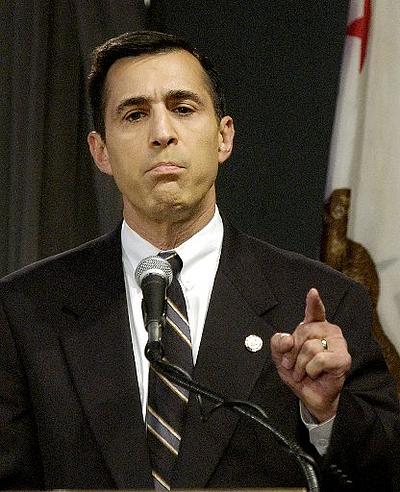
New House Oversight Committee Chairman Darrell Issa (R-CA)
Now that the Republicans control the House of Representatives, the new Chairman of the House Committee for Oversight and Reform will be five-term California Representative Darrell Issa.
According to Wikipedia, Issa is the wealthiest member of Congress with a net worth of $250 million. Before running for office Issa was CEO of Directed Electronics, which makes car alarms and other security devices for autos.
In a recent appearance on the In an October 2010 appearance on the Rush Limbaugh radio show, Issa told the right wing host that Obama is “one of the most corrupt presidents in modern times.”
Issa later tried to backtrack on this statement, saying he was referring to the Obama administration, not the President personally. On Wednesday, he defended his remarks by telling John King that he and CNN did not understand the meaning of the word “corrupt.”
Speaking to CNN’s Chief National Correspondent John King Wednesday, Issa offered his definition of the word “corrupt”:
“I think people misunderstand the meaning of the word corrupt, and obviously, CNN does. ‘Corrupt’, or ‘corrupted’ or ‘failure’, it’s no different than a disc drive that’s given you some bits that are wrong,” Issa said on CNN.
Issa continued, “I have never said it’s illegal.
Issa then explained that the “corruption” he is most concerned about is government regulation of corporations. In fact, Issa recently sent letters to business leaders, asking them to say which regulations they would like to get rid of.
Recipients of the letters include the American Petroleum Institute, The Association of American Railroads, and Toyota. Politico reports that the invitation has garnered complaints against a wide-range of regulations. Environmental protections have drawn lots of criticism. Everything from limiting waste-water flows from construction sites, to greenhouse gas and hazardous air pollutant controls, have been attacked. in the name of economic growth industries are also requesting repeals or blocks on everything from labor safety regulations, financial reforms, and consumer safety.
At Huffington Post, Ryan Grim reported yesterday that Issa plans to investigate the foreclosure crisis by focusing primarily on Fannie and Freddie instead of corporate giants like Bank of America.
This is the man who will be “investigating” the Obama administration and “the operations of Government activities at all levels with a view to determining their economy and efficiency.” Incidentally, one of Issa’s sidekicks on the committee is Dan Burton of Indiana, the guy who “investigated” death of Vince Foster by shooting a watermelon in his backyard in front of reporters.
According to Donald Cohen and Peter Dreier at Alternet,
Issa plans to hold hearings of his Oversight and Government Reform Committee to explore how he can help corporate America rid itself of “burdensome government regulations.” According to Politico, Issa asked businesses, including Duke Energy, FMC Corp., Toyota and Bayer, to supply him with their wish lists. He also sent letters to industry lobby groups including the American Petroleum Institute, National Association of Manufacturers (NAM), the Association of American Railroads, the National Petrochemical & Refiners Association (NPRA) and entities representing health care and telecommunication providers.
It isn’t hard to imagine what that their wish list will look like. Indeed, it hasn’t changed much in the past century. The specific bills and issues ebb and flow, but the business mantra is always the same. Get government off our backs. Let the “free” market determine what we make and how we make it. We can police ourselves. Too many government rules kills jobs.
This would almost be fun to watch if there weren’t so much at stake.
So Who is Darrell Issa? Read the rest of this entry »
Our Dismal Job Market
Posted: January 7, 2011 Filed under: Barack Obama, Breaking News, financial institutions, Global Financial Crisis, jobs, Team Obama, The Great Recession, The Media SUCKS, the villagers, U.S. Economy, U.S. Politics, We are so F'd | Tags: Gene Sperling, labor force participation rate, long term unemployment, rigid wages, Sticky wages, unemployment 11 Comments Economists–well at least NeoKeynesian economists that look at data–frequently use words like “rigid” and “sticky” to describe the jobs market. Rigid is a good word. It means “deficient in or devoid of flexibility”. The Labor Markets are the biggest empirical hurdles to jump if you want to buy into some variant of supply-side economics or NeoClassical economics.
Wages and quantities of labor used to adjust very slowly. They appear to be dismally slow these days. Part of this is obviously due to outsourcing. The substitution of foreign (e.g. outside of our borders; legal status really doesn’t matter for purposes of macro growth) for US-based workers seems to have made the NeoKeynesian assumptions of sticky and rigid wages even more so.
What’s very interesting about today’s BLS report on jobs is that the unemployment rate inched down but the fundamentals in the job market don’t appear to be changing much. Plus, the unemployment rate inched down based on the way it’s calculated by more than anything else. It’s not really fooling people that know economics or finance, but will the public at large embrace the nuance? A huge portion of the populace is simply leaving the job market.
Felix Salmon explains some of the nuances in his Reuters Blog today called “No good news for the long-term unemployed”. He focuses on some of the buried numbers rather than the top number. Yes, he has a nifty graph you should check that out too.
The December jobs report turns recent history on its head. We’ve been used to healthy increases in employment making no dent in the unemployment rate, but this time a mediocre jobs figure—just 103,000 new jobs were created—coincides with a gratifyingly large fall in unemployment, to 9.4% from 9.8%. For those keeping track at home, that’s employment up by 103,000 and unemployment down by a whopping 556,000.
There’s no doubt that the headline payrolls number is a disappointment. The economy just doesn’t seem to be creating jobs: we need to see 150,000 new jobs a month just to keep pace with population growth. But is there some good news, at least, on the unemployment front?
I’m not sure. While unemployment is down from both December 2009 and December 2010, it’s down only for those who have been out of work for less than 26 weeks. The ranks of the long-term unemployed are still rising
Well, it’s not so ‘whopping’ in context–as we’ll see in a moment–but let’s look at some other things. The underlying numbers appear to be a total disconnect–and Salmon’s analysis is not unique among economists’ take on the situation–with the assessment of the President who just appointed lawyer Gene Sperling to do an economist’s job. President Obama also continued his rhetoric on substanial job creation being just around the corner and how the trend is just so much rosier under his leadership. Does any one outside of his circle actually believe this?
Now, read this Bloomberg article and notice the part at the end that I highlighted.
Obama said Sperling has been an “extraordinary asset” over the past two years as a senior adviser to Treasury Secretary Timothy Geithner, helping to pass a small-business jobs bill and a tax-cut compromise.
Obama said one of the reasons he selected Sperling is that “he’s done this before,” a reference to Sperling’s 1996-2000 leadership of the NEC during the Bill Clinton administration.
Obama also named Jason Furman as principal deputy director of the NEC, and nominated Katharine Abraham to the Council of Economic Advisers. He also nominated Heather Higginbottom as deputy director of the Office of Management and Budget.
Obama spoke on the same day that government data showed that the U.S. added 130,000 jobs in December and the unemployment rate dropped to 9.4%. Read MarketWatch’s story about jobs report.
Obama trumpeted 12 straight months of private-sector job creation and said, “the trend is clear.” But he said there’s a lot of work to do to get more people back in the labor force, and pledged to forge ahead with more job-creation efforts.
Sperling was also deputy NEC director during Clinton’s first term, which was marked by standoffs that resulted in government shutdowns. Sperling helped negotiate a balanced budget agreement in 1997 and was an advocate for the repeal of the Glass-Steagall law that separated commercial and investment banking.

 peej
peej Carissa
 bostonboomer
 dakinikat
 ecocatwoman
 mablue2
 Mama Lopez
 peggysue22
 quixote
 skydancingguestblogger
 Mona (aka Wonk the Vote)



 Sky Dancing
Recent Comments