But while Democratic leaders managed to unify House progressives and moderates to hold a vote on the Senate-passed bill, not all members of the party ultimately supported it.
A number of progressives — who have consistently called for both the infrastructure and the separate economic package, known as the Build Back Better Act, to move together — voted “no” on the legislation.
Here are the six House Democrats who broke from their party to vote against the bill: Rep. Jamaal Bowman of New York, Rep. Cori Bush of Missouri, Rep. Alexandria Ocasio-Cortez of New York, Rep. Ilhan Omar of Minnesota, Rep. Ayanna Pressley of Massachusetts, Rep. Rashida Tlaib of Michigan
Thirteen Republicans in the House voted with Democrats to approve the bill. They are: Rep. Don Bacon of Nebraska, Rep. Brian Fitzpatrick of Pennsylvania, Rep. Andrew Gabarino of New York, Rep. Anthony Gonzalez of Ohio, Rep. John Katko of New York, Rep. Adam Kinzinger of Illinois, Rep. Nicole Malliotakis of New York, Rep. David McKinley of West Virginia, Rep. Tom Reed of New York, Rep. Chris Smith of New Jersey, Fred Upton of Michigan, Rep. Jeff Van Drew of New Jersey, Rep. Don Young of Alaska.
The bill calls for investing $110 billion for roads, bridges and major infrastructure projects. That’s significantly less than the $159 billion that Biden initially requested in the American Jobs Plan.
Included is $40 billion for bridge repair, replacement and rehabilitation, according to the bill text. The White House says it would be the single, largest dedicated bridge investment since the construction of the interstate highway system, which started in the 1950s.
The deal also contains $16 billion for major projects that would be too large or complex for traditional funding programs, according to the White House.
Photo by Hisakata Hiroyuki
Some 20%, or 173,000 miles, of the nation’s highways and major roads are in poor condition, as are 45,000 bridges, according to the White House.
The investments would focus on climate change mitigation, resilience, equity and safety for all users, including cyclists and pedestrians.
Also in the package is $11 billion for transportation safety, including a program to help states and localities reduce crashes and fatalities, especially of cyclists and pedestrians, according to the White House. It would direct funding for safety efforts involving highways, trucks, and pipeline and hazardous materials.
And it contains $1 billion to reconnect communities — mainly disproportionately Black neighborhoods — that were divided by highways and other infrastructure, according to the White House. It will fund planning, design, demolition and reconstruction of street grids, parks or other infrastructure.
The bill will provide funding for public transit and rail, broadband upgrade, upgrading airports, ports and waterways, electric vehicles, improving power and water systems, and environmental remediation. Read more details at the CNN link. See also this article at The New York Times: This Is Where the States Want Billions in Infrastructure Funding Spent.
Biden’s $1.2 trillion infrastructure bill passed late Friday night and is headed for his signature after months of intense wrangling over the details — particularly whether it would be tied to a larger spending plan that progressives insisted upon passing alongside it. But in the end it wasn’t really those progressives who provided the key votes, but rather 13 Republicans. The final vote count was 228 to 206, meaning if no Republicans had voted for the bill, it wouldn’t have passed.
And some Republicans are predictably furious — with undersold questions about House Minority Leader Kevin McCarthy’s (R-Calif.) future leadership of the party potentially in the offing.
“I can’t believe Republicans just gave the Democrats their socialism bill,” Rep. Matt Gaetz (R-Fla.) said….
“That 13 House Republicans provided the votes needed to pass this is absurd,” Rep. Chip Roy (R-Tex.) said.
By Andrei Salokhin
Others threatened before the vote to target or launch primaries against the defectors in their midst.
“Vote for this infrastructure bill and I will primary the hell out of you,” Rep. Madison Cawthorn (R-N.C.) said shortly before the vote.
Rep. Marjorie Taylor Greene (R-Ga.), in her typically understated fashion, warned last week that any Republican who voted for the bill would be “a traitor to our party, a traitor to their voters and a traitor to our donors.” After the vote, she accused the 13 of having voted to “pass Joe Biden’s Communist takeover of America” and tweeted the phone numbers to their congressional offices (while for some reason only listing 12 of the 13)….
“That 13 House Republicans provided the votes needed to pass this is absurd,” Rep. Chip Roy (R-Tex.) said.
Others threatened before the vote to target or launch primaries against the defectors in their midst.
“Vote for this infrastructure bill and I will primary the hell out of you,” Rep. Madison Cawthorn (R-N.C.) said shortly before the vote.
This is pretty interesting. I wonder if the DC press will begin writing about Republicans in disarray? Just kidding.
Friday’s GOP defections were even more significant than during the last Trump impeachment, when 10 Republicans voted to impeach the president — a historically high number. And the fact that on Friday they provided the votes necessary for passage makes this even more fraught.
Circumstances change, but the defections from McCarthy’s party line were significant for the modern era. They also notably included Rep. Nicole Malliotakis (R-N.Y.), who had been made part of the team led by Minority Whip Steve Scalise (R-La.) just earlier this year — the same whipping operation that failed Friday.
Malliotakis comes from a region which stood to benefit more than others from the bill and accounted for many of the GOP yes votes; 5 of the 13 came from New York and New Jersey. But that one in particular has to sting. We knew at least a few Republicans would vote yes and others were seemingly freed up to vote for a bill once it was headed for passage. But 10 Republicans voted for the bill rather quickly, and the eventual total number of defections gave the bill more than just a veneer of bipartisanship (especially when combined with the Senate vote).
Retiring Rep. Anthony Gonzalez has a warning for his fellow Republicans: former President Donald Trump will try to steal the next election.
Gonzalez was one of 10 House Republicans who voted to impeach Trump in the wake of the January 6 attack on the Capitol. In the face of relentless attacks and threats directed toward him and his family afterward, the Ohio Republican chose to retire from Congress at the end of his term and avoid facing off with a Trump-backed primary challenger next year.
With Trump appearing to prepare for another presidential run in 2024, Gonzalez told CNN he will try to stop Trump from running the same 2020 playbook to overturn another election, but he warned that Trump could have more help next time from those in charge of running — and certifying — elections.
“January 6 was an unconstitutional attempt led by the President of the United States to overturn an American election and reinstall himself in power illegitimately. That’s fallen nation territory, that’s third world country territory. My family left Cuba to avoid that fate. I will not let it happen here,” Gonzalez said.
“I think it’s all pushing towards one of two outcomes: He either wins legitimately, which he may do, or if he loses again, you just try to steal it,” he added.
Photo by Hisakata Hiroyuki2
The quotes are from CNN’s excellent special “Trumping Democracy: An American Coup,” If you didn’t watch it last night, I hope you will see it next time it airs. More Gonzalez quotes:
Gonzalez pointed to election officials like Gates as a key reason Trump was unsuccessful in his attempts to subvert the election result in 2020.
“The institutions don’t hold themselves,” he said. “In the moments of truth, you need the right people to pass the most difficult tests. We had just enough people on January 6 pass the test. We have to make sure we have equal number of people to continue to pass the test going forward.”
But Gonzalez and other Republicans fear the officials who stopped Trump in 2020 may be replaced by those “more beholden to him than their oath,” thanks to the former President’s revenge campaign against those who opposed his election lies.
Trump has endorsed Republicans who have embraced his lies about the election in key battleground states for normally low-key secretary of state races, seeking to replace officials who rebuffed his pressure campaign such as Georgia Republican Brad Raffensperger.
“It looks to me that he has evaluated what went wrong on January 6: Why is it that he wasn’t able to steal the election? Who stood in his way?” Gonzalez said. “And he’s going methodically state by state at races from, you know, state Senate races all the way down to county commissioner races trying to get the people who — the Republicans, the RINOs, in his words — who stopped this, who stopped him from stealing the election.”
In other news, those professors who were ordered not to testify in a voting rights case have filed a lawsuit.
Three professors filed a lawsuit against the University of Florida on Friday, claiming school officials violated their right to free speech by trying to prevent them from offering testimony in a voting rights case.
The case further inflames a heated debate over academic freedom, one that has brought national attention and criticism to the state flagship university.
It was filed on the same day school officials reversed course: After a week of controversy and pushback from faculty, alumni and academics across the country, the University of Florida on Friday said the three political science professors should not be barred from testifying in a voting rights lawsuit against the administration of Gov. Ron DeSantis (R).
The complaint by the professors contends the university is discriminating against them based on viewpoints they wish to express, and by trying to prevent them from offering expert testimony on issues of overwhelming public importance, UF violated their First Amendment rights.
Seeking to restrict the professors from testifying is contrary to UF’s stated mission as a public research institution — “to share the benefits of its research and knowledge for the public good,” and to the principles of academic freedom and free speech, the complaint says.
The lawsuit asks the court to declare unlawful the policy of “stifling faculty speech against the State.”
Houston authorities are investigating what officials described as a crowd surge that killed at least eight people and injured “scores” of others during the annual Astroworld music festival in Houston while rapper Travis Scott performed.
Officials declared a “mass casualty incident” at 9:38 p.m. Friday local time during the festival at NRG Park, where an estimated 50,000 people were in attendance, Houston Fire Chief Samuel Peña told reporters during an overnight news briefing.
“The crowd began to compress toward the front of the stage, and that caused some panic, and it started causing some injuries, said Peña. “People began to fall out, become unconscious, and it created additional panic.”
As first responders rushed to the scene, 17 people were transported to local hospitals, including 11 who were in cardiac arrest, the fire chief said. There were scores of other injuries, he added.
Peña said officials did not yet know the cause of death for the eight victims. It was not immediately clear whether they were among those transported to hospitals.
Many people were also treated at the scene, where a field hospital had been set up. About 300 people were examined at that site throughout the day, said Peña.
Astroworld promoters had medical personnel and an emergency transport component at the festival, but “they were quickly overwhelmed” as the injury count mounted at “really a chaotic event,” the fire chief said.
Read more at the link.
That’s all I have for you today. What stories are you following?
Did you like this post? Please share it with your friends:
There is a great deal of news today about Trump’s attempted coup and his attempts to cover up what he did. The more that comes out the clearer it becomes that Trump really tried to bring down the U.S. government and install himself as a Putin-like strongman. Furthermore, he’s not finished yet.
As Vice President Mike Pence hid from a marauding mob during the Jan. 6 invasion of the Capitol, an attorney for President Donald Trump emailed a top Pence aide to say that Pence had caused the violence by refusing to block certification of Trump’s election loss.
The attorney, John C. Eastman, also continued to press for Pence to act even after Trump’s supporters had trampled through the Capitol — an attack the Pence aide, Greg Jacob, had described as a “siege” in their email exchange.
“The ‘siege’ is because YOU and your boss did not do what was necessary to allow this to be aired in a public way so that the American people can see for themselves what happened,” Eastman wrote to Jacob, referring to Trump’s claims of voter fraud.
Eastman sent the email as Pence, who had been presiding in the Senate, was under guard with Jacob and other advisers in a secure area. Rioters were tearing through the Capitol complex, some of them calling for Pence to be executed.
Jacob, Pence’s chief counsel, included Eastman’s emailed remarks in a draft opinion article about Trump’s outside legal team that he wrote later in January but ultimately chose not to publish. The Washington Post obtained a copy of the draft. Jacob wrote that by sending the email at that moment, Eastman “displayed a shocking lack of awareness of how those practical implications were playing out in real time.”
Black Cats in Paris, by Atelier De Jiel
Jacob’s draft article, Eastman’s emails and accounts of other previously undisclosed actions by Eastman offer new insight into the mind-sets of figures at the center of an episode that pushed American democracy to the brink. They show that Eastman’s efforts to persuade Pence to block Trump’s defeat were more extensive than has been reported previously, and that the Pence team was subjected to what Jacob at the time called “a barrage of bankrupt legal theories.”
Eastman confirmed the emails in interviews with The Post but denied that he was blaming Pence for the violence. He defended his actions, saying that Trump’s team was right to exhaust “every legal means” to challenge a result that it argued was plagued by widespread fraud and irregularities.
“Are you supposed to not do anything about that?” Eastman said.
He stood by legal advice he gave Pence to halt Congress’s certification on Jan. 6 to allow Republican state lawmakers to investigate the unfounded fraud claims, which multiple legal scholars have said Pence was not authorized to do.
There’s much more at the link.
Also at The Washington Post, Aaron Black highlights the story’s revelation that Trump and Eastman tried to leverage the attack itself to force Pence’s hand: The most shocking new revelation about John Eastman.
After Pence aide Greg Jacob emailed Eastman to tell him that his “bull—-” legal advice was why Pence’s team was “under siege,” Eastman responded that it was in fact Pence’s fault.
“The ‘siege’ is because YOU and your boss did not do what was necessary to allow this [election challenge] to be aired in a public way so that the American people can see for themselves what happened,” Eastman replied, as revealed in a previously unpublished op-ed by Jacob.
Blaming a guy currently in hiding for fear of his life is certainly a position to take. We knew Trump posted a tweet attacking Pence early in the riot, even after Pence had just gone into hiding, but it hasn’t been clear that Trump knew he was in hiding or the level of the danger involved. Here is Trump’s lawyer suggesting that even when they were able to appreciate the danger, Pence was still being leaned on.
By Day She Made Herself Into A Cat, Arthur Rackham (1920)
But that’s arguably not even the most compelling evidence that Trump and Eastman tried to leverage the mob. Check out this section of The Post’s report about what happened after the Capitol had been cleared and Congress had reconvened:
Pence allowed other lawmakers to speak before they returned to counting the votes, and said he wasn’t counting the time from his speech or the other lawmakers against the time allotted in the Electoral Count Act.
Eastman said that this prompted him to email Jacob to say that Pence should not certify the election because he had already violated the Electoral College Act, which Pence had cited as a reason that he could not send the electors back to the states.
“My point was they had already violated the electoral count act by allowing debate to extend past the allotted two hours, and by not reconvening ‘immediately’ in joint session after the vote in the objection,” Eastman told The Post. “It seemed that had already set the precedent that it was not an impediment.”
This is all a bit dense. But what it basically amounts to is Eastman attempting to use the fallout of a mob riot — one spurred by his and Trump’s baseless claims of voter fraud and Eastman’s highly unorthodox plan to overturn the election — to then get Pence to reject election results based upon a technicality.
In an interview with the Guardian, Eastman explained that he had been asked to prepare the memo by one of Trump’s “legal shop”. “They said can you focus first on the theory of what happens if there are not enough electoral votes certified. So I focused on that. But I said: ‘This is not my recommendation. I will have a fuller memo to you in a week outlining all of the various scenarios.’”
Inside the Oval Office, with the countdown on to 6 January, Trump urged Pence to listen closely to Eastman. “This guy’s a really respected constitutional lawyer,” the president said, according to the book I Alone Can Fix It.
Eastman, a member of the influential rightwing Federalist Society, told the Guardian that he made clear to both men that the account he had laid out in the short memo was not his preferred option. “The advice I gave the vice-president very explicitly was that I did not think he had the authority simply to declare which electors to count” or to “simply declare Trump re-elected”.
Eastman continued: “The vice-president turned to me directly and said, ‘Do you think I have such powers?’ I said, ‘I think it’s the weaker argument.’”
Grumpy Cat, by Vanessa Stockard
Instead, Eastman pointed to one of the scenarios in the longer six-page memo that he had prepared – “war-gaming” alternatives. His favorite was that the vice-president could adjourn the joint session of Congress on 6 January and send the electoral college votes back to states that Trump claimed he had lost unfairly so their legislatures could have another go at rooting out the fraud and illegality the president had been railing about since election day.
“My advice to the vice-president was to allow the states formally to assess the impact of what they had determined were clear illegalities in the conduct of the election,” Eastman said. After a delay of a week or 10 days, if they found sufficient fraud to affect the result, they could then send Trump electors back to Congress in place of the previous Biden ones.
The election would then be overturned.
“Those votes are counted and TRUMP WINS,” Eastman wrote in his longer memo, adding brashly: “BOLD, certainly … but we’re no longer playing by Queensbury rules.”
Then why did Eastman send that e-mail to Jacob in the middle of the violent insurrection? It’s pretty obvious that Eastman is just trying to get himself out of trouble. It’s a mystery to me why he hasn’t been disbarred. Pilkington’s story is long and well worth reading in full.
John Eastman, a conservative lawyer working with then-President Donald Trump’s legal team, said in a radio interview in early January that then-Vice President Mike Pence had the power to throw the 2020 presidential election to the House of Representatives, saying it depended on whether Pence had “courage and the spine.” Those comments are more direct than how Eastman has recently described his conversation with Pence, when he has said he told the vice president it was an “open question” whether he could throw out seven states’ Electoral College votes and that it’d be a “foolish” option to pursue.
Two Black Cats, by Jacques Lehmann Nam
Eastman made the comments, unearthed by CNN’s KFile, on the radio show of former Trump White House senior adviser Stephen Bannon on January 2 — just two days before Eastman briefed both Pence and Trump on his controversial memo about how Pence could overturn the election and just four days before January 6, when he spoke at the rally that preceded the attack on the US Capitol….
Eastman’s memo outlines a scenario in which Pence would disregard seven states’ Electoral College votes — making sure no candidate received the 270 Electoral College votes required to be declared the winner — thereby throwing the election to the House. Each state delegation would then have had one vote to cast for president, and since Republicans controlled 26 state delegations, a majority could have voted for Trump to win the election.
Eastman claims the memo does not reflect his own views and called the scenario to have Pence reject electoral votes and therefore throw the election to the House not “viable” and “crazy” to pursue in comments to the National Review. He also told CNN the memo was a draft.
In a conversation with CNN, Eastman said that his statements have been consistent and that he told Pence during their January 4 meeting that throwing the election to the House was “the weaker argument” and ultimately did not advise it.
“My statement on Bannon on January 2 acknowledges that that was one of the scenarios that was being discussed. But the issue that I presented to the vice president, when he asked me point blank, I told him, I said, ‘It’s an open question,’ which is true. And I said, ‘I happen to think it’s the weaker argument,’ which is true. And that’s why I recommended that he delay rather than taking that step,” Eastman said.
After CNN pointed out that on Bannon’s radio show, Eastman did not specify that the option to throw the election to the House was the “weaker” option, Eastman responded, “That’s right. Because it was a radio show.”
Yeah, right. Eastman is a liar, and not a very good one.
Donald Trump is seeking to prevent Jan. 6 investigators from accessing daily presidential diaries, drafts of election-related speeches, logs of his phone calls, handwritten notes and files of top aides, the National Archives revealed in a Saturday morning court filing.
According to the National Archives, the former president has sought to block about 750 pages out of nearly 1,600 identified by officials as relevant to the Jan. 6 investigation. Among them are hundreds of pages from “multiple binders of the former press secretary [Kayleigh McEnany] which is made up almost entirely of talking points and statements related to the 2020 election,” according to the court filing.
Painting by Donge Kobayashi
The filing details are the clearest indication yet of what Trump is trying to withhold from congressional investigators seeking information about his efforts to overturn the 2020 election results and his activities on the day that a mob of violent Trump supporters stormed the Capitol and disrupted the peaceful transfer of power.
The National Archives indicated that many files were drawn from the systems of key Trump aides including former Chief of Staff Mark Meadows, adviser Stephen Miller and deputy counsel Patrick Philbin.
Other documents include “draft text of a presidential speech for the January 6, 2021, Save America March; a handwritten list of potential or scheduled briefings and telephone calls concerning election issues; and a draft Executive Order concerning election integrity … a draft proclamation honoring deceased Capitol Police officers Brian Sicknick and Howard Liebengood, and associated e-mails from the Office of the Executive Clerk, which relate to the Select Committee’s interest in the White House’s response to the Capitol attack.”
“These records all relate to the events on or about January 6, and may assist the Select Committee’s investigation into that day, including what was occurring at the White House immediately before, during and after the January 6 attack,” Justice Department attorneys, acting on behalf of Archivist David Ferriero, wrote in the filing.
SALISBURY, Md. – Friday is National Cat Day, a day all about celebrating our feline friends, but also about raising awareness of adopting and fostering.
This time of year especially, local shelters tell us they’re very busy with kittens and are in need of fosters.
Arynn Brucie with the Brandywine Valley SPCA says adopting and fostering cats and kittens are equally important, and National Cat Day can shed a light on all of the four legged friends who are looking for temporary and permanent homes.
“The shelter is a great stop for them, but not necessarily great long term, so for the older kitties that may not be adjusting well to the shelter, fostering is great for that, kittens that come in without a mom, or super young or a mom with kittens that may not have a soft nice place to land, fostering is really important for that,” she said.
According to nationaltoday.com, National Cat Day was founded in 2005 by Colleen Paige, a lifestyle writer who set out to celebrate beloved pet cats while also putting a spotlight on the thousands still waiting to be rescued.
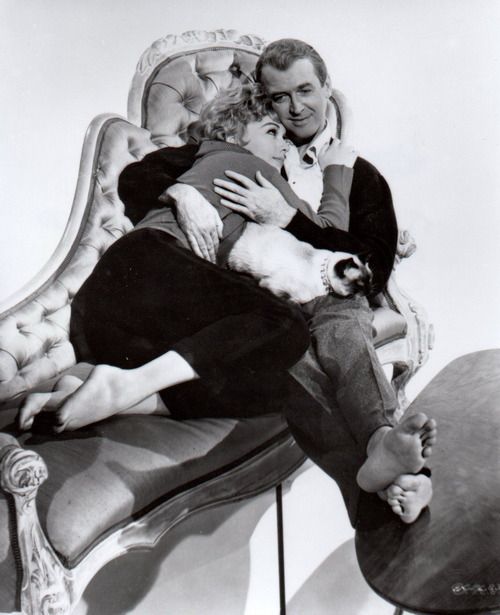
Jimmy Stewart, Kim Novak and Pyewacket. Promo for “Bell, Book and Candle” (1958)
In celebration of this year’s event, here are some facts, tips and must-have feline finds for any cat lover:
Cats have been companion animals to humans since ancient times. Research suggests that cats first lived close to humans and primarily served as pest control before being domesticated as pets.
Cats have been sharing our daily lives for a long time. It’s estimated that cats were first domesticated in Egypt between 10,000 and 12,000 years ago. Today, there are more than 400 million pet cats worldwide and around 90 million pet cats in the United States.
Cats’ whiskers help them navigate their surroundings. While face whiskers are the most obvious, cats also have object-sensing hairs throughout their bodies.
Most cats experience a euphoric reaction to catnip. Purring, pawing, rolling and romping are common reactions. Catnip is a safe treat that many felines enjoy as much as their humans enjoy watching their reactions.
There are a lot of cats in need of rescue. According to the ASPCA, about 3.2 million cats end up in animal shelters each year. Spaying and neutering cats are vital to preventing unwanted litters of kittens.
Pet cat ownership increased during the pandemic. A 2021 survey by the American Pet Products Association found that 14% of respondents got a new pet in the past year, many of whom chose to get a cat.
Americans will remain some of the last people on the planet to have no right to paid leave when they have children, and for that, you can thank Joe Manchin.
To be fair, 50 Republicans are to blame for this as well. All 50 of them oppose Biden’s paid family leave plan, and none were expected to vote for this bill. If even a few of them had been willing to cross the aisle to support parents and new babies – to be, one might say, “pro-life” and “pro-family” – then Manchin would not have the power he does to deny paid family leave to millions of American parents. So let’s not forget this reality, too: most Democrats want to create a paid family leave program. Republicans do not.
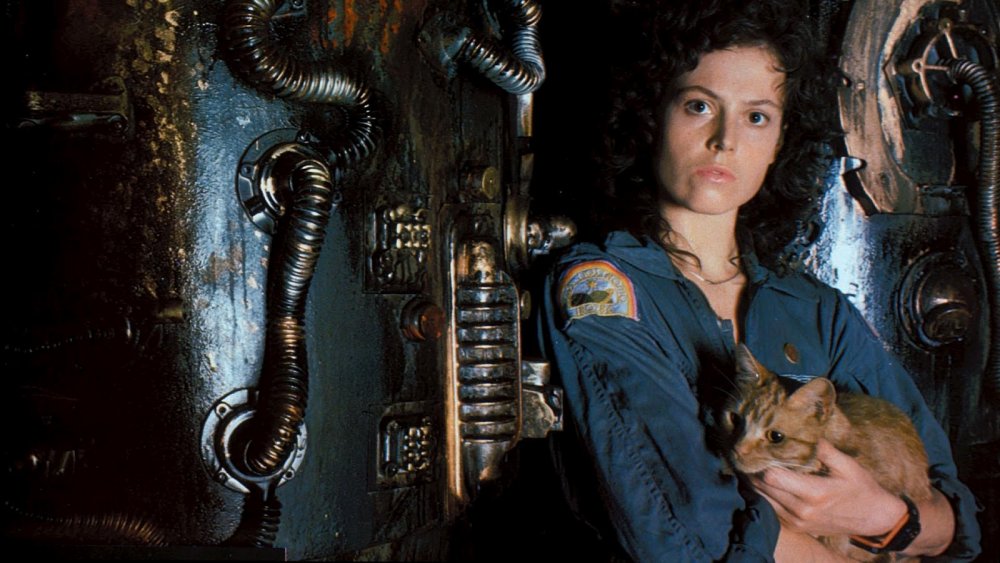
Sigourney Weaver in Alien, 1979
But Manchin’s actions are particularly insulting and egregious because he is a Democrat. He enjoys party support and funding. He benefits when Democrats do popular things. And now, he’s standing in the way of a policy that the overwhelming majority of Democrats want, and that is resoundingly popular with the American public, including conservatives and Republicans.
Paid family leave brings a long list of benefits to families, from healthier children to stronger marriages. And it benefits the country by keeping more working-age people in the workforce – when families don’t have paid leave, mothers drop out, a dynamic we’ve seen exacerbated by the pandemic. By some estimates, paid family leave could increase US GDP by billions of dollars.
This is good policy. But it’s also a policy that is, in large part, about gender equality. While paid leave is (or would have been) available to any new parent, the reality is that it’s overwhelmingly women who are the primary caregivers for children, it’s overwhelmingly women who birth children, and it’s overwhelmingly women who are pushed out of the paid workforce when they have kids.
Those who suggest we should sacrifice the right to vote in order to preserve the filibuster are telling a fairy tale about a democracy gone bad.
As of this month, 19 states have passed 33 new laws since the 2020 election that will make it harder for Americans to vote. Using false allegations of voter fraud like a monster beneath the bed, Republican state legislatures have passed laws that make it harder to register to vote, stay registered, cast a ballot and have it counted. We’re already entering the next wave of voting rights violations, as data from the 2020 census is stretched and pulled into politically gerrymandered districts that will be with us for the decade.
These laws will make it much more difficult for some voters — and especially for people of color, people with disabilities, and people of lower economic status — to exercise their rights. Some of the statutes veer perilously close to enabling future candidates to do what former President Donald Trump and his allies attempted in 2020: cancel just enough votes to win.
Anita Ekberg in La Dolce Vita, 1960
Democrats have passed legislation in the House of Representatives that would provide a fix. But it’s come to a standstill in the Senate. That’s true even though Sen. Joe Manchin, D-W.Va., morphed the House’s Help America Vote Act into the less beefy but still important Freedom to Vote Act. He thought, unlike anyone who’s been paying attention to Congress over the last few years, that he could attract Republican votes. Whether Republicans are afraid of their party’s de facto leader or afraid of their own political prospects if all of their constituents are free to vote, the Senate floor vote last week made the state of play clear. We are losing ground, and dangerously so, in the fight to ensure American voters can exercise their most essential right in our democracy. But that’s OK! Because we’ll have something much more important, at least according to the Republicans and to Sens. Manchin and Kyrsten Sinema of Arizona — the filibuster.
In 2024, your state legislature may decide that because your majority-Black county voted Democratic in the presidential election, there must have been fraud involved. They may remove your local election officials and replace them with their own handpicked people who will “find” enough votes to “fix” the outcome of the election for the Republican — all legal because the Senate failed to pass the law that would have prevented states from doing this. When your vote isn’t counted, you can console yourself with the knowledge that the filibuster is still there for you.
I wonder which side Manchin and Sinema would have been supported in the Civil War?
Moments before announcing Facebook is changing its name to “Meta” and detailing the company’s “metaverse” plans during a Facebook Connect presentation on Thursday, Mark Zuckerberg said “some people will say this isn’t a time to focus on the future,” referring to the massive, ongoing scandal plaguing his company relating to the myriad ways Facebook has made the world worse. “I believe technology can make our lives better. The future will be built by those willing to stand up and say this is the future we want.”
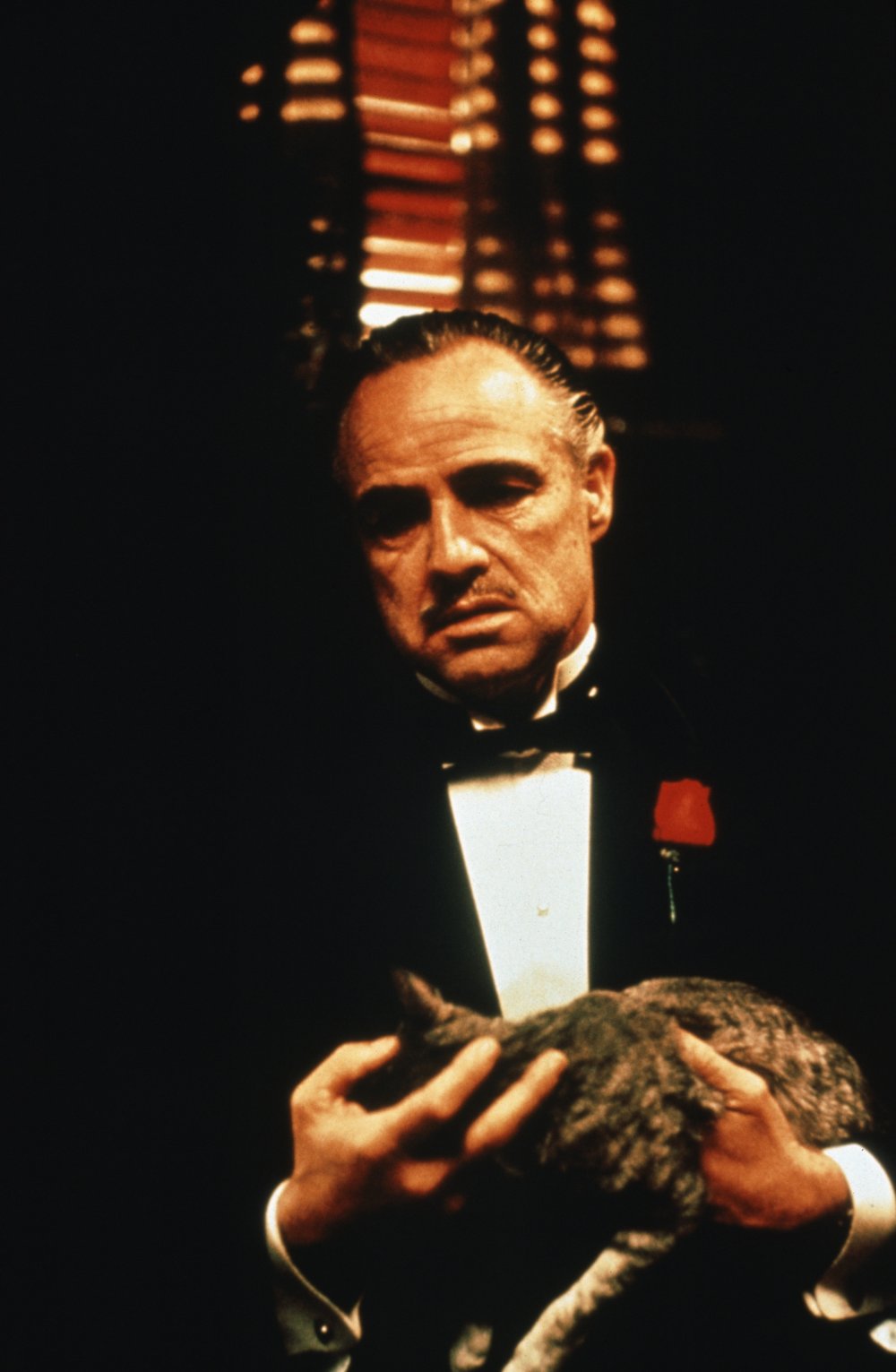
Marlon Brando in The Godfather, 1972
The future Zuckerberg went on to pitch was a delusional fever dream cribbed most obviously from dystopian science fiction and misleading or outright fabricated virtual reality product pitches from the last decade. In the “metaverse—an “embodied” internet where we are, basically, inside the computer via a headset or other reality-modifying technology of some sort—rather than hang out with people in real life you could meet up with them as Casper-the-friendly-ghost-style holograms to do historically fun and stimulating activities such as attend concerts or play basketball.
These presentations had the familiar vibe of an overly-ambitious video game reveal. In the concert example, one friend is present in reality while the other is not; the friend joins the concert inexplicably as a blue Force ghost and the pair grab “tickets” to a “metaverse afterparty” in which NFTs are for sale. This theme continued throughout as people wandered seamlessly into virtual fantasy worlds over and over, and the presentation lacked any sense of what this so-called metaverse would look like in practice. It was flagrantly abstract, showing more the dream of the metaverse than anything resembling reality. We’re told that two real people, filmed with real cameras on real couches, are in a “digital space.” When Zuckerberg reveals that Facebook is working on augmented reality glasses that could make any of this even a possibility, it doesn’t show any actual glasses, only “simulated footage” of augmented reality.
“We have to fit holograms displays, projectors, batteries, radios, custom silicon chips, cameras, speakers, sensors to map the world around you, and more, into glasses that are five millimeters thick,” Zuckerberg says.
Whatever the metaverse does look like, it is virtually guaranteed to not look or feel anything like what Facebook showed on Thursday.
Read more delusional stuff at the link. I’m not sure what any of this has to do with the mess I see when I dare to open Facebook.
GUANTÁNAMO BAY NAVAL BASE, Cuba — A suburban Baltimore high school graduate turned Al Qaeda courier, speaking to a military jury for the first time, gave a detailed account on Thursday of the brutal forced feedings, crude waterboarding and other physical and sexual abuse he endured during his 2003 to 2006 detention in the C.I.A.’s overseas prison network.
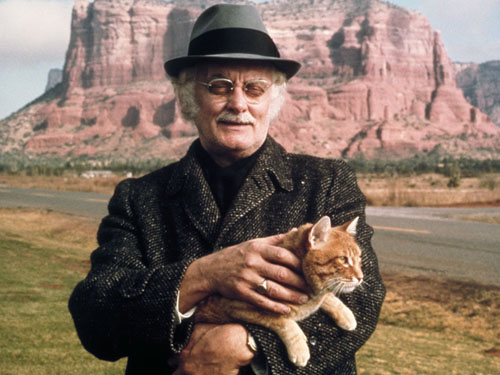
Art Carney in Harry and Tonto
Appearing in open court, Majid Khan, 41, became the first former prisoner of the black sites to openly describe, anywhere, the violent and cruel “enhanced interrogation techniques” that agents used to extract information and confessions from terrorism suspects.
For more than two hours, he spoke about dungeonlike conditions, humiliating stretches of nudity with only a hood on his head, sometimes while his arms were chained in ways that made sleep impossible, and being intentionally nearly drowned in icy cold water in tubs at two sites, once while a C.I.A. interrogator counted down from 10 before water was poured into his nose and mouth.
Soon after his capture in Pakistan in March 2003, Mr. Khan said, he cooperated with his captors, telling them everything he knew, with the hope of release. “Instead, the more I cooperated, the more I was tortured,” he said.
The dramatic accounting capped a day in which eight U.S. military officers were selected to serve on a jury, which will deliberate Friday on his official sentence in the range of 25 to 40 years, starting from his guilty plea in February 2012.
A huge nor’easter is moving up the coast and will likely hit us this afternoon. New Jersey and New York have already declared states of emergency. It has already been pouring rain here for the past two days and it will continue into tomorrow. We are expecting 70 mph wind gusts, maybe a bomb cyclone, and, of course, power outages. I just hope I don’t lose power. I need to get a better flashlight.
A storm offshore the Mid-Atlantic explosively intensified Monday night, and it is buffeting the Northeast with strong winds and flooding rains.
Flash flood watches are up from extreme northern Delaware and New Jersey through eastern Pennsylvania and most of southern New England. Up to five inches of rain are possible, falling on soils that are largely saturated following an exceptionally wet summer. Parts of New Jersey have already seen more than 4 inches, with rainfall rates topping an inch per hour….
Wind advisories also stretch from the nation’s capital to the coastline of Maine, with a high-wind warning up for the shorelines of Massachusetts and Rhode Island, where gusts could top 70 mph. The nor’easter is the first of two sprawling storm systems that will bring inclement weather to the East Coast this week. Its rate of intensification is expected to qualify it as a “bomb cyclone,” or a storm that strengthens with unusual haste.
The storm is the final act of a destructive ensemble that brought tornadoes to the Ozarks and Midwest on Sunday and a line of strong thunderstorms to parts of the Mid-Atlantic overnight Monday, which unloaded 1 to 3 inches of rain from Washington to Philadelphia. By Tuesday, rain and downpours were exiting offshore of the Delmarva Peninsula, spiraling into a new developing low pressure center taking shape off the East Coast.
But nearly half of Americans are deluded about what causes climate change, according to a new poll.
This year was marked by several unprecedented natural disasters, including a “heat dome” marked by sweltering temperatures of up to 113 F that plagued the Pacific Northwest, killing hundreds, and record-breaking wildfire seasons that razed entire towns and displaced thousands. Experts linked the string of natural disasters to the climate crisis, and yet, many Americans are still struggling to understand whether and why the generation-defining crisis is happening.
Emil Carlsen, Nantasket Beach Nor’easter, 1882
The poll, which surveyed 1,000 Americans on behalf of VICE News, the Guardian, and Covering Climate Now, by YouGov, comes less than a week before leaders and delegates from around the world meet in Glasgow, Scotland, for COP26, the United Nations’ climate change conference. The data shows that climate change is a top voter issue in the U.S., behind health care and social programs. For college grads and Democrats, climate change jumped to top spot (for Democrats it was tied with health care).
But while 69.5 percent of respondents believe global warming is happening, they were divided on what’s causing it. Forty-five percent don’t think humans are mostly to blame for global warming, opting instead to blame “natural changes in the environment” or “other,” and 8.3 percent denied global warming is happening altogether.
That’s mostly due to Republicans (55.4 percent) and independents (33 percent) though, who were far more likely than Democrats (17.2 percent) to believe “natural causes” have led to global warming. Young people and educated folks too were significantly more likely to believe humans are to blame for climate change.
Republicans aren’t satisfied with destroying U.S. democracy and killing as many people as possible with Covid-19; apparently they are also determined to hasten the end of the human race. Of course Republican are getting help with their goal of ending democracy and doing nothing about climate change–from a so-called Democrat.
If Joe Manchin gets what he wants in negotiations with the Biden White House and his fellow Democratic senators regarding climate policy, which now seems likely, it could have a devastating impact on the planet—and on Democrats’ prospects in 2022.
How so? Let’s answer that question by asking and answering two other questions.
First: Name an issue that young people—an increasingly important and frequently decisive voting bloc—are passionate about? When the US Conference of Mayors surveyed potential voters between the ages of 18 and 29 in 2020, 80 percent said the climate crisis was “a major threat to human life on earth as we know it.” By a 3-1 margin, young people said “bold measures” needed to be taken to address that threat.
Greg Cartmell, October Nor’easter
Second: Name the issue that Democrats are now talking about downplaying in the ”Build Back Better” agenda in order to secure the West Virginia senator’s support? The Biden administration is by all accounts preparing to cut from the budget plan the Clean Electricity Performance Program (CEPP), a key climate initiative that would use a combination of incentives and mandates to get utilities to embrace renewable energy.
Much of the serious reporting on the issue has focused on the devastating impact that losing those clean-energy provisions could have on upcoming climate negotiations at the United Nations Climate Change Conference in Glasgow, Scotland. Without them, it will be tougher for Biden to convincingly pledge a 50 percent reduction in US carbon emissions by 2030. That could undermine negotiations on the issue, according to Michael Mann, director of the Earth System Science Center at Penn State. So serious is the threat that Mann greeted the news of Manchin’s push to abandon the CEPP by declaring, “Joe Manchin just launched a hand grenade at Glasgow.”
Read the rest at The Nation.
More depressing articles on Biden’s shrinking “Build Back Better” legislation:
Democrats’ sweeping plans to bolster Medicare and Medicaid benefits have been scaled back amid an assault from industry groups and opposition from centrists like Sen. Joe Manchin III (D-W.Va.), with popular coverage expansions likely to be narrowed in hopes of reaching a deal this week.
A proposal to expand Medicare to cover dental, hearing and vision benefits is in danger of falling from the tax-and-spending package rapidly taking shape in Congress. A framework to expand Medicaid to cover Americans in a dozen mostly Southern states has also been reworked.
Meanwhile, drug-pricing reforms have come under sustained attack from pharmaceutical lobbyists, with some Democrats now balking at empowering Medicare to negotiate the price of prescription drugs. Scaling back that proposal, which was expected to cut government spending by more than $700 billion over a decade, would complicate Democrats’ ambition to subsidize their coverage expansions.
Manchin told reporters on Monday that he had concerns about some of Democrats’ signature proposals, underscoring the fragile state of negotiations. “You’ve got to stabilize” Medicare’s long-term finances before adding new benefits, the senator said, adding that he thought the Medicaid proposal was “unfair” to states like his, which have already expanded the program under the Affordable Care Act.
The infighting over health care also prompted Democratic leadership this month to consider a plan to delay some of the party’s health agenda to next year, including a plan to repeal a Trump-era ban on prescription drug rebates, hoping that election-year deadlines would force lawmakers to seal deals that are currently proving elusive, said three people with knowledge of the negotiations, who spoke on the condition of anonymity because of the sensitivity of the negotiations.
This week, Democrats either reach an agreement on Biden’s social and climate agenda or the agenda may shrink into meaninglessness. The climate measures in particular need to be settled before Biden heads to Scotland for the UN climate summit this weekend, so other nations will see our commitment to reduce carbon emissions.
On Sunday, Biden met with key Democrats to work out spending and tax provisions. Yet every senate Republican and at least two senate Democrats continue to assert that Biden’s agenda is too costly.
Too costly? Really? Compare the Biden’s social and climate package’s current compromise tab of $2tn (spread out over the next 10 years) with:
The $1.9 trillion Trump Republican tax cut that went mostly to the wealthy and large corporations.
Americans were promised that its benefits would “trickle down” to average workers. They didn’t. Corporations used them to finance more stock buybacks. The wealthy used them to buy more shares of stock (and shares of private-equity and hedge funds).
The Trump Republican tax cut should be repealed to pay for Biden’s social and climate package. There is no good reason to retain it. But no senate Republican will vote for its repeal, nor will Arizona’s Kyrsten Sinema – making it a political non-starter in a chamber where Democrats have just half the votes.
The $2.1 trillion that America’s 750 billionaires have raked in just since the start of the pandemic.
You might think that at least a portion of this windfall should help pay for Biden’s agenda since much of it has been the result of monopoly power (for example, Amazon’s dominance over e-commerce during the pandemic).
Oregon Senator Ron Wyden, chair of the Senate Finance Committee, is proposing a “Billionaires Income Tax,” to be paid by the roughly 750 Americans with $1bn in assets or $100m in income for three consecutive years. It would be a yearly tax on the increasing value of their assets – such as stocks and bonds – regardless of when they sell. They could still write off losses every year. Interestingly, neither Sinema nor West Virginia Senator Joe Manchin, the other holdout, has voiced opposition to Wyden’s proposal.
The nearly $8 trillion we’ll be spending on the military over the next 10 years.
The United States already spends more on our military than the next 10 biggest military spenders in the world combined.
Last week, the Senate Appropriations Committee unveiled a nearly $726bn budget for the Defense Department in 2022. That was about $20bn more than Biden requested. Some $14bn in other funds are set aside for the Pentagon in separate military construction and energy appropriations bills, bringing the total budget to about $740 billion. Over ten years, that comes close to $8tn.
One of the oldest sales tricks in the book is the one where the salesperson presents the potential buyer with an extremely crappy option first, and follows that up with an only moderately crappy second option. The potential buyer, dazzled by the jump in quality between options one and two, won’t scrutinize option two as much, because it’s so much better than option one. This has been employed by slimy realtors, wedding planners, and used car salesmen.
And now, we’ve reached the point in the American experiment where the Supreme Court’s new conservative majority has resorted to a cheap sales tactic in an attempt to rehabilitate its image. Lower the customer’s expectations enough, conventional wisdom goes, and they’ll thank you for ripping them off.
The high court agreed to hear the Biden administration’s challenge to the law on Nov. 1, on an expedited schedule. Legal observers predict that the court will toss the law out. I—and many wary pro-choicers—predict that after tossing the law out, the media will fawn over the court’s newfound social moderation, and the Susan Collinses of the world will crow that they were right, the hysterical feminists were wrong, and the Supreme Court was never going to toss abortion rights on—as Mike Pence would say—“the ash-heap of history.”
The following month SCOTUS will hear oral arguments in the case of Dobbs vs. Jackson Women’s Health, testing the constitutionality of a Mississippi law that directly confronts Roe v. Wade by banning abortion after 15 weeks’ gestation. Roe established in 1973 that the government has no right to interfere with abortion access prior to fetal viability—around 24.5 weeks’ gestation (a full-term pregnancy takes 40 weeks). Dobbs is the direct challenge to Roe that conservative activists have had a hard-on for since Reagan.
Ryan argues that, using the “smokescreen” provided by the ridiculous Texas law, the right wing justices will use the Alabama law to overturn Roe v. Wade.
Sorry this post is so full of woe. Hope you all have a pleasant Tuesday; I’ll be taking a news break for the next few hours at least.
Did you like this post? Please share it with your friends:
Louisiana is a little later than most states that I’ve lived in with their State Fair Livestock Shows. It probably has something to do with the heat and peak hurricane season which occurs during the Labor Day Weekend which is when I was used to doing the Iowa State Fair, the Nebraska State Fair, and the Minnesota State Fair.
My favorite part as a kid was the kids from 4H showing off their pet livestock projects. It was always a real range of farm animals and the kids and animals seemed really close when you watched them in their pens together.
The one thing that killed all that for me was knowing that what looked like a loving pet to me was most likely going to wind up at an auction. I like the Crazy Cajun Pygmy Goat Shows though because I know they’re likely going to live a long life attending yuppy yoga goat classes, or clearing out the bramble in some backyard for a fee, or being the focus of some kid’s birthday party, or providing the basis for some cheese.
Perhaps I read Charlotte’s Web to my kids way too many times.
The point is that both the ranchers-to-be and the meals-to-be love those shows. The animals have no idea that their purpose is to ensure everyone knows their place in the food chain. It’s mostly to remind everyone that no matter how much attention they get at one point, they’re simply there to show off enough so everyone will go off and find more of their kind to slaughter.
This is about how I feel about Mitch McConnell trotting out Amy Coney Barrett and now, Clarence Thomas to represent just how much animals will preen for the camera when they’re about to sell the rights that got them there out. I wonder if he’ll trot out the white guys too? Nah, it’s all about preserving only their rights.
The deal with livestock shows is they are always big deals to a few that lead up to mass slaughter for the innocent.
This is from The Washington Post. “McConnell lauds Thomas, says Supreme Court should not heed the ‘rule of polls’” Someone needs to tell Mitch the settled laws are not about the rule of polls. They are about the Rule Of Law.
The conservative think tank was the site of a day-long celebration of Thomas’s three decades on the court, with panels of judges, lawyers and legal analysts celebrating the 73-year-old justice’s record.
McConnell was the keynote speaker, and he urged boldness and independence from the federal judiciary he had a large hand in reconstructing. He pushed through a record number of confirmations of federal judges when Republicans controlled the Senate and President Donald Trump was making nominations.
Included in the list are three Supreme Court justices: Neil M. Gorsuch, Brett M. Kavanaugh and Amy Coney Barrett.
Polls have shown public approval of the Supreme Court is falling — those who say it is too conservative are growing — but McConnell said popularity is not the standard by which judges should be evaluated.
“They’re not tasked with reasoning backwards from abstract impressions about what outcome the nation supposedly needs or the court’s public standing supposedly requires,” McConnell said. “We need the rule of law, not the rule of polls.”
Thomas has provided the example, McConnell said. “For 30 years and counting, you have had the brightest possible North Star illumining the path before you, the courage and fidelity of Justice Clarence Thomas,” the senator from Kentucky said.
…
Thomas is the second justice to appear with McConnell in the last two months. Barrett accompanied him to the University of Louisville for a speech at the center that bears the senator’s name in September.
“My goal today is to convince you that this court is not comprised of a bunch of partisan hacks,” she said. Critics said it was not a choice setting for such a nonpartisan message.
McConnell is the politician most responsible for the change on the Supreme Court and in the federal judiciary, said Donald McGahn, Trump’s White House counsel. “He’s always had an eye on the long game,” McGahn said in introducing McConnell.
Democrats remain bitter about McConnell’s role. As Senate majority leader, he refused to allow a hearing on President Barack Obama’s Supreme Court choice Merrick Garland in 2016, saying it was inappropriate in an election year. Garland was nominated to replace Justice Antonin Scalia, who died in February of that year.
Congress is preparing for a showdown Wednesday on a doomed bill to protect minority voting rights that Democrats view as critical – and that, if it were in place, would derail the gerrymandered redistricting plan just finalized in Austin.
Republicans set aside a scant 14 of 38 U.S. House seats in Texas for Democrats, leaving the rest for themselves.
That’s 37% for Democrats, 63% for Republicans – a gap of 26 points that doesn’t even come close to passing muster under the Freedom to Vote Act, which uses recent federal elections as the benchmark to determine whether a congressional map is even modestly fair.
“There are serious voting rights issues on the map,” said Michael Li, a redistricting expert at the left-leaning Brennan Center for Justice.
He noted how blatantly the Texas congressional map that Gov. Greg Abbott will soon sign violates the proposed ban on partisan gerrymandering.
Republicans carried Texas in the last two races for president and U.S. Senate – but not by anything close to 26 points.
With a quick glance at the new redistricting maps that Texas Republicans just rammed into law, you could be forgiven for thinking that the Lone Star State’s population became a whole lot whiter, more Republican, and more rural over the past decade.
But that is a political illusion achieved through surgical lines that create donut-hole districts, gnarled fists, and land bridges, drawn by a party desperate to avoid confronting the realities of a transformed state. People of color constituted 95 percent of Texas’ population growth over the past decade, including roughly half from Latinos alone, earning the state two new congressional districts. But Republicans used redistricting to effectively turn back time, locking in the white majoritarian rule that has controlled Texas since Reconstruction.
Democrats, voting rights advocates, and everyday constituents alike protested that the maps carved apart neighborhoods and voters of color in blatantly discriminatory fashion. But Republicans rushed through the legislative process with their fingers in their ears, providing the public with only a perfunctory chance to provide input as the maps advanced at a rapid clip. GOP leaders insisted that the maps were drawn “race-blind” and that their lawyers had assured them they were not running afoul of the federal Voting Rights Act.
By spreading out the electoral power of their white base in the vast expanses of deep-red rural Texas, Republicans shored up their current hold on power. They drew majority-white districts and fewer Hispanic majority districts, making red seats redder and blue seats bluer. This was done by defusing the ascendant political power of Latino, Black, and Asian voters in the cities and suburbs of Texas.
If this all sounds familiar, it should. During the last redistricting cycle in 2010, Republicans similarly maximized their political control with districts that courts repeatedly found were drawn with intent to racially discriminate. Those legal battles lasted through almost the entire decade. Now, more examples of brazen racial gerrymandering have cropped up in the new maps, just as they did 10 years prior. Take State Senate District 10 in Tarrant County. In 2018, a coalition of Black, Hispanic, and white voters flipped the seat by electing Democrat Beverly Powell. She may not have the seat for long; the new map transforms the 10th district into a conservative stronghold that dilutes Black and Hispanic votes by way of Republican voters in several nearby rural counties.
In the Texas House map, the GOP-held 54th district in Bell County had become increasingly competitive as the Black and Hispanic population grew in Killeen, which overwhelmingly voted for Biden in 2020. To protect that seat, Republicans made the 54th into a Bell County donut that completely encircled another Republican district. Each district got a piece of the county’s two Democratic-voting cities, Killeen and Temple.
Districts like the 22nd in Fort Bend County and the 24th in the Dallas-Fort Worth suburbs had finally become political battlegrounds in the last election cycle as multi-racial coalitions banded together. “That was like a glimpse of the future of American politics. Very coalitional, very multi-racial,” says Michael Li, a redistricting lawyer with the Brennan Center for Justice. But Republicans chose to dismantle those seats, packing diversifying areas into new deep-blue Democratic districts or cracking them off into Republican-held seats made whiter and redder by extending out into far-flung rural counties.
“Republicans are really scared of the suburbs because they’re becoming more diverse and because white voters in the suburbs aren’t as reliable for Republicans anymore and they’re not sure they’re getting it back anytime soon,” Li says.
The U.S. Supreme Court on Friday agreed to review a controversial Texas abortion law on Nov. 1 but refused to block the law while it examines Texas’ unusual enforcement scheme and whether the Department of Justice has the right to sue to block the law.
The court will not directly consider the constitutionality of the law. Instead, in its order, the court said it would consider the following questions:
whether “the state can insulate from federal-court review a law that prohibits the exercise of a constitutional right by delegating to the general public the authority to enforce that prohibition through civil action”;
and can “the United States bring suit in federal court and obtain injunctive or declaratory relief against the State, state court judges, state court clerks, other state officials, or all private parties to prohibit S.B. 8 from being enforced.”
Justice Sonia Sotomayor dissented with keeping the law in place.
“The promise of future adjudication offers cold comfort, however, for Texas women seeking abortion care, who are entitled to relief now,” she wrote. “These women will suffer personal harm from delaying their medical care, and as their pregnancies progress, they may even be unable to obtain abortion care altogether.”
She added:
“There are women in Texas who became pregnant on or around the day that S. B. 8 took effect. As I write these words, some of those women do not know they are pregnant. When they find out, should they wish to exercise their constitutional right to seek abortion care, they will be unable to do so anywhere in their home State. Those with sufficient resources may spend thousands of dollars and multiple days anxiously seeking care from out-of-state providers so overwhelmed with Texas patients that they cannot adequately serve their own communities. Those without the ability to make this journey, whether due to lack of money or childcare or employment flexibility or the myriad other constraints that shape people’s day-to-day lives, may be forced to carry to term against their wishes or resort to dangerous methods of self-help.”
We may all have to become flowers that bloom in a democracy desert quite soon. I’m glad BB covered the Republican cover-up of the insurrection yesterday so I can just forget it a bit here. We’re going to have to organize and show up again. Get ready. This will be a wild News Day.
What’s on your reading and blogging list today?
Did you like this post? Please share it with your friends:
The Sky Dancing banner headline uses a snippet from a work by artist Tashi Mannox called 'Rainbow Study'. The work is described as a" study of typical Tibetan rainbow clouds, that feature in Thanka painting, temple decoration and silk brocades". dakinikat was immediately drawn to the image when trying to find stylized Tibetan Clouds to represent Sky Dancing. It is probably because Tashi's practice is similar to her own. His updated take on the clouds that fill the collection of traditional thankas is quite special.
You can find his work at his website by clicking on his logo below. He is also a calligraphy artist that uses important vajrayana syllables. We encourage you to visit his on line studio.






 The complaint by the professors contends the university is discriminating against them based on viewpoints they wish to express, and by trying to prevent them from offering expert testimony on issues of overwhelming public importance, UF violated their First Amendment rights.

















 peej
peej Carissa
 bostonboomer
 dakinikat
 ecocatwoman
 mablue2
 Mama Lopez
 peggysue22
 quixote
 skydancingguestblogger
 Mona (aka Wonk the Vote)



 Sky Dancing
Recent Comments