I’m feeling kind of blue today. Partly it’s just the inevitable losses that come with my advanced age, and of course I’m sad about what’s happening to our country. In the past 7 years, we were forced to deal with an evil and incompetent man as presidential candidate and then president, and a still-ongoing global pandemic that has killed more than a million Americans. No wonder so many of us are exhausted. I got this in an e-mail from political writer Jared Yates Sexton this morning. He describes our situation better than I ever could.
There are nine members of the Supreme Court of the United States of America. It might be presumptuous, but I’m guessing if you’re reading this you are not counted among them.
The last time I checked, there was one President, one hundred members of the Senate and 435 representatives in the House. Though there are individuals in the White House and Congress who read this newsletter, their ability to effectively pass legislation or break up the intentional logjam at the federal level is somewhat negligible.
All of it is overwhelming. To watch detestable actions like the overthrow of Roe V. Wade, followed by a yawning lack of response by those charged with protecting us, leaves a person feeling desperate and, over time, isolated and demoralized. The system, after all, is designed with this in mind. The founding of the United States was predicated on neutralizing the power of the masses in favor of rule by a tiny group of wealthy white men. Almost everything that has happened since then has been to either shore up that rule or battle attempts to trouble it.
This newsletter appears to be a promo for Sexton’s upcoming book, and it doesn’t offer solutions; but it sure does paint a picture of where we are as a country right now. Sexton says, “we are not alone and we are not powerless.” I guess he’ll explain that in the book.
There isn’t that much I can do at my age, but I keep posting on this blog; somehow that gives me a sense of being a small part of the resistance to authoritarianism. At least I’m paying close attention to daily events and what is being written about them. We’ve been posting to this blog for many years now, and we’ve seen people come and go. If you’re still coming here, I’m very grateful for your presence. Thank you for reading and sharing your thoughts with us.
A Ten-Year-Old Pregnant Rape Victim and Clueless Male Journalists
The case of a 10-year-old child rape victim in Ohio who was six weeks pregnant, ineligible for an abortion in her own state, and forced to travel to Indiana for the procedure has spotlighted the shocking impact of the US supreme court ruling on abortion.
Breakfast Porch, William James Glackens, 1925
The story of the girl came to light three days after the court overturned a nationwide right to terminate pregnancy, and Ohio’s six-week “trigger ban” came into effect.
Dr Caitlin Bernard, an Indianapolis obstetrician-gynecologist, said she had received a call from a colleague doctor in Ohio who treats child abuse victims and asked for help….
Abortion providers like Bernard say they are receiving a sharp increase in the number of patients coming to their clinics for abortion from the neighboring states where such procedures are now restricted or banned.
“It’s hard to imagine that in just a few short weeks we will have no ability to provide that care,” Bernard told the Columbus Dispatch.
You’d think since the story mentioned a doctor by name, people would accept that the story was legitimate. Bernard even appeared on MSNBC’s The Last Word to talk about the case. But Republicans in Ohio claimed the story was fabricated, and that triggered claims that the story was fake on Fox News and social media. Even the Washington Post fact checker got involved.
A Columbus man has been charged with raping a 10-year-old Ohio girl who then had to travel to Indiana seeking an abortion after the Supreme Court overturned Roe v. Wade, according to court proceedings CNN obtained through affiliate WBNS.
Gerson Fuentes, 27, was arrested Tuesday, according to Columbus police and court documents. He has been charged with felony rape of a minor under age 13, according to the Franklin County Municipal Court. His first court appearance was Wednesday.
Fuentes is being held on $2 million bond, according to the court. CNN has reached out to his attorney for comment.
Fuentes admitted to authorities he raped the young girl on at least two occasions, Det. Jeffrey Huhn testified Wednesday at Fuentes’ arraignment.
Police first were alerted to the child’s pregnancy in late June through a referral by a local children services department that was made by the 10-year-old’s mother, Huhn testified.
The girl underwent a medical abortion in Indianapolis on June 30, the detective testified. DNA from the Indianapolis clinic was being tested against samples from Fuentes and the child’s siblings, Huhn said.
Fox News’s Tucker Carlson was still pretending the story was false last night.
As more states restrict or ban abortion, more girls who are raped will face a choice between crossing state lines for care or having babies while they are still in elementary school.
House with a porch, by Andrew Wyeth
I wish that this weren’t true. But events this week make it very clear that if you can’t bear to believe it — even if it seems so impossible that it needs a heartily skeptical fact-checking treatment — it is going to happen.
And reporters who want to tell these stories (and the news organizations those reporters work for) may have to abandon some conventional journalism wisdom in order to give the stories the attention they deserve….
The two-byline story — written by Shari Rudavsky and Rachel Fradette — made headlines around the world. But the firstreactionofmainlyright-leaningnews organizations — despite the fact that the doctor who performed the abortion was on the record saying this happened — was to try to debunk it. Why? I mean, in part because it’s horrible and we don’t want to believe a 10-year-old could get raped and pregnant, because 10-year-olds are babies themselves. (By the way, Covid appears to have increased early-onset puberty around the world. Getting your period “early” now means getting it when you’re younger than 8. People for whom a pregnant 10-year-old strains credulity should keep this in mind.)
You can read the quotes at Neiman Lab, but lets just say Kessler was extremely skeptical.
“An abortion by a 10-year-old is pretty rare,” Kessler notes. (Oh, that “by.”) “The Columbus Dispatch reported that in 2020, 52 people under the age of 15 received an abortion in Ohio.” Definitions of “rare” may vary, but if 52 under-15-year-olds got abortions in Ohio in 2020, that’s one a week — and it’s just abortions that were reported, during a pandemic when a lot of abortion clinics were closed.
The Post column opened the door to worse takes. “Every day that goes by, the more likely that this is a fabrication. I know the cops and prosecutors in this state. There’s not one of them that wouldn’t be turning over every rock, looking for this guy and they would have charged him,” Ohio attorney general Dave Yost told USA Today’s Ohio Network bureau on Tuesday. Picking up on Kessler’s “single source” criticism, Yost added, “Shame on the Indianapolis paper that ran this thing on a single source who has an obvious axe to grind.”
The Wall Street Journal’s editorial board called the episode “An abortion story too good to confirm,” as if there was something particularly juicy and delicious about this one (hint: It’s her age!)
We’re going to be seeing many more horror stories now that the Extreme Court has returned women and girls to second-class citizen status. And no, male journalists will not be ready to deal with the onslaught.
Former President Donald Trump tried to call a member of the White House support staff who was talking to the House select committee investigating January 6, 2021, two sources familiar with the matter tell CNN.
The support staffer was not someone who routinely communicated with the former President and was concerned about the contact, according to the sources, and informed their attorney.
Women Taking Tea on the Porch, Albert Lynch
The call was made after former Trump White House aide Cassidy Hutchinson testified publicly to the committee. The White House staffer was in a position to corroborate part of what Hutchinson had said under oath, according to the sources.
CNN was told the position of the witness Trump tried to call, but not the person’s name. Details about the witness Trump tried to contact have not been previously reported.
The initial revelation about Trump’s phone call was made in a dramatic moment at the end of this week’s hearing by committee Vice Chair Liz Cheney. Cheney, a Wyoming Republican, revealed that Trump “tried to call” an unnamed witness in the committee’s investigation. She said that witness “declined to answer or respond” to Trump’s call and instead alerted their lawyer. The committee has since supplied that information to the Department of Justice….
Rep. Pete Aguilar, a California Democrat who serves on the committee, told CNN on Tuesday that the individual Trump tried to call has been speaking with the panel.
“Trump himself had called someone who has been talking with us,” Aguilar said.
A source familiar with the panel’s investigation added that the committee has spoken to the person Trump tried to call, but not as part of a deposition.
Trump’s crimes just keep on piling up. When will he pay a price? No one outside the DOJ knows.
After seven hearings held by the January 6 committee thus far this summer, doubts as to who is responsible have been resolved. The evidence is now overwhelming that Donald Trump was the driving force behind a massive criminal conspiracy to interfere with the official January 6 congressional proceeding and to defraud the United States of a fair election outcome.
The evidence is clearer and more robust than we as former federal prosecutors—two of us as Department of Justice officials in Republican administrations—thought possible before the hearings began. Trump was not just a willing beneficiary of a complex plot in which others played most of the primary roles. While in office, he himself was the principal actor in nearly all of its phases, personally executing key parts of most of its elements and aware of or involved in its worst features, including the use of violence on Capitol Hill. Most remarkably, he did so over vehement objections raised at every turn, even by his sycophantic and loyal handpicked team. This was Trump’s project all along.
By Edward Hopper
Everyone knew before the hearings began that we were dealing with perhaps the gravest imaginable offense against the nation short of secession—a serious nationwide effort pursued at multiple levels to overturn the unambiguous outcome of a national election. We all knew as well that efforts were and are unfolding nationwide to change laws and undermine electoral processes with the specific objective of succeeding at the same project in 2024 and after. But each hearing has sharpened our understanding that Donald Trump himself is the one who made it happen.
As former prosecutors, we recognize the legitimacy of concerns that electoral winners prosecuting their defeated opponents may look like something out of a banana republic rather than the United States of America; that doing so might be viewed as opening the door to prosecutorial retaliation by future presidential winners; and that, in the case of this former president, it might lead to civil unrest.
But given the record now before us, all of these considerations must give way to the urgency of achieving a public reckoning for Donald Trump.
The Justice Department has asked the House committee investigating the Jan. 6 attack on the Capitol for evidence it has accumulated about the scheme by former President Donald J. Trump and his allies to put forward false slates of pro-Trump electors in battleground states won by Joseph R. Biden Jr. in 2020.
Representative Bennie Thompson, Democrat of Mississippi and the chairman of the committee, disclosed the request to reporters on Capitol Hill on Wednesday, and a person familiar with the panel’s work said discussions with the Justice Department about the false elector scheme were ongoing. Those talks suggest that the department is sharpening its focus on that aspect of Mr. Trump’s efforts to overturn the election, one with a direct line to the former president.
Mr. Thompson said the committee was working with federal prosecutors to allow them to review the transcripts of interviews the panel has done with people who served as so-called alternate electors for Mr. Trump. Mr. Thompson said the Justice Department’s investigation into “fraudulent electors” was the only specific topic the agency had broached with the committee.
A Justice Department official said the agency maintained its position that it was requesting copies of all transcripts of witness interviews.
It’s going to be an interesting week as we start the January 6 committee’s public hearings on the insurrection on Thursday evening. The times are listed in EDT to the left of the headline. NBC asks the big questions: “The Jan. 6 committee begins hearings with a big challenge: Capture public attention. Whether the public hearings will be considered a success for Democrats largely depends on what comes after and whether legislation or prosecutions follow.”
Seldom has a set of congressional hearings opened amid so much anticipation and, at the same time, so little guarantee of success.
The House committee investigating the Jan. 6 attack on the Capitolwill hold the first of at least a half-dozen public hearings this week, having already promised stunning revelations that would lay bare just how dangerously close the U.S. came to losing its democracy.
“It’s all about democratic resiliency. Can we fortify our institutions and our people against insurrection, coups and violence?” Rep. Jamie Raskin, D-Md., a committee member, told NBC News. “I hope we will be able to spur the country to make the necessary reforms to solidify democracy.”
Thursday is when the suspense lifts and the nine-member committee gets to tell all.
But what will success look like? The question has weighed on committee members and congressional Democrats who have invited the panel to present both a definitive accounting of the riot and tangible solutions to prevent another.
What comes later is likely to determine whether the committee’s work is judged a success or a failure, according to interviews with more than 20 committee members, other lawmakers, witnesses, congressional aides and political strategists.
As the panel sees it, the hearings can’t just come and go. Members are looking for accountability. The committee isn’t a law enforcement body, so it can’t prosecute anyone. Yet if members lay out a compelling story about the far-flung effort to deny Joe Biden his rightful victory, it could pressure the Justice Department to ramp up its own inquiry.
“I am really very hopeful that what [the committee] will produce will be a road map — not just for Congress, but for the Department of Justice and for the American people who want to preserve our democracy,” Rep. Veronica Escobar, D-Texas, who was trapped in the gallery of the House chamber during the riot on Jan. 6, 2021, said in an interview.
This is Kristal. She was three weeks old and riddled with fleas when we cleaned her up and started bottle feeding her. Temple adores her. She’s healthy and active now!
The founder of the People of Praise, a secretive charismatic Christian group that counts supreme court justice Amy Coney Barrett as a member, was described in a sworn affidavit filed in the 1990s as exerting almost total control over one of the group’s female members, including making all decisions about her finances and dating relationships.
The court documents also described alleged instances of a sexualized atmosphere in the home of the founder, Kevin Ranaghan, and his wife, Dorothy Ranaghan.
The description of the Ranaghans and accusations involving their intimate behavior were contained in a 1993 proceeding in which a woman, Cynthia Carnick, said that she did not want her five minor children to have visitations with their father, John Roger Carnick, who was then a member of the People of Praise, in the Ranaghan household or in their presence, because she believed it was not in her children’s “best interest”. Cynthia Carnick also described inappropriate incidents involving the couple and the Ranaghan children. The matter was eventually settled between the parties.
Barrett, 50, lived with Dorothy and Kevin Ranaghan in their nine-bedroom South Bend, Indiana, home while she attended law school, according to public records. The justice – who was then known as Amy Coney – graduated from Notre Dame Law School in 1997 and two years later married her husband, Jesse Barrett, who also appears to have lived in the Ranaghan household. There is no indication that Amy Coney Barrett lived in the house at the time when the Carnick children were visiting or witnessed any of the alleged behavior described in the court documents.
The examination of the People of Praise’s history and attitude towards women comes as a majority of the supreme court – including Barrett – appear poised to reverse Roe v Wade, the landmark 1973 ruling that made abortion legal across the US.
Cynthia Carnick stated in the documents that she had witnessed Dorothy Ranaghan tie the arms and legs of two of the Ranaghans’ daughters – who were three and five at the time the incidents were allegedly witnessed – to their crib with a necktie. She also said that the Ranaghans allegedly practiced “sexual displays” in front of their children and other adults, such as Dorothy Ranaghan lying with her clothes on and “rocking” on top of Kevin Ranaghan in their TV room.
Cynthia Carnick – who no longer uses Carnick as her last name – declined to comment but said that she stood by the statement she made at the time.
This is horrifying. We have too many sick, sick individuals on the Supreme Court right now appointed by Republicans appeasing these types of cults. One piece of good news on the SCOTUS front did come out today. This is from USA Today. “Supreme Court declines appeal over law licenses from St. Louis couple who waved guns at protest. Mark and Patricia McCloskey drew national attention for walking onto their front yard with guns during a 2020 protest of the police killing of George Floyd.”
The protesters were walking to the home of the St. Louis mayor at the time.
Mark McCloskey pleaded guilty to a misdemeanor assault charge and Patricia McCloskey pleaded guilty to misdemeanor harassment. Missouri Gov. Michael Parson pardoned the McCloskeys in 2021 but the state office responsible for investigating allegations of misconduct by lawyers sought to suspend their law licenses.
Feinstein is now both the definition of the American political Establishment and the personification of the inroads women have made over the past 50 years. Her career, launched in a moment of optimism about what women leaders could do for this country, offers a study in what the Democratic Party’s has not been able to do. As Feinstein consolidated her power at the top of the Senate, the party’s losses steadily mounted. It has lost control of the Supreme Court; it is likely about to lose control of Congress. Children are being gunned down by the assault weapons Feinstein has fought to ban, while the Senate — a legislative body she reveres — can only stand by idly, ultimately complicit. States around the nation are banning books about racism as Black people are being shot and killed in supermarkets. Having gutted the Voting Rights Act, conservatives are leveraging every form of voter suppression they can, while the Senate cannot pass a bill to protect the franchise. The expected overturning of Roe v. Wade this summer will mark a profound step backward, a signal that other rights won during Feinstein’s adulthood, including marriage equality and full access to contraception, are just as vulnerable.
As the storied career of one of the nation’s longest-serving Democrats approaches its end, it’s easy to wonder how the generation whose entry into politics was enabled by progressive reforms has allowed those victories to be taken away. And how a woman who began her career with the support of conservationist communities in San Francisco, and who staked her political identity on advancing women’s rights, is now best known to young people as the senator who scolded environmental-activist kids in her office in 2019 and embraced Lindsey Graham after the 2020 confirmation hearings of Amy Coney Barrett, a Supreme Court justice who appears to be the fifth and final vote to end the constitutional right to an abortion. As Feinstein told Graham, “This is one of the best set of hearings that I’ve participated in.”
For many from a younger and more pugilistic left bucking with angry exasperation at the unwillingness of Feinstein’s generation to make room for new tactics and leadership before everything is lost, the senator is more than simply representative of a failed political generation — she is herself the problem. After she expressed her unwillingness to consider filibuster reform last year, noting that “if democracy were in jeopardy, I would want to protect it, but I don’t see it being in jeopardy right now,” The Nation ran a piece headlined “Dianne Feinstein Is an Embarrassment.”
Feinstein, who turns 89 in June, is older than any other sitting member of Congress. Her declining cognitive health has been the subject of recent reporting in both her hometown San Francisco Chronicle and the New York Times. It seems clear that Feinstein is mentally compromised, even if she’s not all gone. “It’s definitely happening,” said one person who works in California politics. “And it’s definitely not happening all the time.”
Reached by phone two days after 19 children were murdered in an elementary school in Uvalde, Texas, in late May, Feinstein spoke in halting tones, sometimes trailing off mid-sentence or offering a non sequitur before suddenly alighting upon the right string of words. She would forget a recently posed question, or the date of a certain piece of legislation, but recall with perfect lucidity events from San Francisco in the 1960s. Nothing she said suggested a deterioration beyond what would be normal for a person her age, but neither did it demonstrate any urgent engagement with the various crises facing the nation.
“Oh, we’ll get it done, trust me,” she assured me in reference to meaningful gun reform. Every question I asked — about the radicalization of the GOP, the end of Roe, the failures of Congress — was met with a similar sunny imperviousness, evincing an undiminished belief in institutional power that may in fact explain a lot about where Feinstein and other Democratic leaders have gone wrong. “Some things take longer than others, and you can only do what you can do at a given time,” she said. “That doesn’t mean you can’t do it at another time. And so one of the things that you develop is a certain kind of memory for progress: when you can do something in terms of legislation and have a chance of getting it through, and when the odds are against it, meaning the votes and that kind of thing. So I’m very optimistic about the future of our country.”
Krystal bonded with Temple pretty quickly while the other cats are still getting adjusted to her.
It’s a long read but well worth it if you remember the year of the woman that brought a few more women senators to the District. There are also two features on some of the worst of the worst Republicans if you want to check them out. Steve Bannon is the Focus of “American Rasputin” at The Atlantic. Blind justice is still chasing that one. Hot Air follows the latest Elon Musk Drama with the headline “BREAKING:Musk threatens to dump deal in letter to Twitter, SEC.” The last one doesn’t surprise me at all. It’s from The Bulwark. “The Long History of Glenn Greenwald’s Kissing Up to the Kremlin. In his world, it seems America can do nothing right and Vladimir Putin can do nothing wrong.” I really don’t want to quote them but you may want to skim them and see if anything interests you. I’ll give you a taste of Cathy Young’s piece on Greenwald.
But Greenwald has been baffling and disappointing legions of his progressive admirers for years with his cozy relationship with the MAGA right. And a look at his career shows that his pro-Kremlin affinity goes way back—as part of a more general tendency to sympathize with foes of the U.S.-led “neoliberal” (or “neoconservative”) international order.
A CBS poll shows how out of step a lot of Republicans are with the rest of the county. “In a new @CBSNewsPoll , 72% of the nation believes mass shootings are preventable, however, there is a partisan split with 44% of Republicans saying mass shootings are something we have to accept.” That’s like basically saying we can’t cure all cancers so just give up on it. Or maybe, what you have is cancer, so we’ll just inject more cancer in there.
I just really have trouble understanding this viewpoint. It seems so irrational.
In a new @CBSNewsPoll, 72% of the nation believes mass shootings are preventable, however, there is a partisan split with 44% of Republicans saying mass shootings are something we have to accept. @SalvantoCBS breaks down these numbers. pic.twitter.com/JE9B39wHdM
The big picture: Most of the deadliest shootings in the U.S. since 2018 were committed by men who were 21 or younger.
Between the 2012 Sandy Hook Elementary School shooting, committed by a 20-year-old, and late 2017, killers were between the ages of 26 and 64. All of them were men.
When looking at school shootings specifically, killers tend to be younger, PolitiFact reports.
Nearly half of homicides in 2020 were committed by people 29 and under, according to the most recent FBI data on the matter.
The problem seems to be getting worse. Per the New York Times, only two of the deadliest mass shootings from 1949 to 2017 were committed by gunmen under 21. The two were the Columbine High School shooting in 1999 and the Sandy Hook Elementary School shooting in 2012.
“We see two clusters when it comes to mass shooters, people in their 40s who commit workplace type shootings, and a very big cluster of young people — 18, 19, 20, 21 — who seem to get caught up in the social contagion of killing,” Jillian Peterson, a criminal justice professor who helped found the Violence Project, told the New York Times.
State of play: Under federal law, a person has to be 18 or older to buy a shotgun or a rifle, though some states have a higher limit of 21. Additionally, there is no law preventing teens or even kids from being given a rifle as a gift.
Something could be done to lessen the ability of the under 21 crowd to access guns.
Oh to be able to sleep like a kitten!
So I hope my sweet fluffy kitten brightens your day even if the situation in our country is dire. Even local Republicans are bracing for the impact of Trump on their next round of primaries. This is from Natasha Korecki at NBC News. “Republicans brace for next round of Trump primary chaos. State party officials and other members of the GOP in Nevada, Wisconsin and Missouri say they’re concerned about coming contests and the effects of Trump’s 2020 fixation.”
“I wish Trump would sit down and keep quiet. I think the country’s had enough of him,” said Perry DiLoreto, a prominent Nevada businessman and longtime GOP donor who backed Trump in 2016 and 2020.
In the state’s upcoming GOP primary for Senate, he ignored Trump’s endorsement of former Nevada attorney general Adam Laxalt and instead supported retired Army Capt. Sam Brown.
“Donald Trump was a great example of somebody that had some good ideas and had good common sense. But to move any of those ideas forward, you have to know how to have civil dialogue with people,” DiLoreto said.
Republicans in states like Nevada, Missouri and Wisconsin are airing their frustrations as they brace for primaries that could play a heavy hand in the fate of governor races or ultimately Senate control in November. Republicans in these states say they are increasingly turned off by Trump’s fixation on the unfounded contention that the 2020 presidential election was stolen, particularly since changes in voting laws have already played out in many states.
Their grumbling comes on the heels of a blowout loss of Trump-backed gubernatorial candidate David Perdue in Georgia — he lost by 50 points – only for Trump to push voter fraud conspiracy claims afterward. And it comes after the messy results in the Pennsylvania Senate primary, where Mehmet Oz and David McCormick went into overtime amid the narrowest of Oz leads. This again had Trump, who endorsed Oz, crying foul over ballot counting. (McCormick conceded on Friday.) Trump also backed far-right state Sen. Doug Mastriano in the governor’s contest, who went on to win, prompting an eruption within the state’s GOP that now fears it could lose a once competitive governor’s mansion in the fall.
The seesaw of emotions Republicans are expressing comes as more of the party rank and file members — who still adoringly back Trump and his politics — show signs that they’re open to new faces in the party to run for president in 2024.
I think expecting Orange Caligula to sit down and be quiet is a tall order. Hope springs eternal they say!
Anyway, enough for me today! What’s on your reading and blogging list?
And the sourdough boule is done!!!
Did you like this post? Please share it with your friends:
In the summer of 2015, America caught a glimpse of how its future could unfold. The US military conducted a routine exercise in the south that triggered a cascade of conspiracy theories, particularly in Texas. Some believed the manoeuvre was the precursor to a Chinese invasion; others thought it would coincide with a massive asteroid strike. The exercise, called Jade Helm 15, stood for “homeland eradication of local militants”, according to one of the right’s dark fantasy sites. Greg Abbot, Texas’s Republican governor, took these ravings seriously. He ensured that the 1,200 federal troops were closely monitored by the armed Texas National Guard. In that bizarre episode, which took place a year before Donald Trump became the Republican nominee for president, we see the germs of an American break-up.
As with any warning of impending civil war, the very mention of another American one sounds impossibly alarmist — like persistent warnings from chief Vitalstatistix in the Asterix comic series that the sky was about to fall on Gaulish heads. America’s dissolution has often been mispredicted.
Yet a clutch of recent books make an alarmingly persuasive case that the warning lights are flashing redder than at any point since 1861. The French philosopher Voltaire once said: “Those who can make you believe absurdities can make you commit atrocities.” As the University of California’s Barbara Walter shows in her bracing manual, How Civil Wars Start, US democracy today is checking all the wrong boxes.
Dachshund Puppies by Otto Bache
Even before Trump triumphed in the 2016 presidential election, political analysts were warning about the erosion of democracy and drift towards autocracy. The paralysing divisions caused by Trump’s failed putsch of January 6, 2021, has sent it into dangerous new territory. Polls show that most Republicans believe, without evidence, that the election was stolen by Democrats backed by the so-called “deep state”, the Chinese government, rigged Venezuelan voting machines, or a feverish combination thereof.
In This Will Not Pass, a book by New York Times reporters Jonathan Martin and Alexander Burns, Joe Biden is quoted telling a senior Democrat: “I certainly hope [my presidency] works out. If it doesn’t I’m not sure we’re going to have a country.” That a US president could utter something so apocalyptic without raising too many eyebrows shows how routine such dread has become.
You’ll be hearing a lot about Watergate in the next several weeks, as the 50th anniversary of the infamous June 17, 1972, burglary at the Democratic National Committee headquarters approaches. There will be documentaries, cable-news debates, the finale of that Julia Roberts miniseries (“Gaslit”) based on the popular Watergate podcast (“Slow Burn”). I’ll be moderating a panel discussion at the Library of Congress on the anniversary itself — and you can certainly count on a few retrospectives in this very newspaper.
The scandal has great resonance at The Washington Post, which won a Pulitzer Prize for public service in 1973 for its intrepid reporting and the courage it took to publish it. And it has particular meaning for me, because, like many others of my generation, I was first drawn into journalism by the televised Senate hearings in 1973, and I was enthralled by the 1976 movie “All the President’s Men,” based on the book by Post reporters Bob Woodward and Carl Bernstein.
Young Girl Reading by Joseph W. Gies
Yet thinking about Watergate saddens me these days. The nation that came together to force a corrupt president from office and send many of hisco-conspiratoraides to prison is a nation that no longer exists.
“The national newspapers mattered in a way that is unimaginable to us today, and even the regional newspapers were incredibly strong,” Garrett Graff, author of “Watergate: A New History,” told me last week. I have been immersed in his nearly 800-page history — a “remarkably rich narrative,” former Post executive editor Leonard Downie Jr. called it in a review — which sets out to retell the story.
Americans read about Watergate in their daily papers and watched the dramatic hearings on television. Gradually, public opinion changed and Nixon was forced to resign. Sullivan writes and Graff argues conditions are very different today.
Our media environment is far more fractured, and news organizations are far less trusted.
And, in part, we can blame the rise of a right-wing media system. At its heart is Fox News, which was founded in 1996, nearly a quarter-century after the break-in, with a purported mission to provide a “fair and balanced” counterpoint to the mainstream media. Of course, that message often manifested in relentless and damaging criticism of its news rivals. Meanwhile, Fox News and company have served as a highly effective laundry service for Trump’s lies. With that network’s help, his tens of thousands of false or misleading claims have found fertile ground among his fervent supporters — oblivious to the skillful reporting elsewhere that has called out and debunked those lies.
As Graff sees it, the growth of right-wing media has enabled many Republican members of Congress to turn a blind eye to the malfeasance of Team Trump. Not so during the Watergate investigation; after all, it was Sen. Howard Baker (R-Tenn.) who posed the immortal question: “What did the president know, and when did he know it?” Even the stalwart conservative Sen. Barry Goldwater (Ariz.) was among those who, at the end, managed to convince Nixon that he must resign.
Video obtained by ABC News, taken outside Robb Elementary School in Uvalde, Texas, as last week’s massacre was unfolding inside, appears to capture a 911 dispatcher alerting officers on scene that they were receiving calls from children who were alive inside the classroom that the gunman had entered — as law enforcement continued to wait nearly an hour and a half to enter the room.
Puppies, by Federico Olaria
“Child is advising he is in the room, full of victims,” the dispatcher can be heard saying in the video. “Full of victims at this moment.”
“Is anybody inside of the building at this…?” the dispatcher asked.
Minutes later, the dispatcher says again: “Eight to nine children.”
The video, obtained by ABC News, also shows police rescuing children from inside the school by breaking through a window and pulling them out, and also leading them out the back door to safety….
The video, which appears to show some of what took place outside the school, raises new questions about law enforcement’s response to one of the nation’s deadliest school shootings, which left 19 children and two teachers dead.
The gunman was left inside the classroom for 77 minutes as 19 officers waited in the hallway — and many more waited outside the building — after the incident commander wrongly believed the situation had transitioned from an active shooter to a barricaded subject, law enforcement has said.
Supreme Court officials are escalating their search for the source of the leaked draft opinion that would overturn Roe v. Wade, taking steps to require law clerks to provide cell phone records and sign affidavits, three sources with knowledge of the efforts have told CNN.
Some clerks are apparently so alarmed over the moves, particularly the sudden requests for private cell data, that they have begun exploring whether to hire outside counsel.
Ticket Home, by Christina Ramos
The court’s moves are unprecedented and the most striking development to date in the investigation into who might have provided Politico with the draft opinion it published on May 2. The probe has intensified the already high tensions at the Supreme Court, where the conservative majority is poised to roll back a half-century of abortion rights and privacy protections.
Chief Justice John Roberts met with law clerks as a group after the breach, CNN has learned, but it is not known whether any systematic individual interviews have occurred.
Lawyers outside the court who have become aware of the new inquiries related to cell phone details warn of potential intrusiveness on clerks’ personal activities, irrespective of any disclosure to the news media, and say they may feel the need to obtain independent counsel.
“That’s what similarly situated individuals would do in virtually any other government investigation,” said one appellate lawyer with experience in investigations and knowledge of the new demands on law clerks. “It would be hypocritical for the Supreme Court to prevent its own employees from taking advantage of that fundamental legal protection.”
I’ll end with a story that isn’t completely negative. It’s an interview with First Lady Jill Biden at Bazaar: A First Lady Undeterred.
In November 2020, when Joe Biden was elected president, the win seemed to validate not just his decision to enter this race but his entire career in politics. He has been grieving in public since he was sworn in to the United States Senate in 1973 from the hospital where his two young sons were recovering from the car crash that killed his first wife, Neilia, and their one-year-old daughter, Naomi. He married Jill five years later. Toward the end of his second term as vice president, in 2015, one of those sons, Beau, died of brain cancer. He resolved to launch this bid—his third in three decades—after watching white nationalists march on Charlottesville in 2017. The nation was sick and divided. He wanted to heal it.
Pierre Bonnard, Andree Bonnard with her dogs
When the ballots were tallied, Biden was declared the winner. But in the meantime, America had further deteriorated. It was battling one novel virus and several older ones. The pandemic had exposed long-festering discrimination and hate. Hundreds of thousands of people had died. Biden had the kind of credentials no one envies; few in politics could claim more experience with sorrow.
Pundits wrote that Joe Biden had met his moment. But Jill Biden—a patient educator in an era of rampant misinformation, a woman so determined to be present for her people that she spent one weekend in March straining the limits of the space-time continuum—was there to greet it too.
Now the moment has changed. The pandemic stretches on, with new variants making quick work of the Greek alphabet. Health-care workers are burnt out. Teachers are exhausted. The Russian invasion of Ukraine is devastating—and driving up the cost of fuel amid rampant inflation. Biden’s approval numbers have sunk into the low 40s. Several polls ahead of the midterm elections predict dire losses for Democrats, with both the House and the Senate threatening to slip into Republican control.
It’s not the kind of environment that sets an obvious course for the nation’s most scrutinized political spouse—let alone for one who describes herself as an introvert and was so lukewarm on the rites and rituals of the Washington horse race that she spent her husband’s entire Senate career at their home in Delaware. But perhaps that’s for the best. In the absence of a guidebook, Jill Biden is writing her own.
“Our debt to the heroic men and valiant women in the service of our country can never be repaid. They have earned our undying gratitude. America will never forget their sacrifices.” – Harry S. Truman
Good Day Sky Dancers!
Today was the day my family picnicked through Kansas and Missouri Cemeteries to decorate the graves of those relatives who died fighting for the Union and also my dad’s Uncle Johnny–his namesake–who died of mustard gas in World War I. The older I get, the more I miss these old little family rituals. War may not make much sense but at least we can understand it and have tried to find alternatives to it. Well, everyone but Dick Cheney and Henry Kissinger and Putin and a few other fascists.
Today’s memorial rituals include remembering children slaughtered in schools and grandmothers grocery shopping. Fighting for democracy here or abroad seems so different from this. I want to share this fact-checker from The Washington post last week. It debunks all Republican talking points about mental illness, the infamous good guy with a gun, and every other piece of shit lie they take along with their NRA blood money. Presidents should absolutely pay tribute to our war dead. It’s a damned shame when their other duty is to mourn the loss of someone’s Gramma buying groceries in a store, or an innocent child just going to elementary school, or a group of people at prayer in a church basement or celebrating Shabbat in their synagogue, or people in a movie theatre …
Fact Checker: What research shows on the effectiveness of gun-control laws https://t.co/11GBVVInQ4
— The Washington Post (@washingtonpost) May 28, 2022
Under this definition, there were three or four mass shootings a year through most of the 2010s, but then the number spiked to seven in 2017, 10 in 2018 and eight in 2019, according to the database, provided to the Fact Checker by Duwe.
The team, drawing on the existing databases and supplemental research, found that “the number of mass public shootings has indeed increased over the past four and one-half years, particularly over the past decade. However, even at its peak in 2018, the number of such incidents has not surpassed ten in any year, and often has been much lower.” Moreover, some of the increase can be linked to growth in population. The incident count tripled since the mid-1970s but the rate per 100 million of population increased by a factor of two.
Joe Biden and the first lady, Jill Biden, pay their respects to the victims of Saturday’s shooting at a memorial across the street from the Tops Market in Buffalo. Photograph: Andrew Harnik/AP
This is undoubtedly due to the number of men who now have easy access to weapons of war. My state is number one this year for mass shootings and the Republican whackos serving there are also serving up less and less gun control ala Texas. This is from my university’s national public radio station. “Louisiana leads nation in rate of mass shootings in 2022”.
In the first six months of 2022, Louisiana’s per capita rate of mass shootings has far outpaced any other state and is nearly six times the national average, according to the Gun Violence Archive.
So far this year, Louisiana — which ranks 27th in population size — has experienced 16 mass shootings, trailing only California, 20, and Texas, 21. Louisiana’s mass shooting incidents have left nearly 80 people injured and nine people dead.
The Gun Violence Archive defines a mass shooting as an incident “with a minimum of four victims shot, either injured or killed, not including any shooter who may also have been killed or injured.” There’s no uniform or official definition of a mass shooting, though many groups use similar parameters as the Gun Violence Archive.
Louisiana’s mass shootings have taken place across the state. In Lafayette, twelve people were injured after a shooting involving multiple suspects and officers. In New Orleans, gunfire directed at a bar on Magazine Street left six injured this past April. Ten people were shot in Bogalusa after a Mardi Gras parade in March. Nearly half of the mass shooting incidents this year have taken place in the state’s major metro areas: Baton Rouge and New Orleans. Both cities have seen a surge in gun violence and homicides this year, following a nationwide trend in spikes of violent crime.
1 dead, 7 injured in a Taft, Oklahoma festival shooting over the Memorial Day Weekend Creator: Ian Maule | Credit: AP
At least seven people have been killed and 49 injured in the mass shootings over the holiday weekend, according to GVA and local news sources. Since the Uvalde shooting last Tuesday, at least10 people have been killed and 61 injured in mass shootings.
Brian Stelter, chief media correspondent and news anchor at CNN, interrupted a broadcast Sunday about the response to the mass shooting in Uvalde to tell viewers about another — in Tennessee.
“Mass killings like Buffalo and Uvalde become national news, but many mass shootings do not. They just end up being local stories,” Stelter said, in a clip that has been viewed over 334,000 times on Twitter.
Saturday evening, six teenagers were injured by gunfire in Chattanooga, Tenn., in what Mayor Tim Kelly said was probably “an altercation between other teenagers.”
In 1994, President Bill Clinton signed into law a ban on assault weapons and large-capacity magazines (LCMs), defined as those that could hold more than 10 rounds. The law — which grandfathered in an estimated 1.5 million assault weapons and 25 million LCMs already owned by Americans — was in place for 10 years until Congress let it lapse.
Even supporters of the law have acknowledged that it was riddled with loopholes, such as allowing copycat weapons to be sold, that limited its effectiveness. Some research, however, suggests the ban became more effective toward the end of the 10-year period because it helped cap and then reduce the supply of assault weapons and LCMs.
Biden claimed that mass shooting deaths tripled after the law expired. He appears to be relying on a study of mass shooting data from 1981 to 2017, published in 2019 in the Journal of Trauma and Acute Care Surgery by a team led by Charles DiMaggio, a professor of surgery at New York University’s Langone Medical Center. That group found that an assault weapons ban would have prevented 314 out of 448, or 70 percent, of the mass shooting deaths during the years when the ban was not in effect. But the data used in that study has come under attack by some analysts.
Meanwhile, Louis Klarevas, a research professor at Teachers College at Columbia University, studied high-fatality mass shootings (involving six or more people) for his 2016 book “Rampage Nation.” He said that compared with the 10-year period before the ban, the number of gun massacres during the ban period fell by 37 percent and that the number of people dying because of mass shootings fell by 43 percent. But after the ban lapsed in 2004, the numbers in the next 10-year period rose sharply — a 183 percent increase in mass shootings and a 239 percent increase in deaths.
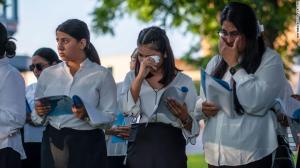
Antonio Basco cries while standing next to the cross for his partner Margie Reckard at the makeshift memorial for the mass shooting at a Walmart in El Paso, Texas, Aug. 5, 2019.
Christopher S. Koper, an associate professor of criminology at George Mason University, said in a 2020 study that LCMs enable rapid spray fire that gives shooters the ability to wound higher numbers of victims in public settings. So restrictions on LCMs can have an effect.
“Data on mass shooting incidents suggest these magazine restrictions can potentially reduce mass shooting deaths by 11 percent to 15 percent and total victims shot in these incidents by one quarter, likely as upper bounds,” Koper wrote, adding, “It is reasonable to argue that the federal ban could have prevented some of the recent increase in persons killed and injured in mass shootings had it remained in place.”
Moreover, a number of studies of state-level bans on LCMs, such as by Mark Gius of Quinnipiac University and by Klarevas, indicate that such laws are associated with a significantly lower number of fatalities in mass shootings. Fox co-wrote a 2020 study of state gun laws that concluded that bans on LCMs are associated with 38 percent fewer fatalities and 77 percent fewer nonfatal injuries when a mass shooting occurred.
One final thought from the same article.
That makes it difficult to know when to draw the line, especially because mental illness is not a predictor of violence. “Databases that track gun homicides, such as the National Center for Health Statistics, similarly show that fewer than 5 percent of the 120,000 gun-related killings in the United States between 2001 and 2010 were perpetrated by people diagnosed with mental illness,” noted Jonathan Metzl and Kenneth MacLeish of Vanderbilt University in a 2016 study. They said that other factors, such as alcohol and drug use, may increase the risk of turning toward violent crime even more. A history of childhood abuse is also considered a predictive risk factor.
Red-flag (“extreme risk”) laws — which generally allow police to take firearms away from people who exhibit concerning behavior — have been passed in 19 states and the District of Columbia, according to Everytown for Gun Safety, which advocates for gun-control laws. Between 1999 and 2021, at least 16,857 extreme risk petitions were filed, the group says. Florida, which passed such a law after the Marjory Stoneman Douglas High School shooting in 2018, has used it 6,000 times since then.
There are other possibilities like universal background checks discussed. It’s really a worthwhile read since it basically uses peer-reviewed research by major organizations and universities.
As a gunman entered Robb Elementary School in Uvalde, Texas, and started firing, one student said his wounded teacher texted 911 for help.
Daniel, 9, alongside his mother, Briana Ruiz, told CNN the gunman fired several shots into his classroom after being unable to enter. The door had been locked by his teacher, and the bullets fired struck the teacher as well as a classmate.
The deadly rampage at Robb Elementary marked at least the 30th shooting at a K-12 school in just the first five months of this year. It was the deadliest school shooting since the 2012 Sandy Hook massacre.Daniel survived by first “hiding under a table next to the wall.” He said he could see the gunman through the door’s window.
“I could still see his face,” the boy said. “I could see him staring at people in front of me.”
The scene at the memorial of the King Soopers in Boulder, Colorado, on April 2, 2021. Ten people died in a mass shooting at the store on March 22, 2021. Courtesy of David Kalish
Why are we like this? Are we reliving the days of the Wild West and the slaughter of Native Americans as we steal their land? Are we stuck in the Fugitive Slave Law Days or the Lynchings of Jim Crow? Are we on some kind of Crusade against everyone who does not worship the select god and manner we’ve been raised with? All of this is definitely Western History. It’s our history. Why are we repeating it every time the country makes little progress towards liberty and justice for all? Well, let me also make this clear. This royal “we” refers to the men in this country. It’s rare for a woman to do this. Remember the NPR article I suggested last week where there are two clusters of men or boys that do this?
Densley and Peterson said they see two kinds of age clusters of mass shooters: Men in their mid-40s for those who are workplace shooters and school shooters or those involved in other types of mass shootings between the ages of 15 and 24.
Of the 180 instances of mass shootings in the U.S. they’ve studied, they found that there are only two cases where women acted alone.
It’s always men otherwise, Peterson said.
“We know that 18 is this kind of fragile age, this kind of coming of age where people tend to have mental health crises, or they may feel suicidal,” she said.
These shootings are emblematic of that.
The shooters have “the desire to have that pain, and that anger be known to the world, to have us all watch and witness it, to hear their names, to see their pictures, to read what they’ve left behind for us to read. These are public performances meant for us to watch,” she said.
Notably, in many places in the U.S., it’s also the age they can legally buy their weapons of choice.
It’s time to take all these studies seriously and change the gun laws since we obviously can’t change the boys and men. Europe and Japan know what works. Most civilized countries know what works. It’s about not having an Ok Corral atmosphere with a group of testosterone-driven mouth-breathers taking their grievances out on the rest of us.
If they can’t Man Up, then they shouldn’t be able to get to play with grown-up toys.
What’s on your reading and blogging list today?
Did you like this post? Please share it with your friends:
I’ve spent a couple of hours now searching the internet for good news. The closest I’ve gotten to finding it is some articles about bad news for Donald Trump.
First up: the investigation into Trump’s efforts to interfere with the 2020 presidential election process in Georgia appears to be building steam.
ATLANTA — As many as 50 witnesses are expected to be subpoenaed by a special grand jury that will begin hearing testimony next week in the criminal investigation into whether former President Donald J. Trump and his allies violated Georgia laws in their efforts to overturn his 2020 election loss in the state.
The process, which is set to begin on Wednesday, is likely to last weeks, bringing dozens of subpoenaed witnesses, both well-known and obscure, into a downtown Atlanta courthouse bustling with extra security because of threats directed at the staff of the Fulton County district attorney, Fani T. Willis….
Ms. Willis emphasized the breadth of the case. As many as 50 witnesses have declined to talk to her voluntarily and are likely to be subpoenaed, she said. The potential crimes to be reviewed go well beyond the phone call that Mr. Trump made to Georgia’s secretary of state, Brad Raffensperger, on Jan. 2, 2021, during which he asked him to find enough votes to reverse the election results.
Ms. Willis is weighing racketeering among other potential charges and said that such cases have the potential to sweep in people who have never set foot in Fulton or made a single phone call to the county.
Her investigators are also reviewing the slate of fake electors that Republicans created in a desperate attempt to circumvent the state’s voters. She said the scheme to submit fake Electoral College delegates could lead to fraud charges, among others — and cited her approach to a 2014 racketeering case she helped lead as an assistant district attorney, against a group of educators involved in a cheating scandal in the Atlanta public schools.
“There are so many issues that could have come about if somebody participates in submitting a document that they know is false,” she said. “You can’t do that. If you go back and look at Atlanta Public Schools, that’s one of the things that happened, is they certified these test results that they knew were false. You cannot do that.”
An Atlanta-area district attorney investigating Donald Trump‘s efforts to overturn the 2020 election results has subpoenaed half a dozen officials from the Georgia secretary of state’s office, according to copies of the documents obtained by CNN….
Fulton County District Attorney Fani Willis subpoenaed Georgia Secretary of State Brad Raffensperger, Interim Deputy Secretary of State Gabe Sterling, General Counsel Ryan Germany, former Elections Director Chris Harvey, Legislative Liaison Victoria Thompson and former Chief Investigator Frances Watson, according to copies of the documents.
The subpoenas call for the witnesses to testify on dates from early to mid-June. Raffensperger, who has previously said he would comply with a subpoena, appears slated to be one of the first witnesses to testify on June 2. His call with Trump — in which the former President pressured Raffensperger to “find” the votes needed for Trump to win Georgia — lies at the heart of the Georgia probe.
Sterling, Raffensperger’s deputy, also has said he would comply with his subpoena. Several staffers in the office have already had voluntary conversations with Fulton County investigators and handed over relevant documents and recordings.
Willis, meantime, has said she’s not limiting her investigation to Trump’s infamous call with Raffensperger. She has cast a wide net — looking at Georgia’s fake electors, former Trump lawyer Rudy Giuliani’s conspiracy-ridden presentation to state lawmakers and other issues — as she tries to determine whether Trump and his allies engaged in a broad criminal conspiracy to try to swing the Peach State to Trump’s column….
Fulton County investigators traveled to Washington, DC, earlier this month to meet with staffers for the House select committee investigating the January 6, 2021, insurrection to go over information that may be relevant to the Georgia probe, according to the person familiar with the investigation.
Here’s hoping some bad news for Trump and good news U.S. democracy emerges from this investigation.
More potential bad news for Trump: his chosen candidates for 2022 aren’t doing so well.
Donald J. Trump had cast this year’s primaries as a moment to measure his power, endorsing candidates by the dozen as he sought to maintain an imprint on his party unlike any other past president.
But after the first phase of the primary season concluded on Tuesday, a month in which a quarter of America’s states cast their ballots, the verdict has been clear: Mr. Trump’s aura of untouchability in Republican politics has been punctured.
Annamira, Jeffrey Nentrup
In more than five years — from when he became president in January 2017 until May 2022 — Mr. Trump had only ever seen voters reject a half-dozen of his choices in Republican primaries. But by the end of this month, that figure had more than doubled, with his biggest defeat coming on Tuesday when Gov. Brian Kemp of Georgia thrashed a Trump-backed challenger by more than 50 percentage points. Three other Trump recruits challenging Kemp allies also went down to defeat.
The mounting losses have emboldened Mr. Trump’s rivals inside the party to an extent not seen since early 2016 and increased the chances that, should he run again in 2024, he would face serious competition….
Mr. Trump remains broadly popular among Republicans and has a political war chest well north of $100 million. But there has been a less visible sign of slippage: Mr. Trump’s vaunted digital fund-raising machine has begun to slow. An analysis by The New York Times shows that his average daily online contributions have declined every month for the last seven months that federal data is available.
Mr. Trump has gone from raising an average of $324,633 per day in September 2021 on WinRed, the Republican donation-processing portal, to $202,185 in March 2022 — even as he has ramped up his political activities and profile.
Unfortunately, it appears that even if the Republicans dump Trump, the party is already suffused with Trumpism and that’s not likely to change.
The former US president suffered some humiliation on Tuesday when four candidates he handpicked in Georgia lost Republican primary elections in a landslide. It was a stinging rebuke in what has become ground zero for his “big lie” that the 2020 election was stolen.
But it was no rebuke of Maga and all it stands for.
The hard-right, nativist-populist strain of Republican politics predates Trump and will surely survive him. This year’s primary season winners in Georgia and elsewhere have been careful not to disavow the movement, or its patriarch, even when they lack his blessing.
“Donald Trump has transformed the Republican party over the past five years and it is now a solid majority Trumpist party with everything that entails in policy and in tone,” said Bill Galston, a senior fellow at the Brookings Institution thinktank in Washington. “On the other hand, Republicans, including very conservative ones, are clearly willing to entertain the possibility of Trumpism without Trump.”
Painting by K. Celia Wood
Galston, a former policy adviser to President Bill Clinton, commented: “The results in Georgia were really stunning. Few, if any Republicans, have aroused Donald Trump’s ire so much as Governor Kemp and Brad Raffensperger and they both did substantially better than expected. Donald Trump went all out in Georgia and he ended up an egg on this face, which is significant.
“It may be that the people who have been in the bull’s eye of Trump’s ‘big lie’ campaign have started resenting it and took their resentment out. More generally, I think an increasing number of people are asking themselves a question that they weren’t asking previously: would we be better off with a Trumpist candidate who’s not named Donald Trump?”
Among those asking the question is Chris Christie, the former governor of New Jersey, who campaigned for Kemp in Georgia and told the Politico website: “Trump picked this fight.” Senators Ted Cruz and Rand Paul have also felt at liberty to campaign for midterm candidates denied Trump’s imprimatur.
Then there is Mike Pence, the former vice-president, who defied his old boss by rallying with Kemp on Monday and telling the crowd: “Elections are about the future.” Pence, himself a former governor of Indiana, has made a habit of speaking with pride about the accomplishments of the Trump-Pence administration while distancing himself from the “big lie”.
There’s more analysis at the Guardian link.
Yesterday, Dakinikat focused on the NRA convention in Houston, just after the ghastly school shooting in Uvalde, Texas and just two weeks after the racist mass murders in Buffalo, New York. Heather Digby Parton wrote at Raw Story about the NRA’s long history of arguing that they are the true victims of mass shootings: The NRA celebrates in Texas before Uvalde victims are buried.
That’s to be expected, of course. The NRA has never let a mass shooting get in the way of gathering for fun and profit. The Washington Post’s Gillian Brockell reminded us this week that they did exactly the same thing after Columbine, the first of the modern school shootings that have plagued America for more than two decades. That mass killing took place in Littleton, Colorado, a suburb of Denver where the NRA convention was scheduled to take place just days later. In that case, the Denver mayor told them the city didn’t want them there and even offered to pay them for their trouble if they would cancel. They still refused.
Photo by Brooke Hummer
Last year, NPR correspondent Tim Mak came into possession of some recorded calls between NRA officials right after Columbine which showed that their primary concern at the time was that they would look weak if they canceled the meeting. In the end, after contemplating creating a “victims fund” and deciding it would look like an admission of guilt, their only compromise was to cancel the gun show portion of their convention and shorten their gathering to just one day. According to Brockell, NRA president Charlton Heston went on to give a memorable speech that year “blaming the media for scapegoating NRA members as somehow responsible for the tragedy, while ‘racing’ to ‘drench their microphones with the tears of victims.'” The next year he returned to give one of the most famous culture war speeches in history:
I believe that we are again engaged in a great civil war, a cultural war that’s about to hijack your birthright to think and say what lives in your heart. I’m sure you no longer trust the pulsing lifeblood of liberty inside you, the stuff that made this country rise from wilderness into the miracle that it is…
As I’ve stood in the crosshairs of those who target Second Amendment freedoms, I’ve realized that firearms are — are not the only issue. No, it’s much, much bigger than that. I’ve come to understand that a cultural war is raging across our land, in which, with Orwellian fervor, certain accepted thoughts and speech are mandated.
That was almost a quarter century ago so all this recent wailing about “cancel culture” is just a new term for the same culture war that’s been raging for years. And guns have been at the heart of it because the NRA put them there.
I’ve written a lot over the years about Wayne LaPierre and his fantastically successful gun rights movement, for which he can pretty much take total credit. He saw the potential to turn the sporting and hunting organization into a political powerhouse and through his public relations and propaganda skills met his goals in the matter of a few short years. In doing so he made gun ownership a social identity for the American right wing.
It’s difficult not to obsess about all the bad news, but we also have to take care of ourselves. So I wish you all well and hope you have a pleasant long weekend. And thank you for being here and sharing your thoughts with us.
Did you like this post? Please share it with your friends:
The Sky Dancing banner headline uses a snippet from a work by artist Tashi Mannox called 'Rainbow Study'. The work is described as a" study of typical Tibetan rainbow clouds, that feature in Thanka painting, temple decoration and silk brocades". dakinikat was immediately drawn to the image when trying to find stylized Tibetan Clouds to represent Sky Dancing. It is probably because Tashi's practice is similar to her own. His updated take on the clouds that fill the collection of traditional thankas is quite special.
You can find his work at his website by clicking on his logo below. He is also a calligraphy artist that uses important vajrayana syllables. We encourage you to visit his on line studio.








 This is horrifying. We have too many sick, sick individuals on the Supreme Court right now appointed by Republicans appeasing these types of cults. One piece of good news on the SCOTUS front did come out today.










 “Our debt to the heroic men and valiant women in the service of our country can never be repaid. They have earned our undying gratitude. America will never forget their sacrifices.” – Harry S. Truman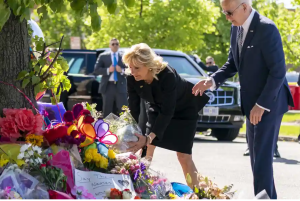

 The victims, in this case, were 13 and 15.








 peej
peej Carissa
 bostonboomer
 dakinikat
 ecocatwoman
 mablue2
 Mama Lopez
 peggysue22
 quixote
 skydancingguestblogger
 Mona (aka Wonk the Vote)



 Sky Dancing
Recent Comments