Posted: November 10, 2022 | Author: bostonboomer | Filed under: 2022 Elections, Afternoon Reads, Donald Trump | Tags: "red wave", abortion rights, Joe Biden |

The Yellow Cow, Franz Marc
Good Afternoon!!
I’ve been sitting here for awhile with my laptop open, staring into space; and I just realized that I’m kind of in a daze after the past few days.
Election day was much better for Democrats than I expected, even though I had read convincing arguments from Democratic polling experts Simon Rosenberg and Tom Bonier that they could do well. I actually included their predictions in my election day Tuesday post via a piece by Rosenberg.
My worst fears didn’t materialize, and that’s great; but we’re still in a kind of limbo waiting for results in Arizona and Nevada. It will also be a long time before California counts all the votes, so we may not know who controls the House for some time. In the Senate, we may not know until the December 6 Georgia runoff.
One thing we do know for sure is that abortion rights was an extremely important issue for voters in many states.
The New York Times: ‘My Main, Core Issue’: Abortion Was the Driving Force for Many Voters.
It was a driving force for a retired banker in San Antonio, an artist in Racine, Wis., an event planner in Miami Beach. It motivated college students and retirees, men and especially women. Even those who might usually skip a midterm election had been compelled to make time to cast a ballot.
Across the nation, voters felt an obligation to weigh in on what, for many, was a vital matter: abortion rights.
“Abortion was my main, core issue,” said Urica Carver, 41, a registered Republican from Scranton, Pa.
A single mother of six children, Ms. Carver, a caseworker for the state, said she would have most likely supported Republicans in the midterms. But the Supreme Court’s decision to overturn Roe v. Wade this summer magnified an issue that outweighed all others, she said. Abortion, she said, was a personal decision, and she would want her own daughters to have the option if needed.
Ms. Carver voted a straight Democratic ticket. “If they didn’t support that right, regardless of who they were,” she said, “they were not getting my vote.”

Two Poodles, Pierre Bonnard
Abortion played a larger role in midterm election results than even many Democrats, who had made it central to their campaigns, expected. Pre-election polls had shown Americans fixated on inflation and crime, with abortion still a concern but not as much of a priority.
Those opposed to abortion rights also said the issue moved them to vote. But in states with ballot initiatives that could affect abortion access, the issue drew more people who supported abortion rights, or did not want more restrictions.
In all five states where abortion-related questions were on the ballot on Tuesday, voters chose to protect access to the procedure or reject further limits. And in some places where the future of abortion rights were uncertain, Democratic candidates who campaigned on the issue fared well — particularly in Michigan, where voters re-elected the Democratic governor, Gretchen Whitmer, and in Pennsylvania, where the Democrat Josh Shapiro won the governorship and the Democrat John Fetterman won the Senate race.
Read the rest at the NYT.
John Hendrikson at The Atlantic: How Abortion Defined the 2022 Midterms. Where Dr. Oz stumbled, John Fetterman only had to say Roe v. Wade. And so it went across the nation.
In red and blue states alike, reproductive autonomy proved a defining issue of the 2022 midterms. Although much preelection punditry predicted that the Pennsylvania Democratic nominee John Fetterman’s post-stroke verbal disfluency was poised to “blow up” the pivotal Senate race on Election Day, the exit polls suggest that abortion seismically affected contests up and down the ballot.
Concerns over the future of reproductive rights unequivocally drove Democratic turnout and will now lead to the rewriting of state laws around the country. In deep-red Kentucky, voters rejected an amendment that read, “Nothing in this Constitution shall be construed to secure or protect a right to abortion or require the funding of abortion.” In blue havens such as California and Vermont, voters approved ballot initiatives enshrining abortion rights into their state constitutions.
In Michigan, a traditionally blue state that in recent years has turned more purple, voters likewise enshrined reproductive protections into law, with 45 percent of exit-poll respondents calling abortion the most important issue on the ballot. In the race for the Michigan statehouse, the incumbent Democratic governor, Gretchen Whitmer, trounced her Republican challenger, Tudor Dixon, who had said that she supports abortion only in instances that would save the life of the woman, and never in the case of rape or incest. Dixon lost by more than 10 percentage points and almost half a million votes.
After the Supreme Court’s Dobbs v. Jackson Women’s Health Organization decision ended the federal right to abortion in June, many observers wondered whether pro-abortion-rights Democrats would remain paralyzed with despair or whether their anger would become a galvanizing force going into the election season. The answer is now clear—though, in fact, it has been for some time.
In August, just six weeks after Dobbs, Kansas voters rejected an amendment to the state constitution that could have ushered in a ban on abortion. That grassroots-movement defeat of the ballot initiative was a genuine shocker—and it showed voters in other states what was possible at the local level.
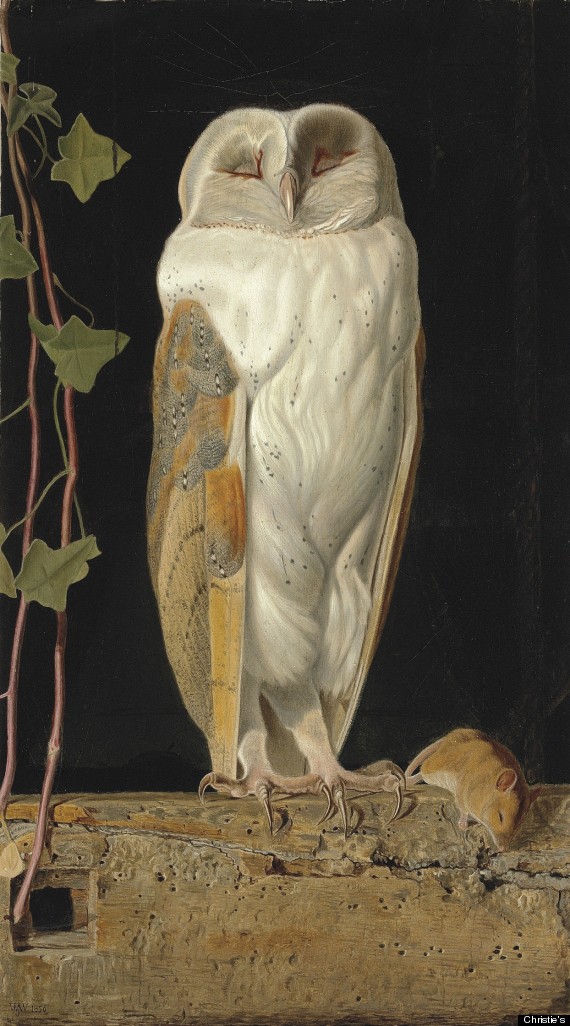
William James Webbe, The White Owl, ‘Alone and warming his five wits, The white owl in the belfry sits,’ signed with monogram and dated ‘1856’
Right leaning Axios reports that anti-abortion groups think the problem is that Republicans distanced themselves from the abortion issues: Republicans’ abortion silence backfires in midterms, by Oriana Gonzalez.
The blame game has begun around what led to Republicans’ disappointing results in the midterms, with some outside groups zeroing in on the party’s lack of an abortion message.
Driving the news: Susan B. Anthony Pro-Life America, a large anti-abortion organization with close ties to GOP leaders, slammed Republican candidates who distanced themselves from abortion bans and failed to clearly communicate their stance on the issue, calling it “political malpractice.”
The group said in a memo that to “win in competitive races,” candidates needed to focus on defining their opponents as “abortion extremists” and “contrast that with a clearly defined pro-life position centered around consensus such as pain-capable or heartbeat limits.” [….]
They specifically praised Florida Sen. Marco Rubio and Gov. Ron DeSantis, Texas Gov. Greg Abbott, Sen.-elect J.D. Vance of Ohio, and Georgia Senate hopeful Herschel Walker, whose closely watched race is headed for a runoff.
Yeah, no. I don’t think that would have worked. The candidates who did talk about it mostly didn’t do well.
More points of view on what kept the anticipated “red wave” from happening
Noah Berlatsky at Public Notice: The red wave that wasn’t.
In the wee hours of Wednesday morning, the results of the 2022 midterms were still uncertain. Control of both the House and the Senate remained up for grabs; the latter may ultimately be determined by a run-off in Georgia in December.
We do know one thing though. Joe Biden has had the most successful midterm of any president in 20 years. The Democrats in disarray narrative looks a lot more like Republicans in disarray. The American people, it turns out, did care about inflation. But they cared about democracy too….
The Democrats currently have 50 seats in the Senate and a narrow majority of 224-213 in the House. Holding that, or losing a handful of seats in the House, may not seem like an impressive outcome. Usually, though, the president’s party gets clobbered in the midterms. Donald Trump in the 2018 midterms lost 40 seats in the House. Barack Obama lost a whopping 63 seats in 2010. In comparison, his 13 seat loss in 2014 seems relatively mild, even though it shifted control to the Republicans again. George W. Bush lost 31 seats in his 2006 midterm.
You have to go back to the 2002 midterm, in the rally around the flag aftermath of the 9/11 attacks, to find a midterm in which the president’s party made any gains. The Republicans that year picked up eight seats, solidifying their hold on the House. Before that, the president’s party lost control of the House in every other midterm election since 1978.
Biden’s achievement — even if he ends up losing a handful of House seats — is all the more remarkable because his popularity remains in the doldrums. Poll aggregator FiveThirtyEight has his approval at around 41.4 percent. That’s lower than Trump’s (42.2 percent) and or Obama’s (44.8 percent) at the same point in their presidencies, when they experienced catastrophic losses.
Biden’s low approval ratings and high inflation nationally led many pundits to believe that there would be a red wave in line with most midterms. Pundits said that New York governor Kathy Hochul could be in danger of losing her blue state to challenger Lee Zeldin. Analysts also suggested Democrats could lose a Rhode Island House seat they’d held since 1991, as Republican Allen Fung looked prepared to unseat Democrat Seth Magaziner. Colorado Democratic Senator Michale Bennett was supposed to be in trouble. So was Washington state’s senator Patty Murray.
Oops! The media’s favorite meme, “Dems in disarray,” might need revisions. Read more at Public Notice.

Cows, by Vincent Van Gogh
This is a “guest essay” at The New York Times by Sohrab Ahmari: Why the Red Wave Didn’t Materialize. Ahmari thinks the Republicans’ failure to help or even empathize with working class Americans explains their electoral losses.
A week before the midterms, a video circulated online of a Starbucks barista crying while explaining the need for a union: “I’m a full-time student. I get scheduled for 25 hours a week, and on weekends they schedule me the entire day — open to close.” The manager is bad, the staffing is inadequate and the stress is overwhelming.
The video should have elicited sympathy from anyone familiar with the lousy wages and grinding conditions that characterize today’s service economy. That was not, though, the response of the full spectrum of conservative media and personalities, from Fox News to The Daily Wire to Sebastian Gorka.
“Boo Hoo!” replied Media Research Center TV, a conservative media site. “This ‘person’” — the barista happens to be transgender, hence, I suppose, the scare quotes around “person” — “was in tears because they had to work eight hours a day on the weekend.”
Episodes like this may be one reason the red wave didn’t materialize, why Republicans failed to usher in a new dawn of prosperity for the multiracial working class that Republican leaders from Senator Ted Cruz to the House policy honcho Jim Banks say they want to champion. When it came down to it, the Republican Party offered ordinary American workers little that might have bolstered their power or leveled the economic playing field. That failure helped dash conservative hopes for a clean Republican sweep.
Read more at the NYT.
Some Republicans and pundits are blaming Trump.
The New York Times: Trump Under Fire From Within G.O.P. After Midterms.
Donald J. Trump faced unusual public attacks from across the Republican Party on Wednesday after a string of midterm losses by candidates he had handpicked and supported, a display of weakness as he prepared to announce a third presidential campaign as soon as next week.
As the sheer number of missed Republican opportunities sank in, the rush to openly blame Mr. Trump was as immediate as it was surprising.

Hunting Dogs in a Boat (1889) by Winslow Homer
Conservative allies criticized Mr. Trump on social media and cable news, questioning whether he should continue as the party’s leader and pointing to his toxic political brand as the common thread woven through three consecutive lackluster election cycles.
Mr. Trump was seen as largely to blame for the Republicans’ underwhelming finish in Tuesday’s elections, as a number of the candidates he had endorsed in competitive races were defeated — including nominees for governor and Senate in Pennsylvania and for governor of Michigan, New York and Wisconsin.
“Republicans have followed Donald Trump off the side of a cliff,” David Urban, a longtime Trump adviser with ties to Pennsylvania, said in an interview.
Former Representative Peter King, a Republican from Long Island who has long supported Mr. Trump, said, “I strongly believe he should no longer be the face of the Republican Party,” adding that the party “can’t become a personality cult.”
The chorus of criticism, which unfolded on Fox News and social media throughout the day, revealed Mr. Trump to be at his most vulnerable point politically since the aftermath of the Jan. 6, 2021, attack on the Capitol.
The Washington Post: How Trump, infighting and flawed candidates limited Republican gains. This is one of the Post’s trademark gossipy reports with 5 authors and many sources, so you’ll need to go read the whole thing if you’re interested. Here’s the intro:
Florida Sen. Rick Scott made a plea to about 35 of his colleagues during lunch at the National Republican Senatorial Committee offices in early August: Send money to the NRSC from your personal campaign accounts. The candidates were in need.
The Republican outlook had gone from glossy to grim since the July campaign finance reports. Despite $5-a-gallon gasoline and a historically unpopular president, Democratic Senate candidates in pivotal states had big financial and polling leads. First-time Republican candidates propelled by former president Donald Trump, on the other hand, were viewed unfavorably in Pennsylvania, Ohio, Arizona and Georgia.
But Scott’s hopes of a united GOP response were dashed as soon as Senate Minority Leader Mitch McConnell (R-Ky.) stood to address the same room: Send 20 percent of the money from their leadership PACs, he told the senators, to the Senate Leadership Fund, an outside group controlled by his own loyalists, according to a person familiar with the matter.
The implication, said multiple people familiar with the exchange, was that senators needed to choose sides in a months-long battle between the two Senate leaders about the best strategy for winning, a conflict that would have serious consequences in the fall.

Bull, 1911, by Franz Marc
At least one senator left the meeting frustrated that Scott had to come hat-in-hand so late in the campaign, according to people briefed afterward. Other senators raised private concerns broadly about how Scott had managed the committee. Others blamed McConnell….
From the outside, this year’s elections looked like a virtual Republican lock. Since Lyndon B. Johnson, new Democratic presidents have lost an average of 45 House and five Senate seats in the midterms. Republicans went to the polls Tuesday needing to gain just five House seats and a single Senate seat to take control, amid soaring inflation and broad dissatisfaction with the nation’s direction.
But behind the scenes, nothing came easy to Republicans this cycle, as their historic tail winds collided with the fractious reality of a political party in the midst of a generational molting. GOP leaders spent much of the last year fighting against each other or plotting against their own primary voters. They were hobbled by unprepared first-time candidates, fundraising shortfalls and Trump, whose self-concern required constant attention — right up to the eve of the election, when he forced party bosses to beg him once again to delay a presidential campaign announcement.
That’s all I have for you today. Please share your thoughts and links in the comment thread, and have a great Thursday!
Did you like this post? Please share it with your friends:
Posted: November 5, 2022 | Author: bostonboomer | Filed under: Afternoon Reads, cat art, caturday, just because | Tags: conspiracy theories, disinformation, Elon Musk, misinformation, polls, Twitter, Twitter advertisers |

Leonid Kiparisov, ‘On a Good Footing’
Happy Caturday!!
At least we can celebrate cats and cat art, even though things in the real world are so f’d up. The top story today should be the upcoming midterm elections, and it is; but not in the way it normally would be. Right now we are dealing with a very strange situation in which a social media meltdown is likely to turn the process we’ve become accustomed to completely upside down. There’s really no way to know how it will all shake out, but it’s not looking good. It’s as if Trump himself took over Twitter in order to stoke chaos in the upcoming elections. In addition to the Twitter madness, the polls, which have been less accurate over the past several years, are seemingly more problematic than ever.
Here’s the latest on the Twitter mess. It’s a deep dive on the layoffs and how they could affect the user experience as well as the ability of experts, journalists, and regular people to follow the election results. Ben Collins, Bandy Zadrozny, and David Ingram at NBC News: Days before the midterms, Twitter lays off employees who fight misinformation.
Mass layoffs at Twitter on Friday battered the teams primarily responsible for keeping the platform free of misinformation, potentially hobbling the company’s capabilities four days before the end of voting in Tuesday’s midterm elections, one current and six former Twitter employees familiar with the cuts told NBC News,five of whom had been recently laid off.
Two former Twitter employees and one current employee warned the layoffs could bring chaos around the elections, as they hit especially hard on teams responsible for the curation of trending topics and for the engineering side of “user health,” which works on content moderation and site integrity. The seven people asked to withhold their names out of worry over professional retribution and because they weren’t authorized to speak for the company.
CEO Elon Musk, who’s facing sizable future debt payments and declining revenue at Twitter, said the cuts were needed to ensure the health of the company’s long-term finances a week after he bought it for $44 billion.
The cuts appeared to affect many people whose jobs were to keep Twitter from becoming overwhelmed by prohibited content, such as hateful conduct and targeted harassment, the seven sources said….
Gita Johar, a Columbia University business professor who has studied misinformation on Twitter, said the job cuts risk turning the site into a “free-for-all with rumors, conspiracy theories and falsehoods taking hold on the platform and in people’s imagination.”
Twitter had not released public figures about which teams had been cut the most, but the layoffs were widespread. In an exchange at an investor conference Friday, Musk appeared to confirm that his team had laid off half the company’s workforce, according to CNBC.
“Elon will own a company without employees,” a source inside Twitter told CNBC.

Painting by Françoise Collandre
Musk and his hand-picked spokespeople claim there won’t be any problems; but if you use Twitter regularly, you know that isn’t true.
Twitter’s curation team, which had a variety of roles across the platform, including coordinating the detection and publishing of moments meant to debunk misinformation, appears to be gone, one source said. The team had recently published an explainer about how it tried to keep information accurate and impartial.
Andrew Haigh, a London-based curation lead, said on Twitter that the team “is no more.”
“Unfortunately, the platform’s history of transparency and supporting research may be just that: history,” said Kate Starbird, a professor of design and engineering at the University of Washington who studies misinformation.
Starbird said it remained to be seen how potential misinformation around the midterms might be affected.
“We were already expecting a surge in rumors and disinformation around the election, even before Musk taking the reins,” she said.
“But the mass layoffs mean that we’ll get to see what an unmoderated major platform truly looks like in 2022, in an era of algorithmic manipulation and networked toxicity, during a massive online convergence event with huge political stakes.”
Read the rest at NBC News if you’re interested in the effects of misinformation and disinformation.
The Verge: Elon Musk’s Twitter layoffs leave whole teams gutted
Elon Musk has now purged roughly half of Twitter’s 7,500 employee base, leaving whole teams totally or near completely gutted, including those tasked with defending against election misinformation ahead of the US midterms next week, The Verge has learned.
The areas of Twitter impacted the most by Musk’s cuts include its product trust and safety, policy, communications, tweet curation, ethical AI, data science, research, machine learning, social good, accessibility, and even certain core engineering teams, according to tweets by laid-off employees and people familiar with the matter. More company leaders, including Arnaud Weber, VP of consumer product engineering, and Tony Haile, a senior director of product overseeing Twitter’s work with news publishers, have also been laid off following Musk’s firings of Twitter’s senior leadership last week.
Given the sweeping nature of Musk’s layoffs and his mandate to cut costs in areas like cloud hosting, employees who remain at Twitter told The Verge that they expect the company to have a hard time maintaining critical infrastructure in the short term. “Shit is gonna start breaking,” said one current employee who requested anonymity to speak without the company’s permission, while another called management’s layoff process “an absolute shit show.”
The rest of the article discusses Musk’s disgusting treatment of employees and upcoming lawsuits by those who have been purged.
The Washington Post: Twitter layoffs gutted election information teams days before midterms.
Devastating cuts to Twitter’s workforce on Friday, four days before the midterm elections, are fueling anxieties among political campaigns and election offices that have counted on the social network’s staff to help them combat violent threats and viral lies.

Slim woman with a cat, Geza Farago
The mass layoffs Friday gutted teams devoted to combating election misinformation, adding context to misleading tweets and communicating with journalists, public officials and campaign staff.
The layoffs included a number of people who were scheduled to be on call this weekend and early next week to monitor for signs of foreign disinformation, spam and other problematic content around the election, one former employee told The Washington Post. As of Friday morning, employee access to internal tools used for content moderation continued to be restricted, limiting staff’s ability to respond to misinformation.
Twitter had become one of America’s most influential platforms for spreading accurate voting information, and the days before elections have often been critical moments where company and campaign officials kept up a near-constant dialogue about potential risks.
But a representative from one of the national party committees said they are seeing hours-long delays in responses from their contacts at Twitter, raising fears of the toll workplace chaos and sudden terminations is taking on the platform’s ability to quickly react to developments. The representative spoke on the condition of anonymity because of the matter’s sensitivity.
It’s “only” a social media company, but Twitter has become a vital source of information for people in every walk of life. This is going to be a disaster.
Some researchers tracking online threats said they also feared that the cuts would interrupt lines of communication between the company and police that have been used to identify people threatening voter intimidation or offline violence.
“Law enforcement may lose precious minutes in identifying that person who we think is posing an actual threat,” said Katherine Keneally, a senior research manager at the Institute for Strategic Dialogue, a think tank that studies political extremism and polarization.
Keneally said she’d already seen an uptick in threatening content related to the election. She pointed to one post where a user wrote of the need to “pour in bleach or gasoline” at ballot drop boxes, a target of right-wing conspiracy theories about systematic voter fraud.
President Biden on Friday criticized Twitter’s role in spreading false information.
“Elon Musk goes out and buys an outfit that spews lies all across the world,” he said while attending a political fundraiser in Chicago. “There’s no editors anymore in America.”
The loss of Twitter as we knew it also has consequences for individuals. Here’s an example from a Washington Post writer:
Read the replies on Twitter. The sentiment is widespread.
Here’s another example:
From Vice yesterday, an example of how the lack of moderation is negatively affecting Twitter: Twitter Recommends Ye as Top Follow on ‘The Jews’ as Company Does Mass Layoffs.
“The Jews” is trending on Twitter, and its algorithm has selected Ye as a “Top” person to follow while Elon Musk fires roughly half of the company’s staff, including many of its policy experts and content moderators.
Ye, formerly known as Kanye West, recently had his Twitter access limited after saying he would go “death con 3” on “JEWISH PEOPLE,” and has been dropped by the vast majority of his business partners after repeatedly making blatantly antisemitic comments over the last few weeks. The freeze on Ye’s account has since been lifted.
“#IStandWithKyrie” is also trending, a reference to Brooklyn Nets star Kyrie Irving, who recently recommended that people watch an antisemitic documentary and was suspended for five games after declining to apologize and evasively answering a question on whether he holds “anti-semitic beliefs.”
Twitter’s content moderation has always been something of a disaster, and harmful things end up trending all the time. Twitter’s content moderation has always relied more heavily on algorithms than competitors like Facebook do. In any case, Musk has promised to protect the values of “freedom of speech”—with the company now running with thousands fewer employees after mass layoffs. This may well be a window into what that looks like.

Girl with Kitten – Olesya Serzhantova Russian painter
Twitter is also losing advertisers, which obviously could impact the long-term health of the company. The New York Times: Twitter’s Advertisers Pull Back as Layoffs Sweep Through Company.
The pullback of advertisers from Twitter gathered steam on Friday amid growing fear that misinformation and hate speech would be allowed to proliferate on the platform under Elon Musk’s leadership.
The Volkswagen Group joined several other companies in recommending that its automotive brands, which include Audi, Lamborghini, Bentley and Porsche, pause their spending on Twitter out of concerns that their ads could appear alongside problematic content. The Danish brewing company Carlsberg Group also said it had advised its marketing teams to do the same. The outdoor equipment and apparel retailer REI said it would pause posts in addition to advertising spending “given the uncertain future of Twitter’s ability to moderate harmful content and guarantee brand safety for advertisers.” And a spokeswoman for United Airlines, Leslie Scott, confirmed that the carrier had suspended advertising on Twitter earlier this week.
Civil rights groups including GLAAD and the Anti-Defamation League held a conference call on Friday urging other companies to abandon Twitter, saying that mass layoffs there were gutting what they described as an already anemic content moderation staff.
Even Mr. Musk acknowledged the advertising slump, tweeting on Friday morning that Twitter “has had a massive drop in revenue,” which he blamed on activist groups pressuring advertisers.
The first chaotic week of Mr. Musk’s ownership of Twitter has given Madison Avenue whiplash, as advertisers struggle to reconcile the billionaire’s promises to make the platform safe for brands with concerns about a surge of extremism and false narratives, including one promoted by Mr. Musk himself.
In his tweet about Twitter’s faltering revenue, Mr. Musk said that “nothing has changed with content moderation and we did everything we could to appease the activists” — a claim that civil rights groups denied.
A minute before he posted his comment, the ad-tracking platform MediaRadar released statistics showing that the number of advertisers on Twitter had dropped from May, soon after Mr. Musk’s bid for the platform was announced, through September, when he was still fighting to get out of the deal he struck to buy Twitter in April.
MediaRadar, which tracks ad campaigns for millions of companies, said data for October, when Mr. Musk took over Twitter, would not be available until later this month.
More details at the link.
 And what about the polls? New York Times polling expert Nate Cohn discusses the situation: Polling Averages Can Be Useful, but What’s Underneath Has Changed. This year, a wave of polls from Republican-leaning firms is driving the averages.
The polls show Republicans gaining heading into the final stretch. They’ve pulled ahead on the generic ballot in the race for the House, and they’ve fought into a closely contested race for Senate control….
On average, Republicans lead by two points on the generic ballot — which asks voters whether they’ll vote for the Democrat or Republican for Congress — and have pulled into very tight Senate races in Pennsylvania, Georgia and Nevada, where Democrats were once thought to have the advantage.
This simple poll average is like many others you might have seen over the years. It weights the most recent polls more heavily. It gives more weight to pollsters that belong to a professional polling organization (they tend to be far less biased over the longer term). It doesn’t contain some of the fancier bells and whistles, like an adjustment for whether a poll tends to lean toward Republicans or Democrats.
But in one important respect, this average is very different from polling averages you’ve seen in prior years: The pollsters making up the average are very different.
Many stalwarts of political polling over the last decade — Monmouth University, Quinnipiac University, ABC/Washington Post, CNN/SSRS, Fox News, New York Times/Siena College, Marist College — have conducted far fewer surveys, especially in the battleground states, than they have in recent years. In some cases, these pollsters have conducted no recent polls at all.
And on the flip side, there has been a wave of polls by firms like the Trafalgar Group, Rasmussen Reports, Insider Advantage and others that have tended to produce much more Republican-friendly results than the traditional pollsters. None adhere to industry standards for transparency or data collection. In some states, nearly all of the recent polls were conducted by Republican-leaning firms.
This creates a big challenge for a simple polling average like this one. From state to state, Democrats or Republicans might seem to be doing much better or much worse, simply depending on which kind of pollster has conducted a survey most recently. The race may seem to swing back and forth, from week to week.
This is a subscriber only article, but I sent a gift link to Twitter and I’m posting it here for anyone who wants to read the rest and see charts.
I’m going to end there. As for how things are going in the many important races around the country, I have decided to kind of ignore the news about those. I can’t trust the polls, and I will only end up anxious and depressed if I read too much about what’s happening in the various states. I’m worried, but I figure all I can do is wait and see what happens and then deal with the results.
Please post your thoughts and share links on any topic in the comment thread, and I wish you a nice, peaceful weekend.
Did you like this post? Please share it with your friends:
Posted: November 3, 2022 | Author: bostonboomer | Filed under: 2021 Insurrection, Afternoon Reads, Donald Trump | Tags: Clarence Thomas, Department of Justice, executive privilege, January 6 investigation, John Eastman, Kash Patel, Kenneth Chesebro, Mar-a-Lago documents investigation, Merrick Garland, use immunity, Walt Nauta |
Good Afternoon!!
It’s really happening, folks. Last night we got another sign that Merrick Garland’s DOJ is likely to indict Donald Trump. The news broke around 9PM Wednesday in The Wall Street Journal that Trump insider Kash Patel has been given limited use immunity and will now have to testify to the grand jury in the stolen documents case. This means he won’t be prosecuted for anything he testifies to truthfully, but he can be prosecuted if he lies.
Lawrence Tribe predicted this last month when The New York Times published a story about the DOJ trying to get testimony from Patel and another Trump aide Walt Nauta, who was involved in moving boxes of documents out of the storage area at Mar-a-Lago.
Here’s the Wall Street Journal article from last night: Trump Aide, Granted Immunity, Set to Testify at Grand Jury Probing Mar-a-Lago Documents.
Kash Patel, a close associate of former President Donald Trump, is set to soon testify before a federal grand jury probing the handling of classified documents at Mar-a-Lago after receiving immunity for his information, people familiar with the matter said.
A federal judge recently decided the Justice Department couldn’t force Mr. Patel to testify without such protection against his statements being used against him in some future prosecution. That ruling, the people said, opens the door for Mr. Patel, who says Mr. Trump broadly declassified White House documents while still president, to answer questions.
Mr. Patel appeared before the grand jury last month and refused to provide information by repeatedly invoking his Fifth Amendment right against self-incrimination, The Wall Street Journal reported.

Kash Patel
In response, the Justice Department asked a federal judge to compel him to testify. Prosecutors argued Mr. Patel had no reasonable expectation that he would be prosecuted based on the kinds of questions they were asking, one of the people said, an argument the judge didn’t accept.
The immunity grant leaves the government only able to charge Mr. Patel, if at all, using information obtained independently of his immunized testimony.
That’s because Patel is just a small fish, and the DOJ is going after a much bigger fish–Trump himself.
Other Trump associates involved in the Mar-a-Lago documents matter also have been offered some form of immunity, people familiar with the matter said, including one of Mr. Trump’s lawyers, Christina Bobb, who declined, saying she didn’t need it.
Mr. Patel, a former White House and Pentagon aide whom Mr. Trump late in his term considered naming to top positions at the Central Intelligence Agency and the FBI, has asserted publicly since May that Mr. Trump broadly declassified documents when he left the White House in January 2021. His comments first came as the Justice Department’s efforts to retrieve the documents from Mar-a-Lago were intensifying and the same month prosecutors issued a grand jury subpoena for their return.
Prosecutors asked Mr. Patel about that claim and an array of other topics, including some that had nothing to do with Mr. Trump or the material discovered at Mar-a-Lago, one of the people said.
Investigators have spoken to a number of other people, including close aides to the former president, since the probe began.
I didn’t encounter a paywall when I opened this WSJ story from a link on Memeorandum.
This is from a New York Times article on this new development:
The disclosure that Mr. Patel has received immunity for his testimony comes as prosecutors have increased their pressure on recalcitrant witnesses who have declined to answer investigators’ questions or have provided them with potentially misleading accounts about Mr. Trump’s handling of documents.
Prosecutors have indicated they are skeptical of the level of cooperation they have gotten from a little-known Trump aide named Walt Nauta, who has provided the authorities with different accounts about whether he moved documents stored at Mr. Trump’s Mar-a-Lago estate. The authorities are using the specter of charges against him for misleading investigators to persuade him to sit again for questioning.
The prosecutors want to question Mr. Patel about an array of matters related to the documents. Among them is an unsubstantiated claim Mr. Patel has publicly made in recent months that Mr. Trump had declassified national security documents he took when he left the White House….
Mr. Patel has long been a part of efforts to fight off the Justice Department investigations into Mr. Trump and his allies. Earlier this year, as officials were pushing Mr. Trump to return records he had taken to Mar-a-Lago when he left office, Mr. Trump made him one of his representatives to the National Archives and Records Administration to deal with his records.
Legal experts say prosecutors try to avoid giving witnesses immunity, especially in high-profile cases, because it makes it much more difficult to prosecute the individual who received it. But prosecutors often ask a judge to grant it when they are confronted with a witness who has information that they believe is essential to completing the investigation….
Mr. Patel has increased his influence with Mr. Trump since the end of the presidency, maintaining his criticisms of the investigation into whether the Trump campaign conspired with Russia in the 2016 campaign.
Earlier this year, Mr. Patel told associates that he was expected to take on an even more central role in Mr. Trump’s legal defenses, currently coordinated by another Trump adviser, Boris Epshteyn, according to a person familiar with his comments.
There’s also big news on the investigation of Trump’s involvement in the investigation of efforts to overturn the 2020 election. Yesterday Politico obtained the 8 emails that Trump attorney John Eastman has been fighting to keep from the January 6 Committee and they are damning.
From the Politico article: Trump lawyers saw Justice Thomas as ‘only chance’ to stop 2020 election certification.
Donald Trump’s attorneys saw a direct appeal to Supreme Court Justice Clarence Thomas as their best hope of derailing Joe Biden’s win in the 2020 presidential election, according to emails newly disclosed to congressional investigators.
“We want to frame things so that Thomas could be the one to issue some sort of stay or other circuit justice opinion saying Georgia is in legitimate doubt,” Trump attorney Kenneth Chesebro wrote in a Dec. 31, 2020, email to Trump’s legal team. Chesebro contended that Thomas would be “our only chance to get a favorable judicial opinion by Jan. 6, which might hold up the Georgia count in Congress.”
“I think I agree with this,” attorney John Eastman replied later that morning, suggesting that a favorable move by Thomas or other justices would “kick the Georgia legislature into gear” to help overturn the election results.
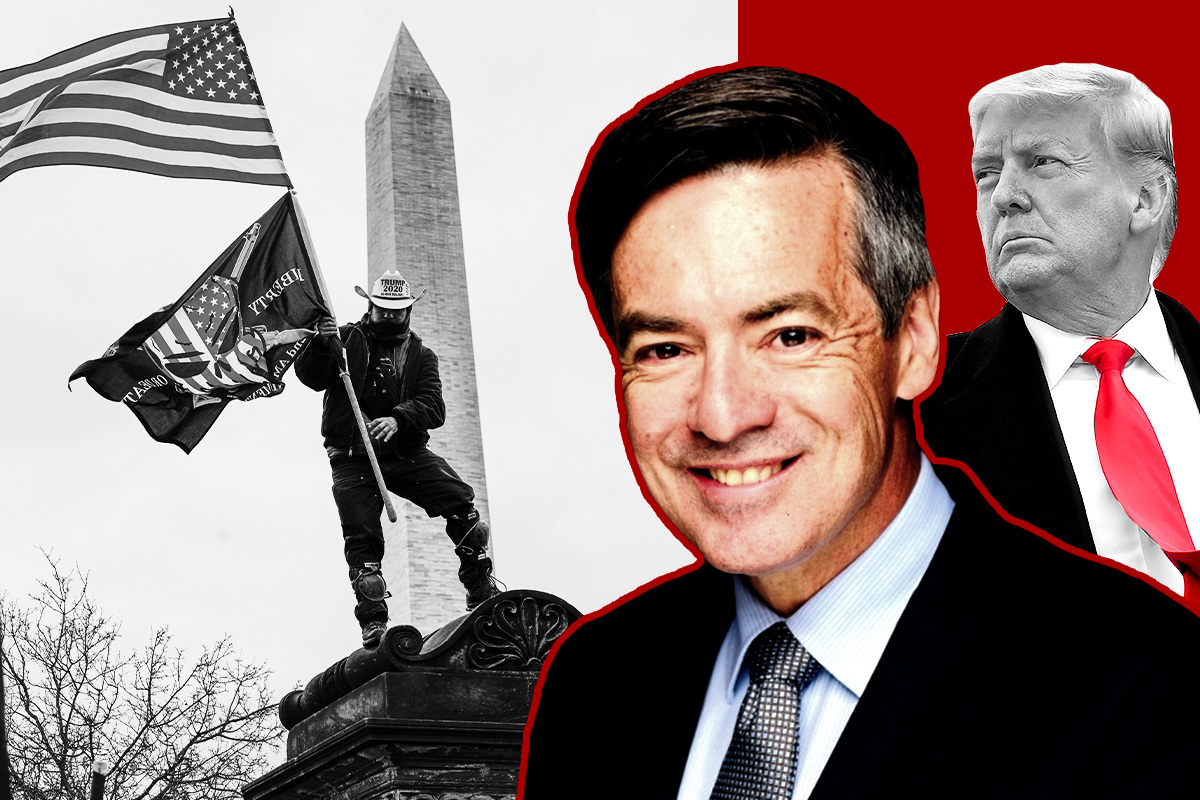
Trump lawyer Kenneth Chesebro
The messages were part of a batch of eight emails — obtained by POLITICO — that Eastman had sought to withhold from the Jan. 6 select committee but that a judge ordered turned over anyway, describing them as evidence of likely crimes committed by Eastman and Trump. They were transmitted to the select committee by Eastman’s attorneys last week, but remained largely under wraps until early Wednesday morning….
Thomas is the justice assigned to handle emergency matters arising out of Georgia and would have been the one to receive any urgent appeal of Trump’s lawsuit to the Supreme Court — a fact that seemed to be part of the Trump legal team’s calculus.
Rulings from so-called circuit justices are typically stopgap measures aimed at preserving the status quo until the full Supreme Court weighs in, but the Trump lawyers hoped a favorable order from Thomas would embolden state GOP-controlled legislatures, Congress — or then-Vice President Mike Pence — to block final certification of Joe Biden’s victory.
“[I]f we can just get this case pending before the Supreme Court by Jan. 5, ideally with something positive written by a judge or justice, hopefully Thomas, I think it’s our best shot at holding up the count of a state in Congress,” Chesebro said.
There’s even more crazy stuff from Chesebro:
In one scenario, Chesebro proposed encouraging Senate Republicans to filibuster long enough to delay the joint session of Congress on Jan. 6, ignoring limitations on the length of debate. He also described how Trump allies could use inaction by the courts to build political pressure against Biden’s inauguration.
“Hard to have enormous optimism about what will happen on Jan. 6, but a lot can happen in the 13 days left until then, and I think having as many states still under review (both judicially and in state legislatures) as possible is ideal,” Chesebro wrote Trump campaign attorney Justin Clark on Dec. 24, 2020. It’s unclear how or whether Clark responded to Chesebro’s message.
The New York-based lawyer has been scrutinized by the Jan. 6 select committee, as well as prosecutors in Fulton County, Ga., who are investigating Trump’s efforts to subvert the election there.
Read more and see the emails at Politico.
There’s a very interesting piece at New York Magazine today by Ankush Khardori: The Secret Court Battle That Threatens Trump After Election Day. Prosecutors are obtaining potentially crucial testimony about January 6.
https://twitter.com/NYMag/status/1588143351253159936?s=20&t=0jL5j6PFFd0McENHeAYidw
As the midterm campaigns draw to a close, so too may an informal détente between Donald Trump and federal prosecutors since the search of Mar-a-Lago in August. While both sides fight in court, the Justice Department has probably refrained from taking major steps in the key investigations into his possession of classified documents and the attack on the U.S. Capitol in order to avoid influencing the elections.
During this relative down period, however, the department has reportedly been fighting an opaque and largely secret legal battle in the January 6 investigation that could constitute its most significant development to date. It could open a floodgate of damaging information about Trump or provide the department with crucial clarity about his conduct with respect to the riot and the effort to overturn the election results beyond what the public has learned so far. Like the search at Mar-a-Lago, this reflects an apparent change in posture at the Justice Department in recent months under Attorney General Merrick Garland, who chose not to focus on Trump’s potential criminal misconduct when he took office last year despite ample reason to do so.
And thus far, the Justice Department appears to be winning.
In recent weeks, according to a variety of news reports, prosecutors successfully compelled grand-jury testimony in Washington, D.C., from two key witnesses over the objections of Trump — Greg Jacob, a onetime lawyer for former vice-president Mike Pence who blamed the shoddy legal arguments advanced by Trump lawyer John Eastman for the outrageous violence at the Capitol, and Marc Short, Pence’s former chief of staff. The proceedings are under seal for the moment, but they are being handled at the district-court level by Chief Judge Beryl Howell, who has so far rejected Trump’s legal challenges. In at least Short’s case, Trump’s lawyers reportedly sought an expedited appeal to the D.C. Circuit Court of Appeals, which rebuffed them. The Justice Department is now reportedly seeking a similar ruling from Howell that would force testimony — again over Trump’s objections — from former White House counsel Pat Cipollone and his deputy Patrick Philbin.
All of the court disputes appear to center on Trump’s effort to invoke executive privilege to block top officials in his White House from providing testimony that might incriminate him. As CNN noted, the recent testimony from Jacob was “the first identifiable time when the confidentiality Trump had tried to maintain around the West Wing after the 2020 election has been pierced in the criminal probe following a court battle.” The fight is not over: There is apparently still a pending appeal at the D.C. Circuit and likely more litigation before Howell as things continue to play out and additional witnesses are called in, and at some point, Trump could seek the involvement of the Supreme Court to try to bail him out.
At first blush, this may seem like a fight among lawyers with esoteric stakes concerning the scope of executive privilege, but there are significant consequences if the Justice Department successfully continues down this path. Prosecutors could obtain fulsome information about what Trump himself (as opposed to the people around him) was actually saying and doing in the run-up to and during the January 6 siege.
Read the rest at the link. The gist is that prosecutors are moving closer to actually holding Trump accountable.
More interesting stories to check out, links only:
The Washington Post: Biden warns GOP could set nation on ‘path to chaos’ as democratic system faces strain.
The Washington Post: Oath Keeper Rhodes had violent message for Trump after Jan. 6, witness says.
Reuters: U.S. Capitol Police to conduct internal review over missed camera images of Pelosi attack.
Will Oremus at The Washington Post: Musk’s Trump-style management rattles Twitter workers awaiting layoffs.
Insider: Elon Musk’s Twitter has identified thousands of employees who will be laid off, representing about 50% of the company’s workforce.
The Guardian: Twitter exodus: company faces murky future as top managers flee the nest.
Please share your thoughts on these stories and anything else you’re interested in and have a great Thursday!
Did you like this post? Please share it with your friends:
Posted: November 1, 2022 | Author: bostonboomer | Filed under: 2022 Elections, Afternoon Reads, Congress, Donald Trump, Elon Musk, SCOTUS | Tags: Affirmative Action, Chris Sununu, election deniers, Jair Bolsonaro, John Roberts, Kari Lake, Nancy Pelosi, Paul Pelosi, Republicans, Twitter |
Good Day!!

Henri Manguin, Dream Landscape
Is it me or is the news today even more dispiriting than usual?
Paul Pelosi was brutally attacked in his home last week and is still in the ICU in at San Francisco General Hospital and Trauma Center, and around the country Republicans are minimizing and even joking about the horrific attack by a MAGA/Qanon crazy.
The New York Times: Republicans Continue to Spread Baseless Claims About Pelosi Attack.
Donald Trump Jr., the former president’s son, continues to post jokes about it.
Dinesh D’Souza, the creator of a discredited film about the 2020 election called “2000 Mules,” accused the San Francisco Police Department on Monday of covering up the facts.
Representative Marjorie Taylor Greene, Republican of Georgia, wrote that the “same mainstream media democrat activists” who questioned former President Donald J. Trump’s ties to Russia were now silencing the new owner of Twitter, Elon Musk.
The reason: Mr. Musk deleted a post linking to a newspaper that once claimed Hillary Rodham Clinton was dead when she ran for president in 2016.
In the days since Paul Pelosi, the 82-year-old husband of House Speaker Nancy Pelosi, was attacked by an intruder asking, “Where is Nancy?”, a litany of Republicans and conservatives have spread baseless conspiracy theories about the assault and its motives.
Although the police have not yet detailed all the circumstances of the crime, these theories have already seeped into the Republican mainstream. While many Republican officials have denounced the violence, others have at the very least tolerated, and in some cases cheered, a violent assault on the spouse of a political rival.
The disinformation “isn’t just political,” said Angelo Carusone, the president and chief executive of Media Matters for America, a progressive nonprofit. “It’s much bigger than that; it’s deeper. They’re really rethinking and reshaping a lot of our norms.”
The attack on Mr. Pelosi in the couple’s home in San Francisco early on Friday morning has raised fears about the rise of political violence against elected officials — increasingly, it seems, inspired by a toxic brew of extremism, hate and paranoia that is easily found online.
The assailant, identified by the police as David DePape, 42, posted a series of notes in the days before the attack suggesting that he had fallen under the sway of right-wing conspiracy theories and antisemitism online. Some of the flurry of posts by others questioning the circumstances of the attack appeared intended to deflect attention from Mr. DePape’s views.

Vincent Van Gogh, The Courtyard of the Hospital in Arles, 1889
Super MAGA Trump follower Kari Lake, who is likely to be the next governor of Arizona, got a big laugh from the audience when she joked about the attack on Pelosi. NBC News: Arizona GOP nominee Kari Lake mocks attack on Paul Pelosi at campaign event.
The Republican nominee for governor of Arizona, Kari Lake, made light of the attack on House Speaker Nancy Pelosi’s husband in remarks at a campaign event Monday, drawing laughter from the audience.
Asked about school security, Lake suggested the protection afforded to federal lawmakers should be available to students, as well.
“Nancy Pelosi, well, she’s got protection when she’s in D.C. — apparently her house doesn’t have a lot of protection,” Lake said at a campaign event in Scottsdale, Arizona, sparking laughter from many in attendance….
Lake wasn’t asked about the remark in an interview with Tucker Carlson on Fox News but said: “We can’t talk about all these issues, because the media has told us they’re prohibited. You can’t talk about vaccines, you can’t talk about elections, you can’t talk about Paul Pelosi, and now you can’t talk about Nancy Pelosi.
“I’m talking about all of those things,” she added.
Paul Pelosi was still in intensive care, surrounded by family members, a source with knowledge of the situation said Monday.
Even New Hampshire Governor Chris Sununu, supposedly moderate Republican has now gone MAGA. William Saletan at The Bulwark: Even the Sane Republicans Are Embracing Election Deniers.
Chris Sununu, the governor of New Hampshire, is one of the saner people in today’s Republican party. He concedes that the 2020 election was free and fair. He acknowledges climate change. He has criticized Republican leaders for ostracizing Rep. Liz Cheney and other principled dissidents while protecting the party’s worst extremists.
That’s why Sununu’s decision in the final weeks of the 2022 campaign to embrace election deniers is a particularly bad sign. Like other Republican officials, he has decided that sabotage of public faith in democracy doesn’t matter, as long as the saboteurs are Republicans. And he’s defending their reckless behavior with pernicious excuses.
On Sep. 13, election deniers won the Republican primaries for two of New Hampshire’s three federal offices. Don Bolduc, who has insisted that “Trump won the election” in 2020, captured the GOP nomination to face off against incumbent Democratic Sen. Maggie Hassan. And Karoline Leavitt, who has said Trump “absolutely” won, got the nomination for one of the state’s two congressional seats.
Sununu could have said that he considered these nominees unfit for office. At a minimum, he could have kept his distance. Instead, he has endorsed Leavitt and praised Bolduc.
Last Tuesday, in a gubernatorial debate, Sununu was asked why he supported candidates who claimed “without evidence that elections were stolen.” He didn’t dispute that characterization of their views. Instead, he said endorsement decisions should be based on more than just “one issue,” as though election denial were no different from energy subsidies or water management.
Two days after Sununu’s comment, Bolduc—who had indicated after the primaries that he would tone down his allegations of fraud—again insinuated that elections were being stolen. In a Senate debate, he said the people of New Hampshire “don’t like the fact that they can’t trust the mail-in ballot system,” that there were “proven irregularities with voting machines,” and that “same-day voter-registration causes fraud.” He added: “We need to make sure that school buses loaded with people at the polls don’t come in and vote.”

Caspar_David_Friedrich, Woman at a Window, 1822
In Brazil, Jair Bolsonaro lost his bid for reelection, and has decided to go the Trump route and refuse to concede. The Daily Beast: Bolsonaro Plays Trump Card: Won’t Concede as Fans Block Roads.
SÃO PAULO—The biggest and busiest city in South America was forced into a stunning standstill Monday night after supporters of Brazilian President Jair Bolsonaro blocked roads across the city to protest the results of a fair and free election.
Hundreds of Bolsonaro supporters, embittered by the victory of former Brazilian president Luiz Inácio “Lula” da Silva on Sunday, blocked the highway to the main airport in São Paulo, setting up barricades, chanting phrases like “Lula the robber!,” and starting fires in the middle of the road.
Hundreds of roadblocks in every state in the country threaten to plunge Brazil into chaos.
The populist rightwinger has yet to concede the election since the unprecedentedly close result was announced Sunday, with leftist former president Lula winning by just 1.8 percentage points. With fears mounting that Bolsonaro could take a leaf from the playbook of his close ally, Donald Trump, and refuse to accept the result, truckers loyal to the incumbent have taken matters into their own hands.
Roadblocks and protests demanding a military coup to stop Lula being certified as president have erupted in all but two Brazilian states, according to reports. Brazil’s federal highway police said over 300 protests had partially or completely shut down roads around the country, while authorities in the capital Brasilia closed traffic access to the central government esplanade amid fears that Bolsonaro’s supporters were planning to stage a demonstration in front of the Supreme Court, which they perceive as having given Lula favorable treatment.
Videos shared on social media show blockages along the 1,000 mile-long BR-163 highway which links companies in the Amazon basin with ports in the north of the country. One clip shows a fire burning as vehicles block the road, with a remix of a Brazilian song using the lyrics “Bolsonaro 22” playing in the background.
Read more at the Daily Beast link.
As Dakinikat wrote yesterday, the right-wing Supreme Court is going to end Affirmative Action in universities. Dahlia Lithwick and Mark Joseph Stern at Slate: The Supreme Court Has No Reason to End Affirmative Action. They’re Doing It Anyway.
Oral arguments in a pair of much-anticipated cases about the future of affirmative action sprawled over almost six hours on Monday, yet the outcome was obvious within the first 30 minutes: The Supreme Court’s conservative supermajority appears poised to overturn almost 50 years of precedent and outlaw race-conscious admissions at institutions of higher education. One case—arising from the University of North Carolina’s affirmative action program—was argued over two and a half hours. The second, a challenge to Harvard’s program, took up the better part of the afternoon. These arguments suggested that six justices will deem affirmative action to be unconstitutional chiefly because the effort to promote diversity in education has reached its sell-by date.

Konrad Vilhelm Mägi, Landscape of Vilsandi, 1913-14
What was perhaps most remarkable in these largely predictable arguments was how much time the conservative justices devoted to pure policy arguments. These justices dislike affirmative action for a whole lot of deep emotional reasons that, it turns out, have nothing to do with the Constitution. They barely even considered the meaning 14th Amendment until Justice Elena Kagan finally brought it to their attention two and a half hours into the UNC arguments. Kagan, along with Justices Ketanji Brown Jackson and Sonia Sotomayor, were vastly more interested in the history of the Constitution’s equal protection clause than their ostensibly originalist colleagues. If and when the supermajority does eradicate race-conscious admissions, everyone will be able to weigh the strength of their arguments. But no one should pretend the decision was remotely rooted in actual law.
The history of affirmative action at the Supreme Court is not particularly complicated. In 1978’s Bakkedecision, a majority found that universities could consider race to build a diverse student body, identifying educational benefits that flow from diversity. At the same time, a majority prohibited quotas and other rigid metrics that reduced applicants to their race, requiring universities to undertake a holistic review of each applicant. The Supreme Court affirmed this principle in 2003’s Grutter v. Bollinger and again 2016’s Fisher v. Texas.
Although these cases involve both public and private institutions, the Supreme Court has consistently held that federal law simply applies the equal protection clause to private universities that receive federal funds. So, in theory, the justices should’ve been debating the meaning of the Constitution. Instead, the conservative justices continually reverted to free-floating policy discussions about how affirmative action makes them feel. (Hint: they feel bad.)
John Roberts has also put a hold on releasing Trump’s taxes to Congress. The Washington Post: Chief Justice Roberts temporarily delays release of Trump tax records.
Chief Justice John G. Roberts Jr. on Tuesday temporarily halted the release of former president Donald Trump’s tax records to a congressional committee, and called for more briefing in the case.
Without the Supreme Court’s intervention, the records could have been handed over to the House Ways and Means Committee as early as Thursday.
Last week, the full U.S. Court of Appeals for the D.C. Circuit declined to review earlier rulings finding that lawmakers are entitled to the documents in the long-running legal battle. The court also said it would not put the release of the papers on hold while Trump’s lawyers sought Supreme Court review.
Roberts, the justice designated to hear emergency orders from that court, put the release on hold and called for a response from the committee by noon on Nov. 10. A committee spokeswoman said in a statement, “The Ways and Means Committee maintains the law is on our side, and will file a timely response as requested. Chairman [Richard E.] Neal (D-Ma.) looks forward to the Supreme Court’s expeditious consideration.” [….]
The Supreme Court generally has not been receptive to Trump’s assertions that he should be allowed to keep records private and that he was immune to investigation while in office. The justices in 2020 upheld Congress’s right to subpoena that information with some limitations, and last year declined to block the release of Trump’s financial records for a New York state investigation.
I hope this really is just temporary.

A Forest Stream, by Peder Mork Monsted
Finally, it looks as if Elon Musk is about as competent to take over Twitter as Trump was to be POTUS. Rebecca Kern at Politico: Musk’s Twitter: ‘This is exactly what many of us were worried about.’
A day after Elon Musk seemed to confirm critics’ worst fears about his ownership of Twitter by tweeting out right-wing misinformation from his personal account, political leaders and operatives wrestled with a loaded question: Would the most important social-media platform in the political world survive his ownership?
And if it did, should they stay on it?
“This is exactly what many of us were worried about,” said Mark Jablonowski, the managing partner of Democratic digital advertising firm DSPolitical.
Rep. Jan Schakowsky (D-Ill.), who chairs the House Energy and Commerce panel on consumer protection, said she was worried about Twitter becoming “a platform that is a sewer of hateful and harmful content” and planned to leave if Musk allowed it to become more of a Wild West.
The immediate anxiety comes from a false story about the brutal attack on Paul Pelosi, husband of House Speaker Nancy Pelosi, that Musk personally tweeted over the weekend. Musk has now deleted the tweet, but the story continues to ricochet around the conservative political world.
In the larger sense, political players are worried that Musk’s promises to bring Twitter’s policies closer in line with his own ideas about politics and society, as well as his firing of its top accountability executives, will permanently change a platform they’ve come to rely on, and trust to police misinformation and hate speech.
Musk has left no doubt who’s in charge of the company since he took Twitter private Thursday night. He renamed himself “Chief Twit” on his official bio, and told the Securities and Exchange Commission that he dissolved the board and named himself sole director.
Musk doesn’t understand that what makes Twitter so popular is the well known journalists, experts, and popular personalities who post content on the platform. Now he wants to charge these people for being verified with blue checks. The Hollywood Reporter: Elon Musk Defends Controversial $20 Blue Checkmark Twitter Plan to Stephen King.
Elon Musk has responded to Stephen King’s horrified reaction at his reported plan to charge for a blue checkmark — and in the process, confirmed that the surprising and controversial idea is in the works.
On Monday, King went viral with his reaction to a report that Musk wanted to charge verified users a whopping $20 per month to keep their blue checkmarks. “$20 a month to keep my blue check?” King tweeted to his 6.9 million followers. “Fuck that, they should pay me. If that gets instituted, I’m gone like Enron.” When a reader told King he could afford the fee, he replied, “It ain’t the money, it’s the principle of the thing.”

Trees, by Henri Manguin
Five Thirty Eight political guru Nate Silver similarly wrote to his 3.5 million followers: “I’m probably the perfect target for this, use a ton, can afford $20/mo, not particularly anti-Elon, but my reaction is that I’ve generated a ton of valuable free content for Twitter over the years and they can go fuck themselves.”
Early Tuesday, Musk responded to the uproar, replying to King: “We need to pay the bills somehow! Twitter cannot entirely rely on advertisers. How about $8?” Musk then added: “I will explain the rational in longer form before this is implemented. It is the only way to defeat bots & trolls.”
But critics have pointed out that verified accounts are not simply a free perk for a certain level of user, but rather a utility that makes the wild-west social media platform/hellscape more credible. Blue checks help everyday readers — as well as journalists — determine whether a comment being made by a public figure is actually from that person instead of their fans or impersonators. It is, in other words, a way of preventing fake news. TechCrunch dubbed Musk’s idea a potential “misinformation nightmare.”
“Musk and his buddies view this plan as a way to get people to actually give Twitter money,” TechCrunch noted. “But by monetizing a symbol that currently has value, they will ultimately remove all of that existing value.”
I’ll end there. Please share your thoughts on these and other current happenings. I hope you all have a great Tuesday!!
Did you like this post? Please share it with your friends:
Posted: October 27, 2022 | Author: bostonboomer | Filed under: Afternoon Reads, just because | Tags: Apple, Elon Musk, Facebook, longtermism, Twitter |
Good Afternoon!!
We only have eleven days until the midterm elections and–unless the Feds intervene–one more day until Elon Musk starts destroying twitter. I know I should focus on the elections, but I just can’t face it. The press has more or less decided that the Republicans are going to take over control of the House and Senate, and I just can’t face reading beyond the headlines. I’m just going to wait and see what happens on Nov. 8. Instead, I’m going to focus on the more immediate Musk/Twitter situation.
Musk’s idea of humor is to rename his Twitter feed “Chief Twit” and walk into Twitter headquarters carrying a sink.
Can someone please explain why anyone would find that funny? I don’t get it. Here’s the latest on Musk and his determination to ruin Twitter for the rest of us.
Raquel Maria Dillon at NPR: From Tesla to SpaceX, what Elon Musk touches turns to gold. Twitter may be different.
Musk has been founding companies since the dawn of the internet age. He’s grown Tesla, SpaceX and PayPal into the blue chips that they are today.
But the financially struggling social media company, which he is expected to buy by Friday, needs something more to become a success story, said Andy Wu, who teaches business strategy at Harvard Business School.
“Musk has no experience in managing organizational change and there’s definitely an embedded culture at Twitter that he’ll have to change in order to achieve some of his goals,” Wu said.
The challenge has only grown since Musk first offered to buy Twitter in the spring for $54.20 a share, or about $44 billion. Tech stocks have struggled along with the broader market. It didn’t help that Musk openly criticized the company, tried to walk away from the deal, and only changed his mind after a high-profile and expensive legal battle neared trial. At one point, Twitter’s stock lost a quarter of its value.
“Myself and other investors are obviously overpaying for Twitter right now,” Musk said on a call with Tesla investors last week.
He acknowledged on Thursday that there was a lot of speculation about why he was buying Twitter after all his wavering.
“It is important to the future of civilization to have a common digital town square, where a wide range of believes can be debated in a healthy manner, without resorting to violence,” he wrote in an open letter to Twitter advertisers.
“That is why I bought Twitter. I didn’t do it because it would be easy. I didn’t do it to make more money,” he added, acknowledging that failure was a “very real possibility.”
Read much more about Musk at the link if you can stomach it.
Maybe Sargent is right. I sure hope so, but I’ll believe it when I see it.
Lauren Hirsch at The New York Times: Elon Musk Reaches Out to Advertisers Ahead of Deadline for Twitter Deal.
A day before Elon Musk’s court-imposed deadline to complete his $44 billion acquisition of Twitter, he posted a message to advertisers in an apparent attempt to soothe nerves as concerns circulate about how he intends to run the platform.
“I wanted to reach out personally to share my motivation in buying Twitter,” he wrote. “There has been much speculation about why I bought Twitter and what I think about advertising. Most of it has been wrong.”
Mr. Musk went on to say that the reason he was buying Twitter was “because it is important to the future of the civilization to have a common digital town square,” where a “wide range of beliefs can be debated in a healthy manner without resorting to violence.” But, he added, “Twitter obviously cannot become a free-for-all hellscape where anything can be said with no consequences!”
Mr. Musk’s olive branch comes as he is in the final stages of completing the deal to buy Twitter, during which he changed his mind about buying the company before recommitting in the face of legal challenges. The billionaire, who also runs Tesla and SpaceX, showed up at Twitter’s headquarters in San Francisco on Wednesday, and he is expected to address the company’s 7,500 employees on Friday when the deal is set to close.
Advertisers, which account for about 90 percent of Twitter’s revenue, have been watching the deal drama, and some have been concerned about how the uncertainty will affect the service as an ad platform. Mr. Musk has said he is a “free speech absolutist” and wants to loosen rules around content moderation on the service, including reversing the ban on former President Donald J. Trump from the platform. Advertisers typically shy away from promotions alongside toxic content and misinformation.
Twitter and other social media platforms are also grappling with a broader slowdown in digital advertising. Meta said on Wednesday that its profit in the most recent quarter was down more than 50 percent from a year earlier. The company, which owns Facebook, Instagram and WhatsApp, warned that it didn’t see any relief on the horizon for the declining ad market.
“Twitter aspires to be the most respected advertising platform in the world that strengthens your brand and grows your enterprise,” Mr. Musk wrote in his note Thursday. “To everyone who has partnered with us, I thank you. Let us build something extraordinary together.”
And Musk picked a fight with Apple. From Fortune via Yahoo Finance: Elon Musk isn’t even done buying Twitter, but he’s already picking a fight with Apple over Spotify and payment guidelines.
Elon Musk hasn’t wrapped up his purchase of Twitter yet, but he seems to be already gearing up for another battle.
In a pair of late-night Tweets, posted just four minutes apart, Musk expressed concerns about Apple’s business practices, specifically those surrounding Spotify and app store guidelines.
The first was a reply to Spotify founder Daniel Ek’s tweet highlighting a New York Times story about Apple’s three-time rejection of Spotify’s new app, as the streaming service adds audiobooks to its offerings. Apple says the new app violates its rules detailing how developers communicate with customers about online purchases.
Ek used the story as a launching pad to decry the policies, saying “I can’t be the only one who sees the absurdity.” Musk seemed to agree, replying “Concerning.”
Moments later, he voiced support for venture capitalist Bill Lee’s criticism of Apple’s 30% fee for in-app purchases, agreeing “30% is a lot.”
Criticisms about Apple and its app store policies are nothing new, of course. Spotify has butted heads with Apple before, when it began offering podcasts. And Epic Games took Apple to court last year over the policies, resulting in a split decision where the judge upheld the app store’s structure as legal.
Musk loves a good fight, though, and this isn’t the first time he’s poked Apple. In May, he tweeted that “Apple’s store is like having a 30% tax on the internet. Definitely not ok,” following that up with “Literally 10 times higher than it should be.”
Meanwhile, Reuters is reporting that Musk’s company Tesla is under criminal investigation by the DOJ
Reuters: Exclusive: Tesla faces U.S. criminal probe over self-driving claims.
Tesla Inc (TSLA.O) is under criminal investigation in the United States over claims that the company’s electric vehicles can drive themselves, three people familiar with the matter said.
The U.S. Department of Justice launched the previously undisclosed probe last year following more than a dozen crashes, some of them fatal, involving Tesla’s driver assistance system Autopilot, which was activated during the accidents, the people said.
As early as 2016, Tesla’s marketing materials have touted Autopilot’s capabilities. On a conference call that year, Elon Musk, the Silicon Valley automaker’s chief executive, described it as “probably better” than a human driver.
Last week, Musk said on another call Tesla would soon release an upgraded version of “Full Self-Driving” software allowing customers to travel “to your work, your friend’s house, to the grocery store without you touching the wheel.” [….]
However, the company also has explicitly warned drivers that they must keep their hands on the wheel and maintain control of their vehicles while using Autopilot.
The Tesla technology is designed to assist with steering, braking, speed and lane changes but its features “do not make the vehicle autonomous,” the company says on its website.
Such warnings could complicate any case the Justice Department might wish to bring, the sources said.
I can see why Musk likes Trump. He’s just another scam artist. All I want is to keep Twitter as a place where I can go to get the latest news and opinion, but those days may be over after tomorrow night. Sigh . . .
Brynn Tannehill argues at The New Republic: Why Elon Musk’s Idea of “Free Speech” Will Help Ruin America.
After months of legal wrangling, Elon Musk’s bid to buy Twitter appears to be finally going through. Musk and the right see this as a great thing because it will restore “free speech” to Twitter. Any suggestion that the sort of “free speech” they envision can have highly undesirable consequences is met with howls of “Libs hate free speech” or other accusations of fascism. Similarly, warnings that unfettered free speech results in dangerous misinformation spreading are derided with “Sunlight is the best disinfectant” and the libertarian belief that in the marketplace of ideas, the best will always win out.
These theories will be tested quickly. It is being reported that after the sale is finalized, Musk plans on laying off nearly three-quarters of Twitter’s staff and that one of the first things to go will be any corporate attempt at content moderation and user security. Musk also plans on restoring the accounts of high-profile sources of disinformation and violent messaging who were previously banned, most notably former President Trump.
The pro-Musk arguments are complete nonsense, and there are innumerable historical and modern examples of why social media platforms with nearly unlimited freedom of speech produce horrors. The Supreme Court decided free speech isn’t absolute long ago, when Chief Justice Oliver Wendell Holmes noted that you can’t shout “Fire!” in a crowded theater, for obvious reasons.
First, freedom of speech has caused untold death and suffering when used to disseminate hate or spread disinformation. The Protocols of the Elders of Zion was a fabricated antisemitic text that purported to expose a global baby-murdering Jewish plot bent on world domination. Mein Kampf was Hitler’s autobiography, which blamed Germany’s post–World War I woes on a global Jewish conspiracy. Both were readily available in the Weimar Republic, which had no First Amendment per se but guaranteed freedom of speech. They were key contributors to the fall of German democracy, the rise of the Third Reich, and the Holocaust itself.
In modern times, lack of moderation on social media sites has repeatedly contributed to mass murder. The Christchurch, New Zealand, shooter killed 51 Muslims at two mosques after being radicalized on YouTube, 4Chan, and 8Chan. The shooter who killed 11 Jews at the Tree of Life synagogue in Pittsburgh had been radicalized on the social media site Gab, which advertised itself as the “free speech” alternative to Twitter. Dylann Roof killed nine people at the historically Black Emanuel African Methodist Episcopal Church in Charleston, South Carolina, in 2015, after he self-radicalized online. Investigations revealed that Google searches steered him further and further into extremist propaganda and hate.
The carnage caused by misinformation spread by social media goes far beyond massacres by racists, antisemites, and Islamophobes. Over one million Americans have died of Covid-19, and at least 25 percent of those deaths were preventable if people had gotten vaccinated. Many others could have been prevented if people had worn masks, socially distanced, believed the disease was real, or otherwise behaved in a rational manner.
Read the rest at TNR.
Finally, Musk is a believe in “longtermism,” a philosophical theory about how to save humanity in the long term. It involves making it possible for humans to populate other planets and other crazy, cult-like ideas. Dave Troy, an investigative journalist who studies “threats to democracy,” argues that Musk’s desire to control Twitter as a “public square” is part of his belief in this weird philosophy.
Read Troy’s thread on Musk and longtermism. You can also learn about it in this article by Nicholas Kulish at The New York Times: How a Scottish Moral Philosopher Got Elon Musk’s Number.
When Elon Musk’s text messages were released as part of a court filing over his proposed purchase of Twitter, the world’s richest man was found to be corresponding with tech billionaires, fellow chief executives and bankers.
Tucked incongruously among those business leaders were messages from a Scottish moral philosopher.
The philosopher, William MacAskill, was acting as a go-between for the crypto-billionaire Sam Bankman-Fried, who “has for a while been potentially interested in purchasing it and then making it better for the world,” Mr. MacAskill wrote to Mr. Musk in March, referring to Twitter.
Mr. MacAskill’s appearance in that batch of messages, along with TV appearances and magazine profiles, has contributed to a sense of his sudden ubiquity, improbable considering his usually staid, ivory tower-bound profession. But his latest book, “What We Owe the Future,” became a best seller after it was published in August.
His rising profile parallels the worldwide growth of the giving community he helped found, effective altruism. Once a niche pursuit for earnest vegans and volunteer kidney donors who lived frugally so that they would have more money to give away for cheap medical interventions in developing countries, it has emerged as a significant force in philanthropy, especially in millennial and Gen-Z giving.
As the title of his recent book suggests, Mr. MacAskill argues that people living today have a responsibility not just to people halfway around the world but also those in future generations.
The rise of this kind of thinking, known as longtermism, has meant the Effective Altruists are increasingly associated with causes that have the ring of science fiction to them — like preventing artificial intelligence from running amok or sending people to distant planets to increase our chances of survival as a species.
McCaskill published an op-ed in The New York Times in August: The Case for Longtermism. The idea is that the long-term survival of humans should be our moral focus, not the immediate needs of people who are alive today.
Longtermism is about taking seriously just how big the future could be and how high the stakes are in shaping it. If humanity survives to even a fraction of its potential life span, then, strange as it may seem, we are the ancients: we live at the very beginning of history, in its most distant past. What we do now will affect untold numbers of future people. We need to act wisely.
It took me a long time to come around to longtermism.Over the past 12 years, I’ve been an advocate of effective altruism — the use of evidence and reason to help others as much as possible. In 2009, I co-founded an organization that has raised hundreds of millions of dollars to help pay for bed nets to protect families against malaria and medicine to cure children of intestinal worms, among other causes. These activities had a tangible impact. By contrast, the thought of trying to improve the lives of unknown future people initially left me cold.
But some simple ideas exerted a persistent force on my mind: Future people count. There could be a lot of them. And we can make their lives better. To help others as much as possible, we must think about the long-term impact of our actions….
But society tends to neglect the future in favor of the present. Future people are utterly disenfranchised. They can’t vote or lobby or run for public office, so politicians have scant incentive to think about them. They can’t tweet, or write articles, or march in the streets. They are the true silent majority. And though we can’t give political power to future people, we can at least give them fair consideration. We can renounce the tyranny of the present over the future and act as trustees for all of humanity, helping to create a flourishing world for the generations to come.
Anyway, that’s what’s behind Musk’s space projects–making sure humans survive even if the the planet Earth doesn’t. I’m not sure I understand how that’s related to Twitter and free speech, but I’m not a tech billionaire, so I don’t count.
I know this is a weird post, and if you didn’t read the whole thing, that’s OK. I hope you all have a nice Thursday!
Did you like this post? Please share it with your friends:


 peej
peej Carissa
 bostonboomer
 dakinikat
 ecocatwoman
 mablue2
 Mama Lopez
 peggysue22
 quixote
 skydancingguestblogger
 Mona (aka Wonk the Vote)



 Sky Dancing
Recent Comments