
Frayed Nerves Friday Reads: Vote Updates still Coming in
Posted: November 11, 2022 Filed under: just because | Tags: 2022 Midterms, Twitter Free zone 26 Comments
1917, Sitting Woman with Legs Drawn Up, Egon Schiele
Good Day Sky Dancers!
Biting nails is probably a national pastime for those still following the election. This is a nail-biter of an election! It looks like the Democratic Party will hold on to the Senate. The House is still in play. This is from Politico. “The path to 218: Why Democrats aren’t out of the race for the House yet. A district-by-district look at which party is favored in the uncalled races.” Some of the California House races are still out and quite close.
Republicans still have a wider path to the House majority than Democrats — but it’s narrowed a lot over the past 24 hours.
As the vote count continues, particularly in mail-heavy Western states, Democrats continue to win most of the contested races, keeping them in the hunt and meaning news organizations won’t declare a winner in the overall fight for the chamber.
Not all of the 32House districts that remain uncalled are truly in doubt: In some of them, one party is clearly favored, and Democrats are likely to win more of them than Republicans, according to a POLITICO analysis.
But that alone wouldn’t be enough for Democrats to snatch the House majority, with the GOP only seven seats away. Democrats would still need to win the vast majority of the nearly-a-dozen races that are truly in doubt.
It’s not impossible, but it’s not likely, either.

The Mad Woman, Chaim Soutine, c.1919
If the Republicans do get control of the House, there is no guarantee that Kevin McCarthy will be the next Speaker of the House. This is from CNN. “Kevin McCarthy faces rocky road to speakership as hardliners emboldened by GOP’s election showing.”
Members of the pro-Trump House Freedom Caucus are withholding their support for House GOP leader Kevin McCarthy’s speakership bid and have begun to lay out their list of demands, putting the California Republican’s path to securing 218 votes in peril if the party ultimately takes the House with a slim majority.
McCarthy and his team are confident he will ultimately get the votes to be speaker. But the conservative hardliners are emboldened by the likelihood of a narrow House GOP majority and are threatening to withhold their support – something that could imperil his bid or force him to make deals to weaken the speakership, something he has long resisted.
Rep. Chip Roy of Texas told reporters that “no one currently has 218” votes for speaker, which is the magic number McCarthy would need to secure the speaker’s gavel on the House floor in January, and said he wants McCarthy to list in greater detail his plans for a wide array of investigations into the Biden administration. And Rep. Andy Biggs of Arizona complained that McCarthy seemed to backpedal on whether he’d be willing to launch impeachment proceedings into President Joe Biden or members of his Cabinet.
“I’ve heard from multiple of my constituents who question the wisdom of proceeding forward with that leadership,” Biggs said, adding that there needs to be a “frank conversation” about who they elect for the top job.
Members of the group are also pushing to make it easier for lawmakers to call for floor votes on ousting a sitting speaker. That is something that McCarthy is adamantly against and was wielded over former Speaker John Boehner before he eventually resigned.
Rep. Lauren Boebert of Colorado said it was a “red line” for her, but not everyone in the Freedom Caucus is united on whether to make that a hard line.
Boebert has pulled ahead in her race by less than 900 votes.
The race may head to a recount according to the Denver Post. “A thin-enough margin will trigger an automatic recount, but candidates can also request their own.”
Few votes separate Colorado’s congressional race between U.S. Rep. Lauren Boebert and Adam Frisch, meaning whoever wins the heated election could still suffer through a recount.
Eyes across the country are watching the race, which could swing either way as counties continue to count straggling ballots.
If neither candidate gains a wide enough margin, election officials might not declare an official winner in the race for weeks, depending on how the process plays out. Not only would a slim margin of victory trigger an automatic recount but either candidate can also request a recount so long as they’re willing to pay for it.
The process could then extend into December.

Self-Portrait with Hand on the Forehead (Selbstbildnis mit der Hand an der Stirn), Käthe Kollwitz, 1910
Axios has good news at the state level, where many of the worst election deniers will not be in control of future elections. Also, a woman’s right to choose is a winning issue. “Democrats make quiet history with state-level gains.”
Overlooked amid frantic punditry about the “red ripple” in Congress: Democrats quietly won and defended majorities in state legislatures across the country, weakening GOP power on issues at the heart of the national political debate.
Why it matters: State legislative races are on pace to be the highlight of the Democratic ballot. If Democrats hold on to Nevada, this will be the first time the party in power hasn’t lost a single chamber in a midterms year since 1934, according to the Democratic Legislative Campaign Committee.
The big picture: The partisan battles over democracy and abortion rights — the two issues that dominated Democratic messaging this cycle — are shaped at the state level.
- Republicans have controlled more state legislative seats than Democrats for more than a decade straight, thanks in large part to a deliberate strategy the GOP hatched in 2010 to dominate the redistricting process.
- Even after Democrats’ stunning gains, Republicans still control more states and will have more total legislative seats. But this election shows Democrats are committed to playing the long game, says Daniel Squadron, founder of The States Project.
State of play: Democrats defended their state-level majorities in Massachusetts and Maryland and won governor seats left open after Republican retirements, securing a “trifecta” in both states. Helmed by a historic $50M investment from the DLCC, they also kept the Maine legislature, the New Mexico and Colorado state Houses, and secured a supermajority in both chambers in Vermont (which has a GOP governor).
- In Michigan, Democrats flipped the House and Senate to take complete control of the state government for the first time in 40 years. Gov. Gretchen Whitmer won re-election by double-digits, vaulting the rising Democratic star into the national spotlight.
- In Minnesota, Democrats also secured a trifecta after taking the state Senate.
- In Wisconsin, Democrats denied Republicans a supermajority that would have allowed them to override Gov. Tony Evers’ veto — the only thing standing in the way of a statewide abortion ban.
What we’re watching: Arizona, where Republicans have a narrow two-seat majority in both chambers, was another top target for Democrats. It’s still early in the state’s vote-counting process, but Democrats told Axios they’re hopeful their winning streak will continue there.
- In Pennsylvania, Democrats are just one seat away from flipping the state House.
The backdrop: Outside Dem groups — fueled by Republican threats to abortion rights and fair election processes — made unprecedented investments in state legislative races this cycle.
- Two groups, The States Project and the National Democratic Redistricting Committee (NDRC), poured millions into state races in the final four weeks of the election. They targeted races with thin margins in Arizona, Colorado, New Hampshire, Michigan and Pennsylvania.
- Forward Majority, a Democratic super PAC focused on the states, invested over $20 million this cycle targeting 25 seats in Michigan, Pennsylvania and Arizona.
- “We’re clawing our way back to power after 50 years of investment for Republicans and so much neglect for so long by the Democratic Party,” said Forward Majority’s president Vicky Hausman.

Pink Blouse, Amedeo Modigliani,1919
This analysis of our election comes from The Economist. “A Republican victory will be much smaller than Democrats feared. Several sorts of extremism may have prevented the party from securing a more convincing victory.”
Imagine if Noah’s prognostications about a world-ending flood had ended in a light shower. That is roughly the situation faced by Republicans who had been expecting a biblical sort of rebuke of President Joe Biden in the midterm elections. Despite clear voter discontent with Mr Biden and the pace of inflation, Republicans managed only a limp showing. As final results were being tallied, they looked on track to barely pick up the five seats needed for a majority in the House of Representatives (a typical loss for a president’s party in the modern era is 30 seats). That will be sufficient for Kevin McCarthy, the Republican leader in the House, to wrest the speaker’s gavel from Nancy Pelosi, the Democratic leader, and ensure divided government in Washington for the next two years. But it is hardly a spectacular showing.
The same is true of the contest to control the Senate, which may take weeks to decide, due to the need for a run-off election in Georgia in December. Taking the Senate would have required netting only a single additional seat—but it now looks likelier than not that even this low bar will not be met (see chart 1). Democrats never met the attacks that Republicans launched at them on crime, inflation, indoctrination of schoolchildren and immigration with a convincing or cohesive rejoinder. And yet the morning after the election there was, surprisingly, more need for Republican soul-searching than for Democratic recriminations.
Several sorts of extremism may have robbed Republicans of the marginal seats they needed to secure a more convincing victory. The first was over abortion, which became an immediate rallying cry for Democrats when the Supreme Court overturned Roe v Wade, the case that had established a right to terminate a pregnancy up until the point of fetal viability, in June. Although most Americans supported some limitations on the procedure, they also found bans pitched by many Republicans too extreme. In the suburban battlegrounds for the House, abortion proved a potent battering-ram for Democrats, who improved their margins in districts with lots of white, college-educated voters—previously a reliable constituency for the Republicans (see chart 2).

Self-Portrait (1886), Edvard Munch © Munch Museum
You may see the charts and read more analysis at the link.
Jonathan Chait-writing for New York Magazine–thinks “The GOP Revolt Against Trump Is More Serious Than You Think. It’s not going to be like 2016 or 2021.”
I’ve been telling people for most of the year that I consider Ron DeSantis to be the odds-on favorite — not a guarantee, not a prohibitive favorite, but the favorite — to win the Republican presidential nomination. Usually, they nod and then add something like, “But not if Trump runs, right?” “Yes,” I reply, “even if Trump runs.” Then they look at me like I’m crazy.
Tuesday night, my view began to look a little less crazy. The Murdoch-owned media, very much including Fox News, unleashed an undisguised propaganda blitz to convince its audience that Trump is the source of the party’s struggles and DeSantis represents its future. Trump’s angry response is a measure of how seriously he takes the threat to steer the base away from him. Many journalists registered surprise at the bluntness of the chorus blaming Trump. Yet the prospects for a DeSantis nomination, and the changes beneath the surface that have made it relatively likely, have not been fully appreciated outside the Republican world.
For one thing, the Murdoch-owned media, and many other legacy conservative-media outlets, like National Review, have never fully supported Trump. They defended him against Democrats while wishing the party would nominate somebody else. This has meant, in other words, that they would criticize some of his excesses, even while insisting the Democrats were worse. During moments when Republicans had the opportunity to wrest leadership of the party from his hands, like during the 2016 primary campaign and in the days after January 6, they would even savage him. But when his leadership of the party went unchallenged, they would mute their criticism and fall dutifully in line.
This pattern has led to an easy assumption that whatever misgivings Republicans express now will come to nothing. “We have heard this tune many times before,” Dan Drezner says, sighing. “It’s nice to hope that this time it’ll take,” writes the Bulwark, “But we’ve all seen this movie before. Many, many, many times before.”
This ignores a crucial difference. In both 2016, and the aftermath of the insurrection, there was no unified Republican alternative. The non-Trump candidates in 2016 infamously failed to coordinate, and even devoted most of their energy to attacking each other in the belief that the last non-Trump standing would automatically prevail. “Jeb, Rubio, Christie, Kasich, Walker… every one of these guys was as hyped as DeSantis is now. Trump beat them all,” argues Adam Jentleson. But that is the point – beating them all was easier than beating a single opponent with unified conservative movement support.
After the insurrection, a brief window opened to move on, but the party lacked any obvious figure to rally around. (DeSantis had yet to make the key moves consolidating his support on the right.) And in between these events, Trump was president.
I wish I could get over my premonition that the next two years will be stressful and will still be dominated by MAGA Republicans in Congress. I just do not want to go back to where turning on the TV means enduring crazy Gym Jordan, Sleazy Steve Scalise who could potentially be Speaker of the House to my dismay, Marjorie Three Names in a Committee Hearing, and Trump flying around the country with his HateFest events as he runs for president. Trump may find more time to roast DeSantis than “Sleepy Joe”, but it will still be that anxiety-inducing, stomach-clenching shit show. We’ll just have to see what nickname he gives DeSantis.
Happy Veterans Day to everyone that served!!!
So, what’s on your reading and blogging list today?
“Baby, I see this world has made you sadSome people can be badThe things they do, the things they say.”
Mark Knopfler
Mostly Monday Reads: None of them will come via the former social media source
Posted: November 7, 2022 Filed under: just because | Tags: 2022 Midterms, Are all Republicans Corrupt? Asking for a friend., delusional Republicans, Twitter Free zone 34 Comments
Emil Nolde, Mohn (Poppies), 1950.
Good Morning Sky Dancers!
Chief Twit suggested we return the House to what used to be a political party that shouldn’t be in charge of anything. His misogyny is on full display, as well as his hypocrisy. Twitter is obviously not impartial, and I can’t appear to block, mute, or remove the NAZI images he posts. I believe you can’t block him anymore, although it does no good because others will quote him. Kathy Griffin showed up on my Mastadon server because she’s permanently banned there for parodying his account. Yet, Ye is in full antisemitic mode, having been reinstated to the newest Truth Social/Parler platform is serving as a one-man ‘ish’ band.
I give up!
So, let me go back to my 2009 version of sharing my reads. Yes, this is more Emil Nolde. Beautiful, aren’t they? Hard to imagine a Nazi could create such beauty. While his admiration of Hitler was well-known, his art was still considered “degenerate”. It could not be shown in public.

Emil Nolde, Sonnenblumen und Rittersporn ,1935
This is from The Atlantic and written by Ronald Brownstein. “How a GOP Congress Could Roll Back Freedoms Nationwide. The rights reversal taking place in conservative states is just the beginning.”
If republicans win control of one or both congressional chambers this week, they will likely begin a project that could reshape the nation’s political and legal landscape: imposing on blue states the rollback of civil rights and liberties that has rapidly advanced through red states since 2021.
Over the past two years, the 23 states where Republicans hold unified control of the governorship and state legislature have approved the most aggressive wave of socially conservative legislation in modern times. In highly polarizing battles across the country, GOP-controlled states have passed laws imposing new restrictions on voting, banning or limiting access to abortion, retrenching LGBTQ rights, removing licensing and training requirements for concealed carry of firearms, and censoring how public-school teachers (and in some cases university professors and even private employers) can talk about race, gender, and sexual orientation.
With much less attention, Republicans in the U.S. House and Senate have introduced legislation to write each of these red-state initiatives into federal law. The practical effect of these proposals would be to require blue states to live under the restrictive social policies that have burned through red states since President Joe Biden’s victory in 2020.“I think the days of fealty [to states’ rights] are nearing an end, and we are going to see the national Republicans in Congress adopting maximalist policy approaches,” Peter Ambler, the executive director of Giffords, a group that advocates for stricter gun control, told me.
None of the proposals to nationalize the red-state social agenda could become law any time soon. Even if Republicans were to win both congressional chambers, they would not have the votes to overcome the inevitable Biden vetoes. Nor would Republicans, even if they controlled both chambers, have any incentive to consider repealing the Senate filibuster to pass this agenda until they know they have a president who would sign the resulting bills into law—something they can’t achieve before the 2024 election.
But if Republicans triumph this week, the next two years could nonetheless become a crucial period in formulating a strategy to nationalize the red-state social-policy revolution. Particularly if Republicans win the House, they seem certain to explore which of these ideas can attract enough support in their caucus to clear the chamber. And the 2024 Republican presidential candidates are also likely to test GOP primary voters’ appetite for writing conservative social priorities into national law. Embracing such initiatives “may prove irresistible for a lot of folks trying to capture” the party’s socially conservative wing, Patrick Brown, a fellow at the conservative Ethics and Public Policy Center, told me.

Untitled, Emil Nolde
Just getting Trump out of the White House and the republicans out of the majority is not stopping them. Neither is the unpopularity of all the abortion restrictions and the call for sensible gun regulations. It’s difficult to not get discouraged.
Cameron Joseph–writing for VICE–states that “This Election Could Be Just as Long and Ugly as 2020. Slow vote counts, close races, and a crowd of GOP candidates ready to cry “rigged” could lead to a scary election month.”
Republicans who are pushing misinformation about the election are running for state office across the country. And they’ve had two years to prepare to sow chaos this week.
Former President Donald Trump, his election-denying candidates, GOP operatives, and an army of conspiracy theory-believing activists are lobbing bad-faith lawsuits, attempting voter intimidation, and gearing up for disruptive protests to take advantage of slow ballot counts in this week’s midterm elections. And the closer the election results are, the longer it will take to determine a winner in key contests. Things could get very messy.
It will take days, if not weeks, to count enough of the ballots to know which side has won many of the closest, and most closely watched, Senate and governor races. That’s totally normal, and in many states it’s how things have been for years.
But that won’t stop bad-faith candidates—especially those who are losing—from using it to claim it’s being rigged against them, demand that officials stop counting ballots in places where mail ballots are counted late, and push their supporters to protest. Multiple Trump-aligned candidates have already strongly signaled they won’t concede, no matter the outcome.
And 2020 showed exactly how much damage can be done when one side decides to attack the election process itself.
Trump drove the country into chaos by refusing to accept his loss and incited violence to try to keep himself in power. Now, it’s not just Trump and his immediate circle. The prospect of political violence has only continued to grow since the Jan. 6, 2021, Capitol insurrection, with the attack on House Speaker Nancy Pelosi’s husband just the latest in a long string of attacks on officials.
“I’m very concerned about the possibility of violence in the post-election period incited by losing candidates,” David Becker, a former Justice Department voting rights attorney who heads the Center for Election Innovation and Research, told VICE News.

Emil Nolde
Blumen (Flowers), n.d.
He continues by providing efforts by groups like The Oathkeepers in various states. The FBI is taking this seriously, which could also be why Republicans are after the institution as being “political.” From NPR: “Judiciary Republicans hint at investigation into FBI, DOJ if they retake the House.”
In a glimpse of what’s to come, House Judiciary Committee Republicans warned the FBI and Department of Justice that they plan to investigate both agencies if their party retakes the House of Representatives. And on Friday they released a 1,000-page report about whistleblower accounts of “a rampant culture of unaccountability, manipulation, and abuse at the highest level.”
Republicans will more than likely retake the House, and possibly the Senate, with the party heavily favored to win midterm elections in several congressional districts.
Ohio Rep. Jim Jordan sent a letter to U.S. Attorney General Merrick Garland, who heads the DOJ, and another to FBI Director Christopher Wray requesting documents pertaining to committee investigations lurking in the not-too-distant future. The report, titled FBI Whistleblowers: What Their Disclosures Indicate About the Politicization of the FBI And Justice Department, alleges political corruption at the highest levels of the FBI, according to a House Judiciary Republicans press release. Republicans assert in the report that whistleblowers have brought to their attention, “allegations of political bias by the FBI’s senior leadership and misuses of the agency’s federal law-enforcement powers.” The report, while primarily focused on the FBI, also targets the Justice Department as well.

EMIL NOLDE
Garden Flowers, no date
The AP reports, “Jackson, in dissent, issues first Supreme Court opinion.”
New Justice Ketanji Brown Jackson has issued her first Supreme Court opinion, a short dissent Monday in support of a death row inmate from Ohio.
Jackson wrote that she would have thrown out lower court rulings in the case of inmate Davel Chinn, whose lawyers argued that the state suppressed evidence that might have altered the outcome of his trial.
Jackson, in a two-page opinion, wrote that she would have ordered a new look at Chinn’s case “because his life is on the line and given the substantial likelihood that the suppressed records would have changed the outcome at trial.”
The evidence at issue indicated that a key witness against Chinn has an intellectual disability that might have affected his memory and ability to testify accurately, she wrote.
Prosecutors are required to turn over potentially exculpatory evidence to the defense. In this case, lower courts determined that the outcome would not have been affected if the witness’ records had been provided to Chinn’s lawyers.
Justice Sonia Sotomayor was the only other member of the court to join Jackson’s opinion. The two justices also were allies in dissent Monday in Sotomayor’s opinion that there was serious prosecutorial misconduct in the trial of a Louisiana man who was convicted of sex trafficking.
Ladies and Gentlemen, I believe we may be in the fight of our lives. This is from Reuters. Putin’s buddy finally states the obvious. “Russia’s Prigozhin admits interfering in U.S. elections.”
Russian businessman Yevgeny Prigozhin said on Monday he had interfered in U.S. elections and would continue doing so in future, the first such admission from a figure implicated by Washington in efforts to influence American politics.
In comments posted by the press service of his Concord catering firm on Russia’s Facebook equivalent VKontakte, Prigozhin said: “We have interfered (in U.S. elections), we are interfering and we will continue to interfere. Carefully, accurately, surgically and in our own way, as we know how to do.”
The remark by the close ally of Russian President Vladimir Putin was posted on the eve of the U.S. midterm elections in response to a request for comment from a Russian news site.
“During our pinpoint operations, we will remove both kidneys and the liver at once,” Prigozhin said. He did not elaborate on the cryptic comment.
Prigozhin, who is often referred to as “Putin’s chef” because his catering company operates Kremlin contracts, has been formally accused of sponsoring Russia-based “troll farms” that seek to influence U.S. politics.
So, I’m thinking about going to my little old fire station down the street to vote. My social security check was deposited today. I’ll likely see lots of kids jumping on their school buses to head to their public schools. I will do this before I take up my role as a professor trying to ensure my students understand economics and the financial system without all the propaganda lies coming from certain politicians and their propaganda-based news stations. Let’s not normalize America’s NAZIs. I’m all up to listening to the next installment of Ultra today. This is surely one country in chaos.
What’s on your logging and blogging list today? Please vote BLUE and drag everyone you know with you to do the same!
Finally Friday Reads: Your Extra Hour comes on Sunday!
Posted: November 4, 2022 Filed under: just because | Tags: anti-semitism, Elon Musk, Midterms 2022, Trumpism is killing us 21 Comments
EMIL NOLDE, Lake Lucerne, 1931-34
Good Day Sky Dancers!
We’re closing in on “the most wonderful day of the year!” Since it’s my birthday, I’m allowed one rant, and annually, it has to do with “Rejoice in the End of Daylight Saving Time.” This is from The Atlantic, and the opinion’s written by Katherine J. Wu.
This weekend, I’ll be waking up to one of my favorite days of the year: a government-sanctioned 25-hour Sunday. Forget birthdays, forget my anniversary; heck, forget the magic of Christmas. On Sunday, I’ll get to do a bit of time traveling as most of the United States transitions out of daylight saving time back into glorious, glorious standard time.
I may be a standard-time stan, but I’m no monster. I feel for the die-hard fans of DST. With the push of a button, or the turn of a dial, most Americans will be cleaving an hour of brightness out of their afternoons, at a time of year when days are already fast-dimming. Leaving work to a dusky sky is a bummer; a pre-dinner stroll cut short by darkness can really be the pits.
But if we all put aside our differences for just a moment, we can celebrate the fact that this weekend, nearly all Americans—regardless of where they sit on the DST love-hate spectrum—will be blessed with a 25-hour day, and that freaking rocks. If we must live in a dumb world where the dumb clocks shift twice a dumb year, let’s at least come together on the objective greatness of falling back.
I don’t want to minimize the nuisance of the time shift. Toggling back and forth twice a year is an absolute pain, and many Americans cheered when the Senate unanimously passed a proposal earlier this year to move the entire U.S. to permanent daylight saving time. But Katy Milkman, a behavioral scientist at the University of Pennsylvania and the host of the podcast Choiceology—who, by the way, loathes the end of DST—told me we can all reframe the autumn clock change “as a windfall.” Sunday will contain a freebie hour to do whatever we like. Rafael Pelayo, a sleep specialist at Stanford, will be spending his at the farmers’ market; Ken Carter, a psychologist and self-described morning person at Emory University, told me he might chill with an extra cup of coffee and his cats. I’m planning to split my minutes between a nap and Paper Girls (the graphic novel, not the show).
I will probably walk Temple a little longer that morning and then enjoy some tea and breadmaking.
I got a pretty good laugh as some friendly remaining Twitter employer or algorithm has fact-checked the Chief Twit.
And here’s the fun part!

And let’s just track some of those down!
This is from Newsweek. “Every Advertiser to Pull Out of Twitter Since Musk’s Takeover—Full List”. Many businesses don’t want to be associated with a site that lets NAZIs, Racists, and nasty-talking idiots run amok, according to those asking those businesses. For some reason, everyone but Musk gets it.
Since Elon Musk‘s takeover of Twitter last week, at least six major companies have stopped advertising on the platform over concerns about how the billionaire will affect content moderation policies on the app.
During the rocky process of acquiring the platform, marked by U-turns, controversies, and lawsuits, Musk pledged to make Twitter a champion of free speech. This promise led many right-wingers to see Musk’s takeover as a victory for conservatives over political correctness, though the Tesla CEO is yet to implement any changes to the way the platform moderates content.
But where right-wingers saw potential, many companies appear to have spotted a risk of damage to their business, especially after a sudden surge of slurs and hateful comments were reported on the platform immediately following Musk’s takeover.
This could be a problem for Musk’s Twitter: before his takeover, the company reported making 90 percent of its revenue from advertisers. Now that Twitter is set to charge its blue-tick users $8 per month to keep their verified badge, it’s unclear whether this could make up for lost revenues from advertising.

Marsh Landscape with Farmhouses at Utenwarf, Emile Nolde,
Most of us can live without “slurs and hateful comments.” This list is from The Daily Mail.
General Mills, Audi and Pfizer join growing list of companies pausing advertising on Twitter amid fears the platform won’t be a ‘safe place for brands’ after Musk’s $44B takeover
- Audi and Cheerios-maker General Mills confirmed an ad pause on Thursday
- Pfizer and Oreos-maker Mondelez also reportedly halted Twitter spending
- Brands are watching nervously to see how Twitter evolves under Elon Musk
- Musk insists that it will be safe for brands and not a ‘free-for-all hellscape’
- General Motors previously announced a pause in its Twitter ad spending
- Carmakers are especially worried about fair treatment from Tesla CEO Musk
And you can check this out of you want from the Washington Post: “Elon Musk begins mass layoffs at Twitter. Employees said the layoffs came across teams, as Twitter broadly reduced its workforce. Musk originally pitched investors on cutting Twitter’s staff up to 75 percent.” Sounds like they’re in serious need of a union.
Elon Musk is beginning mass layoffs at Twitter, sharply reducing the company’s workforce of 7,500 and kicking off his wholesale overhaul of the company.
An email went out to the company’s employees late Thursday notifying employees of plans to cut jobs, informing them that by 9 a.m. Pacific time Friday, workers would receive an email with the subject line: “Your Role at Twitter.”
Those keeping their jobs would be notified on their company email. Those losing them would be told via their personal email.

Marshy Landscape Under the Evening Sky, c.1943
What a guy!
All of this becomes before the Hatefest of our Times. The Midterm ballots probably won’t be counted by November 14, but that will not stop Orange Caligula’s big announcement. This is from Axios: “Scoop: Trump team eyes Nov. 14 announcement,” reported by Jonathan Swan. I need a replacement for my now deceased 1976 RCA TV in my bedroom. Maybe, I’ll just extend my shopping past that date so I don’t have to see any of it anywhere.
Former President Trump’s inner circle is discussing announcing the launch of a 2024 presidential campaign on Nov. 14 — with the official announcement possibly followed by a multi-day series of political events, according to three sources familiar with the sensitive discussions.
Why it matters: Trump and his top advisers have been signaling for weeks that a 2024 announcement is imminent. But those discussions have reached the point that allies are blocking off days in their calendars for the week after the midterms — and preparing to travel.
What we’re hearing: With polls pointing toward a good night for Republicans on Tuesday, Trump plans to surf the GOP’s expected post-midterm euphoria to build momentum for his own effort to retake the White House.
- Look for Trump to take credit for Republican victories across the board —including those he propelled with his endorsements, and even those he had nothing to do with.
Between the lines: Trump has long planned to announce shortly after midterms — and even toyed with announcing before Nov. 8 — in an effort to get ahead of potential rivals for the GOP’s 2024 nomination, including Florida Gov. Ron DeSantis.
- In recent weeks, Trump has been inching closer and closer to saying he is running, relishing the applause as he hints to his rally crowds that he’s doing it.
- At his Thursday rally in Sioux City, Iowa, Trump said: “In order to make our country successful and safe and glorious, I will very, very, very probably do it again … Get ready that’s all I’m telling you — very soon. Get ready.”
- A Trump spokesman declined to comment. The discussions are still fluid and could change depending on Tuesday’s results, especially if the Senate still hangs in the balance and the Georgia race between Herschel Walker and Raphael Warnock goes to a run-off.
Reality check: It’s Trump. So anything could happen — or not. He’s conflicted on the timing and nothing is ever certain. But people who have been close to him for many years are lacing up for the next race.

Emil Nolde, Meer mit zwei qualmenden Dampfern [Sea With Two Smoldering Steamboats], 1930,
Now federal investigators are planning for a burst of post-election activity in Trump-related investigations. That includes the prospect of indictments of Trump’s associates – moves that could be made more complicated if Trump declares a run for the presidency.
“They can crank up charges on almost anybody if they wanted to,” said one defense attorney working on January 6-related matters, who added defense lawyers have “have no idea” who ultimately will be charged.
“This is the scary thing,” the attorney said.
Trump and his associates also face legal exposure in Georgia, where Fulton County District Attorney Fani Willis is investigating Trump’s efforts to overturn the 2020 election in the Peach State and expects to wrap her probe by the end of the year.
Indicting an active candidate for the White House would surely spark a political firestorm. And while no decision has been made about whether a special counsel might be needed in the future, DOJ officials have debated whether doing so could insulate the Justice Department from accusations that Joe Biden’s administration is targeting his chief political rival, people familiar with the matter tell CNN.
Special counsels, of course, are hardly immune from political attacks. Both former special counsel Robert Mueller’s Russia investigation and special counsel John Durham’s investigation into the origins of the FBI’s Russia probe came under withering criticism from their opponents.

Milkmaids I, 1903 by Emil Nolde,© Nolde Stiftung Seeb
I wonder if we’ll get an increase or a decrease in White Christiani Nationalist Activity if any of this comes to pass. This morning, the New York Times had this frightening headline: “F.B.I. Locates Suspect After Warning of Security Threat at New Jersey Synagogues. Officials said the man holds “radical extremist views.” On Thursday, they had alerted congregations across the state to be on alert.”
It was not clear whether he was in custody, but officials said the threat had been “mitigated.”
“He no longer poses a threat to the community at this time,” James E. Dennehy, the special agent in charge of the F.B.I.’s Newark office, said during a morning conference call with state and federal law enforcement officials and more than 500 Jewish leaders.
Mr. Dennehy said investigators believed that the man, who is from New Jersey, was acting alone, but they are continuing to pursue leads about people he might have been in contact with. The man was not publicly identified, and officials offered no additional information about whether he had been charged with a crime.
He was located Thursday night, officials said, and questioned for a “few hours.”
“He expressed radical, extremist views and ideology, as well as an extreme amount of hate against the Jewish community,” Mr. Dennehy said.
Hakeem Jeffries may follow Nancy Pelosi as Speaker. This is from Politico: “How a secret meeting put Hakeem Jeffries on track to replace Pelosi. Behind the scenes, House Democrats battle to anoint their next generation of leaders.”
The race to succeed Speaker Nancy Pelosi as the leader of House Democrats may have been clinched at a meeting in the Capitol on Sept. 1.
That’s when House Majority Whip Jim Clyburn of South Carolina and Rep. Hakeem Jeffries of New York slipped back to Washington to connect in Clyburn’s office during the summer congressional recess at Jeffries’ request.
Jeffries, the fifth-ranking House Democrat who aspires to be the first-ranking House Democrat in the next Congress, was picking up heightened chatter from colleagues about California Rep. Adam Schiff’s outreach expressing his own interest in the top caucus job.
The 52-year-old Jeffries was concerned enough that he offered to fly to South Carolina to seek the counsel of the 82-year-old Clyburn. The younger lawmaker wanted to gently make sure his elder in the Congressional Black Caucus knew of Schiff’s quiet campaign — and to even more gently warn Clyburn about the risk of splitting votes between them and opening a path for the ambitious Californian.
Jeffries need not have been alarmed.
“There’s nothing I would ever do to impede the progress of our up-and-coming young Democrats and I see him as an up-and-coming young Democrat,” Clyburn said in an interview about Jeffries. “He knows that, I didn’t have to tell him that — but I did.”
Asked if he would be willing to serve in an emeritus role in the leadership, Clyburn said he is “willing to do anything the caucus thinks is to their benefit,” noting that Jeffries has “referred to me as a mentor.”

Evening Glow, 1915
Emil Nolde (born Emil Hansen)
I’m going to end with a question by Greg Sargent at The Washington Post who asks a question that I frequently ask: “Why isn’t Trumpism hurting the GOP?”
Something extraordinary just happened: In the space of just this week, a president and an ex-president warned that the opposition poses an existential threat to our political way of life. Joe Biden declared that “MAGA Republicans” have placed democracy “under threat.” Barack Obama warned that if GOP election deniers win in Arizona, “democracy may not survive.”
Yet the ongoing MAGA threat to U.S. democracy, including from Donald Trump himself, isn’t harming Republican chances of winning the House and very plausibly the Senate. Some think Democratic warnings are backfiring: Former Obama strategist David Axelrod suggested vulnerable Democrats don’t want the unpopular Biden to elevate himself in the election’s home stretch.
Why hasn’t the threat to democracy extracted a heavier price from Republicans? Is it true that vulnerable Democrats don’t want Biden to prominently address the topic? If so, should he have stood down, since Democrats themselves think protecting democracy above all requires keeping MAGA Republicans out of power? Could a more forceful case have made this a bigger voting issue?
I raised these questions with a number of senior Democratic strategists and pollsters working on tough House and Senate races. The answers that emerged are complicated, nuanced — and ultimately vexing.
First, it’s critical to note that messages about the threat to democracy mean different things to different voter groups, which means they help Democrats in some ways but not in others.
Democratic pollster Celinda Lake has found this mixed picture in extensive work withfocus groups. Elevating threats to democracy, political violence and the events of Jan. 6, 2021, Lake tells me, “helps mobilize the Democratic base,” and, importantly, this kicked in at a key moment, when anger over the demise of abortion rights was “receding” in late summer.
Thisis not a small matter. Threats-to-democracy talkalso galvanizes volunteers, who are critical amid soaring polarization and races decided on the margins, says Ezra Levin, co-founder of the progressive group Indivisible.
I think it’s because many Republicans see their ability to be public assholes and not be held to account for it as their idea of democracy. Correct me if I am wrong. Anyway, I’m going to have a nice quiet day, with the only goal being to relax and not let things get to me.
What’s on your reading and blogging list today?
Mostly Monday Reads: Supreme Horror and Bummer Court takes aim at Precedent Again
Posted: October 31, 2022 Filed under: just because | Tags: 2022 Midterms, Diversity and Affirmative Action, Eastman/Trump Emails Jan. 6, Halloween 2022, Supreme Court 2022 30 Comments
Study after Velázquez’s Portrait of Pope Innocent – Francis Bacon, 1953
Happy Halloween, Sky Dancers!
The Horror Show continues at the Supreme Court as Justice Alito, once again, shows what a Supreme Asshole he can be. We’re also establishing that Roberts doesn’t care if something exists or not, and Clarence Thomas is still the dumbest Justice ever appointed to the High Court. The Supreme Court is revisiting affirmative action, and all the white excuses aren’t relegated to those representing the tropes and misunderstandings about the effort to achieve more diverse universities. This isn’t unbiased questioning at all.
You may remember the Harvard case that was decided in 1978 with the majority opinion written by Justice Lewis Powell. The precedent has been upheld, albeit narrowly, even with Republicans on the court. Powell likened the use of race to broaden the diversity of the student body was similar to using other traits–like talent or ability in sports or the arts–could also come under consideration. Folks covering the hearings are discovering just how biased the religious reactionaries on the court can be.
This is from NPR: “Can race play a role in college admissions? The Supreme Court hears the arguments.”
In a series of cases since then, the court has more or less stuck to that principle, adding that each applicant must be evaluated individually, in a holistic way.
But today Harvard’s admission system, cited as a model by Powell, is itself under the judicial microscope, along with the system at the University of North Carolina. UNC, which until the 1950s refused to accept any black applicants, is now widely rated as one of the top three state colleges in the South, though like many other top universities, it struggles to have a genuinely diverse student population. Just 8% of the undergraduate student population is African American in a state that is 21% Black.
The two cases overlap. Because UNC is a state school, the question is whether its affirmative-action program violates the 14th Amendment’s guarantee to equal protection of the law. And even though Harvard is a private institution, it still is covered by federal anti-discrimination laws because it accepts federal money for a wide variety of programs.
Ultimately, at the heart of both cases is the same principle: what constitutes racial discrimination?
On one side is Students for Fair Admissions, an organization founded by legal activist Edward Blum, who for decades has fought what he sees as racial preferences in school admissions and in other spheres as well.
“What is happening on college campuses today is that applicants are treated differently because of their race and ethnicity,” he says. “Some are given a thumbs up. Some are given a thumbs down.”
On the other side, Harvard and UNC contend that in addition to academic excellence, they aim for a student body that is demographically diverse, and that in evaluating the strengths of each candidate, an admissions committee “need not ignore a candidate’s race any more than it does a candidate’s home state, national origin, family background, or special achievements.”
This holistic approach to college admissions is used by a huge variety of colleges, large and small, including the U.S. military academies. Among the many academic institutions that have filed briefs supporting affirmative action are 57 Catholic colleges and universities, including Notre Dame, Georgetown, and Holy Cross. And there are more briefs filed by 68 of the largest corporations in the country, and a brief filed by a long list of retired three- and four-star generals and admirals attesting to the need for racial diversity in the upper echelons of the military. They say that the lack of racial diversity in the officer corps during the Vietnam War led to enormous tensions, and even violence between the largely white officer corps and the largely black and Hispanic enlisted men, sometimes compromising the war effort.
Ellie Mystal is tweeting the hearings live and not pulling any punches.

The Library, Félicien Rops, circa 1878-188
That’s typical of Alito, who runs with the crowd that invents abortion procedures that don’t exist either. Whatever his crazy ass patriarchal cult insists is, the reality is the only thing that matters. He should try to stick to that minimally. Ryan Lizza and Eugene Danials believe that the affirmative action precedent is dead on arrival to this court. This is from Politico Playbook: “POLITICO Playbook: The next big precedent SCOTUS is set to overturn.”
Their argument is based on Robert’s previous opinions when he could not get them through prior cases.
FIRST ROE, NOW BAKKE — Another landmark Supreme Court decision from the 1970s is likely to fall.
This morning, SCOTUS will hear oral arguments in two cases challenging the use of race in college admissions at Harvard and the University of North Carolina.
There is little mystery about the outcome.
Previous attempts to overturn the use of affirmative action by colleges have failed. In 2003, Justice SANDRA DAY O’CONNOR, nominated by RONALD REAGAN, provided the decisive vote in Grutter v. Bollinger. In 2016, Justice ANTHONY KENNEDY, another Reagan nominee, did the same in Fisher v. University of Texas. Those cases narrowed the use of race in admissions to one permissible goal: diversity.
But the court has changed radically since 2016, and the six conservative justices have a history of hostility to Regents of the University of California v. Bakke, the 1978 opinion that first blessed college affirmative action programs. As the court made clear in Dobbs, if five justices believe that an old case is “egregiously wrong,” 40-plus years of precedent don’t matter.
And Chief Justice JOHN ROBERTS is unlikely to play the role of bridge-builder as he did in the ACA-saving NFIB v. Sebelius, when he was successful, and in Dobbs, when he wasn’t. On rolling back affirmative action, Roberts is the chief hawk on the court.
His two most oft-quoted lines on the issue come from the earliest days of his SCOTUS tenure. “It is a sordid business, this divvying us up by race,” Roberts wrote in a 2006 gerrymandering case. “The way to stop discrimination on the basis of race is to stop discriminating on the basis of race,” he wrote in a 2007 school desegregration case.
It was in that latter opinion that Roberts best articulated the conservative view of Brown v. Board of Education, which is at the heart of the cases that will be heard today. Brown, he insisted, quoting one of the plaintiff’s lawyers at oral arguments in 1952, concluded that “no state has any authority under the equal protection clause of the 14th Amendment to use race as a factor in affording educational opportunities among its citizens.”
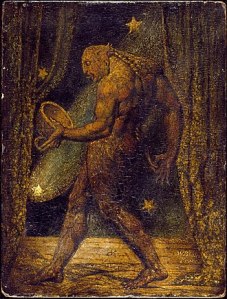
The Ghost of a Flea, c. 1819–20, William Blake
You may recall that Judge Jackson Brown has recused herself from the Harvard Case but can rule on the other. One thing that is interesting to note is this take from Theodoric Meyer and Toby Raji. This is from the Washington Post: “Historically diverse Supreme Court hears disproportionately from White lawyers. The court is grappling with several cases involving race, including two affirmative action cases set to be argued Monday” They also add White Male to that in the body of the article.
Since the start of the Supreme Court’s 2017 term, 374 lawyers have argued before the justices. Some have argued more than a dozen times, while others have done so only once.
To determine the demographics of this group, The Washington Post asked each of them to share their race or ethnicity, gender and other information about their backgrounds. More than 290 responded. The Post confirmed the race of seven more lawyers based on articles, speeches and interviews in which they described how they identify. The Post also confirmed lawyers’ gender identities based on their biographies on law firm and other professional websites and how the justices referred to them during oral arguments.
In total, The Post ascertained the gender identities of all 374 lawyers who have argued before the high court since the start of the 2017 term and the race of more than 80 percent of them.
Of those, nearly 81 percent are White, and 62 percent are White men. Nearly 9 percent are Asian American. While 19 percent of Americans and nearly 6 percent of lawyers in the United States are Hispanic, according to the American Bar Association, only 3.6 percent of the Supreme Court attorneys in the Post analysis were Hispanic. And while almost 14 percent of Americans and 4.5 percent of lawyers nationally are Black, only 2.3 percent of the lawyers in the Post analysis were Black.

Vincent van Gogh, “Head of a skeleton with a burning cigarette,” 1886
I’m not sure I trust the protection of my Constitutional writes to this mix. I’m sure many can effectively argue for or against a case, provide evidence, and do so eloquently. However, no one makes an argument like someone whose ox is about to be gored. The next read is from Axios and written by Sam Baker for Axios. The lede is a good one for Halloween and the Supreme Court that’s hellbent on turning us back into medieval surfs. “Affirmative action is at death’s door at the Supreme Court.” Get along, little peasants! Nothing to see here!
Why it matters: Harvard and UNC — supported by a host of other schools, as well as business organizations — argue that diversity is essential to the educational experience and that the only effective way to ensure diversity is to make it an explicit part of the admissions process.
- But they’ll be making that argument to a court that is extremely skeptical of any sort of racial preference.
- “The way to stop discrimination on the basis of race is to stop discriminating on the basis of race,” Chief Justice John Roberts wrote in a 2007 opinion about the use of race when assigning kids to public schools.
- From voting rights to K-12 education to employment law and probably now college admissions, the court over the past several years has consistently knocked down programs that tried to correct racial inequities by explicitly taking race into account.
This is all largely one man’s doing. Conservative activist Ed Blum has organized and funded a slew of high-profile lawsuits explicitly designed to get the court to strike down affirmative action.
- He orchestrated a 2013 case in which a white student sued because she didn’t get into the University of Texas — and the sequel, in which the same student came back to the high court again in 2016.
- This time around, the named plaintiffs are not only white students but also Asian Americans, who say they’ve been discriminated against because of the way Harvard and UNC give preference to applications from Black and Hispanic students.
- This is not a particularly secretive endeavor. Blum is open about the fact that this is, effectively, a campaign, and that he is the campaign manager.
- “I’m a one-trick pony,” Blum recently told Reuters. “I hope and care about ending these racial classifications and preferences in our public policy.”
- Blum also had a hand in the landmark case that nullified a key section of the Voting Rights Act — another instance in which the conservative court said policies designed to offset a history of discrimination had outlived their usefulness.
Chris Geidner, MSNBC Opinion Columnist writes this: “Chief Justice John Roberts is about to get what he always wanted. That’s a problem. Supporters of race-conscious admissions policies should learn lessons from Democrats’ sluggish response to the overturning of Roe v. Wade.” I’m not exactly sure any of us were sluggish, just at a loss for a way to take action with the split Senate.
Simple vote-counting offers no reason for hope. Roberts has long sought to eliminate or restrict race-conscious programs. In his second term on the court in 2007, Roberts declared in a case about primary school assignments that included race as a factor: “The way to stop discrimination on the basis of race is to stop discriminating on the basis of race.”
The other long-serving conservative justices are similarly strident. In 2003, Justice Clarence Thomas made his views clear: “I believe blacks can achieve in every avenue of American life without the meddling of university administrators.” Justice Samuel Alito joined Roberts’ opinion in the 2007 primary school case. They and Thomas all dissented in a 2016 case about the University of Texas’ race-conscious admissions policies. Alito, in an opinion joined by Roberts and Thomas, referred to UT’s plan as “systematic racial discrimination.”
Now, they also have the three Trump appointees — Kavanaugh, Barrett and Neil Gorsuch — on the court with them. All the earlier appointees will need is two of those three votes to end all race-conscious higher education admissions policies.
Watching Uncle Clarence Thomas close the door behind him will certainly be interesting.

Odilon Redon, “The Cyclops,” circa 1898-1900
So, let me just put a few other things up, given we know now how important elections are. I’d prefer no more morons appointing morons to any court. Katelyn Polantz from CNN writes: “January 6 committee obtains eight emails showing possible planning of post-election crime.” We must ensure we have control of Congress to learn more about this.
The House select committee investigating the January 6, 2021, attack on the US Capitol has obtained eight emails from late 2020 that a judge determined show Donald Trump and his lawyers planning to defraud courts and obstruct the congressional vote on the presidency.
A new court filing from Trump’s then-attorney John Eastman disclosed that the House said it had accessed the emails on Friday.
The House probe has been fighting for the records for months, and a federal judge cleared the way for the committee to receive them in recent weeks, calling them possible evidence of the planning of crimes on Trump’s behalf.
Eastman had tried several last-ditch attempts to hold off the committee. The panel declined to comment to CNN.
The emails that the committee finally has accessed include four communications between Trump attorneys that appear to indicate they knew details they submitted to courts to challenge the election were false, and four emails that reveal them discussing filing lawsuits as a way to hold off congressional certification of Trump’s electoral loss, Judge David O. Carter previously revealed.
One of the emails describes concern the lawyers had about submitting a declaration signed by Trump himself in a lawsuit challenging the election, which said the election fraud allegations it presented to the court were true, the judge’s previous opinion revealed. The Trump-signed statement was sent to court, even though the lawyers knew the allegations within weren’t sound, according to the court record.
Eastman is now asking the Ninth Circuit Court of Appeals for an order telling the House to return or destroy the eight emails.

Aksel Waldemar Johannessen, “The night,” 1920
Whoa! That must be kinda scary for Eastman and Trump. Too bad no medieval dungeons await them if true.
The outcome of the Brazilian elections is at the top of international news today. This is from The New York Times: “Brazil Elects Lula, a Leftist Former Leader, in a Rebuke of Bolsonaro.”
Voters in Brazil on Sunday ousted President Jair Bolsonaro after just one term and elected the leftist former President Luiz Inácio Lula da Silva to replace him, election officials said, a rebuke to Mr. Bolsonaro’s far-right movement and his divisive four years in office.
The victory completes a stunning political revival for Mr. da Silva — from the presidency to prison and back — that had once seemed unthinkable.
It also ends Mr. Bolsonaro’s turbulent time as the region’s most powerful leader. For years, he attracted global attention for policies that accelerated the destruction of the Amazon rainforest and exacerbated the pandemic, which left nearly 700,000 dead in Brazil, while also becoming a major international figure of the far right for his brash attacks on the left, the media and Brazil’s democratic institutions.
More recently, his efforts to undermine Brazil’s election system drew particular concern at home and abroad, as well as worldwide attention to Sunday’s vote as an important test for one of the world’s largest democracies.
Without evidence, the president has criticized the nation’s electronic voting machines as rife with fraud and suggested he might not accept a loss, much like former President Donald J. Trump. Many of his supporters vowed to take to the streets at his command.
As of 11 p.m. local time on Sunday night, Mr. Bolsonaro had not publicly commented on the election’s outcome. The questions of whether he would concede and when remained unclear.
The results on Sunday showed that tens of millions of Brazilians had grown tired of his polarizing style and the frequent turmoil of his administration. It was the first time an incumbent president failed to win re-election in the 34 years of Brazil’s modern democracy.
Still, Mr. da Silva won with the narrowest margin of victory over that same period, signaling the deep divide that he will confront as president.
He won 50.90 percent of the votes, versus Mr. Bolsonaro’s 49.10 percent with 99.98 percent of the vote counted Sunday night.

Katsushika Hokusai, 1830, “Ghost”
Let’s hope many nations get tired of right-wing, fascist thugs. Polls in the US show the races tightening, but the Democratic candidates appear to have the edge in some because their constituents like them. This is also from the New York Times on crucial Senate races. “Senate Control Hinges on Neck-and-Neck Races, Times/Siena Poll Finds. The contests are close in Arizona, Georgia, Nevada and Pennsylvania.”
Control of the Senate rests on a knife’s edge, according to new polls by The New York Times and Siena College, with Republican challengers in Nevada and Georgia neck-and-neck with Democratic incumbents, and the Democratic candidate in Pennsylvania clinging to what appears to be a tenuous advantage.
The bright spot for Democrats in the four key states polled was in Arizona, where Senator Mark Kelly is holding a small but steady lead over his Republican challenger, Blake Masters.
The results indicate a deeply volatile and unpredictable Senate contest: More people across three of the states surveyed said they wanted Republicans to gain control of the Senate, but they preferred the individual Democratic candidates in their states — a sign that Republicans may be hampered by the shortcomings of their nominees.
This is another reminder that we need to get out there and vote. We also need to bring people with us.
So, that’s it for me. I have to teach tonight, so no trick-or-treating for me!
What’s on your reading and blogging list today?
Finally Friday Reads
Posted: October 28, 2022 Filed under: just because | Tags: Elon Musk, Nancy Pelosi, Trumpist Vote Manipulation Plans, voter suppression 21 Comments
Witches’ Sabbath, 1789. Goya’s depictions of witchcraft mocked what he saw as medieval fears exploited for political gain.
Good Day Sky Dancers!
I had a late night since my block was shut down to film a new AMC series last night. I’m somewhat out of it. They filmed on our neutral ground, and there were a lot of flash bangs, police lights, extras wearing black, two big bucket trucks with lights, and a helluva lot of fog. The actor who was supposedly shot had the tough lines of a series of nos with a lot of coughing and emoting. There was even a fire truck. I was certain there were more police out there than usually patrol my entire district. It was like watching a lot of men play with toys and shoot out like they did when they were in grade school.
Anyway, trying to get back to normal, and at least I got a check for the disturbance and being on standby to open a neighbor’s house if needed. I forget how boring and repetitive the entire process is. I’ve wondered how we live in a society where adults that play make-believe and dress up and a bunch of muscled-up men playing with balls make so much money when teachers, healthcare workers, and others can barely eke a life out. Same as it ever was.
Speaking of the plethora of manchildren and toys, today we recognize Twitter will never be the same as the Chief Twit took over last night. BB wrote about the deal yesterday. The headlines today are precursors to what chaos may ensue. This is from the Washington Post: “Racist tweets quickly surfaced after Musk closed Twitter deal. A wide range of anonymous Twitter accounts celebrated Musk’s takeover and argued it meant the old rules against bigotry no longer applied.” What was that the Who sang about new bosses and old bosses?
An emboldened cast of anonymous trolls spewed racist slurs and Nazi memes onto Twitter in the hours after billionaire industrialist Elon Musk took over the social network Thursday, raising fears of how his pledge of unrestricted free speech could fuel a new wave of online hate.
Twitter has struggled to enforce its rules against harassment and extremism, and the company has not yet published any broad-scale changes to its content-moderation policies.
But Musk, a self-described “free speech absolutist,” has fiercely criticized the company’s previous leaders as overly rigid and suppressive and said he would work to overturn some of the company’s main enforcement mechanisms, such as indefinitely suspending accounts.
A wide range of anonymous Twitter accounts celebrated Musk’s takeover and argued it meant the old rules against bigotry no longer applied.

New Orleans’ Marie Laveaux, voodoo priestess
This is an interesting take from Nilay Patel at the Verge: “Welcome to hell, Elon. You break it, you buy it.”
You fucked up real good, kiddo.
Twitter is a disaster clown car company that is successful despite itself, and there is no possible way to grow users and revenue without making a series of enormous compromises that will ultimately destroy your reputation and possibly cause grievous damage to your other companies.
I say this with utter confidence because the problems with Twitter are not engineering problems. They are political problems. Twitter, the company, makes very little interesting technology; the tech stack is not the valuable asset. The asset is the user base: hopelessly addicted politicians, reporters, celebrities, and other people who should know better but keep posting anyway. You! You, Elon Musk, are addicted to Twitter. You’re the asset. You just bought yourself for $44 billion dollars.
The problem when the asset is people is that people are intensely complicated, and trying to regulate how people behave is historically a miserable experience, especially when that authority is vested in a single powerful individual.
What I mean is that you are now the King of Twitter, and people think that you, personally, are responsible for everything that happens on Twitter now. It also turns out that absolute monarchs usually get murdered when shit goes sideways.
Here are some examples: you can write as many polite letters to advertisers as you want, but you cannot reasonably expect to collect any meaningful advertising revenue if you do not promise those advertisers “brand safety.” That means you have to ban racism, sexism, transphobia, and all kinds of other speech that is totally legal in the United States but reveals people to be total assholes. So you can make all the promises about “free speech” you want, but the dull reality is that you still have to ban a bunch of legal speech if you want to make money. And when you start doing that, your creepy new right-wing fanboys are going to viciously turn on you, just like they turn on every other social network that realizes the same essential truth.

The Love Potion, Evelyn De Morgan, 1903
I can only imagine our fates when Orange Caligula returns to do his dance of the veils. This is a sad headline today. It’s what demons like Musk and Trump have wrought, unleashing spoiled and violet manbabies everywhere. Speaker Pelosi’s husband was assaulted in their home. His target was the powerful and effective Speaker. Her husband was beaten with a hammer during an early morning break-in.
This is from CNN Politics: “First on CNN: Assailant tried to tie up Paul Pelosi in home attack, sources say.”
Pelosi was attacked with a hammer at the couple’s home in San Francisco by a male assailant early Friday morning, law enforcement sources told CNN. The assailant who attacked Paul Pelosi was searching for the speaker of the House, according to a source briefed on the attack. The intruder confronted the speaker’s husband in their San Francisco home shouting, “Where is Nancy? Where is Nancy?” according to the source.
Pelosi, 82, was hospitalized but is expected to make a full recovery, the Democratic speaker’s office said in a statement.
The attack sent shock waves through Washington and sparked an outpouring of condolences and condemnation from congressional leaders on both sides of the aisle. It comes as fears of political violence directed toward lawmakers remain high in the wake of the January 6, 2021, attack on the US Capitol as well as other high-profile violent incidents that have targeted members of Congress in recent years.
The US Capitol Police released a statement saying that they are assisting the FBI and the San Francisco Police “with a joint investigation” into the break-in at the Pelosi residence in California.
The statement provides further information on how law enforcement responded, saying that special agents with the USCP’s California Field Office “quickly arrived on scene, while a team of investigators from the Department’s Threat Assessment Section was simultaneously dispatched from the East Coast to assist the FBI and the San Francisco Police with a joint investigation.”

William Blake, Triple Hecate or The Night of Enitharmon’s Joy, 1795, Tate Gallery, London, UK.
Meanwhile, other Trumpist Droogies are after our election results. Here’s some information on Georgia’s elections from the Washington Post: “Inside the secretive effort by Trump allies to access voting machines. How rural Coffee County, Ga. became an early target in the multistate search for purported evidence of fraud after the 2020 election.” This is some scary stuff.
Claims of widespread election fraud have been rejected over and over by local, state and federal officials as well as by computer science experts and numerous judges, including those appointed by Trump. They have nevertheless become an article of faith — or at least a professed belief — for many Republican voters, activists and politicians.
Experts say the events in Coffee County are a potent example of the rising threat posed by insiders who undermine election security in the name of protecting it. While elections officials say security protocols would make it difficult for bad actors to manipulate votes, some experts say the data — circulated beyond a limited number of authorized officials — could give hackers a powerful tool to simulate voting machines and probe for weaknesses.
The operations not sanctioned by courts or lawmakers were clandestine affairs. In Mesa County, Colo., an outsider was allegedly smuggled into the elections office under an alias to copy data. In Michigan, a pro-Trump state lawmaker allegedly persuaded clerks in two counties to hand over equipment for a House investigation that, according to the office of the House speaker, did not exist. In Coffee County, a local elections official invoked his Fifth Amendment right to avoid self-incrimination more than 200 times when questioned under oath recently for a long-running lawsuit that voting activists brought against state officials.
Coffee County was home to the most extensive of the early covert efforts that have come to light. In January 2021, forensics experts copied data from virtually every component of the voting system there, records show. The incursion provided pro-Trump election deniers with copies of sensitive election software used across Georgia, a state widely seen as a linchpin in the battle for control of the U.S. Senate in 2022 and the White House in 2024.
You may read the details of the plot at the link. Meanwhile, we have folks in Nevada thinking hand-counted ballots might do the trick for Trump. What could possibly go wrong? Should we ask Al Gore?
This is from the above Twitter link. I wonder how long legitimate news organizations stay there?
Jay Goldberg, a retired electrician who enjoys four-wheeling with his wife, Bonnie, in the dusty hills that loom over this desert town, sat in a tiny government office here this week counting ballots by hand because he believes the 2020 vote was rigged against Donald Trump.
“If something can be manipulated, it eventually will be,” said Goldberg, 70, referring to unproven claims that tabulation machines made by Dominion Voting Systems threw the presidency to Joe Biden. “It’s that simple.”
And to Goldberg, there’s a simple answer: Go back to hand counts. It’s a solution being embraced this fall in Nye County, a rural outpost of 53,000 where officials who deny the results of the 2020 election hold sway. Should Republicans prevail statewide in November, officials could be pushing it across Nevada next year. Like-minded GOP candidates nationwide have offered similar proposals, even as election experts and Democratic candidates have argued that such steps are only likely to further undermine faith in American democracy.
The rejection of voting machines and embrace of 2020 conspiracy theories make Nye County — a vast area that boomed, then busted, on the back of gold and silver mining more than a century ago and today thrives in part thanks to legal prostitution — a harbinger of the country’s future should election deniers take charge.
It depresses me whenever we find such a weird juxtaposition of strange Republican bedfellows. I’m sure the Christian Right has no problem with legalized prostitution, right? So, I may have another cup of tea or a good rest. I’m not sure I want to do reality today. It must be the Season of the Witch.
Whats on your reading and blogging list today?
What’s on your reading and blogging list today?

 peej
peej Carissa
 bostonboomer
 dakinikat
 ecocatwoman
 mablue2
 Mama Lopez
 peggysue22
 quixote
 skydancingguestblogger
 Mona (aka Wonk the Vote)



 Sky Dancing
Recent Comments