
Censure for Rangel?
Posted: November 18, 2010 Filed under: Breaking News | Tags: Charlie Rangel, congressional censure, ethics committee 17 Comments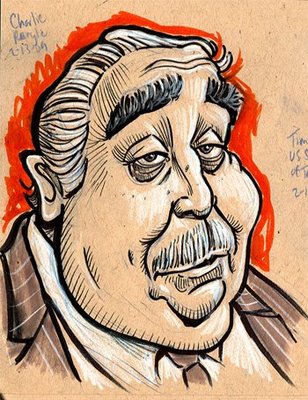 The Ethics Committee just voted 9-1 that Congressman Charles Rangel be Censured this is via NPR.
A censure is the strongest penalty that could have been issued short of expulsion. Rep. James Traficant, an Ohio Democrat, was expelled by the House for bribery and other crimes in 2002.
The last members of the House to be censured were Gerry Studds (D-Mass.) and Dan Crane (R-Ill.), who were punished in 1983 for sexual misconduct with underage congressional pages. Crane was defeated for re-election in 1984; Studds continued to win until he retired in 1996.
Rangel was easily elected to his 21st term earlier this month with about 80 percent of the vote
Today’s Christian Science Monitor has an interesting story of Rangel’s problems. Staff Writer Peter Grier reviews how Rangel has defended himself by pleading ignorance rather than corruption. This evidently did not fly with the panel of Rangel’s Congressional peers.
That is why at his punishment hearing on Tuesday Rangel admitted that he had done wrong in such matters as failing to pay taxes on rental income earned from his Dominican Republic beach villa, and soliciting donations for the Charles Rangel Center for Public Service – but that his actions had been inadvertent.
“I had no intent to evade or avoid the law,” Rangel told a hearing of the full House Ethics Committee.
He hadn’t known the details of his own tax returns, he said. Officials from the City College of New York, site of the Rangel Center, had come to him and suggested that he would be the best person to raise needed cash for the institution, according to Rangel.
In brief remarks to the committee he reminded them that the panel’s own chief counsel, Blake Chisam, under questioning early in the week, had said he saw no evidence of corruption per se in Rangel’s actions.
The more questionable charges concerned Rangel’s handling of donations for the Rangel Center although many believed that in his position on the Ways and Means Committee that it was unlikely he wasn’t aware that the income from his condominium in the Dominican Republic was taxable.
And some panel members questioned Rangel’s assertion that he is not corrupt. They noted that he had failed to pay taxes on his beach villa for 17 years, and that he indeed reaped personal gain from that, in the form of a lower tax bill.
After all, Rep. James Traficant, the Ohio Democrat expelled from the House in 2002 after felony convictions on bribery and other charges, only failed to pay taxes for two years.
“Failure to pay taxes for 17 years. What is that?” said Rep. Michael McCaul (R) of Texas.
Rangel targeted donors for the Rangel Center who had legislative business before the House Ways and Means Committee, which he chaired at the time, according to Mr. McCaul.
“Is that not corruption?” said McCaul. “I guess it is how you define corruption here. I think reasonable people may disagree on that interpretation.”
This is a study in how one powerful and popular congressman has fallen from grace if there ever was one.
Inflation: Not a Problem
Posted: November 18, 2010 Filed under: The Media SUCKS, U.S. Economy | Tags: CPI, inflation, logical fallacies, PCE, PPI, stupid conservative idealogues 36 Comments
Core Inflation: the Japanese Stagnation compared to the U.S. Great Recession via the SF Fed and Mary Daly.
This is one of the posts that I want to use to debunk that stupid cartoon that I keep seeing on Facebook. That cartoon also brought on many comments that come under the classification of ‘fallacy’. A fallacy is a type of error in reasoning. I have to identify the common ones we see when folks discuss economics when teaching economics. The fallacy associated with comments I see about inflation recently come under the heading of unrepresentative samples. People make hasty generalizations that because one thing they experience is true, they can generalize that experience to everything.
These inflation fallacies pretty much fall into line. It’s like, I went to the grocery store, I’ve been keeping track of what I’ve been paying for meat and that’s going up. Therefore, inflation must be a problem. (The other one I’ve been hearing is about rising taxes which I’ll debunk in another post. Let me stick to this one first.) So, first, inflation is not just the increase in one or two prices, it’s the increase in the average price levels in a country. That means everything. Not only the meat at the grocery store in your town, but the average prices every where in the country for the price of meat and everything else. While, your meat is going up, I’ll raise you that pound of brisket and tell you how cheap it is to buy a HD TV or a normal pair of jeans these days, or for that matter any apparel. But then, I’d just be engaging in the same fallacy. So, instead I’ll go with defining inflation, showing you how we measure it as economists, and then letting you look at the numbers. That graph top left is a good illustration of the average prices in the country as measured by the CPI or Consumer Price Index through September. Average Prices as measured by this index–which is the index quoted in that silly cartoon–show a distinct downward trend. This indicates deflation not inflation.
That’s just the CPI which actually tends to overstate prices which is why economists and the FED don’t use the CPI to gauge inflation. It’s been discredited since the 1980s as having distinct biases. Part of this is because it only applies to retail prices. Another part is that it uses a basket of typically purchased consumer goods and until the basket is changed, the weights of each price in the index reflect the basket. For example, if the basket still had VCR players in it, that would be a problem. The basket has to be re-arranged ever so often or it doesn’t reflect the actual buying patterns or budgets of typical U.S. consumers in the top 40 cities where the prices are collected by the BLS. The Fed doesn’t even collect the inflation numbers, the BLS does. The BLS also collects the unemployment and jobs market information. The FED reports them in addition to the BLS and uses them for their studies.
The three main inflation indexes most people hear about are the CPI(the Consumer Price Index), the PPI (the Producer Price Index) and the GDP Deflator. The CPI only tracks retail prices. The PPI tracks whole sale prices. The GDP Deflator tracks and weights all prices by what they represent of the current period GDP. It’s the most broad-based and least biased because of that weighting system instead of the basket. It reflects “average prices” of everything in the country. Most economists use the GDP Deflator unless they are specifically interested in how prices impact households.
The FED uses the PCEPI or Personal Consumption Expenditures Price Index to measure inflation for households. It is less volatile than the CPI and looks at ‘core inflation’. It is also a chained index which means there is no fixed base and it looks at inflation from quarter to quarter. The other indexes use base years which is why you typically see things like REAL (meaning it’s deflated) GDP in 1984 dollars or 1991 dollars. That means those measures are tied to the purchasing power of the base year of the index.
The FED uses the PCE–and has since 2000-which has indicated about 1/3 less inflation than the CPI. This is because of those statistical biases we mentioned above in the way the CPI is calculated (not a chain index) and in the way it uses a basket. The reason that the FED pays attention to “core” prices is because of seasonality that is present in things like food prices and gas prices. Food prices tend to change based on season for obvious reasons and people will substitute in and out of products that are lower in price and ‘in’ season. The CPI does not reflect this because of its use of the constant basket. It has a ‘substitution’ bias.
Economists detect and detrend series like these for seasonality. The biggest example of seasonality is in retail sales which typically peak extensively in November and December. It’s not part of an overall trend in the series. It’s just a recurring blip that we can account for by figuring out what magnitude it tends to be each season.
So let me go back to FedViews and an article over at Mark Thoma’s Economist’s View and talk about why inflation is not a problem, even though the meat prices at your market may be. Then there’ this from the Clelevand FED’s expectations of future inflation today.
The Federal Reserve Bank of Cleveland reports that its latest estimate of 10-year expected inflation is 1.50 percent. In other words, the public currently expects the inflation rate to be less than 2 percent on average over the next decade.
The FT puts this in perspective.
Expected inflation over every time horizon longer than six years is now at its record low in the period since 1982 that the series covers. Expected inflation over the next ten years is now down to 1.5 per cent per annum.
The Cleveland Fed index is not the last word on inflation expectations but it is certainly reason to think that those QE2 = hyperinflation fears are somewhat misplaced…
Mark Thoma responds to an outrageous letter by a bunch of miscreants at the WSJ that have the audacity to scare people with inflation fears. It links to this “Open Letter To Ben Bernanke” and includes such ‘distinguished’ economists as “William Kristol, Editor, The Weekly Standard“. Actually, the signatories aren’t distinguished economists at all. They’re mostly political hacks and conservative policy ideologues.
I doubt the invisible inflation vigilantes will change their tune, but it’s hard to find evidence of inflation worries in the data. If anything, markets are reassessing the Fed’s ability to stop disinflation.
You can also see that Paul Krugman has disinflation concerns and he has a nifty graph up also. There is no inflation, there is deflation or disinflation.
The people who put out that cartoon also fall under the heading of ideologues and miscreants. The cartoon uses cute little funny speaking creatures to lead you into logical fallacies. You watch them and think, why yes this must be true because I just paid more for a pack of pork chops last week when the price most likely reflected the hog cycle. (Yes, hogs have gestational periods and some times even the best farmers don’t plan pig pregnancies at opportune times for household demand.)
So, I hope this gives you enough information on inflation to know that it is not a problem for the country. You really don’t want me to make you do the underlying calculations to all these indexes, but if you want to torture yourself, any Principles of Economics textbooks will put you through the paces. Oh, and don’t buy used cars or the Brooklyn Bridge from any of the shiesters who signed that WSJ editorial or any of them that put out that silly cartoon.
Update: Here’s some data on State Revenues from taxes even though I said I’d wait for another post to debunk that portion of that silly little cartoon. I’ve already explained how quantitative easing is not printing money, but I’ll do it again shortly because the blasted cartoon is getting more steam. It’s like some stupid chain letter now!
The data is from The Nelson Rockefeller Institute of Government at NYU-Albany and it shows how revenues from taxes are way down from the pre-recession period although slightly up this year from last. That includes all forms of taxes taken in at the state level. You can see if your state’s tax revenues are up or down in a Table 3.
Wednesday Reads
Posted: November 17, 2010 Filed under: morning reads | Tags: Dubya Library, GM IPO, Murkowski v Demint, Obama triangulation, Plum Line, QE2, Richard Wolffe 59 Comments Good Morning!!!

So we finally have the triangulation word and President Obama used in the same sentence by liberal groups. Ya think ? This is the Headline from The Hill: ‘Angry left to Obama: Stop caving on agenda’.
Adam Green, co-founder of the Progressive Change Campaign Committee (PCCC) and an outspoken critic of the White House, said liberal anger has less to do with fears of a Clintonian move to the middle by Obama and more with a misreading of the election results by the administration.
The White House “fundamentally” doesn’t get that “the only way to get Republicans to deal in good faith is to fight them, crush them and teach a lesson that if Republicans are on the wrong side of an issue there will be consequences … so it makes sense to negotiate,” Green said.
“Right now, every time Republicans are on the opposite side of an issue from the public, it’s the Democrats who cave and talk about ‘compromise.’ It’s ridiculous.”
While the White House declined to comment for this story, Obama’s remarks since the election indicate that pursuing compromise with Republicans, including on the tax issue, will be one of his top priorities moving forward.
So, they couldn’t make a point without a little dash of CDS thrown in for good measure. Could they?
Here’s an interesting commentary on the economy by UCLA economist Roger Farmer at the FT. The economist forum there is a notorious hang out for all bow tie and spectacles set. He’s got an interesting suggestion here. Rather than buy Treasury bonds for QE2, the Fed should consider buying stocks.
US consumers and business investors reduced spending in 2008 because the value of houses, factories and machines plummeted. The housing bubble burst and the stock market fell at the same time. Currently, investors hold more than a trillion dollars in excess reserves at the Fed because they are afraid of a repeat performance.
QE is widely perceived to be the same thing as increasing the money supply. But it is not. Mr Bernanke has argued that the first round of QE was effective because it increased stock market wealth. That is an argument I have made in previous opinion pieces in the FT and two recent books. When people feel richer, they spend more. That creates jobs.
But the current problem is not that the stock market is undervalued. The Dow is now back at the level it attained immediately before the 2008 crisis. The problem is that investors are fleeing from risk and are demanding safe assets. The Fed is uniquely positioned to provide a safe haven for investors by buying risky securities from the public and replacing them with interest bearing deposits at the Fed.
What kind of risky assets should the Fed buy? Mr Bernanke plans to purchase treasury bonds. The Bernanke plan could prove costly when inflation reappears because the price of treasury bonds will fall when interest rates rise. And when the Fed loses money, its political independence will be compromised. That is why a better plan would be to buy stocks. This policy would provide a more effective exit strategy, since, when inflation reappears, dividends and stock prices will rise and rather than lose money, the Fed will stand to make substantial gains.
Notice that he says that QE2 is not the same as printing money. It’s not because the FED’s trying to prime the credit/investment channel, not the real sector directly. It can’t do that. Another interesting thing in the works is the GM IPO. It seems strange to call GM stock an initial public offering, but post bankruptcy it is what it is. The New GM is not the Old GM legally, but has it changed all of its old GM ways? The U.S. Treasury Department and the United Auto Workers’ retiree health-care trust want to sell more of their stock so this IPO looks to be huge. It would be interesting to see the FED mop up some of these, wouldn’t it?
The IPO, scheduled for tomorrow, will help Chief Executive Officer Dan Akerson return some of the $49.5 billion GM received in a taxpayer bailout last year. The Treasury, which is taking a loss on its portion of the sale, will break even only if the shares climb at least 50 percent, Bloomberg data shows.
“Treasury is confident demand is there for these shares to get soaked up,” said Michael Yoshikami, who oversees $1 billion at YCMNet Advisors in Walnut Creek, California. “It makes a lot of sense for them to do this because we’re already talking about shares going out at a price that is far above what everybody thought would be in demand.”
The IPO would be the second-largest in U.S. history, after Visa Inc.’s $19.7 billion sale in March 2008, and comes 16 months after GM emerged from bankruptcy. The biggest U.S. automaker also increased a preferred stock offering to $4 billion today, $1 billion more than it had planned.
Let’s see what the market does with these things today and see if our dollars were wisely invested in Detroit.
Here’s some interesting Republican infighting between Lisa Murkowski and Jim Demint via Politico. She’s got some fighting words for him.
“I think some of the Republicans in the Congress feel pretty strongly that he and his actions potentially cost us the majority by encouraging candidates that ended up not being electable,” Murkowski told POLITICO outside her Senate office. “And I think Delaware is a pretty good example of that, and I think there’re some folks that feel that DeMint’s actions didn’t necessarily help the Republican majority.”
Murkowski suggested the South Carolina conservative and favorite of the tea party seemed more interested in bolstering his own political standing rather than that of the Republican Party.
“So the real question is, what’s his desire?” she said. “Does he want to help the Republican majority, or is he on his own agenda, his own initiative?”
Asked what she believed the answer was, Murkowksi said: “I think he’s out for his own initiative.”
Fight on little wingnuts, fight on!! It can only help the things we care about. Now if only Obama would just take advantage of the infighting and not cave in to their demands before they have shown they are able to deliver anything but sloppy nasty verbiage.
The Plum line at WAPO is going over Richard Wolffe’s book Revival and reporting on all the juicy bits including this on Rahmbo. Rahm didn’t want any thing to do with bi-partanship and he warned that Health Care Reform would be Waterloo. This is an excerpt from the book quoted by Greg Sargent.
From page 102:
Unlike his boss, Emanuel wasn’t interested in looking reasonable with Republicans; he wanted to look victorious. He didn’t care much for uniting red and blue America; he wanted blue America to beat its red rival…
Obama was prepared to sacrifice time and political capital to make his policy bipartisan and more ambitious; Emanuel believed Obama did not have that luxury. “Time is your commodity. That answers everything,” Emanuel said. “But a lot of us thought we didn’t have the amount of time that was being dedicated. If you abandon the bipartisan talks you get blamed. He still wanted to try to achieve it that way. But that’s one of a series of things you can look back on and be a genius about.
“My job as chief of staff is to give him 180-degree advice. He hired me, as he asked, to learn from the past, or to use my knowledge from my time in Congress and in the Clinton administration. Watching ’94, watching ’97 when we did kids’ health care, and then studying Medicare, what were the lessons? The lesson about time as a commodity is not mine, it’s Lyndon Johnson’s. You got X amount of time; you gotta use it.”
There’s more in an another thread on an exchange between Grassley and Obama on removing the public option from the bill. I guess I may have to buy this book. I know Bostonboomer’s been looking for it to add to her Kindle.
Wolffe reports that Obama got into a testy exchange with Senator Chuck Grassley, in which the President flatly asked Grassley if he could support health reform if the public option were dropped and he got everything he wanted. Grassley, in effect, said: Nope. And he told a top Obama adviser the same.
The key is that this exchange occurred early on in the process, and the quest for bipartisan support for health reform continued anyway. The tale begins on page 70, when top Obama adviser Nancy DeParle met with Grassley to ask for his support amid the health care wars in the summer of 2009:
Just before [Grassley] returned to Iowa, he met with DeParle for another strategy session.
“If we do everything and resolve all the policy issues the way you want, with no public plan, do you think you’ll be able to support the bill?”
Grassley looked away. “I don’t know.”
Grassley went to the Oval Office for a similar conversation with the president and his fellow Republican and Democratic negotiators. He asked Obama to say publicly that he would sign a bill without a public option of a government-run plan. Grassley believed this would be a reasonable, minimal demonstration of Obama’s desire for a bipartisan deal. But the president declined to confront his own party base so explicitly. Obama asked Grassley the same question DeParle had posed: With every concession he wanted, could he support the bill?
“Probably not.”
“Why not?” asked an exasperated Obama.
“Because I’d have to have a number of Republicans,” said Grassley. “I’m not going to be the third of three Republicans. I’ve defined a bipartisan bill as broad-based support.”
Cheney and Dubya think the tide is turning in their favor. This is from CBS and it’s about the ground breaking for the Dubya Library in Dallas. I still wonder what’s going in there and now I’m going to wonder if it wasn’t all lifted from other places. I can’t believe we’ll all have memories that are that short no matter how much they want Jeb as their next president.
Cheney said that Mr. Bush, whose approval rating upon leaving office was just 22 percent, always understood that “judgments are a little more measured” with the passage of time. He added that Americans “can tell a decent, goodhearted stand up guy when they see him.”
Cheney lauded Mr. Bush as a president who refused “to put on airs,” stating that he was thrilled to find that the most powerful person he knew was “among the least pretentious.” He said Mr. Bush was someone who could “walk with kings, yet keep the common touch,” added that “there were no affectations about him at all – he treats everyone as an equal.”
He spoke admiringly of Mr. Bush’s actions in the wake of the Sept. 11th attacks, telling the former president that “because you were determined to throw back the enemy, we did not suffer another 9/11 or something even worse.”
Okay, now I feel like we should donate copies of “The Pet Goat” when the thing opens just as a reminder.
So, I’m a Nielson family this week and I haven’t turned on the TV once. Some big contributor to pop culture I’ve turned out to be. Actually, I think there’s some pretty good reasons that I avoid the thing. I’m linking you to one PSA that I’d rather not see. It’s a train wreck. I’m not going to put the Youtube up here because I have bodhisattva vows that include being compassionate to sentient being. It’s Bristol Palin and The Situation discussing abstinence and safe sex. Neither can act. Neither are attractive in my book. Warning. You will need eyeball bleach and ear wash if you go over there. There’s gratuitous use of the word situation and icky nick names. Please put all sharp items in a safe place before venturing over there. Do not have any liquid in your mouth.
What’s on your reading and blogging list today?
Home, Lost Home
Posted: November 16, 2010 Filed under: Bailout Blues, Equity Markets, Global Financial Crisis, U.S. Economy | Tags: bad lending practices, Bank of America, Foreclosure Crisis, Mortgage Loans, Subprime mortgages, truth in lending 41 Comments The Senate Banking Committee is looking into allegations today about Bank of America’s Foreclosure process. As you may know, there have been problems with foreclosure documents that have led many to question the legality of many foreclosure actions by banks. At least seven banking officers will appear before the committee to argue the case that robo-notorization and other means of speeding up the process of making people homeless are not illegitimate. Retiring Senator Bank-Lobbyist-in-Training Chris Dodd is in charge of that committee.
Bloomberg has this to report about the hearings.
Democrats said they are concerned not only about foreclosures, but also about whether mortgage servicers are properly handling mortgage modifications intended to keep some homeowners from losing their properties.
“If many banks and servicers are not handling even basic foreclosure procedures correctly, it is likely that many are also not correctly evaluating homeowners for mortgage modifications,” Senator Robert Menendez, a New Jersey Democrat who is a member of the Banking Committee, said in a letter to Treasury Secretary Timothy F. Geithner that is scheduled to be sent today.
In the House, lawmakers will also call in overseers and regulators from government agencies, including the OCC and the Federal Housing Finance Agency.
Consumer advocates have been expressing concern about this process for years and aggressive lobbying is apparently paying off for the financial institutions. This report on a flurry of FIRE lobbying is from WAPO.
The spotlight on the foreclosure process has anxious financial executives mobilizing on Capitol Hill. A financial lobbyist said senior executives have been meeting with lawmakers and their staffers, and industry groups are planning letter campaigns aimed at preventing aggressive new legislation.
“Everyone’s very nervous about what’s going to happen this week,” said another industry official, who spoke on condition of anonymity because his firm has a stake in the outcome. “We have all hands on deck.”
It’s unclear what new measure could pass in a politically divided Congress, but some ideas under consideration could broadly reshape the mortgage industry.
Some lawmakers want to resurrect legislation that would give bankruptcy judges the power to order lenders to reduce the principal that homeowners owe. Others are pushing for some big banks to spin off their mortgage-servicing arms to avoid conflicts of interest. There’s also discussion of replacing the industry’s current system for tracking mortgages with one that would be subject to federal regulation.
“The risk is small that a bill gets through,” the financial lobbyist said, but “we are taking it very seriously.”
Meanwhile, Americans for Financial Reform have requested the FED withdraw a Rescission Rule. In real estate transactions, these rules generally offer up a ‘cooling off period’ that give a buyer a chance to nullify a sales contract within a certain period. Most state rescission rules run from five to 15 days. The FED’s considering tightening the process to favor the lenders. Here’s some information on the request from AFR to the FED.
In the face of an unparalleled foreclosure crisis, now is the time to reinforce the fundamental importance of TILA rescission. Instead, the Board’s proposal would eviscerate the single most effective tool that homeowners have to stop foreclosures and avoid predatory loans: the extended right of rescission. The FRB Docket R-1390 contains a series of proposed changes to the TILA rules governing mortgage lending.
A few of the proposed changes, including new “material A much greater concern is the proposed decimation of TILA’s right of rescission. At the depths of the worst foreclosure crisis since the Great Depression, we are surprised that the Federal Reserve Board has proposed rules that would eviscerate the primary protection homeowners currently have to escape abusive loans and avoid foreclosure: the extended right of rescission in 12 CFR § 226.15 and 226.23. disclosures” for home secured credit, would advance consumer protections.
Some changes are neither particularly damaging nor particularly beneficial to consumers. Other parts of the proposal, however, would seriously undermine the reliability of TILA disclosures on home secured credit. Instead of informing consumers about the terms of their loans as Congress intended, these proposals would allow broad misstatements of loan terms through new tolerances that are without statutory authority.
The Truth in Lending Act passed by Congress specifically provides consumers the right to unwind an illegal loan through “rescission” for up to three years after the loan was consummated. The statute – and current Board regulations –both provide that if the proper disclosures were not provided to the homeowner at the closing, the homeowner can rescind the loan by sending a notice to the creditor. The statute then requires the creditor to cancel the security interest. Only after the creditor has complied with its obligation to cancel the security interest is the homeowner required to pay back the lender the amount still due on the loan. This order of obligations is the essence of the protection provided by TILA’s extended right of rescission. The cancelling of the security interest means that the homeowner has a defense to a foreclosure. It also means that the homeowner has the means to obtain refinancing so as to be able to tender the amount due. The extended right of rescission does not mean that the homeowner does not have to repay the loan. While the amount due is reduced by the finance charges, fees and amounts the homeowner has already paid, the balance is still due the creditor.
Current momentum to push the laws to protect mortgage loan originators and processors appears aimed at protecting them from the consequences of some really shoddy underwriting practices. This seems mostly motivated to save them the billions of dollars of costs they–and in turn the Federal Government–would incur should there be zero tolerance of these egregious practices. Not only are billions of dollars of investors money at risk–including pensions and institutional investment funds–but there’s also that little matter of the bankrupt Fannie and Freddie that sit on tons of the nasty stuff and are currently being propped up by tax payer money.
Oddly enough, there are calls again for the FED or Treasury to do more ‘stress tests’ to see exactly what the potential fall out from this massive stupidity might be. Will we once again have to fork over our Treasury to pay for the greed of the housing and mortage debacle? All of this undoubtedly has the markets shaky, I went in search of why so much Big RED numbers in the major stock indexes today. The uncertainty inherent in this problem is undoubtedly fueling the equities set back. We continue to see fall out from the District’s inability to deal with the current systemic risk in our Financial System due to massive and hasty deregulation. Here’s some more analysis from WAPO.
At the same time, he said, panel members sympathize with the conundrum facing policymakers as they deal with the issue: On one hand, grinding foreclosures to a halt unnecessarily could harm the economy and slow its recovery. On the other, he said, distressed borrowers are entitled to due process, especially when banks are trying to take their homes.
Administration officials say they are keeping a close watch on the issue.
“We strongly believe that the reported behavior within the mortgage servicer industry is simply unacceptable, and servicers who have failed to follow the law must be held accountable,” said Treasury spokesman Mark Paustenbach. He added that the administration has led an interagency effort to “investigate misconduct, protect homeowners and mitigate any long-term effects on the housing market. The independent regulatory agencies, the Justice Department and [the Department of Housing and Urban Development] are examining servicers’ behavior, and we will continue to monitor the situation closely.”
This loosely means they’re probably anticipating the need for more bailouts. Good luck with that given the influx of hostile partisans coming in from the right wing of the Republican Party in January. What’s a bunch of lame ducks to do?
This is a Democratic Adviser?
Posted: November 15, 2010 Filed under: Surreality, Team Obama, The DNC, The Great Recession, U.S. Economy | Tags: budget, cat food commission, Peter Orzag, President Obama, Social Security, the economy 39 Comments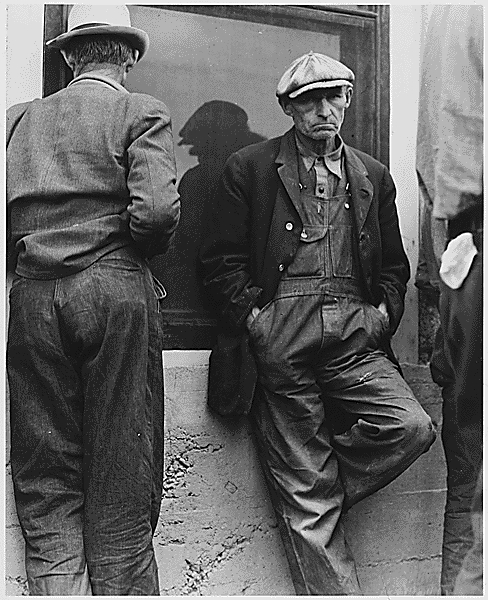 I have to admit to being with Digby on this one. It’s getting more obvious to me that this Democratic Administration is going after our Social Security benefits with gusto. You may recall that Peter Orzag was the Obama Budget Director and is now one of the major economic advisers to the President. This contribution to the NYT is not the first flare to be fired, but it is a distinctly blinding one.
So, first Orzag admits that Social Security is not a federal deficit problem. You would think he’d end with that. Social Security is an off budget program and it’s self funding and managing. That’s the deal. People pay for the benefits and they expect them. It’s a third rail of politics and you’d think after Dubya’s adventures into handing the trust fund to Wall Street that would be all she wrote. But, it’s not. (Emphasis is mine on this.)
So it would be desirable to put the system on sounder financial footing. And that is precisely what the co-chairmen of President Obama’s bipartisan commission on reducing the national debt have bravely proposed to do. It’s too bad their proposal has been greeted with so much criticism, especially from progressives — who really should look at it as an opportunity to fix Social Security without privatizing it. Although the plan leans too much on future benefit reductions and not enough on revenue increases, it still offers a good starting point for reform.
…
The main flaw in the proposed Social Security plan is that it relies too little on revenue increases and too much on future benefit reductions. A reasonable objective would be a 50-50 balance between changes in benefits and changes in revenues. But the way to bring reform into better proportion is to adjust the components of this proposal, not to fundamentally remodel it.
Alrighty, so let’s first IGNORE the fact that the cat food commission had no real business sticking its nose into Social Security because it’s charter said it was to go after the Federal Deficit. And, as Orzag has stated, Social Security is NO contributor to that deficit.
So, here’s where I agree with Digby.
I can hardly believe anyone of his stature could argue this nonsense. Orszag agrees that SS does not contribute to the long term deficit and yet is trying to convince us that that the Deficit Commission draft just put it on the table anyway, apparently out of a surfeit of progressive idealism. Huh? Moreover, he also thinks it makes sense to jump right on the third rail in American politics because it would be desirable” to do something about a potential future problem — when we are in the middle of an epic economic shitstorm with stubborn 10% unemployment and a banking and housing crisis that shows no sign of abating.
Is he ignorant of the fact that most people in this country are convinced — mainly because they’re being told it every single day by every politician, talking head and gasbag — that “entitlements” are destroying the economy and the future of the United States? The idea that social security cuts could buy the administration a chance for more stimulus is delusional.
Yup, delusional. And get this closer …
The White House has been handed a highly progressive reform plan for Social Security that could attract Republican support as well.
If this is progressive, I want to be known as something completely different.
This just seems to be the start of the swansong for the program. BostonBoomer sent me this call for liberals to get on board with similar clarion calls today. It’s from USN and John Farrell.
Okay, my liberal friends. On Friday I explained why the proposals of the Simpson-Bowles commission should be welcomed, and put on the bargaining table by conservatives. Today I will argue, despite what Paul Krugman says, that there’s good stuff for liberals too.
Remember, first and foremost, that this is a starting point. You don’t have to buy into everything to keep the conversation going. And beware misinformation.
You know, this all seems to assume that we don’t have Democratic pols that make Faustian bargains with themselves before they even start dealing with the Republicans. I have to admit that I’m with Krugman on this one too.
Right at the beginning of his administration, what Mr. Obama needed to do, above all, was fight for an economic plan commensurate with the scale of the crisis. Instead, he negotiated with himself before he ever got around to negotiating with Congress, proposing a plan that was clearly, grossly inadequate — then allowed that plan to be scaled back even further without protest. And the failure to act forcefully on the economy, more than anything else, accounts for the midterm “shellacking.”
You expect any one to fight for what’s right in Social Security given recent history like Krugman identifies? I don’t. No hope or expectation of it at all. After all, a major Presidential Advisor just call Allan Simpson brave instead of being labeled the crazy old coot he is.

 peej
peej Carissa
 bostonboomer
 dakinikat
 ecocatwoman
 jjlo
jjlo mablue2
 Mama Lopez
 peggysue22
 quixote
 skydancingguestblogger
 Mona (aka Wonk the Vote)





Recent Comments