
Friday Reads
Posted: July 13, 2012 Filed under: morning reads | Tags: Dinosaur Sex, George Zimmerman, Jerry Sandusky, Native American migrations, Paul Krugman, pedophile, race baiting, Rush Limbaugh 28 Comments Good Morning!
There are so many headlines flying about at the moment of interest that it’s hard to pick just a few this morning. Let’s start with some big ones that won’t go away.
A 267 page internal investigation of pedophile Jerry Sandusky shows that every knew and they all concealed the horrible crimes. Gawker sums up the shameful findings.
If you don’t have time to review the full 267-page internal investigationof the Penn State scandal, here’s the gist: Everyone knew. Former Penn State head football coach Joe Paterno knew. Former Penn State University president Graham Spanier knew. Former Penn State University vice president Gary Schultz knew. Penn State Athletic Director (currently on leave) Tim Curley knew. Everyone knew. As far back as 1998, when they learned of a criminal investigation of Sandusky related to an instance of suspected sexual misconduct with a boy in a PSU football locker room shower.
Here’s a paragraph from investigator Louis Freeh’s remarks sent out alongside his report that damns “the most powerful leaders at Penn State University” quite succinctly:
“Taking into account the available witness statements and evidence, it is more reasonable to conclude that, in order to avoid the consequences of bad publicity, the most powerful leaders at Penn State University – Messrs. Spanier, Schultz, Paterno and Curley – repeatedly concealed critical facts relating to Sandusky’s child abuse from the authorities, the Board of Trustees, Penn State community, and the public at large. Although concern to treat the child abuser humanely was expressly stated, no such sentiments were ever expressed by them for Sandusky’s victims.”
It’s really hard to put together the words that describe exactly how disgusted I am by this statement. That last sentence just is shameful. This sums up just about everything there is to say about how people in power with an agenda will behave when their interests are placed above everything else.
You wouldn’t know about the complete meltdown over Mitt Shady in the MSM and everyplace else if you hang out in right blogosphere or listen to Rush Limbaugh. It’s a wonderful day for race-baiting! They’re stuck on the NAACP Romney appearance and appear oblivious to the continued uncovering of Romney’s lies to every one including two federal agencies. Nope. Rush just turns up the volume and hate. Here’s more on that from MoJo.
“Obama’s the Preezy,” Limbaugh told his listeners Wednesday, (get it? Cuz that’s how black people talk). “He’s confident they’ll boo Romney, simply ’cause Romney’s white. He’s confident of that.” I’m sure Limbaugh will have an impressive rationalization for why Vice President Joe Biden was so well received by the NAACP convention Thursday. This is, put simply, the dumbest thing Limbaugh has said since the time the 61-year old radio host revealed he didn’t know how birth control works.
Romney has now said he “expected” to get booed, and House Minority Leader Nancy Pelosi accused Romney of wanting to get booed in order to make himself look politically brave. Like Limbaugh’s ridiculous comment, Romney and Pelosi’s statements are unfair to the NAACP. There has only been one black president of the United States in history, and Mitt Romney is not the first white presidential candidate to address the NAACP. When Ross Perot (!) adressed the convention in 1992, press accounts don’t describe any boos despite Perot referring to the audience as “you people.” Then-Arkansas Governor Bill Clinton was well received. Former Republican Senator Bob Dole (R-Kan.) declined to speak, saying he wanted to talk to audiences he “could relate to.”Both Al Gore and George W. Bush addressed the convention in 2000, and neither were booed.
There are only two instances in the past thirty years or so in which a “white guy” of comparable status to Romney getting booed at an NAACP convention. Following his appearance in 2000, George W. Bush snubbed the NAACP for years as president, but when he finally did speak in 2006, he was booed when he brought up charter schools and the war in Iraq. Prior to that, you have to go back about twenty years of white guys not getting booed to 1983, when then-Vice President George H.W. Bush was booed because of his defense of the Reagan administration’s civil rights record. Even then, ABC News describes him as being “well received” when he returned as a presidential candidate in 1988.
Here’s something interesting from Paul Krugman quoted at Politico: “I miss Bush’s ‘honesty’.”
The “radicalized” GOP has gone so far off the deep end, according to Paul Krugman, that it has the New York Times columnist wishing for the days of George W. Bush.
Only one side’s to blame for our “nightmarishly dysfunctional political situation,” he tells Business Insider.
“It’s entirely one-sided,” Krugman said. “That’s one of those things, you know, the centrists — you want to be a centrist, and you want to blame both sides, and it’s one of those almost hilarious things because you see it again and again, the pundits who say, ‘Here’s what President Obama should do, he should reach out across the divide and propose some short-term stimulus but long-term spending cuts to balance the budget, and you say, ‘He’s actually proposed that.’”
“We have a radicalized, off-the-deep end Republican Party,” the Nobel Prize–winning economist added.
Krugman puts the GOP’s latest presidential candidate in that category.
“I find myself now, watching Mitt Romney campaign, I find myself wishing for the honesty of George W. Bush,” he said.
The FBI has released its report on George Zimmerman–shooter of unarmed teenager Trayvon Martin–and has determined there is no evidence of racism present. CSM reports on the findings.
After interviewing 30 people familiar with George Zimmerman, the neighborhood watch captain charged with killing African-American teenager Trayvon Martin, FBI agents found no evidence that the shooting was driven by racial bias or animus.
Before Thursday’s release of a Department of Justice report, both sides have argued over whether smatterings of racially charged testimony should be released to the public before the trial – in particular, the testimony of “Witness 9,” whom state prosecutors say has described an “act” by Mr. Zimmerman that suggests “he had a bias toward black people.”
The report released Thursday made clear that the FBI found no one willing to go on the record as saying Zimmerman is racist. Even one of the most skeptical local investigators with the Sanford, Fla., police department, Chris Serino, suggested to the FBI that Zimmerman followed Trayvon “based on his attire,” not “skin color,” and added that he thought Zimmerman had a “little hero complex,” but is not racist, according to the Orlando Sentinel, which obtained copies of the document.
Prosecutors say Zimmerman profiled Trayvon as a criminal (though the teen was doing nothing wrong), followed him, confronted him, and then killed him after a brief scuffle. Zimmerman says he shot Trayvon in self-defense after the teen jumped him, knocked him down, and bashed his head against a sidewalk. The case caused a national uproar over racial profiling and gun laws after local police originally declined to charge Zimmerman. Forty-four days after the shooting, a special state prosecutor charged Zimmerman with second-degree murder.
The report outlines how FBI agents asked each person interviewed whether Zimmerman “displayed any bias, prejudice or irrational attitude against any class of citizen, religious, racial, gender or ethnic groups.” No one said he had.
More information is available at the paper’s website.
I want to add a few interesting links since this is Friday! First, the CSM reviews DNA evidence that shows that indigenous Americans came to this side of the world in at least three waves.
Supporting a controversial view of how humans might have populated the Western Hemisphere, geneticists have found that groups from Asia traveled over the Bering Strait into North America in at least three separate migrations beginning more than 15,000 years ago — not in a single wave, as has been widely thought.
“We have various lines of evidence that there was more than one migration,” said Dr. Andres Ruiz-Linares, a professor of human genetics at University College London and senior author of a report on the findings that was published Wednesday by the journal Nature.The discovery was made possible by the sheer volume of genetic material the team was able to assemble and analyze, he said.
Ruiz-Linares and colleagues around the world analyzed DNA samples, primarily from blood, taken from hundreds of modern-day Native Americans and other indigenous people representing 52 distinct populations. These included Inuits of east and west Greenland, Canadian groups including the Algonquin and the Ojibwa, and a larger variety of people spanning the southern regions of the Americas from Mexico to Peru.
Investigating patterns in more than 350,000 gene variants, the scientists determined that most of the groups they studied did indeed descend from an original “First American” population.
One last link! Ever wonder how dinosaurs had sex? Here’s some information on T-Rex’s Sex Life from the Daily Mail. There’s even some paintings that depict the act. Consider this!
Scientific illustrators have also attempted to capture the intriguing rituals of the huge beasts – including an illustrator who worked with Dr Halstead on a magazine article in 1988.
The physical challenges involved must have been formidable.
The penis of a tyrannosaur is estimated to be around 12 feet long.
Kristi Curry Rogers, Assistant Professor of Biology and Geology at Macalester College in Minnesota, told the Discovery Channel.
‘The most likely position to have intercourse is for the male behind the female, and on top of her, and from behind, any other position is unfathomable.’
So, that’s my offerings today! That should get us started! What’s on your reading and blogging list today?
Placing bets on which Romney Lie is the Felony Lie
Posted: July 12, 2012 Filed under: 2012 elections, 2012 presidential campaign, Mitt Romney | Tags: Bain Capital, Felony Lying, Mitt Romney, Mitt Shady, outsourcing 34 Comments We’ve pretty much seen Mitt Romney take positions on all sides of issues. We know he lies and repeats lies of others. You can get away with a lot in the world of high finance these days. This is especially true for the ways that Romney has conducted business. He thrives in a world of little to no transparency where lawyers can work their way around just about anything. Will this be the case for Willard now that David Corn and reporters at the Boston Globe have uncovered contradictory federal filings? One has to be a lie. Lying on either the SEC or the FEC form is a felony. Which agency has the correct information?
Bostonboomer has been doing a lot of heavy lifting on telling us all about Mitt Shady. I had no idea about his dealings, his tenure as governor of her state, or his business as a corporate raider. ( I hesitate to call what Bain does equity capitalism because I have friends in venture capitalism and equity capital firms that create value. Bain is anathema to them even. ) I had no idea he was such a complete sleaze. I sent BB this David Corn article at MoJo last night. You can see from the threads last night and this morning that she jumped right on it. The Boston Globe article even goes further with evidence of Mitt Shady having commited felony lying.
In the words of Joe Biden, “this is a big fucking deal”.
There is some really good analysis on this out there today in the MSM including interviews with former SEC and FEC commissioners who believe that one of the filings must represent felony lying. The deal is that filings made by Bain to the SEC and Romney to the FEC contradict each other on when Romney left Bain Capital. This date is important for several reasons to the political campaign. It is part of an Obama campaign tactic to hang outsourcing and job loss on Romney. The Romney defense was that he wasn’t there at the time so it wasn’t him. Well, that’s what the FEC filings say. However, that’s not what the SEC filings say.
Which one is the truth and which is the felony lie? This is from Peter Cohen writing for Forbes Magazine.
Why does this matter? It depends on whether the SEC and state filings are accurate. If those filings are correct, then Romney is in a weak position to claim that he had nothing to do with decisions to fire employees working for Bain Capital-controlled companies after 2002.
To wit, consider Bain Capital’s 1993 $24 million investment in GST Steel, a Kansas City, Missouri steel company. During his 2002 campaign for governor, Romney’s opponent pointed out that Bain Capital had profited to the tune of $50 million – after laying off 750 workers at GST.
And Romney replied that he was no longer at Bain Capital when the layoffs happened. But the SEC filings indicate that Romney was Bain Capital’s CEO in February 2001 when GST declared bankruptcy. And Romney made the same “not there then” claim when the Obama campaign raised this example in May 2012.
If the SEC filings are accurate, that means Romney was again in a grey area when he made the claims about GST. After all, if he was CEO and sole owner of Bain Capital in 2002, he would have had a responsibility to his investors to make key decisions about its investments — like whether GST should file for bankruptcy and fire its staff.
On July 11, Bain Capital issued a statement: “Mitt Romney retired from Bain Capital in February 1999. He has had no involvement in the management or investment activities of Bain Capital, or with any of its portfolio companies, since that time.”
To paraphrase Clinton, it depends upon what the meaning of the word retired is.
This is actually a big deal if the SEC filing is wrong because it leaves Romney open to huge lawsuits by buyers of 5 funds supposedly managed by Romney in 2002. Any prospectus beyond the initial red herring has to have the truth or the SEC will come after you with the wrath of Khan. In the words of John Aravosis: “Romney told the SEC that he remained the firm’s “sole stockholder, chairman of the board, chief executive officer, and president” up until 2002.”
But Romney said in a more recent financial disclosure form that he left Bain in 1999 – so the two federal forms contradict each other, at least one is a lie:
Mitt Romney Public Financial Disclosure Report, Aug. 11, 2011: Mr. Romney retired from Bain Capital on February 11, 1999 to head the Salt Lake Organizing Committee. Since February 11, 1999, Mr. Romney has not had any active role with any Bain Capital entity and has not been involved in the operations of any Bain Capital entity in any way.
In other words, Romney lied to the federal government either way. Either to the SEC, or in his more recent financial dislocure (sic) forms. And either one appears to be a felony.
Interestingly, Politico now has up a post echoing what I already wrote, and reaching the same conclusion about a felony.
The Boston Globe article is damning.
Romney has said he left Bain in 1999 to lead the winter Olympics in Salt Lake City, ending his role in the company. But public Securities and Exchange Commission documents filed later by Bain Capital state he remained the firm’s “sole stockholder, chairman of the board, chief executive officer, and president.”
Also, a Massachusetts financial disclosure form Romney filed in 2003 states that he still owned 100 percent of Bain Capital in 2002. And Romney’s state financial disclosure forms indicate he earned at least $100,000 as a Bain “executive” in 2001 and 2002, separate from investment earnings.
The timing of Romney’s departure from Bain is a key point of contention because he has said his resignation in February 1999 meant he was not responsible for Bain Capital companies that went bankrupt or laid off workers after that date.
Contradictions concerning the length of Romney’s tenure at Bain Capital add to the uncertainty and questions about his finances. Bain is the primary source of Romney’s wealth, which is estimated to be more than $25o million. But how his wealth has been invested, especially in a variety of Bain partnerships and other investment vehicles, remains difficult to decipher because of a lack of transparency.
The Obama campaign and other Democrats have raised questions about his unwillingness to release tax returns filed before 2010; his offshore assets, which include investment entities based in Bermuda and the Cayman Islands and a recently closed bank account in Switzerland; and a set of “blind trusts” that meet the Massachusetts standards for public officials but not the more rigorous bar set by the federal government.
Romney did not finalize a severance agreement with Bain until 2002, a 10-year deal with undisclosed terms that was retroactive to 1999. It expired in 2009.
The Corn article at Mojo contains information on Sankaty–also something Boomer’s followed–which is another thread in the Mitty Shady’s dealings.
Sankaty is a story in itself. It was recently the focus of an Associated Press investigation that reported that Sankaty “is among several Romney holdings that have not been fully disclosed” and that there is a “mystery surrounding” Sankaty. Reporting on this Romney entity, Vanity Fairnoted that “investments in tax havens such as Bermuda raise many questions, because they are in ‘jurisdictions where there is virtually no tax and virtually no compliance,’ as one Miami-based offshore lawyer put it.” With Sankaty, Romney was using a mysterious Bermuda-based entity to invest in a Chinese firm that thrived on US outsourcing.
In early 1999, Romney’s investment in Global-Tech expanded again. An SEC report filed on March 25, 1999, stated that Brookside and Sankaty at this stage owned 9.11 percent of the firm’s stock. Romney was still listed as the sole shareholder and president of both Brookside and Sankaty.
By this point, according to the open-to-question account offered by Bain and the Romney campaign, Romney no longer had any involvement in Bain deals. But the series of SEC filings show active Brookside and Sankaty trading in Global-Tech Appliances while Romney fully controlled these firms. The two Romney companies repeatedly changed their ownership stake in this Chinese firm, which was not shy about its dependence on outsourcing. In its 2001 annual report, Global-Tech noted that US outsourcing was essential to its prospects: “Household appliance companies are focusing on their primary strengths of marketing and distribution, while increasingly outsourcing product development and manufacturing…Our ability and commitment to develop new and innovative, high quality products at a low cost has allowed us to benefit from the increased outsourcing of product development and manufacturing by our customers.”
In August 2000, Brookside and Sankaty sold their interest in Global-Tech, according to the SEC documents. With these filings disclosing minimum details about Romney’s investment in Global-Tech, there is no telling how much money he made—or lost—on the deal.
Democrats and the Obama Campaign are wasting no time issuing talking points about this. The Romney campaign is firing back that The Boston Globe article is wrong and the Obama Campaign cannot hold Romney responsible for all that outsourcing because he was out rescuing the Olympics. My question to you is if you were 100% owner in a company would you truly, completely ignore it for about 3 – 4 years? Here’s Harry Reid firing off his salvo. Needless to say, the rhetoric is getting pretty fierce out there.
Senate Majority Leader Harry Reid (D-NV) said Thursday that new revelations about Mitt Romney’s tenure at Bain Capital mean he’d have trouble gaining Senate approval for pretty much any job.
“He not only couldn’t be confirmed as a cabinet secretary, he couldn’t be confirmed as dog catcher,” Reid told reporters at a Capitol press briefing, in response to a question from TPM. “Because a dog catcher, you’re at least going to want to look at his income tax returns.”
The bottom line remains, however. These two filings contradict each other. They can’t both be true. Both agencies will have to investigate. Also, riddle me this. Who is in charge of the executive branch right now and probably won’t impede or stop these investigations? Who would probably like to speed them up?
So, my next question is will we have a last minute rescue and nomination of Jeb Bush, Chris Christie, or perhaps, Michelle Bachmann or Ron Paul? This puts Ron Paul in a very interesting position because his people have been wrangling up enough delegates to try to stage a floor fight anyway.
Even The Business Insider is tut tutting Mitt Shady.
As “Chairman, CEO, and President” of Bain, he damn well would have remained responsible for these decisions. In which case, saying he had “left” and implying that he had no involvement or responsibility whatsoever is highly misleading.
The CEO of a car company may not have input into the decision of what specific cars the company makes or where it makes them (though he or she obviously could if s/he wanted), but this CEO is unequivocally responsible for these decisions.
Similarly, if Romney was CEO of Bain at the time it made the Stericycle decision, as well as the company layoffs and other unpleasant facts that Candidate Romney would like to disown, he certainly was responsible for these decisions.
So, enough with walking a fine line rhetorically.
Here are the questions that the Romney campaign needs to answer:
- Was Mitt Romney “chairman, CEO, and President” of Bain from 1999-2002 (even if he had physically “left” and was spending 100% of his time running the Olympics)? If the answer is “yes,” then Romney is responsible for what Bain did during that period–full stop.
OR
- Were the filings submitted to the SEC inaccurate?
The answer to those two questions cannot be “both.” It’s one or the other.
And if the answer is that Mitt Romney was chairman, CEO, and president of Bain for the years in which he has long tried to disavow any responsibility for what the firm did, the American public has every right to feel misled.
I know what I’ll be doing this week. 
The New “Funny”: Rape Threats/Rape Tweets
Posted: July 11, 2012 Filed under: misogyny | Tags: comedians, he man woman haters, rape, rape culture, rape jokes, rape threats, Rape Tweets, Tosh 11 Comments***Warning*** The graphics below the fold are extremely graphic. RAPE, Misogynist slur content.
Updated with new content.
 I’ve been watching a “comic” tweet something that he thinks is extremely funny and just part of comedy. He’s joined by a merry gang of Rape Tweeters. Simultaneously, I was watching Melissa from Shakesville deal with a similar incident. Rape culture is a huge part of our society. It’s disgusting.
I’m going to document the tweets I captured because they’ve disappeared from his tweet stream. It could be due to the abuse reports. But, dude is still on line so it might be he deleted them thinking he wouldn’t be caught threatening someone. I hope some one either SWATS him or the sex crimes police show up at his door. I wonder if this is how he texts his mom on mother’s day?
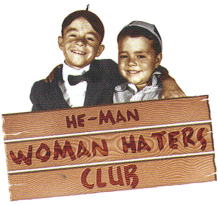
I guess what has started all this off is this story about Daniel Tosh and a rape “joke” during a stand up routine. I’m obviously not in his demographic and I don’t watch his show. The few times I’ve seen the show while channel surfing is about two minutes. I move on because it’s simply not funny imho. I guess it appeals to young men of certain demographic (e.g. white, immature, can’t get laid, bad looking, chubby, greasy, etc. Just notice the pics in the tweets below the fold.) Basically, it’s the call them “humorless, men hating feminists” men Haters Club all over again with violent rape threats thrown in to make it ‘edgy’.
Tepid apology? Thinly veiled insult?
You be Daniel Tosh’s judge.
A woman’s Tumblr post that went viral Tuesday claimed Comedy Central‘s “Tosh.0” host singled her out during one of his stand-up gigs and said, “Wouldn’t it be funny if that girl got raped by like, five guys right now? Like right now? What if a bunch of guys just raped her?”
We’re struggling to find humor (or proof of Tosh’s humanity) in that one.
Faced with Web backlash, the foul-mouthed comedian took to Twitter:
“All the out of context misquotes aside, i’d like to sincerely apologize,” he wrote, linking to the woman’s post.
“The point i was making before i was heckled is there are awful things in the world but you can still make jokes about them. #deadbabies.”
What more can we expect from the man who wrote Inappropriate Touch Tuesdays?
According to the blogger’s account, Tosh targeted her after she interrupted his show, yelling, “Actually, rape jokes are never funny!”
Rape Tweets are now en vogue with aspiring nasty young male comics and their adoring He Man Woman Haters Club. Here’s more information from Feministing which is more in line with the demographic of folks that know or care about what or who a Tosh might be.
This resulted in more criticism for this obvious fauxpology, but also a ton of Tosh defenders making more terrible rape jokes, and calling the woman a “dumb bitch“ and “cunt,” requesting her Twitter handle.The rest of the tweets in defense are regurgitations of the usual argument that “it’s just a joke” and #getoverit, Tosh’s job is to stir things up.
Yes, many comedians take life’s tragedies and make fun of them; they use humor as a way of coping with the awful things that happen to people. It’s actually similar to my own defense that bringing the funny into feminism and social justice makes it all the more accessible and fun, and can be a way for us to collectively laugh at the injustice that we have to deal with on a daily basis.
What Tosh did was not that.
Tosh threatened an audience member with rape. This should not be a conversation about where to draw the line (as much of themedia is asking around this). There is a very, very clear line here.
Be very careful treading around the Twitter today. It’s ugly ugly ugly. But then, it’s just one big frigging misogynistic, woman hating world out there, isn’t it?
PSSSSssssst. Tosh is said to have horrible boy cankles! I’m sure these next two “comedians” are poorly endowed and tweet with one hand, because let’s face it, look at their pix? What woman would want them?
The War on Constitutional Rights
Posted: July 11, 2012 Filed under: abortion rights, War on Women, Women's Healthcare | Tags: abortion rights, bad states, religious nuts, vagina 24 Comments We’ve already seen many many ways that states are trying to restrict constitutionally-granted rights like voting. Many states are trying to restrict the rights of women and the GLBT community. Access to abortion rights suffered severe blows under any state suffering from Republican Majority Rule. A recent report showed that 39 states enacted restrictions on a woman’s constitutional right to abortion.
Here are some examples of the kinds of assaults that women have had to endure as Republican majorities try to force them further into second class citizenship.
– Waiting periods: So far this year, states have considered requiring counseling and extending waiting periods for women seeking an abortion. In April, Utah enacted the most extreme waiting period law by requiring women to wait a full 72 hours between obtaining counseling and having the procedure. Twenty-five other states have waiting period laws that generally require the woman to wait 24 hours.
– Fetal heartbeat: Oklahoma and Louisiana adopted measures that attempt to use the fetal heartbeat to dissuade women from seeking an abortion. The Oklahoma law requires health providers to offer women the opportunity to hear the fetal heartbeat if they are after eight weeks’ postfertilization. In Louisiana, health providers must make the heartbeat audible, often necessitating a transvaginal ultrasound.
– Mental health: Arizona and South Dakota passed laws requiring counseling on the unsubstantiated negative mental health consequences of abortion. Nine states now require the counseling. The myth that there is a causal link between abortion and mental health issues has been largely debunked by mental health professionals.
– Public pressure helps: Only 30 percent of abortion restrictions passed by one chamber have actually been enacted so far this year, a significantly lower rate than the proportion signed into law at this point in 2011. Public pushback against the transvaginal ultrasound law in Virginia likely squashed momentum for similar provisions in Alabama, Idaho, and Pennsylvania. In addition, last November’s defeat of the Mississippi personhood amendment probably helped thwart efforts for similar laws elsewhere in the country.
This really does look like a war on Women and their health. It will take years to unravel the damage that Bobby Jindal has done in Louisiana in just a few short years.
A year ago, 2011 was record-breaking in terms of attacks on reproductive health. While this year is set to have fewer restrictions on the books, 2012′s figures are still higher than any year prior to 2011. As was the case last year, issues related to abortion and family planning funding were lightning rod issues in a few state legislatures. In fact, 14 of the new restrictions have been enacted in just three states — Arizona, Louisiana, and South Dakota — three of the most hostile to reproductive health.
No wonder my Ob/gyn daughter is trying to move to the safety of a blue state where the state government doesn’t try to influence what she can and cannot do as a doctor. Here’s the 19 worst states to live for women who would prefer the states stay out of their VAGINAS!
American Entrepreneurship on the Decline … Yet … not for the reasons you’d think
Posted: July 10, 2012 Filed under: 2012 elections, Economic Develpment, Economy | Tags: How Republican Policies kill Small Businesses, Regulation, Small Businesses, taxes 7 Comments One of the great symbols of US spirit has always been its small businesses. It’s one of those myths that seems to carry everywhere including to views of us in other countries. There are two related memes that go along with this mythic American institution that are not borne out by statistics. The first is that small businesses are the source of employment growth in the country. This is not true. Most small businesses that do not fail stay small. The majority of job growth comes from medium to large businesses. Midsize business are far more important. (Data from the BLS.) The second meme is that either too much regulation or uncertainty created by the government is causing depressed job growth. This is simply not true either.
What does this mean? By any reasonable interpretation, it is mid-size companies that are generating the bulk of the jobs in the recovery. From an economic development perspective, it means that job growth is more likely to come from mid-size companies that are adding several workers or perhaps a couple of dozen new employees, rather than the smallest or largest businesses.
And what are these businesses most worried about today? According to a recent survey by the National Federation of Independent Business (here):
“The two principal impediments to current small-business growth are business uncertainty and weak sales… The single most important indicator that would renew small-business owner confidence in business conditions is increased sales in their businesses.”
The economic recovery is a demand issue.
There is also some strange set of lies out there that the increase in taxes proposed by the Obama Administration on those making over $250k is going to kill small business. Not true again! This tax hike would likely impact only about 3.5% of small businesses. The majority of these are partnerships formed by doctors and lawyers. They are not your average mom and pop store. I just heard Haley Barbor repeat this lie on CNN last night.
But to what extent would Obama’s tax plan actually affect small businesses?
In its latest estimate last month, Congress’s nonpartisan Joint Committee on Taxation found that in 2013, just 3.5 percent of small business tax filers would pay a higher rate — about 940,000 individuals, many of whom are lawyers and doctors in partnerships. But those few percent account for 53 percent of all small business income.
GOP aides accept those facts but they say those few small businesses are the ones overseeing growing companies whom the nation is counting on to hire. According to a variety of analyses, the lion’s share of the tax hike would be absorbed by Americans earning well over $1 million.
Late in 2010, when the same debate played out, William Gale, co-director of the nonpartisan Tax Policy Center, called it a “myth” to suggest that ending the tax cut on top marginal rates would hurt small businesses.
“This claim is misleading,” Gale wrote in the Washington Post. “If the objective is to help small businesses, continuing the Bush tax cuts on high-income taxpayers isn’t the way to go — it would miss more than 98 percent of small-business owners and would primarily help people who don’t make most of their money off those businesses.”
There’s a new study covered by The Washington Monthly that shows that entrepreneurship and small business ownership is on the decline. Get ready for this result. It’s primarily Republican policies that are killing small businesses and not over regulation, over taxation or over anything else. Here’s some interesting information about the decline and how some of it is due to other things too.
Data kept by the Small Business Administration, for instance, shows that the share of the working-age population that is self-employed has been declining since 1994. The share fell steadily until 2002, stayed level between 2003 and 2006, then began to drop again. Overall, between 1994 and 2009, the share declined nearly 25 percent.
This drop in the number of self-employed citizens relative to the overall working population is also captured by the Bureau of Labor Statistics, which isolates nonfarm workers. The BLS survey asks workers if they are employed by a private company, a nonprofit organization, or the government, or are self-employed. Self-employed workers are further separated into those who have incorporated their businesses and those who have not.
According to the BLS, the number of Americans who are both self-employed and not incorporated has fallen significantly as a share of the working-age population, from 461 per 10,000 in 1990 to 359 in 2011. This decline—more than 22 percent—reversed a long trend in the opposite direction during the 1970s and ’80s. The BLS data shows a somewhat different picture when it comes to self-employed persons who incorporate their businesses. As a share of the working-age population, their ranks grew 35 percent between 1989 and 2008, before dropping off sharply in 2009. Yet this increase in incorporation may be evidence not so much of rising entrepreneurship as of existing unincorporated one-person firms deciding to change their legal status—to take better advantage of new limited liability laws in many states, for instance, in order to cut their tax bills.
Even if we accept this number without question, however, the total share of the self-employed dropped steadily over the last two decades. In 1994 there were roughly 663 self-employed (incorporated and unincorporated) for every 10,000 working-age Americans; by 2009 this number was down to 606, an 8.5 percent decline.
If anything, there’s good reason to believe that this decline in entrepreneurship is even steeper than government data shows, thanks to what appears to be systematic miscategorization by the government of what counts as a true independent company. Since the 1990s, large companies have increasingly relied on temporary help to do work that formerly was performed by permanent salaried employees. These arrangements enable firms to hire and fire workers with far greater flexibility and free them from having to provide traditional benefits like unemployment insurance, health insurance, retirement plans, and paid vacations. The workers themselves go by many different names: temps, contingent workers, contractors, freelancers. But while some fit the traditional sense of what it means to be an entrepreneur or independent business owner, many, if not most, do not—precisely because they remain entirely dependent on a single power for their employment.
Again, it’s not taxes and it’s not over-regulation responsible for the decline. Here are the two major reasons.
Perhaps the most common complaint among small business entrepreneurs is a shortage of financing. While the rise of the venture capital business might give the impression that financial support for entrepreneurs has never been easier to obtain, the truth is that only a tiny fraction of start-ups have access to venture funds. To get their businesses up and running, the vast majority of entrepreneurs today tend to rely at first, as they always have, on a combination of personal savings and contributions from family and friends. But with family balance sheets ravaged by stagnant wages and skyrocketing costs for health care and higher education, fewer and fewer average families have the savings needed to invest in a small business.
The effects of the radical consolidation in the banking industry that began in the 1980s are equally dramatic. Relatively few bank officers today have the leeway and local knowledge to lend to established local businesses, much less new ventures. This is especially true in bad times, when big institutions come under great pressure both from Wall Street and regulators. In Maryland, for example, Bank of America made 312 SBA-guaranteed loans to local businesses in 2007. In 2010, it made two. Consolidation also concentrates the power of a few financial institutions over small businesses, and radically raises the risk that entire funding systems can collapse all at once. The near breakdown of CIT Group in early 2009—averted only by a last-minute deal with bondholders—would have cut more than a million small businesses off from some of the most important forms of day-to-day business financing.
The single biggest factor driving down entrepreneurship is precisely the radical concentration of power we have seen not only in the banking industry but throughout the U.S. economy over the last thirty years. This revolutionary remaking of almost every economic activity in the nation was set in motion in 1981, when officials in the Reagan administration all but suspended traditional enforcement of America’s antimonopoly laws, a change in policy then adopted by every subsequent administration. Since then, regulators have done almost nothing to stop the great waves of mergers and acquisitions, with the result that control over most major economic activities is now more consolidated than at any time since the Gilded Age.
The effects have been nowhere more dramatic than in those sectors that have always been most congenial to individual proprietorships, like retail, services, farming, and small manufacturing. These were the activities most affected, for instance, by the type of “roll-up” strategies pioneered by financiers like Mitt Romney’s Bain Capital. In the case of the office-supply retailer Staples, Bain’s investment helped propel the company from a one-store operation to a 2,000-store international behemoth. Similar plays resulted in Home Depot capturing a vast proportion of the nation’s hardware business, in Best Buy capturing a vast proportion of America’s electronics business, and in Macy’s capturing a vast proportion of all department store sales. Just one company, Wal-Mart, now controls upward of 50 percent of some lines of grocery and general merchandise business—commerce that a generation ago was divided among tens of thousands of families.
So, next time you think that Republicans are the small business friendly party, think again. It’s clearly the drive towards monopoly, market concentration and policies that benefit the One Percenters that’s killing US small business.

 peej
peej Carissa
 bostonboomer
 dakinikat
 ecocatwoman
 jjlo
jjlo mablue2
 Mama Lopez
 peggysue22
 quixote
 skydancingguestblogger
 Mona (aka Wonk the Vote)





Recent Comments