
Monday Reads: Nice Bridge, it would be a shame if sumpin’ would happen to it
Posted: January 20, 2014 Filed under: morning reads | Tags: Chris Christie, George Washington Bridge, MSNBC 45 Comments Good Morning!
Just when you think Governor CrankyPants of New Jersey couldn’t be that corrupt, more stuff starts leaking out about him.
Hey, that’s a nice bridge you have there. It would be a shame if anything happened to it.
Hoboken Mayor Dawn Zimmer confirmed Sunday that she spent several hours privately with federal investigators, a day after leveling stunning accusations that Gov. Chris Christie’s administration held out Hurricane Sandy relief funds until she would sign off on a private development project, according to media reports.
Zimmer gave the U.S. Attorney’s office her journal and other documents, she said to NBC.
“As they pursue this investigation, I will provide any requested information and testify under oath about the facts of what happened when the Lieutenant Governor [Kim Guadagno] came to Hoboken and told me that Sandy aid would be contingent on moving forward with a private development project,” she said.
Asked by Candy Crowley on CNN why she had waited until now, with the scandal swirling around the Christie administration’s purported payback move to close the George Washington Bridge after the mayor of Fort Lee refused an endorsement, Zimmer said “I really didn’t think anyone would believe me and quite frankly, if I came forward, no one believes me, then I’m going to put Hoboken in an even worse position and my number one priority as a mayor of Hoboken is to fight to make sure that we can get as many Sandy funds as possible.”
Then, some Dem who did endorse Christie fessed up.
Long Branch, N.J. Mayor Adam Schneider (D) on Saturday said he got “enhanced” access to state officials after he endorsed Gov.
Chris Christie (R) during his re-election campaign.
Schneider told the Washington Post that a few months after he endorsed the governor, he contacted his office about an issue he couldn’t get resolved by the state utility board
“I’m not talking to any more underlings, and I’m not being delegated to,” Schneider told Christie’s aides, a strategy that proved successful. “I got what I needed.”
The Long Branch mayor believes the help from Christie’s office can be attributed to the endorsement, even though the governor never promised him anything.
Governor CrankyPants has decided that it’s all MSNBC’s fault.
Here’s the full statement from Reed (emphasis added):
“MSNBC is a partisan network that has been openly hostile to Governor Christie and almost gleeful in their efforts attacking him, even taking the unprecedented step of producing and airing a nearly three-minute attack ad against him this week. Governor Christie and his entire administration have been helping Hoboken get the help they need after Sandy, with the city already having been approved for nearly $70 million dollars in federal aid and is targeted to get even more when the Obama Administration approves the next rounds of funding. The Governor and Mayor Zimmer have had a productive relationship, with Mayor Zimmer even recently saying she’s ‘very glad’ he’s been our Governor. It’s very clear partisan politics are at play here as Democratic mayors with a political axe to grind come out of the woodwork and try to get their faces on television.”
“Our journalism speaks for itself,” MSNBC spokesperson Lauren Skowronski told Business Insider in response to Christie’s office.
The billionaire Kenneth G. Langone, Mr. Christie’s most devoted fund-raiser and loudest cheerleader, got in touch with him in recent days. Mr. Langone said he told the governor that he must be smarter about those who surround him.
“I conveyed the importance of the decisions he makes about the people around him and their qualification and their competence, including common sense,” said Mr. Langone, who called the politically motivated closure of lanes onto the George Washington Bridge “beyond the pale.”
“It upset the hell out of me,” he said.
Mr. Christie has told friends and contributors that he can weather the slings and scrutiny, even as he complains about what he sees as “piling on” by his enemies and a once-admiring news media, according to people told of his thinking, who spoke on the condition of anonymity because they did not want to be associated with comments that could upset the governor or his aides. Mr. Christie has leaned hard on his wife and brother for advice, in long, searching conversations. (The governor could not bring himself to watch the traffic jam-themed parody of “Born to Run” sung by his idol, Bruce Springsteen, on “Late Night With Jimmy Fallon,” though he was told by his college-age son, Andrew, that it was funny.)
Inside Mr. Christie’s inner circle, advisers are disputing public opinion polls, which show a noticeable drop in his popularity and job approval rating, saying that his previous sky-high numbers were inflated by election-year advertising.
Several Republican governors said they were heartened by Mr. Christie’s efforts to address the controversy head-on. So long as he is telling the truth and was not personally involved in the shutdown in Fort Lee, they said, Mr. Christie will remain a major force within the party.
You just gotta love the entire party and how it just continually strives to be out of touch with reality, doncha? Just so you know, Langone is basically the guy that founded Home Depot. It’s one of the stores on my boycott list.
Is it a law of evolution that the fatter the wallet, the thinner the skin? The wallet of Ken Langone, the billionaire co-founder of Home Depot, is so fat he he must sit on it funny, yet there he was the other day, crabbing to CNBC about Pope Francis’ missive to the effect that the rich are indifferent to the poor.
Langone was careful to attribute his complaints to an unnamed fellow plutocrat, who being a rich person ostensibly took the Pope’s remarks as an insult. Langone claimed his friend was so upset by the Pope’s remarks that he was reconsidering a donation for the renovation of New York’s St. Patrick’s Cathedral.
If Langone sounds a little like the guy with an embarrassing condition opening his medical consultation with the words, “Doc, I’ve got this friend…,” so be it. Langone told CNBC he advised Cardinal Timothy Dolan of New York that the pope should cool it with the finger-pointing at the rich. (“You get more with honey than with vinegar,” he said.) Dolan promised to explain to the reluctant donor that he was “misunderstanding” the pope’s words and suggested he would explicate the pope’s words in a more emollient way. “And then,” Dolan said hopefully, “he’s going to say, ‘OK, if that’s the case, count me in for St. Patrick’s Cathedral.'”
Remember, this is all about a $180-million project to renovate the big cathedral on Fifth Avenue, which suggests that the priorities of the New York diocese may not leave so much room for “misunderstanding” the pope’s message.
That message, in part, was that “while the earnings of a minority are growing exponentially, so too is the gap separating the majority from the prosperity enjoyed by those happy few…. A new tyranny is thus born, invisible and often virtual, which unilaterally and relentlessly imposes its own laws and rules.”
Langone hates Obama needless to say. He was active against the President as he sought reelection and was pandering to Christie prior to Romney’s nomination.
Langone is a prodigious donor, having given millions to New York University and New York City charities, including the Harlem Children’s Zone. He’s also given hundreds of thousands to conservative groups, like the Republican National Committee, Karl Rove’s American Crossroads super-PAC, and the American Action Network, the dark-money outfit run by former Minnesota Sen. Norm Coleman. Langone strongly backed his friend Ross Perot for president in 1992 and was a bundler for Giuliani in 2008.
Last summer, after the White House and Congress (whose members Langone compared to “sex fiends” when around money) clashed over lifting the federal government’s debt ceiling,Langone branded Obama “petulant” and “unpresidential” on CNBC. He even ripped the president for entering the Oval Office without a suit jacket on—something, Langone insisted, Ronald Reagan never would have done. (PolitiFact rated this claim “mostly false”; Reagan sometimes wore track jackets in the Oval Office on weekends.) Obama is “not bringing us together,” Langone said. “Divide us and we all lose. This has got to stop.”
He’s just another one of those billionaires that thinks he knows what’s best for the rest of us and that mostly means fattening his wallet.
Meanwhile, the news about the chemical leak from West Virginia is awful. The Ohio River is tainted and Cinncinatti closed its intake valves to prevent the chemical from entering the tri-state water supply.
The chemical leaked from a tank along the Elk River in West Virginia last week. The Elk feeds into the Ohio. Traces of the chemical were found at the Meldahl Dam around 9 p.m. Tuesday and were detected at a GCWW intake around 7 a.m.
“Right at the intakes,” Jerry Schulte, a manager with ORSANCO said. “The intakes have been shut down so that’s not a concern.”
GCWW stored water and alternate sources to supply customers until the chemical plume passed Wednesday night or Thursday.
The Northern Kentucky Water District said that it has also shut down its Ohio River intakes as a precautionary measure while the remnants of the spill passes.
Water treatment experts said the water could have been treated with activated charcoal and made safe for customers to use, but
Deborah Metz, a superintendent of water quality and treatment with GCWW, said, “We figure the least risky scenario is for us to just let it go on by.”
The environmental impact will be tracked by comparing fish counts and even bug populations from this spring to last spring.
“We won’t be able to detect the material it will be long gone from the system but if it had an impact on the systems we might be able to see it,” Schulte said.
Freedom Industries has filed for bankruptcy in order to avoid lawsuits and fines. This should not be possible under US Law but you know how this country is about the so-called job makers. What would be doing right now if this was Al Quaida that poisoned that many people?
Freedom Industries, the company that fouled thousands of West Virginians’ water with a chemical leak into the Elk River last week, filed for Chapter 11 bankruptcy Friday.
Freedom owes $3.6 million to its top 20 unsecured creditors, according to bankruptcy documents. The company also owes more than $2.4 million in unpaid taxes to the Internal Revenue Service, and the IRS has placed at least three liens on Freedom’s property, demanding payment.
The unpaid taxes date back to at least 2000, according to a lien filed in 2010.
Under the bankruptcy code, Chapter 11 permits a company to reorganize and continue operating.
The filing also puts a hold on all of the lawsuits filed against Freedom Industries. Since the leak last week, about a mile and a half upriver from West Virginia Water American’s plant in Charleston, about 25 lawsuits have been filed against Freedom in Kanawha Circuit Court. The company also faces a federal lawsuit.
The company’s assets and liabilities are each listed as between $1 million and $10 million in the bankruptcy filing. Chemstream Holdings Inc. is the sole owner of Freedom Industries, according to the filing. Gary Southern, who is identified as Freedom’s president, signed all of the bankruptcy documents.
On Thursday, a source close to Freedom Industries, who asked to remain anonymous because of pending lawsuits, told The Charleston Gazette that Chemstream Holdings is owned by J. Clifford Forrest of Kittanning, Pa.
 So, here’s the bottom line on that move.
A bankruptcy filing halts most litigation, forcing plaintiffs to vie with other creditors for a share of a company’s assets. More than two dozen lawsuits have been filed since the accident, which led President Barack Obama to declare a state of emergency for the affected counties. The state attorney general is investigating the spill.
Shorter bottom line: This pits bankers and investors against people damaged by the company. It protects the company’s assets.
I drove south to the point where I-79 South ends, and you pick up I-64 West to head into the interstate exchanges on the freeway that runs the length of downtown. And there, about a mile and a half out, I smelled it, smelled the odor of the MCHM coming in through the car vents.
I keep hearing the odor described as “licorice.” That’s not quite right, at least to me. But I can see how you’d make that association. The smell was both sweet and sharp, and strangely light, at least in comparison to the smells I associated with chemical leaks growing up. But it was there, suddenly, like someone had flipped a switch. It wasn’t there, and then the next second, there it was.
I-64 West into Charleston, coming from southbound, unrolls in a big left-hand curve just after you come into the city. I’ve driven this route hundreds, maybe thousands of times. I grew up here. I recognize every building from the freeway—the banks, the hospitals, the hotels and apartment complexes, all of it. In the deepest part of that big left-hand curve, down off the freeway and to my left, there was West Virginia-American Water Company, and the smell suddenly became very, very strong.
On my way in, the rain had let up. Now there was low-lying fog, white-and-gray tufts and tendrils of vapor rising up from the street level all around the small wood-frame houses and gas stations and grocery stores. The sky was dark, and the fog was in the streets, and the smell was everywhere. I looked at the water company, and I smelled the air, and suddenly I was filled—I mean filled—with a rage that was quite sudden, very unexpected, and utterly comprehensive.
We can never predict what moments are going to affect us this way. I’m no dewy-eyed innocent about chemical leaks. They were regular occurrences when I was a kid. On the merits, this doesn’t seem right now to be the worst industrial threat West Virginia has ever endured. Hell, it isn’t the most immediately threatening one my family has endured personally; that would be the bromine leak in my very own hometown of Malden in the 1980s, the one that forced a complete evacuation of the entire town until the leak could be contained.
But something about this confluence, the way I had to bring potable water to my family from two hours north, the strange look of the landscape wreathed in rain and mist, the stench of a chemical that was housed directly upstream from the water company—something about all of that made me absolutely buoyant in my rage. This was not the rational anger one encounters in response to a specific wrong, nor even the righteous anger that comes from an articulate reaction to years of systematic mistreatment. This was blind animal rage, and it filled my body to the limits of my skin.
And this is what I thought:
To hell with you.
Do go read the entire thing. It’s worth it.
So, at least today is a Holiday and we are celebrating the life of some one who fought for social justice. Today we celebrate the life and legacy of Dr. Martin Luther King, Jr.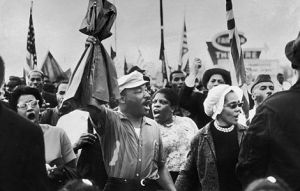
It took 32 years to get this holiday into law when it was signed by Ronald Reagan in 1983. It took until 2000 to get all 50 states to recognize the holiday.
The House took up the bill in 1983 and it passed by 53 votes. Democrats O’Neill and Jim Wright, along with Republicans Jack Kemp and Newt Gingrich, gave speeches supporting the King holiday.
But getting the bill passed in the Senate would be contentious. Senator Jesse Helms of North Carolina openly opposed it. At first, Helms introduced a filibuster, and then he presented a 400-page file that accused Dr. King of being a communist.
Senator Ted Kennedy criticized Helms and Senator Daniel Moynihan called the document “filth” and threw it on the Senate floor.
Despite Helms, the bill passed the Senate by 12 votes–even South Carolina Senator Strom Thurmond voted in favor of the King holiday.
President Ronald Reagan signed the bill in November 1983. The first federal King holiday was celebrated in 1986.
It took longer for the 50 states to adopt the holiday. By 1986, 17 states had already adopted it. But there was strong resistance in Arizona to passing a state holiday.
The fight between state legislators came to a head when the King holiday was put up for an Arizona voter referendum in November 1990.
At that point, entertainers had started boycotting the state in protest, and the National Football League threatened to move the 1993 Super Bowl from Tempe if the holiday was defeated at the polls.
The King holiday lost in a two-part voter referendum and the NFL made good on its threat, taking the Super Bowl to Southern California and costing the state an estimated $500 million in revenue.
Arizona voters approved the King holiday two years later.
There was also a fight in South Carolina over the holiday. It was one of the last states to approve a paid King holiday for state employees in 2000.
The state’s governor had tried to link the holiday to a commitment to allow the state house to fly the Confederate battle flag. Instead, he signed a bill that approved the King holiday along with a Confederate Memorial Day celebrated in May.
Have a great day! What’s on your reading and blogging list?
No, I don’t want Republican Son in Laws
Posted: January 17, 2014 Filed under: religious extremists, right wing hate grouups, War on Women, worker rights 66 Comments I so badly want to write on your blog, Bob, or at NOLA.com about your op ed because it sounds so, well, reasonable. However, I’m going to do it here where I am totally surrounded by my friends. Yup, you’re reasonable, my friend, like most democrats I know. Y’all will compromise on just about anything because y’all so reasonable. I’ve got the President in mind when I say that one, actually, let alone most of the senators and congressmen in the democratic caucus. I’m a political independent, Because y’all tend to be so reasonable,
I don’t really mind that my oldest daughter grew up to be a democrat and that she married one. However, I would completely totally freak if either daughter registered republican or brought one home to me. I say this with the caveat that up until the Clinton years, I was a republican and I ran for office in Nebraska as a republican. You may be reasonable, but today’s republicans are not. There is no compromise with them. There is no one reasonable left in the party unless you count the people that don’t believe the dogma but enable it any way to either get re-elected or to have their businesses get preferential tax treatment and subsidies. I don’t want these folks in my home or near my daughters.
So you ask “Would you be troubled if your son married a Republican? What if your daughter married a Democrat?” and I’m answering you here because I don’t want to sully up the nola.com site or your blog site. My answer will be trolled beyond anything reasonable people can imagine and it won’t be by my fellow independents or your democrats. You can read my response here where I am surrounded by loving friends who will agree with me and will give you their own stories as Latinas, feminists, GLBTs, atheists or religious and racial minorities, and people that are not only reasonable but will stand up for what’s right.
According to a 2010 national survey, 40 percent of us would be “upset” with such a marriage. That’s worrisome, but almost as interesting as the historical trend. In 1960, when a pollster asked a similar question, only 5 percent said they would be “displeased” if a child married into the opposite party.
Doesn’t it feel some days that the entire, polarized country is obsessed with politics, down to the political affiliation of our children’s spouses?
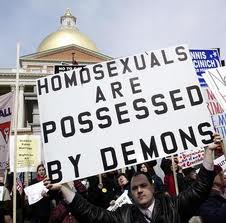 I may have agreed that you were oh, so reasonable if I haven’t witnessed so much disrespect coming from the Republican Party towards women, gays, racial minorities and non-christians. I have the perspective of having been republican, having ran for office as a republican, and
  being basically drummed out of the republican party for being pro-choice and having “marched in the streets with lesbians” in support of an anniversary of women’s voting rights like it was some kind of immoral act.
As a matter of fact, I just had this conversation at a friend’s house last month. I met a woman who had a son undergoing gender reassignment surgery. I was telling her that one of my best friend’s nephews was having the same surgery and was a doctoral candidate at UC Berkley in the AI robotics program. We both laughed and said it could be worse, they could’ve become born again and republicans. I thought about it and decided that’s about the only thing that would cause me never to speak to either of my children. The idea of having a Michelle Bachmann as a daughter or a Ted Cruz, or a David Vitter or a Steve Scalise any where near my daughters let alone married to them would cause me to worry about their safety and their sanity.
Let’s check legislation proposed by today’s Republicans.
Here’s a new proposed law in Arizona.
A veteran state lawmaker is pushing legislation that would allow businesses to discriminate against gays — and maybe even women and Jews — as long as they were acting on sincerely held religious beliefs.
SB 1062 would allow those sued in civil cases to claim that they have a legal right to decide not to provide their services to any individual or group because it would “substantially burden” their freedom of religion. That specifically means doing something that the person feels is contrary to their religious teachings.
Sen. Steve Yarbrough, R-Chandler, said the measure is aimed specifically at preventing what happened in New Mexico where courts there said a gay couple could sue a wedding photographer who turned away their request to take pictures at their nuptials. He said that should not be allowed to happen here.But Yarbrough said his legislation could also be interpreted broader than that, allowing motel operators with vacant rooms to refuse to rent to gays.
Potentially more significant, Yarbrough acknowledged there may be individuals who have religious beliefs about unmarried women, or even employing people who do not share their same beliefs.

On the morning of December 11th, Gretchen Whitmer, the charismatic 42-year-old minority leader of the Michigan Senate, stood before her colleagues in the Statehouse in Lansing, and told them something she’d told almost no one before. “Over 20 years ago, I was a victim of rape,” she said. “And thank God it didn’t result in a pregnancy, because I can’t imagine going through what I went through and then having to consider what to do about an unwanted pregnancy from an attacker.”
No one in the gallery said a word. Instead, with just hours to go before it broke for Christmas recess, Michigan’s overwhelmingly male, Republican-dominated Legislature, having held no hearings nor even a substantive debate, voted to pass one of the most punishing pieces of anti-abortion legislation anywhere in the country: the Abortion Insurance Opt-Out Act, which would ban abortion coverage, even in cases of rape or incest, from virtually every health-insurance policy issued in the state. Women and their employers wanting this coverage will instead have to purchase a separate rider – often described as “rape insurance.” Whitmer, a Democrat known as a fierce advocate for women’s issues, described the new law as “by far one of the most misogynistic proposals I’ve seen in the Michigan Legislature.”
And it’s not just Michigan. Eight other states now have laws preventing abortion coverage under comprehensive private insurance plans – only one of them, Utah, makes an exception for rape. And 24 states, including such traditionally blue states as Wisconsin and Pennsylvania, ban some forms of abortion coverage from policies purchased through the new health exchanges. While cutting insurance coverage of abortion in disparate states might seem to be a separate issue from the larger assault on reproductive rights, it is in fact part of a highly coordinated and so far chillingly successful nationwide campaign, often funded by the same people who fund the Tea Party, to make it harder and harder for women to terminate unwanted pregnancies, and also to limit their access to many forms of contraception.
 Here’s a great list of what right wing, christianist republicans say about women and their bodies. They believe it’s perfectly acceptable to deem women property of the state and endanger their lives.
1. Texas State Senator Wendy Davis is a “terrorist” because she filibustered an anti-choice bill.
2. “If it’s a legitimate rape, the female body has ways to try to shut that whole thing down.”
3. Who needs abortion when victims of sexual assault can just get “cleaned out” by a rape kit?
4. Women shouldn’t terminate pregnancies resulting from rape because it’s what God intended.
5. Women shouldn’t complain about forced transvaginal ultrasounds, because they’ve already had sex.
6. “If babies had guns, they wouldn’t be aborted.”
7. “Abortion is much more serious than the rape of children by priests.”
8. Abortion rights caused the Sandy Hook massacre.
9. Ban abortions because of masturbating fetuses.
10. Abortion is just like the Holocaust.

I would worry about the safety of my daughters because of this: Virginia GOP candidate: Spousal rape isn’t a crime if she is ‘wearing a nightie’.
“I do not know how you could validly get a conviction of a husband-wife rape, when they’re living together, sleeping in the same bed, she’s in a nightie and so forth,” Black says. “There’s not injuries, there’s no separation or anything.”
or this: Medical Records Confirm The Pregnant Texas Woman On Life Support Is Actually Dead
Did I mention that my oldest is actually an ob/gyn and she went to practice some place where these folks aren’t second guessing her medical expertise? You’ll excuse me if I say that with their guns, their onward christian soldiers zealotry, and their anger/meanness that I believe that the only thing safe around these people might be a clump of cells called a zygote.
Then, there’s the laws they want enacted to teach specific creation mythology as science. Oh, and we taxpayers get to foot the bills for christianist madrassas.
When public-school students enrolled in Texas’ largest charter program open their biology workbooks, they will read that the fossil record is “sketchy.” That evolution is “dogma” and an “unproved theory” with no experimental basis. They will be told that leading scientists dispute the mechanisms of evolution and the age of the Earth. These are all lies.
The more than 17,000 students in the Responsive Education Solutions charter system will learn in their history classes that some residents of the Philippines were “pagans in various levels of civilization.” They’ll read in a history textbook that feminism forced women to turn to the government as a “surrogate husband.”
Responsive Ed has a secular veneer and is funded by public money, but it has been connected from its inception to the creationist movement and to far-right fundamentalists who seek to undermine the separation of church and state.
The opening line of the workbook section declares, “In the beginning, God created the Heavens and the Earth.”
Infiltrating and subverting the charter-school movement has allowed Responsive Ed to carry out its religious agenda—and it is succeeding. Operating more than 65 campuses in Texas, Arkansas, and Indiana, Responsive Ed receives more than $82 million in taxpayer money annually, and it is expanding, with 20 more Texas campuses opening in 2014.
Charter schools may be run independently, but they are still public schools, and through an open records request, I was able to obtain a set of Responsive Ed’s biology “Knowledge Units,” workbooks that Responsive Ed students must complete to pass biology. These workbooks both overtly and underhandedly discredit evidence-based science and allow creationism into public-school classrooms.
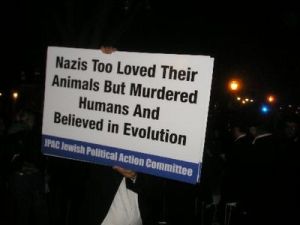 I’m a political independent but frankly, if my daughters came home spouting this stuff or with some man in tow that thought it was okay, I frankly would see if they need to be institutionalized and thoroughly checked by a psychiatrist. Fortunately, my son-in-law is a nice registered Democrat and Hindu. My other potential son-in-law is also a democrat and is as agnostic as they get. My son in law is a doctor and my youngest’s SO has degrees in biological engineering so both of them are reality based.
However, I could go on and on and on about the climate change denial, the treatment of the poor in this country, the unemployed, and just about any one else who isn’t a big political donor to the Republican party and ask you to rethink your treatise. The leader of GOPround just quit because he couldn’t take the bigotry any more.
Jimmy LaSalvia co-founded political action group GOProud to prove to America that the Republican Party is a safe home for gay conservatives. But he no longer believes his own arguments. On Monday, he announced on his blog that he could no longer take his own party’s refusal to stand up to bigotry: he was leaving the Republican Party and had registered as an Independent. “I am every bit as conservative as I’ve always been, but I just can’t bring myself to carry the Republican label any longer,” he wrote.
His condemnation of the GOP was even stronger when he explained his decision to TIME on Wednesday. The Republican brand,
he says, is so tarnished that he no longer believes it is salvageable. “I’ve come to the conclusion that it’s time to pull the plug on the patient. It’s been brain-dead for a long, long time.”
In a wide-ranging interview with TIME, included before in an abbreviated form, LaSalvia explains the journey that led him to abandon the party ship:
TIME: You are someone who once had lots of hopes for the GOP. What happened?
LASALVIA: I have been my whole life the ultimate team player. I was ‘The Gay for Mitt’ last year. I think that what I did should cause the leadership in the Republican Party to ask themselves, How bad must it be if we’ve even lost Jimmy?
I spent my career working to create an atmosphere in the conservative movement where gay conservatives can be open and honest and live their lives and work within the conservative movement. I wanted it to be a place where straight conservatives could publicly support gay Americans and even eventually come to support civil marriage for gay couples. I feel like I have accomplished that. I had hoped that would be enough to melt the anti-gay bigotry that runs through the ranks of some in the Republican Party. I’ve come to realize that it is not, and that the leadership of the party tolerates bigotry, not just antigay bigotry, but anti-Muslim, any people who are not like us it seems like, because they are afraid of losing that sliver of their base who are anti-gay. And the truth is they are turning off millions more Americans by kowtowing to a group that frankly is losing and who most Americans think are wrong.
The entire party has become a safe haven and magnet for neoconfederates and bigots. Jimmy just came to the realization about 20 years later than me. I am sure there are some folks that seem like reasonable people. But try telling your conservative “friend” you’ve decided that you’re not a christian anymore and see what happens. Reasonable people do not tolerate and enable unreasonable and mean ideas, actions, and speech. My elderly father is the only Republican I allow near me any more and he just about does me in when he spouts all those Fox lies and Republican talking points that are about as far from the truth as they can be. Some times what he says horrifies me but he’s 90.
Our current democratic president and nearly all of his policies are just about as Nixonian as one can get. He’s pushing the new trade agreements. The Affordable Health Care Act was the republican response–called Chaffecare or Dolecare at the time–and the individual mandate is the cost demanded by private insurers for taking on people with pre-existing conditions like ovaries, HIV, or cancer. His budget and the level of government spending represents draconian cuts. His national security programs are still pretty extreme. Yet, every Republican sees him as a socialist. It’s total balderdash and racism!
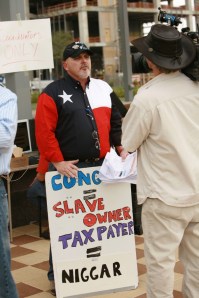 Here’s a nice South Carolina Republican Senator advocating gun violence to get his views enacted.
South Carolina Sen. Lindsey Graham’s top-polling primary challenger, state Sen. Lee Bright, stood on the steps of the South Carolina statehouse (Confederate flags proudly displayed behind him) and said:
“If the Tenth Amendment won’t protect the Second, we might have to use the Second to protect the Tenth.”
Lee Bright’s insinuation being, if you don’t let South Carolina do as they want then South Carolinians will take up arms against you.
Go read some of the quotes from this darling of the Tea Party.
Let’s face it. It doesn’t take long for the congress and the U.S. Senate to come in and say, ‘Y’know what? These states are a lot of trouble. They’re gettin’ in the way. They’re organizing these people. They’re having these rallies. They got, you know, they got, some of them are even talking about militias. I mean, we gotta do something about this. So let’s just go ahead and dissolve them.
Today’s republicans and today’s republican party are no where near even Barry Goldwater or Ronald Reagan who had some pretty  outrageous things to say in their day. They would hate Nixon, Ford, Eisenhower, and they dis Lincoln. All you have to do is talk to a Rand Paul follower and you’ll hear nothing but criticism of Lincoln. I don’t even have time to describe how absolutely crazy they are about regulation, the Federal Reserve Bank, balanced budget amendments, and policies that should be fairly noncontroversial that would get people back to work again.
Yes, Bob, I would absolutely say yes to your question: DEMOCRAT? REPUBLICAN? ARE WE REALLY ALL THAT DIFFERENT?
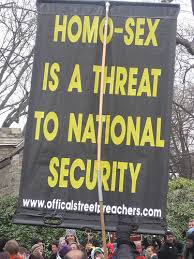
I wouldn’t let people like these near my home, let alone near my daughters. I wouldn’t even let Senator David Vitter near my home or near my daughters. Would you?
If you don’t believe me, ask another person who used to be a big reasonable republican party insider and is another economist. That would be Reagan advisor Bruce Bartlett. Hit him up on his facebook page or just watch his thread. He calls them all wankers now. Frankly, I’ve got worse words for them after my experiences trying to be pro-choice, pro-era, and pro-equal wages for equal work back in the day.
Anyway, that’s my rant illustriously peppered with republican rally signs. You know those great people that did things like boo at gay soldiers and believe in secession, they’re as reasonable as you so I’m sure I’m gonna hear from them here. That way, I wont sully your website.
Friday Reads Over the Rainbow
Posted: January 17, 2014 Filed under: morning reads 53 CommentsGood Morning!
 Just a few notes on some passings of folks near and dear to childhoods every where.
Ruth Robinson Duccini died at age 95. She was the last surviving woman munchkin from the movie “Wizard of Oz”. Only one man survives now of the 124 little people cast in the movie.
One of my favorite sitcoms as a kid was “Gilligan’s Island”. Russell Johnson, the professor, passed yesterday at the age of 89.
The third death was that of Dave Madden who played the manager of “The Partridge Family”. 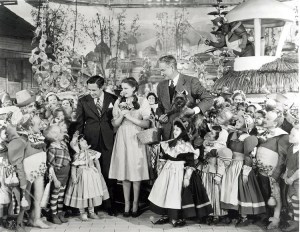
I am happy to announce that the outrage over the proposed noise ordinance in New Orleans led to its withdrawal last night. Maybe the proximity to February’s elections had something to do with it? I sent a letter to the one council woman that was most likely to opt out and whose election is more iffy. She indicated she would vote no on Wednesday. The Mayor also said he had an issue with the proposal.
Councilwomen Stacy Head and Kristin Gisleson Palmer have withdrawn a controversial proposed noise ordinance that was set to be discussed at a council meeting Friday.
In a joint statement, Head and Palmer acknowledged there has been “much public consternation” over the ordinance.
Palmer said the council will work to craft a different ordinance that has “an even more limited focus” on the Vieux Carré Entertainment District.
Nathan Chapman, a lead supporter of the ordinance, said he supports the decision to “take a breath and focus first on solutions for the French Quarter.”
“At some point, the general public became greatly confused in a negative campaign of disinformation and personal attacks. If the volume of the rhetoric had been turned down a bit, we could have heard each other more, and made progress for the entire city.”
A draft form of a new ordinance will be presented to the next Special Housing and Human Needs Committee meeting on Jan. 27.
The meeting set for Friday has been cancelled.

Today Representatives Jim Sensenbrenner (R-WI) and John Conyers (D-MI) and Senator Patrick Leahy (D-VT) introduced legislation to strengthen the Voting Rights Act of 1965 in the wake of the Supreme Court’s decision last June invalidating a critical section of the VRA. The legislation, known as “The Voting Rights Amendment Act of 2014,” represents the first attempt by a bipartisan group in Congress to reinstate the vital protections of the VRA that the Supreme Court took away.
In the Shelby County v. Holder ruling on June 25, 2013, the Court’s conservative majority struck down Section 4 of the VRA, the formula that compelled specific states with a well-documented history of voting discrimination to clear their voting changes with the federal government under Section 5 of the VRA. The two provisions were always meant to work together; without Section 4, Section 5 became a zombie, applying to zero states.
Section 4 covered nine states (Alabama, Alaska, Arizona, Georgia, Louisiana, Mississippi, South Carolina, Texas and Virginia) and parts of six others (in California, Florida, Michigan, New York, North Carolina, South Dakota) based on evidence of voting discrimination against blacks and other minority groups dating back to the 1960s and 1970s. Since the Shelby decision, eight states previously covered under Section 4 have passed or implemented new voting restrictions. This includes onerous new laws in states like North Carolina and Texas, which the Justice Department objected to under other provisions of the VRA (Sections 2 and 3).
The Sensenbrenner-Conyers-Leahy bill strengthens the VRA in five distinct ways
Hollywood producer Harvey Weinstein says he will produce blockbuster movie starring Meryl Streep to direct confront the power of the NRA. He broke the news on Sirrius radio on Howard Stern’s show.
Weinstein said he plans on making a movie that will make the NRA “wish they weren’t alive after I’m done with them.”
During a discussion about Weinstein getting into the directing game, the issue of guns weaved its way in. Weinstein admitted that if something like the Holocaust was happening again, “I’d find a gun if that was happening to my people.” That being said, Weinstein doesn’t think “we need guns in this country” and called the NRA a disaster area.”
Oklahoma has become the latest state in the battle ground for Marriage Equality. Discriminatory marriage laws are collapsing all over the country.
The victories keep coming, from unexpected places: A federal judge in Oklahoma today ruled that the state’s constitutional amendment banning same-sex marriage violates the U.S. Constitution.
U.S. District Judge Terence Kern’s ruling is on hold pending appeal, so same-sex couples in Oklahoma will not be able to marry immediately, reports theHuman Rights Campaign.Nonetheless, the national LGBT rights group welcomed Kern’s decision with a statement issued by its president, Chad Griffin.
“Judge Kern has come to the conclusion that so many have before him — that the fundamental equality of lesbian and gay couples is guaranteed by the United States Constitution,” Griffin said. “With last year’s historic victories at the Supreme Court guiding the way, it is clear that we are on a path to full and equal citizenship for all lesbian, gay, bisexual and transgender Americans. Equality is not just for the coasts anymore, and today’s news from Oklahoma shows that time has come for fairness and dignity to reach every American in all 50 states.”
Two couples — Mary Bishop and Sharon Baldwin, and Gay Phillips and Susan Barton — filed the case,Bishop v. Oklahoma, in the U.S. District Court for the Northern District of Oklahoma in November 2004, the same year the largely conservative state adopted the antigay amendment. Their legal team is led by Don Holladay and James Warner of the Oklahoma City law firm Holladay and Chilton.
With this decision, 19 states and the District of Columbia have approved marriage equality either through legislative action or court decision. This number includes two states with rulings on hold — Utah and Oklahoma — and one state, Illinois, whose law has yet to go into effect. The Illinois marriage equality law is effective June 1, although couples in which at least one partner has a serious illness can apply to receive a marriage license earlier.
It seems Utah may actually be warming up to the idea of Marriage Equality.
Utah is split down the middle on the question of same-sex marriage, indicating a sharp decline in support for the state’s 2004 constitutional ban, according to a new poll.
A Salt Lake Tribune poll by SurveyUSA shows that Utahns are evenly split on the issue with 48 percent in favor of legalizing gay marriage and 48 percent against it. This marks a massive shift in opinion in the strongly conservative state, where 66 percent of voters who participated in the 2004 election approved of the constitutional amendment to ban same-sex marriages in Utah.
According to the survey, 36 percent of Utah adults have changed their views of same-sex marriage over time, further complicating an already-tricky legal battle in the state.
There’s one more happy example of marriage equality in Houston Texas! Mayor Parker has married her long time partner.
Houston Mayor Annise Parker and longtime partner Kathy Hubbard are now married – at least in the eyes of 18 states, including California, where the couple formally exchanged vows Thursday in a sunset ceremony in Palm Springs.
“This is a very happy day for us,” Parker said in a news release issued from her office. “We have had to wait a very long time to formalize our commitment to each other. Kathy has been by my side for more than two decades, helping to raise a family, nurture my political career and all of the other ups and down and life events that come with a committed relationship. She is the love of my life and I can’t wait to spend the rest of my life married to her.”
The wedding included family and friends, including the mayor’s mother and Hubbard’s sister, according the mayor’s press office. The Rev. Paul Fromberg, a family friend from San Francisco, presided. Two other close friends from Houston, Judge Steve Kirkland and Mark Parthie, were attendants and formal witnesses. Parker and Hubbard chose Jan. 16 for their wedding because it marks the 23rd anniversary of the start of their lives together, her office said.
That is quite a positive change!
So, that’s a little bit to get us started today. So, what’s on your reading and blogging list this morning?
Monday Reads: Rabid, Rich Dogs Bite People across the country
Posted: January 13, 2014 Filed under: morning reads | Tags: Bridge closure, Chris Christie, Kansas Gun Laws and spending cuts, New Jersey, New Orleans Sound ordinance, Treme 83 CommentsGood Morning!
One of the biggest problems that I have with folks who wear the smug mantle of libertarian is that they make hay over abuses of power at the Federal level while shrugging off what goes on at the state level unless it has something to do with dismantling public schools or taxing the rich. I’ve always thought that abuse of power and destruction of civil liberties shouldn’t happen at any level. However, if you go from state to state, you’re going to see how serious money has serious sway over the actions of politicians. Some states and locales just ooze plutocracy. It’s a lot easier to be a thug at the state level. It’s getting to the point where reality is unfolding like a TV plot.
 I’ve dived into the fray at the local level again here in New Orleans where our culture of second lines, Mardi Gras Indians, and live local music is under siege.
On one hand, I’ve decided to volunteer for the Mary and Mitch Landrieus’ re-elections despite serious reservations about both, because I don’t want to live in a state ruled by one party intent on driving the trains straight off the reality track.
I’m also headed to a huge demonstration on Friday, because some freaking rich lawyer has time and money to continually harass the causes of street sounds and music near his property in the French Quarter. His pet peeves will impact all of us. Before he moved into the quarter, you would find musicians out about the street at nights. I would see them on the way home from my gigs all the time when I lived in the quarter myself. They now have to be out of sight and ear by 8:30. He’s been on a tear since then with a few rich neighbors. Problem is, they have money and time and they just don’t give up. Now, they want a “sound ordinance” that has an outlandishly low standard for what he deems ‘noise”. I literally will not be able to play my piano in my back parlor without risking a violation. That means also that Alan Toussaint would not have been able to play it in the taping of Hurricane on the Bayou. And, a few months back, you would not have been able to hear Robert Plant from my front porch. And, you will likely never hear live music in and around my neighborhood bars. This, to me, is unthinkable!
So, I am going to the city council on Friday and I’m going to sign in to testify. I’ve already written letters. This is bad for my friends who own small restaurants and bars. It’s also bad for musicians and those who enjoy live music. The only beneficiaries are these few rich landowners that are all over the city council right now although they try to give the impression they have mass support. The other beneficiaries are the downtown hotels and casinos and other big money interests that would rather have all the musicians held hostage in their bars. I’m doing something of a weird thing by supporting the status quo but yet fighting the powers that want to buy themselves a pristine, billionaire friendly New Orleans. Go figure. I do wonder why people would buy property when they know they are surrounded by bars and music venues. This is a bit like the other stuff that’s gong in my current neighborhood where I suddenly have neighbors who are all about having manicured grass in the back and side yards. All hell is breaking loose, however, around this ordinance.
All hell seems to be breaking loose from New Orleans citizens who are up in arms regarding the underhanded way that the
VCPORA attempted to slip in a noise ordinance that would have a severe impact on the city’s music scene.
Understandably, the peeps at VCPORA are tired of getting no action from the City Council regarding what seems to be Mr. Smith’s Number One priority (other than bashing oil companies, from whom he’s won bazillions of dollars in class action lawsuits. (From his firm’s web page: “In a 2001 Stuart Smith and Michael Stag jointly prosecuted the widely publicized Grefer case. A jury returned a verdict of $1.056 billion dollars against Exxon/ Mobil Corporation, the world’s largest oil company, in favor of the firm’s client after a six-week trial. The landmark verdict was listed in Lawyers Weekly, USA as the second largest verdict in the United States for 2001.”)
To recap from last week’s post, attorney Smith bankrolls the VCPORA and is successfully using its purported agenda of “preservation” to achieve his goals of eliminating “noise” in the French Quarter.
Since last week’s post, I’ve attended a MaCCNO (Music and Culture Coalition) meeting on Friday, and have been subjected to several emails from Stuart Smith, by way of the Brylski Company, which bills its emails as “Krewe of truth.”
Stuart Smith. From the VCPORA website: “For years, VCPORA has been able to count on a man who’s led innumerable legal battles on our behalf, and on behalf of the Quarter – and done all of it pro bono. That man is Stuart H. Smith – our neighbor, our benefactor, and a man of courage and capability who’s been a passionate advocate on behalf of the Vieux Carré.”I’d call it more the “Krewe of Propaganda.”
Here are a few points in the email [First of all, it’s entitled “Hearing Beyond The Misinformation: TRUE SOUND FACTS [in BIG FAT BOLD letters] about the ‘Seven Essentials’ and the Sound Amendments.”
“WILL THESE AMENDMENTS ‘KILL’ NEW ORLEANS’ MUSIC SCENE?
NO! Of course not! No elected official in New Orleans would sign onto an ordinance that would kill, or even hurt, our invaluable New Orleans music scene [Not unless a VCPORA member like Nathan Chapman sneaked it into Stacy Head’s office to be presented to the council at the last minute pre-2013 Christmas holiday. Chapman is past president of VCPORA and, how shall I say this?: Stuart Smith’s “minion.”] “Music is an invaluable part of our culture and our economy. The reason all seven council members signed on was because, after four years of detailed study and hearing, these amendments are actually very limited in scope and provide common sense improvements. [Untrue, these are not common sense improvements to anyone other than those who want to keep music at the level or a normal conversation. Oh, one had better NOT say that they want to kill New Orleans music! Ask Mr. Smith how much he enjoys the jazz at the Gazebo. Smith bought a property at 516 St. Philip Street in 1997, just a half block from the Gazebo and tried to get the zoning changed at a bar that had had music for many years, well before Stuart took up residence. Oh yeah, he loves music all right. But he moved right next to it and did try to kill it.]
 Smith appears to have done some really creative things in terms of showing he has support. And, he’s convinced the City Council that what he is doing isn’t a big deal at all but very responsible and reasonable.
When they use these unrealistically low sound levels to justify lawsuits and to try to get police shut-downs, the well-funded noise factories of Bourbon Street will come out okay. They can either pay the fine, pacify the enforcers, or hire effective attorneys to back the process into a corner with constitutional challenges which the local court can’t handle and the Supremes won’t be bothered with, so the cases sit in limbo like Bleak House.
But smaller, newer venues, events and street bands, where some new music might emerge – they won’t be able to come close to affording it. The gentrifiers’ suppression will take hold. Venues will have to either shut down the music, or get driven out of business. Perhaps it is the city establishment’s strategy: to leave us with just tourist music and a few big names in big sites, with no sense that they are strangling the future. And for what? Increasing the radius of the comfort zone for a few property owners claiming special privilege.
So, those of you that follow me on FaceBook or Twitter or here, will continue to hear me talk about this because I’ve just about had it with people trying to change my city into some blase suburb.
BTW, the HBO series Treme ended this season. There’s a great interview with a resident of that neighborhood on what the series has meant. I still haven’t watched it but I swear there’s not an episode that doesn’t have a friend or neighbor in it. I bought the DVDs some time ago but I still can’t bring myself to watch it. I lived the entire thing and just can’t get into the idea of doing it again. I think the biggest curse of Katrina has turned into two things for me. One is the number of transplants that seem to want a pristine version of what they think New Orleans should be and what seems like the forced diaspora of the black middle class from the area which brought a red Louisiana and the evil Governor Jindal. We could handle the Hurricane but I don’t know how much damage from those last two we can take.
RO: I think the show’s tapestry—dare I say gumbo?—of characters and struggles plays a big part in what makes Treme so authentically New Orleans. So it’s kinda hard for me to isolate a character or storyline—they all resonated with me at some level. But if I had to chose? I guess LaDonna running her bar; Nelson Hidalgo for his newcomer’s perspective, learning the byzantine ways of the city; Janette Desautel and her restaurant. Those would be the closest to my personal experience in post-Katrina New Orleans: I ran a bar right after the storm; I was a newcomer, in town just three months when the levees broke. Also, my first wife was a chef and we opened a summer restaurant in the Hamptons together, so Kim Dickens’ character’s professional struggles were very familiar to me.
This is one newcomer who seems to want to adjust to the way of life down here instead of having the way of life adjust to him. But then, he doesn’t have billions of dollars to spend and the attention of politicians needing donors. I think this sound ordinance protest is the beginning of the pushback. I’m not sure how much more folks are going to put up with gentrification at all costs. I just hope the city council gets it. All of the music culture of New Orleans shown in Treme will only occur in hotel bars, the city’s sole casino, and a few Bourbon joints if the ordinance passes.
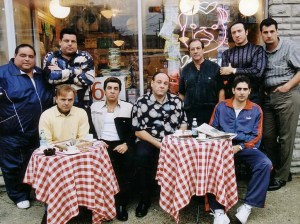 There are a lot of times when the larger-than-TV-Life culture of a state seems to be brought to life. It’s just not my state where the government seems to be pushing the agendas of the plutocracy at the cost of the people who call the place home. New Jersey government seems to be the new Goodfellas under Chris Christie.
The Christie Bridge Scandal seems to just pop off the screen and right into your face So far, there are more questions than answers. However, this is not going away since the New Jersey Assembly has reissued subpoenas. If there was an attempt to ride out the legislative year, it didn’t work. Key establishment republicans are trying to buff this turd.
During a panel segment on Fox News Sunday, host John Roberts pointed out that many Republicans were praising Christie for firing one of his top aides after a newspaper exposed his administration’s role in closing part of the busiest bridge in the world as part of political retribution plot, but President Barack Obama had not fired anyone over the health care reform law.
“I think he did himself a lot of good,” Rove said of Christie’s reaction to the scandal. “I think he did himself some good by contrasting with the normal, routine way of handing these things, which is to be evasive, to sort of trim on the edges.”
“You’ll notice we haven’t been hearing a lot from the Clinton camp about this,” he added. “Contrast both with Bill Clinton and Secretary Hillary Clinton’s handling of Benghazi.”
Later in the segment, Roberts asked the panel: “Where was this media coverage on Benghazi, the NSA or the IRS?”
Columnist George Will admitted that “this was not a phony scandal” because Christie’s administration had used the machinery of government to “screw our enemies.”
“There are reasons why conservatives had disagreements with Chris Christie, I don’t think that the tea party is going to seize upon Fort Lee and the George Washington Bridge as their defining difference with Christie,” Rove opined. “In fact, I think his handling of this, being straightforward, taking action — saying, ‘I’m responsible’ — firing the people probably gives him some street cred with some tea party Republicans, who say that’s what we want in a leader, somebody who steps up and takes responsibility.”
I’m sorry, but there’s something distinctly different about handling people who have abused the public trust, committed crimes, and caused public safety issues and managing people who had oversight of a bad roll out of product. Here’s more information about those subpoenas because it looks more and more like something very criminal happened in Trenton.
At least six New Jersey residents have filed suit against Christie, the state of New Jersey, and the Port Authority of New York and New Jersey, among others for the traffic jams and resulting problems.
The traffic jam caused by the lane closures delayed emergency services and left commuters and school children stranded on the bridge during periods of heavy traffic, according to local officials.
ABC News also obtained a letter from Fort Lee EMS coordinator Paul Favia that documents four medical situations in which emergency responders were delayed because of the traffic gridlock. In one case, a 91-year-old woman later died at a hospital of cardiac arrest.
Although Favia doesn’t directly tie her death to the delays, he noted that “paramedics were delayed due to heavy traffic on Fort Lee Road and had to meet the ambulance en route to the hospital instead of on the scene.”
Documents now show that the aides were told that this would hurt people and cause safety issues. Christie originally mocked the stories by talking about laying the cones down. How is this leadership? I don’t recall Obama ever making a joke about the people who were struggling with the original problems of the site and he told the people in charge to go back and fix it. Which model of leadership seems ethical to you?

No special interest groups appear to have larger sway over the country than the NRA and the various groups–like ALEC–that are funded by Pete Peterson and the Koch Brothers. They’ve convinced many Republican controlled states that even providing the most basic services is evil in the face of putting taxes on the wealthy. Well, the modern day Matt Dillons are going to have a rough time controlling gunslingers in Kansas.
Reasoning that more guns mean greater safety, Kansas lawmakers voted last year to require cities and counties to make public buildings accessible to people legally carrying concealed weapons.
But for communities that remained wary of such open access to city halls, libraries, museums and courthouses, the Legislature provided an exemption: Guns can be banned as long as local governments pay for protections like metal detectors and security guards, ensuring the safety of those they have disarmed.
It turns out that in Wichita, the state’s most populous city, and in some other towns, the cost of opting out before the Jan. 1 deadline was just too high.
“It was essentially being foisted upon us,” said Janet Miller, a City Council member in Wichita. The city applied over the summer for a six-month exemption but voted last month not to extend it after the police estimated that it would cost $14 million a year to restrict guns in all 107 city-owned buildings.
While Republican-majority legislatures across the country are easing restrictions on gun owners, few states are putting more pressure on municipalities right now than Kansas. The new law has forced some local leaders to weigh policy conviction against fiscal pragmatism in a choice that critics say was flawed from the start: Open vulnerable locations to concealed side arms or stretch meager budgets to cover the extra security measures.
I guess it will be open season on criminal justice employees in courtrooms in Kansas.
Anyway, these are just three different parts of the country where it seems that local politicians are doing a disservice to the people who elected them. They are more moved by special interests than their constituents. So, what’s a voter to do? As for me, I’m taking to the streets on Friday. I’m just relying on the Greater Ethos that I’ll be in my own bed on Friday Night.
What’s on your reading and blogging list today?
Saturday Morning Reads: Guilty Pleasures
Posted: January 11, 2014 Filed under: morning reads | Tags: Absinthe, Catherine Robbe-Grillet, Japanese Monster Stories, Literary Misery Index, Mary Shelley, Moche 26 Comments
Good Morning!
I’ve found some interesting reads for you this morning! I promise I’m not going to bore you with economics today!
There’s been some interesting discoveries in the literature world. A “cache” of Mary Shelley Letters were discovered in a rural English library that shed some light on her last days.
The letters date between 1831, nine years after the death of her poet husband Percy Bysshe Shelley, and 1849, when Mary Shelley was already unwell with the brain tumour that would kill her two years later, and show a woman who was skilled in charming favours from friends, bursting with pride in and concern for her teenage son – and not unconcerned with frivolities. A last-minute ticket to the coronation of William IV in 1831 necessitated a 3am visit from her hairdresser; she attended the event sporting a plumed headdress (“The whole thing was wondrously splendid – Diamonds & cloth of gold grew common to the eye.”)
The later letters, written in an increasingly scrawled hand, are short and distracted, full of apologies for her failing memory and powers. To a number of them is still attached a blob of scarlet wax stamped with the author’s own seal – one that was not previously known, according to Crook.
The “nondescript-looking” missives were written to Horace Smith and his daughter Eliza. Smith was a stockbroker and wit who had been close to the poet Shelley and whose family befriended his widow after his death, and the discovery of the letters is a particular surprise, said Crook, because he had a habit of destroying correspondence.
“The Smith connection has been known but this little bit of the jigsaw hasn’t been,” said Crook. “A few things that had been inferred by scholars can now be confirmed. But what is nice is that Mary Shelley’s personality emerges. We see her as very loyal to the Smith family, very grateful and very attentive to Eliza – I don’t think that friendship has ever been fully documented.” There is also, notes the professor, Shelley’s “charming wheedling side”, as she cajoles Smith into favours.
I thought of Shelley when I saw a BBC article on the cultural roots of Absinthe as a literary muse. I’ve tried the drink–imported from  Portugal where the wormwood was left in–and I will say it gives one an odd buzz. Here’s some background on the green fairy.
Arthur Rimbaud called absinthe the “sagebrush of the glaciers” because a key ingredient, the bitter-tasting herb Artemisia absinthium or wormwood, is plentiful in the icy Val-de-Travers region of Switzerland. That is where the legendary aromatic drink that came to symbolise decadence was invented in the late 18th Century. It’s hard to overstate absinthe’s cultural impact – or imagine a contemporary equivalent.
The spirit was a muse extraordinaire from 1859, when Édouard Manet’s The Absinthe Drinker shocked the annual Salon de Paris, to 1914, when Pablo Picasso created his painted bronze sculpture, The Glass of Absinthe. During the Belle Époque, the Green Fairy – nicknamed after its distinctive colour – was the drink of choice for so many writers and artists in Paris that five o’clock was known as the Green Hour, a happy hour when cafes filled with drinkers sitting with glasses of the verdant liquor. Absinthe solidified or destroyed friendships, and created visions and dream-like states that filtered into artistic work. It shaped Symbolism, Surrealism, Modernism, Impressionism, Post-Impressionism and Cubism. Dozens of artists took as their subjects absinthe drinkers and the ritual paraphernalia: a glass, slotted spoon, sugar cubes – sugar softened the bitter bite of cheaper brands – and fountains dripping cold water to dilute the liquor.
Absinthe was, at its conception, not unlike other medicinal herbal preparations (vermouth, the German word for wormwood, among them). Its licorice flavor derived from fennel and anise. But this was an aperitif capable of creating blackouts, pass-outs, hallucinations and bizarre behaviour. Contemporary analysis indicates that the chemical thujone in wormwood was present in such minute quantities in properly distilled absinthe as to cause little psychoactive effect. It’s more likely that the damage was done by severe alcohol poisoning from drinking twelve to twenty shots a day. Still, the mystique remains.

Bentley visits Robbe-Grillet, sadomasochistic author and widow of novelist (and accomplished sadist) Alain Robbe-Grillet, at the 17th-century château in Normandy where she resides with Beverly Charpentier, the 51-year-old South African woman who is her submissive companion. “Catherine is my secret garden,” Charpentier says. “I have given myself to her, body and soul. She does whatever she wants, whenever she wants, with either or both, according to her pleasure—and her pleasure is also my pleasure.”
“As a dominatrix you must dominate yourself,” Robbe-Grillet tells Bentley. “Otherwise you take the chance of killing someone or doing serious damage, so you have to know your limits.” For example, “blood is only drawn with initiates,” Beverly explains. “I stop at what is irreversible,” says Robbe-Grillet. Except when she doesn’t. Robbe-Grillet recalls an encounter she had with a man named Christian, whom she met in 1986. He wanted her to brand him with the initials of her nom de plume, “JDB.” She did. “I fell into my dream,” Christian tells Bentley of his relationship with Catherine, “and I have never left it.” Over the course of almost 20 years, the marks faded and a year ago Robbe-Grillet held another ceremony to burn them in anew.
Okay, one link that has something to do with economics but more closely related to the self-pleasure of reading. I got this link from Chelsea Clinton who posted it to her facebook page. Does the state of the economy have anything to do with what you’re reading or what author’s write?
The analysis, published in the journal PLOS One, found that when words commonly associated with misery show up in books, it meant that 10 years before, the economic situation was pretty grim.
To reach this discovery, researchers from Bristol and London sifted through a database of more than five million digital versions of books from Google. They created a literary misery index calculated by adding the amount of sadness-related words and subtracting the number of happiness-related words. They then compared this literary misery index to a well known measurement called the economic misery index, which is the sum of inflation and unemployment rates. The literary misery level in a given year was associated with the average of the previous 10 years’ economic misery index.
“When we looked at millions of books published in English every year and looked for a specific category of words denoting unhappiness, we found that those words in aggregate averaged the authors’ economic experiences over the past decade. In other words, global economics is part of the shared emotional experience of the 20th century,” said study author Alex Bentley,
a professor at the University of Bristol in a statement.
They reported that market economic misery corresponds with WW1, the aftermath of the Great Depression, and the energy crisis of 1975. The literary misery comes about a decade later, which the researchers speculate could be due to the time gap between when a writer was young and live through these experiences and formed these memories, to when they actually began writing published work.
The researchers even repeated the study with books written in German, and found the same connection.
Have you ever spent much time reading about the monsters that can be found in the stories of other cultures. Here’s some of Japan’s most frightening and bizarre monsters! I got this one from Delphyne’s facebook feed. She’s always finds some of the most intriguing items! The Japanese believe that almost anything can become a terrifying ghost!
The Ittan-Momen doesn’t sound particularly scary; it’s basically a sentient roll of cotton that just flies around in the wind at night, wandering around. But the Ittan-Momen is also a sadistic asshole, because if it sees you, it will either wraps itself around your neck and choke you to death, or wrap itself around your head and suffocate you. Again, the idea that you can be walking back from the convenience store and suddenly get murdered by a large piece of cloths is deeply disconcerting to me.
That’s a drawing of a pretty odd looking ghost lantern over there on the left. I can only imagine what it’s story is all about.
Okay, so this isn’t my usual fascination with burial sites thing, but it is about thing going on underground in Europe. A series of interconnected underground tunnels all around Europe appear to be have made by Stone Age humans.
Stone Age man created a massive network of underground tunnels criss-crossing Europe from Scotland to Turkey, a new book on the ancient superhighways has claimed.
German archaeologist Dr Heinrich Kusch said evidence of the tunnels has been found under hundreds of Neolithic settlements all over the continent.
In his book – Secrets Of The Underground Door To An Ancient World – he claims the fact that so many have survived after 12,000 years shows that the original tunnel network must have been enormous.
‘Across Europe there were thousands of them – from the north in Scotland down to the Mediterranean.
‘Most are not much larger than big wormholes – just 70cm wide – just wide enough for a person to wriggle along but nothing else.
‘They are interspersed with nooks, at some places it’s larger and there is seating, or storage chambers and rooms.
‘They do not all link up but taken together it is a massive underground network.’
I did find one very cool tomb article about a tattooed Sorceress Queen. It appears that the Moche may have been a matriarchal society.
On the beautiful northern coastline of Peru overlooking the blue Pacific, the place known as Huaca El Brujo (Sacred place of the Wizard) gives us an incredible glimpse into the culture of the Moche and the ‘Wizard’ buried there. Its two main pyramids, Huaca del Sol and the Huaca de la Luna, were once the centre of social and religious functions in the area and the final resting place of the tattooed mummy, who has come to be known as the Lady of Cao. Not an elderly woman, she died in her mid-twenties about fifteen hundred years ago, probably as a complication of childbirth.
The Moche did not mummify their dead purposefully, but the conditions for desiccation just happened to preserve the Lady of Cao and by doing so also preserved her intricate tattoos. Although it is not believed that the more common members of Moche society were tattooed it could certainly be inferred from this burial that the highest status members were, and the tattoos probably represented and strengthened the individuals connection with the divine through sympathetic magic. If you want the strength of the tiger get a tattoo of a tiger…this thought process has not changed since the beginning of the art form and it continues today.
The Lady of Cao’s tattoos included serpents, crabs and spiders – all animals associated with the Moche pantheon of divine
creatures – and their presence further linked her to the world of the supernatural and probably increased her perceived power among her people; the divine literally lived in her skin. Since most Moche burials are not preserved like the Lady of Cao we will never know for certain if all the elite were tattooed, but pottery portrait jugs suggest that they may have been.
The surprise discovery of the tattooed female in the Hill of the Wizard certainly caused archaeologists to have to reconsider their male-centric model of the Moche political structure and I am sure they would have eventually come to consider her an anomalous female ruler like Hatshepsut, Boudicca, Makeda, Cleopatra, or Penthesilea. But the subsequent discoveries of eight more Moche Queens have made it quite clear that this was not a male ruled society.
So, this should be enough to keep you intrigued today! What’s on your reading and blogging list today?

 peej
peej Carissa
 bostonboomer
 dakinikat
 ecocatwoman
 jjlo
jjlo mablue2
 Mama Lopez
 peggysue22
 quixote
 skydancingguestblogger
 Mona (aka Wonk the Vote)





Recent Comments