Posted: April 9, 2022 | Author: bostonboomer | Filed under: Afternoon Reads, just because | Tags: Ali Alexander, Charles Donohoe, Department of Justice, Donald Trump, Donald Trump Jr, foreign gifts, grand jury, January 6 investigation, Mark Meadows, Phony DHS investigation, Proud Boys, Secret Service, State Department, Trump administration |
Good Afternoon!!

Kitty on the Fence, photo by Andy Sewell
Some big Trump criminality news broke yesterday, and today there’s more news on stories we’ve been following over the past week. Here’s the latest:
This one was posted late last night at The New York Times: Trump Officials Failed to Provide Accounting of Foreign Gifts.
The Trump administration left office without providing the State Department with an accounting of the gifts former President Donald J. Trump, former Vice President Mike Pence and other White House officials received from foreign governments in 2020, the department disclosed late Friday.
The department said that as a result, it could not fully account for the gifts officials received, the latest example to emerge in recent months of how the Trump administration’s flouting of laws and norms about the day-to-day operations of government now makes it harder to determine whether anything improper took place.
“It’s flagrant and it looks terrible,” said Richard W. Painter, the former top ethics lawyer for George W. Bush’s administration. “Either it was really stupid or really corrupt.”
Under federal law, each government department and agency is legally required to submit a list to the State Department of gifts over $415 its officials received from foreign governments. The measure is intended to ensure that foreign governments do not gain undue influence over American officials.
LOL We already know that the Trumps were under “undue influence” from Russia, China, Saudi Arabia, Turkey, and likely more countries.
The department said it had tried to collect the information about the gifts Trump White House officials had received but had failed to come up with an accounting.
“As a result, the data required to fully compile a complete listing for 2020 is unavailable,” the State Department said in a footnote to its list of gifts government officials received that year….

Country Cats, Rosemary Margaret Daunis
In February, it was revealed that classified documents and gifts from the White House had been improperly taken to Mr. Trump’s Mar-a-Lago estate in Florida, a matter federal authorities are now in the preliminary stages of investigating. Around that time, the House committee investigating the Jan. 6, 2021, attack on the Capitol learned that significant chunks of time were missing from White House call records from the day of the attack….
The State Department’s inspector general reported in November that tens of thousands of dollars in gifts given to Trump administration officials were missing. They included a 30-year-old Suntory Hibiki bottle of Japanese whiskey given to Secretary of State Mike Pompeo, worth $5,800, and a 22-karat-gold commemorative coin valued at $560 given to another State Department official.
Many more items are missing–read about the rest at the NYT link.
Three interesting follow-up stories on the fake DHS guys who were busted for bribing Secret Service agents.
CNN: Many questions remain in impersonation plot that duped federal agents, prosecutors say.
(Highlighting added by me)
The Daily Mail: Stash of assault rifles, body armor, passports with multiple visas, and sham uniforms found in penthouse of ‘fake’ Homeland agents – including one with ‘links to Pakistani intelligence.’
A motion for detention of the two men who were arrested Wednesday for impersonating federal agents includes a slew of damning evidence, including images showing several different passports, visas and IDs.
The prosecutors are requesting Arian Taherzadeh, 40, and Haider Sher-Ali, 35, be detained due to a slew of evidence found in a raid of their units in a luxury apartment building in southeast Washington, D.C….
Taherzadeh told law enforcement in an interview after being taken into custody on Wednesday that Ali was the one funding their lavish lifestyle and seemingly endless stream of gifts, but claimed he wasn’t aware where the money was coming from.

Debbie Criswell, Best spring day
The question remains, however, on what Ali and Taherzadeh’s motives were in getting close to people with White House access by impersonating government agents.
Secret Service agents assigned to details for President Joe Biden and Vice President Kamala Harris’ residence are among those being investigated for accepting lavish gifts and partying with Taherzadeh and Ali, who alleged they were agents with the Department of Homeland Security.
At least one of the U.S. Secret Service (USSS) agents receiving free rent from Taherzadehand Ali was assigned to the detail protecting Harris’ residence at Number One Observatory Circle at the Naval Observatory, sources at the building told DailyMail.com.
Another, sources claim, was on the presidential protective detail and regularly traveled with President Biden on Air Force One.
The new information comes after an affidavit released Wednesday revealed that one of the witnesses in the case is a secret service agent that worked on First Lady Jill Biden’s protective detail.
Again, the added highlighting is mine. There’s much more at the link, including photos of the defendants and the evidence.
Justin Rohrlich of The Daily Beast interviewed a “former friend” of one of the imposters: Homeland Security Conman’s Arrest Is ‘Karma,’ Says Former Friend.
A man arrested this week for allegedly posing as a phony Homeland Security agent in a years-long ruse that fooled at least four members of the Secret Service—one of them on first lady Jill Biden’s security detail—has been busted for passing bad checks, allegedly created a fake company to win a city contract, and stiffed a close friend and business partner before skipping town, according to state court records and interviews with two former associates.
Arian Taherzadeh, 40, was arrested by the feds at his Washington, D.C., apartment complex on Wednesday….

Barn cats in Spring
In an interview with investigators following his arrest, prosecutors say Taherzadeh admitted to posing as a DHS agent and said he also falsely told others that he was an ex-Army Ranger. However, he put much of the onus on Ali, telling the feds that “Ali was the individual that funded most of their day-to-day operation but Taherzadeh did not know the source of the funds.”
“You could call it karma,” a former friend and business partner in Kansas City who started a now-defunct IT consultancy with Taherzadeh told The Daily Beast. “I got burned a couple of different times and I finally walked away.”
The friend said he’s extremely curious to know what Taherzadeh’s end-game was.
“Part of me just wants to tell you, it’s because he could,” he said.
The tale of the con is a long story. You can read it at the Daily Beast link.
January 6 investigation news
I know you’ve probably heard about this bombshell story from CNN yesterday: CNN Exclusive: ‘We control them all’: Donald Trump Jr. texted Meadows ideas for overturning 2020 election before it was called.

Cat Country by Rosemary Margaret Daunis
I actually think the NYT is underplaying the important of this development, but here’s a bit more from the article:
The grand jury subpoena Mr. Alexander received suggests that prosecutors have greatly widened the scope of their inquiry to include not only people who were at the Capitol, but also those who organized and spoke at pro-Trump events in November and December 2020 and on Jan. 6, 2021.
In an indication that the inquiry could reach into the Trump administration and its allies in Congress, the subpoena also seeks information about members of the executive and legislative branches who were involved in the events or who may have helped to obstruct the certification of the 2020 election….
Mr. Alexander took part in two so-called Stop the Steal rallies in Washington that preceded the former president’s event at the Ellipse, near the White House, on Jan. 6 — one on Nov. 14, 2020, and the other a few weeks later on Dec. 12 — as well as events in the key swing state of Georgia in December.
In the run-up to those gatherings, Mr. Alexander came into contact with a host of rally organizers and with right-wing groups like the Oath Keepers militia and the 1st Amendment Praetorian that provided both public and personal security at the events.
The Washington Post on the plea deal with Proud Boy Charles Donohoe: Proud Boys leader admits plan to storm Capitol, will testify against others.
A North Carolina man who was one of the leaders of the far-right Proud Boys as they assaulted the U.S. Capitol on Jan. 6, 2021, pleaded guilty Friday to two felony counts with a minimum sentence of nearly six years in prison, but agreed to cooperate against his co-defendants in hopes of getting a lighter sentence.
Court records filed Friday show he has already provided numerous insights into the group’s plans and their intention to disrupt the congressional electoral vote confirmation….
Donohoe, 34, of Kernersville, N.C., admitted to conspiring to help organize an attack on Congress by angry supporters of then-president Donald Trump and to assaulting law enforcement officers. Donohoe is the first among six of the charged Proud Boys’ leaders, including longtime chairman Enrique Tarrio, to admit to both organizing an attack on Congress and assaulting law enforcement officers.

By Warren Kimble
On the plans for and carrying out of the assault on the Capitol:
As early as Jan. 4, prosecutors said, “Donohoe was aware that members of MOSD leadership were discussing the possibility of storming the Capitol. Donohoe believed that storming the Capitol would achieve the group’s goal of stopping the government from carrying out the transfer of presidential power. Donohoe understood that storming the Capitol would be illegal.”
On the morning of Jan. 6, the Proud Boys marched away from the Ellipse before President Donald Trump began his speech, and did not return. Instead, they went to the Capitol shortly after 10 a.m., the statement of offense says, and Donohoe posted that his group numbered “200-300 PBs.” Co-defendants Ethan Nordean and Joseph Biggs mustered the group, the statement says, and “Donohoe understood that Nordean and Biggs were searching for an opportunity to storm the Capitol.”
By 1 p.m., the Proud Boys were being instructed in messages to “Push inside!” Donohoe reposted the message to other group leaders. Donohoe admitted throwing two water bottles at police trying to prevent the mob’s advance. At 1:37 p.m., Donohoe took a picture of co-defendant Dominic Pezzola holding a riot shield that had been snatched from police.
Donohoe then found another Proud Boy who “initiated an altercation at the front of the crowd,” the statement says. “Donohoe pushed forward to advance up the concrete stairs toward the Capitol. The crowd overwhelmed law enforcement who were attempting to stop their advance.”
Despite all the whining from Twitter lawyers, it sure looks like the DOJ is conducting a serious investigation that could reach all the way to Trump.
Have a great weekend, Sky Dancers! Spring is on the way.
Did you like this post? Please share it with your friends:
Posted: April 7, 2022 | Author: bostonboomer | Filed under: just because, morning reads | Tags: Arian Taherzadeh, Bucha, Dan Scavino, Eric Boehlert, Haider Ali, Marjorie Taylor Greene, Peter Navarro, Russia, Secret Service, U.S. Postal Service, Ukraine, Vladimir Putin |
Good Morning!!
Yesterday we learned of the tragic death of journalist Eric Boelert in a bicycle accident. He was only 57. This is such a terrible loss.
The Washington Post: Liberal media critic Eric Boehlert dies in bicycle collision.
Eric Boehlert, a liberal critic who offered blistering takedowns and analysis of mainstream and conservative media, died Monday in a bicycle collision in his New Jersey hometown. He was 57.
“Through his journalism, social media, books, and appearances on CNN and MSNBC, Eric was a fierce defender of democracy, social justice and truth in media,” Boehlert’s family said in a statement released Wednesday. “He was fearless and brilliant in his investigation of hypocrisies and double standards in the media, and his contribution was priceless.”
Boehlert’s wife, Tracy Breslin, told the Bergen Record her husband was the cyclist that N.J. Transit said was struck by a train on Monday night. The couple have two adult children.
News of Boehlert’s death provoked an outpouring of grief online from friends and fans of his media criticism, which started appearing in liberal publications such as Media Matters for America, Daily Kos and Salon in the mid 2000s, before he later became prominent on social media and cable news….
Boehlert covered the music industry for Rolling Stone and Billboard early in his career, before he turned his attention to media criticism. He contributed to the liberal media watchdog Media Matters for more than a decade starting in the mid-2000s and also worked as a senior writer for Salon and a media critic at Daily Kos. He took aim at both right-wing media and mainstream outlets for what he saw as their failings, and in early 2020 he started his own liberal newsletter called Press Run because, as he wrote, “we can’t fix America if we don’t fix the press.”
“When a radical White House player is eagerly chipping away at our freedoms and the Constitution, we need the press to stand up to the unprecedented challenge at hand — a press corps that doesn’t wallow in ‘Both Sides’ journalism as a way to escape the wrath from Republicans,” he wrote in February 2020.
There’s much more at the WaPo link.
It’s not clear yet how Boelert could have been hit by a train, but someone from NJ posted this on Twitter:
https://twitter.com/JamesFallows/status/1511848151858229253?s=20&t=-ewA3jzVGRDpmxD8rUtt6A
News from DC
This is a strange story and I suspect it will get even stranger. AP News: US: 2 posed as agents, gave gifts to Secret Service officers.
Federal prosecutors on Wednesday charged two men they say were posing as federal agents, giving free apartments and other gifts to U.S. Secret Service agents, including one who worked on the first lady’s security detail.
The two men — Arian Taherzadeh, 40, and Haider Ali, 36 — were taken into custody as more than a dozen FBI agents charged into a luxury apartment building in Southeast Washington on Wednesday evening.
Prosecutors allege Taherzadeh and Ali had falsely claimed to work for the Department of Homeland Security and work on a special task force investigating gang and violence connected to the Jan. 6 insurrection at the U.S. Capitol. They allege the two posed as law enforcement officers to integrate with actual federal agents.
Taherzadeh is accused of providing Secret Service officers and agents with rent-free apartments — including a penthouse worth over $40,000 a year — along with iPhones, surveillance systems, a drone, flat screen television, a generator, gun case and other policing tools, according to court documents.
He also offered to let them use a black GMC SUV that he identified as an “official government vehicle,” prosecutors say. In one instance, Taherzadeh offered to purchase a $2,000 assault rifle for a Secret Service agent who is assigned to protect the first lady.
Prosecutors said four Secret Service employees were placed on leave earlier this week as part of the investigation.
The First Lady?! Is anyone making sure the Biden’s are really being protected? I hope so.
More from The Washington Post: 2 men accused of posing as federal officers to get near Secret Service.
The charges against Ali and Taherzadeh were made public as FBI personnel were seen in the Navy Yard area Wednesday night and were photographed on social media going into an apartment building. In a statement, the FBI said personnel were conducting “court authorized law enforcement activity” in the 900 block of First Street SE.
The investigation into the pair began March 14 when a U.S. Postal Service inspector went to a D.C. apartment complex to respond to a complaint of an assault on a letter carrier at the building, where many people who work for the FBI, Secret Service, Department of Defense and Navy live. Residents told the inspector that Ali and Taherzadeh identified themselves to residents as Department of Homeland Security investigations special agents who may have witnessed the assault, the affidavit said.
They claimed they were “special police” officers involved in undercover gang-related investigations and probes related to the Jan. 6 attack on the U.S. Capitol, the affidavit states. Other residents told the inspector the men used several apartments in the building, claiming the Department of Homeland Security paid the rent, and used an SUV equipped with emergency lights they identified as “their official DHS vehicle.”
The inspector learned the men were in contact with several members of the Secret Service and had provided gifts to them or their families and use of the SUV, the affidavit states. The document did not explain how the inspector learned about the gifts.
The affidavit included photos of the men in police tactical gear with “POLICE” emblazoned on their clothing. And in one instance, Taherzadeh sent a stock photo from the Internet to one witness and claimed to be in Homeland Security Investigations training, investigators alleged.
And who were these guys working for? Was it a foreign country? I guess we’ll be learning more in the days to come.
The Washington Post: House votes to hold ex-Trump aides Navarro, Scavino in contempt of Congress.
The House voted Wednesday to hold two former aides to President Donald Trump in contempt of Congress for refusing to comply with subpoenas related to the investigation into the Jan. 6, 2021, attack on the Capitol by a pro-Trump mob.
The 220-to-203 vote results in criminal referrals to the Justice Department, which will decide whether to charge former trade and manufacturing director Peter Navarro and former White House communications chief Daniel Scavino Jr. with misdemeanors that can result in up to one year in prison and a fine of up to $100,000.
During Wednesday’s floor debate, Rep. Bennie G. Thompson (D-Miss.), chairman of the House select committee investigating the Jan. 6 attack, said Navarro and Scavino “must be held accountable for their defiance of the law.”
“Even if you do it on your own time, trying to overturn an election is still trying to overturn an election,” Thompson said, adding: “This kind of cynical behavior as we investigate a violent insurrection is just despicable. It can’t stand. Dan Scavino and Peter Navarro must be held accountable for their abuses of the public trust.”
Republicans countered by accusing Democrats of targeting their political opponents — despite the bipartisan nature of the Jan. 6 select committee.
A bit of comic relief:
The Daily Beast: Congresswoman Who Downplayed the Capitol Riot Is Very Concerned About a Slap Joke.
Rep. Marjorie Taylor Greene (R-GA) downplayed the violence at the Capitol, voted against awarding congressional medals to Capitol Police officers injured in the insurrection, and ranted that the agency is like the “gazpacho” (presumably a reference to Nazi Germany’s Gestapo). But now she wants to them to devote resources to investigating comedian Jimmy Kimmel’s joke that Will Smith should slap her. “[T]his threat of violence against me by @jimmykimmel has been filed with the @CapitolPolice,” she tweeted Wednesday. Greene has, among other things, harassed a school shooting survivor, posted a mock-up pic of her holding a machine gun near lawmakers’ heads, and liked a Facebook post about executing Democrats.
Ukraine News and Commentary
The Bundesnachrichtendienst (BND), Germany’s foreign intelligence service, has acquired gruesome new insights into the atrocities committed by Russian military forces in the town of Bucha near the Ukrainian capital of Kyiv. DER SPIEGEL has learned that the BND intercepted Russian military radio traffic in which the murder of civilians in Bucha was discussed. Some of the intercepted radio traffic can apparently be directly linked to dead bodies that have been photographed in Bucha.
Following the withdrawal of the Russian military from the town over the weekend, a mass grave was discovered as well as the bodies of several dozen dead civilians left lying on the streets. The hands of some of the victims had been tied, while other bodies showed signs of torture. Numerous women and children are also reportedly among the victims.
The Russian government has vehemently denied that Russian forces are responsible for these war crimes. Several – completely unsubstantiated – claims have been made that the alleged war crimes have been staged by Ukraine. Those claims, however, are contradicted by the statements of numerous witnesses interviewed by reporters from DER SPIEGEL and other news outlets in the town of Bucha.
The intercepted comments now appear to completely refute Russia’s denials. DER SPIEGEL has learned that the BND briefed parliamentarians on Wednesday about its findings. Some of the intercepted traffic apparently matches the locations of bodies found along the main road through town. In one of them, a soldier apparently told another that they had just shot a person on a bicycle. That corresponds to the photo of the dead body lying next to a bicycle that has been shared around the world. In another intercepted conversation, a man apparently said: First you interrogate soldiers, then you shoot them.
Read more at the link.
The Washington Post: In Bucha, the scope of Russian barbarity is coming into focus.
BUCHA, Ukraine — The name of this city is already synonymous with the month-long carnage that Russian soldiers perpetrated here.
But the scale of the killings and the depravity with which they were committed is only just becoming apparent as police, local officials and regular citizens start the grim task of clearing Bucha of the hundreds of corpses decomposing on streets and in parks, apartment buildings and other locations.
As a team from the district prosecutor’s office moved slowly through Bucha on Wednesday, investigators uncovered evidence of torture before death, beheading and dismemberment, and the intentional burning of corpses.
Some of the cruelest violence took place at a glass factory on the edge of town.
On the gravel near a loading dock lay the body of Dmytro Chaplyhin, 21, whose abdomen was bruised black and blue, his hands marked with what looked like cigarette burns. He ultimately was killed by a gunshot to the chest, concluded team leader Ruslan Kravchenko. His body then was turned into a weapon, tied to a tripwire connected to a mine.
If you can stand to read more, click the link above.
Timothy Snyder at The Washington Post: By denying a Ukrainian culture, Putin flattens his own.
In his 1926 poem “Debt to Ukraine,” Vladimir Mayakovsky wrote: “It’s hard to crush people into one. Don’t raise yourself so high.” After all, the poet continued: “Do we know the Ukrainian night? No, we do not know the Ukrainian night.” But Vladimir Putin wants to crush people into one. He says God told him that Ukrainian souls are Russian. History revealed to him that Ukraine strives to be one with Russia; the very language he speaks entitles him to invade any country where Russian is spoken. An official Russian news service removed any ambiguity a few days ago, publishing a text advocating the complete elimination of the Ukrainian nation as such. And so Ukraine must be crushed, and anyone who thinks or speaks of Ukraine must be eliminated.
By way of these deep misunderstandings, Putin has placed the Ukrainian nation at the center of world history, for everyone to see. A Ukrainian actor, Volodymyr Zelensky, is now one of the most recognizable people on Earth. Putin’s invasion made visible not only that courageous, democratically elected president but also functional institutions, an impressive civil society, and journalists, activists and musicians who appear on our television screens and in our newspapers.
Matters are murkier in Putin’s Russia. A war based upon a big lie is also hard on its culture of origin. Everyone is looking at the Russian nation — or perhaps, rather, for it. What does it do to a society to invade a neighbor, which it claims to love, on the basis of bottomless self-deception? Americans have not yet recovered from the lies they told about Iraq two decades ago, and the Russian deception campaign runs far deeper. How are Russian parents altered when they deny to their children in Ukraine that any war is taking place? What sort of nation makes war and then forbids the use of the very word?
This is Putin’s war, but it is far too simple to say that it is only his war. It is made in the name of Russia, and the killing and maiming and abducting and deporting of Ukrainians are being done by tens of thousands of Russian citizens. As north-central Ukraine is liberated by its own citizens, hundreds of corpses of Ukrainian civilians are found in Bucha and other towns, in positions that suggest atrocities including rape, torture and execution. “This is how the Russian state will now be perceived,” Zelensky said. “Your culture and human appearance perished together with the Ukrainian men and women to whom you came.” Massacres seem to be a normal Russian occupation practice. Even as Russians are committing war crimes that violate Ukraine’s right to exist, Russians are told (and often seem to believe) that they are refighting the Second World War and resisting Nazis. That is a very big lie, and big lies do lasting damage.
I’ll end there. I’m grateful to live in a country that isn’t at war right now. Have a peaceful Thursday, Sky Dancers.
J
Did you like this post? Please share it with your friends:
Posted: April 5, 2022 | Author: bostonboomer | Filed under: Afternoon Reads | Tags: Bucha massacre, GOP and authoritarianism, GOP Russia sympathizers, March Madness, RonDeSantis, Russia, sanctions on Russia, Ukraine, University of Kansas, Vladimir Putin, Volodymyr Zelensky, war crimes |
Good Afternoon!!

By Aliza Nisenbaum
It’s really difficult reading the news these days, between Putin’s genocidal attack in Ukraine and the Republicans’ attempts to end democracy here at home.
Last night I took a break from the cable news shows and watched the University of Kansas beat North Carolina in the NCAA basketball championship game. It turned out to be really exciting. K.U. was down 16 points at the end of the first half, but came back to win 72-69. It was a battle to the finish and fun to watch, so I’m glad I took a break from politics and war news.
I spent my early childhood years in Lawrence, Kansas, where my Dad was working on his Ph.D. I still have happy memories of those years and of the K.U. campus. When we moved away, I was heartbroken. In those days Wilt Chamberlain played for the Jayhawks before he decided to go pro after his junior year. Anyway, our family always rooted for K.U. in basketball for sentimental reasons.
Now on to today’s Ukraine war news.
This morning, Ukraine’s president Volodymyr Zelensky spoke to the UN about Russian atrocities and Russia’s ludicrous claims that the torture and murders of Ukrainian citizens were committed by Ukrainians themselves: Yahoo News: Zelensky: Russia ‘will try to hide the traces of their crimes.’
Ukrainian President Volodymyr Zelensky accused the Russian military of plotting to cover up the mass killing of his country’s civilians in a bid to “distort the facts.”
Speaking in an emotional address to the nation in the early hours of Tuesday morning, Zelensky warned that Kremlin-led forces were attempting to hide the atrocities that were committed in the areas still occupied by Moscow. His speech comes days after hundreds of Ukrainian civilians were reportedly found dead in Kyiv suburbs like Bucha in the aftermath of the recent withdrawal of Russian troops in the region.
In his 10-minute speech, Zelensky accused Russia of using the same propaganda tactics it used when a Malaysia Airlines passenger flight was shot down in 2014 over eastern Ukraine. An independent Dutch investigation found that Russian-backed rebels downed the plane with a surface-to-air missile, killing 298 people. Russia blamed the Ukrainian government for the tragedy.

Berthe Morisot, Girl Playing a Mandolin
“They used the same tactics when the occupiers shot down a Malaysian Boeing over Donbas,” Zelensky said. “They blamed Ukraine. They even came up with various conspiracy theories. They even went so far as to claim that the corpses were ‘thrown’ on board the plane before it crashed.”
Zelensky made his comments undoubtedly aware that the Russian government is already promoting implausible theories to explain the images and video of bodies littering the streets of Bucha. The Russian Defense Ministry suggested that some of the dead civilians were actually actors pretending to be dead, claiming that the video shows the bodies still moving. Independent media fact checkers and satellite images contradict Russia’s claims; the many journalists documenting the aftermath of the killings also undermine Russia’s case.
This is reminiscent of the conspiracy nuts here in the U.S. who claimed that victims of the Boston bombing were “crisis actors,” and the entire event was staged by the government. They made similar claims about the horrific murders of children at Sandy Hook Elementary School. Did they get their ideas from Russian propaganda?
You can read Zelensky’s response to the Russian lies at his official website: There is ample evidence that it is Russian troops who destroy peaceful cities, torture and kill civilians – address by President Volodymyr Zelenskyy.
Yesterday The New York Times published an analysis of satellite images that disprove Russia’s ugly lies: Satellite images show bodies lay in Bucha for weeks, despite Russian claims.
When images emerged over the weekend of the bodies of dead civilians lying on the streets of Bucha — some with their hands bound, some with gunshot wounds to the head — Russia’s Ministry of Defense denied responsibility. In a Telegram post on Sunday, the ministry suggested that the bodies had been recently placed on the streets after “all Russian units withdrew completely from Bucha” around March 30.
Russia claimed that the images were “another hoax” and called for an emergency U.N. Security Council meeting on what it called “provocations of Ukrainian radicals” in Bucha.

Girlfriends, 1916-1917, Gustav Klimt
But a review of videos and satellite imagery by The Times shows that many of the civilians were killed more than three weeks ago, when Russia’s military was in control of the town.
One video filmed by a local council member on April 1 shows multiple bodies scattered along Yablonska Street in Bucha. Satellite images provided to The Timtes by Maxar Technologies show that at least 11 of those had been on the street since March 11, when Russia, by its own account, occupied the town.
To confirm when the bodies appeared, and when the civilians were likely killed, the Visual Investigations team at The Times conducted a before-and-after analysis of satellite imagery. The images show dark objects of similar size to a human body appearing on Yablonska Street between March 9 and March 11. The objects appear in the precise positions in which the bodies were found after Ukrainian forces reclaimed Bucha, as the footage from April 1 shows. Further analysis shows that the objects remained in those position for over three weeks.
Read more at the NYT link.
Bloomberg on the latest sanctions on Russia: Russia’s Effort to Avoid Default Undermined by New U.S. Sanction.
Russia’s efforts to avoid a sovereign default took another blow after the U.S. Treasury halted dollar debt payments from the country’s accounts at U.S. banks.
The decision further complicates Russia’s attempts to keep meeting debt obligations amid the sanctions imposed after it invaded Ukraine. As the government tries to sidestep its first external default in about a century, those restrictions have hampered and delayed the process of transferring money to bond holders.

Friedrich von Amerling, The Young Eastern Woman
Other governments are also planning tougher sanctions after allegations that Russian troops massacred civilians in Bucha and other Ukrainian towns. The European Union is proposing to ban coal imports from Russia, which would be a major step-up for a region that’s so far shied away from targeting energy flows crucial to the bloc’s economy.
The U.S. announcement is intended to force Russia into either draining its domestic dollar reserves or spending new revenue to make bond payments, or else go into default, according to a spokesperson for the Treasury’s Office of Foreign Assets Control, who discussed details on condition of anonymity.
“Clearly this latest announcement by the U.S. Treasury is designed to put additional pressure on the Russians,” said Gary Kirk, a portfolio manager at TwentyFour Asset Management. “The alternative payment methods are significantly more punitive and more challenging for Russia and hence it does increase the chances of a technical default.”
More Ukraine war stories:
The Washington Post: Ukrainian villagers describe cruel and brutal Russian occupation.
Cathy Young at The Bulwark: The Bucha Atrocities and the Kremlin Apologists.
BBC: Ukraine war: Biden calls for Putin to face war crimes trial after Bucha killings.
CNBC: U.S. warns Russia will intensify its military operations in Ukraine after weeks of stalled ground fighting.
Walter Russell Mead at The Wall Street Journal: Biden’s Ugly Options in Ukraine.
Republican authoritarians and Russia sympathizers
Catherine Rampell at The Washington Post: This Republican about-face is so much worse than ‘cancel culture.’
The GOP no longer argues that free markets, rather than government, should choose “winners and losers.”
In today’s Republican Party, the primary economic role of the state is not to get out of the way. It is, instead, to reward friends and crush political enemies.
Fox News anchor Laura Ingraham expressed the new ethos in a recent monologue threatening companies that advocated for LGBTQ rights, ballot access, racial justice and sundry other political stances that are anathema in today’s GOP.
“When Republicans, they get back into power, Apple and Disney need to understand one thing: Everything will be on the table,” Ingraham warned. “Your copyright, trademark protection. Your special status within certain states. And even your corporate structure itself. The antitrust division at Justice needs to begin the process of considering which American companies need to be broken up once and for all for competition’s sake, and ultimately for the good of the consumers who pay the bills.”
This might have been an unusually eloquent articulation of Republicans’ punitive new approach to economic policy, but it is hardly unique to Ingraham.

A Romance by Santiago Rusinol
A bit more:
Florida Gov. Ron DeSantis (R) is furious that Disney has publicly criticized his new law prohibiting classroom discussion of sexual orientation and gender identity (nicknamed the “Don’t Say Gay” law); beyond using his bully pulpit to rail against Disney’s supposed indecency, he has threatened to cancel Disney’s half-century-old special status under Florida law that enables the company to effectively govern itself on the grounds of its theme parks. Similarly, last year, DeSantis signed a (likely unconstitutional) law to punish tech companies for privately determined content-moderation decisions, and another law that fines private companies that attempt to set vaccination requirements in their workplaces.
In other states, such as Georgia, GOP politicians have punished private companies for taking supposedly “woke” stands on issues such as gun violence. Republicans in Congress have likewise tried to use antitrust enforcement and other government levers to punish companies whose public stances on voting rights or internal policies on content moderation they dislike.
This approach to governance was expertly modeled by Donald Trump, who as president frequently used the power of the state to reward friends and punish perceived political enemies.
He did this through tax law, tariff policy and other proposed subsidies that chose winners and losers according to their political allegiances. He selectively enforced energy policies, such as allowing offshore drilling, to dole out favors to friends.
Another interesting read by Aaron Rupar about how DeSantis is following Trump’s example. In the article, Rupar interviews authoritarianism expert Ruth Ben-Ghiat. An authoritarianism scholar on DeSantis as “the ultimate agent for the normalization of extremism.”
DeSantis rode the Trump cult of personality to the Florida governor’s mansion in 2018, but he’s since forged his own brand of right-wing demagoguery. Last Friday, he was on Fox & Friends, which has celebrated him for the stands he’s taken against public health regulations to combat Covid, against the LGBT community, and against liberalism in general….

By Henry Meynell Rheam, 1859-1920
More importantly, DeSantis’s Fox & Friends appearance gave him a platform to rail against Disney, Florida’s largest employer, for publicly speaking out against “Don’t Say Gay” legislation he signed into law that allows parents to sue teachers who bring up gender or sexual orientation in K-3 classrooms.
“This wokeness will destroy our country,” DeSantis declared.
Florida has a large LGBT population and Disney is a major economic driver for the state, so from one standpoint DeSantis picking a fight with Mickey Mouse doesn’t seem to make much sense. But he has his reasons. To better understand them, I reached out to Ruth Ben-Ghiat, an expert on authoritarianism and professor of history and Italian studies at NYU.
Ben-Ghiat has written about how DeSantis is following in Trump’s authoritarian footsteps for both CNN and MSNBC. Last month, she wrote on her blog (“Lucid”) about how he’s turning Florida “into his own mini-autocracy.”
“DeSantis is a particularly dangerous individual,” she wrote. “He may be up for re-election as governor in Florida, but he has designs on the White House as soon as two years from now. It’s not hard to see what he is doing in Florida as a rehearsal for illiberalism on a national scale.”
Read the interview at the link.
William Saletan at The Bulwark: Who’s Soft on Russia? Meet the Republican Anti-Ukraine Caucus!
After years of defending a pro-Putin American president and dismissing Russia’s interference in American elections, Republicans have returned to their old shtick: accusing Democrats of being soft on Russia. Their hypocrisy is galling, but the bigger problem is that their depiction of the two parties is backward. In polls, Republicans are more dovish on Russia and Ukraine than Democrats are. And in Congress, the purveyors of isolationism, appeasement, and Russian propaganda are on the right, not the left.
Since Russia invaded Ukraine, the House of Representatives has voted on three measures specific to the war. The first vote, taken on March 2, was on a resolution that endorsed sanctions against Russia, reaffirmed Ukrainian sovereignty over territory seized by Russia, advocated military aid to Ukraine, and pledged to support the Ukrainian resistance. All six members of the progressive “Squad”—Reps. Jamaal Bowman, Cori Bush, Alexandria Ocasio-Cortez, Ilhan Omar, Ayanna Pressley, and Rashida Tlaib—voted for the resolution. So did Rep. Barbara Lee, the Democrats’ foremost opponent of military spending. Not one Democrat voted against the resolution. But three Republicans did: Reps. Paul Gosar, Thomas Massie, and Matt Rosendale.

La Musique, Henri Matisse
On March 9, the House passed a bill to suspend oil and gas imports from Russia. Five of the seven Democratic leftists voted for the suspension. The two who voted against it—Bush and Omar—were joined by 15 Republicans who also voted no. In addition to Gosar and Massie, this time the list included Reps. Andy Biggs, Dan Bishop, Lauren Boebert, Madison Cawthorn, Scott DesJarlais, Matt Gaetz, Louie Gohmert, Marjorie Taylor Greene, Glenn Grothman, Clay Higgins, Bill Posey, Chip Roy, and Tom Tiffany.On March 17, the House passed a bill to end favorable trade relations with Russia and its accomplice in the war, Belarus. Eight Republicans voted against the bill. Every Democrat, including the seven leftists, voted for it.
Several Republicans have gone further. Cawthorn and Gosar are pushing legislation that would prohibit the U.S. military from deploying “by reason of the situation in Ukraine” any more troops than are stationed at the Mexican border. No sensible military planner would want more troops guarding a friendly border than deterring an imminent threat to our most important alliance, but that’s what this bill would do: It would block deployments to NATO countries in Eastern Europe. It’s a gift to Vladimir Putin.
Meanwhile, 10 Republicans have signed on to a bill that would bar any delivery of military aid to Ukraine until “a border wall system along the United States-Mexico border is completed.” The cosponsors include Reps. Bob Good, Jody Hice, Mary Miller, Ralph Norman, and Randy Weber. (Don’t bother trying to square this demand with Trump’s insistence that he has basically built the wall, except for a couple of tiny spots.)
That’s all I have for you today. Please let me know what you think, and feel free to use the comments to discuss any topics that interest you.
Did you like this post? Please share it with your friends:
Posted: April 2, 2022 | Author: bostonboomer | Filed under: Afternoon Reads | Tags: Amazon, aphasia, Bruce Willis, Clarence Thomas, Ginni Thomas, Hollywood, January 6 insurrection, labor issues, Labor Unions, Merrick Garland, Supreme Court, Trump White House call logs |

Gedda Runyon Starlin, “House Prince”
Good Afternoon!!
You’ve probably heard about actor Bruce Willis having stopped acting because he has aphasia. Aphasia is most commonly caused by a stroke that affects language areas–usually located on the left side of the brain. It can but it can also follow a severe head injury or other brain trauma. It can result from traumatic brain injuries suffered by athletes in contact sports like football and hockey. Willis’ family has declined to explain the cause of his aphasia, so we don’t know if he had a stroke or some other type of brain injury or if he has Alzheimer’s disease or dementia. There’s an interesting story at the LA Times on other celebrities who have struggled with aphasia, including Sharon Stone, Dick Clark, Kirk Douglas, and Patricia Neal.
Apparently Willis showed signs of cognitive decline as far back as 2017, but he continued working. His performances apparently deteriorated enough that he received a “Razzie” award (now rescinded) for “worst performance in a 2021 movie.” I’m not sure what to think about this, but it made me uncomfortable when I learned about this. Abigail Weinberg writes at Mother Jones: For Years, Hollywood Suspected Bruce Willis’ Deteriorating Health. They Exploited Him Anyway This is a labor issue.
After an illustrious career that featured starring roles in movies like Pulp Fiction and The Sixth Sense, Willis had in recent years taken to churning out dozens of low-budget productions. A new Los Angeles Times article reveals just how bad things were on the set of those movies—and gives the impression that the actor was being taken advantage of.
Two crew members from the upcoming film White Elephant told the Times that Willis asked aloud, “Why am I here?” “Someone would give him a line and he didn’t understand what it meant,” a crew member said. “He was just being puppeted.”
The incidents ranged from relatively benign to potentially dangerous: A crew member from the 2020 movie Hard Kill said that Willis repeatedly fired a gun loaded with blanks on the wrong cue. The incident seems particularly stark in light of Alec Baldwin’s gun accidentally firing and killing cinematographer Halyna Hutchins on the set of Rust last year.
So, why were the dozens of people involved in these films so set on working with someone who wasn’t cognitively fit to perform? Well, the money, of course. “His involvement in films—even if for a fleeting few minutes—helped low-budget independent filmmakers sell their films internationally,” the Times explains. “Having Willis’ face on a movie poster or a lineup of streaming service thumbnails helped draw viewers to his films.”
Seems a tad exploitative, no? I’m no Hollywood insider, but I hope these revelations will spur the industry to work toward safer on-set conditions for workers on- and off-screen.
Being rich and famous doesn’t protect you from exploitation.
Another labor story from The Daily Beast: Amazon Workers Claim Historic Union Win in Big Blow to Bezos.
An Amazon warehouse in New York City made history on Friday when workers said they had won a vote to form the retail behemoth’s first union, a breakthrough that represented another sign that support for labor unions is resurgent in America.
 Over 2,000 employees at the fulfillment center known as JFK8 voted to form a union, organizers said, after facing down months of hostile messaging that workers say included daily mandatory meetings with Amazon’s anti-union consultants.
The victory was especially significant because employees not only appeared to unionize a facility controlled by one of the world’s most powerful companies—but also to join the Amazon Labor Union (ALU). The grassroots group is led by current and former warehouse workers who waged a hard-fought battle frequently billed as Davids battling a $1.6-trillion Goliath.
Outside the National Labor Relations Board (NLRB) office in Brooklyn, ALU president Chris Smalls and other organizers popped champagne once the win was official.
“It’s not about me,” Smalls told reporters at a press conference. “Amazon tried to make it about me from Day 1. And I never said it was going to be Amazon versus Chris Smalls. It’s always going to be Amazon versus the people, and today the people have spoken, and the people wanted a union.”
During his remarks, the new union president took aim at Amazon’s billionaire founder, saying, “We want to thank Jeff Bezos for going to space because when he was up there, we was signing people up.”
The Ginni and Clarence Thomas story continues to develop. Yesterday, Dakinikat posted the Daily Beast story about Thomas’s influence on Trump’s hiring and firing decisions. Jane Mayer, who wrote a book about Clarence Thomas, added this to the story:
This situation presents serious problems for the Supreme Court and for Congress. It’s unlikely that Clarence Thomas will voluntarily recuse himself from January 6 cases and I doubt if Chief Justice Roberts will take action unless there is a massive public outcry. At The Washington Post, Paul Waldman writes: What can Democrats do about Clarence Thomas?
The controversy over Virginia “Ginni” Thomas, Clarence Thomas and the Jan. 6 insurrection is demonstrating one profound difference between Democrats and Republicans: how they view the value of making a stink….
Given his wife’s role in encouraging the effort to overturn the election that culminated in the awful events of that day, Clarence Thomas should obviously recuse himself from any case having to do with Jan. 6. But what can Democrats do about him?
The way Democrats are answering that question tells us a lot about their party.
This Friday, 17 progressive organizations are releasing a letter calling on Democrats to launch a congressional investigation of Justice Thomas’s “misconduct in his handling of cases regarding the January 6 insurrection, the 2020 presidential election, and other cases involving his wife’s political activities.”
As the groups note in their letter, which is spearheaded by Take Back the Court, Supreme Court justices are bound by a federal statute that says they, like other judges, should recuse themselves from any case in which their “impartiality might reasonably be questioned.”

Patrick Saunders, Opal in the Window
In addition, in the past, Thomas has failed to properly disclose his wife’s income from political groups (he later amended his disclosures after the omissions were revealed), and she reportedly works with groups that have business before her husband.
What might a congressional investigation accomplish? The letter argues that it might determine “whether Justice Thomas’ conduct was consistent with basic principles of judicial ethics, whether he violated federal law and his oath to ‘impartially discharge and perform his judicial duties, and what actions must be taken in response.”
But so far, Democrats have largely been restrained in response to the Ginni Thomas revelations. While a few more liberal lawmakers, including Rep. Alexandria Ocasio-Cortez (D-N.Y.) have said Clarence Thomas should resign or be impeached, Democratic leaders have not.
Read the rest at the WaPo. You can also check out this post from Emptywheel today: On Ginni Thomas’ Obstruction Exposure and Clarence’s Former Clerk Carl Nichols.
There’s also more news today about the gap in the White House phone logs during the January 6 Capitol insurrection. Dakinikat also wrote yesterday about the Axios claim that it was no big deal; the Trump executive assistant who kept track of the call log was out that day. I don’t buy it. That’s just too convenient an excuse.
Last night CNN reported: Trump’s presidential diarist tells Jan. 6 committee White House officials provided less detail about his activities days before riot.
Just days before the US Capitol riot, White House officials started providing fewer details about then-President Donald Trump‘s calls and visits, the person in charge of compiling those activities for the official record told the House select committee investigating January 6, 2021, according to two sources with knowledge of the probe.
The committee interviewed Trump’s presidential diarist roughly two weeks ago. That interview has not been previously reported, nor has the testimony describing a noticeable drop-off in information provided by Oval Office staff leading up to January 6.

By Daniel F. Gerhartz, 1965
Other witnesses also have told the panel there was significantly less information being shared with those involved in White House record-keeping during the same time period, according to three sources familiar with the investigation.
One source described how White House record-keepers appeared to be “iced out” in the days leading up to January 6.
“The last day that normal information was sent was the 4th,” said another source familiar with the investigation. “So, starting the 5th, the diarist didn’t receive the annotated calls and notes. This was a dramatic departure. That is all out of the ordinary.”
The White House diarist normally receives many streams of information, including the phone logs from the switchboard, the president’s movements from the US Secret Service and, critically, the notes from Oval Office operations, which detail calls, guests and activities.
The Guardian’s Ed Pilkington doesn’t seem to buy the Axios excuse either. He writes today: What is Trump hiding? The Capitol riot-sized hole in White House call log.
At 2.26pm on 6 January last year, Donald Trump picked up a White House phone and placed a call to Mike Lee, the Republican senator from Utah. The communication came at a very significant moment.
Thirty-seven minutes earlier, a riot had been declared by Washington DC police. Minutes after that the then vice-president, Mike Pence, was rushed out of the Senate chamber, where he had been presiding over Congress’s certification of Joe Biden’s victory in the 2020 election, and put into hiding.
Fifteen minutes before Trump made the call his supporters, exhorted by the sitting president to “fight like hell” against what he falsely claimed was a rigged election, broke through a window in the south front of the Capitol and entered the heart of American democracy.
And we know Trump was watching it on TV.
Yet when you look for recorded details of Trump’s 2.26pm call which was made, as Hugo Lowell of the Guardian revealed, on an official White House landline, they are nowhere to be found. The Lee call was one of an unknown number that Trump made during a mysterious gap of 7 hours 37 minutes that exists in the call logs – precisely the timeframe of the Capitol attack.
By Belinda Del Pasco
Those missing call logs, disclosed by the Washington Post and CBS News, raise several burning questions – how did the records disappear? who carried out the excising? – but none more urgent than this: what was Trump trying to hide?
“A gap like this doesn’t happen by accident. It’s not a coincidence,” said Charlie Sykes, columnist at the Trump-resistant conservative outlet the Bulwark. “There is no innocent explanation here – somebody made the decision to rip up the record for the crucial hours of January 6 and there has to be a reason why.”
What Trump is trying to hide lies at the heart of the House committee investigation into the January 6 insurrection. The former president has consistently tried to block information flowing to the committee – pressuring his inner circle not to testify, tearing up documents before they were handed over.
The stakes in the tussle over evidence rose sharply this week when a federal judge said in a ruling that Trump “more likely than not … dishonestly conspired to obstruct” Congress on 6 January. That would be a criminal act.
Read the rest at The Guardian.
Finally, Merrick Garland spoke publicly again yesterday. CNN’s Tierney Sneed reports: Garland says the only pressure DOJ feels on January 6 probes is to ‘do the right thing.’
Did you like this post? Please share it with your friends:
Posted: March 29, 2022 | Author: bostonboomer | Filed under: just because |
Good Morning!!
Lots of January 6 investigation news breaking this morning. There are also other Trump crime developments.
January 6 News
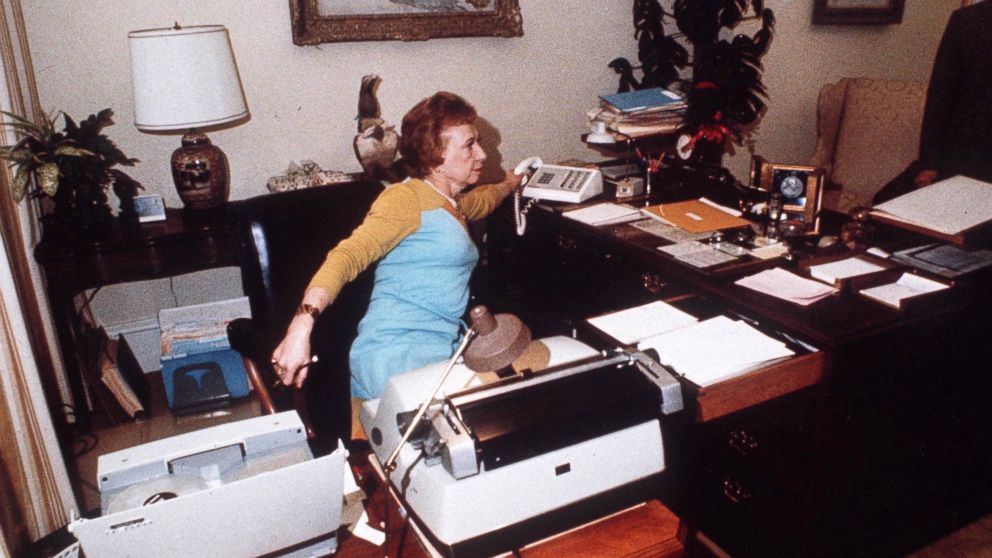
Rose Mary Woods, President Richard Nixon’s secretary at her White House desk, demonstrates the Rose Mary Stretch which could have resulted in the erasure of part of the Watergate tapes, 1973.
Nixon had an 18 minute gap; Trump’s gap is much longer. Bob Woodward and Robert Costa at The Washington Post: Jan. 6 White House logs given to House show 7-hour gap in Trump calls.
Internal White House records from the day of the attack on the U.S. Capitol that were turned over to the House select committee show a gap in President Donald Trump’s phone logs of seven hours and 37 minutes, including the period when the building was being violently assaulted, according to documents obtained by The Washington Post and CBS News.
The lack of an official White House notation of any calls placed to or by Trump for 457 minutes on Jan. 6, 2021 – from 11:17 a.m. to 6:54 p.m. – means the committee has no record of his phone conversations as his supporters descended on the Capitol, battled overwhelmed police and forcibly entered the building, prompting lawmakers and Vice President Mike Pence to flee for safety.
The 11 pages of records, which consist of the president’s official daily diary and the White House switchboard call logs, were turned over by the National Archives earlier this year to the House select committee investigating the Jan. 6 attack.
The records show that Trump was active on the phone for part of the day, documenting conversations that he had with at least eight people in the morning and 11 people that evening. The seven-hour gap also stands in stark contrast to the extensive public reporting about phone conversations he had with allies during the attack, such as a call Trump made to Sen. Mike Lee (R-Utah) — seeking to talk to Sen. Tommy Tuberville (R-Ala.) — and a phone conversation he had with House Minority Leader Kevin McCarthy (R-Calif.).
On what the January 6 committee is looking at:
The House panel is now investigating whether Trump communicated that day through backchannels, phones of aides or personal disposable phones, known as “burner phones,” according to two people with knowledge of the probe, who, like others interviewed for this report, spoke on the condition of anonymity to discuss sensitive information. The committee is also scrutinizing whether it received the full logs from that day.

Best burner phones, 2022
One lawmaker on the panel said the committee is investigating a “possible coverup” of the official White House record from that day. Another person close to the committee said the large gap in the records is of “intense interest” to some lawmakers on the committee, many of whom have reviewed copies of the documents…..
Trump was known for using different phones when he was in the White House, according to people familiar with his activities. Occasionally, when he made outbound calls, the number would show up as the White House switchboard’s number, according to a former Trump Cabinet official. Other times, he would call from different numbers – or no number would appear on the recipient’s phone, the official said….
In a statement Monday night, Trump said, “I have no idea what a burner phone is, to the best of my knowledge I have never even heard the term.”
Uh huh.
This isn’t really breaking news, but it shows that there are investigations of Trump’s culpability for January 6. The New York Times: New Focus on How a Trump Tweet Incited Far-Right Groups Ahead of Jan. 6. Federal prosecutors and congressional investigators are documenting how the former president’s “Be there, will be wild!” post became a catalyst for militants before the Capitol assault.
Mr. Trump’s Twitter post in the early hours of Dec. 19, 2020, was the first time he publicly urged supporters to come to Washington on the day Congress was scheduled to certify the Electoral College results showing Joseph R. Biden Jr. as the winner of the presidential vote. His message — which concluded with, “Be there, will be wild!” — has long been seen as instrumental in drawing the crowds that attended a pro-Trump rally on the Ellipse on Jan. 6 and then marched to the Capitol.
But the Justice Department’s criminal investigation of the riot and the parallel inquiry by the House select committee have increasingly shown how Mr. Trump’s post was a powerful catalyst, particularly for far-right militants who believed he was facing his final chance to reverse defeat and whose role in fomenting the violence has come under intense scrutiny.
Extremist groups almost immediately celebrated Mr. Trump’s Twitter message, which they widely interpreted as an invitation to descend on the city in force. Responding to the president’s words, the groups sprang into action, court filings and interviews by the House committee show: Extremists began to set up encrypted communications channels, acquire protective gear and, in one case, prepare heavily armed “quick reaction forces” to be staged outside Washington.
They also began to whip up their members with a drumbeat of bellicose language, with their private messaging channels increasingly characterized by what one called an “apocalyptic tone.” Directly after Mr. Trump’s tweet was posted, the Capitol Police began to see a spike in right-wing threats against members of Congress.
More details from the NYT article:
Prosecutors have included examples in at least five criminal cases of extremists reacting within days — often hours — to Mr. Trump’s post.
One of those who responded to the post was Guy Wesley Reffitt, an oil-field worker from Texas who this month became the first Jan. 6 defendant to be convicted at trial. Within a day of Mr. Trump’s Twitter post, Mr. Reffitt was talking about it on a private group chat with other members of the far-right militia organization the Texas Three Percenters.
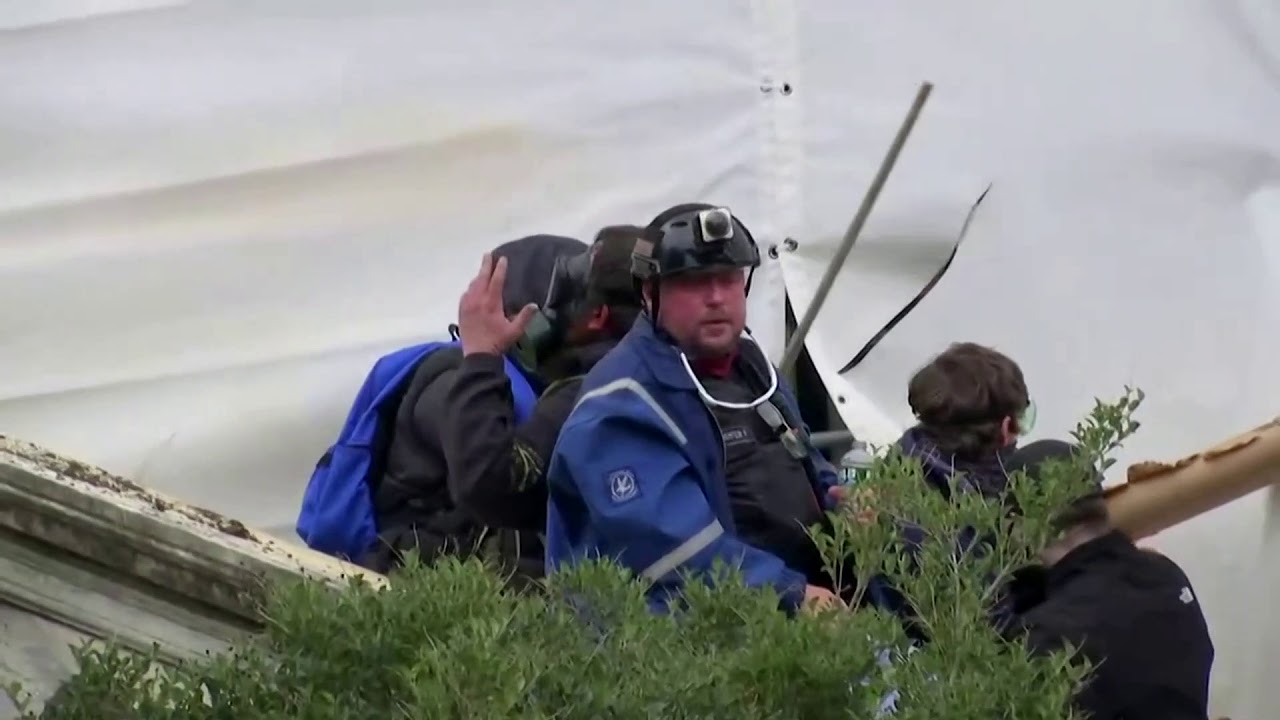
Guy Wesley Reffitt, center in blue with helmet
“Our President will need us. ALL OF US…!!! On January 6th,” Mr. Reffitt wrote. “We the People owe him that debt. He Sacrificed for us and we must pay that debt.”
The next day, prosecutors say, Mr. Reffitt began to make arrangements to travel to Washington and arrive in time for “Armageddon all day” on Jan. 6, he wrote in the Three Percenters group chat. He told his compatriots that he planned to drive because flying was impossible with “all the battle rattle” he planned to bring — a reference to his weapons and body armor, prosecutors say.
Some in the group appeared to share his anger. On Dec. 22, one member wrote in the chat, “The only way you will be able to do anything in DC is if you get the crowd to drag the traitors out.”
Mr. Reffitt responded: “I don’t think anyone going to DC has any other agenda.”
Reffitt was the first Capitol insurrectionist to be convicted in a jury trial.
Analysis by Stephen Collinson at CNN: Trump’s January 6 plot appears darker and more dangerous by the day.
Even as a federal judge commented Monday that Trump “more likely than not” sought to commit a crime to stay in office last year, the ex-President’s attacks on democracy are intensifying. They were on display as recently as Saturday night in a lie-filled rally that underscored how his conspiracy to overturn the election — whether it is criminal or not — remains viscerally alive and able to damage future elections.
While much of the country has been transfixed by Russia’s brutal war in Ukraine, the House committee investigating the insurrection has been racing against the clock ticking down to its own likely demise if Republicans win back the House in November’s midterms. It took another step on Monday toward holding two former Trump advisers to account by advancing criminal contempt referrals.
On Tuesday, The Washington Post and CBS News reported that a gap of more than seven hours exists in the logs of phone calls placed to or from Trump on January 6 that were turned over to the House committee. CNN had previously reported that records were missing regarding the calls.
It’s extraordinary that, more than 14 months on, new details of efforts by Trump and those around him to subvert President Joe Biden’s victory are still emerging. It’s also ironic that this threat to American democracy is being further exposed while Washington leads an international effort to save freedom in Ukraine, which is under much greater assault from Russian President Vladimir Putin, whom Trump still seems to hero worship.
Here at home, a flurry of new details in recent days about the ex-President’s behavior justifies continued investigations into the worst attack on American democracy in decades. Those revelations also explain why pro-Trump Republicans were so keen to prevent the House select committee investigating January 6, 2021, from ever getting off the ground. And they inject a new political dimension into Trump’s attempted comeback as he casts the 2022 midterm elections as a referendum on the lie that he won in 2020 and seeks to build a return to the White House on the same falsehoods that have drawn in millions of his supporters.
On yesterday’s report that federal judge David Carter determined that Trump committed crimes and the repercussions for Attorney General Merrick Garland:
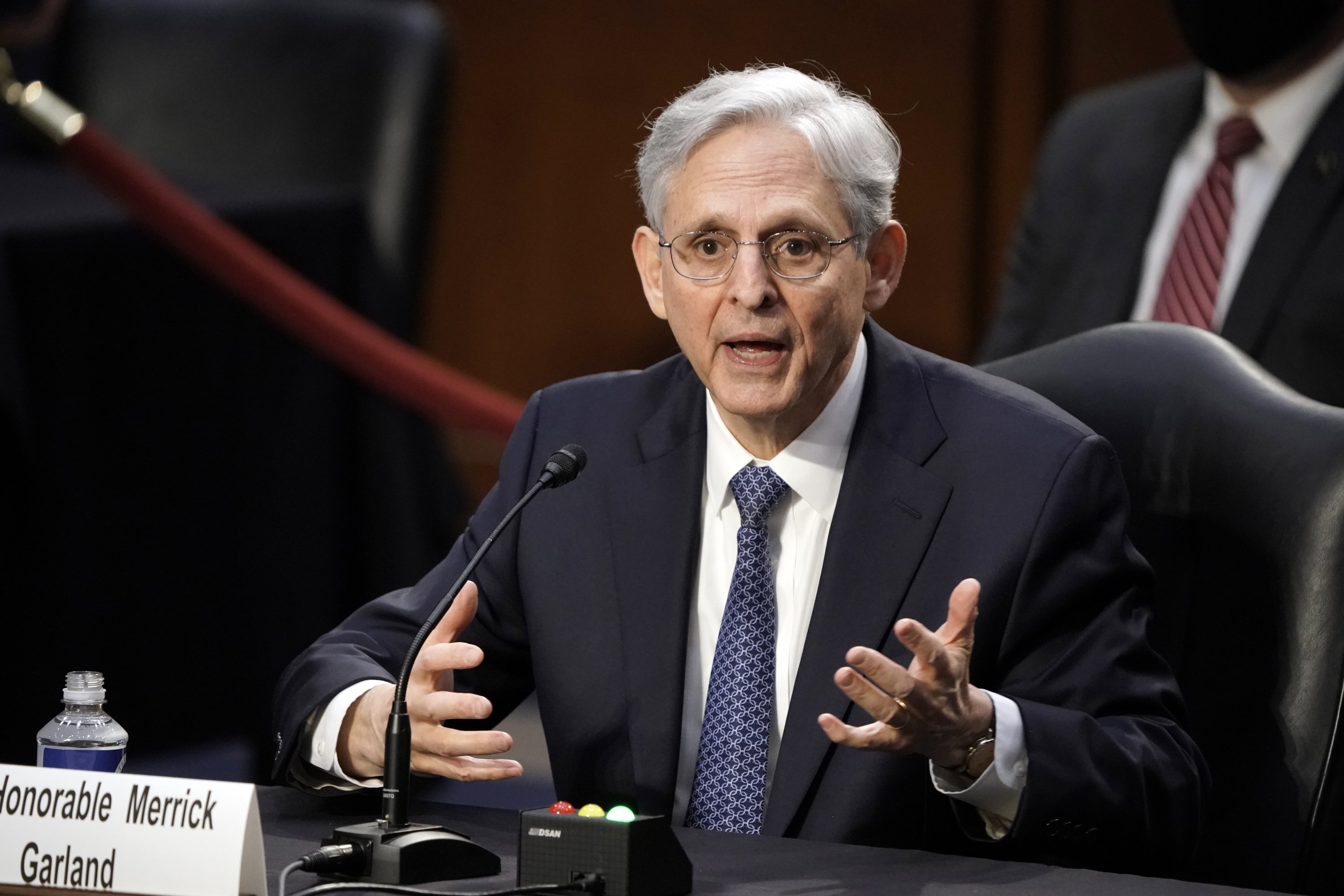 Carter can’t initiate a case against Trump. But his words didn’t just raise a blaring historical marker over a President committing a potential crime in office — and one that put the entire US democratic system at risk. His comment re-focused attention on the debate within the House committee over whether to make what would be a historic criminal referral of Trump to the Justice Department. Such a move would present Attorney General Merrick Garland with the earthshaking decision of whether to prosecute an ex-President who is maneuvering with a $100 million war chest in a potential bid to reclaim his job in 2024.
There could be few hotter political potatoes for an attorney general already facing political pressure to deal with Trump aides who are obstructing the committee.
Failing to pursue Trump in such circumstances would send a signal of impunity for presidents who seek to destroy American democratic institutions, even as Trump’s supporters who ransacked the US Capitol begin to be convicted and face prison terms for apparently acting on their political hero’s wishes.
Last night the January 6 Committee voted to recommend contempt charges for Trump aides Peter Navarro and Dan Scavino for refusing to testify to the committee. In addition, ABC News reports that Jared Kushner is expected to testify to the committee on Thursday.
More Trump Crimes
CNBC: ‘Significant’ evidence suggests Trump Organization misstated asset values for more than a decade, NY AG says.
The New York Attorney General’s Office has “uncovered significant evidence” suggesting that financial statements by the Trump Organization relied on misleading valuations of its real estate assets for more than a decade, the office said in a court filing Tuesday.
Those potentially misleading valuations “and other misrepresentations” were used by the company owned by ex-President Donald Trump “to secure economic benefits — including loans, insurance coverage, and tax deductions — on terms more favorable than the true facts warranted,” the filing alleged.
The claims by Attorney General Letitia James were made in response to an appeal by the Trump Organization and Donald Trump of last month’s order by a Manhattan state court judge directing Trump and two of his adult children, Donald Trump Jr. and Ivanka Trump to submit to interviews by James’ investigators….
In one glaring example, the financial statements for the Trump Organization from 2010 to 2012 “collectively valued” rent-stabilized apartment units it owned at $49.59 million, which was “over sixty-six times the $750,000 total value the outside appraiser had assigned to these units,” the filing said in a footnote.
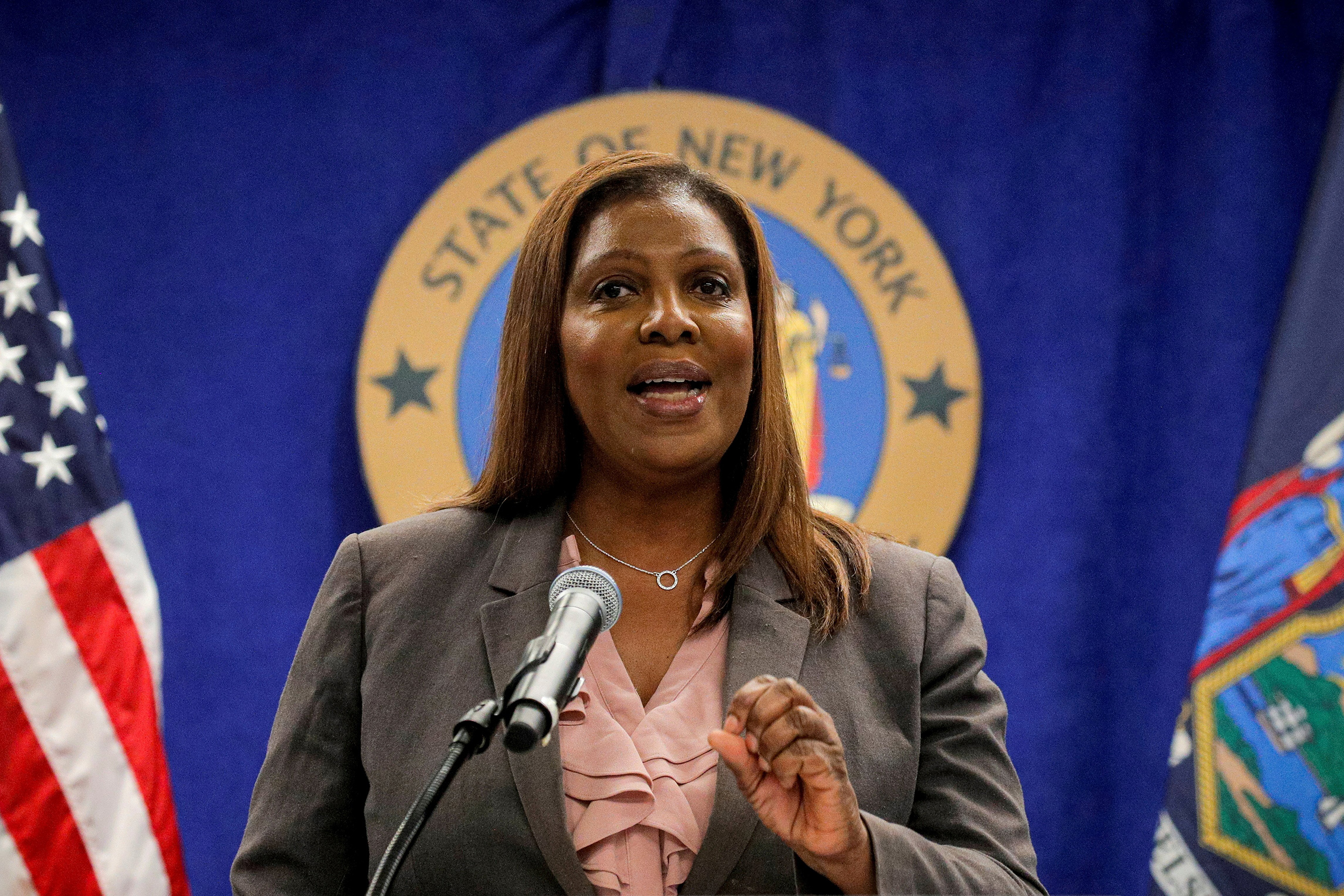
New York State Attorney General, Letitia James REUTERS/Brendan McDermid/File Photo/File Photo
The attorney general has said she is conducting both a civil investigation and a criminal probe related to the company.
“Mr. Trump personally certified the accuracy of the Statements for the years prior to 2016, at which point his assets were placed in a revocable trust,” while Donald Jr. “was responsible for the Statements for the years 2016 to 2020,” James noted in the filing.
That document said that from 2012 through 2016, the company’s financial statements said that Trump’s triplex apartment in Trump Tower in Manhattan “exceeded 30,000 square and valued the apartment at up to $327 million based on those dimensions,” the filing noted.
But in 2017, the company’s statement “slashed the apartment’s value by two-thirds, sizing the residence at just under 11,000 square fees,” which is the figure specified in the offering plan for the building, the filing said.
One more from Just the News: Exclusive: Trump calls on Putin to release info on Hunter Biden’s dealings with oligarchs.
Former President Donald Trump is calling on Russian leader Vladimir Putin to release any information he possesses on Hunter Biden’s dealings with oligarchs in Eastern Europe.
In an interview with the Just the News television show on Real America’s Voice airing Tuesday, the former president cited a 2020 Senate report that disclosed Russian oligarch Yelena Baturina, then the wife of Moscow’s mayor, provided $3.5 million a decade ago to a company co-founded by President Joe Biden’s son and unanswered questions about why the money was given.
“She gave him $3.5 million so now I would think Putin would know the answer to that. I think he should release it,” Trump said in a wide-ranging interview at his Mar O Lago resort in Florida. “I think we should know that answer.”
A grand jury in Delaware has been investigating Hunter Bjden’s business dealings for possible tax violations, foreign lobbying issues and money laundering. Hunter Biden has acknowledge the probe but denied wrongdoing.
Trump said he also would like to know more about Hunter Biden’s relationship with Ukrainian oligarch Nikolai Zlochevsky, the owner of the Burisma Holdings gas company that hired the Biden scion in 2014 to its board and paid him hundreds of thousands of dollars a year.
Shades of Trump’s “Russia, are you listening” appeal for Hillary Clinton’s emails in 2016.
What’s on your mind today?
Did you like this post? Please share it with your friends:



 On Monday, a federal judge
 peej
peej Carissa
 bostonboomer
 dakinikat
 ecocatwoman
 mablue2
 Mama Lopez
 peggysue22
 quixote
 skydancingguestblogger
 Mona (aka Wonk the Vote)



 Sky Dancing
Recent Comments