
Thursday Reads: Romney’s Lies, Debt Ceiling Showdown, and Dimonfreude
Posted: May 17, 2012 Filed under: Barack Obama, Corporate Crime, corporate greed, Economy, House of Representatives, Mitt Romney, morning reads, Surreality, The Media SUCKS, U.S. Economy, U.S. Politics, unemployment, voodoo economics, Voter Ignorance | Tags: Bill Clinton, Bill Moyers, economics, J.P. Morgan, Jamie Dimon, Mary Kennedy, Peter G. Peterson, Robert F. Kennedy Jr., Romney's lies, Simon Johnson 22 Comments
Good Morning!
On Tuesday night I wrote a brief post about the bizarre speech Mitt Romney gave in Des Moines, Iowa earlier that day. I was struck by Romney’s childish effort to get at President Obama by talking about Bill Clinton’s economic policies and claiming that Obama must have ignored those policies because he has some kind of grudge against both Clintons. It was so strange and off key that I thought Romney sounded like a crotchety old busybody gossiping over the backyard fence.
I didn’t really even go into the many baldfaced lies Romney told in the speech–I guess I’ve become so accustomed to his total refusal to confine himself to reality as it is that I almost don’t notice it anymore. Basically, Romney attacked Obama the deficit that was primarily created by Bush, and made his usual claims that he (Romney) will be able to cut taxes by 20 percent, increase defense spending, and at the same time magically balance the budget and dramatically reduce unemployment. Only a moron would buy what he’s selling.
Yesterday, a number of bloggers commented on that speech, so I thought I’d share some of those reactions in this morning’s reads.
Steve Benen at Maddowblog: A peek into an alternate reality.
Mitt Romney delivered a curious speech in Iowa yesterday, presenting his thoughts on the budget deficit, the debt and debt reduction, which is worth reading if you missed it. We often talk about the problem of the left and right working from entirely different sets of facts, and how the discourse breaks down when there’s no shared foundation of reality, and the Republican’s remarks offered a timely peek into an alternate reality where facts have no meaning.
Even the topic itself is a strange choice for Romney. If the former governor is elected, he’ll inherit a $1 trillion deficit and a $15 [trillion] debt, which he’ll respond to by approving massive new tax cuts and increasing Pentagon spending. How will he pay for this? No one has the foggiest idea.
In other words, the guy who intends to add trillions to the debt gave a speech yesterday on the dangers of adding trillions to the debt.
Benen says he doesn’t believe Romney is “stupid,” but he must be “operating from the assumption that voters are stupid.” I’d say that’s true. I think Romney believes that he’s much smarter and more worthy than just about anyone and that poor and middle-class people are beneath contempt.
Jonathan Cohn at The New Republic: Romney’s Make-Believe Story on the Economy. Cohn writes about Romney’s claims that Obama’s failure to reduce the deficit is the cause of the “tepid recovery,” unemployment, and the struggles of seniors to get by on fixed incomes.
Note the way Romney establishes cause and effect here: Obama’s contribution to higher deficits are the reason more people can’t get work and more seniors can’t make ends meet right now. This is an audacious claim and, while I’m no economist, I’m pretty sure it places Romney on the outer edges of the debate among mainstream scholars.
I know of serious conservatives who think the Recovery Act, which has increased deficits temporarily, didn’t ultimately do much to create jobs in the near term. And I know of serious conservatives who think that creating jobs now wasn’t worth the long-term downside of adding to the federal debt, however incrementally. Both viewpoints seem to represent minority views, if a recent University of Chicago survey of leading economists is indicative. But the arguments have at least some logic to them.
But Romney’s suggestion that unemployment today is a consequence of Obama’s contribution to the deficit (real or imagined) requires further leaps of logic. You’d have to argue, for example, that extensions of unemployment benefits have reduced incentives to work (despite research to the contrary) and that such negative effects substantially outweigh the positive effects of traditional stimulus measures. It’s not impossible to make this case. I think Casey Mulligan, also of the University of Chicago, has written things along these lines for the New York Times. But, unless I’m missing something, that argument is even more marginal than suggestions the Recovery Act didn’t help at all.
I suspect that even Cohn’s effort to make sense of Romney’s fantasy economic theory will have Dr. Dakinikat pulling her hair out.
Jonathan Chait at New York Magazine: Romney’s Budget Fairy Tale.
In the real world, the following things are true: The budget deficit was projected to top $1 trillion even before President Obama took office, and that was when forecasters were still radically underestimating the depth of the 2008 crash. Obama did propose temporary deficit-increasing measures, an economic approach endorsed in its general contours, if not its particulars, by Romney’s economists. These measures contributed a relatively small proportion to the deficit, and their effect is short-lived. Obama instead focused on longer-term measures to reduce the deficit, including comprehensive health-care reform projected to reduce deficits by a trillion dollars in its second decade. Obama put forward a budget plan that would stabilize the debt as a percentage of the economy. Obama has hoped to achieve deeper long-term deficit reduction by striking bipartisan deals with Congress, and he has tried to achieve this goal by openly endorsing a bipartisan deficit plan in the Senate and privately agreeing to a more conservative plan with John Boehner, both of which were killed by Republican opposition to any higher revenue.
But Romney doesn’t seem to live in the real world, and Chait suggests that Romney either doesn’t understand how deficits work or doesn’t care if what he says makes any sense at all.
In Romney’s telling, the terms debt and spending are essentially interchangeable. When presented with Obama’s position — that the solution to the debt ought to include both higher taxes and lower spending — he rejects it out of hand. Naturally, Romney has admitted before that his budget plan “can’t be scored.” It’s an expression of conservative moral beliefs about the role of government. While loosely couched in budgetary terms, Romney is expressing an analysis that resides outside of, and completely at odds with, mainstream macroeconomic forecasting and scoring assumptions.
At the Plum Line, Greg Sargent discusses How Mitt Romney gets away with his lying.
If you scan through all the media attention Romney’s speech received, you are hard-pressed to find any news accounts that tell readers the following rather relevant points:
1) Nonpartisan experts believe Romney’s plans would increase the deficit far more than Obama’s would.
2) George W. Bush’s policies arguably are more responsible for increasing the deficit than Obama’s are.
Oh, sure, many of the news accounts contain the Obama campaign’s response to Romney’s speech; the Obama campaign put out a widely-reprinted statement arguing that Romney’s plans would increase the deficit and that he’d return to policies that created it in the first place.
But this shouldn’t be a matter of partisan opinion. On the first point, independent experts think an actual set of facts exists that can be used to determine what the impact of Romney’s policies on the deficit would be. And according to those experts, based on what we know now, Romney’s policies would explode the deficit far more than Obama’s would.
Obviously, the problem is the obsequious corporate media. But the Romney campaign makes it impossible for even the few remaining serious reporters to question his policies by keeping the candidate completely insulated from the press except for occasional appearances on Fox News and lightweight network morning shows like Good Morning America. Yesterday, Politico reprinted tweets from several reporters who were “physically” blocked from talking to Romney on a rope line.
Speaking of Republican ignorance of basic economics, House Republicans are gearing up for another pitched battle on increasing the debt ceiling. Speaker John Boehner met with President Obama at the White House today and they “clash[ed] over” increasing the debt limit, according to The Hill.
The president convened the meeting of the bipartisan congressional leadership to discuss his “to-do list” for Congress, but an aide to the Speaker said the bulk of the meeting was spent on other issues, including a pile-up of expiring tax provisions and the next increase in the federal debt limit.
Boehner asked Obama if he was proposing that Congress increase the debt limit without corresponding spending cuts, according to a readout of the meeting from the Speaker’s office. The president replied, “Yes.” At that point, Boehner told Obama, “As long as I’m around here, I’m not going to allow a debt-ceiling increase without doing something serious about the debt.”
Shortly after the meeting, White House press secretary Jay Carney told reporters that the president warned the leadership that he would not allow a repeat of last August’s debt-ceiling “debacle,” which led to a downgrade in the U.S. credit rating.
Sigh……
In a related story, there’s this piece at Wonkblog about the Pete Peterson summit and how Democrats talked long-windedly about cutting “entitlements,” and Republican refused to talk about tax increases. Read it and weep. I’m not even going to quote from it, because it’s too damn depressing.
So far Jamie Dimon seems to have survived the $2 billion loss recently suffered by J.P. Morgan.
The CEO of JPMorgan Chase survived a shareholder push Tuesday to strip him of the title of chairman of the board, five days after he disclosed a $2 billion trading loss by the bank.
CEO Jamie Dimon also won a shareholder endorsement of his pay package from last year, which totaled $23 million, according to an Associated Press analysis of regulatory filings.
Dimon, unusually subdued, told shareholders at the JPMorgan annual meeting that the company’s mistakes were “self-inflicted.” Speaking with reporters later, he added: “The buck always stops with me.”
Yeah, right. The buck will stop with the taxpayers if Dimon’s bank ultimately crashes and burns. Bill Moyers asked economist Simon Johnson about that.
Moyers: I was just looking at an interview I did with you in February of 2009, soon after the collapse of 2008 and you said, and I’m quoting, “The signs that I see… the body language, the words, the op-eds, the testimony, the way these bankers are treated by certain congressional committees, it makes me feel very worried. I have a feeling in my stomach that is what I had in other countries, much poorer countries, countries that were headed into really difficult economic situations. When there’s a small group of people who got you into a disaster and who are still powerful, you know you need to come in and break that power and you can’t. You’re stuck.” How do you feel about that insight now?
Johnson: I’m still nervous, and I think that the losses that JPMorgan reported — that CEO Jamie Dimon reported — and the way in which they’re presented, the fact that they’re surprised by it and the fact that they didn’t know they were taking these kinds of risks, the fact that they lost so much money in a relatively benign moment compared to what we’ve seen in the past and what we’re likely to see in the future — all of this suggests that we are absolutely on the path towards another financial crisis of the same order of magnitude as the last one.
A number of shareholders have sued Dimon over the losses, according to Bloomberg (via the SF Chroncle). And of course lots of people are gloating over Dimon’s getting temporarily knocked off his pedestal. Jena McGregor writes in the WaPo:
It’s being called Dimonfreude.
There are barely disguised smirks emanating from the canyons of Wall Street and the business press over the fact that Jamie Dimon has had to admit a mistake — and a whale of one, for that matter.
For years, the JPMorgan CEO (and America’s least-hated banker, as he was known) has worn a halo over those pinstripes. Dimon has been called President Obama’s “favorite banker”. Institutional Investor magazine has called him the country’s best CEO for two years running. And his actions during the financial crisis have been painted in patriotic terms: Press reports said he “answered the call” from then-FDIC chairman Sheila Bair to buy Washington Mutual, one of two banks he scooped up during the financial meltdown, and he has cited a patriotic duty to a country in crisis as why he took in $25 billion in government aid.
Yet now, Dimon is in the hot seat as JPMorgan confronts a $2 billion trading loss and the early stages of a criminal probe by the Justice Department.
Finally, some sad news: Estranged Wife of Robert F. Kennedy Jr. Is Found Dead at Home in Westchester
Mary R. Kennedy, the estranged wife of Robert F. Kennedy Jr., was found dead on Wednesday at the family’s home in Bedford, N.Y. She was 52.
Ms. Kennedy’s death was confirmed in a statement from her family, who did not comment on the circumstances. The Bedford Police Department said only that it had investigated a “possible unattended death” in an outbuilding at the home.
Her lawyer, Kerry A. Lawrence, would not say whether foul play was suspected. Kieran O’Leary, a spokesman for Westchester County, said an autopsy was scheduled for Thursday morning.
Born Mary Richardson, Ms. Kennedy joined one of America’s foremost political families in 1994, in a marriage ceremony aboard a boat on the Hudson River, near Stony Point, N.Y. At the time, she was an architectural designer at Parish-Hadley Associates in New York.
Those are my suggested reads for today. What are you reading and blogging about?
Open Thread: Mitt Romney, Busybody
Posted: May 15, 2012 Filed under: 2012 presidential campaign, 2012 primaries, U.S. Economy, U.S. Politics | Tags: Barack Obama, Bill Clinton, busybody, Debt, Federal Deficit, gossip, Hillary Clinton, Mitt Romney 20 Comments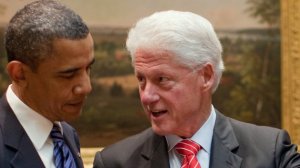
In a speech in Des Moines, Iowa today, Mitt Romney sounded like a fussy old gossip, claiming that President Obama probably has a “beef” with Bill and Hillary Clinton.
Almost a generation ago, Bill Clinton announced that the Era of Big Government was over.
Even a former McGovern campaign worker like President Clinton was signaling to his own Party that Democrats should no longer try to govern by proposing a new program for every problem.
President Obama tucked away the Clinton doctrine in his large drawer of discarded ideas, along with transparency and bipartisanship. It’s enough to make you wonder if maybe it was a personal beef with the Clintons….but really it runs much deeper.
President Obama is an old school liberal whose first instinct is to see free enterprise as the villain and government as the hero. America counted on President Obama to rescue the economy, tame the deficit and help create jobs. Instead, he bailed out the public-sector, gave billions of dollars to the companies of his friends, and added almost as much debt as all the prior presidents combined.
ROFLMAO!! Obama, “an old school liberal?” This guy is a laff riot!
At the Washington Post, Nia-Malika Henderson interpreted Romney’s odd invoking of the good old days of the Clinton administration as another effort to link Obama with Jimmy Carter. Henderson writes:
The strategy, of course, is obvious, if a little heavy handed—paint Obama as more like Jimmy Carter, rather than as a New Democrat in the mold of Clinton.
Clinton has already emerged as one of Obama’s most visible surrogates, appearing in a video marking the death of Osama bin Laden, and will likely be used to gin up support among so-called Reagan Democrats—white, blue collar workers, particularly—and Romney can perhaps mute some of Clinton’s power by suggesting that Clinton isn’t all in with Obama. (It’s a beef, not a bromance, Romney suggests.)
But by invoking Clinton, Romney risks poking the bear in some ways, and perhaps even casting himself as a version of Clinton. Praising Clinton, even in a backhanded way, isn’t exactly a way to solidify support among the religious right.
I don’t know about the reaction from the religious right, but Bill Clinton worked a few digs about Romney into his speech today at the Pete Peterson conference (why Clinton shows up for these things, I’ll never understand, but that’s for another post). According to the National Journal, Clinton said that Romney
shot himself in the foot with the broad tax-cutting budget he suggested during the primary. He said Romney should accept projections that his plan for deep tax cuts would add billions to the deficit while requiring huge cuts to Medicare, Medicaid and non-defense spending.
“If I were in his position I would, I think, use the Congressional Budget Office numbers saying my plan increased the debt and say that no responsible president can pretend an independent analysis of his numbers don’t matter,” Clinton said. “That’s, I think, his his best avenue back to the real world.”
Clinton also offered a few verbal pats on the head to Romney.
“I feel a lot of sympathy for him,” he said. “The whole primary was about finding somebody who was true conservative, but they’re going to vote for him anyway.”
Good one, Bill!
George Zimmerman Had “Closed Fracture” of Nose; Was Taking Adderall and Temazepam
Posted: May 15, 2012 Filed under: Crime | Tags: George Zimmerman, Mark O'Mara, Sanford FL Police Department, Trayvon Martin 20 Comments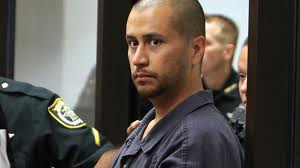
ABC News has gotten hold of a medical report from George Zimmerman’s doctor.
A medical report compiled by the family physician of accused Trayvon Martin murderer George Zimmerman and obtained exclusively by ABC News found that Zimmerman was diagnosed with a “closed fracture” of his nose, a pair of black eyes, two lacerations to the back of his head and a minor back injury the day after he fatally shot Martin during an alleged altercation.
Zimmerman visited a doctor the day after he shot Trayvon Martin.
The record shows that Zimmerman also suffered bruising in the upper lip and cheek and lower back pain. The two lacerations on the back of his head, one of them nearly an inch long, the other about a quarter-inch long, were first revealed in photos obtained exclusively by ABC News last month.
But the report also shows Zimmerman declined hospitalization the night of the shooting, and then declined the advice of his doctor to make a follow-up appointment with an ear nose and throat doctor.
In addition to his physical injuries, Zimmerman complained of stress and “occasional nausea when thinking about the violence.”
It’s interesting that ABC News has been the recipient of a number of leaks in the Trayvon Martin case. It’s difficult not to suspect that this one came from the defense. I suppose it could also have come from someone at the Sanford Police Department who is sympathetic to Zimmerman.
The leaked medical report revealed some surprising information. We’ve learned that Sanford Police investigator did not test Zimmerman for drugs or alcohol, but the report indicates that he was taking Adderall and Temazepam. Adderall is an amphetamine generally used to treat ADHD.
The combination of dextroamphetamine and amphetamine is used as part of a treatment program to control symptoms of attention deficit hyperactivity disorder (ADHD; more difficulty focusing, controlling actions, and remaining still or quiet than other people who are the same age) in adults and children. Dextroamphetamine and amphetamine tablets are also used to treat narcolepsy (a sleep disorder that causes excessive daytime sleepiness and sudden attacks of sleep). The combination of dextroamphetamine and amphetamine is in a class of medications called central nervous system stimulants. It works by changing the amounts of certain natural substances in the brain.
Back in the 1960s and 1970s, we called it speed. Here is a portion of the warnings that go along with using this drug:
The combination of dextroamphetamine and amphetamine can be habit-forming. Do not take a larger dose, take the medication more often, or take it for a longer time than prescribed by your doctor. If you take too much dextroamphetamine and amphetamine, you may find that the medication no longer controls your symptoms, you may feel a need to take large amounts of the medication, and you may experience symptoms such as rash, difficulty falling asleep or staying asleep, irritability, hyperactivity, and unusual changes in your personality or behavior. Overusing dextroamphetamine and amphetamine may also cause sudden death or serious heart problems such as heart attack or stroke.
Tell your doctor if you or anyone in your family drinks or has ever drunk large amounts of alcohol, uses or has ever used street drugs, or has overused prescription medications. Your doctor will probably not prescribe dextroamphetamine and amphetamine for you.
According to Pharma Watchdogs, Temazepam is a benzodiazapine, in the same family as Valium and Xanax. It is generally prescribed for people who have difficulty sleeping. Someone taking Adderall might have difficulty going to sleep and staying asleep. This drug also is not to be prescribed for someone who drinks alcohol.
I’m quite curious about why George Zimmerman was taking Adderall. I haven’t read anything so far to indicate that he has ADHD. Adderall could certainly cause someone to be anxious, jittery, hypervigilant, and/or paranoid.
In other news, WFTV Orlando reported this morning that the FBI “may charge George Zimmerman with [a] hate crime.”
SANFORD, Fla. — WFTV has learned charges against George Zimmerman could be getting more serious.
State prosecutors said Zimmerman, a neighborhood watchman, profiled and stalked 17-year-old Trayvon Martin before killing him, so the FBI is now looking into charging him with a hate crime.
FBI investigators are actively questioning witnesses in the retreat at the Twin Lakes neighborhood, seeking evidence for a possible federal hate crime charge.
This morning prosecutors released a list of the evidence that was handed over to Zimmerman’s attorney Mark O’Mara yesterday.
So far O’Mara has been stalling the public release of evidence, but now that someone is presumably leaking information favorable to the defense side, media organizations will soon begin to demand that it all be released. Florida has a very strict sunshine laws that require release of all documents related to trials.
Tuesday Reads
Posted: May 15, 2012 Filed under: 2012 presidential campaign, Barack Obama, Mitt Romney, morning reads, Republican presidential politics, U.S. Economy, U.S. Politics | Tags: Angela Merkel, austerity, Bain Capital, basilica Sant'Apollinare, Emanuela Orlandi, Enrico "Renatino" Pedis, Eric Fernstrom, Greece, Josh Romney, obama campaign, Rand Paul, Rome, Ron Paul, Spain, the Euro, the Vatican 29 Comments
Good Morning!! Let’s get right to the news. Yesterday wasn’t a big political news day here in the U.S. The President appeared on The View and talked about gay marriage and the Kardashians. He also pandered to young women at Barnard.
The Obama campaign released a new ad highlighting Mitt Romney’s career as a corporate “vampire” at Bain Capital.
The Obama campaign ad focuses on Bain Capital’s misadventures with GST steel of Kansas City and features former steelworkers describing what they saw between the time Bain bought the firm in 1993 and filed to put it in bankruptcy in 2001. (Romney left Bain in 1999).
“It was like a vampire. They came in and sucked the life out of us,” says one of the men. “What Bain Capital did was not capitalism, it was bad management,” says David Foster, lead negotiator for workers at GST Steel. Former steelworker Joe Soptic accuses Bain of cutting corners on safety, saying “it was like working in the sweatshops of the ’30s,” and that watching the plant close was “like watching an old friend bleed to death.”
The campaign also set up a new website to provide information about “Romney economics.”
Ron Paul announced that he won’t compete in any of the remaining primaries, but he still plans to compete with Mitt Romney for delegates to the Republican convention.
Ron Paul, the congressman from Texas and a favorite of tea partyers, effectively ended his presidential campaign Monday but urged his fervent supporters to continue working at the state party level to cause havoc for presumptive Republican nominee Mitt Romney.
In an email to supporters, Paul urged his libertarian-leaning backers to remain involved in politics and champion his causes despite the apparent end of his presidential aspirations. Paul has found success in wrecking the selection process for delegates to the party’s late-summer nominating convention in Tampa, Fla., and trumpeted that he has delayed Romney’s expected nomination….
Paul’s supporters have proved successful in winning state GOP conventions in places such as Maine and Nevada. His supporters in Iowa and Nevada were chosen to lead the state central parties.
Over the weekend, Paul’s supporters managed to boo Mitt Romney’s son Josh off the stage at the Arizona state Republican convention.
Hundreds of state GOP members were gathered at Grand Canyon University to elect delegates for the national convention in July in Tampa, Fla., which is expected to select Mitt Romney as the official Republican nominee to challenge President Obama.
“We cannot afford four more years of President Obama,” said Josh Romney, the third of Mitt Romney’s five sons. “We need someone to step in there and turn things around.”
But Josh Romney had to stop repeatedly as people booed and yelled for Paul, who has continued campaigning in the Republican primary.
What is Ron Paul up to? At HuffPo, Stewart J. Lawrence suggests that Paul may be trying to set up his son Rand Paul to become Romney’s vice presidential choice. Or perhaps he just wants a speaking role at the Convention and input into the party platform. In any case, Romney may have to deal with Ron Paul at some point.
So it was a pretty quiet day in the U.S., but not in Europe, where Greece is teetering on the brink of destruction and threatening to pull all of the Eurozone down with it. From the Washington Post: Greek deadlock heightens fears of full European economic crisis.
Political deadlock in Greece rattled world markets Monday, reviving fears that the fractious Mediterranean country could spurn an international bailout, abandon the common European currency and risk a fresh round of world economic turmoil.
European stock indexes fell, with Greece’s market now at a 20-year low, while the euro currency continued a recent decline against the dollar. U.S. stocks also fell.
Coming only days before the leaders of the world’s Group of Eight industrialized nations meet at Camp David, the standoff in Greece over its political direction has thrust Europe’s troubles to the top of the agenda. A downturn in Europe could stagger a fragile recovery in the United States and undermine growth around the world.
Some headlines from The Independent UK:
World braces itself for Greek euro exit.
Financial markets were plunged into fresh turmoil after Greece’s political parties failed once again to agree to form a unity government, and European policymakers warned that Greece’s aid payments would be cut off unless Athens quickly produced an administration prepared to deliver far-reaching economic reforms and budget cuts.
Without those funds from the European Union and the International Monetary Fund, Greece could run out of cash to meet its national debt interest payments as early as next month. The country would then have no option but to default. Most analysts expect that a default would be a prelude to Greek exit from the single currency altogether.
Panic and violence in the streets as protesters turn against politicians.
Southern Europe is preparing for a summer of discontent as protesters of all ages, and from across the political spectrum, plan demonstrations against greater austerity measures and against those policymakers who say there is no alternative to cuts.
Up to 50,000 “Indignant Ones” gathered in Madrid’s Puerta de Sol area on Saturday, many more than expected, to demonstrate against the Spanish government’s austerity measures. But, as indignant as they might have been, there were fewer on the streets for what was billed as an even bigger rally on Sunday, despite a message of support from the US rocker Bruce Springsteen.
A public holiday in Madrid today is likely to draw another protest, and one group almost certain to be there is the yayoflautas, a collection of people in their sixties and seventies, and who were involved in anti-Franco protests. The group has staged sit-ins in banks, radio stations, hospitals and even the reception area of a ratings agency.
Angela Merkel’s party humiliated by shock election defeat
Angela Merkel’s ruling conservatives suffered a humiliating defeat in key elections in Germany’s most populous state yesterday when voters rejected her party’s austerity policies and handed a resounding victory to her pro-growth Social Democratic Party opponents.
Ms Merkel’s Christian Democrats were shell-shocked by the devastating result they returned in the poll in North Rhine Westphalia, which has a total population of 18 million. Exit polls showed that they secured a mere 25.5 per cent of the vote – their worst performance ever in the state….
By contrast, the pro-growth Social Democrats and their candidate Hannelore Kraft, 50, romped home with 38 per cent of the vote. They were expected to form a so-called Red-Green coalition with the environmentalist Greens who won around 12 per cent of the vote. The two parties secured enough seats to obtain an absolute majority in the state parliament.
U.S. politicians should be paying attention. Austerity is not a long-term winning policy.
In miscellaneous news, Gizmodo reports that the Kodak company had a nuclear reactor in its basement for many years.
Kodak may be going under, but apparently they could have started their own nuclear war if they wanted, just six years ago. Down in a basement in Rochester, NY, they had a nuclear reactor loaded with 3.5 pounds of enriched uranium—the same kind they use in atomic warheads….
Kodak officials now admit that they never made any public announcement about it. In fact, nobody in the city—officials, police or firemen—or in the state of New York or anywhere else knew about it until it was recently leaked by an ex-employee. Its existence and whereabouts were purposely kept vague and only a few engineers and Federal employees really knew about the project.
The company had a legitimate purpose for having the reactor and radioactive material:
Kodak’s purpose for the reactor wasn’t sinister: they used it to check materials for impurities as well as neutron radiography testing. The reactor, a Californium Neutron Flux multiplier (CFX) was acquired in 1974 and loaded with three and a half pounds of enriched uranium plates placed around a californium-252 core.
But still it’s amazing they were able to get away with the reactor and especially the secrecy. The reactor was dismantled in 2006.
Why would a mafia boss be buried in a Roman basilica? Especially when he was suspected of abducting a 15-year-old girl, the daughter of a Vatican employee.
Forensic teams and marble workers have pried open a mobster’s tomb in the basilica Sant’Apollinare in Rome, searching for clues that might help to solve one of Italy’s greatest mysteries.
Fifteen-year-old Emanuela Orlandi, the daughter of a Vatican bank functionary, disappeared in 1983 on her way to a music lesson. Her body has never been found, and the truth about what happened to her has puzzled investigators for nearly 30 years. One of the most prominent conspiracy theories was that Orlandi’s remains would be found in the crypt where the notorious Roman mafioso Enrico “Renatino” De Pedis was eventually laid to rest after he was shot dead in a Rome square in 1990.
On Monday, his tomb was finally opened. His body was there, inside a three-layer sarcophagus, well preserved and wearing a dark blue suit and black tie. Police took fingerprints and confirmed his identity. But also, tucked inside a niche of the ancient crypt – a burial place since before Napoleonic times – were dozens of boxes containing unidentified human bones.
Dozens of boxes of bones?! This should be an interesting story to follow.
Finally, I’d like to call your attention to a profile of Mitt Romney’s top adviser Eric Fernstrom, published in GQ Magazine. It’s long, but well worth reading. Here’s a brief preview:
Fehrnstrom calls himself a “utility player,” and in the press he’s typically identified as a “Romney spokesman” or a “Romney strategist.” But that doesn’t begin to do justice to his place in the high command. Fehrnstrom has been with Romney for a decade, longer than any other political adviser on his 2012 campaign. “Anytime I’ve got questions or I’ve got a doubt, I know I can go to Eric and I’m getting feedback from someone who’s inside Mitt’s brain,” Romney’s senior adviser Kevin Madden told me. Or as Peter Flaherty, another senior Romney adviser, puts it: “Eric has a deeper shelf of institutional knowledge of Mitt Romney than anyone I know whose last name is not Romney.”
Fehrnstrom’s first job for Romney was running the press shop during his successful 2002 run for Massachusetts governor. But his role quickly expanded, and as Romney’s national profile grew, so did his trusted aide’s. (So much so that when Scott Brown was looking for someone to help him win Ted Kennedy’s old Massachusetts Senate seat in 2010, he hired Fehrnstrom, who remains Brown’s top strategist.) Over the course of his decade with Romney, Madden says, Fehrnstrom has become “a Tom Hagen figure. He’s consigliere to the governor.”
But with two slight differences. Whereas Hagen was always trying to cool off the hotheaded Sonny Corleone and keep the peace, Fehrnstrom, 50, is both the wise man and the hothead. He wears the uniform of the modern political consultant—iPad tucked in the crook of his arm, open-collared shirt, rectangular-framed glasses—but his fleshy face and thick New England accent betray a rougher core. And far from reining in Romney, he performs the opposite service for his client: Fehrnstrom toughens him up. “Eric gives Mitt a capability that Mitt doesn’t have,” says Ben Coes, Romney’s campaign manager in 2002. “It’s a streetwise savvy; it’s an on-the-ground Boston-smarts mentality; it’s a back-alley-politics, survival-of-the-fittest point of view. Mitt is not a knife fighter. Eric is a knife fighter.” The best political operatives are the ones who provide their clients with a tangible quality the candidate himself lacks. If Karl Rove was Bush’s brain, then Fehrnstrom is Romney’s balls.
That’s all I’ve got for today. What are you reading and blogging about?
Mitt Romney’s Positions on Social Issues Dictated by Church Leaders
Posted: May 12, 2012 Filed under: 2012 presidential campaign, 2012 primaries, U.S. Politics | Tags: abortion rights, Church of the Latter Day Saints, John F. Kennedy, Judith Dushku, LDS, LGBT rights, Mitt Romney, Mormon church, Roman Catholic Church, Wayne Barrett 47 Comments
Mormon Temple, Salt Lake City, Utah
On January 26, I wrote a post about an excerpt from the biography The Real Romney that had just been published by Vanity Fair. The Vanity Fair article detailed Romney’s cruel treatment of women when he was a Bishop and later Stake President in Boston’s Mormon community.
In doing a little further research on one of those women, Judith Dushku, and came across an earler interview with Dushku in which she recounted a conversation with Romney in which he told her he had been given permission by his church leaders to lie about his views on abortion and LGBT rights. A few years before, Romney had cut Dushku out of his life because she supported a women who had to choose between having an abortion and losing her own life. Here’s the relevant excerpt from my post:
A few years after the friendship ended, Romney ran for the Senate in 1994 against Ted Kennedy. Dushku was very surprised to learn that Romney was running as a pro-choice candidate. Dushku:
I was pleased and called, asking to see him. I told him I suspected that we had our differences, but that maybe I could work with him if he’d come to a really good position on women and childbirth.
And he said – Yes, come to my office.
I went to his office and I congratulated him on taking a pro-choice position. And his response was – Well they told me in Salt Lake City I could take this position, and in fact I probably had to in order to win in a liberal state like Massachusetts.
Suzan Mazur: Who’s “THEY”?
Judy Dushku: I asked him the same question. And he said “the Brethren” in Salt Lake City.
In other words, Romney was consulting with his church elders before deciding his positions on the issues, and they told him to lie!
Last night The Daily Beast published a post by famed investigative reporter Wayne Barrett that adds weight to Dushku’s testimony. Barrett begins by discussing portions of another Romney biography, Mitt Romney: An Inside Look at the Man and his Politics, by R.B. Scott, a former reporter for Time and a “distant cousin” of Mitt Romney’s, as well as an adviser to Romney early on. In the book, Scott writes about
numerous trips Romney has taken to the mountaintop to square his positions on social issues like abortion and gay rights with church hierarchy….[and] he describes how Romney came away from these Salt Lake treks bolstered by a flexible understanding he reached with the brass: He was able to moderate his views during his runs for Senate and the governorship in liberal Massachusetts, yet he could still find his way back to doctrinal purity once in the governor’s mansion and safely on to his way to the White House….
Scott says that 1993 trip “established a pattern” that Romney “would follow in years to come when deliberating about whether to run for Massachusetts governor in 2002, and, especially, before announcing his candidacy for president in 2007.”
In the spring and early summer of 2005, while Romney was still Massachusetts governor and preparing to set up his first presidential PACs, he visited Salt Lake so often that one senior church official said he “basically camped out” at church headquarters, according to Scott. Gordon Hinckley, the president and prophet with decades of ties to the Romney family (he and Mitt’s father, George, went to high school together), reportedly found the frequency and “dithering,” as Scott put it, “a little tiresome.”
During the Republican primaries this year, there was much discussion about Jack Kennedy’s famous speech to Southern Baptist ministers in Dallas in 1960. Kennedy was forced by constant questioning to pledge his independence from the Roman Catholic Church–even though Kennedy never traveled to Rome to seek guidance on political issues and was never a member of his church’s hierarchy as Romney was for many years.
Why is Romney being given a pass on his lack of independence from Mormon church leaders? Why do you suppose these church leaders gave Romney dispensation to hide his “severely conservative” views from voters until he had taken office as Governor of Massachusetts? Here is Scott’s answer, as reported by Barrett (emphasis added):
In 1993, Romney went to Salt Lake with a Mormon pollster and poll results showing that he couldn’t win in Massachusetts without moderating his positions on those sorts of issues. “They realized it would serve no purpose to quibble—the greater good was to get him elected and give him a shot at realizing the victory his father booted 40 years earlier,” Scott writes. “Did they see him as a future presidential candidate? Did he? Do the statues of Angel Moroni atop every Mormon temple always face east?”
In other words, Scott is contending that the church in effect licensed Romney’s better-than-Kennedy promises on gay rights, as well as his pink flyers at the Gay Pride Parade in 2002 that beckoned: “All citizens deserve equal rights, regardless of their sexual preference.”
I won’t belabor the White Horse Prophecy myth again, but it certainly appears that Mormon church leaders very much want a man in the White House who will follow their “advice.”

 peej
peej Carissa
 bostonboomer
 dakinikat
 ecocatwoman
 mablue2
 Mama Lopez
 peggysue22
 quixote
 skydancingguestblogger
 Mona (aka Wonk the Vote)



 Sky Dancing
Recent Comments