
Thursday Reads: Did Nepotism at The Washington Post Contribute to Irresponsible Reporting on the UVA Rape Story?
Posted: December 11, 2014 Filed under: Crime, Criminal Justice System, morning reads, Violence against women, War on Women, Women's Rights | Tags: fraternities, gang rape, nepotism in journalism, rape 40 Comments
Good Morning!!
Have you ever wondered how extremely young men are able to get jobs at elite newspapers like The Washington Post right out of college?
Take for example T. Rees Shapiro, who has led the charge to not only discredit the Rolling Stone story on the problem of rape on the University of Virginia campus but also efforts to dismiss and humiliate Jackie, one of the women interviewed by Rolling Stone writer Sabrina Rubin Erdley .
However flawed the Rolling Stone article may have been, it was about much more than Jackie’s story. It illustrated a culture of minimization of rape that had existed had UVA for at least 30 years, in which women who reported being sexually assaulted were discouraged from going to the police, their complaints were not treated seriously, and accused perpetrators were not seriously investigated or punished.
Shapiro’s career has been greatly enhanced by his dismantling of Jackie’s story about a violent rape that allegedly took place in 2012. As a consequence of his efforts to dismantle Jackie’s story, T. Rees Shapiro has appeared on numerous television programs and received praise from many quarters. Most likely his youth enabled Shapiro to con Jackie into trusting him enough to talk to him “several times.”
Last night, I decided to take a quick look at young Mr. Shapiro and his career development path. How did he get such an elite journalism job at the young age of 27?

In 2009, Shapiro graduated from Virginia Tech, where he wrote for the student newspaper. In 2010, he was hired by the Washington Post as a copy boy. He soon graduated to writing obituaries, and in 2010 became an education reporter for the Post.
Clearly T. Rees (Nicknamed “Trees,” get it?) is a real go-getter, but he also has connections. His father Leonard Shapiro was a sportswriter for The Washington Post for 38 years, and his mother Vicky Moon is a writer and photographer who is apparently a fixture in Virginia society. Would Shapiro have gotten the Washington Post job without those connections? Maybe, but I doubt it.
When he wrote about Jackie, Shapiro emphasized several times that she was using her “real nickname,” thus enabling trolls like Chuck C. Johnson to find her and try to publicly out her. Shapiro was also able to locate Jackie’s so-called “friends” and get their after-the-fact critiques of Jackie’s story. Shapiro doesn’t say whether Jackie told him she still considers these people to be her friends.
In his critiques of the Rolling Stone article and specifically of Jackie’s story, Shapiro chose not to write about the other women who were interviewed by author Sabrina Rubin Erdley or to get input from experts on rape and traumatic memory. Would a more mature reporter have done so, rather than simply picking apart Jackie’s story? Would a female education reporter have thought to do that?

Leonard Shapiro, former WaPo sportswriter and father of T. Rees Shapiro
Despite the Post’s attacks on Jackie, the University of Virginia does in fact have a rape problem. UVA is one of 86 schools being investigated by the Department of Education for mishandling rape complaints. Four Virginia schools are on the DEA list.
From Huffington Post in July: For Years, Students Have Accused Virginia Universities Of Botching Sexual Assault Cases.
Four universities in Virginia are currently being investigated by the U.S. Department of Education’s Office for Civil Rights for possible Title IX violations specifically related to sexual violence — JMU, the University of Virginia, the College of William & Mary and the University of Richmond. Two other schools in the state, the Virginia Military Institute and Virginia Commonwealth University, faced Title IX reviews that concluded this spring….
Each of the investigations at the Virginia schools, like that at JMU, was sparked by federal complaints.
UVA’s investigation is unusual in that it started in 2011, but remains open. The Education Department declined to say why the investigation was so long-running, and noted “that some cases take longer than others due to the nature and complexity of the issues involved.”
(Emphasis added).
In fact, UVA is one of only 12 schools that that the Department of Education has “flagged for a total compliance review.”
Another Washington Post reporter, Nick Anderson, writes that the inconsistencies in Jackie’s story will not end the federal investigation of UVA.
The University of Virginia was under the microscope for its handling of sexual assault cases long before Rolling Stone magazine weighed in with the account of a student who said she was gang-raped at a fraternity house.
The emergence of fresh questions about that account — including the fraternity issuing a rebuttal, doubts voiced by some who know the woman, and a statement from Rolling Stone’s managing editor on Friday acknowledging “discrepancies” in her version of events — will not suddenly cancel that scrutiny.
A federal investigation of U-Va.’s response to sexual violence, begun in June 2011, continues. It is one of the longest-running active probes of its kind in the nation. U-Va. remains one of the most prominent of about 90 colleges and universities facing such investigations by the U.S. Department of Education’s Office for Civil Rights.
Student and faculty activists for sexual assault prevention, given a national platform in recent days, are unlikely to let the issue fade away. Skeptics will still wonder why the university has not expelled anyone for sexual misconduct in the past decade. Parents of prospective applicants, also mindful of the slaying of sophomore Hannah Graham after she disappeared in September, still want assurances that the Charlottesville campus is safe.
Perhaps most important, University President Teresa A. Sullivan laid out a detailed road map this week for a comprehensive review of the campus culture, touching on sexual assault, alcohol, Greek life and university oversight.

Francesca Bessey
Since rape on campus is such a huge issue, shouldn’t education reporters like T. Rees Shapiro be more knowledgeable about sexual assault and its traumatic effects? One journalist, Francesca Bessey thinks so.
From Huffington Post: Thought the Rolling Stone Article Was Bad? Try Other Rape Journalism. Here’s her assessment of the Washington Post coverage:
The actual discrepancies introduced by the Washington Post are few: one, the individual whom Jackie claimed brought her to the fraternity was apparently a member of a different fraternity; and, two, a student who allegedly came to Jackie’s aid claimed she initially gave a different account of what happened that night. The fraternity also released a statement denying knowledge of the assault, or that there was a social function the night Jackie believes she was assaulted.
For someone who knows little to nothing about rape, fraternities, or the contemporary college party scene — which unfortunately seems to characterize a lot of the coverage thus far — these discrepancies might initially seem like gaping holes in Jackie’s story.
However, as any medical professional or victim advocate will tell you, trauma-related memory inconsistencies are extraordinarily common in cases of sexual assault, often manifesting in the survivor describing the incident to first responders as less severe than it actually was. Such plasticity of memory is not unique to rape cases; the FBI, for example, notes that “there can be a wide range of after effects to a trauma,” which can impact on a victim of a violent crime or the victim’s family members. A list of these effects includes confusion, disorientation, memory loss and slowed thinking. Psychological research has long demonstrated that humans reconstruct, rather than recall, memory, which is why eyewitness testimony is considered one of the most dubious forms of evidence in a court of law.
Why have journalists covering this story given more credence to statements by the fraternity and friends who were portrayed very negatively in the Rolling Stone article than to Jackie’s version of events?
…it is important to note that the so-called “inconsistencies” in Jackie’s story don’t necessarily invalidate her version of events. The fraternity’s statement is in no way more credible than Jackie’s own word — in fact, I would argue less so, given the sheer prevalence of fraternity rape. It would be foolish to assume that a fraternity’s formal denial of “knowledge of these alleged acts” means that they did not occur (with or without current leadership’s knowledge), as it would be foolish to rule out that the “date function” Jackie thought she was invited to wasn’t pure pretense in the first place. It is also within the realm of possibility that Jackie was brought to the party by a man who didn’t necessarily belong to the fraternity, even that he misled her about his membership in the frat. It is also possible that the student who gave a different version of how he found Jackie that night, lacks credibility or is himself having trouble recalling events.
Ultimately, these are all details significant to a police or journalistic investigation, upon which the responsibility is on law enforcement and journalists to figure out. For Jackie, however, it doesn’t change much. It doesn’t change her experience of violent assault, or those of countless students like her, many of whose stories are also featured in the article in question. It does not change the majority of the material in the original article: not the debasing lyrics of the UVA fight song; not the person who hurled a bottle at Jackie’s face the first time she tried to speak out; not the 38 students who appeared in Dean Nicole Eramo’s office in just one academic year to discuss incidents of sexual assault, despite the fact that not one student has ever been expelled from UVA for a sexual offense.
In light of these facts, in light of my own rape and the rapes of too many of my friends at the hands of their peers, I do wonder: Whose credibility is really to be doubted here? Jackie’s or the public peanut gallery that has diluted sexual assault down to a number and a date?
Again, I don’t want to personally denigrate T. Rees Shapiro. He writes well, and he has done a fine job of locating sources at the University of Virginia–both in this case and in his previous reporting on in writing on the Hannah Graham murder case–probably because his youth helps him connect with college students only a few years younger than he is. But his analysis of a survivor’s story has suffered from his lack of knowledge and experience about campus sexual assault and rape in general.
I want to share two more articles that offer a more sophisticated take on these subjects–written by women with long journalistic experience.
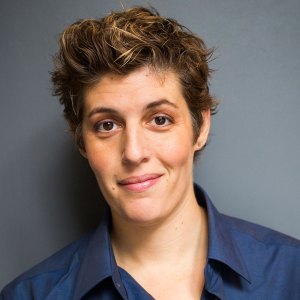
Sally Kohn
From CNN, Rape culture? It’s too real, by Sally Kohn.
We don’t yet know all the facts behind the now-infamous, poorly fact-checked story in Rolling Stone about an alleged gang rape at the University of Virginia. What we do know: Rolling Stone at first blamed the alleged victim, “Jackie” — rather than its own journalistic sloppiness — for so-called “discrepancies” (before changing its callous statement).
And new reporting by the Washington Post does reveal that Jackie’s friends, cited in the story, say they are skeptical about some of the details. Still, they all believe that Jackie experienced something “horrific” that night, in the words of one, and we do know that Jackie stands by her story. Most of the doubts about it were apparently raised by those she’s accusing, including the fraternity and main alleged assailant — whom, I guess, we’re supposed to believe instead. But one other thing we do know is that gang rapes just like what Jackie is alleging do happen — too often, and all over America.
While Rolling Stone’s reporting was clearly shoddy, some writers who initially poked holes in Jackie’s story did so for ideological motives. For instance, even before the reporting lapses were revealed, conservative commentator Jonah Goldberg called Jackie’s story unbelievable. “It is not credible,” Goldberg wrote in the Los Angeles Times. “I don’t believe it.”
Instead, Goldberg insisted, Jackie’s account was “a convenient conversation for an exposé of rape culture,” something, incidentally, Goldberg also doubts to be real. “‘Rape culture’ suggests that there is a large and obvious belief system that condones and enables rape as an end in itself in America,” Goldberg later wrote in National Review. It’s all hogwash, says Goldberg, alleging that the very idea of “rape culture” is just “an elaborate political lie intended to strengthen the hand of activists.”
In other words, whatever the reality of what happened to Jackie, Goldberg and others were skeptical because they simply don’t believe rapes like that happen with the participation of groups of assailants, let alone the complicity of bystanders. This is where they’re mistaken.
Kohn then lists several extreme examples of gang rapes that resemble Jackie’s description–most of which we have covered here.

Also from CNN, In 2014, rape rage drove feminism’s ‘third wave’, by Nina Burleigh.
Historians could look back on this year as the beginning of feminism’s third wave.
The year was momentous for feminism. For the first time, rape victims and their supporters emerged from the shadows in significant numbers and started naming names — to significant effect. Women, their voices amplified by social media and with the support of a small but growing cohort of men, have been exposing and shaming venerable American institutions such as the NFL, Ivy League and non-Ivy League colleges, and the entertainment icon Bill Cosby.
First wave feminists won the right to vote. The second wave got us the right to work. But even with those advances, women have remained fundamentally restricted by the threat and terrible secret of sexual assault.
This year, emboldened and connected by social media, college women formed a powerful grassroots movement that led to universities such as Harvard being publicly named and shamed for not addressing women’s rape reports. They brought the issue of campus sexual assault into the White House, where Barack Obama became the first President to use the words “sexual violence.” The Department of Education released a list of universities under investigation for mishandling sexual violence cases, often letting even repeat predators off with barely a slap on the wrist.
These young women had been silent until social media enabled them to come together, even though thousands of miles apart, share debilitating secrets and then act with the confidence that safety in numbers provided.
I hope you’ll read the rest at the link.
I only hope that irresponsible journalism perpetrated by Rolling Stone and the even more irresponsible reaction to it have not set back the cause of protecting young women on college campuses from sexual violence.

 peej
peej Carissa
 bostonboomer
 dakinikat
 ecocatwoman
 jjlo
jjlo mablue2
 Mama Lopez
 peggysue22
 quixote
 skydancingguestblogger
 Mona (aka Wonk the Vote)



 Sky Dancing
Recent Comments