



One of Donald Trump’s new attorneys proposed an idea in the fall of 2022: The former president’s team could try to arrange a settlement with the Justice Department.
The attorney, Christopher Kise, wanted to quietly approach Justice to see if he could negotiate a settlement that would preclude charges, hoping Attorney General Merrick Garland and the department would want an exit ramp to avoid prosecuting a former president. Kise would hopefully “take the temperature down,” he told others, by promising a professional approach and the return of all documents.
But Trump was not interested after listening to other lawyers who urged a more pugilistic approach, so Kise never approached prosecutors, three people briefed on the matter said. A special counsel was appointed months later.
Kise, a former solicitor general of Florida who was paid $3 million upfront to join Trump’s team last year, declined to comment.
That quiet entreaty last fall was one of many occasions when lawyers and advisers sought to get Trump to take a more cooperative stance in a bid to avoid what happened Friday. The Justice Department unsealed an indictment including more than three dozen criminal counts against Trump for allegedly keeping and hiding classified documents at his Mar-a-Lago Club in Florida.
Thursday Reads
Posted: June 15, 2023 Filed under: Afternoon Reads, Donald Trump | Tags: Chris Kise, creepy dolls, Daniel Penny, Harvard Medical School morgue, Jordan Neely, Katrina MacLean, stolen body parts, Tom Fitton, Walt Nauta 6 CommentsGood Afternoon!!
By now you may have heard about the weird crimes that go on here in Massachusetts. A man who used to manage the morgue at Harvard Medical School has been charged by the Feds with selling body parts.
This is from The New York Times: Harvard Medical School Morgue Manager Sold Body Parts, U.S. Says.
The manager of a morgue at Harvard Medical School has been charged with selling body parts from donated cadavers and allowing buyers to come to the morgue to choose which parts they wanted, federal prosecutors said on Wednesday.
Prosecutors said that the manager, Cedric Lodge, 55, and his wife, Denise Lodge, 63, both of Goffstown, N.H., and three others had been indicted by a federal grand jury in Pennsylvania on charges of conspiracy and interstate transport of stolen goods.
Four grave robbers awaken a ghost, by Joseph Werner
A sixth person, Jeremy Pauley, 41, of Bloomsburg, Pa., was charged separately, prosecutors said. A seventh, Candace Chapman Scott, of Little Rock, Ark., was previously indicted in Arkansas, prosecutors said.
The defendants were all part of a nationwide network that bought and sold human remains stolen from Harvard Medical School and a mortuary in Little Rock where Ms. Scott worked, prosecutors said.
According to federal prosecutors, from 2018 to 2022, Mr. Lodge stole parts from cadavers that had been donated to the medical school and dissected — including heads, brains, skin and bones — before their scheduled cremations.
The Lodges then shipped remains to others, including Katrina Maclean, 44, of Salem, Mass., who owns a store called Kat’s Creepy Creations in Peabody, Mass., and Joshua Taylor, 46, of West Lawn, Pa., prosecutors said.
At times, Mr. Lodge allowed Ms. Maclean, Mr. Taylor and others into the morgue to choose which parts they wanted, prosecutors said. In October 2020, prosecutors said, Ms. Maclean agreed to buy two dissected faces from Mr. Lodge for $600.
More disgusting details about Maclean’s business, if you can handle them:
Prosecutors said that Ms. Maclean stored and sold remains at Kat’s Creepy Creations, which advertises “creepy dolls, oddities” and “bone art” on Instagram.
In June or July of 2021, she shipped human skin to Mr. Pauley and “engaged his services to tan the skin to create leather,” an indictment states.
From September 2018 to July 2021, Mr. Taylor transferred more than $37,000 in electronic payments to Ms. Lodge for body parts that had been stolen by Mr. Lodge, prosecutors said.
In one transaction, Mr. Taylor sent Ms. Lodge $1,000 with a memo that read “head number 7,” prosecutors said. As part of another payment, he sent Ms. Lodge $200 with a memo that read, “braiiiiiins,” prosecutors said.
I’m a horror movie fan, but I don’t want things like this to happen in real life.
From local news source MassLive: Salem artist accused of selling body parts posted about ‘real human skull’ on Instagram.
An artist from Salem who has been accused of buying and selling stolen body parts had posted on Instagram about having a “real human skull” and offering to sell human body parts to the public, in a picture with one of her creations from February 2020.
Katrina MacLean, the bone art, doll-creating and oddity-collecting artist behind Kat’s Creepy Creations, was named in an indictment against Cedric Lodge, who officials said supplied MacLean and others with the body parts, according to court documents….
MacLean was vocal about her artwork on social media and especially on Instagram, where she routinely sold the baby dolls she reworked, according to a comment she responded to on her account.
The Salem artist also sold her art at “oddities markets and expos,” she had said, and had “two cases at Witch City Consignment and Thrift” in the city. Additionally, she is the curator of Freaks Antiques Uniques, a pop-up dark art and oddities market located in Salem, according to her account.
One of MacLean’s creepy dolls
MacLean often posted before-and-after images depicting dolls repainted and dressed in various ways, including with dark coloring around their eyes, blood streaked on their bodies, those made to look dead, clown-style makeup and chilling expressions.
In a post on Feb. 9, 2020, during the time MacLean was believed by officials to be receiving and selling human body parts from Lodge, the Salem woman posted an image of a reworked, “killer clown”-style doll with a skull between its fingers.
The caption on her post read, “Throwback to the set of Hubie Halloween. This doll has been sold and yes that is a real human skull. If you’re in the market for human bones hit me up!”
Even after the FBI searched MacLean’s home in March, according to multiple reports, MacLean continued to post on her Instagram about her reworked dolls and bone art with no apparent signs of issues happening in her personal life. Her most recent post was May 28.
What a weirdo! At one point MacLean revealed more about herself to her readers:
From a March 23, 2020 post, MacLean said, “Meet the maker! I’m Kat, I like to turn regular porcelain dolls into nightmare fuel. I started painting horror dolls back in September of 2018 in an attempt to decorate the store windows @witchcitythrift.
“Everyone wanted to buy the dolls so I began selling them….. I have sold 239 dolls since then! I also make dark art, bone art, human bone jewelry and shadowboxes,” the post went on.
“I joke with my friends and say that my super power is ‘the ability to creepify’ Art and creating is my passion and my therapy. I am also the curator of Freaks Antiques and Uniques dark art and oddity market in Salem MA. Please give my page a follow @freaksantiquesuniques to check out our talented crafters, vendors, artists and creators,” MacLean said.
“Thanks for supporting my twisted creations and I look forward to meeting more of you at upcoming events! Thanks for reading, please share my page with your friends!” the post stated.
A couple of famous attorneys comments on the case:
In other news, Daniel Penny, the man who killed Jordan Neely in a New York subway car has been charged with manslaughter.
CNN: Grand jury votes to indict Marine veteran who held homeless man in fatal chokehold on NYC subway.
Penny, 24, was indicted on second-degree manslaughter charges. The Manhattan District Attorney is expected to formally announce the grand jury’s indictment, which is under seal, on Thursday.
Jordan Neely in 2009. (Andrew Savulich/New York Daily News/Tribune News Service via Getty Images)
Penny surrendered to police last month to face a second-degree manslaughter charge. He has since been out on a $100,000 bond.
Penny held Neely, an unhoused Black man and street artist, in a chokehold on the subway train May 1 after Neely began shouting at passengers that he was hungry and thirsty and didn’t care whether he died. Penny forced 30-year-old Neely to the train floor and restrained him in a chokehold until he stopped breathing. A medical examiner ruled Neely’s death a homicide.
In May, Penny told the New York Post he was “deeply saddened by the loss of life,” amid what has become a contentious homicide case that has highlighted the city’s handling of unhoused people.
Neely was on a New York City Department of Homeless Services list of the city’s homeless with acute needs – sometimes referred to internally as the “Top 50” list – because people on the list tend to disappear, a source told CNN.
Some Trump investigation news:
The Washington Post: Trump rejected lawyers’ efforts to avoid classified documents indictment.
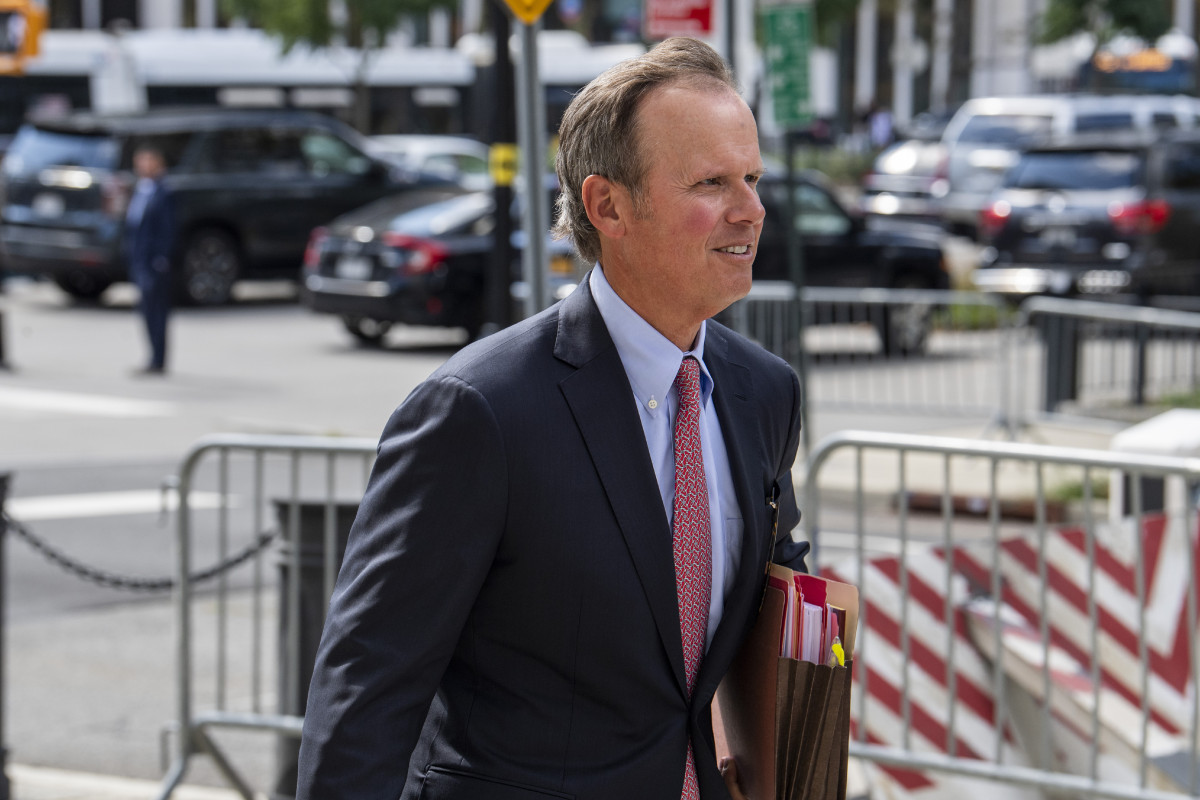
Attorney Chris Kise
Instead of listening to his attorneys, Trump was seeking advice from Tom Fitton, head of the right wing organization Judicial Watch. Fitton is not a lawyer.
“It was a totally unforced error,” said one person close to Trump who has been part of dozens of discussions about the documents. “We didn’t have to be here.”
Trump time and again rejected the advice from lawyers and advisers who urged him to cooperate and instead took the advice of Tom Fitton, the head of the conservative group Judicial Watch, and a range of others who told him he could legally keep the documents and should fight the Justice Department, advisers said. Trump would often cite Fitton to others, and Fitton told some of Trump’s lawyers that Trump could keep the documents, even as they disagreed, the advisers said….
Fitton, who appeared before the grand jury and was questioned about his role in both the Mar-a-Lago documents case and the investigation into the Jan. 6, 2021, attack on the U.S. Capitol, acknowledged he gave the advice to Trump but declined to discuss the details of their conversations. He added that he read the indictment and did not believe it laid out illegal or obstructive conduct. Multiple witnesses said they were asked about Fitton in front of a grand jury and the role he played in Trump’s decisions.
Also from The Washington Post: Will Walt Nauta flip? Trump keeps valet close as question hovers over the case.
The 40-year-old body man from Guam now faces 20 years in prison if convicted of the most serious charge against him. Sporting a wide scarlet tie a few shades deeper than his boss’s candy red one, Nauta, once a Navy sailor, made his first appearance in a Miami federal courthouse Tuesday to face charges that he obstructed justice, withheld and concealed a document from the government, and lied to FBI agents.
A key question hovering over the case now is whether Nauta will cooperate with prosecutors against Trump in hopes of a lesser sentence.
Nauta — who spent Tuesday bizarrely toggling between the roles of co-defendant, equal under the law to Trump, and dutiful “body man,” subservient to the former president — has showed no signs that his loyalty to Trump is waning.
Trump’s lawyers and advisers do not see Nauta as a threat to turn, according to people familiar with the matter, who spoke on the condition of anonymity due to the sensitivity of the criminal case.
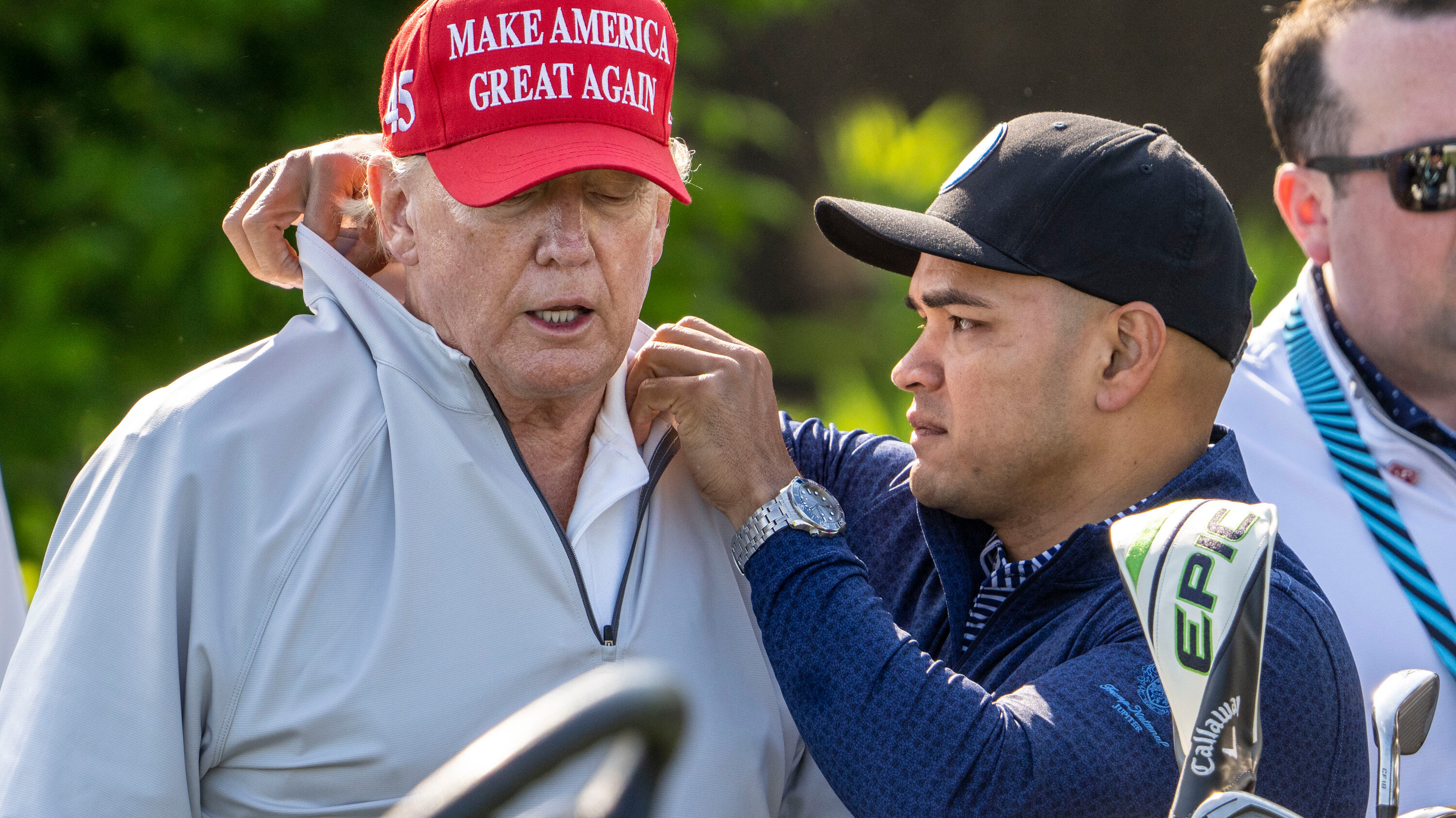
Walt Nauta helping his ancient and frail boss
I have to believe that will change as Nauta begins to realize the jeopardy he is in. He’s a young man, and could end up spending many years in prison.
According to the indictment, Nauta helped bring boxes to Trump’s residence at Mar-a-Lago for his review before Trump returned 15 boxes of documents to the National Archives in January 2022. When interviewed by the FBI in May 2022, however, prosecutors allege Nauta falsely said he had no knowledge of the boxes being taken to Trump’s suite.
He then could be seen on surveillance video removing 64 boxes from the club’s ground floor storage room after Trump received a grand jury subpoena seeking classified records in May 2022. According to the indictment, he was spotted returning only 30 boxes to the room, just before a lawyer for Trump searched the room for documents to turn over to the government in response to the subpoena.
Trump and Nauta spoke repeatedly by phone before Nauta moved the boxes, the indictment alleges. The indictment does not detail what the two discussed. If Nauta chose to cooperate, he could presumably explain what Trump told him on those calls — and offer evidence about whether Trump instructed him to lie to the FBI.
People familiar with the case say that while Nauta spoke more than once with federal investigators, the conversations turned contentious last year when a senior Justice Department lawyer suggested the valet was in legal trouble for some of his statements. Nauta’s lawyers reacted angrily to that suggestion and the relationship never recovered.
CNN reporters figured out a clever way to get the news out of the Miami courthouse on Tuesday, even though electronics–even phones–were not allowed.
Oliver Darcy at CNN: How CNN broke the news from Trump’s arraignment despite a courtroom ban on electronics.
After surveying the courthouse on Monday, CNN’s team hatched a plan — one that ultimately led the news network to become the first to report that Trump was in custody and had entered a not guilty plea on 37 counts related to his alleged mishandling of classified intelligence documents.
It started with hiring a group of local high school students to work as production assistants for the day. Noah Gray, CNN’s senior coordinating producer for special events, had grown up in the Miami area and attended Palmetto Senior High School. He contacted his former teacher, who heads the school’s television production program, and said that CNN wanted to quickly hire some of her students to help with its reporting effort.
On Tuesday, several of the hired students were brought into the courthouse and seated in an overflow room with reporters Tierney Sneed and Hannah Rabinowitz. As the hearing unfolded and developments transpired, Sneed and Rabinowitz jotted down their reporting on notepads, tearing off sheets with urgent news, and handing it to one of the students. The students then ran the reporting to one of their classmates who was standing by at one of the courthouse’s only two pay phones.
But there was a twist: the pay phones at the courthouse could only dial local telephone numbers. To overcome the final obstacle, CNN’s staff devised a plan to have the production assistant dial his own personal cell phone, which was located in a nearby RV that the network was using as a mobile headquarters.
Brad Parks, a CNN regional newsgathering director stationed inside the RV, then picked up the phone, typed up the reporting and relayed the information to the outlet’s Washington, D.C. bureau. Once the reporting was cleared for air by senior leaders in Washington, it was then transmitted to the control room and the network at large. And, from there, it was finally communicated to CNN’s anchors, who delivered the news to viewers across the world.
That’s all I have for you today. I hope you all have a terrific Thursday!
Arraignment Tuesday Reads
Posted: June 13, 2023 Filed under: 2024 Elections, Donald Trump | Tags: classified information, DOJ, Jack Smith, Judge Aileen Cannon, top secret clearances, Trump arraignment in Miami, Trump attorneys 13 Comments Happy Arraignment Day!!
There will be lots of cable news talk today and tonight, but there probably won’t be much excitement at Trump’s arraignment. There are pro- and anti- Trump people demonstrating outside, but we’re unlikely to see another January 6.
Odette Yusef at NPR: Trump is calling for support for his court appearance. The far right may stay away.
When former President Donald Trump posted to his Truth Social platform on Friday, “SEE YOU IN MIAMI ON TUESDAY!!!,” the call eerily echoed the tweets with which he summoned his supporters to Washington, D.C., in the lead-up to Jan. 6, 2021. Then, Trump’s tweet helped to draw tens of thousands to the nation’s capital.
For some, it was interpreted as an invitation to plan and engage in collective violence. But extremism researchers say that this time around, they are not seeing signs of similar, large-scale and detailed planning around Trump’s expected courthouse appearance.
“One of the most striking things that stuck out about January 6 that we’re not seeing now are logistical and tactical maps of buildings, facilities, areas, exit routes,” said Benjamin Decker, CEO of Memetica, a threat intelligence group.
Decker said violent rhetoric on fringe platforms such as far-right Telegram channels, 4chan, Gab, Truth Social, Gettr and Patriots.win has spiked since Trump’s indictment last week. He said it has been particularly concerning to see some of this language targeting Attorney General Merrick Garland and special counsel Jack Smith. But he said the appetite to participate in a mass, in-person event is muted.
“There is a lot of paranoia among Trump supporters about getting arrested,” he said. “And the cost of arrest and potential jail time, that’s still going to deter people … who may be on the fence about being there to exercise their First Amendment rights or being there to participate in mob violence.”
On Monday, a rally in Miami organized by former Florida congressional candidate Laura Loomer seemed to attract more reporters than participants.
Jared Holt, senior research manager at the Institute for Strategic Dialogue, said a handful of other groups appeared to be organizing rallies for Tuesday at the courthouse. But he noted they were attracting skepticism from doubters who accuse the organizers of setting up a “false flag” or federal honeypot trap intended to arrest Trump supporters.
So if there is any violence this afternoon, it will probably be from lone wolves, not organized groups. Let’s hope things stay peaceful.
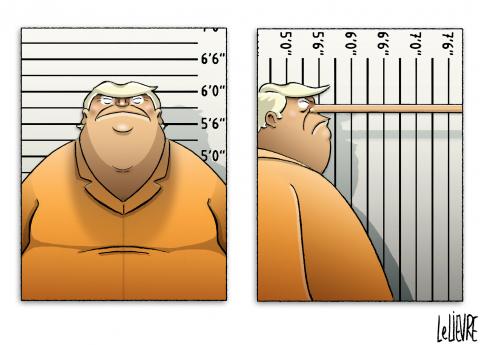 This is from David Kurtz’s Morning Memo at TPM.
I wonder who is televising the speech? I’m going to give that a miss and just look at the clips on Twitter.
Also from the Morning Memo, a discussion of how Trump is reacting to getting his comeuppance: fantasizing about revenge.
The organizing principle of Trump’s re-election campaign first became apparent back in March with his chilling “I am your retribution” speech at CPAC.
I keep coming back to this theme because it animates so much of his rhetoric and has been adopted in both obvious and subtle ways by his closest adherents, and because it poses perhaps the most dire threat to the rule of law if Trump is re-elected.
I bring it back up today because his revenge fantasy is ripening and deepening in alarming ways.
In the immediate aftermath of his indictment in the Mar-a-Lago case, Trump has returned it to the forefront of his own rhetoric, and it’s being picked up again by his boosters. A few of the most egregious examples:
— Trump warned Monday that if re-elected he will name a special prosecutor to “go after” Joe Biden and his family.
“I WILL APPOINT A REAL SPECIAL “PROSECUTOR” TO GO AFTER THE MOST CORRUPT PRESIDENT IN THE HISTORY OF THE USA, JOE BIDEN, THE ENTIRE BIDEN CRIME FAMILY, & ALL OTHERS INVOLVED WITH THE DESTRUCTION OF OUR ELECTIONS, BORDERS, & COUNTRY ITSELF!”
— Trump has targeted Special Counsel Jack Smith’s wife, an echo of what he previously did to deputy FBI Director Andrew McCable’s wife….
By this point, I feel sure you know the many levels these attacks play at: They effectively cow investigators and prosecutors by raising the price and the pain of enforcing the law against him; they keep everyone involved in holding him accountable looking over their shoulders at what happens if Trump wins in 2024; they unleash the less stable and more deranged among us against Trump’s perceived enemies; they are the rallying cry not just for his supporters at election time but for his appointees and subordinates and acolytes throughout government at the local, state and federal level.
Trump’s revenge fantasy – his stated desire to abuse the powers of the office to inflict pain on those who oppose him – is now more toxic, pervasive, and sinister than at any point in his presidency. It is the rocket fuel to his quickening lurch toward fascism, not only because it appeals to his strongman tendencies, but because now as he faces criminal charges on multiple fronts it is inextricably a part of protecting and preserving his own liberty.
Trump is an increasingly desperate man, and he’s telling us exactly what he will do.
In other words, it’s going to get really ugly.
As Dakinikat posted yesterday, pro-Trump Judge Aileen “Loose” Cannon is still assigned to the trial, even though she’s not handling the arraignment. The New York Times’ Charlie Savage has a piece on how Cannon cold screw things up for the DOJ: How a Trump-Appointed Judge Could Influence His Documents Case.
Jack Smith, the special counsel handling the documents investigation into former President Donald J. Trump, vowed to seek “a speedy trial.” But that will be up to Judge Aileen M. Cannon, who will wield considerable power over its calendar, evidence and jury.
Last year, Judge Cannon, a Trump appointee, briefly disrupted the documents investigation by issuing rulings favorable to him when he challenged the F.B.I.’s search of his Florida club and estate, Mar-a-Lago, before a conservative appeals court ruled that she never had legal authority to intervene.
It remains to be seen how she will handle her second turn in the spotlight. The scope of her role before the trial also is unclear: She is not presiding over Mr. Trump’s initial hearing on Tuesday, and could refer some pretrial motions to a magistrate judge who works under her. But here is a closer look at how her decisions as the judge presiding over the trial — like on what can be included and excluded — could affect the case.
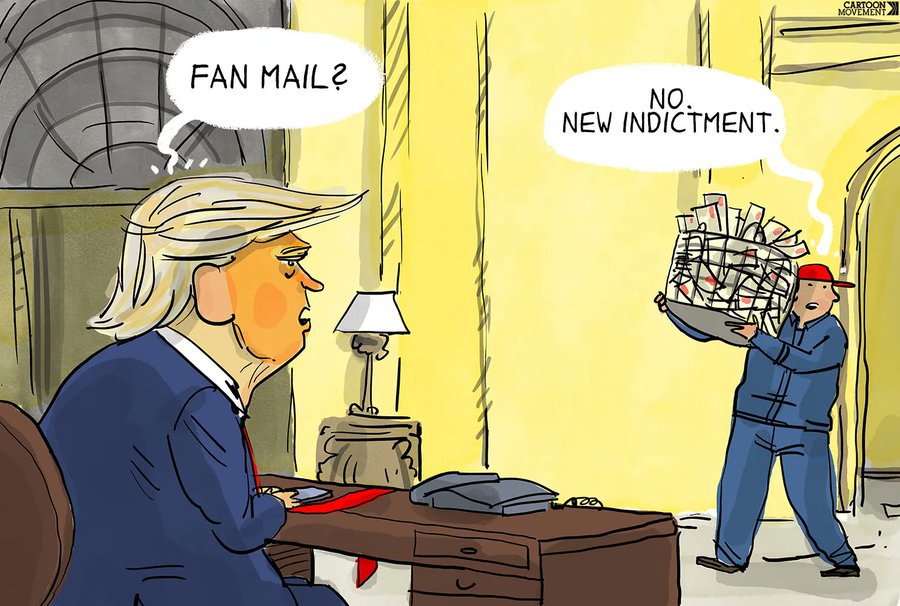 First, she could slow the case down by supporting Trump’s pointless motions. Another problem will be how she handles the classified documents:
Before the trial begins, there is almost certain to be extensive fights behind closed doors over the use of classified evidence, a matter governed by the Classified Information Procedures Act, or CIPA. The law was intended to reduce the opportunities for so-called graymail in criminal cases involving national security, in which defendants threaten to expose sensitive secrets unless prosecutors drop charges against them.
One potential issue: whether the government has to publicly expose all 31 classified documents that are the basis of the 31 counts against Mr. Trump for illegally retaining national-security secrets. Their contents are key evidence for whether they qualify as the type of information protected by the Espionage Act.
CIPA establishes court procedures to sometimes shield sensitive information from the public, including by redacting some documents or substituting summaries. But defense lawyers can argue that they need to discuss their full contents in open court for the trial to be fair.
Read more about this aspect at the link. Another issue could be the attorney-client privilege decisions that have already been decided by a federal judge:
During the investigation, Judge Beryl A. Howell of the Federal District Court for the District of Columbia ruled that the exception applied, forcing Mr. Trump’s lawyers to provide information to the grand jury. But Judge Cannon is not bound by Judge Howell’s decisions when it comes to what information should be presented to a jury.
During pretrial motions, if Mr. Trump’s lawyers ask Judge Cannon to suppress the evidence to protect attorney-client privilege and she does so, prosecutors could appeal — but that would further delay the case.
Other issues discussed in the article: Trump team claims of “prosecutorial misconduct,” jury selection decisions, ‘Rule 29’ Motions to Acquit, and the possibility of a hung jury. Read more details at the NYT link.
Judge Cannon could still recuse herself, but that’s probably unlikely. It will be interesting to see how the DOJ deals with her.
 One serious problem for Trump is that he is having a hard time finding lawyers to defend him. Hugo Lowell at The Guardian: Trump finds no new lawyers for court appearance in Mar-a-Lago case.
Donald Trump is expected to be represented at his first court appearance to face federal criminal charges for retaining national security materials and obstruction of justice by two of his existing lawyers, despite trying to recruit a local Florida lawyer willing to join his legal defense team.
The lawyers making an appearance with Trump on Tuesday will be the top former federal prosecutor Todd Blanche and the former Florida solicitor general Chris Kise, according to people familiar with the matter. Trump’s co-defendant, his valet Walt Nauta, will be represented by Stanley Woodward.
Trump and his legal team spent the afternoon before his arraignment interviewing potential lawyers but the interviews did not result in any joining the team in time for Trump’s initial court appearance scheduled for 3pm ET on Tuesday after several attorneys declined to take him as a client.
Trump has also seemingly been unable to find a specialist national security lawyer, eligible to possess a security clearance, to help him navigate the Espionage Act charges….
After interviewing a slate of potential lawyers at his Trump Doral resort, the former president settled on having Kise appearing as the local counsel admitted to the southern district of Florida as a one-off, with Blanche being sponsored by him to appear pro hac vice, one of the people said.
Here are the attorneys who turned Trump down.
Among the Florida lawyers who turned down Trump was Howard Srebnick, who had expressed an interest in representing the former president at trial as early as last week in part due to the high fees involved, but ultimately was not allowed to after conferring with his law partners, the person said.
The other prominent lawyer who declined to work with Trump was David Markus, who recently defended the Florida Democratic gubernatorial candidate Andrew Gillum against charges that he lied to the FBI and funnelled campaign contributions into his personal accounts, the person said.
Trump and his team have interviewed the corruption attorney Benedict Kuehne, who was indicted in 2008 for money laundering before the charges were dropped, the person said. But he has his own baggage as he faces disbarment for contempt of court in a recent civil suit he lost.
The other interviews are understood to have been with William Barzee, as well as Bruce Zimet, the former chief assistant US attorney in Fort Lauderdale and West Palm Beach.
Hugo Lowell notes that lawyers are concerned about his reputation for being a nightmare client and their concerns that defending Trump could damage their own reputations. They also have to be aware that Trump has lied to and manipulated his attorneys.
Trump is said to still be searching for a lawyer in the mold of Roy Cohn, the ruthless New York fixer who defended and mentored him before he was later disbarred – and the fear of potentially being asked to take similar actions has been a persistent issue.
That fear has loomed large for numerous lawyers Trump’s advisers have contacted, the people said, in particular after Trump might have made Evan Corcoran, another former lawyer who withdrew from his defense in the Mar-a-Lago documents investigation, into a witness against him.
 Marcy Wheeler has a post at Emptywheel about Trump’s need for a lawyer who has or would be able to obtain top secret clearance: Trump Needs Cleared Lawyers, Not Just Any Lawyers.
Trump needs cleared attorneys, and he should (finally) have the lawyers with Espionage Act experience that might have minimized some of the risk he currently faces.
When courts deal with classified documents like this one will, the judge does not need clearance. (This is a separation of powers issue; members of Congress similarly don’t need clearance.) But the lawyers do. At least one and preferably three of Trump’s lawyers will need to be cleared at the elevated levels the FBI Agents who did the search of Mar-a-Lago had to be read into to even conduct the search. As it was, Trusty was Trump’s only attorney with clearance, and he just split.
Not all lawyers want to go through the trouble of getting clearance. Some — possibly including Chris Kise, was a registered agent for Venezuela in recent years — may not be able to get cleared at that level.
Donald Trump’s trouble finding legal representation is no longer simply the comedy of self-destructiveness it has been for years. Starting today (or shortly thereafter), there will be new obligations and exposures for lawyers representing him.
Trump’s search for a lawyer is not just about finding people who are members of the bar in SDFL. He also needs to find lawyers who are willing to put their security clearance and their reputations at risk on a case where Trump has already been wildly misleading his attorneys.
In this post, Marcy also addresses in detail the ways in which he has lost lawyers by misleading and lying to them, as well as asking them to do illegal things. Read all about it at the link.
More interesting stories to check out
Sam Brodey at The Daily Beast: Dems Have a Trump Indictment Strategy: Shut Your Damn Mouth.
The New York Times: How Trump Plans to Beat His Indictment, Politically.
Barbara McQuade at MSNBC: New indictment proves Trump is a triple threat to national security.
Eric Levitz at New York Magazine: The DOJ Went Easy on Trump for Political Reasons.
Geraldine DeRuiter at The Washington Post: We need to talk about Trump’s bathroom chandelier.
The Day Before Indictments Reads: “One Set of Laws”
Posted: June 12, 2023 Filed under: just because | Tags: Trump Family Crime Syndicate, Trump Indictment Day, Trump is in peril 3 Comments
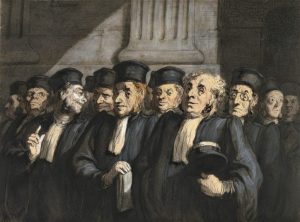
Attorney Reading
Honore Daumier
Good Day, Sky Dancing!
We’ve planned a perp watch party here in my hood for tomorrow. We’re all excited that it’s finally happening. Here are some reads to get you ready for this big week!
We’ve heard a lot about the assignment of Judge Loose Cannon to the Case. Here is some information on what could possibly happen with that. BB suggested the best source for what’s going down with that, and the week is from Civil Discourse with Joyce Vance. This is her SubStack. I’ll focus on tomorrow’s Indictment. It will be handled by Judge Jonathan Goodman. This does not mean Judge Loose Cannon is gone.
We’re told Tuesday’s arraignments are being handled by Magistrate Judge Jonathan Goodman in the courthouse in Miami, rather than in the Fort Pierce Division where Cannon sits. District judges can and do on occasion handle arraignments themselves in high-profile cases—it happened in this district in a case involving Colombian drug kingpins. But here, it’s likely that arraignment will proceed before the magistrate judge in a perfunctory matter, and Trump will enter his plea of not guilty after being processed, fingerprinted, and submitting to a mug shot. The process is likely to be highly orchestrated by the court, the Marshals Service, and the Secret Service, with everyone on high alert because of Trump’s social media posts, reminiscent of the “will be wild” tweet ahead of January 6. As the New York Times detailed, these latest posts have set off a cascade of troubling calls to “support” Trump.
Vance wrote quite a bit of what we might have to see with the appointment of Judge Loose Cannon.
Since we’re talking about judicial discretion, there is lots of concern about the assignment of federal Judge Aileen Cannon to this case. And rightly so given the way she mishandled Trump’s lawsuit after the search, designed to delay or prevent the investigation. Cannon was nominated to the bench by Trump and confirmed after he lost the election. However, there was nothing nefarious about Cannon’s selection. The clerk’s office uses a computerized random selection process. It was the bad luck of the draw.
Among other things, judges are supposed to carefully protect the integrity of the judicial system and the public’s confidence in it. That’s the reason for rules about recusal. The rules come down to requiring recusal where “the judge’s impartiality might reasonably be questioned.” This isn’t a casual standard requiring constant recusals, which would be disruptive. It’s reserved for situations where an objective observer looking at a case would lack confidence the judge could act fairly, for instance, if they had a financial interest in the outcome or a family member were a lawyer for one side.
In less obvious situations, a decision about when a judge should recuse is made on a case-by-case basis. In a case I handled in 2006, U.S. v. Martin, the 11th Circuit Court of Appeals considered an unusual situation involving sentencing and determined that a judge needed to step aside. The judge had sentenced the case, was appealed and reversed, and had resentenced. Considering the judge’s second bite at the appeal, the court reflected, “Finally, based on our review of the record and the elements that this Court considers in determining whether to reassign a case to a different judge where there is no indication of actual bias, see United States v. Torkington, 874 F.2d 1441, 1447 (11th Cir. 1989) (per curiam), we have determined it wiser to remand this case with instructions to reassign it to a different judge. This is the second appeal in Martin’s case and the second time we have had to reverse the sentence that the district court gave Martin…In light of the two reversals in this case and three other appeals in which we have reversed the same judge for extraordinary downward departures that were without a valid basis in the record, we find it likely that ‘the original judge would have difficulty putting his previous views and findings aside.’” It’s unusual to find that a judge’s decisions can form the basis for recusal, but it did in Martin.
When Cannon handled the earlier Trump matter, the 11th Circuit ruled against her twice. The first time was on a preliminary motion after she limited the ways the government could use classified documents seized—in an entirely lawful and normal fashion—from Mar-a-Lago and seriously hampered the government’s investigation (as well as unnecessarily expanding the universe of people with access to classified material). When the Court decided the case on its full merits, they resoundingly reversed Cannon and were sharply critical of the way she handled the case in a fashion that went beyond the typical reversal where the appellate court thinks the district judge got it wrong. It’s not infrequent for that to happen. There are many close calls, and judges acting in good faith can disagree. The tenor of the 11th Circuit’s opinion reversing Cannon was different, finding she lacked jurisdiction and insinuating it was not a particularly close call. She reached a result that was favorable to Trump by all but ignoring the law, refusing to apply it, and rejecting the government’s positions without explaining why. It was the sort of extreme error that rises to the level of Martin, calling into question both whether the judge could set aside her previous views and whether a reasonable person would question her ability to handle the case fairly. Cannon had gone so far as to say her decisions were “inherently impacted by the position formerly held by the plaintiff,” i.e., that he had been the president.
All of this forms a solid basis for Cannon to decide that she should recuse. And she could couch it in this manner, that although she is confident she could handle the case fairly, she is stepping aside to ensure the public has confidence in this highly important matter. That wouldn’t guarantee a judge appointed by a Democratic president would take over—it could even be another Trump appointee. But it would ameliorate specific concerns about a specific judge that would so overtake the case that it would be impossible to have confidence in the outcome. Trump might even argue that she was bending over backward to rule against him in order to protect her own reputation. No one wins, including the judge herself, if she remains on the case. But it’s up to her right now.
What do we make of the fact that Cannon is a Trump appointee? Normally, that’s just not a factor. Every judge is appointed by a president from one party or another, and judges are often called upon to rule in favor of or against a policy of the president who appointed them. It’s not viewed as a ground for recusal. This may be a little different because it’s a criminal case involving the president who appointed her. A judge probably would recuse from a criminal case involving their former boss or mentor. That’s not precisely the relationship here, and, of course, there is no exact case law since Trump is the first ever president to be indicted. But judges err on the side of caution to avoid the appearance of impropriety, and here, combined with her conduct in the earlier case, this might be a factor to consider, although it’s unlikely it would suffice on its own.
If Cannon doesn’t recuse voluntarily, prosecutors will likely have to file a motion requesting the recusal to take the issue forward. This is always a difficult move for prosecutors, one to be avoided unless the circumstances are extreme, like they are here. Under the rules, if a judge denies a request by one of the parties that they recuse, “the Judge shall issue a ruling on the record, stating the grounds for denying the request.” Provoking that statement alone would be worthwhile.
Most likely though, prosecutors will wait for Cannon to make an objectionable ruling that can be appealed pre-trial, and use that opportunity to request that the 11th Circuit order the Chief Justice in the Southern District of Florida to reassign the case on remand. Of course, this means delay, and delay here works in Trump’s favor. None of this is ideal, by any means. But this is the type of situation where the 11th Circuit protects its integrity and reputation by ordering recalcitrant judges to recuse. Prosecutors are likely to get their opportunity because Cannon, whose appointment of the special master and rulings in the earlier matter already demonstrated some inexperience and discomfort handling highly sensitive classified matters, will be called upon to make decisions and set appropriate procedures under a complicated statute, CIPA, the Classified Information Procedures Act, that governs the handling of classified material in a trial setting. Because those decisions can be appealed immediately, it seem likely that the government will need to take an appeal at some point and that will give it the opportunity to request recusal.
The selection of Judge Cannon unnecessarily complicates the trial of what would be a straightforward case of mishandling classified documents and obstructing an investigation into that conduct if the defendant were anyone other than the former president of the United States. Trump seems to get all the breaks, and this is a difficult one to stomach. But I continue to think the courts will sort this out, one way or the other.
 The Washington Post discusses the possibility of violence in Miami due to Trump’s armed and hysterical supporters. This analysis is offered by Mark Berman. “Trump’s Miami court date brings fears of violence, rally plans. Law enforcement officials are monitoring online threats and potential gatherings of far-right extremists and marshaling more officers.”
Federal and local authorities on Sunday ramped up security preparations ahead of Donald Trump’s first appearance in federal court on criminal charges here, monitoring online threats and potential gatherings of far-right extremists while marshaling more police officers to be on duty.
Escalating violent rhetoric in online forums, coupled with defiant statements from the former president and his political allies, have put law enforcement officials on alert for potential disruptions ahead of Trump’s court appearance. He is facing a 37-count federal indictment, 31 of which allege he willfully kept classified documents in his possession after leaving the White House.
Authorities were monitoring plans for pro-Trump rallies in Miami, including one outside the federal courthouse on Tuesday purportedly organized by a local chapter of the Proud Boys, a far-right extremist group, some leaders of which were found guilty of seditious conspiracy in the Jan. 6, 2021, attack on the U.S. Capitol.
This article by interviewer and Executive Editor Andrew O’Hehir–writing for Slate–suggests Trump is in deep trouble. “Trump’s “peril is extreme”: Former federal prosecutor on the historic Mar-a-Lago indictment. Charges against Trump almost “open and shut,” says Dennis Aftergut — and prosecutors will ask for prison time.”
I’ve read a fair number of criminal indictments in 30 years as a journalist, and by any standard this one seems extraordinary. I’d like to ask you, as a former federal prosecutor, how you perceived it in a number of different ways. First of all, what was your general impression of Jack Smith’s indictment overall — as a work of legal argument and narrative, and also as an event in legal and political history?
The narrative here is one of betrayal of a nation and its most precious secrets by a man who was the commander in chief for four years and who seeks that mantle again. There’s never been anything remotely like it.
Just think about it. The disregard for the lives, the risk and the individual courage that goes into gathering information vital to our national security and our safety is incomprehensible. There is no way for the brain to wrap itself around what is described in this indictment, the violation of sacred trust, a one-man demolition crew working against the American intelligence system that has been built, brick by brick, over 80 years.
With the kind of conduct alleged in the indictment by the former occupant of the highest office in the land, how is any foreign intelligence service supposed to trust us to keep information confidential, to protect its methods of collecting our enemies’ secrets or the identity of its sources?
It could take years, if not decades, to recover from the damage.
In more concrete terms, how does that conclusion emerge from this indictment?
Put together three basic pieces: 1) The bone-chilling nature of the materials unlawfully taken from the White House; 2) the apparent exposure of those materials at Mar-a-Lago; and 3) what we know from public reporting about security there and our nation’s enemies whose agents may have breached it.
First, focus on paragraph 77. It lists, with brief descriptions, 31 documents, many of which have what are called “compartmentalized” Top Secret markings.
“Compartmentalized” means “information about certain intelligence sources and methods.” “Top Secret” signifies information that would cause, if revealed, exceptionally grave harm to the nation’s security. Compartmentalized top secret documents are kept in secure structures, or SCIFs — the fortified rooms that protect against electronic surveillance or other efforts by outside parties to obtain the information.
Examples on the list of materials that Trump took to Mar-a-Lago include documents “concerning nuclear weaponry of the United States,” “nuclear capabilities of a foreign country” — which could be North Korea, Russia, China or Iran, we just don’t know. The materials Trump possessed at his resort home included documents “concerning military attacks by a foreign country,” “timeline and details of attack on a foreign country,” and “military contingency planning of the United States.”
These are materials that almost anyone hostile to the interests of the United States would love to get their hands on. Which is why they should never be held at easily penetrated places like Mar-a-Lago.
Second, the indictment describes — and indeed shows, via an abundance of photographs — boxes of documents stacked in exposed locations: A ballroom stage, a bathroom shower and in one instance, a Secret document “concerning military capabilities of a foreign country” that had spilled out of its box and onto the floor in a storage room. (The indictment does not say whether the room was locked at the time.)
Visual journalist Art Lien says Supreme Court Justice Sandra Day O’Connor (center top) was known for being hard to capture on paper.
I would really recommend you read the complete interview.
David Aaron from Just Security uses U.S. sentencing guidelines to estimate how much jail time Trump might face.
The base level for willfully retaining national defense information in violation of 18 U.S.C. § 793(e) is 24 — but increases to 29 if the information at issue was classified Top Secret, as alleged in the Trump indictment (§2M3.3). A defendant’s leadership role in a crime could add 4 points if the defendant was an “organizer or leader” of criminal conduct that involved at least five people or was “otherwise extensive” (for example, conduct that relied on the assistance of unwitting outsiders), or 2 points if the defendant organized or led criminal activity that involved fewer people and was not as extensive (§3B1.1). The Indictment alleges the defendant was the organizer or leader of criminal conduct that involved at least five other people, whether or not all were witting (Waltine Nauta, Employee 2, and Attorneys 1-3), so the defendant’s attorneys will consider calculations based on the 4-point increase. Conversely, point deductions are available if a defendant had a minimal or minor role (§3B1.2).
The Guidelines add 2 points for a defendant’s abuse of public or private trust to commit the crime (§3B1.3). Courts routinely add those extra points in Section 793(e) cases because the defendant usually came into possession of national defense information while in a position of public trust, and indeed by virtue of that position. Two additional points are added for a defendant’s willful obstruction of the investigation, prosecution, or sentencing of the offense at issue (§3C1.1). (The obstruction points are not applied to violations of statutes that themselves prohibit obstruction except in certain circumstances.)
A defendant’s acceptance of responsibility, such as by pleading guilty, provides a 2-point reduction in offense level. An additional 1-point reduction is available at the prosecutor’s discretion (if applied, the court would also need to approve the basis for the reduction following a motion from the government).
For an individual count of 18 U.S.C. § 793(e), then, a potential offense level could consist of:
Base level with Top Secret: 29
Leadership role: 4
Abuse of trust: 2
Obstruction: 2
Total: 37For a defendant with no prior criminal convictions, an offense level of 37 yields 210 to 262 months (17 1/2 to almost 22 years). A defendant who accepted responsibility could reduce that range to 151 to 188 months if the prosecution agreed to deduct the third point.
The base levels for the other charges in the Indictment are lower. Section 2J1.2 applies to “obstruction of justice” charges such as the Tampering and related Conspiracy counts, the Concealment count, and the Scheme to Conceal and False Statements counts. The base level for these crimes begins at 14, but that increases to 17 if the offense “resulted in substantial interference with the administration of justice.” The base further increases to 19 if the court finds that the offense was extensive or involved “any essential or especially probative record,” which the allegations in the Indictment, if proved, would likely support. To account for obstruction of investigations of particularly serious crimes, however, the Guidelines direct the court to apply Section 2X3.1 instead of 2J1.2 if, as alleged in the Indictment, the offense involved obstructing a criminal investigation and Section 2X3.1 would yield a higher offense level. Section 2X3.1 provides a base level of 6 below the underlying offense, which in a Section 793(e) investigation involving Top Secret documents would result in a level of 23. The “leadership role” and “abuse of trust” increases would still apply, but the obstruction increase does not apply to sentences calculated based on Sections 2J1.2 or 2X3.1. As a result, for a conviction of one of these counts, a potential offense level could consist of the following (I’ve included alternate calculations based on 2J1.2 to illustrate the difference in guidelines)…
Base level using 2X3.1: 23 (or 19, as alleged, under 2J1.2)
Leadership role: 4
Abuse of trust: 2
Total: 29 (or 25)For a defendant with no prior criminal convictions, an offense level of 29 yields 87 to 108 months (7 1/4 to 9 years) and an offense level of 25 yields 57 to 71 months (4 3/4 to almost 6 years). A defendant who accepted responsibility could reduce those ranges to either 63 to 78 months or 41 to 51 months if the prosecution agreed to deduct the third point.
The question of whether sentences would run concurrently or consecutively has come up. The answer will depend on a variety of factors, not least of which include the evidence at trial, the count or counts of conviction, and “grouping” under Section 3D1.2. Section 5G1.2, which addresses sentencing on multiple counts, provides that if the sentence imposed on the count with the highest statutory maximum is sufficient to implement the total punishment, then the sentences on multiple counts will run concurrently. But if the sentence on the count with the highest statutory maximum is insufficient, the court can run sentences consecutively to achieve the target sentence.
No wonder Melania took off for New York City Today!
This has gotten very long. So, we should just take it all down the thread!
What’s on your reading and blogging list today?
Lazy Caturday Reads: The Indictments
Posted: June 10, 2023 Filed under: cat art, caturday, Donald Trump | Tags: Civil War, DOJ, Indictments of Trump and Nauta, MAGA crazies, national security, Special Counsel Jack Smith, Walt Nauta 16 CommentsHappy Caturday!!

Greek Kitties, by Timothy Adam Matthews
Honestly, I don’t even know where to begin today. What is happening in U.S. politics right now is beyond anything we have ever experienced as a country, with the exception of the Civil War.
A former president of the U.S. tried to overthrow his own government in order to prevent a transition to a new president after he lost an election. He incited an attempted coup; and when that failed, he tried to overthrow the results of presidential votes in several states.
Finally, when all that failed to keep him in office, he stole hundreds of government documents and stored them in his private club in locations in which all kinds of people could have access to them. He displayed some of the documents to people without clearance to see them and, for all we know, could have given classified information to other countries.
It’s simply breathtaking.
Now the former president has been indicted for serious crimes, and his political party is still supporting him and vowing revenge on our most important institutions. Could it get any worse? The answer is yes, of course it could. He could end up winning his party’s 2024 nomination and being elected president again, even if he is in prison by that time.
So that’s where we stand right now. I’ll share some reads, but there is no way I have the time or space to include everything that’s out there.
First, here is a pdf of the indictment, if you’d like to read it. And here is an annotated version by Charlie Savage at the New York Times: The Trump Classified Documents Indictment, Annotated.
I think this description of the situation we are in by Tom Nichols at The Atlantic is very good. I could only read it in my email, because I’m not a subscriber. The title: Trump’s Indictment Reveals a National-Security Nightmare.
The charges—38 of them—are a big deal. And before the GOP gaslighting reaches supernova levels, let’s also bear in mind that what Trump actually did is a big deal too. He claimed that he declassified, by fiat, boxes of classified information, and then appears to have left all of that material sitting in ballrooms, bedrooms, and bathrooms. To this day, he insists that he had every right to do whatever he wanted with America’s secrets. Fortunately, the court has unsealed the indictment, because Americans need to know, and care, about the magnitude of Trump’s alleged offenses.
To understand the severity of the charges against Trump, consider a thought experiment: Imagine that Vladimir Putin is one day driven from the Kremlin, perhaps in a coup or in the face of a popular revolt. He jumps into his limousine and heads for self-imposed exile in a remote dacha. His trunk is full of secret documents that he decided belong to him, including details of the Russian nuclear deterrent and Russia’s military weaknesses.
Now imagine how valuable those boxes would be to any intelligence organization in the world. I spent the early years of my career analyzing Soviet and Russian documents as an academic Sovietologist, and I would have loved to see such materials. Small, seemingly trivial details—something as innocuous as a desk calendar or a notepad—might not mean much to a layperson, but to a professional, they could be pure gold. To get even a peek at such Russian materials would be an intelligence triumph.
By Timothy Adams Matthews
But of course, I would never have been able to lay my hands on them, because a cache of such immense importance, if U.S. operatives spirited any of it out of Russia, would have been secured in a vault somewhere deep in the CIA. Trump, meanwhile, left highly sensitive American documents lying around at a golf resort like practice balls on the driving range. According to the indictment:
“The Mar-a-Lago Club was an active social club, which, between January 2021 and August 2022, hosted events for tens of thousands of members and guests. After TRUMP’s presidency, The Mar-a-Lago Club was not an authorized location for the storage, possession, review, display, or discussion of classified documents. Nevertheless, TRUMP stored his boxes containing classified documents in various locations at The Mar-a-Lago Club—including in a ballroom, a bathroom and shower, an office space, his bedroom, and a storage room.”
Actually, it might be harder to steal practice balls. “The Storage Room,” the indictment notes, “was near the liquor supply closet, linen room, lock shop, and various other rooms.” These are not exactly low-traffic areas. Worse yet, the indictment asserts that Trump had some of these documents at his club in New Jersey, where he showed files to people who had no business seeing them. (One of them, according to the indictment, was something Trump claimed was a plan of attack on a foreign country prepared for him by the Department of Defense and a senior military official.)

If you can access The Atlantic website, you can read more, but I think that is a good summary of the seriousness of what this country is facing.
Here are a some long reads that address various aspects of the Trump indictment and it’s possible effects on U.S. politics and national security.
For more details on the national security situation, read this piece at Just Security: National Security Implications of Trump’s Indictment: A Damage Assessment.
At The Washington Post, Rachael Weiner writes about the specific charges: Here are the 37 charges against Trump and what they mean.
One of my least favorite New York Times writers, Peter Baker, evaluates what the indictment means for President Biden and the U.S. justice system: Trump’s Case Puts the Justice System on Trial, in a Test of Public Credibility. Why am I not surprised that this is what Baker chose to write about? Still, it’s worth considering.
More helpful reads, with excerpts:
John Gerstein at Politico: The startling, damning details in the Trump indictment.
Classified documents found in a shower. A clumsy effort to move boxes and hide them from the FBI. A damaging admission, caught on tape. And Donald Trump’s own public statements, used against him.
Those are some of the details in the indictment charging Trump and a longtime aide with an extraordinary scheme to hoard national secrets that Trump took to his Mar-a-Lago estate after leaving the White House.
Here are some of the most notable revelations.
By Timothy Adam Matthews
Showing off military plans
On at least two occasions after leaving office, Trump displayed classified documents to others visiting him at his golf club in Bedminster, New Jersey, the indictment alleges. In July 2021, Trump showed a writer, a publisher and two staff members a “plan of attack” that he said had been prepared for him by the U.S. military, the charges say. The audio-recorded meeting reportedly involved a document that Joint Chiefs of Staff Chairman Mark Milley drafted about Iran.
Trump allegedly made a potentially damning admission at that session, saying he could have declassified the document while he was president but “now I can’t.”
A longtime aide turned co-conspirator
Trump isn’t the only person facing criminal charges over the classified documents fiasco: His longtime aide and “body man,” Walt Nauta, was also hit with six felony counts including obstruction of justice and making false statements to the FBI. The indictment says Trump instructed Nauta to move boxes containing classified documents in order to conceal them from both Trump’s own lawyers and the FBI.
Prosecutors accused Nauta of lying months ago and pressured him to cooperate in the investigation, a source familiar with the situation told POLITICO, but the charges unsealed Friday indicate that he and prosecutors didn’t come to terms on a deal – at least not yet.
Classified docs in a bathroom
The indictment says that Mar-a-Lago was a particularly vulnerable location for the classified documents because it’s “an active social club [that] hosted events for tens of thousands of members and guests” – a far cry from the closely guarded “sensitive compartmented information facility,” or SCIF, that is typically used to store the most sensitive national security secrets.
Trump has railed at the FBI for spreading classified documents across the floor of a closet during a search of Mar-a-Lago last August. But prosecutors say Trump’s own storage of the documents was just as sloppy. The indictment says some of the classified records at Mar-a-Lago were stored in “a ballroom, a bathroom and shower [and] his bedroom.”
Spilling secrets, literally
Other details from the indictment emphasize the haphazard nature with which sensitive government documents were strewn around the estate. The indictment alleges that, on at least one occasion in December 2021, boxes containing a mix of classified and unclassified records “spilled onto the floor” of a storage room. Helpfully for prosecutors, Nauta allegedly texted a photo of the scene to another Trump aide.
One of the documents, classified “Secret” and marked for release only to U.S. officials and close allies, discussed “military capabilities of a foreign country,” the indictment says.

More at the link
 The Daily Beast: Photographic Proof: Feds Found Boxes of Classified Docs All Over Mar-a-Lago.
The 37-count indictment accusing Donald Trump of illegally hoarding classified documents used a wealth of surveillance footage, private conversations, employees’ text messages, audio-taped meetings, and witness statements to make a damning case.
But the 44-page document also included a half-dozen images of the documents themselves, stacked in boxes next to a toilet, spilling out onto the floor of a storage room, and piled up in rows on the stage of a ballroom at Trump’s resort in South Florida….
In one exchange outlined in the indictment and backed up with a photograph, Trump employees discussed moving some of Trump’s boxes of documents out of a Mar-a-Lago business center and into a bathroom instead so staff could use the business center as an office.
“Woah!! Ok so potus specifically asked Walt for those boxes to be in the business center because they are his ‘papers,’” one Trump employee texted to another, referencing Walt Nauta.
The two employees then went back and forth discussing what they could move to storage. “There is still a little room in the shower where his other stuff is,” one employee texted. “Is it only his papers he cares about? Theres some other stuff in there that are not papers. Could that go to storage? Or does he want everything in there on property.”
“Yes,” the second employee responds. “Anything that’s not the beautiful mind paper boxes can definitely go to storage.”
In another instance in May 2021, Trump told staff to move some of his boxes to a storage room, the indictment says. Images show the boxes stacked up in the storage room as well as a hallway leading to the room that prosecutors say could easily be reached from Mar-a-Lago’s pool patio. The storage room was right next to a liquor supply closet and a linen room.
In December 2021, Trump’s personal aide, Walt Nauta, found that some of those 80 boxes had fallen over and their contents spilled out on the floor.
Among the papers scattered around the storage room were, according to the indictment, a document marked “SECRET//REL TO USA//FVEY” which denoted information releasable only to the Five Eyes intelligence alliance of the U.S., the U.K., Australia, Canada and New Zealand.
You might want to read what Marcy Wheeler of Emptywheel has to say about the indictment: The Mar-a-Lago Indictment is a Tactical Nuke.
I’ve become convinced that what I will call the Mar-a-Lago indictment — because I doubt this will be the only stolen documents one — is a tactical nuke: A massive tool, but simply a tactical one.
As I’ve laid out, it charges 31 counts of Espionage Act violations, each carrying a 10-year sentence and most sure to get enhancements for how sensitive the stolen documents are, as well as seven obstruction-related charges, four of which carry 20-year sentences. The obstruction-related charges would group at sentencing (meaning they’d really carry 20 year sentence total), but Espionage Act charges often don’t and could draw consecutive sentences: meaning Trump could be facing a max sentence of 330 years. Walt Nauta is really facing 20 years max — though probably around three or four years.
New York Kitty, by Timothy Adam Matthews
Obviously, Trump won’t serve a 330 year sentence, not least because Trump is mortal, already 76, and has eaten far too many burgers in his life.
For his part, Nauta should look on the bright side! He has not, yet, been charged with 18 USC 793(g), conspiring with Trump to hoard all those classified documents, though the overt acts in count 32, the conspiracy to obstruct count, would certainly fulfill the elements of offense of a conspiracy to hoard classified documents. If Nauta were to be charged under 793(g), he too would be facing a veritable life sentence, all for helping his boss steal the nation’s secrets. And for Nauta, who is in his 40s and healthy enough to lug dozens of boxes around Trump’s beach resort, that life sentence would last a lot longer than it would for Trump.
And that’s something to help understand how this is tactical.
I first started thinking that might be true when I saw Jack Smith’s statement.
He emphasized:
- A grand jury in Florida voted out the indictment
- The gravity of the crimes
- The talent and ethics of his prosecutors
- That Trump and Walt Nauta are presumed innocent
- He will seek a Speedy Trial
- A Florida jury will hear this case
- The dedication of FBI Agents
He packed a lot in fewer than three minutes, but the thing that surprised me was his promise for a Speedy Trial. He effectively said he wants to try this case, charging 31 counts of the Espionage Act, within 70 days.
That means the trial would start around August 20, and last — per one of the filings in the docket — 21 days, through mid-September. While all the other GOP candidates were on a debate stage, Trump would be in South Florida, watching as his closest aides described how he venally refused to give boxes and boxes of the nation’s secrets back.
There’s not a chance in hell that will happen, certainly not for Trump. Even if Trump already had at least three cleared attorneys with experience defending Espionage Act cases, that wouldn’t happen, because the CIPA process for this case, the fight over what classified evidence would be available and how it would be presented at trial, would last at least six months. And as of yesterday, he has just one lawyer on this case, Todd Blanche, who is also defending Trump in the New York State case.

There’s much more to read and think about at the link. Her main point seems to be that Smith wants to convince Walt Nauta to testify against Trump.
The New York Times’ Maggie Haberman: Who Is Walt Nauta, the Other Person Indicted Along With Trump?
Walt Nauta, the only other person indicted along with former President Donald J. Trump, has been serving as his personal aide after previously working for him in the White House.
A native of Guam, Mr. Nauta enlisted in the military at some point and was a military aide working as a White House valet while Mr. Trump was president.
The valets in the White House have unusual proximity to the commander in chief, encountering them at moments of vulnerability, including at meals and on foreign trips.
Mr. Trump and Mr. Nauta forged a bond during the Trump administration, and when the term ended, Mr. Nauta retired and went to go work for Mr. Trump personally.
A Closer Look, by Timothy Adam Matthews
He was one of the very few members of Mr. Trump’s post-presidential office when Mr. Trump first returned to private life at his club, Mar-a-Lago, in Palm Beach, Fla. There, Mr. Nauta resumed the kind of personal chores that he had helped Mr. Trump with while he was president.
Mr. Nauta has been seen as deeply loyal to Mr. Trump by other aides.
But he attracted the attention of the government for his appearance on security camera footage from the club, which was subpoenaed by prosecutors, moving boxes in and out of a basement storage room after a grand jury subpoena.
In interviews with government officials, according to the indictment, he gave false testimony about whether he had moved boxes to Mr. Trump’s residence earlier in the year. In reality, according to the indictment, Mr. Nauta brought several boxes to Mr. Trump’s residence from the storage room at a time when National Archives officials were seeking the return of presidential material, but he told investigators he didn’t.

Read the rest at the NYT.
As I’m sure you know, Republicans in the House are vociferously defending Trump. For example:
Former President Donald Trump’s indictment on charges of mishandling classified documents is set to play out in a federal court in Florida. But hundreds of miles away, part of Trump’s defense is well underway in a different venue — the halls of Congress, where Republicans have been preparing for months to wage an aggressive counter-offensive against the Justice Department.
The federal indictment against Trump, unsealed Friday, includes 37 counts, including allegations that the former president intentionally possessed classified documents, showed them off to visitors, willfully defied Justice Department demands to return them and made false statements to federal authorities about them. The evidence details Trump’s own words and actions as recounted by lawyers, close aides and other witnesses.
The Republican campaign to discredit federal prosecutors skims over the substance of those charges, which were brought by a grand jury in Florida. GOP lawmakers are instead working, as they have for several years, to foster a broader argument that law enforcement — and President Joe Biden — are conspiring against the former president and possible Republican nominee for president in 2024.
“Today is indeed a dark day for the United States of America,” tweeted House Speaker Kevin McCarthy, soon after Trump said on his social media platform Thursday night that an indictment was coming. McCarthy blamed Biden, who has declined to comment on the case and said he is not at all involved in the Justice Department’s decisions.
Republicans “will hold this brazen weaponization of power accountable.”
Republican lawmakers in the House have already laid extensive groundwork for the effort to defend Trump since taking the majority in January. A near constant string of hearings featuring former FBI agents, Twitter executives and federal officials have sought to paint the narrative of a corrupt government using its powers against Trump and the right. A GOP-led House subcommittee on the “weaponization” of government is probing the Justice Department and other government agencies, while at the same time Republicans are investigating Biden’s son Hunter Biden.
“It’s a sad day for America,” Senate Judiciary Committee Chairman Jim Jordan of Ohio, a leading Trump defender and ally in the House, said in a statement on Thursday evening. “God bless President Trump.”
And of course, the MAGA crazies are calling for civil war.
Tim Dickenson at Rolling Stone: Trump Extremists Demand Civil War, Mass Murder After New Indictment.
EXTREME SUPPORTERS OF Donald Trump have met news of his federal indictment with visions of violence and retribution.
At The Donald, a forum for ultra-MAGA Trump supporters, users demanded public executions and other forms of lynching to avenge the federal prosecution of Trump, for the alleged mishandling of state secrets at Mar a Lago after he was no longer president.
By Timothy Adam Matthews
The calls for violence appeared in comment threads, responding to posts on the front page of the forum Thursday night, after news broke of Trump’s latest legal troubles. The most extreme comments were written in response to a fanciful post insisting “the only solution” to DOJ’s efforts to lock up Trump would be to vote him back into the presidency, so Trump could “pardon himself and begin arresting those guilty of insurrection and sedition.”
A user named “Belac186” offered a far deadlier fix: “The only way this country ever becomes anything like the Constitution says this country should be is if thousands of traitorous rats are publicly executed.” Commenter “DogFaceKilla” quickly chimed in to offer supplies: “I got some rope somewhere in the garage…” And “Heavy_Metal_Patriot” added: “Hans says we can borrow the flammenwerfer” — a reference to a battlefield flame thrower used to by German soldiers in World War II.
The proposal for mass killing struck user “BlackPilledMAGA” as going too far: “Doesn’t have to be thousands, just a few dozen would do. Shit would STOP immediately.” But user “Nerdrem1” insisted taking out a few elites wouldn’t make the difference, suggesting the number of dead required was on a genocidal scale: “Millions. The real problem is the people that vote for them, as long as they exist the problem can’t be solved.” A user named “Heavy_Metal_Patriot” concurred: “Correct.”
It might be tempting to dismiss these calls for mass murder as loose talk among angry MAGAdonians. Yet there is dark history here. In a previous iteration, The Donald was used to help plot and promote the violence at the Capitol in 2021, as detailed in the final report of the House Jan. 6 Committee, including by users who “openly discussed surrounding and occupying the U.S. Capitol.”

More insanity at the link.
Daniel Gilbert at Vice: ‘We Need to Start Killing’: Trump’s Far-Right Supporters Are Threatening Civil War.
In what is becoming a now all-too-familiar trend, former President Donald Trump’s far-right supporters have threatened civil war after news broke Thursday that the former president was indicted for allegedly taking classified documents from the White House without permission.
“We need to start killing these traitorous fuckstains,” wrote one Trump supporter on The Donald, a rabidly pro-Trump message board that played a key role in planning the January 6 attack on the Capitol. Another user added: “It’s not gonna stop until bodies start stacking up. We are not civilly represented anymore and they’ll come for us next. Some of us, they already have.” [….]
Trump supporters are making specific threats too. In one post on The Donald titled, “A little bit about Merrick Garland, his wife, his daughters,” a user shared a link to an article about the attorney general’s children.
Under the post, another user replied: “His children are fair game as far as I’m concerned.”
In a post about the special counsel conducting the probe, one user on The Donald wrote: “Jack Smith should be arrested the minute he steps foot in the red state of Florida.”
In addition to threats of violence against lawmakers and politicians, many were also calling for a civil war.
“Perhaps it’s time for that Civil War that the damn DemoKKKrats have been trying to start for years now,” a member of The Donald wrote. Another, referencing former President Barack Obama and former secretary of State Hillary Clinton, said: “FACT: OUR FOREFATHERS WOULD HAVE HUNG THESE TWO FOR TREASON…”
More crazy at the link.
That’s just a sampling of what’s out there in the media today. What do you think? What stories have caught your attention?
Friday Reads: Trump Indicted in Stolen Documents Case
Posted: June 9, 2023 Filed under: Donald Trump | Tags: 11th Circuit Court of Appeals, Espionage Act, Judge Aileen Cannon, stolen documents case, Walt Nauta 9 CommentsGood Afternoon!!
It’s finally happening. Last night Trump announced that he has been indicted in the stolen documents case. That’s the good news. The bad news is that the case has been assigned to Judge Aileen Cannon, remember her? She’s the MAGA judge who stalled the case for months by appointing a special master before she was finally humiliated by the 11th Circuit Court of Appeals. Just breaking right now: Walt Nauta, the aide who moved boxes around at Mar-a-Lago has also been indicted in the documents case. Here’s what’s happening this morning.
Hugo Lowell at The Guardian: Donald Trump charged with illegal retention of classified documents.
Federal prosecutors have charged Donald Trump over his retention of national security documents and obstructing the government’s efforts to retrieve them, according to multiple people familiar with the matter, a historic development that poses the most significant legal peril yet for the former president.
The exact nature of the indictment, filed in federal district court in Miami, is unclear because it remains under seal and the justice department had no immediate comment.
Trump confirmed the indictment on his Truth Social social media platform on Thursday afternoon, shortly after his lawyers received an email from prosecutors in the office of special counsel Jack Smith that outlined the charges and summoned the former president to surrender himself to authorities in Miami next Tuesday.
The charges listed in the summons included: wilful retention of national defense information, conspiracy to obstruct justice, withholding a document, corruptly concealing a document, concealing a document in a federal investigation, engaging in a scheme to conceal and false statements, people familiar with the matter said.
Trump’s lawyer Jim Trusty confirmed in an appearance on CNN that prosecutors had listed seven charges on the summons paper. Trusty said he had not seen a copy of the indictment but added he was hopeful that it might be unsealed before Trump makes his initial appearance in court.
Trump will be arraigned in Miami on Tuesday afternoon.
ABC News: Judge Aileen Cannon, a Trump appointee, initially assigned to oversee his case: Sources.
The summons sent to former President Donald Trump and his legal team late Thursday indicates that U.S. District Judge Aileen Cannon will be assigned to oversee his case, at least initially, according to sources briefed on the matter.
Cannon’s apparent assignment would add yet another unprecedented wrinkle to a case involving the first federal charges against a former president: Trump appointed Cannon to the federal bench in 2020, meaning that, if Trump is ultimately convicted, she would be responsible for determining the sentence – which may include prison time – for the man who elevated her to the role….
Cannon is no stranger to the case. The 42-year-old judge appointed a “special master” last year to review those materials seized from Trump’s Mar-a-Lago estate. Legal experts accused Cannon of handing Trump a series of head-scratching victories over the course of those proceedings….
In one instance, Cannon restricted the FBI from using the seized classified documents as part of their ongoing probe until she completed her review. Cannon’s order was ultimately thrown out in its entirety by an 11th Circuit Court of appeals panel, which found she overstepped in exercising her jurisdiction in the probe.
In addition to Cannon, Magistrate Judge Bruce Reinhart’s name also appeared on the summons sent to Trump on Thursday, the sources said.
Reinhart, who was sworn in as a magistrate judge in 2018, is also familiar with the proceedings against Trump: he signed off on the initial search warrant of Mar-a-Lago last year and later ruled to unseal the search affidavit – decisions that made him the target of antisemitic jabs on the internet.
I assume that if Cannon doesn’t recuse herself, the DOJ will appeal to the 11th Circuit. Joyce Vance posted a thread about this on Twitter.
Read the rest on Twitter.
CNN: Trump aide Walt Nauta indicted in classified documents case.
An aide to former President Donald Trump has been indicted in special counsel Jack Smith’s investigation into the mishandling of classified documents from the Trump White House, two sources familiar with the indictment tell CNN.
Walt Nauta’s indictment is the second in the special counsel’s investigation after Trump was indicted on seven counts on Thursday.
An attorney for Nauta declined to comment. Nauta was with Trump at his Bedminster, New Jersey, golf club this week….
Trump responded to Nauta’s indictment on his social media Friday, writing, “They are trying to destroy his life, like the lives of so many others, hoping that he will say bad things about ‘Trump.’ He is strong, brave, and a Great Patriot. The FBI and DOJ are CORRUPT!”
Nauta’s involvement in the movement of boxes of classified material at Trump’s Florida resort had been a subject of scrutiny of investigators. Nauta, with the help of a maintenance worker at Mar-a-Lago, moved the boxes before the FBI executed a search warrant on the Palm Beach property last August.
Maggie Haberman and Jonathan Swan have the inside gossip on what happened when Trump got the news last night.
The New York Times: Inside Trump’s Club When the Call Came: You’re Indicted.
Former President Donald J. Trump was gathered with his core political advisers in the office near his poolside cottage at his club in Bedminster, N.J., when his phone rang around 7 p.m. on Thursday. On the line, according to two people with knowledge of the call, was one of his lawyers, informing him he had been indicted for the second time in less than three months….
Mr. Trump, always compartmentalizing, immediately moved to a political reaction.
At 7:21 p.m., he did what he used to do so often when he was president: He personally programmed the chyrons on every news channel in the country. He broke the news of his own indictment — drafting and then sending a three-part statement on his social media network, Truth Social, that soon interrupted the nighttime shows on Fox News, MSNBC and CNN.
The former president posted a screed against the Biden administration, but buried within his attacks on Democrats were pertinent details: not only that he had been indicted, but also that he had been summoned to appear at a Miami courthouse on Tuesday afternoon.
A studio van was brought to Bedminster so one of his lawyers could go on television. Another Trump lawyer, James Trusty, soon went on CNN to describe a few of the charges, and recounted his client’s reaction.
A bit more:
“He thought about it,” Mr. Trusty said. “He said: ‘This is just a sad day. I can’t believe I have been indicted.’” Mr. Trusty went on: “Those are kind of my — my summary words of what he had to say. But, at the same time, he immediately recognizes the historic nature of this. This is crossing the Rubicon.”
For days, Mr. Trump’s team had been casting about for information about his indictment, after three of his lawyers met with Justice Department officials on Monday. They entered that meeting having been told charges were likely, and nothing that was said changed that perspective, according to people close to Mr. Trump. But while they suspected an indictment was imminent, they were operating more off rumor, gossip and news reports than from verified facts.
As speculation intensified ahead of the Justice Department’s notification of the indictment, Mr. Trump’s team pretaped a video of the former president reacting to the expected charges in a speech direct to the camera — and standing in front of what appeared to be a version of a painting of President Theodore Roosevelt and Kaiser Wilhelm II, Germany’s leader during World War I.
Half an hour after he announced his indictment, he posted the video on his social media website. In it, he bashes Democrats, portrays the indictment as evidence of “a nation in decline” and calls himself “an innocent man.”
Whatever. Just more Trump lies.
CNN has obtained more tapes of Trump talking about the stolen documents.
CNN reports:
Former President Donald Trump acknowledged on tape in a 2021 meeting that he had retained “secret” military information that he had not declassified, according to a transcript of the audio recording obtained by CNN.
“As president, I could have declassified, but now I can’t,” Trump says, according to the transcript.
CNN obtained the transcript of a portion of the meeting where Trump is discussing a classified Pentagon document about attacking Iran. In the audio recording, which CNN previously reported was obtained by prosecutors, Trump says that he did not declassify the document he’s referencing, according to the transcript.
Trump was indicted Thursday on seven counts in special counsel Jack Smith’s investigation into the mishandling of classified documents. Details from the indictment have not been made public, so it unknown whether any of the seven counts refer to the recorded 2021 meeting. Still, the tape is significant because it shows that Trump had an understanding the records he had with him at Mar-a-Lago after he left the White House remained classified.
Publicly, Trump has claimed that all the documents he brought with him to his Florida residence are declassified, while he’s railed against the special counsel’s investigation as a political witch hunt attempting to interfere with his 2024 presidential campaign.
This seems to be more details from the recording CNN revealed last week.
Trump was complaining in the meeting about Chairman of the Joint Chiefs of Staff Gen. Mark Milley. The meeting occurred shortly after The New Yorker published a story by Susan Glasser detailing how, in the final days of Trump’s presidency, Milley instructed the Joint Chiefs to ensure Trump issued no illegal orders and that he be informed if there was any concern.
“Well, with Milley – uh, let me see that, I’ll show you an example. He said that I wanted to attack Iran. Isn’t that amazing? I have a big pile of papers, this thing just came up. Look. This was him,” Trump says, according to the transcript. “They presented me this – this is off the record, but – they presented me this. This was him. This was the Defense Department and him. We looked at some. This was him. This wasn’t done by me, this was him.”
Trump continues: “All sorts of stuff – pages long, look. Wait a minute, let’s see here. I just found, isn’t that amazing? This totally wins my case, you know. Except it is like, highly confidential. Secret. This is secret information. Look, look at this.”
Apparently he was going through some of those boxes he brought with him from Mar-a-Lago.
I expect there will be more news breaking today and over the weekend. Take care everyone and enjoy the schadenfreude!

 peej
peej Carissa
 bostonboomer
 dakinikat
 ecocatwoman
 mablue2
 Mama Lopez
 peggysue22
 quixote
 skydancingguestblogger
 Mona (aka Wonk the Vote)



 Sky Dancing
Recent Comments