The story is really fascinating and reads like a political thriller. The authors explain how the Committee carefully structured its presentations with the help of former TV executive James Goldston. Everything in the hearings was very deliberate and planned out. From the article:
One afternoon in early May, a lanky, bespectacled and mostly bald 53-year-old British American named James Goldston sat in a conference room in the Thomas P. O’Neill Jr. House Office Building before the expectant gazes of 25 or so men and women: the staff of the House Select Committee to Investigate the January 6th Attack on the United States Capitol. For almost a year, they had been amassing evidence against former President Donald J. Trump and his associates. In less than a month, the committee would be presenting this evidence in a succession of live televised hearings. Goldston, who had left his position as president of ABC News a year earlier, had just been hired by the committee to assist in this endeavor.
“So what have we got?” he asked the staff members.
Quite a lot, replied the committee’s lead investigator, Tim Heaphy, a former U.S. attorney. The committee staff had conducted nearly 1,000 witness interviews. It had collected over a million pages of documents from the National Archives and other sources. It had obtained hundreds of phone records, in addition to thousands of text messages sent by and to Mark Meadows, the former White House chief of staff. The committee’s cache of visual material included hundreds of hours of never-before-seen footage that security cameras captured during the attack.
The committee’s chairman, Representative Bennie Thompson of Mississippi, and its vice chairwoman, Representative Liz Cheney of Wyoming, had worked with the staff to organize the hearings around seven specific methods by which Trump and his allies sought to reverse the results of the 2020 presidential election: the willful spreading of lies that the election had been stolen; trying to coerce the Department of Justice into disputing the election results; pressuring Vice President Mike Pence; pressuring state and local officials; seeking to recruit phony electors in several contested states; summoning a mob to Washington; and then, upon inciting that mob, sitting back for more than three hours and doing nothing to stop the violence. The idea, Heaphy said, was for every hearing to include a significant audiovisual representation of the evidence the staff had gathered.
I can’t possibly summarize this long story, but here’s just a bit more. I do hope you’ll go read it; it’s really excellent.
The most consequential congressional committee in generations was immersed in high drama from beginning to end. It originated six months after a domestic siege of the Capitol. It devoted a year to seeking evidence from sources who were often reluctant or even hostile. It then presented that evidence in the form of captivating televised hearings that were watched by more than 10 million Americans at a time, leading up to the November 2022 midterms in which a clear majority cast their ballots against election denialism. And then the committee concluded its work by making history with its criminal referrals of a former president to the Department of Justice.
Mujer con gato – Sonya Grassman
But the inner workings of the Jan. 6 committee — members of Congress, lawyers, video producers and assorted staff members totaling about 80 people tasked with investigating a violent attack on American democracy and a sitting president’s role in that attack — have been almost completely shrouded from public view. Through extensive interviews with all nine of the committee’s members and numerous senior staff members and key witnesses, we have been able to reconstruct a previously unreported account of the committee’s fevered, fraught and often chaotic race to a finish line that has always been understood to be Jan. 3, 2023, when the new Congress is sworn in and a new Republican majority in the House would immediately dissolve the committee. Those same efforts took place at a time when the Republican Party was resolutely united behind the committee’s principal target, Trump, with politicians and voters alike joining the former president in lustily condemning the inquiry at every opportunity.
The committee’s first few months were rocky, even “tumultuous,” in the words of one member, as the lawmakers struggled to plot out a strategy to investigate what they saw as a sprawling, complex conspiracy. It was only after they hired around a dozen former federal prosecutors, including two U.S. attorneys and a lawyer who helped put the drug lord known as El Chapo in prison, that things began to get serious: The committee sent requests to telecommunications companies to preserve phone and text records of some 700 potential witnesses. Soon, witnesses started agreeing to testify, with dozens of interviews coming in a week. If a high-ranking Trump official refused to comply, the committee tried to bring in an aide. If the aide refused, the former prosecutors went after the aide’s aide.
Some of the most interesting parts of the story focus on Nancy Pelosi’s decision to ask Liz Cheney to join the Committee and Cheney’s very important role in the investigation. Whatever you think of her politics, Cheney is a remarkable woman.
It will take weeks to absorb the massive, 845-page report from the House Jan. 6 select committee. No doubt, certain sections will receive more attention than others, such as Chapter 1, about Donald Trump’s role in constructing election lies, and Chapter 7, about the near-total absence of White House records during the four-hour siege of the U.S. Capitol. (Was any evidence destroyed?)
But from a historical, legal and national security perspective, the most alarming information comes in Chapters 6 and 8 and Appendix 1. Those sections cover the right-wing extremists who jointly planned and executed the violent uprising — and the degree to which Trump enabled their attack.
First and foremost, the report busts a myth promoted by right-wing apologists that because some insurrectionists began the assault on the Capitol before Trump concluded his “Stop the Steal” speech, he was not the inspiration for the attack. Wrong.
Chapter 6 details the degree to which members of extremist groups (e.g., Oath Keepers, Proud Boys, Three Percenters) seized upon Trump’s “big lie” of a stolen election. They heard his call to come to D.C. and believed he wanted them to do what was needed to keep him in power. The Proud Boys planned to move ahead of the crowd, which later — at Trump’s instruction — followed them down Pennsylvania Avenue.
In Chapter 8, the report details the early removal of barricades at the Peace Circle by the Proud Boys and their associates. That cleared the way for thousands of protesters to move down Pennsylvania Avenue directly to the Capitol. That provides evidence of the meticulous preparation that went into the assault.
Much of the country experienced a huge winter storm yesterday, and today millions of people are being hit with record cold temperatures.
A massive winter storm battered the US on Friday with frigid temperatures, high winds and heavy snow, leaving at least nine people dead, knocking out power to over a million customers and wrecking holiday plans from coast to coast.
By Pierre-John Maurel
The storm – expected to intensify throughout Friday as it barrels through the Midwest and East – is making for grim road conditions with poor visibility and ice-covered streets. Coastal flooding is also an issue, particularly along the shorelines of the Northeast.
All modes of travel – planes, trains and automobiles – were being disrupted: There were hundreds of miles of road closures and flight cancellations were growing rapidly. In New York, flooding along the Long Island Rail Road forced part of the Long Beach branch to temporarily shut down.
“Christmas is canceled,” said Mick Saunders, a Buffalo, New York, resident who was two hours into blizzard conditions that are expected to last through Sunday morning. “All family and friends agreed it’s safer this way.”
At least 9 deaths have been reported since Wednesday.
In north-central Kansas, three people were killed in separate car crashes on Wednesday evening; one death was confirmed to be weather-related, and two were believed to be weather-related but need more investigation, according to Kansas Highway Patrol spokesperson Lt. Candice Breshears.
In Kansas City, one person died after losing control of their Dodge Caravan on icy roads Thursday afternoon, according to the Kansas City Police Department. “The Dodge went down the embankment, over the cement retaining wall and landed upside down, submerged in Brush Creek,” police said in a statement.
In Kentucky, three people died due to the storm, including two in vehicle crashes and the other a “housing insecure” person in Louisville, Gov. Andy Beshear said. The man’s body was found outside with no obvious signs of trauma and an autopsy would determine the cause of death, police said.
And in Ohio, four people have died “as a result of weather-related auto accidents” and several others have been injured, according to Gov. Mike DeWine.
Life threatening cold has pushed all the way to the Gulf Coast and the Mexican border, with below zero wind chills reported as far south as Austin and Atlanta. Many locations in the eastern US are in for their coldest Christmas Eve in decades as the Arctic blast reaches its peak.
More than one million customers in the US are experiencing power outages amid the winter weather and frigid temperatures, according to the website PowerOutage.US. Maine, New Hampshire, New York, Virginia and Pennsylvania have the most outages.
Mother and Cat, by Mine Ocubo
In Georgia, Fulton County DA Fani Willis’s grand jury investigating the Trump gang’s interference in the state’s 2020 presidential election has finished its work.
A special grand jury investigating whether then-President Donald Trump and his allies illegally tried to overturn his defeat in the 2020 election in Georgia appears to be wrapping up its work, but many questions remain.
Fulton County District Attorney Fani Willis, who began investigating nearly two years ago, has said she will go where the facts lead. It would be an extraordinary step if she chooses to bring charges against Trump himself.
“Even if he’s acquitted by a jury, for him to face trial and to have a public trial with evidence on the record would be an epic thing for American history,” Georgia State University law professor Clark Cunningham said….
Over about six months, the grand jurors have considered evidence and heard testimony from dozens of witnesses, including high-profile Trump associates and top state officials. A prosecutor on Willis’ team said during a hearing in November that they had few witnesses left and didn’t anticipate the special grand jury continuing much longer.
The grand jurors are expected to produce a final report with recommendations on potential further action. Fulton County Superior Court Judge Robert McBurney, who’s supervising the panel, will review the report and recommend to the court’s chief judge that the special grand jury be dissolved. The judges of the county Superior Court will then vote on whether to let the special grand jurors go or whether more investigation is necessary.
The special grand jury cannot issue indictments. Willis will decide whether to go to a regular grand jury to pursue criminal charges.
The Food and Drug Administration on Friday significantly changed the information that will be in every box of the most widely used emergency contraceptive pills to make clear that they do not prevent a fertilized egg from implanting in the womb. The agency explained in an accompanying document that the products cannot be described as abortion pills.
Up to now, packages of the brand-name pill, Plan B One-Step, as well as generic versions of it have said that the pill might work by preventing a fertilized egg from implanting in the womb — language that scientific evidence did not support. That wording led some abortion opponents and politicians who equate a fertilized egg with a person to say that taking the morning-after pill could be the equivalent of having an abortion or even committing murder.
By Paul Kulsha (the mysterious P.A.R.K., the artist behind last week’s illustration of the cat in an overcoat, walking a pet mouse.)
The F.D.A. revised the leaflets inserted in packages of pills to say that the medication “works before release of an egg from the ovary,” meaning that it acts before fertilization, not after. The package insert also says the pill “will not work if you’re already pregnant, and will not affect an existing pregnancy.”
In a question-and-answer document posted on the F.D.A.’s website, the agency explicitly addressed the abortion issue. In answer to the question, “Is Plan B One-Step able to cause an abortion?” the agency writes: “No.” It added: “Plan B One-Step prevents pregnancy by acting on ovulation, which occurs well before implantation. Evidence does not support that the drug affects implantation or maintenance of pregnancy after implantation, therefore, it does not terminate a pregnancy.”
Since the Supreme Court overturned the ruling that ensured the national right to abortion, advocates of abortion rights have warned that some conservative states may outlaw or restrict morning-after pills on the erroneous grounds that they might cause abortions. Advocates and reproductive health providers have also worried that people who are misinformed about how the pills work may decline to use an effective tool to prevent unwanted pregnancies.
For at least a decade, the pills have figured in political debates about abortion. During the 2012 presidential election, Mitt Romney called emergency contraceptives “abortive pills,” and two other Republican presidential candidates, Newt Gingrich and Rick Santorum, made similar statements.
The crazies won’t buy it, but it’s still a good thing.
Speaking of enabling crazies, Elon Musk continues to make a mess of Twitter.
Twitter Inc removed a feature in the past few days that promoted suicide prevention hotlines and other safety resources to users looking up certain content, according to two people familiar with the matter who said it was ordered by new owner Elon Musk.
After publication of this story, Twitter head of trust and safety Ella Irwin told Reuters in an email that “we have been fixing and revamping our prompts. They were just temporarily removed while we do that.” [….]
The removal of the feature, known as #ThereIsHelp, had not been previously reported. It had shown at the top of specific searches contacts for support organizations in many countries related to mental health, HIV, vaccines, child sexual exploitation, COVID-19, gender-based violence, natural disasters and freedom of expression.
Its elimination had led to increased concerns about the well-being of vulnerable users on Twitter. Musk has said that impressions, or views, of harmful content are declining since he took over in October and has tweeted graphs showing a downward trend, even as researchers and civil rights groups have tracked an increase in tweets with racial slurs and other hateful content….
Boy with Cat, by Ivan Generalic, 1959
Eirliani Abdul Rahman, who had been on a recently dissolved Twitter content advisory group, said the disappearance of #ThereIsHelp was “extremely disconcerting and profoundly disturbing.”
Even if it was only temporarily removed to make way for improvements, “normally you would be working on it in parallel, not removing it,” she said.
Washington-based AIDS United, which was promoted in #ThereIsHelp, and iLaw, a Thai group mentioned for freedom of expression support, both told Reuters on Friday that the disappearance of the feature was a surprise to them.
AIDS United said a webpage that the Twitter feature linked to attracted about 70 views a day until Dec. 18. Since then, it has drawn 14 views in total.
Damar Juniarto, executive director at Twitter partner Southeast Asia Freedom of Expression Network, tweeted on Friday about the missing feature and said “stupid actions” by the social media service could lead his organization to abandon it.
Twitter has restored a feature that promoted suicide prevention hotlines and other safety resources to users looking up certain content, after coming under pressure from users and consumer safety groups.
The feature, known as #ThereIsHelp, placed a banner at the top of search results for certain topics, listing contacts for support organizations in many countries related to mental health, HIV, vaccines, child sexual exploitation, Covid-19, gender-based violence, natural disasters and freedom of expression.
Reuters said on Friday the feature had been taken down this week. Citing two people familiar with the matter, the report said the removal was ordered by the social media platform’s owner, Elon Musk.
After publication of the story, Twitter’s head of trust and safety, Ella Irwin, confirmed the removal but said it was temporary….
Musk then denied the feature had been removed, and called the Reuters report “fake news”.
Nonetheless, the report appeared at the start of the Christmas holiday, a fraught time for many, prompting widespread concern. The anonymous sources cited by Reuters said millions had encountered #ThereIsHelp messages on Twitter….
“This is the worst time of the year to remove the suicide prevention feature,” wrote Jane Manchun Wong, a software developer and Twitter user. “Instead of leaving a time gap without suicide prevention feature for a revamp, they could’ve kept the old prompt and replaced it with a new one when it’s ready.”
Early on Saturday, Musk responded, tweeting: “1. The message is actually still up. This is fake news. 2. Twitter doesn’t prevent suicide.”
What an asshole. I hope Tesla stock drops to zero.
That’s all I have for you today. I hope you all have a nice holiday weekend, celebrating in whatever manner you wish.
Did you like this post? Please share it with your friends:
There’s an arctic blast over the country, bringing snow and freezing temps to levels that create hardships! I hope you and yours can stay warm, fed, and inside this weekend! I spent time winterizing the Kathouse to prepare for at least 4 days of below 30 degrees Fahrenheit weather! I’m a hothouse flower after nearly 30 years in tropical New Orleans.
The January 6th Committee’s final report was released last night if you’re in the mood to read a killer thriller over the winter weeks ahead. Analysis can be found at all media outlets all around the world. Here are some highlights from Just Security.
What follows are highlights of the January 6th Select Committee’s final report from our initial review. Our discussion includes but is not limited to the report’s findings and treatment of issues including:
Criminal misconduct in efforts to overturn the 2020 presidential election.
Racism as a driver of efforts to overturn the popular vote in different parts of the country and in fueling some of the organized groups and individuals who attacked the Capitol.
The apparent intelligence and law enforcement failure and the Committee’s perspective on it.
The pressure campaign on state election officials to deviate from their legal obligations, and
The role of social media in propagating false claims about the election and serving as a mechanism to plan acts of violence.
With so much at stake for American democracy, the January 6th Report provides the public an opportunity to reflect on persistent threats to the rule of law, elections, racial justice, and freedom from political violence.
The Magpie by Claude Monet (1868-69)
This is an excellent place to figure out where to start reading the report. The section on the role of extremists and racists is frightening and compelling. The section on social media made me think about what it would have been like with the current ownership structure of Twitter.
Ronald Brownstein from The Atlantic wrote this. “The Biggest Takeaway from the January 6 Report: Rather than conducting a large-scale dragnet, the committee zeroed in on the former president.”
The congressional committee investigating the January 6 insurrection delivered a comprehensive and compelling case for the criminal prosecution of Donald Trump and his closest allies for their attempt to overturn the 2020 election.
But the committee zoomed in so tightly on the culpability of Trump and his inner circle that it largely cropped out the dozens of other state and federal Republican officials who supported or enabled the president’s multifaceted, months-long plot. The committee downplayed the involvement of the legion of local Republican officials who enlisted as fake electors and said almost nothing about the dozens of congressional Republicans who supported Trump’s efforts—even to the point, in one case, of urging him to declare “Marshall Law” to overturn the result.
With these choices, the committee likely increased the odds that Trump and his allies will face personal accountability—but diminished the prospect of a complete reckoning within the GOP.
The Sea of Ice, 1823–1824, by Caspar David Friedrich.
Politico goes straight for role of extremists in the J6 Insurrection. “Extremists at the vanguard of a siege: The Jan. 6 panel’s last word. The voluminous final report from the Capitol attack committee dug deep into the unspoken alliance between Trump allies and far-right groups that showed up to riot” The bylines here go to Nicholas Wu and Kyle Cheney.
Far-right extremists who believed they were answering Donald Trump’s call to stop the transfer of presidential power didn’t just join the Jan. 6 mob — they led it.
The first wave of rioters to enter the Capitol during the siege, according to the Jan. 6 select committee’s final report released Thursday night, was disproportionately comprised of members of the Proud Boys, Three Percenters, QAnon fanatics and so-called Groypers loyal to Nick Fuentes, the former president’s racist and antisemitic recent Mar-a-Lago dinner guest.
Among the central findings of the select panel’s report: Trump’s incendiary lies about the 2020 election activated an extraordinary coalition of far-right militants and conspiracy theorists who not only joined the mob but were its vanguard smashing through police lines. Those extremists chose Jan. 6, the report outlines, in large part because Trump told them to in a now-infamous tweet: “Be there. Will be wild.”
“The January 6th attack has often been described as a riot — and that is partly true. Some of those who trespassed on the Capitol’s grounds or entered the building did not plan to do so beforehand,” the committee found. “But it is also true that extremists, conspiracy theorists and others were prepared to fight. That is an insurrection.”
In other news, Politico reports that the “House prepares for passage of $1.7T spending bill. Roughly 40 percent of the chamber has voted by proxy this week, and still more members are expected to do so during Friday’s pre-holiday vote.
The House is on track for Friday approval of a colossal $1.7 trillion government funding package, as party leaders dash to avoid a shutdown and an intensifying winter storm — hours before Christmas.
The spending bill, which includes a pile of high-profile year-end priorities from Ukraine aid to an election law overhaul, will be Democrats’ final legislative act before surrendering their House majority to Republicans in January. And with their post-midterm leverage boost, GOP leaders successfully negotiated huge hikes to the bill’s military spending, adding billions of dollars beyond what President Joe Biden sought, to the consternation of many progressives.
Democrats, meanwhile, touted the funding measure’s highest-ever level for domestic spending — $800 billion, or a 9.3 percent increase from last year’s levels
“These investments support our communities with the urgency they need,” House Appropriations Chair Rosa DeLauro (D-Conn.) told members of the chamber’s Rules panel on Thursday night.
Like anything in this bitterly divided Congress, the path to passage of the spending package has been winding and slow. Resistance from conservatives held it up for days in the Senate, though Majority Leader Chuck Schumer ultimately reached a time agreement on Thursday that will prevent weekend House votes.
Kandinsky – Winter Landscape, 1911
Mitch McConnell is flexing his political muscle and rhetoric at Trump. Sahil Kapur of NBC News has this report. “McConnell calls out ‘diminished’ Trump, vows not to bow to his candidates in 2024. Exclusive: The Senate GOP leader says in an interview that Trump hurt the party in the 2022 elections by making swing voters see Republicans as “nasty” and attracted to “chaos.””
Senate Republican leader Mitch McConnell deferred to former President Donald Trump’s handpicked candidates in competitive midterm races, culminating in jarring defeats and a larger Democratic majority that bucked the odds.
He promises not to let that happen again, insisting he will “actively look for quality candidates” to promote in the 2024 primaries.
In a rare and pointed criticism of the former president, who’s seeking a comeback in two years, McConnell said Trump’s power is on the wane and called on him to back off Senate primaries.
“Here’s what I think has changed: I think the former president’s political clout has diminished,” McConnell told NBC News on Wednesday in a wide-ranging interview in his Capitol Hill office.
The diminished standing has made McConnell — and by extension his allies, like the deep-pocketed Senate Leadership Fund super PAC — “less inclined to accept cards that may be dealt to us,” he said.
“We can do a better job with less potential interference,” he said. “The former president may have other things to do.”
McConnell also blamed Trump for tarnishing the party’s image among crucial independent and swing voters, who rejected GOP Senate contenders in the states that decided the majority. He said that the party underperformed in “every state” — including the red state of Ohio, which Republicans narrowly won — and that its performance was “fatal” in Arizona, New Hampshire and Georgia.
“We lost support that we needed among independents and moderate Republicans, primarily related to the view they had of us as a party — largely made by the former president — that we were sort of nasty and tended toward chaos,” McConnell said. “And oddly enough, even though that subset of voters did not approve of President Biden, they didn’t have enough confidence in us in several instances to give us the majority we needed.”
So that’s it for me today. I’ll be back on Monday when it starts to warm up again!!
What’s on your reading and blogging list today?
Note Betty Garrett singing with Red Skelton. She was my mother’s cousin from St Joe, Missouri.
Did you like this post? Please share it with your friends:
This will be an abbreviated post, because I’m down with a bad chest cold–at least it isn’t Covid.
Top stories in the news today: Ukraine President Volodymyr Zelensky’s speech to Congress last night, Trump’s taxes and the IRS, the January 6 Committee, and Republicans in disarray, including an incoming Congressman whose backstory seems to be completely fictional.
Reactions to Zelensky’s Speech
and here is Churchill and Roosevelt speaking in Washington, during Churchill's visit, Christmas 1941 https://t.co/yVwcPNWheV
This is the world that Tucker Carlson, Josh Hawley, the Trump family and the many members of the cult of autocracy apparently wish we inhabited. Full description here: https://t.co/uMRWSC0Sg5
I am impressed with the January 6 Committee’s report. It reads like a prosecution memo. I see the fingerprints of committee counsel Tim Heaphy, a former U.S. Attorney, all over this. Some of the proposed charges were expected. Two others are intriguing. https://t.co/hrxk0JC8dI
Jeffries: House Republicans are attacking Senate Republicans. Marjorie Taylor Greene is fighting with Lauren Boebert and George Santos appears to be starring in the sequel to Catch Me If You Can and it’s not even January 3rd. pic.twitter.com/4aygy3pAF4
It's obvious that Republicans are terrified the #TrumpTaxReturns will end up making Trump look like #GeorgeSantos … Jim Jordan is threatening to retaliate by releasing @POTUS' returns, guess what Jim, he already released them…Republicans are in complete disarray meltdown mode pic.twitter.com/am7HYYG0gz
McCarthy threatening Republican Senators, Marge and fellow ‘Freedom Caucus’ members attacking each other, everyone attacking Ronna, Trump hiding out and raging in Palm Beach. Republicans in disarray. Who could see this coming with a Great Unifier like Trump leading the party? pic.twitter.com/0myNFHvtYi
I woke up this morning hoping to find that Elon Musk had kept his word and stepped down as CEO of Twitter after a clear majority of Twitter users voted him out in a poll he posted. It hasn’t happened yet. From CNN:
A Twitter poll created by Elon Musk asking whether he should “step down as head of Twitter” ended early Monday morning with most respondents voting in the affirmative.
Musk had said he would abide by the results of the unscientific poll, which began Sunday evening and concluded with 57.5% voting yes, 42.5% voting no.
More than 17 million votes were cast in the informal referendum on his chaotic leadership of Twitter, which has been marked by mass layoffs, the replatforming of suspended accounts that had violated Twitter’s rules, the suspension of journalists who cover him and whiplash policy changes made and reversed in real time.
Elon Musk has said Twitter will only allow accounts with a blue tick to vote on changes to policy after a majority of users voted for him to quit.
Mr Musk launched a Twitter poll asking if he should step down as chief executive – 57.5% of users voted “yes”.
Since then, he has not commented directly on the result of the poll.
But he has said that Twitter will alter its rules so that only people who pay for a subscription can vote on company policy.
One user claimed that so-called bots appeared to have voted heavily in the poll about Mr Musk’s role at the firm. Mr Musk said he found the claim “interesting”….
In response to a tweet saying Twitter Blue subscribers “should be the only ones that can vote in policy related polls. We actually have skin in the game”, Mr Musk said: “Good point, Twitter will make that change”.
Twitter’s paid-for verification feature was rolled out for a second time last week after its launch was paused. The service costs $8 per month, or $11 for people using the Twitter app on Apple devices, and gives subscribers a “blue tick”.
Previously a blue tick was used as verification tool for high-profile accounts as a badge of authenticity and was free.
I honestly doubt if he’ll do that, because then he would reveal how few people are willing to pay him.
Elon Musk is actively looking for someone to replace him as CEO of Twitter, CNBC reports.
Detail from Garden of Emoji Delights, by Carla Gannis
The news comes after Musk posted a Twitter poll Sunday asking if he should step down as the head of the company. On Monday, when the poll closed, the majority of the 17.5 million votes cast said he should go. The tech boss had promised to “abide by the results” at the time he posted the yes-or-no poll, but he has yet to formally declare his intention to leave.
After buying the social media site for $44 billion in October, Musk said in court last month that he would only be Twitter’s CEO on a temporary basis. “I expect to reduce my time at Twitter and find somebody else to run Twitter over time,” he said.
According to the unnamed sources cited in CNBC’s story about his search for a successor, Musk was allegedly looking for a new Twitter CEO before posting his poll over the weekend. The search is said to be ongoing.
But by his own account, the search to find someone to run the social media giant is challenging. “The question is not finding a CEO, the question is finding a CEO who can keep Twitter alive,” Musk tweeted on Sunday. “No one wants the job who can actually keep Twitter alive. There is no successor,” he wrote a day later.
The final meeting of the House Select Committee investigating January 6 didn’t offer any big surprises, but they did announce four criminal referrals on Trump to the DOJ. Of course the referrals are essentially meaningless, but the Committee also will transmit the evidence they have gathered in support of the referrals.
The historic criminal referral the House Jan. 6 committee issued urging the Justice Department to pursue charges against President Donald Trump is unlikely to sway many minds among prosecutors already pursuing multiple investigations, former DOJ officials said.
Prosecutors are more interested in the thousands of pages of witness statements and other records gathered by the House panel over the past 15 months, current and former officials said.
“I’m sure the Attorney General will welcome any new evidence the committee sends over, but the authority to indict rests with the executive branch, not Congress,” said University of Baltimore Law School Dean Ronald Weich, a former DOJ liaison to Congress. “The decision of whether to bring criminal charges is solely within the purview of the Justice Department. I expect DOJ to respond courteously to the committee, but the referral will not change the outcome.”
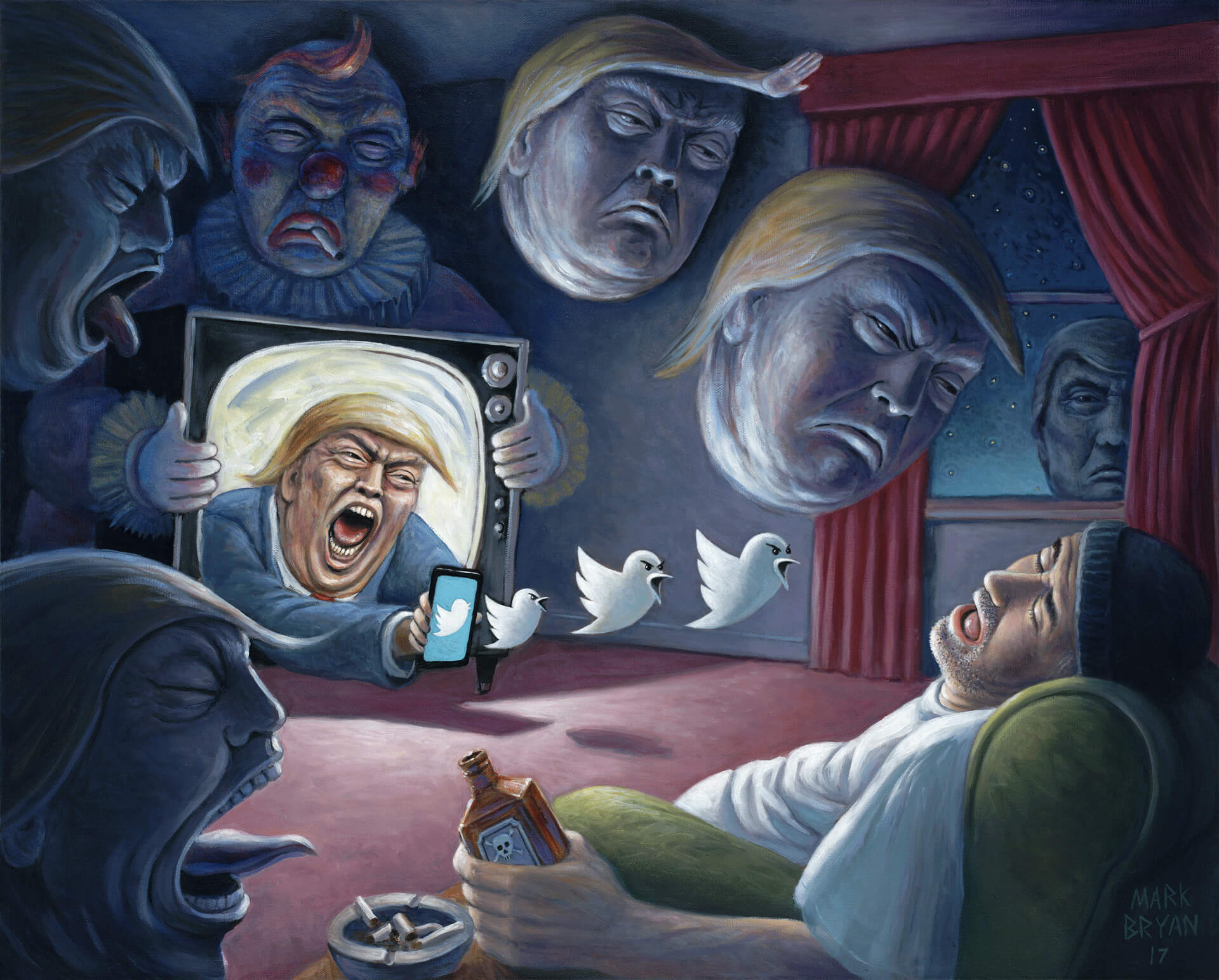
By Mark Bryan
“I think a referral will have zero practical effect on what DOJ does,” said Randall Eliason, a former federal public corruption prosecutor in Washington. “They are already investigating, and they’re not going to decide whether or not to charge based on whether they got a referral from Congress.”
Just last month, Attorney General Merrick Garland emphasized prosecutors wanted to see the House’s evidence, but he notably omitted any desire to see what conclusions lawmakers reached about what that evidence proved.
“We would like to have all the transcripts and all of the other evidence collected … by the committee, so that we can use it in the ordinary course of our investigations,” Garland told reporters gathered in his conference room at DOJ headquarters.
In some ways, the House’s new criminal referral could have less impact than others Congress has sent to the Justice Department in the past. That’s because while some referrals spur DOJ into action, prosecutors already have investigations open into the main areas where the Jan. 6 committee sees potential crimes: Trump’s alleged incitement of the attack on the Capitol and his prolonged effort to undermine the 2020 presidential election results.
The committee is sitting on a stockpile of nearly 1,200 witness interview transcripts and reams of hard-won documents about Donald Trump’s attempt to derail the peaceful transfer of power. While the select panel’s nine members gathered on Monday to refer evidence of Trump’s potential crimes to the Justice Department, that raw information — not the showmanship of a final in-person public meeting — will tell the story the committee has labored to piece together.
The 160-page executive summary, which precedes a final panel report set for release as soon as Wednesday, hints at the extraordinary range of documents the committee collected. It references at least 30 “productions” of documents from various witnesses and agencies, including White House visitor logs, Secret Service radio frequencies and the Department of Labor, where then-Secretary Eugene Scalia produced a Jan. 8, 2021, memo seeking to call a Cabinet meeting to discuss the transfer of power.
“The select committee intends to make public the bulk of its nonsensitive records before the end of the year,” the panel’s chair, Rep. Bennie Thompson (D-Miss.), said Monday. Thompson has stressed that the taxpayer-funded investigation’s materials should be made available to the public: “These transcripts and documents will allow the American people to see the evidence we have gathered and continue to explore the information that has led us to our conclusions.” [….]
Yet crucial questions remain about which evidence the panel will treat as off-limits to the public — including whether it will post hundreds of hours of video interviews alongside its transcripts. Thompson has also emphasized that transcripts will be redacted to exclude private information and law enforcement or national security-related details. And some witnesses who requested anonymity would receive it, Thompson has said.
Call records, with the exception of ones that the committee has found relevant to the probe, would likely remain secret as well, according to the chair.
Hellscape 2020, Walter Simon
The report should still be a BFD:
Even so, the panel’s introductory materials gave tantalizing clues about what’s to come. The committee’s executive summary referenced just over 80 of the panel’s interviews and documents collected from 34 agencies or witnesses; among them, Christoffer Guldbrandsen, a documentarian who captured footage of Trump ally Roger Stone, and Bernard Kerik, who advised Trump attorney Rudy Giuliani in his bid to collect evidence to challenge the 2020 results.
The summary also reflects voluminous contacts among key players in Trump’s alleged plot that were not previously known but could be of interest to federal prosecutors. For example, the document describes numerous contacts that then-DOJ officials Jeffrey Clark and Ken Klukowski had with Trump campaign attorney John Eastman in the closing days of 2020 and into early 2021.
In addition, the summary casts doubt on the testimony of some select panel witnesses — like former Secret Service and Trump White House aide Tony Ornato and former White House press secretary Kayleigh McEnany, who the committee said were not as forthcoming as others who spoke to it.
During her testimony, McEnany had disputed the allegation that Trump was resistant to calling off the mob, but the summary noted that her former deputy Sarah Matthews had told the panel otherwise. Ornato, who played a potentially key role as a witness to an alleged altercation between Trump and his security detail on Jan. 6, drew similar scrutiny after telling the committee he could not recall relaying the account of the altercation despite others’ testimony to the contrary.
“The Committee is skeptical of Ornato’s account,” the panel added in a footnote.
Read the rest at Politico.
Whether or not to indict Trump will be up to Special Prosecutor Jack Smith.
Witnesses had lost hope and disappeared. Criminal suspect No. 1 had become president. And the long-awaited indictment now seemed unreachable.
Then, American prosecutor Jack Smith came along and took charge, sending his investigators on an aggressive mission to win back reluctant witnesses—by targeting the tight-lipped politicians and militant nationalists who had kept them silent.
The story may sound familiar, if not a bit like resistance fan-fiction. But this story is actually about Smith’s efforts in Kosovo, a small country in southeastern Europe that was historically an Albanian enclave in Serbia. It was difficult every step of the way. Smith had to defend his work from widespread accusations that he was conducting an unfair political prosecution to remove the nation’s favorite leader. And the narrative was that cooperators are traitors—and that these lawyers like Smith were trying to destroy the country.
It may prove to be an invaluable experience.
The Nightmare, Mark Bryan
Since the U.S. Department of Justice appointed Smith as the trusted special counsel investigating former President Donald Trump last month, there have been dozens of news profiles focusing on his time as a domestic prosecutor investigating public corruption. Several have even incorrectly identified the international court he served on. But this is the first sweeping look at what exactly he accomplished while on a special assignment abroad in Europe, where he took down Kosovo’s sitting president—and gained the credentials to target an American one.
Kosovo investigation until Smith took over. “It has huge political consequences. It takes bravery. Jack’s got to decide whether he’s going to indict a former president of the United States. But he did the same thing when it came to Hashim Thaçi.”
Kosovo’s now ex-president remains trapped inside a jail in the Dutch city of The Hague. Understanding how he got there helps contextualize Smith’s legacy at the controversial international prosecutor’s office he led until last month—and his ability to face Trump now.
Read more at The Daily Beast.
Today, the House Ways and Means Committee will consider whether to release Trump’s tax returns to the public.
The House Ways and Means Committee will meet Tuesday to discuss former President Donald Trump’s tax returns and weigh whether to release the information to the public, the end to a years-long effort from Democrats to learn more about Trump’s financial background.
The highly anticipated meeting is years in the making but comes as Democrats have just days to act on whether to release the former president’s tax returns. While there is historic precedent for Ways and Means to release confidential tax information, a decision to put it out to the public would come with intense political fallout as Trump has already declared he is running for president in 2024.
The committee has had access to Trump’s taxes for weeks after winning a lengthy legal battle that began in the spring of 2019. House Ways and Means Chairman Richard Neal requested the first six years of Trump’s taxes as well as tax returns for eight of his businesses back in April of 2019.
Mayday, Lena Rushing
Neal and his ranking member Kevin Brady have had access to the information, and rank-and-file members on the committee will have begun to have access and review at least some of Trump’s tax information, according to a source familiar.
It’s not clear if members would have access to all of the information.
Republicans on the committee are preparing to push back hard if Democrats vote to release any of Trump’s tax information, committee sources tell CNN. The argument Republicans will wage, however, won’t center on defending Trump explicitly but rather what the release means for politicians and ordinary people in the future.
Democrats on the committee would rely on section 6103 of the tax code to lawfully release information about Trump’s taxes, but Republicans are prepared to argue that Democrats are abusing the provision, attacking a political enemy and potentially unleashing a system where even individuals could have their personal information exposed if they become targets of the committee.
I’m searching for some reads outside the realm of the current attention hogs. Let’s see what I can come up with!
The first one was shared by a friend that hit home with me. This is from the Washington Post. It’s a project I’ve been trying to do for a while, but I start and stop a lot. “We’re drowning in old books. But getting rid of them is heartbreaking. ‘They’re more like friends than objects,’ one passionate bookseller says. What are we to do with our flooded shelves?”
Humorist and social critic Fran Lebowitz owns 12,000 books, mostly fiction, kept in 19th-century wooden cases with glass doorsin her New York apartment. “Constitutionally, I am unable to throw a book away. To me, it’s like seeing a baby thrown in a trash can,” she says. “I am a glutton for print. I love books in every way. I love them more than most human beings.” If there’s a book she doesn’t want, Lebowitz, 72, will spend months deciding whom to give it to.
“I kept accumulating books. My life was overflowing with books. I’d have to live to 150 to reread these books,” says Martha Frankel, a writer and director of the Woodstock Bookfest. She amassed 3,600 — and that was just in the office that she closed in 2018 — “but the idea of getting rid of these books made me nauseous.”
America is saturated with old books, congesting Ikea Billy cases, Jengaing atop floors, Babeling bedside tables. During months of quarantine, book lovers faced all those spines and opportunities for multiple seasons of spring cleaning. They adore these books, irrationally, unconditionally, but know that, ultimately, if they don’t decide which to keep, it will be left to others to unceremoniously dump them.
So, despite denial, grief, bargaining, anguish and even nausea, the Great Deaccession commenced.
When Dr. Daughter entered Kindergarten, she came home crying about an assignment. When asked what the assignment was, I realized the gargantuan task in front of her. Her father and I were massive book collectors. We had bookcases filled with books in just about every room of our 4 bedroom, a two-story house with a mostly finished basement. I calmed her down saying that I’d write a note explaining that there were literally hundreds of books all over the house and that she should focus on counting the books in her room. She already had plenty. Assignment completed! End of tears!
I had been thinking about all of this when I contemplated the recent portrait ceremony of Judge Robert L. Wilkins. Wilkins was appointed to the U.S. Court of Appeals for the District of Columbia Circuit in 2014, where he sat alongside then-Judge Ketanji Brown Jackson. On Oct. 14, his official portrait was hung at the court, in a ceremony typically representing one of the highlights of a judge’s tenure on the bench.
What struck me most about Wilkins’ speech was that he used it to detail a sometimes submerged narrative about the complicated meaning of freedom: He told the story of his own family’s long journey through U.S. constitutional history, a very different encounter with the Framers’ ideas about freedom and justice.
Excerpts from his remarks at that event are reprinted, with Wilkins’ permission, below.
My maternal grandmother, Marcella Hayes, was with us during my investiture to become a District Court Judge. She has now gone on to glory. She was a documenter of our family history, and I inherited that habit from her. Inspired by my Grannyma, I have traced the maternal side of my family back six generations, to my great-great-great-great grandmother, Edie Saulsbury. Edie was born sometime around 1810, when James Madison, considered by many the father of our Constitution, was President of these United States. She was born into slavery, and thus was not even considered a “person” within the meaning of Madison’s Constitution. She was impregnated by a white man at the tender age of 16, where the legal system did not even define the rape of a Black woman by a white man as a crime, did not allow a Black person to testify in court against the white person anyway, and made it a crime punishable by 30 lashes on the bare back for a Black person to raise a hand against a white person, even to defend oneself from being ravished. Edie gave birth to that child, a boy named Alexander, who would endure a life of slavery. She would later give birth to 12 more children, conceived with my fourth great grandfather, a man named David, who was enslaved and belonged to a neighboring family.
My father, John Wilkins, passed away almost 40 years ago. But he is here through me and my brother Larry, and through my many cousins and other relatives on the Wilkins side here today. I have also been able to trace my paternal side back six generations. My paternal grandfather’s name was Rev. George R. Wilkins. His maternal grandfather, my great-great grandfather, was named George Richardson. George Richardson was born in 1848, and, when asked, during the 1900 census, he reported to the census taker that he was born in South Carolina, his mother was born in South Carolina, but that his father was born “at sea.” Think about that: The most plausible explanation for this series of events is that George Richardson’s father, my great- great-great grandfather, was born aboard a slave ship. That would also mean that—six generations back—my fourth great grandmother delivered my third great grandfather in the filthy bowels of a slave vessel. I have not yet been able to determine my fourth great grandmother‘s name, but for the moment, let’s call her Nancy. George Richardson named one of his daughters Nancy, so perhaps he did so in honor of his grandma.
Consider for a moment the circumstances under which those two of my fourth-great grandmothers, Edie and Nancy, lived and brought children into this world. Circumstances of kidnapping, coercion, abuse and despair. And all that vile treatment was absolutely legal. All of it was condoned and facilitated by Madison’s Constitution.
I recommend reading all of it.
Politico has this lede today. “‘THE central issue’: How the fall of Roe v. Wade shook the 2022 election. More than 50 Democratic and Republican elected officials, campaign aides and consultants took POLITICO inside the first campaign after the Supreme Court’s landmark ruling.” Authors Elena Schneider and Holly Otterbein argue that it’s the decision that handed so many elections to the Democratic Party and defied the historical trend of the out party sweeping elections on the off presidentional year.
On May 4, less than 48 hours after a draft opinion was published showing the Supreme Court was poised to end the federal right to abortion, a group of eight strangers gathered around a conference table in the Detroit suburbs to talk about the news.
They were all white women, mostly in their 30s to 50s and without college degrees. Their home county, Macomb, had voted for President Barack Obama twice and President Donald Trump twice. In the upcoming gubernatorial race, they were undecided, frustrated by how Democratic incumbent Gretchen Whitmer had handled the pandemic.
But when it came to the possibility of abortion being illegal, there was no equivocation: The women were stunned — and enraged.
It was the kind of conversation women everywhere were having with their mothers, sisters, daughters and friends. But behind a glass window in that conference room and tuning in over Zoom, a half-dozen consultants and staffers from Whitmer’s reelection campaign and the pro-abortion rights group EMILY’s List listened to likely the first Democratic focus group conducted in the wake of the report.
The moderator peppered the women with questions about the draft opinion and the possibility it would trigger a 1931 law outlawing nearly all abortions in Michigan. Then she turned to a recent comment from a Republican candidate that the Whitmer team had considered relatively tame, compared to other GOP reactions. Businessman Kevin Rinke had said that when it came to pregnancy, “There are choices that go into our lives, and there’s cause and effect, so people maybe need to consider their choices.”
The remark “elicited a lot of, ‘Fuck this guy and fuck all the guys out there who think they know better than women,’” said Molly Murphy, the Democratic pollster who moderated the discussion in early May. “This was not just about rape and incest and ‘no exceptions,’ which is obviously all very important, but it said so much more about control, about politicians who think they know better than these women — it added a layer to this that none of us were expecting.”
One Republican Congressman elected to the House for the first time from New York State seems to have completely fabricated his work,education, and life history. This is from the New York Times. “Who Is Rep.-Elect George Santos? His Résumé May Be Largely Fiction. Mr. Santos, a Republican from New York, says he’s the “embodiment of the American dream.” But he seems to have misrepresented a number of his career highlights.
George Santos, whose election to Congress on Long Island last month helped Republicans clinch a narrow majority in the House of Representatives, built his candidacy on the notion that he was the “full embodiment of the American dream” and was running to safeguard it for others.
His campaign biography amplified his storybook journey: He is the son of Brazilian immigrants, and the first openly gay Republican to win a House seat as a non-incumbent. By his account, he catapulted himself from a New York City public college to become a “seasoned Wall Street financier and investor” with a family-owned real estate portfolio of 13 properties and an animal rescue charity that saved more than 2,500 dogs and cats.
But a New York Times review of public documents and court filings from the United States and Brazil, as well as various attempts to verify claims that Mr. Santos, 34, made on the campaign trail, calls into question key parts of the résumé that he sold to voters.
Citigroup and Goldman Sachs, the marquee Wall Street firms on Mr. Santos’s campaign biography, told The Times they had no record of his ever working there. Officials at Baruch College, which Mr. Santos has said he graduated from in 2010, could find no record of anyone matching his name and date of birth graduating that year.
He also has a record of check fraud dating back to his days in Brazil. If you read their investigation, you’ll see that he’s a cipher. Nothing he told the public is true. This is a fascinating mystery.
At the same time, new revelations uncovered by The Times — including the omission of key information on Mr. Santos’s personal financial disclosures, and criminal charges for check fraud in Brazil — have the potential to create ethical and possibly legal challenges once he takes office.
Mr. Santos did not respond to repeated requests from The Times that he furnish either documents or a résumé with dates that would help to substantiate the claims he made on the campaign trail. He also declined to be interviewed, and neither his lawyer nor Big Dog Strategies, a Republican-oriented political consulting group that handles crisis management, responded to a detailed list of questions.
NBC News reports that the Jan. 6 committee is finalizing its report.
The House Jan. 6 committee met Sunday to finalize its plans to issue at least three criminal referrals for former President Donald Trump, NBC News has learned exclusively.
The committee, gathering publicly Monday, is expected to vote on referrals asking the Justice Department to pursue at least three criminal charges against Trump related to the Capitol riot: obstructing an official proceeding, conspiracy to defraud the government and inciting or assisting an insurrection.
Rep. Jamie Raskin, D-Md., said in part during the meeting overheard by NBC News that he believed referrals were “warranted.” A source familiar with the committee’s plans told NBC News about the meeting and its location in the Capitol complex.
The Jan. 6th committee will broadcast its final public meeting live today at noon est. This reporting is from CNN where you can get live updates once the meeting starts.
The committee will release an executive summary of the investigation’s report on Monday after the meeting, a committee aide said Sunday. The final report, to be released two days later, will provide justification from the panel’s investigation for recommending the charges.
Why now? Republicans are expected to dissolve the panel when they take over the House in January.
So, I did end on some Trumpy news but it didn’t involve much Trumpyisms so I hope that’s okay.
What’s on your reading and blogging list today?
Did you like this post? Please share it with your friends:
The Sky Dancing banner headline uses a snippet from a work by artist Tashi Mannox called 'Rainbow Study'. The work is described as a" study of typical Tibetan rainbow clouds, that feature in Thanka painting, temple decoration and silk brocades". dakinikat was immediately drawn to the image when trying to find stylized Tibetan Clouds to represent Sky Dancing. It is probably because Tashi's practice is similar to her own. His updated take on the clouds that fill the collection of traditional thankas is quite special.
You can find his work at his website by clicking on his logo below. He is also a calligraphy artist that uses important vajrayana syllables. We encourage you to visit his on line studio.
















 Good Day Sky Dancers!
 When Dr. Daughter entered Kindergarten, she came home crying about an assignment. When asked what the assignment was, I realized the gargantuan task in front of her. Her father and I were massive book collectors. We had bookcases filled with books in just about every room of our 4 bedroom, a two-story house with a mostly finished basement. I calmed her down saying that I’d write a note explaining that there were literally hundreds of books all over the house and that she should focus on counting the books in her room. She already had plenty. Assignment completed! End of tears!
 I recommend reading all of it.
 One Republican Congressman elected to the House for the first time from New York State seems to have completely fabricated his work,education, and life history.
  He also has a record of check fraud dating back to his days in Brazil. If you read their investigation, you’ll see that he’s a cipher. Nothing he told the public is true. This is a fascinating mystery.
 The Jan. 6th committee will broadcast its final public meeting live today at noon est.
 peej
peej Carissa
 bostonboomer
 dakinikat
 ecocatwoman
 mablue2
 Mama Lopez
 peggysue22
 quixote
 skydancingguestblogger
 Mona (aka Wonk the Vote)



 Sky Dancing
Recent Comments