
Tuesday Reads: Trump’s Attacks on the Press and Mueller News
Posted: April 3, 2018 Filed under: Afternoon Reads, U.S. Politics 40 Comments
Henry Matisse, La femme en jaune, 1928
Good Afternoon!!
I’m having another one of those mornings. I’m scared to death about the way Trump is behaving, and I can’t get my brain to pull together a coherent understanding of what’s happening.
Trump’s latest obsession has been attacking the free press from multiple directions. He’s attacking Amazon and because Jeff Bezos owns both Amazon and The Washington Post, which Trump hates. At the same time, Trump tries to boost Fox News and Sinclair Broadcasting, because they suck up to him. Should we be worried?
Brian Klaas, an expert on authoritarianism thinks so.
BTW, Trump’s attacks on Amazon have caused the company’s stocks to lose value. Can investors sue Trump for that?
There are so many tentacles to what he’s doing with his corrupt self-dealing, his sucking up to dictators like Putin and Sisi, his attacks on the press, and his undermining of federal law enforcement. What can we do about it? It seems we can’t do much but hope that Robert Mueller finds more crimes to prosecute until he eventually gets to Trump. But will our democracy ultimately survive the Trump onslaught?
Gabriel Sherman at Vanity Fair: “Trump is like ‘How Can I F–k With Him'” Trump’s War With Amazon (And The Washington Post) Is Personal.
Trump has ripped into Amazon in recent days, claiming in a series of tweets that Jeff Bezos’s tech giant benefits from billions in subsidies from the U.S. Post office while skirting sales taxes. “Unlike others, they pay little or no taxes to state & local governments, use our Postal System as their Delivery Boy (causing tremendous loss to the U.S.), and are putting many thousands of retailers out of business!” Trump tweeted. On Monday, he wrote: “Only fools, or worse, are saying that our money losing Post Office makes money with Amazon. THEY LOSE A FORTUNE, and this will be changed. Also, our fully tax paying retailers are closing stores all over the country . . . not a level playing field!” The tweets caused Amazon’s stock to plunge 5 percent on Monday.
The Music, Henri Matisse
Now, according to four sources close to the White House, Trump is discussing ways to escalate his Twitter attacks on Amazon to further damage the company. “He’s off the hook on this. It’s war,” one source told me. “He gets obsessed with something, and now he’s obsessed with Bezos,” said another source. “Trump is like, how can I fuck with him?”
According to sources, Trump wants the Post Office to increase Amazon’s shipping costs. When Trump previously discussed the idea inside the White Hose, Gary Cohn had explained that Amazon is a benefit to the Postal Service, which has seen mail volume plummet in the age of e-mail. “Trump doesn’t have Gary Cohn breathing down his neck saying you can’t do the Post Office shit,” a Republican close to the White House said. “He really wants the Post Office deal renegotiated. He thinks Amazon’s getting a huge fucking deal on shipping.”
Advisers are also encouraging Trump to cancel Amazon’s pending multi-billion contract with the Pentagon to provide cloud computing services, sources say. Another line of attack would be to encourage attorneys general in red states to open investigations into Amazon’s business practices. Sources say Trump is open to the ideas.

Clearly Trump is a moron, but he’s doing a lot damage anyway. Couldn’t Bezos sue him?
NPR says that Trump is causing the Postal Service’s problems: As Trump Attacks Amazon-Postal Service Ties, He Fails To Fill Postal Governing Board.
The top planning and oversight board at the Postal Service has been unable to meet and consider matters such as the agency’s long-term relationship with Amazon, because the president has failed to appoint any of the nine governors to the 11-member Board of Governors of the U.S. Postal Service.
Henri Matisse – Girl in Yellow and Blue with Guitar, 1939 at the Art Institute of Chicago IL
In October, Trump nominated three candidates, who still await Senate confirmation. The board needs at least four new members to have a quorum for meetings, which prompted concerns from a bipartisan group of senators late last year.
“Without a quorum, the Postal Service cannot make key operational decisions or provide accountability for operational deficiencies, such as intentional mail delays, drug trafficking through the Postal Service’s network, and dramatically falling mail volumes and revenue,” according to a November letter to President Trump from the Senate Committee on Homeland Security and Governmental Affairs.

More details at NPR.
And what about the Sinclair Broadcast Group and their takeover of hundreds of local stations? Trump has been promoting Sinclair on his Twitter feed.
At Politico, Jack Shafer writes: Trump Wants to Promote Sinclair? Let Him. As long as I can still change the channel, who cares?
I intend no defense of Sinclair by pointing out that Sinclair’s brand of conservative news lies well within an established American tradition. To begin with, American newspapers were captive to political parties for the better part of the 19th century, forever claiming that their competitors were printing the malarkey of fake news. In the modern era, William Randolph Hearst made it his business to tell his readers what to think in the pages of his national newspaper chain. Henry Luce likewise applied a political whetstone to Time magazine and his other titles to give them a conservative edge. Colonel Robert R. McCormick turned his Chicago Tribune into a permanent campaign against President Franklin D. Roosevelt. Three months before the 1936 election, the Tribune ran a Page 1 anti-Roosevelt headline that read, “Only 97 Days Left to Save Your Country!’’ In more recent decades, banking heir Richard Mellon Scaife spent tens of millions to create a conservative Pittsburgh newspaper and convicted felon Rev. Sun Myung Moon spent billions on his conservative Washington Times. And don’t forget Rupert Murdoch’s Fox News Channel.
Woman at the Piano, 1924, by Henri Matisse
The moral panic over Sinclair Broadcast Group’s stupid promo might make sense if its TV stations were beamed directly into our skulls, George Orwell style. I might join the liberal dither if Sinclair wiped out its competition on the dial. But as long as I can still change my local channel and avoid Sinclair’s partisan hackery, where’s the crisis?

I don’t know what to think. I never watch local news, so I had to check to see if Sinclair owns any Boston stations. They don’t, but they apparently own some in Maine and Rhode Island, according to this Boston Globe editorial. I tend to find the situation worrisome, but it’s all part of the consolidation of media ownership that has gone on for decades. It seems concerning that Comcast owns NBC too.
And then there’s this old Politico article that Howard Dean called attention to on Twitter.
https://twitter.com/GovHowardDean/status/980932414112456706
Politico: Kushner: We struck deal with Sinclair for straighter coverage.
Donald Trump’s campaign struck a deal with Sinclair Broadcast Group during the campaign to try and secure better media coverage, his son-in-law Jared Kushner told business executives Friday in Manhattan.
Kushner said the agreement with Sinclair, which owns television stations across the country in many swing states and often packages news for their affiliates to run, gave them more access to Trump and the campaign, according to six people who heard his remarks.
In exchange, Sinclair would broadcast their Trump interviews across the country without commentary, Kushner said. Kushner highlighted that Sinclair, in states like Ohio, reaches a much wider audience — around 250,000 listeners — than networks like CNN, which reach somewhere around 30,000.
“It’s math,” Kushner said according to multiple attendees.
Woman with Mandolin, by Henri Matisse
But Sinclair and other networks said such a deal is nothing nefarious or new – just an arrangement for extended sit-down interviews with both candidates, one many campaigns have done in previous years to get around the national media and directly to viewers in key states.
Scott Livingston, vice president of news at Sinclair, said the offer for extended interviews with local anchors was made to both candidates. Trump did a handful of interviews, while Sen. Tim Kaine did a few as well, though Hillary Clinton did not.

One more topical article to consider from The Washington Post: A new study suggests fake news might have won Donald Trump the 2016 election.
The study from researchers at Ohio State University finds that fake news probably played a significant role in depressing Hillary Clinton’s support on Election Day. The study, which has not been peer reviewed but which may be the first look at how fake news affected voter choices, suggests that about 4 percent of President Barack Obama’s 2012 supporters were dissuaded from voting for Clinton in 2016 by belief in fake news stories.
Richard Gunther, Paul A. Beck and Erik C. Nisbet, the study’s authors, inserted three popular fake news stories from the 2016 campaign into a 281-question YouGov survey given to a sample that included 585 Obama supporters — 23 percent of whom didn’t vote for Clinton, either by abstaining or picking another candidate (10 percent voted Trump, which is in line with other estimates).
Read all the details at the WaPo.
Some news on the Mueller investigation broke early this morning.
Bloomberg: Mueller Releases Secret Memo Underpinning Manafort Probe.
Special Counsel Robert Mueller defended the indictment of former Trump campaign chairman Paul Manafort by releasing a secret government memorandum granting him authority to investigate crimes related to Manafort’s political consulting work for former President Viktor Yanukovych of Ukraine.
Young woman at the piano, Henri Matisse
Mueller is using the memo to refute Manafort’s claims that prosecutors went too far by investigating crimes beyond Russian meddling in the 2016 presidential election. Prosecutors released the memo just before midnight on Monday, arguing that Manafort can’t legally challenge his indictment for financial crimes arising from his work for Yanukovych and other Russian-backed politicians.
The memo, dated Aug. 2, 2017, and signed by Deputy Attorney General Rod Rosenstein, supplements a May 2017 appointment order directing Mueller to investigate possible coordination between Russia and the Trump campaign, as well as “any matters that arose or may arise directly” from his probe….
In releasing the heavily redacted memo, Mueller argued that Rosenstein “left no doubt that the conduct that forms the basis for the indictment is within the special counsel’s jurisdiction.” Manafort faces a pair of indictments charging him with earning tens of millions of dollars in Ukraine, laundering much of that money, failing to register as a foreign agent and cheating on his taxes.
Mueller also cited business ties between Manafort and the Russian oligarch Oleg Deripaska. Any investigation of links between Russia and the Trump campaign “would naturally cover ties that a former Trump campaign manager had to Russian-associated political operatives, Russian-backed politicians, and Russian oligarchs,” according to the 53-page filing in federal court in Washington.
“It would also naturally look into any interactions they may have had before and during the campaign to plumb motives and opportunities to coordinate and to expose possible channels for surreptitious communications,” prosecutors wrote. “And prosecutors would naturally follow the money trail from Manafort’s Ukrainian consulting activities. Because investigation of those matters was authorized, so was prosecution.”

We’ll probably learn more about this in the course of today.
An interesting tweet from Ned Price:
So . . . what do you think? What stories are you following today?
Monday Reads: Fairness, Awareness and the death of the Fairness Doctrine
Posted: April 2, 2018 Filed under: morning reads | Tags: Fairness Doctrine, fake news, propaganda 17 Comments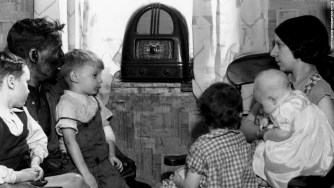 Good Morning Sky Dancers!
I often wonder how different our political, economic, and science discourse would be if the Fairness Doctrine were still in place. This reflection seems more relevant than ever given the appalling number of voters that fell for ‘fake news’, lies, and promises of virtually impossible policy outcomes. Both the tariffs and tax bill inflicted on this economy are going to send us to very dark places quite rapidly. All those crazies in Nebraska, Iowa, Kansas, and the rest of Farm country are about to see an Agricultural Crisis as we relearn the Great Depression lesson, once again, of how every one loses Trade Wars. (It’s already sending the markets down as China retaliates big time.) Craziness is also ensuing as Trump and Bernie Sanders both demonize Amazon with either personal or no reason. Amazon stocks are taking off–after an initial plunge after Trump’s Tax threats–while it appears that Trump’s net worth crash is partially due to the successful business model built by Bezos. Property in the Manhattan shopping districts isn’t doing so well.
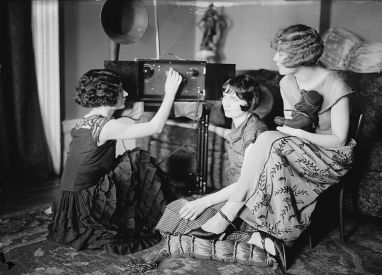 All you have to do is sort the media in to “normal” vs. right wing propaganda and you see what’s what. Still, it’s hard to understand how even “normal” media does what it does in the age of false equivalence of facts. But,how about this little blurb in the local in Hutchison, Kansas where small is still sometimes best?
Consider federal deficits, which are now at a trillion dollars a year and headed still higher. The big reason are GOP tax cuts, although new spending, mostly for the U.S. military, also is adding red ink.
As the tax cuts were being proposed, Congress was warned by its own staff that they would not, as Trump claimed, pay for themselves by fueling additional economic growth.
Not even the White House believes that anymore. A year ago, White House officials vowed their tax cuts would create such energy that the country’s GDP would grow by 4 percent in 2018. A few days ago, the White House announced that it expects 3 percent growth this year.
Meanwhile, the Federal Reserve predicts the U.S. GDP to grow by 2.5 percent this year.
It’s also worth noting that the Committee for a Responsible Federal Budget has argued that tax cuts – of any kind – won’t create even a 0.4 percent difference in economic growth.
The story is much the same on other issues: Changing goals, squishy principles and lots of finger-pointing substitute for achievement.
The latest spending bill pushed through late at night with little debate illustrates the lack of sound reason or policy.
 NY Mag has a feature up on Trump’s record of massive corruption. It’s a must read. The Presidential Pig is on the cover snout and all.
Since Trump took office, his pledge to ignore his own interests has been almost forgotten, lost in a disorienting hurricane of endless news. It is not just a morbid joke but a legitimate problem for the opposition that all the bad news about Trump keeps getting obscured by other bad news about Trump. Perhaps the extraordinary civic unrest his presidency has provoked will be enough to give Democrats a historic win in the midterms this fall, but it is easy to be worried.
Trump’s approval rating hovers in the low 40s: lower than the average of any other president, yes, but seemingly impervious to an onslaught of scandals that would have sunk any other president, and within spitting range of reelectability.
…
“Why shouldn’t the president surround himself with successful people?” argued Larry Kudlow, now Trump’s primary economic adviser, in 2016. “Wealthy folks have no need to steal or engage in corruption.” The administration seems to have set out to refute this generous assumption. The sheer breadth of direct self-enrichment Trump has unleashed in office defies the most cynical predictions. It may not be a surprise that he continues to hold on to his business empire and uses his power in office to direct profits its way, from overseas building deals down to printing the presidential seal on golf markers at the course near Mar-a-Lago. It is certainly not a surprise that Trump has refused to disclose his tax returns. What’s truly shocking is how much petty graft has sprung up across his administration. Trump’s Cabinet members and other senior officials have been living in style at taxpayer expense, indulging in lavish travel for personal reasons (including a trip to Fort Knox to witness the solar eclipse) and designing their offices with $31,000 dining sets and $139,000 doors. Not since the Harding administration, and probably the Gilded Age, has the presidency conducted itself in so venal a fashion.
It is hardly a coincidence that so many greedy people have filled the administration’s ranks. Trump’s ostentatious crudeness and misogyny are a kind of human-resources strategy. Radiating personal and professional sleaze lets him quickly and easily identify individuals who have any kind of public ethics and to sort them out. (James Comey’s accounts of his interactions with the president depict Trump probing for some vein of corruptibility in the FBI director; when he came up empty, he fired him.) Trump is legitimately excellent at cultivating an inner circle unburdened by legal or moral scruples. These are the only kind of people who want to work for Trump, and the only kind Trump wants to work for him.
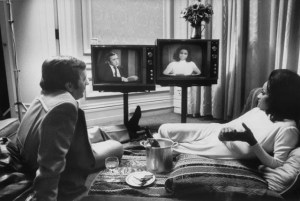 Paul Waldman–writing for the American Prospect–believes US voters will essentially toss the lot of them because of a sense of fairness. This assumes a lot.
At this point, it’s unlikely to change. People are already getting whatever tax cut they’re going to get, and it’s hard to imagine that six months from now many workers will say, “Wait a minute—I am getting more take-home pay! Thanks, Republicans!” Not only that, recent polling shows the tax bill to be a wash at best, with about the same number of people saying they approve of it as disapprove of it, with more usually in the latter camp.
Even if you do approve of it, are you going to rush to the polls to express your gratitude to President Trump and the Republican Congress? If you’re getting another 20 bucks a week, it seems unlikely, especially if you know how much corporations and the wealthy got.
That isn’t to say that the alternative to this bill wouldn’t have been worse for the GOP. When it passed, they breathed a gigantic sigh of relief, knowing that despite the chaos of the Trump presidency and their lack of meaningful accomplishments in this period of one-party rule, at least they could go home to the voters and tell them that they got something done.
But it’s hard to convince people that you just changed their lives for the better with a tax cut if they aren’t seeing the rewards—and they know who is. According to a new reportfrom the Tax Policy Center, people in the lowest income quintile will average a $40 tax cut from the law, or $1.54 per two-week pay period, just like Paul Ryan’s lucky secretary. Those in the middle quintile will average $800, or about $30 per paycheck. And those in the top 1 percent? Their average cut is almost $33,000.
Which is about what everyone expects from a Republican tax plan. And when you play right into people’s expectations, it doesn’t take much to convince them that you have in fact done exactly what they expected you to.
That’s not to mention the fact that if they were looking to win people’s approval for a change to the tax system, they would have done exactly the opposite of what they did. For years, polls have consistently found that what bothered people the most isn’t the amount they have to pay in taxes, even if everyone might like to pay less. The chief complaint voters have long had is that the corporations and the wealthy don’t pay their fair share. So Republicans lowered taxes on corporations and the wealthy, making the system even less fair than it was before.
So, let me just say that all this. All good news coverage and analysis depends on its availability. The idea of understanding all this unfairness assumes that Dear Reader isn’t reading crap put out by Russian Troll Farms or propaganda broadcast by certain news outlets. It also assumes journalists do due diligence with their sources. What good is an interview with a Senator if it’s just a lot of lies and nonsense? Shouldn’t you fact check them all on the spot?
Earlier this month, CNN’s Brian Stelter broke the news that Sinclair Broadcast Group, owner or operator of nearly 200 television stations in the U.S., would be forcing its news anchors to record a promo about “the troubling trend of irresponsible, one sided news stories plaguing our country.” The script, which parrots Donald Trump’s oft-declarations of developments negative to his presidency as “fake news,” brought upheaval to newsrooms already dismayed with Sinclair’s consistent interference to bring right-wing propaganda to local television broadcasts.
You might remember Sinclair from its having been featured on John Oliver’s Last Week Tonight last year, or from its requiring in 2004 of affiliates to air anti-John Kerry propaganda, or perhaps because it’s your own local affiliate running inflammatory “Terrorism Alerts” or required editorials from former Trump adviser Boris Epshteyn, he of the famed Holocaust Remembrance Day statement that failed to mention Jewish people. (Sinclair also owns Ring of Honor wrestling, Tennis magazine, and the Tennis Channel.)
The net result of the company’s current mandate is dozens upon dozens of local news anchors looking like hostages in proof-of-life videos, trying their hardest to spit out words attacking the industry they’d chosen as a life vocation.
 Now, let’s look at something most Fox watchers have probably no awareness about. Monmouth University has a polling institute. It provides opinions and analysis. This is the one today: “‘Fake News’ Threat to Media; Editorial Decisions, Outside Actors at Fault”.
The news about “fake news” is not good, according to the Monmouth University Poll. Large majorities of the American public believe that traditional media outlets engage in reporting fake news and that outside sources are actively trying to plant fake stories in the mainstream media. When it comes to the meaning of “fake news,” a majority believe that it involves editorial decisions as well as inaccurate reporting. The public feels that social media platforms are partly to blame for the spread of fake news and are not doing enough to stop it. The poll also finds that Pres. Trump continues to be less trusted than the major cable news outlets as an information source.
More than 3-in-4 Americans believe that traditional major TV and newspaper media outlets report “fake news,” including 31% who believe this happens regularly and 46% who say it happens occasionally. The 77% who believe fake news reporting happens at least occasionally has increased significantly from 63% of the public who felt that way last year.
Just 25% say the term “fake news” applies only to stories where the facts are wrong. Most Americans (65%), on the other hand, say that “fake news” also applies to how news outlets make editorial decisions about what they choose to report.
“These findings are troubling, no matter how you define ‘fake news.’ Confidence in an independent fourth estate is a cornerstone of a healthy democracy. Ours appears to be headed for the intensive care unit,” said Patrick Murray, director of the independent Monmouth University Polling Institute.
The belief that major media outlets disseminate fake news at least occasionally has increased among every partisan group over the past year, including Republicans (89% up from 79% in 2017), independents (82% up from 66%), and Democrats (61% up from 43%). In addition to the fact that a clear majority of Democrats now believe that traditional media outlets report fake news at least occasionally, the poll also finds that a majority of Republicans (53%) feel this happens on a regular basis (up from 37% in 2017).
A plurality of the public (42%) say that traditional news media sources report fake news on purpose in order to push an agenda. Fewer Americans (26%) believe that major media sources tend to report these stories only by accident or due to poor fact checking. Another 7% feel both reasons are equally prevalent. The remainder are either not sure or do not feel that fake news is reported by traditional media outlets. The number who believe this type of false reporting is done on purpose has not changed much from a year ago when it stood at 39%. The number who say it is done accidentally has increased from 17% a year ago as more people feel that the traditional media engages in reporting fake news stories.
Fully 83% of Americans believe that outside groups or agents are actively trying to plant fake stories in the mainstream media. Two-thirds (66%) say this is a serious problem – including 74% of Republicans, 68% of independents, and 59% of Democrats.
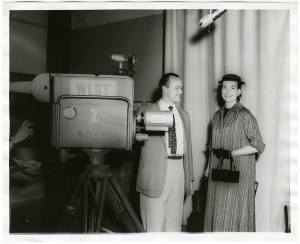 And about the Death of the Fairness Doctrine:
The Fairness Doctrine sustained a number of challenges over the years. A lawsuit challenging the doctrine on First Amendment grounds, Red Lion Broadcasting Co., Inc. v. Federal Communications Commission , reached the Supreme Court in 1969. The Court ruled unanimously that while broadcasters have First Amendment speech rights, the fact that the spectrum is owned by the government and merely leased to broadcasters gives the FCC the right to regulate news content. However, First Amendment jurisprudence after Red Lion started to allow more speech rights to broadcasters, and put the constitutionality of the Fairness Doctrine in question.
In response, the FCC began to reconsider the rule in the mid-80s, and ultimately revoked itin 1987, after Congress passed a resolution instructing the commission to study the issue. The decision has been credited with the explosion of conservative talk radio in the late ‘80s and early ‘90s. While the FCC has not enforced the rule in nearly a quarter century, it remains technically on the books. As a part of the Obama administration’s broader efforts to overhaul federal regulation, the FCC is finally scrapping the rule once and for all.
 This was in August, 2011. This is from Salon: “From the Fairness Doctrine to fake news: The deregulation of media has proved anathema to democracy”.
The 1990s’ deregulation of media illustrates the effectiveness of the Antidemocracy Movement in convincing Republicans and Democrats alike that a narrow, market-driven, anti-government approach was imperative, even if it led to oligopoly.
As the media became a multibillion-dollar industry, a frenzy of mergers continued, wiping out hundreds of competitors. So today most of what Americans watch and see is controlled by just a handful of companies—all preoccupied with their shareholders’ wealth, not our society’s health. The result is a downward spiral of programming. One telling narrative? By 2000, the average length of presidential candidates’ soundbites on the network nightly news had shrunk to seven seconds, less than a fifth of their length in the 1968 presidential election.
As Craig Aaron, president and CEO of the media-focused public interest group Free Press, explained to us:
Years of rubber-stamping merger deals plus the removal of and raising of ownership limits in the 1996 Act did tremendous damage to the media landscape.
Next to no issue coverage means a bigger microphone for Donald Trump.
The undermining of media as a public good and its parallel consolidation helped take us to the election of Donald Trump. A narrow focus on profitability led to this shocking finding by longtime news analyst Andrew Tyndall: In 2016, from the first of January through October 26, the three major television networks’ evening newscasts together “devoted just 32 minutes to issues coverage.” That’s roughly one-seventh of what it was in 2008. What did they cover instead? Heading into the primary season, sensational Trump stories were all but ubiquitous. By March of 2016, he had received nearly $2 billion in free media coverage. But virtually none of it touched on the serious issues our country faces.
Moreover, our hunch is that many of Trump’s lies were never seriously challenged simply because digging might have interrupted the “excitement” of the election, dimming media’s profits from political advertising. In 2012 such profits accounted for about 20 percent of TV station revenues, as much as four times the share of ten years earlier. Another reason: As online news outlets and social media have taken off, newspaper journalism—long entrusted with investigating in the public interest—has taken a big hit, with its workforce shrinking by 39 percent in 20 years. So even if many outlets wanted to expose Trump’s lies, they had little staff to investigate.
Concurrently, more Americans are choosing self-reinforcing news sources, from blogs to websites—creating an echo chamber that alternative narratives can’t penetrate. As Wired (11/18/16) warned, “We develop tunnel vision [and] eventually become victims to our own biases.” So too has talk radio become increasingly polarized, insular, and narrow-minded, and abetted, unsurprisingly, by essential players in the Anti-Democracy Movement. From 2008 to 2012, the Heritage Foundation, the Kochs’ Americans for Prosperity and related groups provided approximately $22 million in sponsorships to extreme right-wing talking heads, including Sean Hannity, Glenn Beck, Rush Limbaugh and Mark Levin. Many of these radio figures, especially Beck—and the local radio hosts they inspire—were critical in stirring up resentment and providing guidance to Tea Party activists from 2009 onward, as chronicled by journalist Will Bunch in his book The Backlash.
 Let’s end with another of the little guys. This an editorial out of Greensborough.
Fake news!
Sometimes you hear this label applied to news reports that are clearly false and meant to mislead. But other times you hear the cry “fake news” just because the person reading facts does not like what he/she reads.
So with actual as well as perceived “fake news” around, what constitutes real news, news that’s reliable, trustworthy journalism? And how have we gotten to the point of needing to debate whether news is real or not anyway?
Speaking at the Bryan Lecture Series a few weeks ago, Ted Koppel, former ABC News anchor and former host of “Nightline,” gave us a quick history lesson about American journalism. For many years our journalism was kept relatively trustworthy by “gatekeepers,” such as noted TV anchors and well-known editors and publishers.
The FCC wielded more influence through its “Fairness Doctrine,” which, as Dylan Matthews explains, “required that TV and radio stations holding FCC-issued broadcast licenses to (a) devote some of their programming to controversial issues of public importance and (b) allow the airing of opposing views on those issues.”
With the relaxing of Fairness Doctrine enforcement in 1969 and its repeal in 1987, the floodgates were opened for unapologetically biased news and talk shows. Now we find ourselves in a time when factual news is being replaced with more and more opinion writing and greater focus on entertainment. Americans are losing access to hard facts and careful reporting.
How can we begin to get ourselves out of this fix?
You can go read the suggestions along with the rest of today’s linky goodness!
What’s on your reading and blogging list today?

 peej
peej Carissa
 bostonboomer
 dakinikat
 ecocatwoman
 mablue2
 Mama Lopez
 peggysue22
 quixote
 skydancingguestblogger
 Mona (aka Wonk the Vote)



 Sky Dancing
Recent Comments