Sorry this is so late. JJ’s mother-in-law passed so she will be taking the week off. It’s my turn today to fill those big shoes! However, my A/C went out yesterday afternoon late. I thought it was only struggling to keep up with the heat when I left for a cocktail hour gig. When I got home from that gig last night, I opened the door on a very hot home and three very miserable animals. It was obvious that the A/C wasn’t just struggling. It was pretty dead. I spent the night trying to get to sleep and only did so at about 4am with the help of Benadryl. Fortunately, I got some relief at 8 am when the owner of the local repair shop got to me and fixed it quickly! I was lucky to meet Julian Marin at my local watering hole awhile back because he ended our suffering here at the KatHouse. I went back to sleep and didn’t get up until around 2 my time. Fortunately, it’s a bad capacitor that’s still under warranty. It turned out to be a quick fix.
So, I’m not letting this mass shooting in Lafayette go for awhile. Several things stand out to me. First, the killer was a rabid misogynist who went on Talk Radio shows screaming about the Biblical roles of women. It shouldn’t be lost on any one that he chose an Amy Schumer movie which was going to have a larger than normal number of women in attendance and that a solid majority of his victims–including the dead ones—were women. Second, there are mass shootings in New Orleans all the time. Gun Violence is a near every day occurrence here and many victims are innocent children playing in the street and elderly people sitting on porches. Where is the national news media on those instances? Third, Louisiana’s gun laws are among the loosest in the country and our deaths attributable to guns are the second highest. Our governor is eager to show the NRA and the state his gun fetish. His policies of disabling whatever few gun laws the state had are exactly why these kinds of problems happen. He can pray to his imaginary friend as much as he wants and focus on the victims. But, he needs to realize that the blood of every gun victim in this state–since he’s started disabling the few reasonable restrictions that we’ve had–is on his hands. If he and others only say “no one could imagine” then he and those others join the ranks of the deliberately avoiding the obvious club.
A governor issuing a call for prayers in the wake of a fatal mass shooting is almost boilerplate by now, but what good does it truly do? Prayers will not pull the bullets out of those people, nor repair their flesh. The frequency of these terrible events has somehow numbed us, and the lack of political courage on the right (and at times, on the left) to do anything to stem the flow of guns into our country is staggering. But can it help, somehow?
“Prayer in these moments serve two basic functions in my opinion: one as a sincere attempt at showing sorrow and hoped for comfort for the deceased, and second, as a hope the violence will stop,” Butler told me. “However, these prayers, while sincere, tend to be diffuse, non focused, and often are not prayers that are about the root cause of the situations: usually people’s actions, changes in gun laws, or repentance—sorrow for being a part of a culture that promotes the violence. Personally, I think it is more about soothing of those who have lost loved ones, and a way to forget the real issues at hand that need to be addressed.”
Jindal is asking us to comfort ourselves in this moment, which sounds right. There he was in Lafayette on Thursday night, recommending prayer as the first recourse and saying,“We never imagined it would happen in Louisiana,” and expecting to be taken seriously. Having now suspended his presidential campaign, he’s going back to being just the governor of the state with perhaps the nation’s weakest gun laws and definitely its worst gun violence. Jindal uses guns as campaign props, frequently touting his hunting acumen, A+ grade from the NRA, and enthusiasm for firearms in speeches, interviews, and in his Twitter feed. “In Louisiana and all across America,” Jindal told the CPAC audience in 2012, “we love us some guns and religion.”
Both came into play on Thursday night in Lafayette. But comforting people after mass shootings, by definition, makes them comfortable after mass shootings. Praying may make you feel better in the moment, but Jindal is essentially asking that citizens do nothing to solve the actual problem of gun violence. People can talk to God if they want, but someone had better be calling Wayne LaPierre at the National Rifle Association. A few members of Congress, too.
As Slate writer Jamelle Bouie noted Thursday night on Twitter, we live in a country willing to accept dozens of murdered children—in a tony Connecticut suburb, no less. Also, we seem to be able to swallow a child and five others being killed in an assassination attempt on a sitting member of Congress, Gabrielle Giffords. Urgency on this issue seems to be out of style, but I’d think that perhaps even out of sheer boredom, this nation would not simply shrug its collective shoulders in grief and resignation for nearly a hundred times in the last several years, and join those actually trying to make our national gun policies make sense. In the absence of any faith that can be done, it will take work.
The words “well-regulated militia” are always the ignored parts of the second amendment when you’re around the gun nuts. Their answer to gun violence is always more guns. Let me ask you something, if you saw a child throwing rocks at other children in a playground would you give those other children rocks and expect the problem to be solved? And, what would you think about arming every one in a dark crowded theater then calling for a virtual shoot out at the OK Corral? Certainly, responsible gun owners know that kind of environment is not likely to produce a positive outcome. However, white male apologists like Rick Perry always blame mental illness and are blaming “gun free zones”. It’s never about the issues of right wing extremists and their racist, misogynist, radical christianist screeds. It’s always about mental illness and not enough guns.
Rick Perry said in an interview Sunday on CNN’s “State of the Union” that the shooting in Lafayette, Louisiana, earlier this week shows why gun-free zones are “a bad idea” and said he believes people should be able to take their firearms to the movies.
“I think that it makes a lot of sense to send a message across this country,” Perry said when asked by host Jake Tapper if the former governor believed a way to prevent such violence would be to allow moviegoers to take guns inside. “If we believe in the Second Amendment, and we believe in people’s right to protect themselves and defend themselves, and their families.”
John Russell “Rusty” Houser on Thursday shot 11 people, killing two, in a theater using a handgun he legally purchased from a pawn shop, authorities have said. Houser, who authorities say had a history of legal and mental problems, then turned the gun on himself.
“I will suggest to you that these concepts of gun-free zones are a bad idea,” Perry said. “I think that you allow the citizens of this country, who have appropriately trained, appropriately backgrounded, know how to handle and use firearms, to carry them. I believe that, with all my heart, that if you have the citizens who are well trained, and particularly in these places that are considered to be gun-free zones, that we can stop that type of activity, or stop it before there’s as many people that are impacted as what we saw in Lafayette.”.
Perry said shootings in gun-free zones like movie theaters and churches — such as the one in Charleston, South Carolina, the scene of a racially-motivated bloodbath that killed nine last month — happen because of a failure to enforce existing gun laws. He said current laws should have prevented Houser from obtaining his gun.
“I think we have the laws in place. Enforcement of those laws is what seems to be lacking, both in Charleston and here in Lafayette, Louisiana,” he said. “We see individuals who are obviously mentally impacted. These are individuals who I think that somewhere, somebody didn’t do their job in the standpoint of enforcing the laws” that are already on the books.
Why does New Orleans have so much gun violence? Yes, many nuances and history of gangs and crime are to be taken into account. City crime is always complex to certain degrees. Yet, one of the major contributing factors in Louisiana is the fact that the availability of guns is much higher than in states like New York, Illinois, and California.
Louisiana has one of the most lax gun laws in the country. Gun sales are hardly regulated properly. You can buy a gun at a pawn shop quickly, provided you are 21 years old and have a Louisiana state ID. If that doesn’t work, well there are the gun shows that Louisiana has held.
The gun show loophole is problematic, and allows anyone to buy military grade firearms without proper background checks. As long as the cash is in hand, many retailers at these gun shows will sell guns if the buyer has proper ID or not.
Now who would show up to a gun show with thousands of dollars in cash, and not want a background check? Hmmm? Criminals, perhaps?
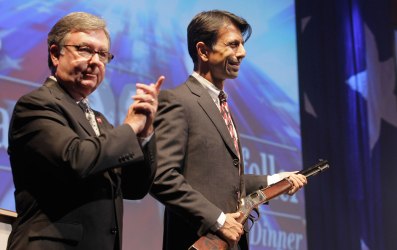
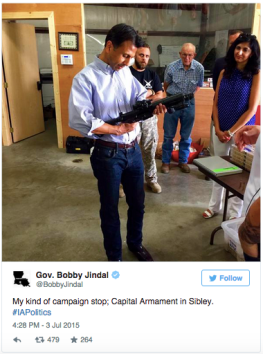
Then factor in Bobby “Louisiana Loves Guns” Jindal, governor of the state, who seems to sit deep in the NRA’s pocket. Under his terms in office, Jindal has regularly weakened gun safety regulations, and often appears at gun stores during his campaigning, to have pictures of himself with whatever the shop’s biggest rifle is.
In 2013, Bobby Jindal signed six gun laws. Most of these laws made it easier for criminals and mentally ill people to obtain laws. He should’ve known he was setting the state up for more mass shootings but as usual, he’s more concerned about things that would contribute to his presidential ambitions. He did sign bills into laws to increase the ability of state and federal agencies to share information on people who should not have access to guns. However, the gun show loop hole alone means that nothing will ever be done with that information. The Lafayette shooter is perhaps a textbook example of some one that should not have access to guns, yet he legally acquired one.
The most discussed piece of legislation in the batch signed Wednesday was House Bill 8by state Rep. Jeff Thompson, R-Bossier City. The new law will enforce penalties on the intentional publication of the personal information of concealed handgun permit holders.
Citizens face penalties of up to six months in jail and $10,000 for those who “intentionally disseminate for publication” the personal information, such as names and addresses, of permit holders. Law enforcement or public safety employees who share such information will face up to six months in jail and a fine of $500.
Thompson, who helped found the pro-gun group Defend Louisiana this year, said the legislation was introduced largely as a reaction to the publication of New York gun permit holders’ names and addresses by The Journal News last year. He said permit holders’ lives and property were put at risk by the release and he wants to ensure such publication will be penalized in Louisiana.
“It is a great day in Louisiana and across this nation for those of us who refuse to give an inch when it comes to defending our right to protect our families and we will stand strong in the defense of the Second Amendment,” Thompson said Wednesday.
“Responsible, law-abiding citizens should not be villainized simply because they are concealed carry permit holders,” he added.
The bill received significant push-back from journalists, including Baton Rouge Advocate Executive Editor Carl Redman and Louisiana Press Association Executive Director Pamela Mitchell. Penalties will not be imposed if the permit holder had approved the information release or if it was already in the public domain. Publication would be allowable if the permit holder committed a felony involving a gun or if the information is subject to a court order.
“We love us some guns,” Bobby Jindal once said of his fellow Louisianans. Two of them were killed, and nine others wounded, on Thursday night when a man walked into a movie theater in Lafayette, sat for a while, and then fired more than a dozen rounds from a .40 caliber handgun.
“We never imagined it would happen in Louisiana,” Jindal said afterward, though the state has the second-highest rate of gun deaths in the country, more than twice the national average. Louisiana also has some of the laxest firearm regulations, for which Jindal bears much responsibility. During his eight years as governor he’s signed at least a dozen gun-related bills, most intended to weaken gun-safety regulation or expand access to firearms. One allowed people to take their guns to church; another, into restaurants that serve alcohol. He broadened Louisiana’s Stand Your Ground law, and made it a crime to publish the names of people with concealed carry permits. At the same time Jindal has pushed for cuts to mental health services.
Jindal treats guns not as weapons but political props. On the presidential campaign trail he’s posed repeatedly for photos cradling a firearm in his arms. “My kind of campaign stop,” he tweeted earlier this month from an armory in Iowa. After the Charleston massacre, he called President Obama’s mild comments about gun violence “completely shameful.” The correct response then, according to Jindal, was “hugging these families,” and “praying for these families.”
The gunman who opened fire in a Louisiana movie theater should not have been allowed to legally buy the gun he used to kill two people and injure nine because of his mental history, Gov. Bobby Jindal said Sunday.
Shooter John Houser “should have never been able to buy that gun,” Jindal told NBC News. “That should have never been able to happen.”
Jim Cavanaugh, a retired Bureau of Alcohol, Tobacco, Firearms and Explosives agent and now NBC News security analyst, said those red flags should have kept Houser from buying a gun in any state.
“If he’s adjudicated as a danger to himself or others, or not able to handle his affairs due to his mental capacity, he is also barred from having a firearm,” Cavanaugh said.
It is unclear whether officials in Georgia filed records about Houser’s involuntary hospitalization, which would have been funneled to the FBI’s database and therefore surfaced during a background check in any state, according to The Associated Press.
“Obviously somebody with this kind of history should have never been able to buy a gun,” Jindal said, noting that Louisiana laws would have prevented Houser from legally buying a gun.
In order to acquire a concealed handgun license in Louisiana, an applicant must “not suffer from a mental or physical infirmity due to disease,” according to the Louisiana Department of Public Safety and Corrections. But private owners and gun show sellers aren’t required to perform background checks to determine the mental health and arrest history of prospective gun buyers.
In the immediate wake of the shooting, Jindal, who is running for president and is generally known as pro-gun (the NRA last gave him an “A+” rating), declined to speak on gun policy, saying he wanted to give Lafayette a chance to grieve.
Authorities have yet to determine a motive for why Houser chose to attack people at the showing of “Trainwreck,” why he chose to target Lafayette and why he picked a Thursday evening.
Police in Lafayette, Louisiana are evidently struggling to understand why the outspokenly misogynistic, racist and anti-Semitic John Russell “Rusty” Houser murdered two women and wounded 9 other moviegoers at a showing of “Trainwreck,” a film written by and starring Amy Schumer, a feminist comedian with a Jewish father, known for joking frankly about sex.
Col. Michael D. Edmonson, superintendent of the Louisiana State Police, wondered aloud about Houser’s motives at a press conference:
Why did he come here? Why did he do that? … We may not find a motive.
It seems to me that Houser’s likely motive is staring them in the face.
Because it turns out that Houser was pretty well-known, at least to regular viewers of one local TV talk show in Columbus, GA, as an angry right-wing fanatic who hated women. As one former host of the show recalled,
He was anti-abortion. … Rusty had an issue with feminine rights. He was opposed to women having a say in anything.
Houser evidently appeared on the live show dozens of times as a “gadfly” whose appearances “would generate calls.”
When news emerged that a middle-aged white man in Lafayette, Louisiana opened fire at a showing of the Amy Schumer vehicle Trainwreck, I immediately had this sinking feeling that the movie choice wasn’t a coincidence—that this was, like theElliot Rodger and George Sodini killings, an act of rage at women. While Trainwreck is a fluffy rom-com, it’s also a popular topic of chatter in the feminist-sphere, and therefore likely to be noticed by the seething misogynists who monitor the online activities of feminists with unsettling obsessiveness.
That fear is now moving from the uneasy-feeling column to the likely-possibility column, with Dave Weigel of the Washington Post reporting that alleged shooter John Russell Houser was a rabid right-winger—he even went to one of those unranked conservative Christian law schools—who had particularly strong anger towards women for their growing independence and rights. Former talk show host Calvin Floyd had Houser on as a frequent guest, knowing that his off-the-wall opinions would generate audience interest: “The best I can recall, Rusty had an issue with feminine rights,” Floyd said. “He was opposed to women having a say in anything.” Houser also had a history of domestic violence.
It would be nice, as Jessica Winter argued in Slate after the Charleston shooting, if this country could have a grown-up conversation about gun control in the wake of crimes like this. Instead, we’re just going to hear a bunch of ridiculous rhetoric about how more guns will fix this problem, as if Lafayette isn’t one of those parts of the country where every and their poodle is packing heat. But since that’s not happening, maybe we can talk about the continuing role that misogyny plays in the relentless drumbeat of gun violence in this country.
My colleague Ben Mathis-Lilley noted today at Slatest, there were 14 other gun-based murder-suicides in the past week in this country, resulting in the loss of 36 lives. If you look down the list of the killings, an unmistakeable pattern pops out: “shot and killed his 37-year-old wife… shot and killed his ex-wife… shot and killed his 62-year-old wife… shot and killed his 23-year-old girlfriend…” and so on. Most of these killings involve men killing women that they were in a relationship with, had lost a relationship with, or likely wanted a relationship with, but were rejected. This last week also featured a bizarre story of a woman who not only survived beingkidnapped and raped by a man but also saw her boyfriend and a random other man killed in the rapist-murderer’s rampage.
So much of this stuff seem clear to us and it escape our policymakers, the police, and the media who are co-conspirators in the gun deaths that impact so many women and racial minorities on a daily basis. I can only shake my head at the amazing lack of self evaluation by those basking in the glow of white male christianist privilege.
The day after the shooting in Charleston, South Carolina, that killed nine people in a church June 17, Jindal said it was not the time to discuss gun control but rather an occasion for prayer and hugs.
Jindal officially announced his entry in the campaign for the 2016 Republican presidential nomination a week later, but he was regarded as a candidate for months before then — and it was in that light that he was asked to respond to President Barack Obama’s suggestion that the Charleston tragedy fit a distinctly American pattern of firearms violence that should be addressed.
Jindal characterized Obama’s comment as a “completely shameful” attempt to “score cheap political points.”
In the hours after the Lafayette shooting, in which a gunman fatally shot two women and wounded nine others before taking his own life, Jindal again said prayers and hugs made for the appropriate response.
“There’ll be a time; I’m sure folks will want to jump into the politics of this,” he said. “Now is not the time.”
That didn’t prevent gun control advocates from landing on Jindal with both feet. The New Republic accused Jindal of enabling gun violence in Louisiana — a state with one of the highest rates of firearms violence and least-restrictive gun regulations — citing his enthusiastic pro-gun record and support for legislation that permits guns in churches and creates lifetime concealed-carry permits. In the Daily Mail, commentator Piers Morgan was particularly vehement, saying the blood of the victims was on Jindal’s hands.
But such attacks are unlikely to faze Jindal, said Bernie Pinsonat, a veteran Louisiana political pollster.
“That’s like throwing him into the briar patch,” Pinsonat said. “Democrats or anyone else who is anti-gun, they’re not voting for Jindal anyway.”
Like some one on Twitter said, once you allow a mass murderer to come in and gun down innocent children and you can still do nothing as a policymaker but talk about more guns and prayers, you’ve pretty much lost the battle to the gun industry. You’ve also conceded to the moral high ground to greed and political ambition.
What’s on you reading and blogging list today?
Did you like this post? Please share it with your friends:
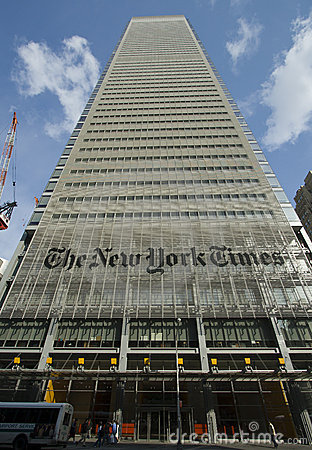
Early Friday morning, The New York Times published a story about Hillary Clinton on the front page below the fold. In it reporters Michael Schmitt and Matt Apuzo stated that–according to unnamed government sources–a criminal investigation into emails from Hillary Clinton’s server was in the offing.
The story’s lead soon had to be altered, and in the course of the yesterday, the story fell apart. Dylan Byers reported the changes at Politico at 4:58AM Friday.
The New York Times made small but significant changes to an exclusive reportabout a potential criminal investigation into Hillary Clinton’s State Department email account late Thursday night, but provided no notification of or explanation for of the changes.
The paper initially reported that two inspectors general have asked the Justice Department to open a criminal investigation “into whether Hillary Rodham Clinton mishandled sensitive government information on a private email account she used as secretary of state.”
That clause, which cast Clinton as the target of the potential criminal probe, was later changed: the inspectors general now were asking for an inquiry “into whether sensitive government information was mishandled in connection with the personal email account Hillary Rodham Clinton used as secretary of state.”
The Times also changed the headline of the story, from “Criminal Inquiry Sought in Hillary Clinton’s Use of Email” to “Criminal Inquiry Is Sought in Clinton Email Account,” reflecting a similar recasting of Clinton’s possible role. The article’s URL was also changed to reflect the new headline.
As of early Friday morning, the Times article contained no update, notification, clarification or correction regarding the changes made to the article.
Whoever it is at the NYT who is making decisions based on Clinton hatred is making a laughing stock of what was once considered “the newspaper of record.”
Late last night, The New York Times published an anonymously sourced reported, titled ”Criminal Inquiry Sought in Hillary Clinton’s Use of Email,” that claimed two inspectors general asked the Justice Department to open a criminal investigation into whether the Democratic presidential frontrunner “mishandled” sensitive government information by using a personal email account and server while she was secretary of state. That story quickly fizzled by early Friday morning, with the Justice Department quashing talk of a criminal probe, although a new report claims Clinton sent at least four emails that contained classified intelligence community information from her private server while at the State Department.
A spokesperson for the Inspector General of the Intelligence Community confirmed to the Wall Street Journal that a review of 40 of the 30,000 emails Clinton has released from her time in office found that four “were classified when they were sent and are classified now.” Clinton had previously claimed she never sent classified emails using her personal server, although the State Department has later acknowledged that some information in the messages should be retroactively classified.
But even that was incorrect, as reported Michael Schmidt had to admit on Hardball With Chris Matthews last night (thanks for Dakinikat for telling me about the MSNBC report. If you watch it, you’ll learn that there never was any criminal investigation and that the emails in question were not even sent by Hillary. They were messages that may have been sent to her that contained information that probably should have been marked classified, but were not so marked.
The best part of the Matthews segment was his interview with Representative Elijah Cummings, who explained why the story is just plain B.S. and not worth the paper it was printed on. Here’s the segment as posted on YouTube.
Back to the Salon story:
The Clinton campaign came out forcefully against the news, much swifter than they had with the initial round of New York Times reporting on the use of Clinton’s email account, with a campaign spokesman railing against “reckless, inaccurate leaks from partisan sources.” After allegedly receiving complaints on the report’s accuracy from the Clinton campaign, The Times changed the article’s title to ”Criminal Inquiry Is Sought in Clinton Email Account,”and most crucially, walked back the claim that Clinton herself was the target of the probe. A spokesman for the campaign released a statement on Twitter early this morning blasting the report:
Contrary to the initial story, which has already been significantly revised, she followed appropriate practices in dealing with classified materials. As has been reported on multiple occasions, any released emails deemed classified by the administration have been done so after the fact, and not at the time they were transmitted.”
In March, the newspaper published a highly touted article about Hillary Clinton’s use of a personal email account that, as I wrote in an earlier column, was wrong in its major points. The Times’s public editor defended that piece, linking to a lengthy series of regulations that, in fact, proved the allegations contained in the article were false. While there has since been a lot of partisan hullaballoo about “email-bogus-gate”—something to be expected when the story involves a political party’s presidential front-runner—the reality remained that, when it came to this story, there was no there there.
Then, on Thursday night, the Times dropped a bombshell: Two government inspectors general had made a criminal referral to the Justice Department about Clinton and her handling of the emails. The story was largely impenetrable, because at no point did it offer even a suggestion of what might constitute a crime. By Friday morning, the Times did what is known in the media trade as a “skin back”—the article now said the criminal referral wasn’t about Clinton but about the department’s handling of emails. Still, it conveyed no indication of what possible crime might be involved.
The story seemed to further fall apart on Friday morning when Representative Elijah Cummings (D-Md.) issued a statement saying that he had spoken to the inspector general of the State Department and that there had been no criminal referral regarding Clinton’s email usage. Rather, Cummings said, the inspectors general for State and the intelligence community had simply notified the Justice Department—which issues the regulations on Freedom of Information Act requests—that some emails subject to FOIA review had been identified as classified when they had not previously been designated that way.
But Eichenwald says the problems with he story “may” be even worse.
But based on a review of documents from the inspectors general, the problems with the story may be worse than that—much, much worse. The reason my last sentence says may is this: There is a possibility—however unlikely—that theTimes cited documents in its article that have the same dates and the same quotes but are different from the records I have reviewed. I emailed Dean Baquet, the Times’s executive editor, to ask if there are some other records the paper has and a series of other questions, but received no response. (Full disclosure: I’m a former senior writer for the Times and have worked with Baquet in the past.)
So, in an excess of caution, I’m leaving open the possibility that there are other documents with the same quotes on the same dates simply because the other conclusion—that The New York Times is writing about records its reporters haven’t read or almost willfully didn’t understand—is, for a journalist, simply too horrible to contemplate.
Indeed, if the Times article is based on the same documents I read, then the piece is wrong in all of its implications and in almost every particular related to the inspector generals’ conclusions. These are errors that go far beyond whether there was a criminal referral of Clinton’s emails or a criminal referral at all. Sources can mislead; documents do not.
The New York Times‘ dramatic changes to their initial, anonymously-sourced claim that federal investigators were seeking a criminal probe into former Secretary of State Hillary Clinton’s use of personal email raises significant questions about the paper’s reporting of the story.
Read the whole thing at the link, but here are the questions:
“Who were the Times’ sources?”
It’s still unclear, but whoever they were they apparently burned the Times and they should be outed, according to a Media Matter source.
“Did the Times seek documentary evidence of the referrals for a criminal probe?”
The answer seems to be no.
“Did The Times Reach Out To Democrats On The Benghazi Committee Before Publication?”
Again the answer seems to be no. The story only quoted Republicans.
“Did The Times Reach Out To The Inspectors General Before Publication?”
Apparently not.
Quoting Kurt Eichenwald, “What the hell is happening at The New York Times?” Are they trying to become The New York Post? The powers that be at the Times need to start providing some answers.
What else is happening? Please post your thoughts and links on any topic in the comment thread and have a terrific weekend!
Did you like this post? Please share it with your friends:
Three people, including the shooter, are now dead after a shooting at the Grand Theater on Johnston Street.
Brooks David of Louisiana State Police says the shooter was a 58-year-old male white male.
Lafayette Police Chief Robert Craft tells KLFY that the shooter died from a self-inflicted gunshot wound.
The shooting happened during a showing of the movie ‘Trainwreck”
Photo Gallery: Grand Theater Shooting Scene
Nine people were injured in the shooting. Three of the victims are being at treated at Lafayette General Hospital, three are being treated at Lourdes Hospital, and two are being treated at Acadiana General Hospital.
Investigators say the shooting appears to be random. The shooting happened around 7:30 p.m. at the Grand Theater on Johnston Street.
Louisiana Governor Bobby Jindal is currently visiting victims and families at Lafayette General.
» Gov. Bobby Jindal visited with a pair of teachers who were in the theater when the shooting started. One teacher was shot as she threw herself upon the other. She then pulled the fire alarm.
The injured teachers have been identified as Jena Meaux and Ali Martin from Iberia Parish, via a Go Fund Me page set up by educators’ groups.
» Col. Mike Edmonson, Louisiana State Police, said late Thursday that investigators would work in the theater throughout the night collecting evidence.
He said some bodies remained inside the theater, as did items of interest that police dogs had “hit on.” They included a backpack.
He said although the suspected shooter was dead, investigators still needed to process the scene to determine what happened.
The investigation would include a review of the shooter’s background and his family history, he said.
» Former Louisiana Insurance Commissioner Jim Brown told The Daily Advertiser The Grand Theatre is part of Southern Theatres. The company is headed by his brother-in-law, George Solomon of New Orleans, who was on his way to the scene Thursday night.
Brown, who was on the scene of the theater, said it would be closed for the indefinite future.
“He’s devastated, obviously,” Brown said.
» At 10:33, KATC reported that police were investigating a bomb threat at Greenbriar Condos on Doucet Road, across the street from the theater. The threat caused media to be pushed back from the area. Haz-Mat crews were responding.
» Unconfirmed reports indicated that Aries Marine CEO Bo Ramsay and his wife Gerri were among the wounded. Bo Ramsay was reportedly shot in the leg, and his wife grazed by a bullet. Neither injury was considered life-threatening.
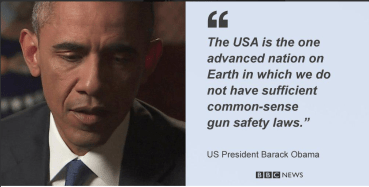
President Barack Obama has admitted that his failure to pass “common sense gun safety laws” in the US is the greatest frustration of his presidency.
In an interview with the BBC, Mr Obama said it was “distressing” not to have made progress on the issue “even in the face of repeated mass killings”.
He vowed to keep trying, but the BBC’s North America editor Jon Sopel said the president did not sound very confident.
However, Mr Obama said race relations had improved during his presidency.
Hours after the interview, a gunman opened fire at a cinema in the US state of Louisiana, killing two people and injuring several others before shooting himself.
In a wide-ranging interview, President Obama also said:
He is confident the Iran nuclear deal will be passed by Congress
Syria needs a political solution in order to defeat the Islamic State group
He would speak “bluntly” against corruption and human rights violations in Kenya
He would defend his advocacy of gay rights following protests in Kenya
Despite racial tensions, the US is becoming more diverse and more tolerant
Mr Obama lands in Kenya later on Friday for his first visit since becoming president.
But with just 18 months left in power, he said gun control was the area where he has been “most frustrated and most stymied” since coming to power in 2009.
“If you look at the number of Americans killed since 9/11 by terrorism, it’s less than 100. If you look at the number that have been killed by gun violence, it’s in the tens of thousands,” Mr Obama said.
You can read the full transcript of the President’s Interview here. The President expressed frustration at race relations and guns in our country.
OBAMA: There will be. Look there was never a promise that race relations in America would be entirely resolved during my presidency or anybody’s presidency. I mean, this has been a running thread – and – and fault line in American life and American politics since its founding.
And so some of the most recent concerns around policing and mass incarcerations are legitimate and deserve intense attention. And I feel that we are moving the ball forward on those issues. What I will say is that – eight years – well, after eight years of my presidency, that children growing up during these eight years will have a different view of race relations in this country and what’s possible.
Black children, white children, Latino children. America is becoming more diverse, it’s becoming more tolerant as a consequence there’s more interactions between groups. There are going be tensions that arise. But if you look at my daughters’ generation, they have an attitude about race that’s entirely different than even my generation.
And that’s all for the good. You mentioned the issue of guns, that is an area where if you ask me where has been the one area where I feel that I’ve been most frustrated and most stymied it is the fact that the United States of America is the one advanced nation on earth in which we do not have sufficient common-sense, gun-safety laws. Even in the face of repeated mass killings.
And you know, if you look at the number of Americans killed since 9/11 by terrorism, it’s less than 100. If you look at the number that have been killed by gun violence, it’s in the tens of thousands. And for us not to be able to resolve that issue has been something that is distressing. But it is not something that I intend to stop working on in the remaining 18 months.
Anyone reading headlines these days know these are major problems.
Houser is also known as Rusty Houser, and apparently has a presence on social media as an outspoken conservative.
The last thing someone posting as Rusty Houser posted on Facebook was in 2013, when he linked to an article called “A woman’s place in the church and the weak church elder.”
He wrote, “The bible doesn’t ask me to like what it says, only to obey it. Death comes soon to the financially failing filth farm called the US.”
He only had two things liked on Facebook, among them “I hate liberals!”
Police called Houser a drifter and said he had only been in Lafayette since early July.
A man identified as John Russell Houser on Twitter tweeted only twice. He wrote, “If you don’t think the internet is censored, try reading a newspaper from a country that hates liberals the way I do,” in June 2013.
A little earlier, he wrote, “The Westboro Baptist Church may be the last real church in America members not brainwashed.”
A man identified as Rusty Houser also posted on the website http://www.politicalforum.com. His last post, dated March 27, 2013, refers to the state of the American and world economies and says, “It is true that the US is about to fall. I will be in fear at that time as will everyone else, but not in a fear which resembles that of the leaders of foolishness and the brainwashed that follow.Truth carries with it an understanding of death. Rather than live without it,I will take death.” [sic]
According to his LinkedIn profile, Houser claimed that he was an entrepreneur. The profile claims he owned and operated two bars and was a real estate developer. However, his last listed job is in 2006.
In addition, a John Russell Houser from Phenix City, Alabama, is listed as a member of a group called the Tea Party Nation. However, KATC could not confirm if this John Russell Houser is one in the same with the shooter.
Did you like this post? Please share it with your friends:
I’m getting a very slow start today–sorry about that! This is going to be pretty much a link dump.
I just can’t stop thinking about Sandra Bland and Kindra Chapman–who still isn’t getting much attention from the national media. There is a nice article about Kindra in The Independent UK today.
Kindra Darnell Chapman was booked at the Homewood County Jail on a first-degree robbery charge after allegedly stealing another person’s cellphone, AL.com reported.
Family members and activists have compared the teen’s death to the case of Sandra Bland, a 28-year-old woman found hanged in a Texas jail cell just a day prior. Kathy Brady, the teen’s mother told AL.com that she believes police officers have killed her daughter….
A family member, who requested to not be identified, told My Fox Alabama that Chapman was a “wonderful person who did not deserve this.”
“She was a great person. She loved her sisters, her brother, she loved everybody. She had her whole life ahead of her.”
Kindra Chapman
Police claim Kindra committed suicide. Two so-called suicides of black women in two days? Their families are demanding answers and Americans need to make sure they get truthful ones.
Police claim they last saw her alive at 6:30pm and at 7:50pm, they found her hanged by a bedsheets in her cell. The teen was rushed to Brookwood Medical Center where she was pronounced dead.
A Change.org petition titled “We want immediate full disclosure on the alleged suicide of Kindra Darnell Chapman” demands transparency in the ongoing investigation. Nearly 2,700 signatures supported the petition as of Thursday morning.
A spokesperson from the Jefferson County DA’s office told The Independent that the autopsy may take up to four weeks and toxicology report may take six to eight, a usual time frame for the reports in Alabama.
The Sandra Bland case is getting massive coverage. Yesterday it was revealed that the video of Bland’s arrest had serious anomalies. The first to call attention to this was journalist Ben Norton. From his website: Dashcam Video of Violent Arrest of Sandra Bland Was Edited. If you go to that link, there are a number of updates. From the original piece:
The Texas Department of Public Safety uploaded dashcam police video of the arrest to YouTube on 21 July. Parts of the approximately 52 minutes of footage it uploaded appear to have been doctored.
A man leaves the truck in the center of the frame at 25:05. For the next 15 seconds, he walks toward the right of the frame and leaves. At 25:19, he suddenly appears again, promptly disappears, then returns at 25:22. The same footage of him walking is subsequently repeated….
At 32:37, a white car drives into the left side of the frame, then promptly disappears in the middle of the road. Seconds later, the same car drives back into the frame and subsequently turns left. This footage is later looped several times.
A different white car also drives into the left side of the frame and turns left from 32:49 to 32:59. The previous white car again briefly enters the frame at 33:04, and once more at 33:06, yet it suddenly disappears both times. When these cuts are made in the footage, the lights on top of the truck in the center of the frame also abruptly cut out.
At 33:08, the exact same footage from 32:37 is repeated, followed by the same second white car at 33:17….
It appears that someone cut footage out and looped part of the video in order to correspond with the recorded audio of Texas state trooper Brian Encinia speaking. Who exactly edited the footage is unknown, but the video was recorded by police and released by the Texas Department of Public Safety.
Sandra Bland
Please go to the link to read the rest along with multiple updates. Here’s just one:
They told the Texas Tribune that the video has not been edited. This seems unlikely. It is possible parts of the repeated footage are encoding errors, but it is unlikely that the 15-second repeated clip of a man leaving the truck is an encoding error.
Others have also noted that police dashcam videos usually have timecode on the footage. In this video, the timecode do not appear. Why this is is unclear. There is no answer at this point and an investigation needs to be conducted. A possibility some have suggested, however, is that, if the footage was indeed edited, as it likely was, whoever edited it zoomed in on the video or cropped the timecode.
The LA Times has also examined the police videos closely. Today they have a side-by-side comparison of the video with the anomalies vs. the “cleaned-up” video.
Police agencies and city halls throughout Waller County continue to receive angry and sometimes threatening phone calls and emails from across the country after the tragic jail death of Sandra Bland.
And along with the Bland’s death, city leaders and residents say they also mourn the negative national spotlight the incident has brought to this corner of Southeast Texas.
“We are in some way being judged and victimized by people that don’t know us and are making assumptions about us,” said Waller County District Attorney Elton Mathis, who has held face-to-face meetings with the Bland family.
Oh, boo hoo. Too f**king bad. Stop victimizing black people who drive cars through your county then.
The corporate media has mostly been focusing on trying to make Bland look like a crazy, depressed drug user. It also turns out she had epilepsy; and when she told the arresting officer that, he said “Good!” as he continued to manhandle her. The simple truth is that she never should have been stopped in the first place; and once she was stopped, the officer escalated the confrontation in unconstitutional ways. Regardless of how she died, Sandra Bland should be alive today and working in her new job.
Before I get going with my post, I want to note that Hillary will be hosting a Facebook chat this afternoon. You can post questions and read about it here.
Now to today’s reads. While the Sandra Bland case is still being investigated in Texas, another young black woman has died in police custody and once again authorities are claiming it was a suicide.
Authorities in Alabama claim a teen committed suicide in a jail cell an hour after being arrested, another suspicious case of a Black woman dying in police custody in the past week.
Kindra Darnell Chapman, 18, was jailed last Tuesday for allegedly stealing someone’s phone on the street, according to the Huffington Post. Chapman was charged with first-degree robbery and was last seen alive at 6:30 p.m. When officers went to check on Chapman an hour later, she was found unresponsive.
Chapman was pronounced dead at Brookwood Medical Center from apparent asphyxiation.
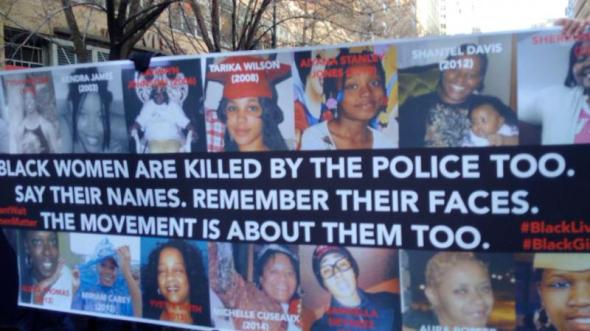
Although the mantra “Black Lives Matter” was developed by black women, I often worry that in the collective consciousness it carries with it an implicit masculine association, one that renders subordinate or even invisible the very real and concurrent subjugation and suffering of black women, one that assigns to these women a role of supporter and soother and without enough space or liberty to express and advocate for their own.
Last week, the prism shifted a bit, as America and the social justice movement focused on the mysterious cases of two black women who died in police custody.
The first and most prominent was Sandra Bland, a black woman from suburban Chicago who had moved to Texas to take a job at her alma mater, Prairie View A & M University, a historically black school about 50 miles northwest of Houston.
Is it just a coincidence that a young black woman died similarly in an Alabama jail cell?
Then, there was the case of 18-year-old Kindra Chapman, arrested on Tuesday in Alabama for allegedly stealing a cellphone. According to AL.com: “Jailers last saw her alive at 6:30 p.m. She was found unresponsive at 7:50 p.m. Authorities said she used a bed sheet to hang herself.” According to the paper, she had been booked in the Homewood City Jail at 6:22 p.m.
The deaths seem odd: young women killing themselves after only being jailed only a few days or a less than a couple hours, before a trial or conviction, for relatively minor crimes.
And the official explanations that they were suicides run counter to prevailing patterns of behavior as documented by the Bureau of Justice Statistics, which has found that, on the whole, men are more likely to commit suicide in local jails than women, young people are less likely to do so than older people, and black people are the least likely to do so than any other racial or ethnic group.
I think these two similar deaths of black women need to be closely examined by independent investigators from the Department of Justice.
As Blow noted, the tragic deaths of Sandra and Kindra call attention to the fact that the lives of black women as well as black men are in danger when they come in contact with police. Even if these women did commit suicide, most likely neither would have been in jail if they were white. Would a policeman have stopped a white woman for not signaling a late change and then slammed her head on the pavement as a Texas officer did to Sandra Bland? I don’t think so.
Over the weekend, I read a long article at the Huffington Post about what happens to young people who end up in the adult prison system. It’s a shocking and heartbreaking story, and it’s extremely important. I hope you’ll read it, because I can’t possibly do it justice with excerpts.
Cruel And All-Too-Usual: A Terrifying Glimpse Into Life In Prison–As a Kid, Story by Dana Liebelson, Art by Luke Tedaldi. The story is also accompanied by graphic videos. Here’s the introductory section of the story:
When the video above was filmed, the girl on the bed was 17 years old. For the purposes of this story, I’ll call her Jamie. There was a time when she liked acting in goofy comedy skits at her Detroit church or crawling into bed with her grandmother to watch TV. She loved to sing—her favorite artist was Chris Brown—but she was too shy to perform in front of other people.
Jamie, whose mother was addicted to crack cocaine, was adopted when she was 3. At high school, she fell in with a wayward crowd and started drinking and smoking weed. Since she didn’t always get along with her adoptive mom, she lived with a close family friend from her church whom she referred to as her sister. One fall day in 2011, they got into a bad fight over their living arrangements. The friend told police that Jamie threw a brick at her, hitting her in the chest, and then banged the brick so hard on the front door that she broke the glass mail chute. Jamie denies the assault—and the police report notes that the brick may not have hit her friend—but she admitted to officers that she was “mad” and “trying to get back in the house.” The Wayne County court gave her two concurrent six-month sentences, for assault and destruction of a building.
In a wealthier Michigan county, kids convicted of minor offenses are almost always sentenced to community service, like helping out at the local science center. Doug Mullkoff, a criminal defense attorney in Ann Arbor, told me that prison in such circumstances is “virtually unheard of.” But Jamie is from Detroit, and in January 2012, she was sent to the Women’s Huron Valley Correctional Facility, a prison that holds inmates convicted of crimes like first-degree homicide. From this point onward, her world was largely governed by codes and practices and assumptions designed for adult criminals.
Jamie is 20 now, but her soft brown eyes make her seem younger. When she first came to prison, women old enough to be her mother told her she was cute and promised to take care of her. “They rub on you and stuff, I can’t stand it,” she said. In the seven months before her 18th birthday, prison records show that Jamie was housed with at least three adult cellmates, including one in her 50s who had a history of cocaine possession. Jamie said she was also around adults in the showers and the yard. She had a bunkmate who did drugs she had never been around before, “something you snort.”
In this environment, Jamie found it hard to stay out of trouble. And when trouble came, she didn’t know how to explain herself to the guards. According to Chris Gautz, a spokesman for the Michigan Department of Corrections (MDOC), Jamie “failed in every instance” to meet good-behavior standards that under Michigan law allow certain inmates to have their records scrubbed clean after they serve their sentences. In June 2012, Jamie’s special status was revoked and she was resentenced to up to five years in prison for her original crime.
When this news sank in, Jamie snapped.
Remember this?
That led to the scene in the video, in which Jamie was essentially tortured by prison employees during their efforts to control her. This scene is just one example of the horrible treatment that minors receive in the U.S. prison system, as more and more juveniles are tried and sentenced as adults. Liebelson writes:
In the course of reporting on a lawsuit against the Michigan prison system, I obtained a series of videos depicting the treatment of underage inmates in adult facilities, as well as hundreds of prison documents through Freedom of Information Act (FOIA) requests and other sources. (Jamie is a plaintiff in the lawsuit.) These materials show under-18-year-olds being restrained, held in solitary confinement, forcibly extracted from their cells, tasered, and allegedly sexually assaulted. Some of these incidents would not violate any official rulebook, but are simply accepted practices inside adult correctional institutions.
In 1822, when prison reformers in New York proposed the nation’s first juvenile institution, they saw the need to keep children separate from adults as “too obvious to require any argument.” The juvenile justice system was founded on the idea that young people are capable of change, and so society has a responsibility to help them overcome early mistakes in life. More recent science has only confirmed this principle. Because adolescents’ brains are still developing, their patterns of behavior not yet fixed, they have a far better chance of being rehabilitated than adults. And yet this potential is lost in prisons and jails, which barely recognize any distinction between adults and minors. Amy Fettig, senior counsel for the American Civil Liberties Union’s National Prison Project, said, “The adult system is not designed in any way, shape or form to treat children, to rehabilitate children, or to recognize that children are different than adults.”
That is no longer the case in our country. Children are thrown into prisons with adults who take advantage of them and prison authorities who have no training in dealing with teenage offenders. As always in our system, the situation is likely to be worse for African American than white young people. I hope you will take the time to read this important story.
Kelvin Sewell, author, homicide cop, and recently fired police chief.
A few days ago, The Washington Post published a story that demonstrates that law enforcement personnel who are black can also face greater challenges than white officers and administrators.
POCOMOKE CITY, Md. — The crowd gathered outside City Hall last week, demanding that their community’s first black police chief — fired amid allegations leveled against white officers of departmental racism — be given his job back.
In a place that bills itself as the “Friendliest Town on the Eastern Shore,” angry residents marched with posters that read “We Support Chief Kelvin Sewell” and jammed inside the quaint red-brick building to voice their outrage to the Pocomoke City Council.
Pocomoke City has been on edge since Sewell was fired by the council June 29. According to the former chief and his supporters, he was sacked for refusing to dismiss two black officers who described working in a hostile environment.
The chief was fired because he supported the two officers in an EEOC complaint!
The officers alleged in complaints with the U.S. Equal Employment Opportunity Commission that they faced racism that was overt and rampant — allegations the city denies. Among the incidents alleged: a food stamp superimposed with President Obama’s face that was left on a black detective’s desk and a text message that read, “What is ya body count nigga?”
“This is one of the most egregious cases of primary racial discrimination and retaliation for assertion of rights before the EEOC that I’ve seen,” said Andrew G. McBride, co-counsel for the Washington Lawyers’ Committee for Civil Rights and Urban Affairs, which is representing Sewell. “Chief Sewell has a fantastic record as a police officer. He was terminated because he stood up for two African American officers who filed an EEOC complaint.”
It’s unbelievable! We’ve gone through nearly 8 years with our first African American President, and concurrently we’ve seen shocking levels of overt racism come to the fore in this country. We’ve seen one political party basically surrender to the racism of its political base. Where do we go from here? Where do we start to change this?
What else is happening? Please post your thoughts and links on any topic in the comment thread and have a good day.
Did you like this post? Please share it with your friends:
The Sky Dancing banner headline uses a snippet from a work by artist Tashi Mannox called 'Rainbow Study'. The work is described as a" study of typical Tibetan rainbow clouds, that feature in Thanka painting, temple decoration and silk brocades". dakinikat was immediately drawn to the image when trying to find stylized Tibetan Clouds to represent Sky Dancing. It is probably because Tashi's practice is similar to her own. His updated take on the clouds that fill the collection of traditional thankas is quite special.
You can find his work at his website by clicking on his logo below. He is also a calligraphy artist that uses important vajrayana syllables. We encourage you to visit his on line studio.












 peej
peej Carissa
 bostonboomer
 dakinikat
 ecocatwoman
 mablue2
 Mama Lopez
 peggysue22
 quixote
 skydancingguestblogger
 Mona (aka Wonk the Vote)



 Sky Dancing
Recent Comments