
Thursday Reads
Posted: May 29, 2014 Filed under: 2014 elections, morning reads | Tags: Maya Angelou 18 Comments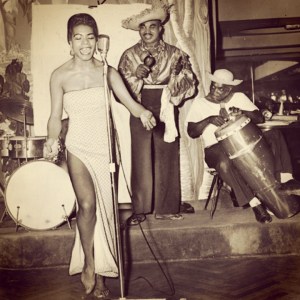
Good Morning!
The world lost the great activist, poet, author, and educator Maya Angelou yesterday. She was an outstanding person who led a full and productive life.
Maya Angelou, whose landmark book of 1969, “I Know Why the Caged Bird Sings” — a lyrical, unsparing account of her childhood in the Jim Crow South — was among the first autobiographies by a 20th-century black woman to reach a wide general readership, died on Wednesday at her home in Winston-Salem, N.C. She was 86.
Her death was confirmed by her longtime literary agent, Helen Brann. The cause was not immediately known, but Ms. Brann said Ms. Angelou had been frail for some time and had heart problems.
In a statement, President Obama said, “Today, Michelle and I join millions around the world in remembering one of the brightest lights of our time — a brilliant writer, a fierce friend and a truly phenomenal woman,” adding, “She inspired my own mother to name my sister Maya.”
Though her memoirs, which eventually filled six volumes, garnered more critical praise than her poetry did, Ms. Angelou (pronounced AHN-zhe-low) very likely received her widest exposure on a chilly January day in 1993, when she delivered her inaugural poem, “On the Pulse of Morning,” at the swearing-in of Bill Clinton, the nation’s 42nd president. He, like Ms. Angelou, had grown up in Arkansas.
I had to fortune and pleasure to meet Dr. Angelou when I was barely pregnant with oldest daughter at a conference. I was lucky to hear her speak and to be able to spend some time speaking with her. I actually have that meeting on a VHS tape that I will have to transfer to DVD one day. It also has me with Kate Millet and Bette Friedan and is one of my most prized possessions. I spoke to her about my teaching experience in an alternative high school where they basically dumped teenage pregnant girls and uncontrollable boys. I used to give them copies of her book “I know why the Caged Bird Sings”. She was amazing. She was serene in a strong way. I have to say she had a deep and profound effect on me then and every time I had the pleasure to read something she wrote.
Growing up in St. Louis, Mo., and Stamps, Ark., she was Marguerite Johnson. It was her brother who first called her Maya, and the name stuck. Later she added the Angelou, a version of her first husband’s name.
Angelou left a troubled childhood and the segregated world of Arkansas behind and began a career as a dancer and singer. She toured Europe in the1950s with a production of Porgy and Bess, studied dance with Martha Graham and performed with Alvin Ailey on television. In 1957 she recorded an album called “Calypso Lady.”
“I was known as Miss Calypso, and when I’d forget the lyric, I would tell the audience, ‘I seem to have forgotten the lyric. Now I will dance.’ And I would move around a bit,” she recalled with a laugh during a 2008 interview with NPR.
“She really believed that life was a banquet,” says Patrik Henry Bass, an editor at Essence Magazine. When he read Angelou’s memoir I Know Why the Caged Bird Sings, he saw parallels in his own life in a small town in North Carolina. He says everyone in the African-American community looked up to her; she was a celebrity but she was one of them. He remembers seeing her on television and hearing her speak.
“When we think of her, we often think about her books, of course, and her poems,” he says. “But in the African-American community, certainly, we heard so much of her work recited, so I think about her voice. You would hear that voice, and that voice would capture a humanity, and that voice would calm you in so many ways through some of the most significant challenges.”
Film director John Singleton grew up in a very different part of the country. But he remembers the effect Angelou’s poem “Still I Rise” had on him as a kid. It begins:
You may write me down in history
With your bitter, twisted lies,
You may trod me in the very dirt
But still, like dust, I’ll rise.
“I come from South Central Los Angeles,” he says. It’s “a place where we learn to puff up our chests to make ourselves bigger than we are because we have so many forces knocking us down — including some of our own. And so that poem … it pumps me up, you know. … It makes me feel better about myself, or at least made me feel better about myself when I was young.”
Singleton used Angelou’s poems in his 1993 film Poetic Justice. Angelou also had a small part in the movie. Singleton says he thinks of Angelou as a griot — a traditional African storyteller.
Longtime Texas GOP observers have noticed the sea change, too. They say the grassroots now controls the GOP.
“Things certainly have changed. The conservative grassroots activists have come to dominate the party establishment, offsetting or pushing aside some of the more traditional business/donor community,” said Texas Republican strategist Ray Sullivan, a former top aide to both Gov. Rick Perry and former President George W. Bush.
Sullivan said grassroots groups are much more organized and unified than in the past. They can also depend on help from national groups like the Senate Conservatives Fund and the Club for Growth.
“The conservative factions largely within Tea Party brands have become very well organized and have a significant amount of influence in Republican primary elections,” he added.

Two-thirds of Americans in a new Washington Post-ABC News poll disapprove of the Republican strategist raising questions about Clinton’s age and health in advance of her potential presidential run. The lopsided negative reaction to Rove’s commentary — just 26 percent approve of his topic of criticism — includes majorities of every age group as well as Democrats and independents. Republicans split evenly on the issue, with 45 percent approving and 46 percent disapproving of Rove broaching the issue.
One of the most durable myths in recent history is that the religious right, the coalition of conservative evangelicals and fundamentalists, emerged as a political movement in response to the U.S. Supreme Court’s 1973 Roe v. Wade ruling legalizing abortion. The tale goes something like this: Evangelicals, who had been politically quiescent for decades, were so morally outraged by Roe that they resolved to organize in order to overturn it.
This myth of origins is oft repeated by the movement’s leaders. In his 2005 book, Jerry Falwell, the firebrand fundamentalist preacher, recounts his distress upon reading about the ruling in the Jan. 23, 1973, edition of the Lynchburg News: “I sat there staring at the Roe v. Wadestory,” Falwell writes, “growing more and more fearful of the consequences of the Supreme Court’s act and wondering why so few voices had been raised against it.” Evangelicals, he decided, needed to organize.
Some of these anti-Roe crusaders even went so far as to call themselves “new abolitionists,” invoking their antebellum predecessors who had fought to eradicate slavery.
But the abortion myth quickly collapses under historical scrutiny. In fact, it wasn’t until 1979—a full six years after Roe—that evangelical leaders, at the behest of conservative activist Paul Weyrich, seized on abortion not for moral reasons, but as a rallying-cry to deny President Jimmy Carter a second term. Why? Because the anti-abortion crusade was more palatable than the religious right’s real motive: protecting segregated schools. So much for the new abolitionism.


 peej
peej Carissa
 bostonboomer
 ecocatwoman
 mablue2
 peggysue22
 quixote
 skydancingguestblogger
 Mona (aka Wonk the Vote)



 Sky Dancing
The commentary is correct in the Tea Partiers have taken over the GOP in Texas but that’s really not new. The largely rural RWNJs have been in charge for years but finally got more of their candidates on the ballot this cycle. I really don’t know how it will work out because people here don’t pay attention to politics unless absolutely forced to do so. Apathy is our real enemy here.
As an aside, it looks like the Santa Barbars Sheriff’s Dept may have lucked into finding the next Elliott Rodger before he could act. This young man had 7 guns and over 1000 rounds of ammunition in his apartment in Isla Vista.
tpm: Ummm, This Sounds A Bit Weird
Why isn’t having a home arsenal illegal?
At least it’s California where high capacity magazines are illegal. Even that isn’t true here and probably in Louisiana. We need a complete revamp of gun laws in this country. from top to bottom.
We do but it doesn’t seem likely to happen.
Ain’t gonna happen so long as the NRA scares the crap out of politicians.
Gun nut bingo. http://www.motherjones.com/mixed-media/2014/05/arguing-gun-nuts-bingo
That captures it. Like talking to robots.
http://www.dallasnews.com/news/columnists/steve-blow/20140528-democrats-won-the-gop-primary-vote.ece
And she was a Democrat her entire career until she switched parties to run for Congress after the GOP took control of the state.
WTF? 1,000 rounds and more, shooting thru walls, and bail is a lousy $2,500?
Wayne Slater has a somewhat similar opinion.
Dallas Morning News: In Texas, there’s no penalty for pushing as far right as possible
http://www.salon.com/2014/05/29/why_so_many_christians_still_literally_believe_in_demons_and_satan_partner/ interesting take on the hypocrisy of the Boston area Catholic archdiocese and freedom of religion
Texas Tribune: Sen. Wendy Davis agrees to debate in El Paso, Abbott appears to have declined
Wendy has accepted 6 debate invitations while Abbott has declined. In other states, he couldn’t hide until November but I’m not sure about here. Hopefully, it will mean more exposure for Wendy Davis anyway.
Maybe the new surgeon general of Texas (Ted Nugent for his authority on cat scratch fever) will debate in his place.
That would be hilarious but, to be brutally honest, the main difference between Nugent and Abbott is Nugent is just more up front with the crazy.
Gen Honore was on Maddow tonight. He needs to run for Governor of Louisiana and start doing it now! What a great guy.
Yup, I’m a member of his green army!!! Been keeping track of this. Wish the man would run for governor but his wife says no!
I sure hope she changes her mind. He’d be a super candidate!