
Are Edward Snowden Types Driving the DC Economy?
Posted: June 10, 2013 Filed under: U.S. Economy, U.S. Military, U.S. Politics | Tags: Alec McGillis, Booz Allen Hamilton, Edward Snowden, NSA building, surveillance state, Washington DC economy 59 Comments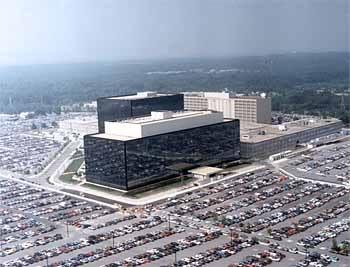
I thought we needed a fresh thread, so here’s another aspect of the Edward Snowden story to consider.
Alec McGillis has an interesting article up at The New Republic on all the high-salaried young outside contractors who are profiting from the rise of the U.S. surveillance state.
Edward Snowden is ready for his Rorschach test. Is he Benedict Arnold or Tom Paine, Daniel Ellsberg or Bradley Manning (or Aaron Swartz)? For the moment, I’ll leave that to others to debate, and instead consider Snowden through another lens: as an exemplar of the conspicuous, decade-long economic boom of Washington, D.C.
We’ve been hearing more and more about this boom, as the disconnect grows between the ever-more-prosperous Beltway and a Rest of America only now recovering from the recession. You’ve seen the stats: Seven of the 10 highest-income counties are in the Washington area; of the counties with the highest levels of college graduates, the top three are in greater D.C., and five of the top 10. There have been plenty of theories proffered to explain the Beltway boom—typically, conservatives like to talk about the growing scope of the federal government, while liberals like to talk about the rise in the influence industry that has accompanied it. But Snowden offers a reminder of another driver of the boom, one that I’ve long suspected was the biggest factor of all: the construction of the post-9/11 security leviathan, which has tentacles all around the country but is concentrated above all in greater Washington—not only at the headquarters of the FBI, CIA, and NSA, but in the sprawl of the contractors that have attached themselves to the region like barnacles, in hundreds of glass boxes along the Dulles Toll Road and Interstate 66 and Route 32, with naught but a cryptic acronym (SAIC, CAIC, ITT) affixed on their upper walls to hint at their identity (and sometimes not even that)….
The people working in these buildings and contractors are, by definition, a low-visibility lot, with job descriptions so inscrutable to the average American taxpayer footing the bill that they might as well be written in Sanskrit. But they make up a goodly share of the people who are crowding the Beltway’s ever-more-crowded highways in late-model cars and buying up condos and homes at rates that have made Washington the strongest real estate market in the country since 2000. But now we get to see one of their type close-up in a way that we are normally not able to. Edward Snowden is only 29 and lacks a four-year college degree, yet he has been pulling down $200,000 working for one of the biggest Beltway bandit contractors of all, Booz Allen Hamilton. He was most recently based not in Washington, but at an NSA facility in Hawaii (tough gig!), but he is otherwise highly typical of the new class of highly-paid security-state worker bees that litter the Beltway at firms like Booz Allen, which is headquartered in Northern Virginia.
Hey, they’re not only watching our every move, listening to our phone calls, and reading our e-mail and Facebook pages, but they’re getting filthy rich doing it–while the rest of us struggle with high unemployment, low-wage service jobs, collapsing infrastructure, and failing schools.
Let’s hear it for the good old USA!
This is an open thread.
Monday Reads
Posted: June 10, 2013 Filed under: morning reads | Tags: Blue State, Joan Walsh, Noam Chomsky, passive americans, Philadelphia, Philadelphia building collapse, Red State, republican modernity gap, Robert Reich, Will Bunch 97 Comments Good Morning!
One of the things that really amazes me when I talk to folks on either ends of the political spectrum is that both think that our republic is falling prey to self-dealing politicians and corporations that exist only to take from tax payers. The themes are somewhat different when it comes to the associated concerns but the overall vision of a country and great democracy in decline appears shared. I often wonder why very few of either see the real dangers but focus more on the silly stuff. We have had some pretty astounding portends of our Huxleyian future. It seems we have met the enemy and he is indeed us to borrow from that old Pogo cartoon.
I read this astounding take on the collapse of the building in Philadelphia by William Bunch at his blog at The Inquirer. It is called “When Things Fall Apart”. It’s an apt lede for nearly everything these days from our infrastructure to our national security policy.
To be clear. the collapse here in Philadelphia of the four-story building was no metaphor — it was a senseless, heartbreaking tragedy that was all too real for people who were shopping for bargains in a Salvation Army thrift store one minute and trapped in a mountain of rubble the next. But the building collapse did seem to be the the epitome, at least here in Philadelphia, of a week that had the feel from start to finish of things falling apart, of the old foundations collapsing and no one sure exactly which of the many suspects is to blame — or what, if anything, will replace them.
Much like the Santa Monica shooting, the news locally that some 3,700 Philadelphia school employees are getting pink slips, the first step in transforming the remaining schools from places of learning to oversized child warehouses, floated away into the weekend ether, In the past, such a move would be seen as a mere bargaining ploy, but in 2013 the sense is growing that no one can stop this tragedy, that Philadelphians have become powerless bystanders watching our schools fall down in slow motion — very much like the citizens who called help lines and begged for someone to stop the shoddy demolition at 22nd and Market.
Nationally, the news was dominated by a serious of revelations — initiated, we now know, by a courageous whistleblower named Edward Snowden — that the U.S. government’s scooping up of data about its everyday citizens — who we’re calling on the telephone, now long we talked for, and possibly whom we’re talking to overseas on the Internet via sites like Facebook or Google — is much more extensive than all but the most cynical among us expected, or feared.
Nothing about the deadly demolition of a blighted four-story building at the edge of downtown looked right. That’s what the people who had watched it in the days and weeks before the collapse told me.
In fact, everyone I spoke with said something seemed off – way off.
Everyone, apparently, except the city that issued a demolition permit for a building owned by infamous king of porn and serial slumlord Richard Basciano. The permit was issued to Philadelphia architect Plato Marinakos for Griffin Campbell Construction – led by a demolition boss who in addition to a criminal record, also has a history of violations on other properties he’s worked on.
Despite obvious red flags, the city is claiming everything was on the up and up, the demolition company had proper permits, the workers were certified, blah, blah, blah.
But I wonder how workers can be vetted when permits are issued through a middleman? And I wonder what, if any, oversight the project had? And I wonder if anyone from L&I ever inspected the site?
If anyone was monitoring the site, neighbors and construction workers said they missed some obvious signs of trouble.
Workers weren’t wearing hard hats.
They were trying to tear down the building in the dark with sledgehammers and flashlights.
And union carpenters working nearby said the wall that eventually collapsed wasn’t braced properly.
The demo was so screwed up, they said, they were literally waiting for the building to collapse.
And it did, apparently killing six people and hurting 13 others who had to be rescued from the rubble.
Yup. We see it all coming and then we watch as it keeps happening. Joan Walsh believes we Americans are a passive lot these days.
On Thursday night the National Journal released a poll showing that 85 percent of those surveyed believed it was “likely” that their “communications history, like phone calls, e-mails, and Internet use,” was “available for businesses, government, individuals, and other groups to access without your consent.” The steady drip, drip, drip of detail about our ever-expanding national security state has led all of us to protect ourselves a little with a kind of tired cynicism about it.
And I think there’s more to the indifference, even by a lot of liberals, to this latest news than just “it’s OK when our guy does it.” Partly, we blame ourselves. Probably every one of us has thought from time to time about how exposed we all are, from our cellphones to email to the Internet “cloud” to all of social media — and then we go about our business using all of it because it’s all so damn awesome. And so, on some level, we feel partly culpable. We always knew, or suspected, all of this was possible — and went on doing it anyway.
We know our cellphone signal lets us be tracked, which sometimes seems creepy, but seems excellent when you can activate “Find My Phone” to locate your iPhone in the cab where you dropped it last night, or find the best Japanese restaurant near your current location on Yelp. We all scream when Facebook changes its privacy settings without notice – but very few of us close our accounts in protest. We are tweeting our outrage from our Sprint smartphones, Googling to find out whether Sen. Obama really flip-flopped and voted to authorize the way the Bush administration was using FISA in 2008 (he did), then G-chatting with our editors about when we’re filing our stories on all of it.
There’s a strong Calvinist impulse in the American psyche: So often, Americans blame themselves for their troubles. If I worked harder, maybe I wouldn’t have lost my job. I should have stayed in school. If I hadn’t gotten so drunk, I wouldn’t have been date-raped. If I wasn’t strutting all over social media like a strumpet, and so tied to my iPhone, addicted to my email, they wouldn’t have so much data on me. We shouldn’t have walked down that dark data alley; it’s not like we weren’t warned.
 Again, it’s like people have the sense of something going all wrong but have their focus on the wrong thing. Walsh talks about the blinders of partisan democrats above. Republicans have a brand that denies more of reality. Lloyd Green–at the Daily Beast–calls it a “Modernity Gap”.
… a report issued this week by the College Republican National Committee, Grand Old Party for a Brand New Generation, indicted the Republicans for being “closed-minded, racist, rigid, old-fashioned;” for singularly attacking government; for hostility toward gay marriage, and for acting like the “stupid party.” But too many in the GOP seem to embrace that label.
Limiting the evidence to just the past two weeks, Exhibit No. 1: Texas Congressman Louie Gohmert, a GOP member of House Judiciary Committee, told a witness — who had ended her pregnancy after having been advised that the fetus was brain dead, that she should have carried the “child” to term.
Exhibit No. 2: Erik Erickson, the founder of RedState, mansplained to Fox News’ incredulous Megyn Kelly this week that “when you look at biology, look at the natural world, the roles of a male and a female in society, and other animals, the male typically is the dominant role.”
Exhibit No. 3: Phil Bryant, Mississippi’s first-term governor, blamed working mothers for American illiteracy.
Exhibit No. 4, Georgia Senator Saxby Chambliss attributed rape in the armed forces to hormones.”
The real problem, though, is not stray and scatterred comments. Rather it is that such comments speak to the party’s discomfort with modernity.
Notice how much of these examples are aimed at women and have a distinct religious fanaticism about them. I wanted to actually not make this a depressing post, but I find myself ending with more than a bit of a nihilistic headline from Noam Chomsky who asks: “Are We on the Verge of Total Self-Destruction?” However, his post looks at places where people are doing something.
In fact, all over the world — Australia, India, South America — there are battles going on, sometimes wars. In India, it’s a major war over direct environmental destruction, with tribal societies trying to resist resource extraction operations that are extremely harmful locally, but also in their general consequences. In societies where indigenous populations have an influence, many are taking a strong stand. The strongest of any country with regard to global warming is in Bolivia, which has an indigenous majority and constitutional requirements that protect the “rights of nature.”
Ecuador, which also has a large indigenous population, is the only oil exporter I know of where the government is seeking aid to help keep that oil in the ground, instead of producing and exporting it — and the ground is where it ought to be.
Venezuelan President Hugo Chavez, who died recently and was the object of mockery, insult, and hatred throughout the Western world, attended a session of the U.N. General Assembly a few years ago where he elicited all sorts of ridicule for calling George W. Bush a devil. He also gave a speech there that was quite interesting. Of course, Venezuela is a major oil producer. Oil is practically their whole gross domestic product. In that speech, he warned of the dangers of the overuse of fossil fuels and urged producer and consumer countries to get together and try to work out ways to reduce fossil fuel use. That was pretty amazing on the part of an oil producer. You know, he was part Indian, of indigenous background. Unlike the funny things he did, this aspect of his actions at the U.N. was never even reported.
Perhaps it is time we here in the US took similar action. Rather than accepting this march to the destruction of our privacy, our identities and our freedoms, we should do what we can where we are. Here are the things we need to change via Robert Reich. Most are the result of the Reagan mindset that our government is the problem. However, his list shows that the red states are getting worse while the blue states are showing signs of moving the other direction. Is geography destiny in this country once again?
Federalism is as old as the Republic, but not since the real Civil War have we witnessed such a clear divide between the states on central issues affecting Americans.
Some might say this is a good thing. It allows more of us to live under governments and laws we approve of. And it permits experimentation: Better to learn that a policy doesn’t work at the state level, where it’s affected only a fraction of the population, than after it’s harmed the entire nation. As the jurist Louis Brandies once said, our states are “laboratories of democracy.”
But the trend raises three troubling issues.
First, it leads to a race to bottom. Over time, middle-class citizens of states with more generous safety nets and higher taxes on the wealthy will become disproportionately burdened as the wealthy move out and the poor move in, forcing such states to reverse course. If the idea of “one nation” means anything, it stands for us widely sharing the burdens and responsibilities of citizenship.
Second, it doesn’t take account of spillovers — positive as well as negative. Semi-automatic pistols purchased without background checks in one state can easily find their way easily to another state where gun purchases are restricted. By the same token, a young person who receives an excellent public education courtesy of the citizens of one states is likely to move to another state where job opportunity are better. We are interdependent. No single state can easily contain or limit the benefits or problems it creates for other states.
Finally, it can reduce the power of minorities. For more than a century “states rights” has been a euphemism for the efforts of some whites to repress or deny the votes of black Americans. Now that minorities are gaining substantial political strength nationally, devolution of government to the states could play into the hands of modern-day white supremacists.
A great nation requires a great, or at least functional, national government. The Tea Partiers and other government-haters who have caused Washington to all but close because they refuse to compromise are threatening all that we aspire to be together.
Just some things to think about. What’s on your reading and blogging list today?
Glenn Greenwald’s NSA Source, Edward Snowden, Outs Himself
Posted: June 9, 2013 Filed under: Media, PRISM, U.S. Politics | Tags: CIA, domestic spying, Edward Snowden, Glenn Greenwald, Hong Kong, NSA, The Guardian 101 Comments
Edward Snowden
Another “bombshell” from Glenn Greenwald and The Guardian: the NSA whistleblower reveals his name, his reasons for copying classified material, and his plans for the future.
He has had “a very comfortable life” that included a salary of roughly $200,000, a girlfriend with whom he shared a home in Hawaii, a stable career, and a family he loves. “I’m willing to sacrifice all of that because I can’t in good conscience allow the US government to destroy privacy, internet freedom and basic liberties for people around the world with this massive surveillance machine they’re secretly building.”
Three weeks ago, Snowden made final preparations that resulted in last week’s series of blockbuster news stories. At the NSA office in Hawaii where he was working, he copied the last set of documents he intended to disclose.
He then advised his NSA supervisor [He is currently employed at Booz Allen Hamilton] that he needed to be away from work for “a couple of weeks” in order to receive treatment for epilepsy, a condition he learned he suffers from after a series of seizures last year.
As he packed his bags, he told his girlfriend that he had to be away for a few weeks, though he said he was vague about the reason. “That is not an uncommon occurrence for someone who has spent the last decade working in the intelligence world.”
On May 20, he boarded a flight to Hong Kong, where he has remained ever since. He chose the city because “they have a spirited commitment to free speech and the right of political dissent”, and because he believed that it was one of the few places in the world that both could and would resist the dictates of the US government.
Snowden apparently decided to leave his life behind and begin a new one. He told the Guardian “I do not expect to see home again.” And if that isn’t dramatic enough, he has barely left his hotel room since arriving in Hong Kong because
He is deeply worried about being spied on. He lines the door of his hotel room with pillows to prevent eavesdropping. He puts a large red hood over his head and laptop when entering his passwords to prevent any hidden cameras from detecting them.
OK, I’m in no position to evaluate the truth value of all this. It does sound a little paranoid, but look what has happened to Bradley Manning. Certainly the Feds will go after Snowden, whether his revelations are truly damaging to U.S. national security or not and despite the fact that other journalists than Greenwald are now pooh-poohing the revelations.
So who is Snowden? He has an unusual biography for someone in his position. He grew up in North Carolina. He was not a very good student and never graduated from high school, although he took computing courses at a community college. He went into an army special forces training program, hoping to go to Iraq, but he was badly injured and had to be discharged.
After that he worked at the NSA as a security guard, then somehow because of his apparent genius for computers he stepped up the CIA where he worked on IT network security. He eventually worked in Switzerland under diplomatic cover. He gradually became disillusioned and left the CIA to work for private contractors.
He thinks the
value of the internet, along with basic privacy, is being rapidly destroyed by ubiquitous surveillance. “I don’t see myself as a hero,” he said, “because what I’m doing is self-interested: I don’t want to live in a world where there’s no privacy and therefore no room for intellectual exploration and creativity.”
Once he reached the conclusion that the NSA’s surveillance net would soon be irrevocable, he said it was just a matter of time before he chose to act. “What they’re doing” poses “an existential threat to democracy”, he said.
You can read the rest at the Guardian.
I really don’t know what to think at this point. I’m not sure if we have learned anything new beyond what we have known throughout the Bush and Obama administrations–that we are being spied upon constantly, but government and corporations. I hate it, and I hope these revelations–whether they are new or not–may lead to change.
I’m going to add a few more links to add to the discussion.
Reuters: Senator seeks review of Patriot Act amid surveillance report
Bob Cesca: NSA Bombshell Story Falling Apart Under Scrutiny; Key Facts Turning Out to Be Inaccurate
ZDNet: The real story in the NSA scandal is the collapse of journalism
Rayne at Emptywheel: Truck-sized Holes: Journalists Challenged by Technology Blindness
Reuters: Government likely to open criminal probe into NSA leaks: officials
Tim Shorrock: Who’s helping the NSA? A Look at Palantir
What are you hearing and reading? What do you think?
Saturday: Hillary 2016
Posted: June 8, 2013 Filed under: just because | Tags: Hillary 2016 65 Comments Morning newsjunkies!
So yesterday was our weird anniversary, as Dr. Dakinikat blogged. I definitely remember five years ago yesterday. Almost as if it was yesterday, in fact. Needless to say, while some of the initial sting from June 2008 has subsided, the skin never grew quite back the same as before. The wound was actually first created on May 31, 2008…a wound reopened, with the scab pulled all the way off before it had healed, on June 7th, with the CNN sign blasting “The Clinton Exit” on our TV screens. The talking d00ds may be surprised how Our Girl never left the stage at all that day, but I know most of us here are not, and we never needed any tinglies up our legs to know the difference. (The Ready for Hillary chant grows stronger with every day.)
Looking even further back, Obama’s 2004 DNC speech was the first time I heard him speak. Not knowing anything about his politics at that point, I actually felt sympathy for him that the media kept acting as if he was ‘the first black man who could speak’ … ugh, wtf?! If someone called me ‘the first Indian woman who could speak’ at the DNC Convention, I would have pulled a Daria Morgendorffer eyeroll and just walked out of the building. (“La la la la la… this is my stuff, got to get off, I might go pop …’Excuse me, Excuse me…’ I’ve got to be direct, if I’m off please correct… la la la… you’re standing on my neck “)
At any rate, once the 2008 cycle was underway and all that, Obama grated for a Hillary ‘diehard’ like me obviously. For quite awhile.
Now, here five years later in 2013, I’m just kinda eh.
His speechifying is alright. I guess the kangaroo court-like atmosphere of the “new scandal” every day in the msm/Foxnutz zone grates way more by comparison. Nothing has really changed from Bush to Obama to Obama’s second term, except that the political landscape is even bleaker than that Chris Hedges “2011: A Brave New Dystopia” post at the end of 2010.
Bush III, yada yada political affective disorder-cakes.
But, hey ‘nobody’ could have ever predicted the way things would turn out. Right?
(Paging Emily Dickinson, yup, I’m a ‘nobody’ too, sister!)
I’m actually going to excerpt that second to last link–which is to one of my old posts I wrote in September 2010–in its entirety, because I think now is as good a time as any to revisit my words (plus, I’m an uppity goddess who likes to quote herself):
Evelyn De Morgan, Cassandra (1898)
Digby’s response to Obama’s state secrets (h/t bostonboomer):
Back when everyone naively thought that electing a Democrat would end these obscene royalist decrees, it was argued by a few of us that once given, these powers are rarely given back. But I don’t think anyone expected the Democratic constitutional scholar would actually double down on the dictatorial powers. I confess, I’m fairly gobsmacked.
I often start my frontpage rants in a comment section reacting to the latest buzz in the moment, so you may have seen me post the following bit before. Please bear with another repeat, because it’s the first thing that came to mind when I read about Digby digging up that sorry old excuse that “nobody could have predicted.”
Party of Nobodies…
Nobody could have predicted Bush-Cheney would be a massive failure.
Nobody could have predicted the Iraq war would be an unfounded war and a diversion.
Nobody could have predicted Obama would make Bush-Cheney’s policies the new normal.
I’m nobody, and I endorse this message.

Friday Reads and a weird anniversary
Posted: June 7, 2013 Filed under: morning reads | Tags: 2008, 5 years ago, austerity, Bush's 4th term. 32 Comments Good Morning All!
I apologize for my absence but I have a sinus infection that has really impacted my eyes so I am not spending a lot of time looking at screens. They are driving me crazy right now. I am trying to use eye drops but the best thing I have found is just to keep a warm washcloth on them and listening to music or radio instead. I do feel slightly better today so I am hoping that it’s going away.
I had a weird little greeting today on my WordPress bar. It appears that today is my fifth anniversary as a blog owner so it is also this little virtual hamlet’s fifth year in existence. Do you remember what we were doing together five years ago in a blog far far away? Or maybe two blogs far far away?
I was actually looking for some of our comments from back then but decided that I’d just remind you about how most of us met over a brokered convention five years ago and how we were shoved from blog to blog until we’ve found some interesting way places and homes. Do you remember your thoughts five years ago? I was pretty mad as I recall. So, today we’re going to look a little at 2008 and 2013.
So, today I have pulled a post from Politico with this headline: ‘Bush’s 4th term’ by Glenn Thrush.
The outrage over President Barack Obama’s authorization of a nearly limitless federal dive into Americans’ phone records obscures a hiding-in-plain-sight truth about the 44th president many of his supporters have overlooked for years:
For all his campaign-trail talk of running the “most transparent administration” in U.S history, Obama never promised to reverse the 43rd president’s policies on domestic anti-terrorism surveillance — and he’s been good on his word.
Obama’s effort to strike what he’s repeatedly called “a balance” between personal liberty and homeland security has exposed what amounts to a split political personality: Candidate Obama often spoke about personal freedom with the passion of a constitutional lawyer — while Commander-in-Chief Obama has embraced and expanded Bush-era surveillance efforts like the 2011 extension of the Patriot Act, which paved the way for a secret court order allowing the gathering of Verizon phone records.
In an irony now being savored by his conservative critics, Obama administration officials are now relying on Republicans to defend him against charges from liberals and the libertarian right that he’s recklessly prioritized national security over personal liberty.
“Drone strikes. Wiretaps. Gitmo. Renditions. Military commissions. Obama is carrying out Bush’s fourth term, yet he attacked Bush for violating the Constitution,” said Ari Fleischer, George W. Bush’s press secretary.
“He’s helping keep the nation safe, vindicating President Bush, all while putting a bipartisan stamp on how to fight terror,” Fleischer added.
So this makes an interesting backdrop to my previous reflections on five years ago when I was told that Obama was the more liberal candidate  and didn’t support the Iraq war.
Obama in 2007: “No more national security letters to spy on citizens who are not suspected of a crime, no more tracking citizens who do nothing more than protest a misguided war…” While Obama publicly expressed outcry at monitoring of citizens protesting Iraq, his administration’s collection of Verizon phone records was broader. Unlike the Bush White House, which sometimes did not use a warrant, the Obama Administration had a warrant from a FISA judge. Obama goes on to mention that FISA court system, which he used to get his warrant for the broad seizing of Verizon records, works.
We now have Republicans defending Obama based on carrying out Dubya’s National Security pogrome or is it Dick Cheney’s and Donald Rumsfeld’s plan. My memory fails me.
Government officials and the document itself made clear that the NSA regarded the identities of its private partners as PRISM’s most sensitive secret, fearing that the companies would withdraw from the program if exposed. “98 percent of PRISM production is based on Yahoo, Google and Microsoft; we need to make sure we don’t harm these sources,” the briefing’s author wrote in his speaker’s notes.
An internal presentation of 41 briefing slides on PRISM, dated April 2013 and intended for senior analysts in the NSA’s Signals Intelligence Directorate, described the new tool as the most prolific contributor to the President’s Daily Brief, which cited PRISM data in 1,477 items last year. According to the slides and other supporting materials obtained by The Post, “NSA reporting increasingly relies on PRISM” as its leading source of raw material, accounting for nearly 1 in 7 intelligence reports.
That is a remarkable figure in an agency that measures annual intake in the trillions of communications. It is all the more striking because the NSA, whose lawful mission is foreign intelligence, is reaching deep inside the machinery of American companies that host hundreds of millions of American-held accounts on American soil.
The technology companies, whose cooperation is essential to PRISM operations, include most of the dominant global players of Silicon Valley, according to the document. They are listed on a roster that bears their logos in order of entry into the program: “Microsoft, Yahoo, Google, Facebook, PalTalk, AOL, Skype, YouTube, Apple.” PalTalk, although much smaller, has hosted traffic of substantial intelligence interest during the Arab Spring and in the ongoing Syrian civil war.
So, we’ve read and written about the white guy from Shreveport, LA who sent out Ricin-laced letters to a bunch of politicians. There was also a ricin case in 2008.
In 2008, authorities said a man in Las Vegas may have accidentally poisoned himself with ricin that he had made from a backyard castor plant. Roger Bergendorff told The Associated Press at the time that he made the ricin just for the sake of having it, and swore he had no intention of harming anyone. He was sentenced to more than three years in prison.
So, that article shows exactly how many ricin cases we’ve had. But, how come we don’t see these instances labelled act of terrorism? Remember, Is it because some crazy white American guy does it?
In late May, a threatening letter laced with the deadly chemical ricin was sent from Shreveport, Louisiana, to New York City Mayor Michael Bloomberg as a response to the mayor’s outspoken support for stricter gun control laws. Two identical letters, also containing the lethal substance, were addressed to both President Barack Obama and the head of the Washington D.C. lobbying group, Mayors Against Illegal Guns, which is managed and funded by Bloomberg himself.
The contents of the letters are clearly the work of a right-wing gun nut and readas follows: “You will have to kill me and my family before you get my guns. Anyone wants to come to my house will get shot in the face. The right to bear arms is my constitutional, god-given right and I will exercise that right till the day I die. What’s in this letter is nothing compared to what I’ve got planned for you.”
Despite lethally targeting civilians and non-military officials far from any active battlefield, no one is referring to these acts as terrorism. Not the press, not political pundits, not the intended victims. No one.
In fact, Bloomberg himself was nonplussed by the whole ordeal, tellingreporters on May 30, “I’m not angry. There are people who I would argue do things that may be irrational, do things that are wrong, but it’s a very complex world out there and we just have to deal with that.”
Yes, Mike, it is a very complex world. This world is so complex, in fact, that an easily identifiable act of terrorism isn’t considered terrorism for one simple reason: it probably wasn’t committed by a Muslim, but rather by some white guy in the South.
Clearly, while white guys who send murderous mail are merely acting irrationally and doing something wrong, potential violence by members of the Muslim faith present a singular threat to our civilized society. So much so, in fact, that Michael Bloomberg himself believes our own laws and the bedrock of that very society are not good enough to defend against such a scourge to humanity.
 I’ve got yet another great tieback to 2008 before I close and go rest my eyes. Clive Cook writes about why politicians will not give up on austerity even though it is all wrong.
What we know, or think we know, about fiscal policy five years after the global recession started isn’t all that different from what we knew, or thought we knew, back in 2008. It boils down to two points. One, fiscal stimulus is essential when conventional monetary policy is powerless. Two, fiscal stimulus may be impossible even when it’s essential.
Most economists agree that changes in interest rates are usually a better way to regulate demand than discretionary changes in taxes and public spending. But interest rates can’t fall to less than zero. When that limit is reached — as it was in this recession — fiscal policy must carry a bigger load.
In economies with a lot of slack, fiscal multipliers (the change in output that follows from any change in the fiscal balance) are more powerful than usual. This recession, because of its unusual depth, has supplied new evidence to back up this rule, and the U.K.’s attempt to refute the logic with “expansionary austerity” is widely seen as a failure despite some recent tentative signs of recovery.
Moreover, unconventional monetary policy, the other alternative to changes in short-term interest rates, can’t yet be called a success. Only when the Federal Reserve and other central banks end their vast asset-purchase programs will it be possible to render a verdict on quantitative easing as a partial substitute for fiscal stimulus. So far, it looks as though it has helped. Let’s see how the exit goes before we declare it a triumph.
So, I am making this a bit short but I really can feel the eyes strain again. What’s on your reading and blogging list today? And please, join me in our way down memory lane ….

 peej
peej Carissa
 bostonboomer
 dakinikat
 ecocatwoman
 mablue2
 Mama Lopez
 peggysue22
 quixote
 skydancingguestblogger
 Mona (aka Wonk the Vote)



 Sky Dancing
Recent Comments