
Fiscal Bunny Slope Update and Breaking News
Posted: January 1, 2013 Filed under: Breaking News | Tags: fiscal cliff 64 Comments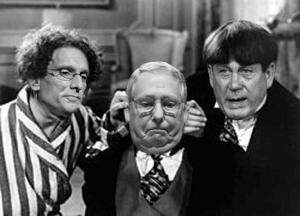
The two choices: amend the bill with spending cuts – likely killing it for the 112th Congress – or vote to adopt the Senate measure and send it to President Obama for his signature.
During an evening vote series, members are being whipped on an amendment option: attaching a $328 billion spending cut measure to the Senate deal. That measure passed the House twice in 2012 on party-line votes. It reduced the deficit by $243 billion, left cuts to Medicare in place, turned off $72 billion of $109 billion in defense and non-defense spending set for 2013. The Senate throughout 2012 ignored this House measure.
When the standalone bill came up for a vote in May, it passed by 218 to 199 votes with 16 GOP “no” votes. In December, it passed 215 to 209 with 21 GOP “no” votes. Since that last vote, Rep. Tim Scott (R-S.C.), a “yes” vote, has resigned from the House to become a senator.
Sources confirmed that despite conservative grumbling about corporate tax “giveaways” in the Senate bill, tax breaks for corporations are not considered for amendment. The Senate deal contains dozens of “tax extenders” including for clean energy.
If there is more than a 217-vote majority within the Republican conference for the amended bill, it will be brought to the floor. If a majority cannot be found, the Senate deal will get an up-or-down vote, members said.
While House Republicans broadly oppose the legislation the Senate passed overwhelmingly early Tuesday morning, many of them emerged from their second closed-door meeting of the day believing that, ultimately, the House would approve the measure without amendments.
Meanwhile, stock markets around the world are on USA Economy Death Watch. Believe me, markets will not react will to what’s going on right now–starting in about an hour–when the Hong Kong, Singapore, and Tokyo markets open up. Ask me why all of my money is sitting in FDIC insured bank accounts right now and not enriching my brokerage firm. Yes, folks, it’s the House Republican Dysfunction Show!
Let me provide some background music while I explain what’s going on with the Republicans in the House.
So, what are the folks that are willing to tank-the- country over fear of losing their seats to even more crazy people in 2 years doing now? Well, combine that with political ambitions of Ryan, Cantor, and other “up and comers” that would cook their grandmother for the main dish at a fundraiser for their 2016 presidential bids and it’s drama worthy of any Three Stooges short.
Conservative opposition to the agreement stems from a host of issues, including the fact that the deal does not include any spending cuts, would significantly add to the nation’s deficit and raises taxes on those making more than $400,000 a year.
And Cantor’s not alone in opposing the deal: the agreement is universally disliked within Republican circles, and even Democrats in the House and Senate have voiced complaints about the deal.
The lack of spending cuts in the Senate bill was a universal concern amongst members in today’s meeting,” said Boehner spokesperson Brendan Buck. “Conversations with members will continue throughout the afternoon on the path forward.”
Rep. Steve LaTourette, a Boehner ally, said there were “two schools of thought” expressed in the meeting: To accept the deal and “live to fight another day,” or amend the measure and send it back to the Senate.
CNN and Twitter appear to be the sole sources of news on this at the moment. The news readers are still recovering from the champagne brunches and aren’t working. Mostly, CNN has turned into a breif show of representatives that want to be counted in the “I’d rather tank the country than piss off my insane base” number. Boehner is clearly in a corner. He appears to be the appetizer on the let’s cook granny for our fundraiser event.
Under our non-parliamentary system, the party leadership has less leverage to pressure rank-and-file members of the caucus. The result is episodes like last month’s “Plan B” fiasco, where Speaker Boehner tried and failed to pass an official Republican solution to the fiscal cliff. Democrats were unified against the bill, which they viewed as too conservative. Yet many Republicans viewed it as not conservative enough, and Boehner didn’t have any way to force them to support it.
In short, John Boehner has committed himself to a set of principles for operating the House that makes the body fundamentally dysfunctional. A functional legislative body either needs a mechanism for the majority leader to get members of his caucus to toe the party line, or he needs the ability to “reach across the aisle” to get the votes he needs from the minority. John Boehner lacks the former, and by ruling out the latter he’s effectively painted himself into a corner where he might not be able to get any piece of “fiscal cliff” legislation passed by the full House of Representatives.
It does look like the amended bill will not pass. Most bets are that Boehner will hold an up or down on the Senate bill and the Dems will ensure its passage. Hey house Republicans! Feet meet your ak-47s!!!! We’ll know more within the our after all the hand wringing and protesting too much occurs.
As your friendly resident economist, I’d just like to say that it’s apparent that there are a bunch of people in charge of our policy that did not learn the lesson of the great depression or the great recession. They’ve also not learned the lessons of the research surrounding the Reagan years. Every one needs to know the variables that can use to plan their finances. Businesses and families should not be held hostage to political antics and economic policy based on wishful thinking and extremists beliefs. This keeps repeating itself because crazy people have taken over the Republican Party. It needs to stop.
BREAKING NEWS:
The choice is to let an up or down vote on the Senate Bill happen within the next hour or so. The Democratic Leadership believes they have enough Democratic votes to get it passed. So, the thought is that the Senate bill will pass. The technical process to get the bill to the floor has started (per CNN). The vote will be held some time around 9:00 pm.
Maybe the deal isn’t as bad as I thought.
Posted: January 1, 2013 Filed under: 2012 presidential campaign, Barack Obama, Congress, Fiscal Cliff, Medicaid, Medicare, Mitt Romney, Social Security, U.S. Economy, U.S. Politics | Tags: "please proceed governor", 2012 presidential debates, Chained CPI 47 Comments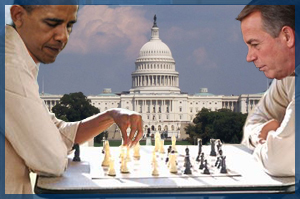
Chess Master or Pawn?
So I went and watched a silly movie (and thoroughly enjoyed it). I calmed down and decided to get back online for a bit. I read some reactions to the fiscal cliff deal from a different perspective, and now I think maybe I was wrong. Sure it’s a lousy deal, but it’s not over yet and at Obama did manage to preserve the social safety net programs, extend unemployment benefits, hold onto the earned income tax credit and child credits, and got some minimal revenue increases.
Look, I’m poor, but I’m not on unemployment. I was willing to go “off the cliff” in order to force the Republicans’ hand. But there are millions of poor and working class people out there would would really suffer if they lose their unemployment and those tax givebacks. Now those have been extended for a year at least. Yes, there will be another fight in two months, but there was going to be a battle royal in two months anyway. Now they will kill two birds with one stone–the debt limit and the sequester will be wrapped up in one fight.
Have I drunk the Koolaid? No, but I admit I really do want to hang onto some hope for the future. So beat me up in the comments all you want. I’m going to hold off judging this deal for two more months. Then if Obama completely sells out the poor and elderly, I’ll admit I made a big mistake. But for now, I’m willing to give Obama a chance.
My changed perspective came from reading a couple of diaries at DailyKos (so shoot me!) and then rereading pieces by Paul Krugman and Noam Scheiber. First up, a Kos diary by ban nock: “Obama’s Deal From a poor Person’s Perspective.”
As usual Obama looked out for us fairly well. All you folks in the financial industry who are weeping and wailing can just pound sand, cash in some stock options, sell your Lincoln, cry me a river.
The biggest thing is earned income tax credit and medicaid, neither of which were touched. Looks like we lost 2% on Social Security contributions but that is more than made up by the earned income credit (EIC)
I should do more to define poor. By poor I mean lower than median income down to, well, to really really poor. Median is around 40K.
The earned income credit is the thing that pulls the greatest number of people out of poverty in the USA. It’s an alternative to raising minimum wages.
You take your adjusted gross income and if you’re a family with a coupla kids making between $13K and $22K Uncle Sam is going to either reduce your taxes by around $5K or reduce them as much as possible and send you a fat check for the remainder. How cool is that? Chart to figure what you get here. http://www.irs.gov/… What is Adjusted Gross Income? That’s how much money you make, but it could come down for things like IRA contributions.
And then, as ban nock points out, there’s unemployment, which is the only thing between millions of Americans and abject poverty.
Now when I first read ban nock’s diary, I was somewhat skeptical. My point of view was that Obama is just warming up for the big kill, “entitlement reform.” But wait a minute. The Republicans were screaming for that in 2011 and again in this last fight. But they didn’t get it. In fact Harry Reid even took the Chained CPI off the table and Obama and Biden didn’t put it back on.
Then I moved on to this diary by Alexander Dukes AKA “Game Guru”: “Umm… We’re playing chess, not checkers. And we’re winning.” You really need to read the whole thing, but the gist is that Obama has been dealing with people who are utterly intractable–they’re actually buttfuck crazy!–so what Obama has done is to keep kicking the can down the road while each time getting something for nothing and at the same time preserving the social programs most needed by the poor and unemployed. Here’s an
First off, lets establish that we’re playing chess, not checkers. Our objective is not to win more battles than the Republicans, its to win the war. In this case its a war against the Republican objective to effectively dismantle Medicare, Social Security, Obamacare, the EPA and every other part of the government that doesn’t leave the people to the whims of the 1 percent. This is chess, so we can afford to lose a few pieces so that we draw our opponent in for the final blow. With every turn we attempt to move toward our ultimate goal, even if that means we take some blows along the way. Chess is a thinking man’s game, it takes a long time to play. Similarly, in these budget fights, Obama’s thinking about the long haul.
Lets examine the President’s strategy: In the first budget fight, Republicans wanted to extend the Bush tax cuts for everyone. The Democrats wanted to extend unemployment benefits and renew the START treaty. There was a great deal of debate… and something happened. What did we end up with? We got START, the unemployment extension, and what else…. what else… oh yeah, DADT was repealed! All for maintaining the tax status quo at the time. Essentially, we offered nothing, and the Republicans got nothing.
Okay, so we gave up the hope for more revenue from taxing the rich, but as Republicans keep pointing out, that new revenue won’t even keep the government going for very long. It’s mostly a symbolic effort to restore some fairness to the tax system.
After that was the debt ceiling fight. Well, Obama almost got to a deal back in 2011, but to no avail. So to raise the debt ceiling congress created the sequester. Nothing for nothing there. Not a bad or good deal, because there wasn’t really a deal at all. But in the sense that there was a deal, both sides agreed to a lame duck rematch, betting that their side would win the election and have the leverage in the sequester fight. Obama won the election, so he had the leverage.
Again, Republicans basically got nothing–just a fake deadline that everyone knew all along was just kicking the can down the road.
Lets discuss what happened (and is still happening) today. Yesterday, Mitch McConnell and Obama reached a deal that did 3 main things: It ends the Bush tax cuts for those making over $400K, it raised the estate tax for those with estates greater than 5 million, and extends unemployment benefits for another year. For this, the Republicans gained… nothing.
That’s right, nothing. Yes, the sequester is extended for only 60 days, but that bumps right up against the debt ceiling… something the Republicans were going to fight over anyway. The media common wisdom is that the Republicans gained “leverage” in this deal. How so? Obama just combined two potential clusterf*cks into one! He gained a years worth of unemployment benefits, tax hikes on the 1%, and an estate tax hike; all for making his job easier in the long term.
Next time Obama may have to cave on the Chained CPI, which would be horrible, but better than privatization of Social Security. But maybe he won’t have to give that up, who knows? All we know for now is that Social Security hasn’t been changed yet.
Obama wanted the debt limited to be raised with the elimination of the sequester. This is essentially raising the limit along with eliminating the sequester, only now he’s getting more of what he wants when the debate starts because he’s already got the tax hikes and the unemployment extension!
Not only that, but now he has two major speeches between now and then to set the debate squarely in his favor.
It makes sense to me. Frankly, I buy it for now. And you know why I’m willing to string Obama along for another two months? Because of what happened in his second debate with Mitt Romney:
Please proceed, Governor.
Please proceed, Speaker.
Maybe I’m nuts, but maybe I’m not. I’m going to wait two months and find out. Now let’s look at what Krugman had to say about the upside of the deal:
To make sense of what just happened, we need to ask what is really at stake, and how much difference the budget deal makes in the larger picture.
So, what are the two sides really fighting about? Surely the answer is, the future of the welfare state. Progressives want to maintain the achievements of the New Deal and the Great Society, and also implement and improve Obamacare so that we become a normal advanced country that guarantees essential health care to all its citizens. The right wants to roll the clock back to 1930, if not to the 19th century.
There are two ways progressives can lose this fight. One is direct defeat on the question of social insurance, with Congress actually voting to privatize and eventually phase out key programs — or with Democratic politicians themselves giving away their political birthright in the name of a mess of pottage Grand Bargain. The other is for conservatives to successfully starve the beast — to drive revenue so low through tax cuts that the social insurance programs can’t be sustained.
The good news for progressives is that danger #1 has been averted, at least so far — and not without a lot of anxiety first.
Romney lost, so nothing like the Ryan plan is on the table until President Santorum takes office, or something. Meanwhile, in 2011 Obama was willing to raise the Medicare age, in 2012 to cut Social Security benefits; but luckily the extremists of the right scuttled both deals. There are no cuts in benefits in this deal.
And Scheiber’s take on the upside:
I think a reasonable person can defend the bill on its own terms. The fact is that nudging up the tax threshold to $450,000 only sacrifices $100-200 billion in revenue over the next decade (against the $700-800 billion the administration would have secured with its original threshold), while allowing unemployment benefits to lapse would cause real pain to both the 2 million people directly affected and, indirectly, to the economy. Yes, Obama could have gotten the latter without giving up the former had he just waited another few days—at which point what the GOP considers a tax increase suddenly becomes a tax cut. But these things are always easier to pull the trigger on when you, er, don’t actually have to pull the trigger. I can’t begrudge Obama his wanting to avoid some downside risk for only a marginally better deal.
In other words, we are dealing with insane people–the Republicans in the House and Senate–and so far we haven’t given away the real farm, the social safety net. Unfortunately we don’t have enough revenue for a real stimulus either, but we go back to the table in two months and the Republicans are scoring that as a win for them.
But what if it’s not? What if dealing both issues at once–the debt ceiling and the sequester–and sooner, is an advantage for Democrats and the White House? We can’t know for sure until the next fight. But Obama did get a year of unemployment, those tax givebacks, and some symbolic concessions from the super-rich. And he does have the State of the Union and Inauguration speeches to call out the Republicans and make his case.
So that’s why I’m going to give this deal a chance for now. It’s not a great deal, but the important stuff has been protected for the time being. Now go ahead and hammer me in the comments, I don’t mind.
New Year’s Day Reads: The Lousy Deal
Posted: January 1, 2013 Filed under: Fiscal Cliff, morning reads, U.S. Economy, U.S. Politics | Tags: 2013, Barack Obama, Joe Biden, John Boehner, Mitch McConnell, The Lousy Deal 35 Comments
First Night fireworks against the Boston skyline
Good Morning and Happy New Year!!!
Sorry to be late with this post. I got so discouraged last night with our dysfunctional government that I went to bed completely disgusted. After a good night’s sleep, I’m feeling slightly more optimistic, if not truly hopeful. If I have any hope, it’s that perhaps the American people will rise up and let the president and Congress know what a horrible job they are doing.
So, what’s happening this morning? We officially went over the fiscal cliff at midnight even though the Senate approved a half-baked, crappy “deal.” Politico reports:
Congress lost a mad, New Year’s Eve dash to beat the fiscal cliff deadline, cinching a deal with President Barack Obama to raise taxes on the wealthy and temporarily freeze deep spending cuts but failing to get it through both chambers before midnight.
So over the cliff the country went — though perhaps for only a day or two and, assuming no snags, without incurring the double whammy of another recession and higher unemployment.The measure, which would raise tax rates for families making more than $450,000 and delay deep across-the-board spending cuts for two months, cleared the Senate by an overwhelming 89-8 vote shortly after 2 a.m. The Republican-controlled House could take up the pact in a rare New Year’s Day session, though the timing of that chamber’s vote was not clear.
The $620 billion agreement was a major breakthrough in a partisan standoff that has dragged on for months, spooking Wall Street and threatening to hobble the economic recovery. It turned back the GOP’s two-decade-long refusal to raise tax rates, delivering a major win for the president.
The bill also canceled pay raises for members of Congress and averted an expected hike in the price of milk by extending expiring dairy policy.
Wow, they cancelled their own pay raises? That was big of them–not. They probably did that out of fear of an angry populace. And of course, we still have to watch the shameful spectacle of the tea party House wrangling over a deal that basically give them everything they wanted and more than they ever dreamed of.
From TPM, the Senators who voted against the deal:
The eight senators voting no were Michael Bennet (D-CO), Tom Carper (D-DE), Charles Grassley (R-IA), Tom Harkin (D-IA), Mike Lee (R-UT), Rand Paul (R-KY), Marco Rubio (R-FL), and Richard Shelby (R-AL).
Robert Reich calls it “A Lousy Deal on the Edge of the Fiscal Cliff.” I’m thinking that could be the new logo for this administration–“The Lousy Deal” as opposed to Roosevelt’s “New Deal.” Reich writes:
Details of the agreement reached by the president and congressional Republicans are still forthcoming, but from the look of it, Obama gave ground where he need not have.
What else is new?
Yes, the deal finally gets Republicans to accept a tax increase on the wealthy, but this is an inside-the-Beltway symbolic victory. If anyone believes this will make the GOP more amenable to future tax increases, they don’t know how rabidly extremist the GOP has become.
The deal also extends unemployment insurance for more than 2 million long-term unemployed. That’s important.
But I can’t help believe the president could have done better than this. After all, public opinion is overwhelmingly on his side. Republicans would have been blamed had no deal been achieved.
More importantly, the fiscal cliff is on the president’s side as well. If we go over it, he and the Democrats in the next Congress that starts later this week can quickly offer legislation that grants a middle-class tax cut and restores most military spending. Even rabid Republicans would be hard-pressed not to sign on.
I hate to say it, but it really looks like Obama pushed for this so he could give more away that he would have had to if we had just gone over the cliff without all the fake deal making.
Noam Scheiber writes at The New Republic: Democrats’ Cliff Compromise Is Bad; But the Strategic Consequences Are Disastrous.
I think the president made a huge mistake by negotiating over what he’d previously said was non-negotiable (namely, the expiration of the Bush tax cuts on income over $250,000). Then the White House compounded that mistake by sending Biden to “close” the deal when Harry Reid appeared to give up on it. As a practical matter, this signaled to Republicans that the White House wouldn’t walk away from the bargaining table, allowing the GOP to keep extracting concessions into the absolute final hours before the deadline….
I think a reasonable person can defend the bill on its own terms. The fact is that nudging up the tax threshold to $450,000 only sacrifices $100-200 billion in revenue over the next decade (against the $700-800 billion the administration would have secured with its original threshold), while allowing unemployment benefits to lapse would cause real pain to both the 2 million people directly affected and, indirectly, to the economy. Yes, Obama could have gotten the latter without giving up the former had he just waited another few days—at which point what the GOP considers a tax increase suddenly becomes a tax cut. But these things are always easier to pull the trigger on when you, er, don’t actually have to pull the trigger. I can’t begrudge Obama his wanting to avoid some downside risk for only a marginally better deal.
My far bigger gripe with the whole fiscal-cliff exercise has always been the strategic dimension—how it affects the next showdown with the GOP, and the one after that. Coming into the negotiation, Obama had two big problems: First, no matter how tough he talked, Republicans always assumed he’d blink in the end, for the simple reason that he pretty much always had. (This is one of the major themes of my book about his first term.) Second, despite the results of the most recent election, in which Obama won a fairly commanding victory on a platform of raising taxes on wealthy people, the GOP continued to believe that public opinion was mostly on its side. House Republicans cited the preservation of their majority—never mind that their own candidates received fewer total votes than House Democratic candidates—and polls showing most Americans still think government is too big.
No kidding. And I disagree that we shouldn’t begrudge Obama for not sticking to his promise to hold the line at $250,000. As I’ve written previously, Obama should not be involved in negotiations, because he either wants to lose to the Republicans or his need to please the people who hate him is just too strong. I don’t know which is the real problem, and it really doesn’t matter for practical purposes. He’s just a horrible negotiator, period. Now we have to watch another repulsive display of childish squabbling in a couple of months. Is this going to be the extent of what happens in Obama’s second term? With this incompetent, useless Congress, it’s entirely possible.
And of course we still have to wait and see what Boehner and his gang do.
In a joint statement late Monday, House GOP leaders promised to keep their commitment to act on the measure if it passes the Senate. But they say they won’t decide whether to accept the measure or to amend it and send it back to the Senate until lawmakers and their constituents have a chance to review the legislation.
Give me a frickin’ break! I’m going to end here, because there doesn’t seem to be much other news. What are you reading today. I look forward to clicking on your links.

 peej
peej Carissa
 bostonboomer
 dakinikat
 ecocatwoman
 mablue2
 Mama Lopez
 peggysue22
 quixote
 skydancingguestblogger
 Mona (aka Wonk the Vote)



 Sky Dancing
Recent Comments