
Republicans Mess with Votes and Voting Rights: An Update on Stealing Our Votes
Posted: September 22, 2012 Filed under: 2012 elections | Tags: republicans act to suppress voters, Voter ID laws, voter suppression 23 CommentsMy political activism has been shaped by two very disturbing events as well as the women’s rights movement. I watched Watergate unfold on TV as a kid. I watch the Supreme Court Select a  President in 2000. It’s one thing for a political party to rig votes within the confines of its apparatus. It’s a completely different thing when your elected government tries to rig the way you can vote or puts up deliberate obstacles to voting. I’ve been watching Rachel Maddow hammer home all the attempts around the country by Republican Secretaries of State to disenfranchise voters. I’ve written about this before. I want to give you some updated information on how the Republican Party actively works to take away your right to vote.
First, the voter ID laws have been shown to not get at the kind of election fraud that we usually experience. THIS is the kind of fraud that’s an issue: Republican Staffers Charged With 36 Counts of Election Fraud.
Four former staffers for resigned House Rep. Thaddeus McCotter have been charged with 36 counts of misdemeanor and felony election fraud. Yesterday one of those staffers, Lorianne O’Brady, pled not guilty to five misdemeanor counts of submitting fraudulent signatures on a ballot petition. O’Brady is the last of the four staffers to be arraigned; the other three, Don Yowchuang, Mary Melissa Turnbull, and Paul Seewald, were arraigned on similar charges on August 10th.
…
This incident perfectly highlights the dirty little secret about election fraud. Election fraud overwhelmingly happens on the campaign side, not the voter side. It’s far easier – and more rewarding – to cheat while working from within the system than it is to commit in-person voter fraud. The GOP is legislating against cases of voter fraud in which a person would have to give someone else’s name at the correct polling place in order to falsely vote once; meanwhile a Republican Congressman and his staff fabricated 1,756 signatures so that he could run illegally.
Perry, who has been registered to vote in North Carolina since at least 1975, according to election records, was dismayed to receive a letter this month from the Wake County Board of Elections suggesting she may no longer be qualified to vote because she might be dead.
“My initial reaction? I was mad as hell,” Perry said Monday morning.
Her name was one of nearly 30,000 across the state that volunteers with the Voter Integrity Project identified two weeks ago as potentially being dead but still registered to vote. The Voter Integrity Project is a North Carolina offshoot of True the Vote, a national movement that purports to combat election fraud by challenging the voter registration of those they believe should not be on voter lists.
“We’re not really interested in partisan politics,” said Jay DeLancy, a retired Air Force officer and director of Voter Integrity Project. “As an organization, we try to eliminate those kinds of biases in our research.”
However, the subject of voter fraud is inextricably linked to the current political conversation. Republicans in many states, including North Carolina, have led efforts to pass laws that would require people to present picture identification when they go to the polls. That effort failed in North Carolina, but DeLancy recently appeared on a Fox News Channel show calling such laws “common sense”. Democrats have generally pushed back against such laws, saying they would disproportionately affect elderly and minority voters.
The Republicans’ plan is that if they can’t buy the 2012 election they will steal it.
The plan, long in the making and now well into its execution, is to raise great gobs of money—in newly limitless amounts—so that they and their allies could outspend the president’s forces; and they would also place obstacles in the way of large swaths of citizens who traditionally support the Democrats and want to exercise their right to vote. The plan would disproportionately affect blacks, who were guaranteed the right to vote in 1870 by the Fifteenth Amendment; but then that right was negated by southern state legislatures; and after people marched, were beaten, and died in the civil rights movement, Congress passed the Voting Rights Act of 1965. Now various state legislatures are coming up with new ways to try once again to nullify that right.
In a close election, the Republican plan could call into question the legitimacy of the next president. An election conducted on this basis could lead to turbulence on election day and possibly an extended period of lawsuits contesting the outcome in various states. Bush v. Gore would seem to have been a pleasant summer afternoon. The fact that their party’s nominee is currently stumbling about, his candidacy widely deemed to be in crisis mode, hasn’t lessened their determination to prevent as many Democratic supporters as they can from voting in November.
This national effort to tilt the 2012 election is being carried out on the pretext that the country’s voting system is under threat from widespread “voter fraud.” the fact that no significant fraud has been found doesn’t deter the people pursuing this plan. Myths are convenient in politics. Want to fix an election? No problem. Just make up a story that the other side is trying to rig the election—and meanwhile try to rig the election. (Jon Stewart recently concluded a searing segment about the imagined voter fraud by saying: “Next, leashes for leprechauns.”)
There’s states that have been challenged in court, yelled out by voters and organizations like the League of Women Voter’s, and by Good Government Groups. They’re on a mission. They’re targeting groups that traditionally vote Democrat. For example, if you live in the South, chances are that you know that the Sunday before Election Day is the day that most black churches use their church buses to take their elderly and their poor, transportationless parishioners to the polls to vote. Guess how many states are now closing down access to voting on the Sunday before the election? Nothing is stopping this steam roller.
Iowa, Florida, and Colorado tried to purge the voting rolls of suspected unqualified voters, but their lists turned out to be wildly inaccurate. Florida officials compiled a list of 180,000 people whose qualifications were questioned, but after voting registrars checked (some protesting the unfairness of the purge) only 207, or .0002 percent of the state’s registered voters, were found to be unqualified to vote. Nearly sixty percent of the 180,000 names had Hispanic surnames, another 14 percent were blacks. Officials said that whites or republicans were unlikely to be on the list.
While a combination of outraged citizens and legal challenges led all three states to ostensibly give up on the idea of purging voters, Florida and Iowa officials have said that they intend to pursue those who haven’t been proven innocent. As a result, hundreds of thousands of citizens don’t know if they’ll be allowed to vote—which, like a number of the restrictions, could be a disincentive to even subjecting oneself to what could be a hassle or humiliation at the polling place. Florida also enacted a voter ID law, which was struck down by a federal court. Ever on the lookout for ways to keep Democratic supporters from the polling places, the state cut short the number of days for early voting, and established rules that in effect barred outside groups such as the League of Women Voters from conducting registration drives. Though this restriction was later overturned by a federal court, voter registration groups said that important time had been lost while they contested the new restrictions on their activities.
You can learn more about this from Melissa Harris-Perry and her panel. Melissa explains why women, minorities, the elderly and college students are at highest risk of losing their vote. Here’s how Voter ID laws suppress voting by college students.
In Tennessee, a new law requiring voters to show photo identification at the polls explicitly excludes student IDs.
In Wisconsin, college students are newly disallowed from using university-provided housing lists or corroboration from other students to verify their residence.
Florida’s reduction in early voting days is expected to reduce the number of young and first-time voters there.
And Pennsylvania’s voter identification bill, still on the books for now, disallows many student IDs and non-Pennsylvania driver’s licenses, which means out-of-state students may be turned away at the polls.
In 2008, youth voter turnout was higher that it had been since Vietnam, and overwhelmingly for Barack Obama. This time around, the GOP isn’t counting solely on disillusionment to keep the student vote down.
In the last two years, Republican-controlled state legislatures have passed dozens of bills that erect new barriers to voting, all targeting Democratic-leaning groups, many specifically aimed at students. The GOP’s stated rationale is to fight voter fraud. But voter fraud — and especially in-person fraud which many of these measures address — is essentially nonexistent.
Here’s a guide on Voter Suppression efforts put out by the National Women’s Law Center. Women often require at least twice the documentation that men do to get Voter IDs because of name changes due to marriage, divorce and remarriage.
Because women’s names often change in marriage, many women lack state-issued photo ID in their current legal names. Although 1 in 10 Americans do not have a valid state-issued photo ID,
ten states have recently passed “no-photo, no-vote” laws that will disproportionately impact women because of these name changes.4 As a result of these new laws, women who do not have a valid state-issued photo ID in their current name may need to first get an official copy of their marriage license before they can get a photo ID—a cumbersome process that may be prohibitively expensive for women hard hit in this economy
Also, women make up a majority of the black voting base, of college students, and the elderly. Any effort to suppress any of these groups disproportionately impacts women. All of these groups–and Hispanic voters–are more likely to be the targets of voter suppression laws and are more likely to vote for liberal causes and democratic candidates.
I want to give a shout out to all Sky Dancers and their friends to please check around your family and neighborhood to see if any folks you know could possibly need a voter ID, a ride to the Polls, or some help to meet the requirements of laws if you live in one of the states that has passed one of these laws. I’ve already gotten on the case of my youngest daughter who could potentially get trapped into this mess. Be prepared to stand up for any one at the polls who is being harassed. Help them get provisional ballots, if necessary. Be especially careful if you have a Hispanic surname. Florida and some other states appear to be targeting Hispanic surnames. Make sure no one has this essential right and privilege of citizenship taken from them!!! Also, check with the League of Women Voters. They’re working actively on this issue in many states.
Saturday Reads: Mitt Romney’s Religion, Politics, and Taxes
Posted: September 22, 2012 Filed under: 2012 presidential campaign, morning reads, U.S. Politics | Tags: 60 Minutes, apostasy, David Twede, excommunication, J.R.R. Tolkien, Mitt Romney, Mormon church, Scott Pelley, tax returns, The Hobbit 75th anniversary 44 Comments
Good Morning!!
Everyone is still talking about Mitt Rommey’s taxes and his struggling campaign. I have some interesting reads on those subjects, but first I want to all attention to a story from The Daily Beast yesterday by Jamie Reno that I think deserves more attention. The Mormon church in Florida is threatening to excommmunicate one of their prominent members who has written some negative on-line articles about Mitt Romney.
David Twede, 47, a scientist, novelist, and fifth-generation Mormon, is managing editor of MormonThink.com, an online magazine produced largely by members of the Mormon Church that welcomes scholarly debate about the religion’s history from both critics and true believers.
A Mormon in good standing, Twede has never been disciplined by Latter Day Saints leadership. But it now appears his days as a Mormon may be numbered because of a series of articles he wrote this past week that were critical of Mitt Romney.
On Sunday, Twede says his bishop, stake president, and two church executives brought him into Florida Mormon church offices in Orlando and interrogated him for nearly an hour about his writings, telling him, “Cease and desist, Brother Twede.”
Twede posted the letter he received from his stake president on his blog, Prozacville. His excommunication hearing “for apostasy” is to take place September 30. Twede wasn’t using his real name on-line, but the church learned his identity from someone at a pro-Mormon website, Foundation for Apologetic Information and Research.
So apparently the Mormon church is not as neutral in this election as it has claimed. In fact, ABC News recently reported that the church has been working to get Mormons registered in swing state Nevada.
In a provocative move within a religious organization that has sought to display strict political neutrality, an official of the Mormon church has disseminated a presentation across the key swing state of Nevada that urges members to vote and speak “with one voice” in the coming Presidential election that pits Mormon Mitt Romney against President Barack Obama.
“Any Mormon would understand exactly what’s being said there,” said Randall Balmer, a Dartmouth religion professor who has studied the church’s handling of Romney’s presidential bids. “This is very thinly coded language.”
Personally, I think this is very creepy. The church seems to be quite involved in this election–trying to encourage votes for Romney and at the same time attempting to silence critics of the prominent Mormon candidate.
If the Romney campaign was hoping that releasing Mitt’s 2011 tax returns along with a vague “summary” of his returns for the past 20 years, they will be disappointed. Most tax experts aren’t buying the “summary,” and lots of them are trying to figure out exactly what Romney is trying to pull this time.
I thought this piece in USA Today by Rick Newman was very helpful (h/t Dakinikat). Newman reads between the lines of the official release and finds some oddities. First, somehow $7.2 million disappeared from Romney’s income between January when he filed an estimate and now on his official return.
Between January and October of this year, Romney’s adjusted gross income for 2011 fell by $7.2 million. And it dropped by nearly $8 million compared with his AGI in 2010. His federal tax liability also fell, by similar proportions.
The most likely explanation is that Romney’s accountants transferred income from Romney’s personal return to one of the three trusts that also generate considerable income, almost all of it from investments. It will take a detailed examination of the 2010 and 2011 documents to figure out what changed, but here’s a clue: Romney’s campaign has begun to focus on the “personal” tax rate paid by Romney, rather than the tax rate that might be associated with the trusts and his total income from all sources.
Newman also notes that the Romney representatives are emphasizing the word “personal” when they refer to Romney’s tax returns, suggesting that some kind of fudging is going on.
Romney hasn’t released tax documents prior to 2010, but some tax experts think his overall tax rate could have been very close to zero during at least a couple of years, possibly because of capital losses suffered during the stock-market wipeout of 2008, which zeroed out earnings for many investors.
The Romney campaign now says that since 1990, “the lowest annual effective federal personal tax rate” Romney paid was 13.66 percent. In other words, the rate on what might be characterized as his personal income never fell below that threshold.
But that doesn’t account for the three trusts, or other investment vehicles that may have existed prior to 2010. And it’s unusual to limit the claim to “personal” taxes when Romney has acknowledged other types of income. So it’s possible that the effective tax rate on the trusts was very low at some point—and maybe even zero, which would have indicated a net loss for the year.
Greg Sargent talked to another expert, Roberton Williams, of the Tax Policy Center, about the 20-year summary and Romney’s claim that “Over the entire 20-year period, the average annual effective federal tax rate was 20.20%.” Sargent learned from the campaign that this represents an average of Romney’s tax rates over the 20 year period.
Williams tells me that this is a far less meaningful way to calculate the overall rate than the second way, which actually calculates the real tax rate Romney paid over the period.
Here’s why: The first way obscures the fact that income may have fluctuated quite markedly from year to year. If Romney paid his lowest rates in a number of the higher income years, the overall 20 percent figure would overstate the rate he actually paid over the whole period. Williams provided the following purely hypothetical example:
“Let’s say you have 10 years in which you paid 13 percent in taxes, and 10 years in which you paid 27 percent,” Williams told me. “If you average those rates, you’ll get an overall rate of 20 percent. But if the 13 percent years were high income years, and the 27 percent years were low income years, then his total taxes paid as a share of total income over the 20 years would be less, perhaps significantly less, than 20 percent.”
Yet in that scenario, the Romney campaign would be claiming, by its chosen metric, to have paid 20 percent.
This is very troubling, and I’m sure more detailed analyses will be coming. You have to wonder why Romney didn’t just keep stonewalling instead of raising lots more questions about his taxes.
There have been lots of stories this week about what Romney should do to rescue his flailing campaign, but the candidate himself says there no problem. At least that’s what he told Scott Pelley of CBS’ 60 Minutes.
Scott Pelley: You are slipping in the polls at this moment. A lot of Republicans are concerned about this campaign. You bill yourself as a turnaround artist. How are you going to turn this campaign around?
Mitt Romney: Well, actually, we’re tied in the polls. We’re all within the margin of error. We bounce aroun — week to week– day to day. There are some days we’re up. There are some days we’re down. We go forward with my message, that this is a time to reinvigorate the American economy, not by expanding government and raising taxes on people, but instead by making sure government encourages entrepreneurship and innovation and gets the private sector hiring again.
Scott Pelley: Governor, I appreciate your message very much. But that wasn’t precisely the question. You’re the CEO of this campaign. A lot of Republicans would like to know, a lot of your donors would like to know, how do you turn this thing around? You’ve got a little more than six weeks. What do you do?
Mitt Romney: Well, it doesn’t need a turnaround. We’ve got a campaign which is tied with an incumbent president to the United States.
Scott Pelley: Well– as you know, a lot of people were concerned about the video of the fundraiser in which you talked about the 47 percent of the American people who don’t pay taxes. Peggy Noonan, a very well-known conservative columnist, said that it was an example of this campaign being incompetent. And I wonder if any of that criticism gets through to you and whether you’re concerned about it at all….
Mitt Romney: I’ve got a very effective campaign. It’s doing a very good job. But not everything I say is elegant. And I want to make it very clear, I want to help 100 percent of the American people.
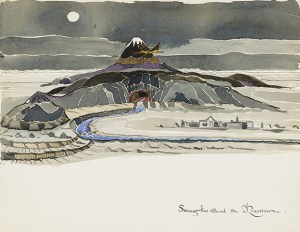
In non-political news, yesterday was the 75th anniversary of the publication of J.R.R. Tolkien’s The Hobbit. Corey Olson has written a history of Tolkien’s beloved book. Check it out at The Daily Beast. It’s quite interesting.
It’s getting late and I need to get this post up, so I’ll end there.
What are you reading and blogging about today?
Better Goosestep with the Goons or Else Girlie …
Posted: September 21, 2012 Filed under: 2012 presidential campaign, U.S. Politics | Tags: Mitt Romney, Peggy Noonan, Sexism 64 CommentsPlenty of Reagan Republicans have criticized the current Republican Party and their embrace of policies and stances more suitable to the John Birch Society, the KKK and the Taliban than the  party’s past lives or the US Constitution. Bruce Bartlett and David Stockman have both come out with books that mince no words about the embrace of crazy economic policies that don’t resemble anything of Reagan’s views or modern economic theory. So, why is it they’re suddenly jumping on Peggy Noonan? I guess the boyz don’t like one of their women stepping out of line more than it bothers them that many of their stallions have already bolted from the stable. Sexism anyone?? First there’s Chris Wallace who is one of the clearest voices of John Birch propaganda and spurious economics to be found on the Fox Propaganda Network.
In her column today, Noonan doubled-down on criticisms she made earlier in the week: “This week I called [the Romney campaign] incompetent, but only because I was being polite,” she wrote. “I really meant “rolling calamity.”
During today’s interview, part of POLITICO’s “Turn The Table” series, Gavin asked Wallace whether conservative opinion makers who have criticized Romney — such as Noonan, David Brooks of The New York Times, and the Weekly Standard’s Bill Kristol — had influence on conservatives around the country or were simply participating in an “inside-the-Beltway parlor game.”
“I think it’s more of ‘Inside-the-Beltway,” Wallace said. “Some of the people you’ve mentioned, like Peggy Noonan, sometimes they’re New York City’s idea of conservatives. Kristol is a different deal. Kristol is a serious, movement conservative, and he never wanted Mitt Romney. He always wanted people of the next generation like Ryan, Rubio — so I think he feels disappointed.”
Wallace then mentioned David Frum, the conservative columnist who now writes for the Daily Beast, though whether he was referring to David Frum or David Brooks was unclear.
“David Frum is the guy who turned on George W. Bush. Peggy Noonan has bashed George W. Bush, bashed Mitt Romney, wasn’t crazy about McCain. So, their conservative bona fides I’m not sure I take too seriously,” he said.
One of the creepiest goons in the enforcement racket is John Sununu. Evidently, he doesn’t mind going after Peggy either. Remember, we’ve had a series of wingers criticize Romney recently. Why single out Noonan?
In today’s edition of the Sununu Series, Mitt Romney’s attack dog pushes back against Wall Street Journal columnist Peggy Noonan for her ongoing criticism of Romney’s campaign. “I wouldn’t hire Peggy Noonan to run a campaign,” Sununu says.
What set them off? Noonan’s blunt assessment of Romney ‘s inefficient management style was published in this WSJ op ed: Noonan: Romney Needs a New CEO. Here’s three of her points that really hit home.
5. “The president had a strong convention and Romney a weak one.” The RNC failed “to relaunch a rebranded Romney and create momentum.”
6. Team Romney has been “reactive,” partly because of the need for damage control, but it also failed to force the Obama campaign to react to its proposals and initiatives.
7. The “47%” comment didn’t help, but Mr. Romney’s Libya statement was a critical moment. Team Romney did not know “the most basic political tenet of a foreign crisis: when there is an international incident in which America is attacked, voters in this country will (at least in the short term) rally around the flag and the President. Always. It is stunning that Team Romney failed to recognize this.”
Still, the Romney team is attacking Noonan while letting other republican pundits off the hook. After Scott Brown’s smirking performance last night, I’m beginning to see how much the boys really like to beat up on those uppity girls who dare to question their born-with-a-dick abilities. Call a Whambulence boyz. The girls obviously hit you where it hurts.
Friday Reads
Posted: September 21, 2012 Filed under: morning reads | Tags: BP Oil Spill and Hurricane Isaac, Republicans could lose house, Robertson Court and Corporations, Romney 47%, Romney Staff Bonuses, voter fraud 99 Comments Good Morning!!
You want a good laugh? You know how all those Wall Street Banks keep giving bonuses to people that crashed the economy and forced tax payers to bail out their bad investment decisions? How about this one for size? Romney campaign gives bonuses to top staff. Ever notice how bonuses–which are usually said to be for merit pay–always look more like gifts from slush funds? Yup, he can’t afford media buys, but he can shower his incompetent staff with big money.
Mitt Romney’s campaign handed out $112,500 in bonuses to four of its top staffers, according to new disclosure records filed Thursday.
Richard Beeson, Romney’s national political director, received a $37,500 payment on Aug. 31, in addition to his monthly salary of $13,750, according to records filed with the Federal Election Commission.
In addition, campaign manager Matt Rhoades, policy advisor Lanhee Chen and communications director Gail Gitcho each received $25,000 payments on the same date, filings show. The trio are also paid at the same rate as Beeson, which works out to an annual equivalent of $165,000.
A Romney spokeswoman did not immediately respond to requests for comment on the payments Thursday.
The bonuses came the day after Romney formally accepted the Republican presidential nomination at the party’s convention in Tampa. Despite strong fundraising since May, new records show that the campaign was struggling badly for money in August because it had run low on primary funds and was unable to tap into contributions collected for the general election until after the nomination. Instead, the campaign borrowed $20 million.
Records show that the campaign still owed $15 million of a $20 million loan from the Bank of Georgetown on Aug. 31. The campaign has since paid off another $4 million of the total by collecting new contributions for its primary account, officials have said.
Romney’s failure to match President Obama’s campaign in television advertising, along with worsening polling numbers and a series of missteps, have prompted grousing among political strategists about the Republican nominee’s campaign and senior staff. Former Ronald Reagan speechwriter Peggy Noonan called Romney’s operation “incompetent” in a widely read column earlier this week.
This is what’s called making sure your staff doesn’t abandon you even if they are really bad at their jobs. Just imagine what he’d do with the federal deficit!
The Princeton Election Consortium believes that Republicans are at risk of losing the House now. This is good news for those of us that are tired of seeing continual attacks on Planned Parenthood, abortion rights, voting rights,and healthcare reform instead of anything else.
Conditions through August showed a 2% lead on the generic Congressional ballot for Democrats. As of September 20th, in the wake of the Democratic convention, the lead has widened to 4.0 +/- 2.0%. Although it has yet to be appreciated by pundits, this could well translate to a November loss of the House of Representatives by Republicans. Based on the generic Congressional ballot, the probability of a Democratic takeover is 74% with a median 16-seat majority. Whichever party is in control, the seat margin is headed for being narrower than the current Congress. Like any probability in the 20-80% range, this is a knife-edge situation. This picture may change over the coming six weeks as more information, especially district-level polls, becomes available.
As seen in recent articles in Politico and U.S. News, few pundits think the Democrats will re-take the House. However, analysis of a leading indicator suggests to me that transfer of control is a distinct possibility.
Predicting the House outcome is challenging. First, there is the basic problem that we have to estimate how far opinion will move between now and November. On top of that, there is uncertainty in knowing how the polling measurement – generic Congressional ballot preference – translates to a seat outcome.
It’s been widely observed that Mitt Romney’s attacks on Obama over Medicare, welfare, dependency and “redistribution” are about driving up Romney’s share of working class white support. Romney — who may need two thirds of that vote to win — is arguing that Obama isn’t really looking out for their interests and wants to redistribute their hard-earned money and medical benefits to those other people.
So today’s report on white working class Americans from the Public Religion Research Institute is a must read. It defines them as ”non-Hispanic white Americans without a four-year college degree who hold non-salaried jobs, and make up one third (36 percent of all Americans,” and it sheds light on what all this stuff is all about.
On “dependency,” the study finds that large numbers of working class whites (46 percent) have received Social Security or disability payments over the last two years; more than a fifth have received food stamps; 19% have received unemployment.
Yet the study also finds that three quarters of working class whites believe poor people have become too dependent on government assistance. There’s obviously overlap there, which bears out what some have already pointed out — many of these voters simply won’t think Romney’s comments about the freeloading 47 percent, or about government “dependency” in general, are about them.
But the findings on “redistribution” are also revealing. White working class voters want to soak the rich, and they agree with key aspects of Obama’s views about capitalism and inequality.
Here’s Sarah Silverman on one of my pet peeves this year.
Comedian Sarah Silverman’s has a new video saying exactly what she thinks of the GOP effort to suppress Democratic votes with their new voter ID laws. Take a few minutes to watch it. Make it a viral hit.
And then make sure your voter registration is up to date. If you moved since you last voted, you need to update your address before your state’s registration deadline. In Florida, Colorado, Ohio, Pennsylvania, North Carolina and Nevada, that’s two weeks away.
Here’s some new information on how women still face a stubborn wage gap.
The gap between women’s and men’s pay remained about the same for the fourth straight year in 2011, as both genders got slammed by lower wages.
Women earned 77 cents for every dollar a man earned in 2011, the Census Bureau said this week as part of its extensive annual report on income and poverty.
The female-to-male earnings ratio for full-time workers has been little changed for four years, after hitting a record high of 78 percent in 2007.
Experts say the latest figures show that women aren’t making significant gains in terms of earning power – but men aren’t either.
“It’s not that gap is not closing,” said Katherine Gallagher Robbins, senior policy analyst with the National Women’s Law Center. “It’s that wages are sort of flattening.”
For men who work full-time and year-round, inflation-adjusted median earnings fell about 2.5 percent between 2010 and 2011, to $48,202, according to the Census Bureau. For women working full-time, the median, or midpoint, of annual earnings also fell by about 2.5 percent, to $37,118.
Dahlia Lithwick writes in October’s The Nation on “One Nation by and for the Corporation”.
But how does one measure the ways big business is faring at the Roberts Court, and whether it’s happening at the expense of ordinary citizens? We can start with a study in late June by the Constitutional Accountability Center showing that the US Chamber of Commerce, the powerhouse business lobbying group, had seven straight wins this past term at the Court—a vastly better record than it had during other recent periods of stability in the Court’s membership. When Lewis Powell wrote his famous 1971 memorandum urging the Chamber to press its agenda in the courts, in academia and in the media to give the business community a larger and more unified voice in the legal system and society at large, he could hardly have dreamed of the gains made by the Chamber and other pro-corporate entities in the decades since [see William Yeomans, “How the Right Packed the Court”].
Another measure of the Supreme Court’s favoritism for corporations over ordinary people lies in the ways it has eroded access to the courts for ordinary litigants in recent years. It’s worth recalling that the courts exist as the one branch of government intended to be immune from the kind of concentrated and wealthy influence contemplated by the Powell memo. The judicial branch was conceived as the one above-the-fray realm where ordinary people—those without lobbyists, Super PACS or position papers—might still find a fair hearing when they were wronged. But one of the central projects of the conservative legal movement in recent decades has been to recalibrate that balance, allowing big business to throw up roadblocks to the courthouse doors and make the courts less and less accessible to the people it has harmed.
Can we please put Rush Limbaugh in a straight jacket in some nice facility some where–like Gitmo–and off the air? Limbaugh: “Male Private Parts Are Shrinking” Because Of “Feminazis” And “Chickification”. You can go listen to it. I don’t even want to print it here.
You know how BP swears it cleaned things up down here? Well, it appears Isaac uncovered a heckuva lotta oil that’s still here.
Coast Guard Capt. Duke Walker told the state Coastal Protection and Restoration Authority that officials would investigate as many as 88 segments of the coast requested by state officials in the aftermath of Isaac in areas that are not still part of the existing BP cleanup.
But Garret Graves, chairman of the authority, failed to gain assurances from Walker that the joint Coast Guard-BP response will expand its search for BP oil at locations other than those requested by the state or where the public has reported oil.
Walker said BP contractors have removed 44,000 pounds of tar mat uncovered on Elmer’s Island, and a large amount of tar balls at neighboring beaches. They haven’t completed a survey of known oiled areas in interior wetlands, however.
Graves said the state has found a combination of tar mats and liquid oil at Keelboat Pass in St. Bernard Parish, and at a variety of locations between there and Elmer’s Island on the west side of the river. He said BP should search all beach and wetland areas in between.
So, that’s an offering of things that I think are important to know. What’s on your reading and blogging list today?
Has Mitt Romney Been Exaggerating His Campaign Finances?
Posted: September 20, 2012 Filed under: 2012 presidential campaign, Barack Obama, Mitt Romney, U.S. Politics | Tags: campaign advertising, campaign finances, fund-raising, media buys 33 Comments
I mentioned this in the morning post, but I may not have emphasized it enough. On Tuesday, there was a report that the Romney campaign is $11 million in debt. The campaign had borrowed $20 million before the Convention to tide them over until they could begin spending funds from the general election coffers. The campaign is choosing to hold onto the cash for now and try to pay it back with new fund-raising.
There have been many reports over the summer that Romney was taking in huge amounts of money, but last night The New York Times posted an article explaining why Romney has been spending more time fund-raising than on the stump in swing states and why his campaign hasn’t been running that many ads in the media. The fact is, that Romney’s campaign Isn’t really rolling in as much money as he’s been leading us to believe.
Despite what appears to be a plump bank account and an in-house production studio that cranks out multiple commercials a day, Mr. Romney’s campaign has been tightfisted with its advertising budget, leaving him at a disadvantage in several crucial states as President Obama blankets them with ads.
One major reason appears to be that Mr. Romney’s campaign finances have been significantly less robust than recent headlines would suggest. Much of the more than $300 million the campaign reported raising this summer is earmarked for the Republican National Committee, state Republican organizations and Congressional races, limiting the money Mr. Romney’s own campaign has to spend.
For each the past three months, the Romney campaign has been claiming contributions of more than $100,000, but it turns out not all of that money went into the campaign account.
Yet at the same time Romney aides worked hard to project the image of a fund-raising machine far outpacing the president’s.
Romney aides released informal dollar figures that lumped several pools of money — some available for his use, others not — into a single figure, providing a perception greater than reality: $106 million in June and $101 million in July, far more than Mr. Obama and the Democrats.
Yet those figures obscured the fact that most of the money Mr. Romney was raising was reserved for those other political entities like the Republican National Committee.
Only $22 million of the huge RNC windfall can be spent in combination with Romney’s presidential campaign. On the other hand, President Obama has more cash on hand.
A closer look at Mr. Romney’s own filings revealed that Mr. Obama, while trailing in overall party fund-raising, was pulling far more money than Mr. Romney into his campaign account, the most useful and flexible dollars a candidate has to spend, in part because of strong collection from small donors who could give again and again without hitting federal limits.
One reason for this is that this year Obama is getting most of his contributions from smaller donors, while Romney has fewer and wealthier donors, many of whom may have already maxed out. They can give unlimited amounts to superpacs, but with all the problems Romney has been having over the past three weeks, you have to wonder if the big guys will want to keep throwing away millions on a losing cause.
To show how the effect the lack of funds is having on Romney’s campaign, the Times compared his and Obama spending on ads in a number of states:
According to a review of spending figures provided by a group that tracks political advertising, from Sept. 10 through Sept. 24, Mr. Romney and his allies reserved $3.7 million in advertising time in Ohio. That compared with $5.2 million for Mr. Obama and his allies.
In Colorado, Mr. Romney is being outspent $2.2 million to $1.5 million during that same period. In New Hampshire, Mr. Obama is spending $1.2 million, compared with $380,000 to benefit Mr. Romney. The vast majority of that is coming not from the Romney campaign but from American Crossroads, the conservative super PAC.
The Times also notes that the Obama campaign has reserved $40 million worth of ad time through November 6, while the Romney campaign has been purchasing ad time day to day–a week ahead at most.
Now I admit that I’m a mathphobe, and I haven’t seen this discussed much around the blogosphere today, so maybe I’m totally nuts. But to me it looks like Romney is worried about money.
The campaigns have to report their spending for the past quarter tonight, and Romney released his report a short time ago. From Politico:
Mitt Romney’s presidential campaign spent more than $66 million in August, ending the month with $50 million in the bank, new federal disclosure reports show….
The campaign took in nearly $67 million in August, doubling the $33 million the campaign in July.
That total doesn’t include a $20 million secured loan the campaign took out in August….The Romney campaign’s August figures do not include money raised by the Republican National Committee, which operates a joint fundraising operation with the Romney campaign.
Right now Romney has $50 million in his campaign account. It looks to me like he’s going to be dependent on outside groups to fund his advertising. I also heard today that Karl Rove’s Crossroads superpac is not going to have a stunning report–their donations were down in August.
No wonder Romney has been going to so many fund-raisers instead of campaigning. It doesn’t seem smart to me. Doesn’t he have other people who could collect donations for him? Maybe not. And who knows how much longer the big money guys will stick with him? Will he have to start writing his own checks for the campaign?
As I said, I’m terrible at math. Let me know if you think I’m right or wrong about this.

 peej
peej Carissa
 bostonboomer
 dakinikat
 ecocatwoman
 mablue2
 Mama Lopez
 peggysue22
 quixote
 skydancingguestblogger
 Mona (aka Wonk the Vote)



 Sky Dancing
Recent Comments