
Frank Rizzo and a Militarized Police Force
Posted: January 2, 2012 Filed under: #Occupy and We are the 99 percent!, Anti-War, Civil Liberties, Injustice system, Patriot Act, U.S. Politics 8 CommentsWhile I grew into my young adulthood, Frank Rizzo was the Police Commissioner and then later served as mayor of Philadelphia, Pa.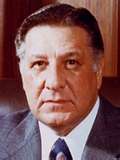 Rizzo died in 1991 but I suspect somewhere in the Great Unknown, the man wails with disappointment, bemoaning the fact he lived before his time. Rizzo once said that if necessary he would roll tanks down Market Street to preserve the peace.
My parents loved Rizzo’s blustery, make-my-day style. I thought he was nuts. As it turns out? The man was a visionary.
One of the overlooked or rarely mentioned contributions of the Occupy Wall Street Movement has been the public eyeballing of today’s military style, domestic police force. Many were surprised, even appalled by the military-style uniforms, the aggressive force, the ‘shock and awe’ approach of smoke and sound cannons caught on video.
Let me start off by saying I enjoy safe environments, appreciate the fact that children walk our streets without the fear of immediate abduction, that little old ladies are not routinely bashed over the head for their social security checks or that drug cartels have yet to murder mayors and judges in turf wars [eg., Mexico].
Crime is down in America. That’s a good thing.
 But the push for overkill security measures from our national police forces, fueled by the residual shock of 9/11, defense contractors recognizing small but reliable profit centers and Federal grants under the Homeland Security Department has shot into hyper-drive. This transformation has occurred not simply in urban settings, where drug-related crime is often a legitimate concern, the source of violence against innocent citizens and police alike. No, the rise of military-style SWAT teams has come to small town America. And numerous Federal Agencies.
Why should we, ordinary citizens, be concerned? Surely, there is a parallel between the military and police—the hierarchal structure, the use of weaponry and force. However, the main difference is a soldier is expected to kill the enemy, break the place up in times of war. In contrast, police departments are expected to protect the peace and citizenry, as well as respect our Constitutional rights. Situations quickly grow hairy when these roles [soldier/policeman] begin to morph into one another.
A case in point, actually several cases were laid bare by Radley Balko, who as early as 2007 testified before Congress, warning of the growing number of SWAT Teams in America and/or the militarization of our police departments. This did not happen overnight. In fact the swing to military-style policing has been growing steadily since the 1980’s when Congressional legislation made military surplus available to police departments.
Here are a few examples that Balko has described:
Dress cops up as soldiers, give them military equipment, train them in military tactics, tell them they’re fighting a “war,” and the consequences are predictable. These policies have taken a toll. Among the victims of increasingly aggressive and militaristic police tactics: Cheye Calvo, the mayor of Berwyn Heights, Md., whose dogs were killed when Prince George’s County police
mistakenly raided his home; 92-year-old Katherine Johnston, who was gunned down by narcotics cops in Atlanta in 2006; 11-year-old Alberto Sepulveda, who was killed by Modesto, Calif. police, during a drug raid 2000; 80-year-old Isaac Singletary, who was shot by undercover narcotics police in 2007 who were attempting to sell drugs from his yard; Jonathan Ayers, a Georgia pastor shot as he tried to flee a gang of narcotics cops who jumped him at a gas station in 2009; Clayton Helriggle, a 23-year-old college student killed during a marijuana raid in Ohio in 2002; and Alberta Spruill, who died of a heart attack after police deployed a flash grenade during a mistaken raid on her Harlem apartment in 2003.
As well as:
. . . paramilitary creep has also spread well beyond the drug war. In recent years, SWAT teams have been used to break up neighborhood poker games, including one at an American Legion Hall in Dallas. In 2006, Virginia optometrist Sal Culosi was killed when the Fairfax County Police Department sent a SWAT team to arrest him for gambling on football games. SWAT teams are also now used to arrest people suspected of downloading child pornography. Last year, an Austin, Texas, SWAT team broke down a man’s door because he was suspected of stealing koi fish from a botanical garden.
Btw, the case of child pornography? Turned out the man raided had a password-free wifi connection. It was his next-door neighbor who was into kiddie porn.
On SWAT teams employed specifically by Federal Agencies:
In 2007, a federal SWAT team raided the studio of an Atlanta DJ suspected of violating copyright law. And in June, the Department of Education’s Office of Inspector General sent its SWAT team into the home of Kenneth Wright in Stockton, Calif., rousing him and his three young daughters from their beds at gunpoint. Initial reports indicated the raid was because Wright’s estranged wife had defaulted on her student loans. The Department of Education issued a press release stating that the investigation was related to embezzlement and fraud — though why embezzlement and fraud necessitate a SWAT team isn’t clear, not to mention that the woman hadn’t lived at the house that was raided for more than a year. Ignoring these details, however, still leaves the question of why the Department of Education needs a SWAT team in the first place.
The Department of the Interior also has one [SWAT team], as does the Consumer Products Safety Commission. Last August, gun-toting federal marshals raided the Gibson Guitar factory in Nashville, Tenn. The reason? The company is under investigation for importing wood that wasn’t properly treated.
In 2006, a group of Tibetan monks inadvertently overstayed their visas while touring the U.S. on a peace mission. Naturally, immigration officials sent a SWAT Team to apprehend them.
Concerned yet?
According to Andrew Becker and GW Schulz from the Center for Investigative Reporting, Federal funds deluged America after 9/11 with little oversight. And so, a place like Fargo, ND though an unlikely target for jihadist terrorism, has received 34 billion dollars over the last decade, resulting in a wild spending spree.
In recent years, they [Fargo’s PD] have bought bomb-detection robots, digital communications equipment and Kevlar helmets, like those used by soldiers in foreign wars. For local siege situations requiring real firepower, police there can use a new $256,643 armored truck, complete with a rotating turret. Until that day, however, the menacing truck is mostly used for training runs and appearances at the annual Fargo picnic, where it’s been displayed near a children’s bounce house.
And,
No one can say exactly what has been purchased in total across the country or how it’s being used, because the Federal government doesn’t keep close track. State and local governments don’t maintain uniform records. But a review of records from 41 states obtained through open-government requests, and interviews with more than two-dozen current and former police officials and terrorism experts, shows police departments around the U.S. have transformed into small army-like forces.
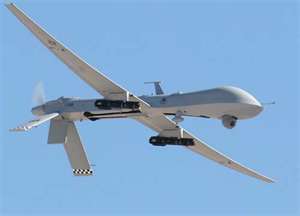 Last month, I wrote a post for Sky Dancing on the growing popularity of drones for domestic applications, Eyes in the Sky. Yes, it is true police departments have routinely employed helicopters for apprehension purposes but a drone can be kept in the air for 20+ hours, employ cameras to spy on citizens in their own homes. There’s been no public discussion or debate on using drones in American airspace. For good reason, I would argue. The public identifies the drone to our recent wars in the Middle East, an effective killing machine. On its face, remote aircraft application takes the issue of surveillance to another level, one that many citizens would reject.
Perhaps more disturbing is the fact that with all the money spent on military weaponry and hardware over the last decade+, it’s reported that local municipalities have pinched costs when it comes to basic training, the how to’s, the when and wherefores for their personnel. Basic safety and procedural training protects not only the innocent citizen bystander but police officers as well.
 The tragedy we witnessed in Oakland during the Occupy protests where Scott Olsen, an Iraqi vet, was nearly killed was a preventable action. The pepper-spraying and crackdown of peaceful protestors in NYC and elsewhere by overzealous police is a chilling development, as is the routine use of stun guns on the elderly, on children, even pregnant women, and/or the multiple shooting of family pets in warrantless house raids [an alarming number of which have been mistakes]. These are steps too far, steps we will surely regret as a society. This is particularly true at a moment when authoritative incursions are being made on our basic civil rights, eg., the recent sign off on indefinite detention; the kill order on and ultimate assassination of Anwar al-Awlaki, a bad guy but an American citizen nonetheless; a continuing war against whistleblowers; the veil of secrecy in an ever-expanding state of war and surveillance; the deliberate fear-mongering and scapegoating used by our politicians; the disturbing rise and spread of corporatism, etc.
The slide into tyranny is an easy hop, skip and jump from where we find ourselves right now. We’re deluding ourselves by pretending our democratic principles cannot be/have not been eroded. This should not be a partisan issue because all parties have been responsible and all parties will be injured if the trend continues.
Frank Rizzo may be smiling in the afterlife. But Benjamin Franklin leans over his shoulder, reminding us all:
‘Those who sacrifice liberty for security deserve neither. ‘
Sorry, Frank. Ben was the far wiser man.


 peej
peej Carissa
 bostonboomer
 ecocatwoman
 mablue2
 peggysue22
 quixote
 skydancingguestblogger
 Mona (aka Wonk the Vote)



 Sky Dancing
Excellent post! Dak posted the story about Fargo (my birthplace) whle you were away, but you’ve really connected the dots. This is what Bush/Cheney did to us, and Obama is only intensifying the militarization of American law enforcement. I really don’t think there’s a way to turn it around either. We’re so f’d.
It is pretty overwhelming, BB, even scary when you add all the other elements–the economic anxiety, the knee jerk scapegoating [it’s always someone else’s fault], this glorification of corporate values at the expense of democratic principles.
When Rizzo was Police Commissioner it was a time of turmoil–student demonstrations, extreme political posturing but the economy [up until the Carter years] was still in gear. Then when inflation went through the roof, Rizzo’s take no enemies angle got a new lease on life and was wildly popular with a lot of people. At least that’s how I remember it. My parents and I always disagreed on Rizzo–led to a lot of shouting matches, even after I left home for good.
It was a crazy time. History seems to be repeating.
I remember Rizzo. Is he the guy who killed a blew up a bunch of people in a house back in those days?
Rizzo was a force of nature, according to a number of people :0). He had the first violent run in with the MOVE compound in Philly. As I recall a police officer was killed in the melee and there was evidence of police brutality. But it was Wilson Goode, the 1st black mayor, who dropped the fire bomb on MOVE. It wasn’t intended to go down like that but city officials refused to allow the fire department to come in and a whole bloody block was destroyed. Horrible situation!
They were interesting times in Philadelphia! Little too interesting.
Great post Peggy, I had to edit my evening reads…and add a link to this post. 😉
Thank you, Minx!
Arizona, New Mexico, California and Texas have militarized check points. Supposedly the Federal Government has taken exception to instate immigration check points — when we went through these check points a couple of years ago — it was exactly like any military checkpoints on military bases.
I am being forced to go through military checkpoints — where I have absolutely no rights. If a Hitler type brownshirt wants to search our vehicle — this can be done.
Why am I so sensitive to military check points? Because I had to endure years of the garbage. At 13 I had to carry my military dependent ID on me at all time. WE had no real Constitutional rights — I learned that as a teen ager during the Vietnam war — living on base.
The coast guard has also become a military arm of the Government — In a real emergency I would never rely on the thugs now dressed like the gestapo. The military police are everywhere.
Security theater — this makes a few people feel safer — and helps politicians win elections — and it costs we the taxpayers a whole hell of a lot of money.
Wow, northwestrain. I had no idea of how ridiculous and scary it’s become in the southwest. They get away with this sort of nonsense there, it would be very easy to have a slow creep everywhere.
That’s the danger–the creeping militarization at a time of heightened anxiety and stress. People will sign away their freedom and we’ll a cellblock in return.
Chilling!