
Thursday Reads: Defense Authorization Bill, Ron Wyden, the Filthy Rich, and Bird Crashes
Posted: December 15, 2011 Filed under: #Occupy and We are the 99 percent!, 2012 presidential campaign, Banksters, Barack Obama, Civil Liberties, George W. Bush, income inequality, indefinite detention, Medicare, morning reads, net-neutrality, Psychopaths in charge, Republican presidential politics, U.S. Economy, U.S. Military, U.S. Politics, We are so F'd, WE TOLD THEM SO | Tags: ACLU, Afghanistan War, AUMF, Carl Levin, CEO salaries, defense authorization bill, Diane Feinstein, Emptywheel, Harry Truman, Human Rights Watch, indefinite detention, Iraq War, John McCain, Newt Gingrich, taxes, terrorism 71 Comments
Good Morning!!
So far I haven’t been locked up in Guantanamo or debtors’ prison. I hope the rest of you Sky Dancers still have your freedom too, such as it is.
Yesterday the U.S. House of Representatives passed the Defense Authorization bill, which includes language permitting indefinite detention by the military of “al Qaeda members” without specific charges or trials. You can read the bill here.
Our craven and cowardly President had promised to veto this bill, but today the White House reneged on that promise, and Obama is set to sign it once it passes the Senate tomorrow or Friday.
The White House backed down from its veto threat of the defense authorization bill Wednesday, saying that the bill’s updated language would not constrain the Obama administration’s counterterrorism efforts.
While the White House acknowledged it still has some concerns, press secretary Jay Carney said President Obama’s advisers wouldn’t recommend a veto, a threat that had been hanging over the Pentagon policy bill for the past month.
Obama and his crew don’t care about the fifth amendment, habeas corpus and all that jazz–just that the president is the one who decides who is an “al Qaeda member” and therefore will be whisked away to indefinite detention. Wanna bet there are suddenly going to be a lot of “al Qaeda members” in the Occupy movement? From Anti-War.com:
As revealed in the Senate deliberations last week, the Obama administration itself requested the principal authors of the provision – John McCain and Carl Levin – to include language authorizing due-process-free military custody for American citizens. The initial threat of veto was apparently nothing more than political theater on the part of the White House.
According to The Hill, the following changes satisfied the White House concerns:
The bill deleted the word “requirement” from the section on the military detention of terror suspects, which was among the most contentious parts of the bill.
The national security waiver allowing the executive branch to move terror suspects from military to civilian courts was placed in the president’s hands rather than the Defense secretary’s, a change Levin said Obama had asked for.
The conference bill was based on the Senate language, which was not as harsh as the House bill when it came to trying terror suspects in civilian courts.
The administration called the provision in the bill that establishes the authority for military detentions unnecessary because the executive branch already was given this authority following Sept. 11.
Carney’s statement said if the administration finds parts of the law “negatively impact our counterterrorism professionals and undercut our commitment to the rule of law,” it expects the bill’s authors will correct those problems.
Oh well, then no worries… Except that lots of people who care about the Constitution aren’t so happy about it. Here’s a statement from Laura Murphy of the ACLU:
“The president should more carefully consider the consequences of allowing this bill to become law,” Laura W. Murphy, director of the ACLU Washington Legislative Office. “If President Obama signs this bill, it will damage both his legacy and American’s reputation for upholding the rule of law. The last time Congress passed indefinite detention legislation was during the McCarthy era and President Truman had the courage to veto that bill. We hope that the president will consider the long view of history before codifying indefinite detention without charge or trial.”
Unfortunately, Barack Obama is no Harry Truman.
Here’s a statement from Human Rights Watch:
“By signing this defense spending bill, President Obama will go down in history as the president who enshrined indefinite detention without trial in US law,” said Kenneth Roth, executive director of Human Rights Watch. “In the past, Obama has lauded the importance of being on the right side of history, but today he is definitely on the wrong side.”
The far-reaching detainee provisions would codify indefinite detention without trial into US law for the first time since the McCarthy era when Congress in 1950 overrode the veto of then-President Harry Truman and passed the Internal Security Act. The bill would also bar the transfer of detainees currently held at Guantanamo into the US for any reason, including for trial. In addition, it would extend restrictions, imposed last year, on the transfer of detainees from Guantanamo to home or third countries – even those cleared for release by the administration.
There are currently 171 detainees at Guantanamo, many of whom have been imprisoned for nearly 10 years. As one of his first acts in office, Obama signed an executive order for the closure of Guantanamo within one year. Instead of moving quickly to close the prison and end the use of the discredited military commissions, he supported modifications to the Military Commissions Act.
“It is a sad moment when a president who has prided himself on his knowledge of and belief in constitutional principles succumbs to the politics of the moment to sign a bill that poses so great a threat to basic constitutional rights,” Roth said.
The bill also requires the US military take custody of certain terrorism suspects even inside the United States, cases that previously have been handled by federal, state and local law enforcement authorities. During debate over the bill, several senior administration officials, including the secretary of defense, attorney general, director of national intelligence, director of the FBI, and director of the CIA, all raised objections that this provision interfered with the administration’s ability to effectively fight terrorism. In the last 10 years over 400 people have been prosecuted in US federal courts for terrorism related offenses. Meanwhile during that same period, only six cases have been prosecuted in the military commissions.
“President Obama cannot even justify this serious threat to basic rights on the basis of security,” Roth said. “The law replaces an effective system of civilian-court prosecutions with a system that has generated the kind of global outrage that would delight recruiters of terrorists.”
The bill also reauthorizes the AUMF that Bush used to get us into Iraq. Emptywheel has a lengthy post in which she wonders: Feinstein’s “Fix” on AUMF Language Actually Authorize Killing American Citizens? You probably should read the whole thing, but here’s the summation:
…by affirming all purportedly existing statutory authority, DiFi’s “fix” not only reaffirmed the AUMF covering a war Obama ended today, but also affirmed the Executive Branch’s authority to use deadly force when ostensibly trying to detain people it claimed present a “significant threat of death or serious physical injury.” It affirms language that allows “deadly force” in the name of attempted detention.
In any case, it’s one or the other (or both). Either the AUMF language became acceptable to Obama because it included American citizens in the Afghan AUMF and/or it became acceptable because it affirmed the Executive Branch’s authority to use deadly force in the guise of apprehending someone whom the Executive Branch says represents a “significant threat.”
My guess is the correct answer to this “either/or” question is “both.”
So DiFi’s fix, which had the support of many Senators trying to protect civil liberties, probably made the matter worse.
In its more general capitulation on the veto, the Administration stated that the existing bill protects the Administration’s authority to “incapacitate dangerous terrorists.” “Incapacitate dangerous terrorists,” “use of deadly force” with those who present a “significant threat of death or serious physical injury.” No matter how you describe Presidential authority to kill Americans with no due process, the status quo appears undiminished.
Finally Al Jazeera asks: Is the principle of indefinite detention without trial now an accepted and permanent part of American life? I wonder if Michelle Obama is still proud to be an American today?
There is some other news, of course. For one thing, it seems as if Rep. Ron Wyden of Oregon must have more energy I can imagine having. As of today he managed to get the decisions on rural post office closings postponed until next May; he joined with Rep. Paul Ryan (!) to propose a medicare overhaul; and he and Darrel Isa (!) have proposed an alternative to the entertainment industry bill that would effectively shut down social networking on the internet. Check out those links if you’re interested.
One of my favorite economists, Robert Reich, has an analysis of Newt’s Tax Plan, and Why His Polls Rise the More Outrageous He Becomes.
Newt’s plan increases the federal budget deficit by about $850 billion – in a single year!
….
Most of this explosion of debt in Newt’s plan occurs because he slashes taxes. But not just anyone’s taxes. The lion’s share of Newt’s tax cuts benefit the very, very rich.
That’s because he lowers their marginal income tax rate to 15 percent – down from the current 35 percent, which was Bush’s temporary tax cut; down from 39 percent under Bill Clinton; down from at least 70 percent in the first three decades after World War II. Newt also gets rid of taxes on unearned income – the kind of income that the super-rich thrive on – capital-gains, dividends, and interest.
Under Newt’s plan, each of the roughly 130,000 taxpayers in the top .1 percent – the richest one-tenth of one percent – reaps an average tax cut of $1.9 million per year. Add what they’d otherwise have to pay if the Bush tax cut expired on schedule, and each of them saves $2.3 million a year.
To put it another way, under Newt’s plan, the total tax bill of the top one-tenth of one percent drops from around 38 percent of their income to around 10 percent.
What about low-income households? They get an average tax cut of $63 per year.
Oh, I almost forgot: Newt also slashes corporate taxes.
Wow!
Dakinikat clued me in to this post at Naked Capitalism: “Let Them Eat Pink Slips” CEO Pay Shot Up in 2010, which links to this article in the Guardian.
Chief executive pay has roared back after two years of stagnation and decline. America’s top bosses enjoyed pay hikes of between 27 and 40% last year, according to the largest survey of US CEO pay. The dramatic bounceback comes as the latest government figures show wages for the majority of Americans are failing to keep up with inflation.
America’s highest paid executive took home more than $145.2m, and as stock prices recovered across the board, the median value of bosses’ profits on stock options rose 70% in 2010, from $950,400 to $1.3m. The news comes against the backdrop of an Occupy Wall Street movement that has focused Washington’s attention on the pay packages of America’s highest paid.
The Guardian’s exclusive first look at the CEO pay survey from corporate governance group GMI Ratings will further fuel debate about America’s widening income gap. The survey, the most extensive in the US, covered 2,647 companies, and offers a comprehensive assessment of all the data now available relating to 2010 pay.
And these oligarchs couldn’t care less if we like it or not. They own the White House and the Congress and we don’t.
I’ll end with a bizarre and very sad story out of Utah:
Thousands of migratory birds were killed or injured after apparently mistaking a Wal-Mart parking lot, football fields and other snow-covered areas of southern Utah for bodies of water and plummeting to the ground in what one state wildlife expert called the worst mass bird crash she’d ever seen.
Crews went to work cleaning up the dead birds and rescuing the injured survivors after the creatures crash-landed in the St. George area Monday night.
By midday Wednesday, volunteers had helped rescue more than 3,000 birds, releasing them into a nearby pond. There’s no count on how many died, although officials estimate it’s upwards of 1,500.
“They’re just everywhere,” said Teresa Griffin, wildlife program manager for the Utah Division of Wildlife Resource’s southern region. “It’s been nonstop. All our employees are driving around picking them up, and we’ve got so many people coming to our office and dropping them off.”
Those are my recommendations for today. What are you reading and blogging about?
Have We Died and Gone to Heaven?
Posted: December 14, 2011 Filed under: #Occupy and We are the 99 percent!, Banksters, Congress, Corporate Crime, corruption, Democratic Politics, legislation | Tags: 2011: days of revolt, Financial Crisis, Rule of Law 5 Comments
Just read a heads-up from OpEd News that Tammy Baldwin [WI] has proposed H.Con Res. 85 for consideration to prevent any Wall Street settlement[s] and/or immunity against criminal or civil charges, where fraud [aka criminal activity] is indicated, requiring investigation and subsequent prosecution by Federal and state authorities.
Halleluiah!
This is in addition to the investigations that Attorney Generals Eric Schneiderman [NY], Beau Biden [DE], Martha Coakley [MA], Catherine Cortez Masto [NV] and Karmala D. Harris [CA] are pursuing in the mortgage foreclosure crisis, namely robosigning, origination and securities fraud, as well as NY District Court Judge Jed Rakoff, who notably [and bravely] refused to sign off on a ‘deal’ between the SEC and Citigroup in another case involving securities fraud.
Forty-eight representatives have signed to co-sponsor the proposed bill. I think it’s safe to say that the Occupy Wall St. Movement has had an impact, voicing the concerns and anger of the 99%, the ordinary citizen, all of us, who would be thrown into the clink for breaking the law. Particularly for brazen theft. Yet bank CEOs and managers, mortgage servicers, realtors, accountants, lawyers and variety of regulators and auditors have been routinely given a pass [get out of jail card[.
Dare I say our lawmakers are finally listening? Let’s hope so because unless the Rule of Law is re-established unequivocally there can be no faith in the system. The Law applies to all or it is invalidated, applying to none.
Thumbs up to Congresswoman Baldwin [who is running for the Wisconsin Senate seat in 2012] and her colleagues listed below. If one of these gentlemen or gentlewomen represent your district, an appreciative email might be in order. If your representative’s name does not appear you may want to send a questioning email or pick up the phone–just to say ‘hello’ and btw why aren’t you supporting The Rule of Law?
Those of us not in the streets, still have our voices.
Let them be heard.
Rep. Earl Blumenauer [OR]
Rep. Michael Capuano [MA]
Rep. Andre Carson [IN]
Rep. David Cicilline [RI]
Rep. Steve Cohen [TN]
Rep. John Conyers [MI]
Rep. Elijah Cummings [MD]
Rep. Danny Davis [IL]
Rep. Peter DeFazio [OR]
Rep. Keith Ellison[MN]
Rep. Bob Filner[CA]
Rep. Marcia Fudge [OH]
Rep. Raul Grijalva [AZ]
Rep. Luis Gutierrez [AZ]
Rep. Janice Hahn [CA]
Rep. Alcee Hastings [FL]
Rep. Brian Higgins [NY]
Rep. Rep. Maurice Hinchey [NY]
Rep. Rush Holt [NJ]
Rep. Michael Honda [CA]
Rep. Jay Inslee [WA]
Rep. Jesse Jackson [IL]
Rep. Henry Johnson [GA]
Rep. Marcy Kaptur [OH]
Rep. Dennis Kucinich [OH]
Rep. James Langevin [RI]
Rep. John Larson [CT]
Rep. Barbara Lee [CA]
Rep. Edward Markey [MA]
Rep. Doris Matsui [CA]
Rep. James McDermott [WA]
Rep. James McGovern [MA]
Rep. Gwen Moore [WI]
Rep. Grace Napolitano [CA]
Del. Eleanor Norton [DC]
Rep. John Olver [MA]
Rep. Mike Quigley [IL]
Rep. Bobby Rush [IL]
Rep. Loretta Sanchez [CA]
Rep. Janice Schakowsky [IL]
Rep. Louise Slaughter [NY]
Rep. Fortney Stark [CA]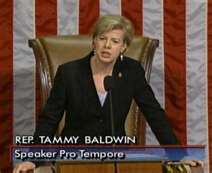
Rep. Michael Thompson [CA]
Rep. John Tierney [MA]
Rep. Edolphus Towns [NY]
Rep. Niki Tsongas [MA]
Rep. Maxine Waters [CA]
Rep. Lynn Woolsy [CA]
UPDATE: Just received an email indicating that cosponsors now number 50 [don’t have the additional names].
“Are there any adults left in the Democratic Party?”
Posted: December 14, 2011 Filed under: 2012 presidential campaign, Democratic Politics | Tags: Dump Obama, Harper's Magazine 32 Comments So, the first thing I want to say is that I am an independent. The second thing is that the header is in quotes because it’s the punchline to a Harper’s Magazine essay written by John R. MacArthur. Harper’s Magazine is the second oldest magazine in the country. It was first published in 1850. It has a long place in US journalism history for publishing thoughtful essays and fiction of some of America’s greatest writers. John “Rick” MacArthur is its president and grandson of the founder of the magazine. You may frequently see the bug for the MacArthur foundation on all kinds of PBS programs like Frontline. The title of his essay is “President Obama Richly Deserves To Be Dumped”.
Wow.
The essay begins by quoting Bill Moyer’s recent comments about the Presidential speech in Osawatomie, Kansas. MacArthur characterized Moyer’s speech to Public Citizen as one that “puts the lie to our barely Democratic president’s populist pantomime, acted out last week in a Kansas speech decrying the plight of “innocent, hardworking Americans.” He then continues to quote Ron Suskind’s “Confidence Men” as an example of showing how Obama is basically a product of a neoliberal system who has a penchant for picking the wrong people for the most important jobs on purpose. His argument is that picking plutocratic functionaries is actually what Obama was placed in the White House to do. He is a tool of the plutocracy that’s residing in the Democratic Party. MacArthur is most concerned about an Obama that rails against bankers on TV and then invites them to a mega fundraiser the next night. This is concern from a man that was born into the 1 percent. He believes that this hypocrisy should put an end to the presidency of Obama and argues that dems of the little d should start a movement to replace him immediately. This is the second time we’ve heard this call.
BostonBoomer offered up some similar evidence to this profile in a Politico piece that quotes Obama as saying that he had no idea about the full extent of the economic crisis. This is ridiculous on all levels. Obama had ongoing advice from Warren Buffet and Paul Volcker as well as many many insiders in Wall Street as early as 2007. The Confidence Men narrative is full of examples of how much Obama knew and to what extent the entire thing was minimized or just whiffed because of a lack of credible leadership. The backroom wranglings of Rahm and Geithner to thwart Sheila Bair and other regulators meant to hold account Citibank in particular just completely blows this quote right out of the realm of truthfulness. Bair was prepared to bust up Citibank ala what happened to GM and–if Suskind’s account is true–Obama felt that was the correct way to go. It is also evident from the book that Christie Romer couldn’t get Obama’s ear on her analysis of the crisis. Obama walked out of a meeting on the economic crisis at one point and left the decision making to Geithner, Emmanuel, and Summers. He actually told them to work it out amongst themselves and get back to him later. The book shows a President who did anything but attempt to grasp the depth of the crisis and make his staff handle Wall Street appropriately.
President Barack Obama said Tuesday he wishes he knew the full extent of the economic crisis when he took office, if only so he could have let Americans know just how tough the coming years would be.
“I think we understood that it was bad, but we didn’t know how bad it was,” Obama said in an interview with KIRO in Seattle. “I think I could have prepared the American people for how bad this was going to be, had we had a sense of that.”
MacArthur characterizes the Osawatomie speech as “a new standard in deception” and calls the President a functionary for party and party donor interests.
But Obama’s hypocrisy in Osawatomie, Kansas, set a new standard in deception. Among other things, his speech blamed “regulators who were supposed to warn us about the dangers of all this [the unfettered sales of bundled mortgages], but looked the other way or didn’t have the authority to look at all. It was wrong. It combined the breathtaking greed of a few with irresponsibility all across the system.”
What’s truly breathtaking is the president’s gall, his stunning contempt for political history and contemporary reality. Besides neglecting to mention Democratic complicity in the debacle of 2008, he failed to point out that derivatives trading remains largely unregulated while the Securities and Exchange Commission awaits “public comment on a detailed implementation plan” for future regulation. In other words, until the banking and brokerage lobbies have had their say with John Boehner, Max Baucus, and Secretary of the Treasury Tim Geithner. Meanwhile, the administration steadfastly opposes a restoration of the Glass-Steagall Act, the New Deal law that reduced outlandish speculation by separating commercial and investment banks. In 1999, it was Summers and Geithner, led by Bill Clinton’s Treasury Secretary Robert Rubin (much admired by Obama), who persuaded Congress to repeal this crucial impediment to Wall Street recklessness.
MacArthur fails to mention that Confidence Men also details the gutting of the Volcker Rule and the Consumer Protection Act by Chris Dodd with tacit approval from the White House. I don’t buy this reviewer’s take that it was just Democratic Senators who supported this effort.
Suskind’s reporting on what happened next is stunning: While the country endured a nail-biting period of doubt and even terror over the economy’s spiral, Democratic senators seemed not to have the best interests of the nation and their newly elected president in mind. The Dodd-Frank Wall Street Reform and Consumer Protection Act was denuded by Sen. Christopher Dodd, himself. Without the young and inexperienced president’s knowledge, Dodd “had discreetly gutted the Volcker Rule.
“Many were critical of the lame-duck senator (Dodd) for not being more aggressive in his reforms, alleging that his interests were inexorably linked with the lobby he so closely served. But Dodd remained steadfast, arguing that he simply wanted to produce the strongest possible bill that could feasibly withstand a vote.
“The Volcker Rule, with teeth, was dead,” Suskind writes.
Obama, already bloodied from more than a year of contentious attempts at repair and reform, and the Democrats took a “shellacking” in the 2010 midterm elections, losing the House of Representatives to the Republicans. With unemployment hovering around 10 percent, the lack of job creation hurt the president. “People liked the president, but only 32 percent felt real confidence in him as a leader,” Suskind writes.
A stream of wealthy traders and CEOs people this story of confidence run amok, including a JPMorgan investment banking head. After picking up the bill at an expensive extended family dinner, his 80-something steelworker father takes him aside: “Bill, is what you’re doing legal? I don’t see how it can be.” The banker retires and gets involved with financial reform — in London.
MacArthur continues his rant with a bit on Afghanistan which is interesting in the context of the President winding down the Iraq War on Bush’s terms and not his own.  You may recall that Bush signed the agreement to get us out of Iraq right now. The announcement of that signing was met with two shoes from a journalist. Obama tried to negotiate further US presence. He is undoubtedly going to take credit for this too, however, as witnessed by his “mission accomplished’ presser complete with the requisite prop soldiers today. You can read more on that from Juan Cole at Informed Consent.
MacArthur’s essay calls for a Dump Obama movement akin to the Dump LBJ movement of 1967. He believes that a modern day Allard Lowenstein could arise and change the current dynamics of 2012.
You may say it’s too late, that Obama is impregnable. Consider Gene McCarthy’s obscurity on November 30, 1967, when he announced his insurgent crusade. At the time, many Americans confused him with Senator Joe McCarthy (R., Wis.), the notorious communist hunter, and in January 1968 a Gallup poll showed him winning just 12 percent of the votes in a presidential election. But on March 12, McCarthy nearly beat Johnson in the New Hampshire primary. The opposition was galvanized, Robert Kennedy jumped into the race, LBJ announced he would not seek re-election, and American democracy was revived.
Granted, there are big differences between 1968 and 2012 — for one thing, there’s no military draft to frighten the young — but the great issues are the same: an immoral war and a merciless money power. Moreover, high unemployment and the dominance of Wall Street do frighten the young. They need a tribune.
I was struck by this Eugene McCarthy quote.
“Party unity is not a sufficient excuse for silence”
Of course, RFK eventually became the frontrunner in that race until his assassination. (I have to admit to being too young to really grasp all of this at the time but I know that many of our readers can give fuller accounts than me so I’ll defer to them.) While the McCarthy run ushered in the Nixon era and is considered a huge black period in the time of the Democratic Party, the lesson here is that no one need accept an incumbent president as inevitable. Just as Republicans struggle with their terrible, horrible, awful, very bad choices in the Republican party, the Democrats provide no choice at all but a severely weakened and demonstrably inept incumbent President.
The most irritating thing is that any independent run is likely to be a gadfly like Donald Trump or NY Mayor Donald Bloomberg. Party entrenchment is killing the US during its most vulnerable time since the run up to World War 2. Are these folks really the only choices a country as big, educated, and powerful as the US can come up with? Just as the right wing media is attack the Gingrich insurgency, is there really any way for independents and fed up partisans to create a movement to get a real choice? I, for one, desperately would like a real choice. As far as I am concerned, the only people that are running for President right now are ones that I’d rather see completely out of public life. Is there anyway that a real leader could actually launch an authentic insurgent candidacy in this age of crony capitalists and pols?
A War of a Different Sort
Posted: December 14, 2011 Filed under: Austerity, Banksters, Democratic Politics, Economy, globalization, income inequality, poverty, productivity, U.S. Economy, unemployment | Tags: Federal Reserve, investment, the Great Depression, The Great Slump 25 Comments
In the May edition of Vanity Fair, Joseph Stiglitz [economist and professor at Columbia University and recipient of the Nobel prize in economic sciences, 2001] wrote a prescient essay entitled, “Of the 1%, For the 1% and By the 1%.”
In a strange way, the piece voiced what would months later become the rallying cry of the Occupy Wall Street Movement, a foreshadowing of the public’s growing discontent with high unemployment, rising poverty and income disparity as well as the social damage resulting from Government failure to address the problems: the distortion it creates, how income disparities breed a climate of imbalance and lack of restraint, encouraging:
. . . no limit to the adventures we can undertake; corporations and contractors stand only to gain. The rules of economic globalization are likewise designed to benefit the rich: they encourage competition among countries for business, which drives down taxes on corporations, weakens health and environmental protections, and undermines what used to be viewed as the “core” labor rights, which include the right to collective bargaining.
In addition, Stiglitz underscored how inequality erodes our national identity–the sense of fairness, equal opportunity, our sense of community–the very elements we consider American staples. In fact, while listening to the GOPs’ endless political debates these past months, I’ve felt like a stranger in a strange land. Abandon child labor laws? Let the uninsured die? Begin massive deportations?
Really?
In any case, Stiglitz was the first to sound the warning in clear, concise and effective prose.
Which is why I found Stiglitz’s recent VF piece, ‘The Book of Jobs,’ required reading. Great title, btw. Even better is the comparison made between the Great Depression of the 1930s and the present downturn. Or as Stiglitz refers to our current dilemma: the Great Slump. An interesting aside, Paul Krugman pulled out all the stops over the weekend and called our economic crisis a depression, period. Hardly a surprise for the underwater homeowner, the long-term unemployed or those juggling multiple part-time positions to make ends meet.
 I’d encourage readers to take a few minutes and read Stiglitz’s recent essay. It’s amazingly concise and clear, even for non-economic types [like myself]. But here’s the gist: Ben Bernanke, a self-proclaimed scholar of the Great Depression, turned on the money spigots in response to the 2008-2009 meltdown because traditional wisdom said the Great Depression was the result of excessive money tightening by the Federal Reserve. So, doing the opposite would be the charm, right?
Not quite. As Stiglitz notes, this time we have proof that monetary manipulations were neither the cause nor the answer.
Why?
Because despite the flood of money, we’re still in the crapper. Consider this an Advanced Economics Lab experiment, playing out before your eyes.
So what is the root problem?
The economy itself, Stiglitz contends, a structural dislocation, a weak economy disguised by whopping bubbles in the real estate and financial markets, the easy, even crazy availability of credit, but basically a shift in the jobs we have to the jobs we need.
This is eerily similar to the precursor of the Great Depression. Then, massive unemployment resulted as the country moved from agriculture to industry. The cause? Increased agricultural productivity. What was once done by 20% of the population would be accomplished [with surplus] by 2%. Currently, the economy is moving from industry to service. Again, this shift has been provoked by increased productivity.
What is old is new again. With a twist, of course: the impact of globalization.
Industry to service? you say. Most Americans wince at the prospect of ‘service’ jobs—low skills, lower pay, 8 hours of mindless burger flipping.
Not really.
For instance, addressing our energy needs alone will require an abundance of high tech skills [and commensurate wages] to develop cleaner, more efficient fuels. Support of basic research work is critical in this and other areas and leads to increased innovation and economic growth. Examples are plentiful—research produced the Internet and biotech industry, spawning huge upticks in economic growth. And this is something Americans excel at—thinking outside the box. Education will be required to retrain the work force and prepare and encourage our children with requisite skills and creative know how. In addition, infrastructure, a growing national concern, offers years of labor for out-of-work construction crews. We certainly don’t need an American version of ‘London Bridge is falling down.’ The Minneapolis bridge collapse in March was one too many.
Yes, Stiglitz says, we will need to rein in the banks, turn them back into the boring businesses they once were [they’re suppose to be serving us, not the other way around]. And we will need to seriously re-evaluate our tax policies, most of which favor the rich. But to solve the most critical problem—structural change—will require investing in our future, our own people. Private enterprise will not and cannot do that on a massive scale [I can hear Republicans wailing in unison].
FDR had World War II, spurring the necessary investment [spending] that launched the US into an unparalleled cycle of growth and prosperity. We are now faced with another war, a battle of ideology and political one-upmanship. Yet the solutions are real and within our grasp, Stiglitz suggests. I, for one, believe him.
Now it’s a matter of mustering the national will. We employed that fierce will during the Second World War; our survival and ultimate victory depended on it.
As it does once again.
Financing Politics and Democracy: the ultimate one percent
Posted: December 13, 2011 Filed under: U.S. Politics, We are so F'd | Tags: campaign finance reform, Political donations, Super PACs 19 Comments A recent examination of political donors by the Sunlight Foundation has found some extremely disturbing numbers on how campaigns are financed. I knew it would be bad but it’s worse than I personally imagined. Nearly all political donations are made by a select few and those donors are not ordinary citizens. There is a sliver of folks/institutions that fund campaigns and they do so with huge amounts of funds and impact. It is difficult to imagine that democracy can survive under these circumstances.
In the 2010 election cycle, 26,783 individuals (or slightly less than one in ten thousand Americans) each contributed more than $10,000 to federal political campaigns. Combined, these donors spent $774 million. That’s 24.3% of the total from individuals to politicians, parties, PACs, and independent expenditure groups. Together, they would fill only two-thirds of the 41,222 seats at Nationals Park the baseball field two miles from the U.S. Capitol. When it comes to politics, they are The One Percent of the One Percent.
A Sunlight Foundation examination of data from the Federal Election Commission and the Center for Responsive Politics reveals a growing dependence of candidates and political parties on the One Percent of the One Percent, resulting in a political system that could be disproportionately influenced by donors in a handful of wealthy enclaves. Our examination also shows that some of the heaviest hitters in the 2010 cycle were ideological givers, suggesting that the influence of the One Percent of the One Percent on federal elections may be one of the obstacles to compromise in Washington.
The One Percent of the One Percent are not average Americans. Overwhelmingly, they are corporate executives, investors, lobbyists, and lawyers. A good number appear to be highly ideological. They give to multiple candidates and to parties and independent issue groups. They tend to cluster in a limited number of metropolitan zip codes, especially in New York, Washington, Chicago, and Los Angeles.
There is little wonder in my mind about the role of this type of campaign finance concentration in the ever-increasing march to plutocracy. It is no wonder that most laws reflect self-dealing and monopoly protection to these same interests. It is also why we continue to see bail outs for these folks and usound economic policy during recessions. There is no room for common sense when policy priorities can be bought. These folks are savvy. Their money is going to Super PACS to represent their interests. We know that Grover Norquist sits on an incredible amount of bucks and is accountable to no one. We also know that his deep pockets have bought off many a republican. He is just one example.
In the 2010 election cycle, the average One Percent of One Percenter spent $28,913, more than the median individual income of $26,364
At the top of this elite group are individuals such as Bob Perry, CEO of Perry Homes, who gave $7.3 million to Karl Rove’s American Crossroads in 2010 and $4.4 million to Swift Vets and POWs for Truth in 2004, and Wayne Hughes, owner and chairman of Public Storage Inc., who gave $3.25 million to American Crossroads in 2010, and Fred Eshelman, CEO of Pharmaceutical Product Development who spent $3 million in 2010 on his own group, RightChange. Sunlight’s Ryan Sibley writes more about the top donors here.
Unlike the other 99.99% of Americans who do not make these contributions, these elite donors have unique access. In a world of increasingly expensive campaigns, TheOne Percent of the One Percent effectively play the role of political gatekeepers. Prospective candidates need to be able to tap into these networks if they want to be taken seriously. And party leaders on both sides are keenly aware that more than 80% of party committee money now comes from these elite donors.
Campaign finance reform is one of those things that doesn’t get much press. It goes no where in Congress. Lobbyists fight it tooth and nail. It appears the stranglehold of big, monied interests is a sure thing. It can only lead to more social unrest since there are no traditional ways to remove it. The Supreme Court has upheld the rights of institutions to act as individuals. Courts have generally been the only bastion of counter measures. This is the kind of thing that sent many tea party and Occupy participants to the streets. Unfortunately, these statistics show that no one is listening.

 peej
peej Carissa
 bostonboomer
 dakinikat
 ecocatwoman
 mablue2
 Mama Lopez
 peggysue22
 quixote
 skydancingguestblogger
 Mona (aka Wonk the Vote)



 Sky Dancing
Recent Comments