
It’s still the jobs, stupid
Posted: August 29, 2011 Filed under: Economy, jobs, unemployment, voodoo economics | Tags: Alan Krueger, Dean Baker, Economists, jobs policy, labor market, Mark Thoma, unemployment 17 Comments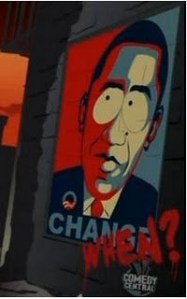 In what I hope is not some symbolic hype, Alan Krueger–an actual economist and a labor one at that–was nominated by President Obama today to head the Council of Economic Advisors. He will replace Austin Goolsbee.
As the Wall Street Journal noted, Krueger’s scholarship suggests he will “likely provide a voice inside the administration for more-aggressive government action to bring down unemployment and, particularly, to address long-term joblessness.”
If his name sounds familiar, it’s because Krueger’s academic work has frequently played a valuable role in the political discourse. When congressional Republicans blatantly lied about the costs of a cap-and-trade plan, it was Krueger who set the record straight. When conservatives said in 2009 that slashing the minimum wage would boost the economy, Krueger explained why the opposite is true.
The economist also brings relevant experience to the table.
I’m hoping this finally brings the correct policy priorities and prescriptions to the table. We’ve had nearly three years of confused messages and results and the economy is clearly the worse for it. There’s an article up at The Guardian by economist Dean Baker that pretty much sums up all of my economic posts for the past few years. Obama never seemed to understand that high unemployment is a problem and never instituted any kind of policy to target the problem directly. He says he gets it now, but I’d just like to remind every one that he said he got it after the election that delivered the House of Representatives to the Tea Party terrorists and still has shown no sign that he understands that people expect bold fiscal policy in the face of low economic growth. All we keep getting is tax breaks for rich people and opposites day fiscal policy.
President Obama has discovered how serious the recession is. That’s what he told an audience in Chicago last week. To be fair, he was referring to revised data from the commerce department showing that the falloff in GDP was larger than originally reported.
But ridicule is appropriate. He and we knew all along how many people were out of work. The employment numbers told us the size of the hole and the desperate need for government action.
This sort of ridiculous comment, and President Obama’s weak response to the recession over the first two and a half years of his presidency, explains the tidal wave of scepticism facing his widely hyped upcoming speech on jobs after the Labor Day weekend. The list of remedies leaked ahead of time does little to inspire hope.
At the top of the list of job-creating measures is extending the 2 percentage-point reduction in the social security payroll tax. This provides no boost to the economy, since it just keeps in place a tax cut that was already there, but if the cut is allowed to end at the start of 2012, it will be a drag on growth.
As it stands, the social security programme is being fully reimbursed for the lost tax revenue, but there is always the possibility that Republicans will use this as a basis for attacking the programme. Given President Obama’s willingness to support cuts to social security, it is understandable that this part of his jobs agenda doesn’t generate much enthusiasm.
Baker goes on to call for a new CCC and explains why trade agreements, tax cuts to business yet again that undermine social security, and all the rest of the “jobs” agenda touted by the President aren’t going to do much of anything. Economist Nancy Folbre has a great piece of analysis up at the NYT explaining why letting this high level of unemployment go on for a period of time has an increasingly negative impact on the entire economy because things multiply over time. However, a new study covered by Folber shows that the unemployed just don’t sit around and act like they are on vacation. They create value by doing unpaid work. The same folks that think that the unemployed just lie around are the same ones that push the meme that homemakers spend their days eating bon bons and watching soap operas.
The overall increase in non-market work implies that household consumption among the unemployed fell less than market income, but it’s hard to put a dollar value on the unpaid work. When people make a voluntary decision to substitute time for money, we can infer something about the relative value they place on it.
But most unemployment is involuntary, and some unpaid work probably represents an effort to stay busy more than a significant contribution to household living standards.
The authors emphasize the relatively large impact of unemployment on unpaid work, in part because this is a new finding, and in part because it counters the wrong impression that, as Professor Hurst put it, the Great Recession was a Great Vacation.
But it is also important to note that most of the unemployed can’t allocate more of the free time they gain to productive uses, even if they want to. They lack the capital, land, tools and skills needed to flexibly shift from wage employment to production for their own use. Even when they can make a partial shift, their productivity is likely to be lower in unpaid work than paid work.
That’s why involuntary unemployment represents such a waste of human capabilities and loss of productive output for the economy as a whole.
So, what can Alan Krueger bring to the White House if the President will listen to this economist? This is economist Mark Thoma’s take on the appointee.
His most well known research is on the minimum wage and immigration, The work is somewhat controversial in that the results show small negative effects from raising the minimum wage and from increasing immigration. In my view that is a sign of an economist who is willing to let the evidence do the talking, and that is a good trait to have in this job.
He has also worked in many other areas, including occupational licensing, the economics of terrorism, and more recently on job search in periods when unemployment is high, including how job search is affected by things such as unemployment insurance. But that is just a small taste of the large amount of research he has done.
Krueger’s been working at the Treasury so maybe that will give him access that many of the other Obama economic advisers seemed without. Time is running out for policy to help the unemployed in any meaningful way. I say this because as we get closer to the election, it will make the Republicans more surly and less likely to do anything to help a Democratic administration. They’ve already been rewarded for hostage-taking behavior. Then, there’s the policy lags. Things like infrastructure banks take a lot of time to set up. Ideas like patent reform are laughable as job creation tools. I have no idea why the Obama administration won’t embrace things that worked in the past, but that doesn’t appear to be their MO. They seemed to get their jobs mojo from reheating failed Republican canards and presenting them as the higher, middle ground. I continue to be discouraged.
Monday Reads
Posted: August 29, 2011 Filed under: 2012 presidential campaign, morning reads | Tags: 2012 election, Colin Powell, Hurricane Irene Hype, Republicans against Science, Super PACs, Women in high positions in business in emergin markets 37 Comments Good Morning!
Paul Krugman has a great piece in the NYT on how Republicans are against science. They do appear to ignore it in favor of myth, conspiracy theories and wishful thinking. However, it does us no good to send Democrats into office that won’t fight for science and rational thought, either. How much more nonsense do you think will come out during the 2012 political season?
Mr. Perry, the governor of Texas, recently made headlines by dismissing evolution as “just a theory,” one that has “got some gaps in it” — an observation that will come as news to the vast majority of biologists. But what really got peoples’ attention was what he said about climate change: “I think there are a substantial number of scientists who have manipulated data so that they will have dollars rolling into their projects. And I think we are seeing almost weekly, or even daily, scientists are coming forward and questioning the original idea that man-made global warming is what is causing the climate to change.”
That’s a remarkable statement — or maybe the right adjective is “vile.”
The second part of Mr. Perry’s statement is, as it happens, just false: the scientific consensus about man-made global warming — which includes 97 percent to 98 percent of researchers in the field, according to the National Academy of Sciences — is getting stronger, not weaker, as the evidence for climate change just keeps mounting.
In fact, if you follow climate science at all you know that the main development over the past few years has been growing concern that projections of future climate are underestimating the likely amount of warming. Warnings that we may face civilization-threatening temperature change by the end of the century, once considered outlandish, are now coming out of mainstream research groups.
But never mind that, Mr. Perry suggests; those scientists are just in it for the money, “manipulating data” to create a fake threat. In his book “Fed Up,” he dismissed climate science as a “contrived phony mess that is falling apart.”
I could point out that Mr. Perry is buying into a truly crazy conspiracy theory, which asserts that thousands of scientists all around the world are on the take, with not one willing to break the code of silence. I could also point out that multiple investigations into charges of intellectual malpractice on the part of climate scientists have ended up exonerating the accused researchers of all accusations. But never mind: Mr. Perry and those who think like him know what they want to believe, and their response to anyone who contradicts them is to start a witch hunt.
All the candidates are pushing bad economics as well.
I’ve been kind’ve “blown away” by the news coverage of the remnants of Irene today. It seems like most of the TV coverage has been 24 hours now worth of people saying we dodged a bullet and trying to find people impacted by the storm. You’re beginning to see headlines like this now: Get Real: Hurricane Irene Should Be Renamed “Hurricane Hype”. Last night Geraldo looked like he’d just re-opened that silly empty vault again.
Irene has put on a remarkably similar show. Within the limits of forecasting error, Irene’s projected path makes it was impossible to rule out a major disaster. But, as a dangerous Category 3 storm within two days of land, something similar to what happened to Gloria occurred. Instead of going slightly off course, the power of her winds dropped markedly, at least as measured by hurricane hunter aircraft. Because it is prudent to not respond to every little tropical cyclone twitch (such as Gloria’s jog or Thursday’s wind drop), the Thursday evening forecast was virtually unchanged, the Internet went thermonuclear, and the Weather Channel’s advertising rates skyrocketed. From that point on, it became all Irene, all the time. With this level of noise, the political process has to respond with full mobilization. Hype begets hype.
A day later, the smart money is still riding a very Gloria-like track, but with a cyclone that will be weaker than projected. It is doubtful that Irene will even cough up eight bodies (the number killed by Gloria), though power outages east of where the center makes landfall (probably on Long Island) may be extensive.
I think the body count’s at 21 now which kind’ve makes this hype on all the hype look like hype. Well, at least all the governors of the mid Atlantic states got some air time praising civil servants instead of demonizing them for a change. Is it just me or does Chris Christine remind you of those big boy statues in front of those 1960s hamburger joints? That man looks like a heart attack about to happen.
Former Secretary of State Colin Powell–who cross party lines last year to hype Obama–is having second thoughts about hyping an Obama second term. Powell was on Face the Nation yesterday.
“I haven’t decided who I’m going to vote for,” Powell said on CBS’ “Face the Nation.” “Just as was the case in 2008, I am going to watch the campaign unfold. In the course of my life I have voted for Democrats, I have voted for Republicans, I have changed from one four-year cycle to another.
“I’ve always felt it my responsibility as a citizen to take a look at the issues, examine the candidates, and pick the person that I think is best qualified for the office of the president in that year. And not just solely on the basis of party affiliation,” he said.
Asked about the Republican field, Powell said there are some “interesting candidates,” but no one who has “emerged into the leading position.”
“So let’s see if anybody else is going to join, and we’ve got a long way to go,” he added.
Powell, the nation’s first African-American secretary of state, praised Obama’s leadership style in 2008 in endorsing him, saying shortly before the election that Obama “has a definite way of doing business that will serve us well.” He also said at the time that he didn’t think the GOP vice-presidential candidate, Sarah Palin, was “ready” to be president.
The really, really bad thing about the political system these days is that PACs are getting bigger and more powerful. They also seem more closely aligned with candidates. Here’s an interesting story from the NYT. The Supreme Court decision on corporations and first amendment rights has definitely impacted the political money machine.
But some advocates for tighter campaign regulation say existing rules on independent groups did not anticipate the emergence of Super PACs so closely tied to a single candidate, leaving so much room to maneuver that the independent groups are able to act as surrogates for the candidates.
“There’s not a big difference between these candidate-specific Super PACs and candidate campaign committees,” said Paul S. Ryan, associate legal counsel at the Campaign Legal Center. “I think it’s a joke. What they are doing is abiding by the very meager restrictions on coordinations on expenditures and solicitations. But that leaves a wide swath of activities that can be fully coordinated under present law.”
Increasingly, the new Super PACs are taking on tasks that in previous years were handled by — and paid for — the candidates themselves. But instead of using money raised in the $2,500 increments that federal law imposes on candidates, the Super PACs can accept donations of unlimited amounts. (The groups must disclose their donors, though some Super PACs, including Priorities USA and the Karl Rove-founded American Crossroads, have affiliated nonprofit arms that do not have to disclose donors.)
Just in case you haven’t read Rick Perry’s outrageous lies about Social Security, here’s some more information. Perry calls the popular government program unconstitutional and refers to it as a Ponzi Scheme. I want to hear him say this in Florida.
But Perry returned to the “Ponzi scheme” description on the campaign trail in Iowa last night:
“It is a Ponzi scheme for these young people. The idea that they’re working and paying into Social Security today, that the current program is going to be there for them, is a lie,” Perry said. “It is a monstrous lie on this generation, and we can’t do that to them.”
Later, in Des Moines, when a reporter asked about the suggestion that his campaign was backing off some positions in the staunch states-rights book, Perry said, “I haven’t backed off anything in my book. So read the book again and get it right.”
Kay Henderson has more on this:
Another reporter pressed the issue, asking if Perry believes Medicare is “unconstitutional” as well.
“I never said it was unconstitutional,” Perry said. “I look at Medicare just like I look at Social Security. They’re programs that aren’t working and we ought to have a national conversation about it. You know, those that have said I’ve said they’re unconstitutional — I’m going to have them read the book. That’s not what I said.”
In his book, Perry called Social Security something akin to a “bad disease” that was created “at the expense of respect for the Constitution and limited government.”
This is going to be one weird, strange, political season. I’ve never seen so many people pushing so many unpopular positions.
Women may have hit the glass ceiling in the US, but women in emerging market countries are winding up in board rooms more and more all the time. Remember, many of these countries have already had women presidents and prime ministers.
Seven of the 14 women identified on Forbes magazine’s list of self-made billionaires are Chinese. Many firms in emerging markets do a better job of promoting women than their Western rivals, some surveys suggest. In China, 32% of senior managers are female, compared with 23% in America and 19% in Britain. In India, 11% of chief executives of large companies are female, compared with 3% of Fortune 500 bosses in America and 3% of FTSE 100 bosses in Britain. Turkey and Brazil come third and joint fourth (behind Finland and Norway) in the World Economic Forum’s ranking of countries by the proportion of CEOs who are women. In Brazil, 11% of chief executives and 30% of senior executives are women.
Young, middle-class women are overtaking their male peers when it comes to education. In the United Arab Emirates 65% of university graduates are female. In Brazil and China the figures are 60% and 47% respectively. In Russia 57% of college-age women are enrolled in tertiary education; only 43% of men are. Business schools, those hothouses of capitalism, are feminising fast. Some 33% of students at the China Europe International Business School (CEIBS) in Shanghai and 26% at the Indian School of Business are female, a figure comparable with those of Western schools such as the Harvard Business School and INSEAD.
In “Winning the War for Talent in Emerging Markets: Why Women are the Solution”, Sylvia Ann Hewlett and Ripa Rashid point out that businesswomen face steep obstacles in emerging markets. How can they stay on the fast track if, as in the UAE, they cannot travel without a male chaperone? And how can they be taken seriously if, as in Russia, the term “businesswoman” is synonymous with prostitute? In every emerging market women bear the lioness’s share of family responsibilities. In many places, deals are sealed with booze and male bonding.
So, there’s some things to get us started on this Monday. Hopefully, those of you on the east coast are getting back to normal after the storm. Let us know how you’re doing! What’s on your reading and blogging list today?
Hurricane Irony: Lame Press Coverage
Posted: August 28, 2011 Filed under: The Media SUCKS, the villagers | Tags: Hurricane Irene, it's all about the villagers, press coverage 9 CommentsI’m hoping that all of you on the East Coast had an uneventful Hurricane Irene visit. It’s always a pain to lose electricity and some tree branches, but hey, as I’ve been hearing all day today, it could’ve been worse. I seriously can’t believe the coverage this weekend. You’d have thought the martians had landed. I think the corporate media out did itself. So, I’m putting up any open thread so you can share your stories and I’m also putting up what I considered some of the most offensive press moments of the week.
My number one choice for stupid press tricks was who ever thought to call Ray Nagin on to the media circuit as a preparedness guru. Remember, Ray Ray, he was the mayor of New Orleans that basically put all the city buses right in the most flood prone sections of the city and hid in the penthouse of the Sheraton Hotel until the President showed up to offer him a shower about 5 days after landfall. It gave all of us at Rising Tide 6 a source of endless jokes.
No, this wasn’t meant to be a joke. Although many believe the 2005 response to Hurricane Katrina was a colossal failure at every level of government, former New Orleans Mayor Ray Nagin appeared on MSNBC on Friday to offer preparedness advice for those in Hurricane Irene’s path.
Speaking with Martin Bashir, Nagin gave government agencies and their leaders high marks for their preparations. But he said only time will tell if the public follows their instructions.
“[I] think they’re doing an excellent job of alerting the public, which is one of the main things you need to do. One of the problems they’re having on the East Coast is that they have not experienced a storm like this in so long, so there are going to be many people who may not heed the warnings, or may move too late to try and evacuate. And that is when the drama will unfold.”
Nagin didn’t deny that he made some errors with Katrina in 2005. But he put much of the blame on New Orleanians themselves:
“Well, I would tell you this, Martin: It was a historic, catastrophic event … “[N]ow that I have had a chance to really go back and take a look, there are a number of things that I think that I could have done better. But in an evacuation situation where a catastrophic storm is approaching, the leader has one responsibility, but also the citizen has a responsibility to heed the warnings and act appropriately.”
My second lame press trick of the Hurricane coverage was how Geraldo Rivera couldn’t suppress his disappointment that there wasn’t more mayhem and death. Every time I tried to find something on TV other than hurricane coverage, I would eventually see Geraldo. The look on his face said “Damn! It’s empty again!!” every time I saw him.
Number three is up there on the Youtube. That’s the Sea Foam covered Tucker Barnes in Ocean City telling us how he smells while reporting because he’s taking a sea foam shower. If it doesn’t smell great and it’s coming in during flooding, chances are you don’t really want to be covered in it.
Number four is Howard Kurtz’s pronouncements that are just lame by definition: “Cable news was utterly swept away by the notion that Irene would turn out to be Armageddon”. No Howard, they were utterly swept away because it’s always all about them and this was doubly so.
The fact that New York, home to the nation’s top news outlets, was directly in the storm’s path clearly fed this story-on-steroids. Does anyone seriously believe the hurricane would have drawn the same level of coverage if it had been bearing down on, say, Ft. Lauderdale?
The symbiotic relationship between television and local officials played a huge role. Chris Christie, the New Jersey governor who was all over television on Sunday morning, had drawn saturation coverage with his blunt warnings to “get the hell off the beach.” New York’s mayor, Michael Bloomberg, who ordered evacuations of low-lying areas, has been a constant presence. President Obama and FEMA officials made sure to generate their share of news as well.
These officials have a responsibility to plan for worst-case scenarios, of course, but something more blatantly political is at work. Mayors and governors need to be seen as on top of the crisis, which means being visible on the tube. No one wants to be the next Ray Nagin or Heckuva Job Brownie, looking disorganized after Katrina. A badly handled snowstorm has contributed to more than one mayor’s defeat.
The blizzard of press conferences, in turn, enable the networks to keep their “Breaking News” banners up and furnished a sense of drama for a story that otherwise consisted of reporters on streets where the hurricane was expected to strike and weather experts with their maps in climate-controlled studios.
All I can say is that we’re lucky there is better stuff on the internet these days. Otherwise, no one on the east coast would’ve probably gotten some real information at all.
This is an open thread, so have at it!!!
Nicholas Kristof Suddenly Discovers the Unemployment Crisis
Posted: August 28, 2011 Filed under: Barack Obama, Economy, U.S. Economy, U.S. Politics, unemployment | Tags: Barack Obama, callous disregard for human lives, Depression, joblessness, media elite, Nicholas Kristof, politicians, Suicide, the NEW York Times, Torture, unemployment, war 16 Comments
I probably shouldn’t pick on Nicholas Kristof, because I guess as media elites go, he’s one of the least offensive. But really, his latest column just about sent me out into the street screaming and tearing my hair out. The piece is titled “Did We Drop the Ball on Unemployment?”
WHEN I’m in New York or Washington, people talk passionately about debt and political battles. But in the living rooms or on the front porches here in Yamhill, Ore., where I grew up, a different specter wakes friends up in the middle of the night.
It’s unemployment.
I’ve spent a chunk of summer vacation visiting old friends here, and I can’t help feeling that national politicians and national journalists alike have dropped the ball on jobs. Some 25 million Americans are unemployed or underemployed — that’s more than 16 percent of the work force — but jobs haven’t been nearly high enough on the national agenda.
Duh! I have a question for Captain Obvious Nick Kristof: Is the Pope Catholic? Here’s another one: Does a bear sh*t in the woods? Yes, Nick. You and your pals dropped the ball, missed the boat, and every other metaphorical cliche you can think of. Yes. And it’s way too late for your mealy-mouthed *concern* to make a difference.
What is wrong with these people? Kristof goes on to provide a few examples of people he knows in Oregon who are suffering from joblessness and hopelessness. Frankly, I found his little anecdotes rather patronizing. Maybe I’m being too hard on him, but really, if this man claims to be a “journalist,” why didn’t he recognize years ago that unemployment was a huge problem for the American people and for the economy as a whole? Kristof’s half-hearted prescriptions for solutions aren’t much better than Obama’s:
There are no quick fixes to joblessness, but Washington could temporarily make federal money available to pay for teachers who are otherwise being laid off. We could increase spending on service programs like AmeriCorps that have far more applicants than spots.
We could extend the payroll tax cut, which expires at the end of December. Astonishingly, Republicans in Congress seem to be lined up instinctively against this basic economic stimulus. Could the Tea Party actually favor tax reductions for billionaires but not for working Americans? Could we have found a tax increase the Republican Party favors?
Mr. Obama, with 25 million Americans hurting, will you fight — really fight! — to put jobs at the top of the national agenda?
Give me a break! Obama isn’t going to fight for anything except his own reelection and keeping his wealthy donors happy. And Nick Kristof, after tossing of a facile column in which he pretends to care about struggling Americans, will return to Washington and New York, smile his self-satisfied smile, and continue to ignore the depth of what is really happening to our country.
Why doesn’t The New York Times hire Jeffrey Kaye, who writes about important topics like torture? Joblessness can be a kind of torture too, and a couple of weeks ago, Kaye wrote a fine article about the links between unemployment, depression, and suicide.
When considering the effects of unemployment, and the desultory, really uncaring response of the current Democratic administration, as well as Republicans in Congress, to the human devastation of joblessness, it is important to consider the terrible emotional and psychological effects of such unemployment. Such effects are well-documented, but rarely mentioned in articles or blog postings.
A well-regarded 2010 study by the John J. Heldrich Center for Workforce Development at Rutgers, the State University of New Jersey, “The Anguish of Unemployment,” quantified the tremendous emotional suffering engendered by unemployment. “‘The lack of income and loss of health benefits hurts greatly, but losing the ability to provide for my wife and myself is killing me emotionally,’ wrote one respondent to the survey.” ….
Just last April, the Centers for Disease Control (CDC) released a study that showed that suicide rates rise and fall in tandem with the business cycle.
Kaye, a clinical psychologist actively working with clients, says he has seen the devastating effects of joblessness in his own practice since the financial crisis. He writes:
Unemployment is deadly. The effects of the capitalist boom-and-bust system seriously damage millions of lives. But with an almost daily bombast of propaganda about terrorism, the populace lives in fear, while wondering how they will make their bills, ground down between anxiety over ghostly terrorists and eviction, or how to put gas in their car, or afford a bus pass. Hopelessness stalks the land, not Al Qaeda. And yet the politicians in D.C. care little or nothing about the suffering their policies cause. Indeed, their pockets are lined with campaign donations from corporations that routinely layoff hundreds of thousands, and ship many thousands more jobs overseas.
Callous disregard for human lives is what links the terrible policies of war and torture with the policies of neglect and indifference towards the jobless. Such callousness is the by-product of a get-rich-quick ethos that worships profit over all else, over worship of a capitalist system that has brought about terrible world wars, massive depressions, colonial atrocities, and even genocide. U.S. society awaits its turn through the meat-grinder of history.
That is the kind of writing I’d like to see on the op-ed page of the NYT. Of course I know it will never happen. The elite media, the out-of-touch political class, and their wealthy enablers must not be made to feel even slightly uncomfortable about the effects of their actions–not even for the few minutes it takes to read a newspaper column.
Take it from Dr. King
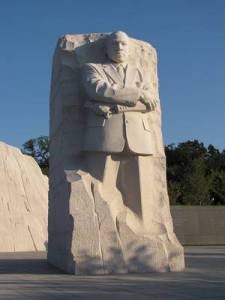
Posted: August 27, 2011 Filed under: Civil Rights | Tags: American Dreamers, Dr. Michael Kazin, I have a Dream, Martin Luther King, MLK Memorial, music and social justice, Pete Seeger, We Shall Over come 24 Comments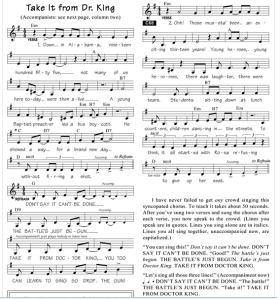 The I have a Dream Speech happened 48 years ago tomorrow.
I thought about this a lot while I was watching the PBS Masters series on Pete Seeger called The Power of Song. A repeat of the 2007 program was played yesterday showing 88 years of Pete Seeger and the role of his protests songs in everything from cleaning the Hudson River, to the Vietnam War and protesting the Wars in Afghanistan and, of course, his score for the Civil Rights movement.
There was then and there should be now: a powerful joining of social justice, music, and words.
Here’s part of Dr. Martin Luther King’s “I have a Dream” speech.
But there is something that I must say to my people who stand on the warm threshold which leads into the palace of justice. In the process of gaining our rightful place we must not be guilty of wrongful deeds. Let us not seek to satisfy our thirst for freedom by drinking from the cup of bitterness and hatred.
We must forever conduct our struggle on the high plane of dignity and discipline. We must not allow our creative protest to degenerate into physical violence. Again and again we must rise to the majestic heights of meeting physical force with soul force. The marvelous new militancy which has engulfed the Negro community must not lead us to a distrust of all white people, for many of our white brothers, as evidenced by their presence here today, have come to realize that their destiny is tied up with our destiny. They have come to realize that their freedom is inextricably bound to our freedom. We cannot walk alone.
As we walk, we must make the pledge that we shall always march ahead. We cannot turn back. There are those who are asking the devotees of civil rights, “When will you be satisfied?” We can never be satisfied as long as the Negro is the victim of the unspeakable horrors of police brutality. We can never be satisfied, as long as our bodies, heavy with the fatigue of travel, cannot gain lodging in the motels of the highways and the hotels of the cities. We cannot be satisfied as long as the Negro’s basic mobility is from a smaller ghetto to a larger one. We can never be satisfied as long as our children are stripped of their selfhood and robbed of their dignity by signs stating “For Whites Only”. We cannot be satisfied as long as a Negro in Mississippi cannot vote and a Negro in New York believes he has nothing for which to vote. No, no, we are not satisfied, and we will not be satisfied until justice rolls down like waters and righteousness like a mighty stream.
I am not unmindful that some of you have come here out of great trials and tribulations. Some of you have come fresh from narrow jail cells. Some of you have come from areas where your quest for freedom left you battered by the storms of persecution and staggered by the winds of police brutality. You have been the veterans of creative suffering. Continue to work with the faith that unearned suffering is redemptive.
Go back to Mississippi, go back to Alabama, go back to South Carolina, go back to Georgia, go back to Louisiana, go back to the slums and ghettos of our northern cities, knowing that somehow this situation can and will be changed. Let us not wallow in the valley of despair.
I say to you today, my friends, so even though we face the difficulties of today and tomorrow, I still have a dream. It is a dream deeply rooted in the American dream.
Here is the powerful music of Pete Seeger who provided the score to so many social justice movements during my life time.
and from the PBS show and the transcript up top:
 This is an open thread, but I’d like to add an article with a good question.
Why won’t America embrace the left?
In two centuries, the movement’s history in America is plagued by failure. An expert explains why.
What has the left really accomplished over the past two centuries? FDR’s New Deal remains one of the great American success stories. In the ’60s, leftist politics created a massive countercultural movement — and sexual and feminist revolutions. The civil rights movement transformed both American society and the American soul. But, if you compare the accomplishments of the American left to those of other parts of the world, like Western Europe, its record is remarkably dismal, with a surprising lack of real political and social impact.
At least, that’s the main takeaway from “American Dreamers,” a new book by Michael Kazin, professor of history at Georgetown University, which covers nearly 200 years of struggle for civil rights, sexual equality and radical rebellion. His book explores the way the national conversation has been changed by union organizers, gay rights activists and feminists. He also writes about how their techniques have now been adopted by the Tea Party movement. From Michael Moore to “Wall-E,” he argues that, although the left has been successful at transforming American culture, when it comes to practical change, it’s been woefully unsuccessful.

 peej
peej Carissa
 bostonboomer
 dakinikat
 ecocatwoman
 mablue2
 Mama Lopez
 peggysue22
 quixote
 skydancingguestblogger
 Mona (aka Wonk the Vote)



 Sky Dancing
Recent Comments