
Four NYT Journalists Missing in Libya
Posted: March 16, 2011 Filed under: Afghanistan, Breaking News, Foreign Affairs, Libya | Tags: Anthony Shadid, journalists, Libya, Lynsey Addario, New York Times, Stephen Farrell, Tyler Hicks 14 Comments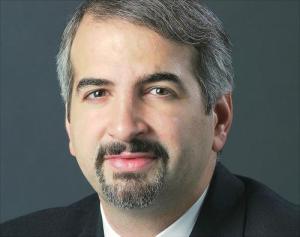
Anthony Shadid
Four New York Times journalists disappeared while reporting on fighting in Libya, the newspaper said Wednesday.
Editors at the newspaper said they last heard from the journalists on Tuesday as they were covering the retreat of rebels from the town of Ajdabiya. Libyan officials told the newspaper they are trying to locate the four, executive editor Bill Keller said in a statement.
“We are grateful to the Libyan government for their assurance that if our journalists were captured they would be released promptly and unharmed,” Keller said.
The missing journalists are Pulitzer-Prize-winning reporter Anthony Shadid, the newspaper’s Beirut bureau chief; Stephen Farrell, a reporter and videographer; and photographers Tyler Hicks and Lynsey Addario. In 2009, Farrell was kidnapped by the Taliban and later rescued by British commandos.
Anthony Shadid has won two Pulitzer Prizes, including one in 2010 for reporting on Iraq at the Washington Post.
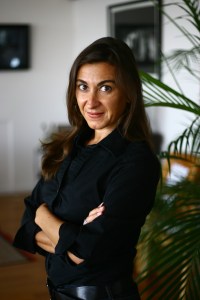
Lynsey Addario
Lynsey Addario is a brilliant photographer who was a 2009 recipient of a MacArthur “genius” grant. You can view some of her work here and here.
Libyan government forces said Wednesday that they have no information about where the journalists may be and that, if they were picked up by the Libyan military, they would be returned to Tripoli.
CNN quotes from an e-mail Addario sent to CNN correspondent Ivan Watson on Monday:
Addario called the Libya story “one of the most dangerous” of her career.
The e-mail said, “qaddafi’s forces heading back east, and the rebels are surrendering along the way…so exhausted. this story has been one of the most dangerous i have ever covered. getting bombed from the air and by land, with no cover, and no flack and helmet.”
Of the other missing writer and photography, CNN says:
Farrell routinely reports from Pakistan, Afghanistan and Iraq. Before joining The New York Times in 2007, he worked for the Times of London. In April 2004, he was kidnapped on assignment in Iraq.
Hicks, a staffer for the paper, is based in Istanbul and has served as an embed in Afghanistan.
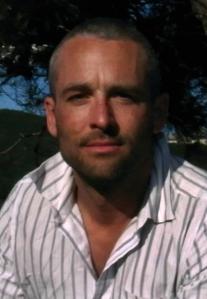
Tyler Hicks
Here is a recent post at the NYT Lens blog, with photos by Tyler Hicks along with his reflections on covering the Libyan conflict.
Stephen Farrell was taken prisoner by the Taliban in 2009. The Guardian has a report about the British soldier who died rescuing Farrell in Afghanistan.
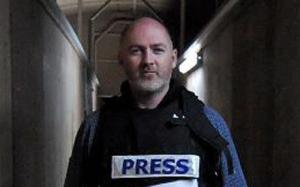
Stephen Farrell
There is some good news. Guardian UK journalist Abdul-Ahad has been freed.
Abdul-Ahad, an Iraqi national, and Andrei Netto, a Brazilian journalist, were taken into custody on 2 March.
They were held in a prison outside Tripoli after being picked up in Sabratha, a coastal town.
Netto was released last week, but Abdul-Ahad, an award-winning correspondent was held until Wednesday.
Guardian editor Alan Rusbridger has said that Abdul-Ahad “is safely out of Libya”.
The recent conflicts in the Middle East have been dangerous for journalists. I only hope that these four fine journalists will soon be found safe and unhurt.


 peej
peej Carissa
 bostonboomer
 ecocatwoman
 mablue2
 Mama Lopez
 peggysue22
 quixote
 skydancingguestblogger
 Mona (aka Wonk the Vote)



 Sky Dancing
I’m really worried about what will happen to the opposition forces in Libya. It looks like Gaddafi will remain in power, thanks in great part to our cowardly president.
When Gaddafi retains control of that country, there will be a secret war on the initial organizers of the protest. They will die horrible painful deaths. But hey, we have a black president that is for change…
Asshat.
Hillary 2012
This is frightening news, the lack of leadership in any of these urgent matters…have you seen the response from Carney when Jake Tapper asked about Japan Nuclear crisis?
RealClearPolitics – Video – WH’s Carney To Tapper: “You Have Reporters In Japan”
It is upsetting to have a president go do FUN things when the world is in crisis, yea, Twittie will say he doesn’t wear his emotions out in the open but honestly someone that cares doesn’t do that, he knew that going in.
Gaddafi thinks they’re going to let him get away with any thing. He’s acting with impunity for good reason.
UN still hasn’t made up its mind on the no fly zone as of today’s meeting.
for some reason we did not step in. The reason has to be oil…the opposition forces in Libya had to be appear to about to win without help for us to consider changing sides …thanks in large part to us, they did not win. Gaddafi’s “success” shows other dictators the way and we showed we will stand down…and actually I think we wanted an Arab uprising to be checked…We let this happen… for whatever reason
My hypothesis is that he doesn’t want to spend the money or endanger any more troops while he’s in a Presidential campaign.
I think he is just following his past MO. He is just voting present.
He’s not “present”, he’s absent.
Present or gone golfing… 😦
Bingo. I feel like he’s aware that this will all be forgotten by election time. If the democracy movement is stopped in its tracks and dissidents in other countries get the message then it’s win-win for him and the human costs are a small price to pay for “stability.” He does not want to be running while the region is exploding and he’s the hapless fool working the spread on Butler vs. UNLV.
Red Cross pulls out of Benghazi, fearing Gaddafi attack.
Wouldn’t it be better to do something before Gaddafi murders a half-million people?
The situation in Libya is really upsetting. You are right BB, when Gaddafi gets to Benghazi the blood will flow.