
Wikileaks and GMO/GM food, More cables, more fun!
Posted: December 28, 2010 Filed under: Economic Develpment, Farming, Food, Foreign Affairs, Wikileaks | Tags: Africa, cables, food, France, GM food, GMO, GMO food, monsanto, Spain, Wikileaks 24 CommentsRecently our own Grayslady posted an excellent article about Wikileaks, Monsanto and GMO Corn. She discussed a cable sent in late 2007 from our then Ambassador to France, Craig Stapleton, in which he discusses ways to force France and the EU to be more favorable towards the adoption of Monsanto’s GM BT enhanced, Roundup Ready corn. Other aspects of the information in that Wikileaks cable has been discussed in other places, for instance at Huffington Post by Jeffery Smith and at Truthout by Mike Ludwig.

Wheat and Hay Fields near Pendleton, Oregon
What the cable suggested, in part, was publishing a ‘retaliation’ list of places, down to the actual fields, growing GMO foods in Europe in the hopes the fields and crops would be destroyed by activists, ’cause pain’ for officials and hopefully swing GMO acceptance in Europe around. The Ambassador went on to say that France was particularly culpable because scientists in France were attempting to change ‘knowledge’ by studying the effects of GMO products (even the ‘good’ GMO like BT enhanced products). These studies show that the effects of GMO food on those eating it may be more pronounced and drastic than the limited studies done by the FDA and USDA suggest (see for example the studies of Dr. Gilles-Eric Seralini, Professor Andrés Carrasco, and others). And for more, see this interview of Jeffery Smith on Democracy Now.
This is very interesting, because a cable sent in 26 October 2007 is the subject of French President Sarkozky’s first visit to the USA, and his meetings with American business leaders, including pushers of GM foods. The cable suggests that the President’s support of more restrictive rules on GM products in France might be politically based and therefore, changeable.
But Wait, There’s more! The cable to France, although receiving a lot of attention because it suggests undercutting the rightful government of our supposed allies and creating civil unrest and ‘pain’, is not the only released cable to mention GMOs and Monsanto’s needs across the world. Over at Eats, Shoots and Leaves there’s a good rundown by Richard Brenneman of some of the cables.
For example, in a cable from 9 April 2009 concerning, in part, African development, one of the points of intelligence to be gathered is the African governments’ and peoples’ reactions to growing and using GM crops. Brenneman rightly asks, why would this be a concern of our State Department, unless our government is actively pushing and supporting Monsanto and the company’s GM stable of crops?
I’m going to drop a final h/t to Rady Ananda at the Food Freedom blog. She wrote about GMO and Wikileaks several weeks ago, and has been right on top of things. She brings forth the case of the food crisis of 2007-08 which wraps up some of the things we at Sky Dancing discuss into a tidy bundle.
In a January 2008 meeting, US and Spain trade officials strategized how to increase acceptance of genetically modified foods in Europe, including inflating food prices on the commodities market, according to a leaked US diplomatic cable released by WikiLeaks.
Some of the participants thought raising food prices in Europe might lead to greater acceptance of biotech imports.
It seems Wall Street traders got the word. By June 2008, food prices had spiked so severely that ‘The Economist announced that the real price of food had reached its highest level since 1845, the year the magazine first calculated the number,’ reports Fred Kaufman in The Food Bubble: How Wall Street starved millions and got away with it.
The unprecedented high in food prices in 2008 caused an additional 250 million people to go hungry, pushing the global number to over a billion. 2008 is also the first year ‘since such statistics have been kept, that the proportion of the world’s population without enough to eat ratcheted upward,’ said Kaufman.
Remember back in 2007/08 when food prices, especially bread prices, suddenly shot up? I remember being astounded when the price of a bag of hot dogs went from 99 cents to 1.29$ overnight. I figured maybe it was the result of the rise in oil costs going on about then, and perhaps it was, in part. But after reading the article by Kaufman I’m not so sure. There was no crisis in food production at this time. It was simply a manufactured bubble. About that time there were terrible food riots in Mexico amongst 29 other countries, because the price of tortillas had gone up so much people couldn’t afford to buy them. I note that the Mexican government has recently taken steps to ensure this doesn’t happen again, by buying corn futures to guarantee a flat price.
So, I wonder, how are the big fat cats and the government diddling in our food today? Surely food, at least food, should be relatively safe from bubbles, like electricity, water, and sewage service? Oh wait, those are being commoditized too. Ahd I would like to point out, the price of the bag of hot dogs has not come back down, although the bubble burst… makes ya wonder, doesn’t it?
Note: I’m going to be in and out all today, so consider this something of an open thread. I’m really keen to know what everyone thinks of the Kaufman article. When I read it I was stunned by the lengths to which the greedy people of Wall Street will go to make money.
Derivatives – The Dark Market
Posted: December 28, 2010 Filed under: Barack Obama, commercial banking, Corporate Crime, Equity Markets, financial institutions, Global Financial Crisis, investment banking, Stock Market, The Bonus Class, The Great Recession, U.S. Economy, U.S. Politics | Tags: AIG, Andrew Ross Sorkin, CFMA, CFTC, Commodity Futures Modernization Act, Credit Default swaps, derivatives, Dodd Frank, Gary Gensler, Glass Steagall, Graham Leach Bliley, Mary Schapiro, SEC, securitization 35 Comments[Dakinikat here: We at Sky Dancing would like welcome fiscalliberal to the Front page!!!]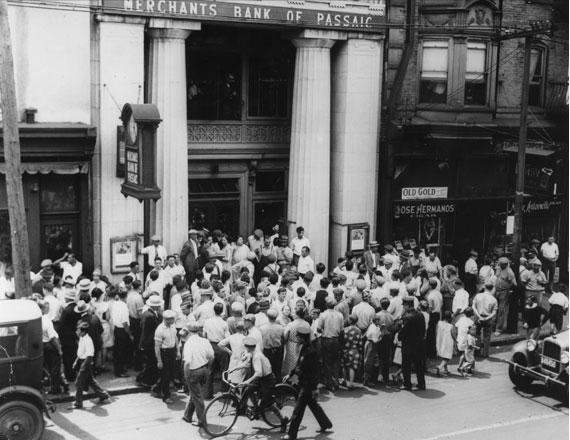
The major objective of this article is to begin the process of understanding the financial market to enable intelligent discussion on the blog.
One of the major pillars of financial collapse was Derivatives. They are very complex financial instruments with a wide diversity. They are described by a gaggle of terminology used by the high priests of finance. Because of complexity most of the books on the collapse skirt the detail of the Derivative Market. After we get through some basic definitions, we will focus on Credit Default Swaps (CDS); a subset of the Derivatives offerings. We will see how the government created a non regulated environment where fraud, compromised regulators and incompetent people ran the Investment Financial community in a very high risk mode.
Derivatives Defined
A Derivative is a financial instrument whose value is dependent on the value of another entity at a future time. Its primary function is to mitigate risk. A simple analogy would be your Home insurance. These policies guarantee that you will be remunerated if the value of your home falls due to fire, wind, or accident. A relatively small premium of money can mitigate a large potential financial catastrophe. State regulators are in charge of most regular Insurance products and solvency is less of an issue as adequate capital reserves are defined.
We need to think of Derivatives as a “risk tool” meant to stabilize the financial businesses (markets). The wide variety of Derivatives creates confusion, so we are going to restrict our discussion to Credit Default Swaps (CDS). Anticipating problems with Sub Prime mortgages, Securities were insured by investors. It was the Credit Default Swaps inability to perform that was a party to the financial collapse after the Lehman bankruptcy. They did not have the financial reserves to back up the policies they wrote How did that happen?
Deregulation
For our discussion today, three government deregulation actions are relevant.
- 1999 Graham Leach Bliley Act repealed the 1933 Glass Steagall act. The Glass-Steagall Act prohibited any one institution from acting as any combination of an investment bank, a commercial bank, and an insurance company.
- 2000 Commodity Futures Modernization Act deregulated Derivatives creating a Wild West environment for “Derivatives financial innovation”. See this link for a excellent Brooksley Born interview
- April 28, 2004 SEC drastically relaxed leverage standards for the Big Five Investment Banks: Goldman, Merrill, Bear, Lehman and Morgan Stanly. This created a very high risk environment. The session can be viewed here.
Financial self regulation brought the system down in 8 years. Bush de-funded Federal regulation. Greed, incompetence and corruption reigned supreme. Enron people went to jail. As of 2010, under Obama only bit players have been jailed. Civil fines are a joke.
Securitization Market
We need to understand the environment created by the above regulation changes to understand the role of CDS Derivative failure. We will concentrate on the Real Estate Industry
Traditionally, according to HBSwiss, the real estate industry was handled by local banks who retained the loans. Their exposure to losses resulted in more careful origination of loans. For a long time, Fannie, Freddie and FHA were packaging (securitizing) mortgages and selling them to Investors. They enjoyed a good reputation because they had good loan origination standards. These were categorized as Prime mortgages. Generally these securities obtained a AAA rating which rarely changed. Good consistent returns were recorded with these products.
Early in the 2000 decade the Investment banks adopted the securitization model called Private Label Securities. They purchased their mortgages from unregulated brokers (Country Wide, Ameriquest etc) who had little or no standards regarding underwriting of loans. The private label market latched on to the fact that high risk “Sub Prime” loans carried higher interest rates, hence higher profits. They had no exposure to the failure of the loan as risk was passed on to the Investors. They simply collected the lucrative fee’s.
Investment Banks packaged the loans (millions and billion level). They paid the rating agencies (S&P. Moody and Fitch) for ratings structuring the packages to get AAA ratings. It is clear the rating agencies did not do their job as traditionally solid AAA ratings were changed as the packages started to fail. These packages were sold to the domestic and world markets. Trillions of dollars were involved. The banks simply passed the risk on to the investors and collected the origination and servicing fee’s
CDS Market
Risk could be mitigated by purchasing a CDS against the failure of the security. So if the security failed the investor was held harmless. Remember that as of 2000 the CDS market was unregulated. AIG – London Financial Services is the poster child of the CDS industry. AIG wrote most of the CDS contracts cheaply as they held inadequate reserves (in the event of a default) and had a good company rating based on the parent insurance company whose operations were regulated. Office of Thrift Supervision was the responsible regulator, but their presence was effectively non existent, Goldman Sachs (Hank Paulson as CEO) was one of their major clients.
However, late 2006 / 2007 AIG FP realized they were over exposed and got out of the market retaining the previous contracts. Recall in the unregulated market anyone could write CDS and the big banks did. As the Mortgage Backed Securities began to fail, the banks started writing CDS between the banks to mitigate risk always falsely believing the market would recover. This was necessary because When Bear and Lehman started to fail the banks were joined at the hip, guaranteeing each others toxic securities. Based on the 2004 SEC relaxing reserve requirements, that banks were leveraged up and things were starting to fail. In a leveraged market things get serious to critical in a matter of hours.
The daily, weekly and monthly credit markets froze up because nobody trusted anybody. Even GE was having trouble borrowing for daily operations. Andrew Ross Sorkin’s book—‘Too Big to Fail’— gives a good account of the scenario in 2008. Fannie and Freddie were in conservator ship, near bankruptcy Bear was bought on a fire sale by JP Morgan, Lehman was bankrupt, Merrill near bankruptcy was bought by Bank Of America and AIG had to be rescued by the Federal Government. Morgan Stanly and Goldman were within days of bankruptcy, but got bailed out by Warren Buffet and a Korean financial entity.
The AIG story is discussed in this newspaper article ‘Behind Insurer’s Crisis, Blind Eye to a Web of Risk’.
It is interesting to know that just before the 2008 collapse, the rating agencies down graded AIG forcing them to hold more reserves. They were forced to raise cash in a collapsing market. In a high leverage industry, when it rains it pours.
Naked CDS
Investors can buy CDS on securities even though they do not own the security. This is equivalent to a neighbor buying insurance on your house. So if you know that a Mortgage Backed Security has a lot of high risk loans in it and is headed to failure, you buy a CDS anticipating the default. Michael Lewis’ book—‘The Big Short’–is all about the people who anticipated the failures and bought CDS products. A Bloomberg video interviews Lewis and it provides a lot of insight into the mess that evolved.
I look to Dakinkat, Gillian Tett, Yves Smith, and Janet Tavakoli on technical issues of Derivatives. Lewis’ forte is being able to write to the general public. His book gives a lot of insight to the CDS market nuances. It is interesting that Smith and Tavakoli consider Lewis to be a light weight. Yet, his book sales exceed theirs.
To get a notion of the size of the CDS market we need to look at these numbers. The size of our national economy this year is roughly $15 trillion. The whole world GDP is about $56 trillion. At the time of the 2008 failure, the size of the Credit Default Swaps (CDS) market was $64 trillion. The exposure at the time of the collapse was huge. The magnitude of the Naked CDS is not known, but is understood to be huge.
Given that the unregulated CDS underwriters were prone to not provide adequate capital reserves for defaults, there was a massive liquidity problem, hence the government had to step in and bail out the likes of AIG and banks who wrote these products.
The whole CDS market is described as being part of the Casino Gambling image in the financial markets
Current Status
The Dodd Frank Bill has a moderate approach for Derivatives Regulation. However it is up to the regulators for implementation and the banks are attempting to minimize the impact of regulation. This is documented by two recent NYT articles.
It’s Not Over Until It’s in the Rules
A Secretive Banking Elite Rules Trading in Derivatives
A short summary of the above articles is that the big banks are attempting to save their Oligopoly through the Risk Committees of the Clearing Houses. This is being done by imposing high capital reserve requirements for participants. This has the effect of limiting competition which limits price competition and transparency. The elephant in the room is the risk committee’s saying certain derivatives are to complex to be cleared. This gets us right back to where we were in the financial crisis. Over the Counter non clearing house products are the most profitable and open to risk.
In the spirit of Brooksly Born regulation, It has been proposed that Derivatives be run using a Clearing House or a Exchange Trading Requirement.
From The Economist:
Clearing House: A clearing requirement is a requirement that all eligible derivatives be cleared on a central clearinghouse (also known as a central counterparty, or CCP). A clearinghouse provides critical counterparty risk mitigation by mutualizing the losses from a clearing member’s failure, netting clearing members’ trades out every day, and requiring that parties post collateral every day. Clearinghouses also centralize trade reporting, and can provide any level of post-trade transparency to the OTC derivatives markets that your heart desires — same-day trade reporting, including prices, aggregate and counterparty-level position data, etc. Virtually all of the harmful opacity and murkiness of the current OTC derivatives markets can be ended with just a clearing requirement — that is, a clearing requirement is a prerequisite for getting rid of the harmful opacity in OTC derivatives
Exchange Trading: An exchange-trading requirement, on the other hand, is simply a requirement that all eligible derivatives use a particular type of trade execution venue: exchanges (also known as “boards of trade”)..The exchange is just the trade execution venue (think NYSE vs. Nasdaq). The only thing that an exchange-trading requirement adds to the clearing requirement is “pre-trade price transparency.”
The clearing house is obviously the better because it brings a degree of financial integrity and transparency. It certainly is the more expensive of the options, but its cost is minuscule when we think of the financial collapse.
However based on the articles above, it is clear that the big bankers are attempting to preserve their oligopoly in terms of the CDS market. They also want to preserve the option to take the market back to the opaque high risk environment because of profit opportunities. The Opaque Over the Counter market is the biggest threat to the stability of the market
In Dodd – Frank, the CFTC and SEC have co-jurisdiction The CFTC commission seems to be moving to the bankers view. SEC has been relatively quiet on this subject
We need to remember that Mary Schapiro (SEC) and Gary Gensler (CFTC) were part of the problem before the 2008 Financial Crisis. It remains to be seen how well they address the problem. Will they do the right thing or are they financial industry moles?
Tuesday Reads
Posted: December 28, 2010 Filed under: Global Financial Crisis, Gulf Oil Spill, investment banking, jobs, New Orleans, the blogosphere, The Bonus Class, The Great Recession, the villagers, U.S. Economy, U.S. Politics, We are so F'd, Wikileaks | Tags: AIG, Bradley Manning, cylical unemployment, Dispersant, Emeril, Gulf oil Gusher, Harry Shearer, Hoppin' John, Labor Unions, Levee failure during Hurricane Katrina, Levees.org, Nancy Pelosi, structural unemployment, The Big Uneasy, The New Orleans Saints, Those Crazy Pauls!!, Wikileaks, Wired won't release documents 29 CommentsGood Morning!
I had a productive day yesterday for a change and I hope you did too! Dare I go shop for plumbing stuff today? I was bemoaning a shortage of headlines on Sunday. I should be a bit more careful about wishing for things because today’s list of reads will be long.
The other good news for me is that we’re going from hard freeze warnings to weather in the 70s this weekend. It sounds like it’s going to be a fun New Year’s Eve here in New Orleans! That should explain the picture! I also wanted to give you a bit of New Orleans News before I moved on to other things.
First, if you haven’t had a chance to read Sandy Rosenthal’s piece at HuffPo on the failure of the Levees during Hurricane Katrina, please do so. There are still folks out there that think our devastation was from Hurricane Katrina and that just isn’t so. I was on the edge of the bowl. I know. My house experienced very little actual damage because my house was on high ground and above the waters. A failure of engineering devastated my city. It was not an act of nature. I signed the petition. Will you?
Last week, I wrote to the New York Times asking them to please resist using fast and easy “Katrina shorthand.” Forty-eight hours passed and we heard no response, so we decided to let our supporters step in. We urged our followers to sign our petition to the NY Times urging the paper to be more specific when referencing the flood disaster.
Over 1,000 people all across the nation signed our petition in under 48 hours. This immediate huge response – during the holiday no less – will hopefully show the New York Times that informed citizens understand that “Katrina” did not flood New Orleans. Civil engineering mistakes did.
Saying Katrina flooded the city protects the human beings responsible for the levee/floodwall failures. It is also dangerous since 55% of the American people lives in counties protected by levees.
If you haven’t yet, please sign our petition. We will keep it live until Jan 4, 2011.
In a similar vein, I would like to shout out HAPPY BIRTHDAY HARRY!!! to fellow New Orleans Blogger, neighbor, actor, musician, and polymath Harry Shearer (12/23/49) who made his film debut in the great epic ‘Abbott and Costello Go To Mars’ in 1953. There’s another New Orleans connection in that movie. The Abbot and Costello characters–Lester and Orville–accidentally launch a rocket that should’ve been Mars bound. They land in New Orleans for Mardi Gras instead. Harry plays an uncredited “Boy”.
I also want to offer up a plug for Shearer’s wonderful documentary on the Levee Failure called ‘The Big Uneasy’ that was released last August on our 5th Katrina Anniversary. It’s going to be re-released in 2011. I’m including an interview with him by local radio show host Kat (not me). You’ll learn that the Golden Globes are a simple piece of business and that Harry’s songstress wife is spoonable. Who knew? Also there seems that there’s a chance his documentary will be shown on PBS so you may get to see it there. I wonder if we can help encourage that situation.
I’d like to take another chance to remind you that we’re still living with the results of the BP Oil Gusher here on the Gulf Coast. There also appears to be covered-up as well as forgotten stories down here. You may want to take a look at this from Open Channel on MSNBC.com: ‘ Is dispersant still being used in the Gulf?” This story reports on pictures and samples take in early August that are being investigated now. I’d written about some of these reports earlier.
Kaltofen is among the scientists retained by New Orleans attorney Stuart Smith to conduct independent environmental testing data from the Gulf on behalf of clients who are seeking damages from BP. (Click here to read about their effort.)
An independent marine chemist who reviewed the data said that their conclusion stands up.
“The analytical techniques are correct and well accepted,” said Ted Van Vleet, a professor at the College of Marine Science at the University of South Florida. “Based on their data, it does appear that dispersant is present.”
Why responders would continue to use chemical dispersants after the government announced a halt is a mystery. If the oil was gone or already dispersed, as the federal government and BP have said, what would be the point? And, because dispersants don’t work very well on oil that has been “weathered” by the elements over long periods of times, there would be little point in spraying it that situation.
I wanted to share a New Orleans and indeed a Southern New Year’s eve tradition. We serve a concoction of black eyed peas, cabbage and sausage/ham called ‘Hoppin’ John’ to bring us luck and wealth in the New Year. I evidently didn’t make enough of it last year, so I’m planning to cook more this year. The pea’s black eyes represent coins, the cabbage represents cash, and the sausage or ham is meat that always symbolizes luxury to hungry, poor people.
Here’s Emeril’s ‘Hoppin’ John’ recipe provided courtesy the Food Network:
Hoppin’ John
Prep Time: 15 min Cook Time:50 min Serves: 10
Ingredients
1 tablespoon olive oil
1 large ham hock
1 cup onion, chopped
1/2 cup celery, chopped
1/2 cup green pepper, chopped
1 tablespoon chopped garlic
1 pound black-eyed peas, soaked overnight and rinsed
1 quart chicken stock
Bay leaf
1 teaspoon dry thyme leaves
Salt, black pepper, and cayenne
3 tablespoons finely chopped green onion
3 cups steamed white rice
Directions
Heat oil in a large soup pot, add the ham hock and sear on all sides for 4 minutes. Add the onion, celery, green pepper, and garlic, cook for 4 minutes. Add the black-eyed peas, stock, bay leaves, thyme, and seasonings. Bring to a boil, reduce the heat and simmer for 40 minutes, or until the peas are creamy and tender, stir occasionally. If the liquid evaporates, add more water or stock. Adjust seasonings, and garnish with green onions. Serve over rice.
Okay, so enough about my home town.
The AFL-CIO wants to talk unions this holiday season because there is so much misinformation about these days. It’s a nice list of myths and facts that you may want to arm yourself with when talking to those right wing nattering nabobs of negativism.
MYTH: Unions only care about their members.
FACT: Unions are fighting to improve the lives of all workers.
- It’s easy to forget that we have unions to thank for a lot of things we take for granted today in today’s workplaces: the minimum wage, the eight-hour work day, child labor laws, health and safety standards, and even the weekend.
- Today, unions across the country are on the frontlines advocating for basic workplace reforms like increases in the minimum wage, and pushing lawmakers to require paid sick leave.
- Studies show that a large union presence in an industry or region can raise wages even for non-union workers. That means more consumer spending, and a stronger economy for us all.
- So it’s no wonder that most Americans (61 percent) believe that “labor unions are necessary to protect the working person,” according to Pew’s most recent values survey.
Here’s a gift that keeps on giving er… taking from FT: “AIG secures $4.3bn in credit lines“.
AIG, took a step closer to independence from government as it said it had secured $4.3bn in credit facilities.
The US insurer bailed out by Washington during the financial crisis is is in the process of repaying the $95bn the US Treasury and the Federal Reserve Bank of New York lent following its disastrous decision to insure billions of dollars worth of securities backed by mortgages.Under the facilities arranged by 36 banks and administered by JPMorgan Chase, AIG can borrow $1.5bn over three years and an additional $1.5bn over 364 days, according to a regulatory filing. Separately, Chartis, an AIG division, obtained a $1.3bn credit line.
Let’s just hope they clean up their act this time. I’m not holding my breath or any stock offers that may come up. Notice one of the usual suspects is ‘facilitating’ the arrangements. Cue ‘The Godfather’ music, please.
There’s an item from Slate that you may want to check out. It’s “A selection of gaffes from the 2010 campaign we should forgive”. Here’s one from Pelosi that gave me a chuckle.
Nancy Pelosi: “We have to pass the bill so that you can find out what is in it.”
On March 9, the Speaker of the House spoke to the National Association of Counties about the health care bill that was days away from final passage. This was the phrase that launched a thousand campaign ads. Nine months later, this is remembered as Pelosi admitting what Tea Partiers had feared: that Democrats were ramming through bad bills without reading them.
BostonBoomer sent me to Glenn Greenwald’s latest which really is a must read: ‘ The worsening journalistic disgrace at Wired’. Greenwald’s work on behalf of massacre leaker Bradley Manning is Nobel Peace Prize worthy. I don’t mean aspirational prizes either.
For more than six months, Wired‘s Senior Editor Kevin Poulsen has possessed — but refuses to publish — the key evidence in one of the year’s most significant political stories: the arrest of U.S. Army PFC Bradley Manning for allegedly acting as WikiLeaks’ source. In late May, Adrian Lamo — at the same time he was working with the FBI as a government informant against Manning — gave Poulsen what he purported to be the full chat logs between Manning and Lamo in which the Army Private allegedly confessed to having been the source for the various cables, documents and video that WikiLeaks released throughout this year. In interviews with me in June, both Poulsen and Lamo confirmed that Lamo placed no substantive restrictions on Poulsen with regard to the chat logs: Wired was and remains free to publish the logs in their entirety.
We’re waiting for a response from Wired since vacation seem to preempt media responsibility these days. Will we find out that there’s been some active media suppression of the truth regard Manning’s accusations today? This morning, Greenwald continued his admonition to fellow journalists in the excellent article “The merger of journalists and government officials”.
From the start of the WikiLeaks controversy, the most striking aspect for me has been that the ones who are leading the crusade against the transparency brought about by WikiLeaks — the ones most enraged about the leaks and the subversion of government secrecy — have been . . . America’s intrepid Watchdog journalists. What illustrates how warped our political and media culture is as potently as that? It just never seems to dawn on them — even when you explain it — that the transparency and undermining of the secrecy regime against which they are angrily railing is supposed to be . . . what they do.
There’s another economics story covered on The New Yorker‘s The Financial Page headlined: ‘The Jobs Crisis’ by James Surowiecki. It’s a good explanation of a debate between economists and politicians right now. Guess which one knows best on this?
Why have new jobs been so hard to come by? One view blames cyclical economic factors: at times when everyone is cautious about spending, companies are slow to expand capacity and take on more workers. But another, more skeptical account has emerged, which argues that a big part of the problem is a mismatch between the jobs that are available and the skills that people have. According to this view, many of the jobs that existed before the recession (in home building, for example) are gone for good, and the people who held those jobs don’t have the skills needed to work in other fields. A big chunk of current unemployment, the argument goes, is therefore structural, not cyclical: resurgent demand won’t make it go away.
Though this may sound like an academic argument, its consequences are all too real. If the problem is a lack of demand, policies that boost demand—fiscal stimulus, aggressive monetary policy—will help. But if unemployment is mainly structural there’s little we can do about it: we just need to wait for the market to sort things out, which is going to take a while.
The structural argument sounds plausible: it fits our sense that there’s a price to be paid for the excesses of the past decade; that the U.S. economy was profoundly out of whack before the recession hit; and that we need major changes in the kind of work people do. But there’s surprisingly little evidence for it. If the problems with the job market really were structural, you’d expect job losses to be heavily concentrated in a few industries, the ones that are disappearing as a result of the bursting of the bubble. And if there were industries that were having trouble finding enough qualified workers, you’d expect them to have lots of job vacancies, and to be paying their existing workers more and working them longer hours.
Here’s a fun read at New York Magazine about living large in a libertarian world.
No one exemplifies that streak more than Ron Paul—unless you count his son Rand. When Rand Paul strolled onstage in May 2010, the newly declared Republican nominee for Kentucky’s U.S. Senate seat, he entered to the strains of Rush, the boomer rock band famous for its allegiance to libertarianism and Ayn Rand. It was a dog whistle—a wink to free-marketers and classic-rock fans savvy enough to get the reference, but likely to sail over the heads of most Republicans. Paul’s campaign was full of such goodies. He name-dropped Austrian economist Friedrich Hayek’s seminal The Road to Serfdom. He cut a YouTube video denying that he was named after Ayn Rand but professing to have read all of her novels. He spoke in the stark black-and-white terms of libertarian purism. “Do we believe in the individual, or do we believe in the state?” he asked the crowd in Bowling Green, Kentucky, on Election Night.
It’s clear why he played coy. For all the talk about casting off government shackles, libertarianism is still considered the crazy uncle of American politics: loud and cocky and occasionally profound but always a bit unhinged. And Rand Paul’s dad is the craziest uncle of all. Ron Paul wants to “end the Fed,” as the title of his book proclaims, and return the country to the gold standard—stances that have made him a tea-party icon. Now, as incoming chairman of the subcommittee that oversees the Fed, he’ll have an even bigger platform. Paul Sr. says there’s not much daylight between him and his son. “I can’t think of anything we grossly disagree on,” he says.
Well, they must have both been impacted by the same disease or environmental catastrophe to share so many views so out of the mainstream and be so far removed from experience, data, and science. I can’t help but believe the more the media shines a bright light on them, the more the warts and the brain damage will become noticeable.
So, one more suggested read comes via Lambert and Corrente. It’s really interesting piece from The Atlantic on ‘The Hazards of Nerd Supremacy: The Case of WikiLeaks’. It talks about Hackers, Assange, and the Hacker code of conduct. Any one who as read Assange’s manifest can see the connect and disconnect that simultaneously occur in the ideas. BB and had discussed that Assange might have a form of Aspergers disease about a month ago and I was also interested to see that Lambert, Valhalla, and some others had similar thoughts. It frequently runs in brilliant people who can decode a lot of things with the exception of other people. Anyway, here’s a taste of Jaron Lanier.
The strategy of Wikileaks, as explained in an essay by Julian Assange, is to make the world transparent, so that closed organizations are disabled, and open ones aren’t hurt. But he’s wrong. Actually, a free flow of digital information enables two diametrically opposed patterns: low-commitment anarchy on the one hand and absolute secrecy married to total ambition on the other.
While many individuals in Wikileaks would probably protest that they don’t personally advocate radical ideas about transparency for everybody but hackers, architecture can force all our hands. This is exactly what happens in current online culture. Either everything is utterly out in the open, like a music file copied a thousand times or a light weight hagiography on Facebook, or it is perfectly protected, like the commercially valuable dossiers on each of us held by Facebook or the files saved for blackmail by Wikileaks.
The Wikileaks method punishes a nation — or any human undertaking — that falls short of absolute, total transparency, which is all human undertakings, but perversely rewards an absolute lack of transparency. Thus an iron-shut government doesn’t have leaks to the site, but a mostly-open government does.
I’m still fascinated by the sideshow that is driving ad hominem attacks on Assange and the women involved with the charges. Still, that does not cloud my appreciation of what’s being released by Wikileaks. We’ll definitely have more coming. I’m personally waiting for the BOA stuff as that’s the stuff that I can personally decode. I’m glad we’re extending the Front Page Team to include more and more people that can tackle some of the other technical stuff from their vantage points. Stay tuned for more on all of this.
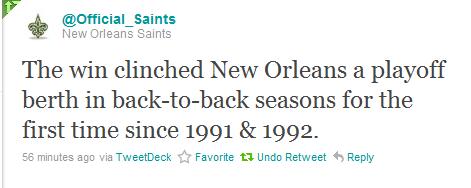
Just ONE MORE NAWLINS THANG: New Orleans Saints 17 – Atlanta Falcons 14. My home town continues to be the Great American Comeback Story.
So, what’s on your reading and blogging list today?
Open Thread: Post-Christmas White-Out
Posted: December 27, 2010 Filed under: just because | Tags: open thread, photos, Snopocalypse, Snowmageddon 38 CommentsA couple of Sky Dancers have sent in snow pics! If you would like to add yours to this post, please send your photos to skydancingblog@gmail.com. I’ll update the post as I get more pics.
Joanelle sent these gorgeous shots from NJ:


The following photos were contributed by Delphyne, who also lives in NJ:

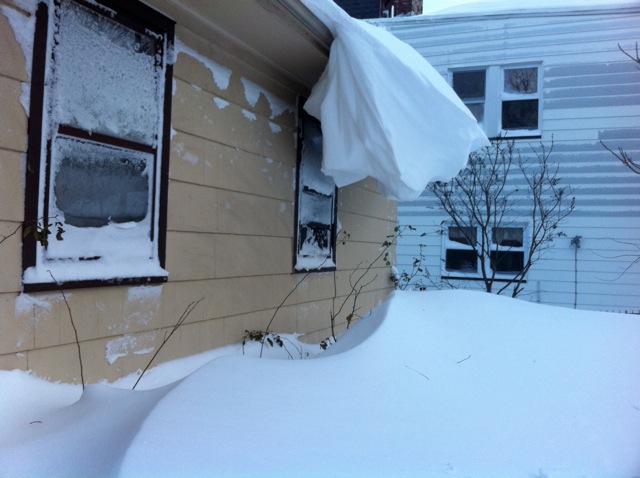
That's snow hanging off the roof!

Buried cars
This one is from Fran in Northern CA:

Timber Crater
A photo submitted by Minkoff Minx, from Georgia. Good Grief!

Big-ass icicle
We’ve got another photo from NJ. This one is from Branjor.
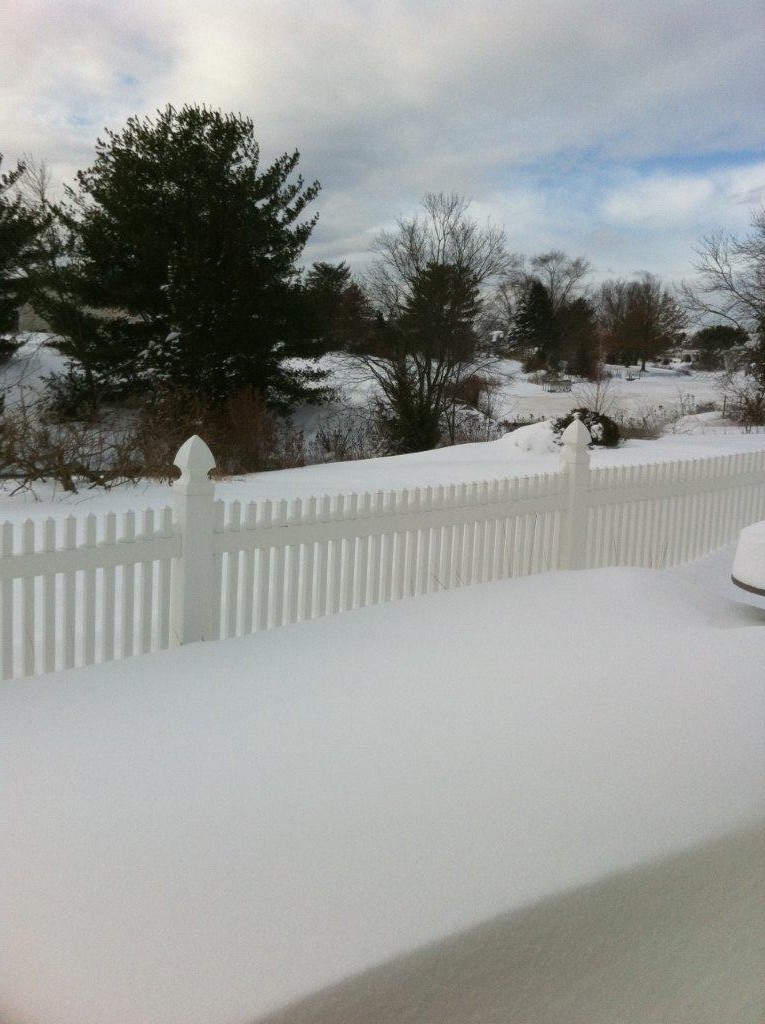
So, send in your photos if you have them. We could use some shots from CT, NY, and MA, (hint hint). Have fun in the snow everyone! It will melt quickly, because the temperatures are supposed to go up into the 40s in a lot of places by the end of the week.
A little Economics this and that …
Posted: December 27, 2010 Filed under: Catfood Commission, Civil Liberties, Civil Rights, The Media SUCKS, U.S. Economy, U.S. Politics, Voter Ignorance, We are so F'd, WE TOLD THEM SO | Tags: AFL-CIO, Chris Hedges, commodity prices, Paul Krugman, wealth gap 44 CommentsI thought I’d post a little end of the year economics stuff just in case you need a nap!!

A nifty chart to show we are SO f'd!!!
I’ve been writing for around a year about a possible bubble in commodity prices but a definite increases in base commodity prices coming shortly. Now, this doesn’t necessarily mean it will involve an increase in over all inflation because these price increases are mostly in the already volatile areas of food and energy which are considered outside the ‘core’ inflation measures because they tend to bump and shuffle a lot. This is from Paul Krugman in his column: “The Finite World”.
Oil is back above $90 a barrel. Copper and cotton have hit record highs. Wheat and corn prices are way up. Over all, world commodity prices have risen by a quarter in the past six months.
Is it speculation run amok? Is it the result of excessive money creation, a harbinger of runaway inflation just around the corner? No and no.
What the commodity markets are telling us is that we’re living in a finite world, in which the rapid growth of emerging economies is placing pressure on limited supplies of raw materials, pushing up their prices. And America is, for the most part, just a bystander in this story.
Krugman goes on to explain how booms in the economies of developing nations is causing increased Demand for certain commodities. This simply means the price will go up when the supply is limited for some reason or another. Some times the supply is slow to increase because of production considerations or inventory considerations. Other times the supply is limited just because there is a finite amount of it on the planet. Some of this may also be due to the market taking in the impact of those just passed subsidies to corn-based ethanol which take farm land out of food/other crop production and funneling it to corn production, This decreases the supply of wheat, soybeans, and cotton too.
And those supplies aren’t keeping pace. Conventional oil production has been flat for four years; in that sense, at least, peak oil has arrived. True, alternative sources, like oil from Canada’s tar sands, have continued to grow. But these alternative sources come at relatively high cost, both monetary and environmental.
Also, over the past year, extreme weather — especially severe heat and drought in some important agricultural regions — played an important role in driving up food prices. And, yes, there’s every reason to believe that climate change is making such weather episodes more common.
Krugman concludes with the important question of what does this mean for us?
So what are the implications of the recent rise in commodity prices? It is, as I said, a sign that we’re living in a finite world, one in which resource constraints are becoming increasingly binding. This won’t bring an end to economic growth, let alone a descent into Mad Max-style collapse. It will require that we gradually change the way we live, adapting our economy and our lifestyles to the reality of more expensive resources.
But that’s for the future. Right now, rising commodity prices are basically the result of global recovery. They have no bearing, one way or another, on U.S. monetary policy. For this is a global story; at a fundamental level, it’s not about us.
Yes. The world economy is “not about us” any more. So many other countries now have huge viable economies that we are no long the center of the Supply and Demand world like we were post World War 2. This is definitely going to take some adjusting on our part and some ignoring of the rhetoric of the right on our country’s role in the world. We can not continue to maintain the idea of American Exceptionalism in its current form given that we are really no longer exceptional in many, many ways. That adaptive behavior does not diminish our historical role as the original provider of Democracy-based Constitutions and Civil Liberties or our military role in freeing many countries from monarchy and fascism in both world wars.
We can continue to pour our resources and the lives of our young into asserting ourselves as the global military police in attempt to maintain our delusion of being ‘special’, or we can put our resources into assuring ourselves and our children a comfortable niche in the world with a respected voice at a big table. The Right Wing has to understand that we don’t own the table anymore. If only our politicians would grow up enough to make the best choice for us instead of deluding us into thinking that we’ll ever see post World War 2 America again.
I want to couple this with something I got in a tweet from the AFL-CIO: ‘U.S. Workers Earned Less in 2009 Than in 2008’. This goes along with the fact that many things we could finance or buy twenty to thirty years ago will elude us today.
New data show America’s workers earned less in 2009 than in 2008, according to the Bureau of Labor Statistics. Compensation was down by 3.2 percent in 2009 with declines in construction and manufacturing fueling the plunge. St. Louis County, the hardest hit, saw a decline of 11.5 percent.
For those lucky enough to have a job, average pay increased by 1.2 percent. But overall income inequality is now at its worst since 1928. As the chart by the Economic Policy Institute (EPI) shows here, between 1979 and 2005, households at the bottom fifth of the income scale have seen an average, inflation-adjusted income growth of just $200. The $200 figure does not represent an average annual increase in income, but rather an increase of $200 over the entire 26-year period. By contrast, a small number of households at the top 0.1% of the income scale saw average income growth of almost $6 million over that same period.
In addition, the “wealth gap,” which differs from the income gap because it measures total net worth, is now 225 times greater between the richest 1 percent and the median family net worth.
Lest we forget, corporations are sitting on $1.93 trillion as of Sept. 30—up from $1.8 trillion at the end of June–and not using some of that money pot to create jobs.
The bottom is falling out for the middle classes in this country. Income inequality is as bad as it was in 1928 during the peak of the Robber Baron age. There is no way we’ll have a shot at seeing ‘morning again in America’–even one concocted from a senile man’s political rhetoric–without a strong middle class. This is one of the reasons that I highly recommend your holiday reading included Chris Hedges ‘Death of the Liberal Class’. Here’s Sanctuary TV’s you tube on his explanation the “genesis of the book”. Wonk mentioned some of his thesis in her excellent post yesterday.
The ‘lies of omission’ that we see in the Main Stream Media today makes this imperative that we have conversations outside of channels that are controlled by for-profit corporations. Listen in to the video at around 2:45.
Most of the images that are disseminated around our culture are skillfully put together and are disseminated by for profit corporations so that we are made to …or we confuse … how we are made to feel with knowledge. Which is precisely how ended up with Barrack Obama.
This is especially true with things economic. I had a conversation with my Republican Dad yesterday which ended up with him accusing me of sounding just like the Democrats after the Great Depression. (I will wear that badge proudly, thank you.) I was trying to explain to him how Social Security isn’t going bankrupt, that the overages are invested in T-bonds and T-bills and that isn’t the same as massive borrowing from the fund by the federal government, and that if social security can’t rely on the interest and their capital invested in T-bonds or T-bills in the future, we will undoubtedly have a much greater problem than having smaller social security checks. (My guess is that we would be in the middle of a government collapse similar to what happened to the USSR in the 1980s.) Dad kept accusing me of living in the theoretical world of economics–me, an empirical economist–when I kept telling him it was just a matter of debits and credits which are anything but theoretical economics.
The deal is this if you read studies, and follow the debits and the credits. The threat to social security isn’t coming from its cash flows. It’s coming from the politicians in Washington, D.C. and it appears that it will shortly be led by the aforementioned Barrack Obama. Some of these people seem intent on collapsing our Republic and its democratic roots. These Bircher-like attacks on the New Deal are real attacks on the ways the government–through New Deal Policies, Laws, and Agenciess- levels the economic playing field for small businesses and working class people. This is the same way that Bircher-like attacks on Civil Rights attacks the ways the government levels the legal playing field for minorities and women.
Again, I’m drawn to the quote most attributed to the late great Senator Patrick Monihan. People and politicians are entitled to their opinions but not the facts. The problem is that fact manufacturing–or labeling political diatribes by media monsters like Glenn Beck–appears to be rampant in the very outlet that provides the life blood of our democracy.
This maldescriptions of unemployment, the role and purpose and very political independence of the Fed are more features of this misinformation campaign. I’m going to further reference Paul Krugman and his economist yogini–yup, there’s at least two of us out there–wife Robin Wells here. They co-authored an excellent essay on “Where do We Go from Here” in The New York Review of Books. This part comes after their joint call to the Democratic congress critterz–left standing from the midterms elections–to fight.
First, it would mean fighting on economic issues. While it is extremely unlikely that Democrats can undertake any further fiscal stimulus, they can put Republicans on the spot, resisting calls for austerity and making the case, repeatedly, that the GOP is standing in the way of necessary action. The fight over renewal of unemployment benefits should be only the start. Democrats can also denounce Republican attacks on the Federal Reserve and defend the Fed’s independence. They can resist attempts to turn back health care reform, on both humanitarian and long-term budgeting grounds, as health care reform is the critical factor in reining in the long-term budget deficit.
Health Care Reform Inc. could be one more rung on the ladder for the middle class on the ladder back to upwards mobility. Instead of repealing the now unpopular bill, we should be working actively to get the right things into its corporate enabling shell. That would be–at minimum–a Public Option. We have to get them to fight on Economic issues. Also, we desperately need to deal with Fannie and Freddie. These organizations used to be the way to home ownership for working class Americans. I stand proudly as an example in that regard. My little kathouse in the bayou in the middle of a solid urban hood shines as a beacon of what those things were supposed to do before they started manufacturing loans to the derivatives market.
And there are steps that the White House could take without congressional approval. Democrats could pressure the administration to fix the inexcusable mess at the HAMP (mortgage modification) program—a program whose Kafkaesque complexity has in many cases made matters so bad for home owners that it has triggered the foreclosures it was supposed to avoid. In addition, mortgage relief would benefit the wider economy. Furthermore, the scope of mortgage relief could be made much wider if Fannie Mae and Freddie Mac were used to guarantee mortgage refinancing. Other proposals go even further: for example, that Fannie and Freddie engineer reductions in mortgage principals. All of this could be done, conceivably, by executive order.
What we are seeing is a brick by brick removal in the walls that support the social net built during the New Deal that helped America become the thing it was during the 1950, 1960s and 1970s. Yes, we helped many countries get rid of Nazis and Fascist and this did make us some what exceptional at the time, but ushering in the very policies and attitudes of fascism does not make us the least bit exceptional now. It weakens the very people that make for a vibrant Democracy. Also, given that the Wikileaks information has been the soul source recently of unmanufactured news and opinion passed off as fact, it also gives us a glance at why the rest of the planet has ceased to see the US as exceptional too.
To paraphrase the words of Common Dreams and Margaret Flowers: We Must Resist. Okay, so this essay was a little Political Economy and not just economics. You awake?
update:
I get to update this post with a link to one of the more influential ‘liberal’ economist who is also writing on the changes in the Political Economy at Project Syndicate. Here’s something from Jeffrey D. Sachs writing on ‘America’s Political Class Struggle’. You may recall that both Krugman and Sachs were called to the Obama woodshed a few weeks ago and told to get on board with the McConnell-Obama tax cuts.
America is on a collision course with itself. This month’s deal between President Barack Obama and the Republicans in Congress to extend the tax cuts initiated a decade ago by President George W. Bush is being hailed as the start of a new bipartisan consensus. I believe, instead, that it is a false truce in what will become a pitched battle for the soul of American politics.
As in many countries, conflicts over public morality and national strategy come down to questions of money. In the United States, this is truer than ever. The US is running an annual budget deficit of around $1 trillion, which may widen further as a result of the new tax agreement. This level of annual borrowing is far too high for comfort. It must be cut, but how?
The problem is America’s corrupted politics and loss of civic morality. One political party, the Republicans, stands for little except tax cuts, which they place above any other goal. The Democrats have a bit wider set of interests, including support for health care, education, training, and infrastructure. But, like the Republicans, the Democrats, too, are keen to shower tax cuts on their major campaign contributors, predominantly rich Americans.
The result is a dangerous paradox. The US budget deficit is enormous and unsustainable. The poor are squeezed by cuts in social programs and a weak job market. One in eight Americans depends on Food Stamps to eat. Yet, despite these circumstances, one political party wants to gut tax revenues altogether, and the other is easily dragged along, against its better instincts, out of concern for keeping its rich contributors happy.
This tax-cutting frenzy comes, incredibly, after three decades of elite fiscal rule in the US that has favored the rich and powerful. Since Ronald Reagan became President in 1981, America’s budget system has been geared to supporting the accumulation of vast wealth at the top of the income distribution. Amazingly, the richest 1% of American households now has a higher net worth than the bottom 90%. The annual income of the richest 12,000 households is greater than that of the poorest 24 million households.
Please go read the rest of the article. I think this shows further evidence that Obama didn’t placate liberal economists.

 peej
peej Carissa
 bostonboomer
 dakinikat
 ecocatwoman
 mablue2
 Mama Lopez
 peggysue22
 quixote
 skydancingguestblogger
 Mona (aka Wonk the Vote)



 Sky Dancing
Recent Comments