
Who is Harshing our Memorial Day Weekend? Better yet, WHY?
Posted: May 25, 2009 Filed under: Diplomacy Nightmares, Team Obama Comments Off on Who is Harshing our Memorial Day Weekend? Better yet, WHY? I was going to try to take a breather and stick to spring cleaning and cocktailing this weekend. The rest of the world evidently doesn’t know it’s the official start of the US summer! I suppose one of the things about blogging is its ability to play to the obsessive streak that probably exists in all bloggers. So, let me put this to you, because no one at BJ’s over on Rue Dauphine last night would engage my question. Doesn’t it strike you as being extremely coincidental that the same day North Korea sets off an underground nuke, we also wind up with a fleet of Iranian warships in the Gulf of Aden effectively threatening both Yemen and Saudi Arabia and we get a big no on the nuclear negotiations? I mean, what is up with this? Did the stars align just correctly on a Memorial Day weekend to send all moonbat dictators on world threat alert?
North Korea exploded a nuclear device Monday morning, startling the world with its second underground test in three years and vexing the Obama administration, which has said it wants to solve the nuclear impasse with North Korea.
The test, described as “successful” by the communist state’s official Korean Central News Agency, escalates a pattern of provocation that this spring has included a long-range missile launch, detention of two U.S. journalists, kicking out U.N. nuclear inspectors, restarting a plutonium factory and halting six-nation nuclear negotiations.
So, the Iranian rationale for sending six warships to the Gulf of Aden is piracy. However, theses pirates are from Somalia which is not so close to the Saudis. Some of the problem areas have been near Yemen but more south in the Indian Ocean and out toward the Arabian Sea. Why are these ships so far north?
Navy Commander Rear Admiral Habibollah Sayyari announced on Monday that Iran has sent 6 warships and logistic vessels to the Gulf of Aden and the surrounding international waters.
Sayyari, who made the remarks while visiting the development projects and installations of the Iranian Navy here in Tehran, described the measure as “unprecedented in the history of the Iranian Navy”, and added, “This important move indicates the country’s high military capability in confronting any kind of foreign threat along the coasts of the country.”
He expressed hope that the Iranian Navy experts and specialists would continue daily progress in all fields of surface and sub-surface and arms technology and production.
On May 15, Iran dispatched two warships to the troubled waters off the coast of Somalia and the Gulf of Aden to safeguard Iranian trade cargo ships against piracy.
The move was in line with UN resolutions 1838 and 1846 and a request by the Safety Committee of the International Maritime Organization (IMO).
Perhaps this is just a little bit of pre-election posturing by Iran’s ever colorful Ahmadinejad. Yes, maybe the mullahs have declared jihad on pirates. However, this news was also announced about the same time they rejected the latest Western nuclear deal. The most interesting part of the rejection was the challenge from Ahmadinejad to POTUS to engage in a debate on the floor of the UN. (Guess Ahmadinejad watched the Democractic primary debates and decided it would be an easy take down.)
Iran’s President Mahmoud Ahmadinejad on Monday rejected a Western proposal for it to “freeze” its nuclear work in return for no new sanctions and ruled out any talks with major powers on the issue.
The comments by the conservative president, who is seeking a second term in a June 12 election, are likely to further disappoint the U.S. administration of President Barack Obama, which is seeking to engage Iran diplomatically.
The United States, Russia, China, France, Germany and Britain said in April they would invite Iran to a meeting to try and find a diplomatic solution to the nuclear row.
The West accuses Iran of secretly developing atomic weapons. Iran, the world’s fifth-largest oil exporter, denies the charge and says it only wants nuclear power to generate electricity.
Breaking with past U.S. policy of shunning direct talks with Iran, Obama’s administration last month said it would join nuclear discussions with Tehran from now on.
Ahmadinejad proposed a debate with Obama at the United Nations in New York “regarding the roots of world problems” but he made clear Tehran would not bow to pressure on the nuclear issue.
So, FOX news has trotted out John Bolton who of course sees this as a vindication of his overtly militaristic approach to diplomacy. Thankfully, all he can do is bloviate with the other bloviaters at this point and SOS Clinton is currently on the phone with the other countries involved with the so-called six party talks. Bolton’s analysis seemed to contradict all that Bush insistence on the six party talks.
“This is a moment of truth for this administration,” Bolton told AFP.
“They put all of their faith in the six-party talks. The North Koreans have thumbed their nose at the administration and now we have to see what kind of stuff they (the new administration) are made of,” Bolton said.
He urged Obama’s team to first put North Korea back on the list of state sponsors of terrorism following its removal in the waning months of the Bush administration.
Bolton also urged the UN Security Council to expel Pyongyang from the world body as a “persistent violator” of UN resolutions.
Ultimately, Bolton said, North Korea wants nuclear weapons because it is motivated by the desire to preserve its isolated dictatorship, adding it has no interest in nuclear diplomacy.
Excuse me, but if you’re complaining that we’ve had such bad results from the six party talks over the years, isn’t part of that your faulty strategy? Or are you now saying you were just following orders then? So, why are all these thing escalating right now? AND, why are they harshing a perfectly good three day American Holiday? Inquiring and obsessive bloggers like me, want to know.
A Deadly Unwind
Posted: May 23, 2009 Filed under: Bailout Blues, Global Financial Crisis, Main Stream Media, U.S. Economy | Tags: automobile dealers, bailouts, Chrysler bankruptcy, liquidation Comments Off on A Deadly Unwind My dad was a small town Ford dealer (Council Bluffs, IA). Dad was fortunate enough to have a very rich mentor that put him into the dealer development program when I wasn’t even walking and so we moved to what I still believe is the middle of no where and put down roots. I don’t know if you’ve got much experience in a small town, but the local car dealers are actually pretty big businesses for them. My dad headed up blood drives and the United Way. He belonged to the Chamber of Commerce. When Dad was younger he volunteered for everything. As he got older, he wrote a lot of checks. He helped my Mom establish a Victorian house museum that still is world-renown. He always bought tons of tickets to the college world series to hand out to every one who walked in the door. He sponsored little league teams and bought advertising in the local newspapers and TV stations. His 50-100 employees were with dad for as long as I can remember. Not only the mechanics and the office folks stayed with Dad, but also the car salesmen. They were my family too. When dad retired in the 1980s after surviving those horrible energy crisis years, I came to look back on how central the car business is to small town America. Actually, Dad also sold a lot of trucks because we lived in farm country.
I’m thinking more and more about this as well as having a lot of discussions with Dad on the unwinding of the great  American car companies. In a way, it feels like the unwinding of small America cities and a way of living. Chrysler and GM are dumping dealers all over the country. Most of the surviving dealerships are not going to look like the way dealerships developed when cars and the car industry were the most American of all business. I’m sure it’s going to be much more efficient and I am certain that each of the US automakers over franchised, but still, there is something about a small town car dealership that is not going to be replaceable. In many towns, it is one of the biggest employers and also a huge source of charitable donations.
It is odd that the first two articles that grabbed me this morning as I drunk my coffee were two contrasting views on the wind down of Chrysler. The first one was all about the finance and the bankruptcy and is on Salon. It’s called “Who is Screwing with the bankruptcy laws”. The second was on the front page of the business section of the NY Times. It goes to directly to the heart of the dealer closings and is entitled “Chrysler Francisees Make Case Against Closure”. Both show exactly how ugly the Chrysler bankruptcy has become.
Women and the Great Recession
Posted: May 21, 2009 Filed under: Economic Develpment, Global Financial Crisis | Tags: Development Goals, Gender Equality, Macroeconomics and Gender equality 4 Comments
Nataliya is a single mother with two children. She runs a small business selling flowers in downtown Uzhgorod, Ukraine.
A colleague of mine sent me a link to the Levy Economics Institute of Bard College where they do a lot of research on Gender Equality and Economic Issues. The Institute’s Rania Antonopoulos has just released a very interesting study on The Current Economic and Financial Crisis:
A Gender Perspective. It is an interesting addition to a growing field that finds that “widespread economic recessions and protracted financial crises have been documented as setting back gender equality and other development goals”. Problems with development goals include food insecurity, poverty and increasing inequality.
I learned that women’s economic and social role in an economy is one of the primary indicators of when and if a country will every creep its way off the bottom of Human Development index when I began to study development economics way back in the late 70s and early 1980s. Development economics spends a lot of time on institutions these days. I do a lot of my research into the depth and effectiveness of financial institutions. There are also legal institutions (like lack of government corruption and presence of an effective justice system) that make an important difference too. But, overlying all of these institutional institutions is the society’s treatment of women. Women’s access to education, birth control, and economic-self determination are essential to a country’s overall development. This is especially true for developing nations but it holds true for industrialized ones as well.
Antonopoulos poses an interesting question for those of us interested in both eliminating poverty and achieving gender equality throughout the world. She asks “what macroeconomic conditions must prevail for gender-equality processes to take root?” and argues that women’s rights can only be achieved if economic development is “broadly shared”. I was particularly awed by her treatment of women in her study.
Hence, women in this analysis are not featured as passive recipients of gender-equality policies, but rather as full citizens participating at all levels of economic, political, and social life. As active members of the community, women have a stake in putting forward comprehensive, coherent, and consistent proposals instead of being content with a piecemeal agenda that targets the “poor” and “women.”
I like this definition of equality as ‘full participation’ in all aspects of a community although I would add that as stake holders women (and indeed GLBT and other minorities kept in an inequality gulag) not only should achieve full participation but also full rewards for that participation.
One of the most compelling arguments that she makes for Gender Awareness is that frequently women’s most important roles in the local economy are in nonpaying jobs. She argues that you really can’t take any policy into full account unless you study the impact on all of women’s contributions to the economy. That includes work that does not entail monetary compensation but is welfare-enhancing.
While the former (paid work) in the private and public sectors (under formal contracts or informal arrangement) is largely recognized, unpaid work, which includes unpaid family work contributions, subsistence production, collection of free goods from common lands and volunteer work, household maintenance, and unpaid care work for family members and communities, still remains hidden and, hence, outside policy consideration.
These contributions are still the dominant areas for women in traditional societies. It has been shown that women who

Mrs. Som Neang, age 53, is married and lives with her two children in Phnom Penh, Cambodia. She and her husband, Mr. Ban Boeun, 59, have a small business selling eggs and a variety of vegetables in a busy market.
understand health and nutrition issues as well as women who are educated and value education contribute a lot to an economy when they serve in these traditional capacities. Educated women contribute through their children who are healthier and go on to achieve better outcomes in life.
There is also impact, however, on women who work outside the homes and women are concentrated in jobs that tend to suffer greatly during bad economic times. Any time energy or food prices increase, development goals and gender equality goals suffer setbacks. Antonopolous forwards some broad areas where women tend to suffer most from any economic crisis.
“Among the emerging challenges of the current crisis, we now turn to the turbulence in the world of women’s work in four key areas: paid work (especially in textiles and agriculture); informal work; unpaid work; and fluctuations in remittances, including those from women migrant workers.”
Employment is always one of the slowest things to recovery from a macroeconomic downturn. The last set of recessions resulting from the Asian Financial crisis as well as other country-specific downturns showed that employment recovery has been even more slow than recovery from recessions earlier in the post world war 2 years. Current data is rich in information on how this impacts women’s equality goals.
Social Security: Reform, Refund, or Opt Out? (Part 4)
Posted: May 19, 2009 Filed under: U.S. Economy | Tags: Social Security, Social Security Privatization, Social Security Reform Comments Off on Social Security: Reform, Refund, or Opt Out? (Part 4)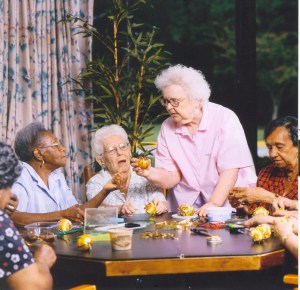 The aging burden is upon us and solutions are required quickly. People are living longer. There are three responses households face: consume less and save more when young, consume more and have lower monthly benefits when older, or work longer. They should make these decisions with a combination of their own savings and employer savings plans. They should plan retirement based on their preference to work and their health. They should also be able to rely on a minimal public pension plan so that no one fears dying a bag lady.
Government should respond when the public pension system is out of balance. There should be a mandated cycle of revision. The plan should be evaluated at least every five years and changes should be recommended by professionals to policymakers. Responses include: cutting benefits, raising taxes or contributions, subsidizing the program from general revenues or by issuing some form of debt, and generating a higher rate of return on the Trust Fund’s assets. There is still the question of generational risk-bearing and redistribution answered by the pre-funded or PAYG choice. Will the bigger burden lie with future generations or current generations? It appears we must deal with the PAYG choice made during the depression years one way or another.
Social Security: Reform, Refund or Opt-Out? (Part 3)
Posted: May 18, 2009 Filed under: U.S. Economy | Tags: Chile, Japan, Pension Plan Reform, SERPS, Social Security, Social Security Privatization, Thatcherism, UK pension Comments Off on Social Security: Reform, Refund or Opt-Out? (Part 3)Lessons from the World
One of the most interesting things about the large number of countries  reforming their public pension programs is how dissimilar many are to the United States. A large number are in Latin America or are Asia countries that are not experiencing the demographic challenges faced by the United States. Instead, they reform their systems because the old systems have lost their store of value function. Privatization is required because the trust between recipients and their governments has broken down. Chile (1981), Columbia (1993), Peru (1993), Mexico (1997), Bolivia (1997), El Salvador (1998) and Kazakhstan (1998) have the least future demographic problems, are not developed countries, and have had the largest reforms.[1] The expected retirement benefits in these countries are now derived from the income produced by an asset portfolio in individual accounts.
The most moderate reforms have happened in countries with high per capita incomes and severe demographic problems. These countries include Switzerland (1985), the United Kingdom (1986), Denmark (1990), Australia (1992), Argentina (1994), China (1995), Uruguay (1996), Hungary (1998), Sweden (1998) and Poland (1999). These developed countries have adopted systems that blend defined contribution accounts with a defined benefit. Germany and Japan have serious demographic problems. They are also highly developed countries. They—like the United States—have passed minor reforms. These countries have less suspicion that their government will not provide secure retirement resources somehow. Traditional PAYG systems require a “social contract.” Trust between workers of different generations is higher developed countries than in developing countries. Trust between households and government is also higher.

 peej
peej Carissa
 bostonboomer
 dakinikat
 ecocatwoman
 mablue2
 Mama Lopez
 peggysue22
 quixote
 skydancingguestblogger
 Mona (aka Wonk the Vote)



 Sky Dancing
Recent Comments