
Mission Creep: The Incredible Expanding Power to Bailout
Posted: April 7, 2009 Filed under: Bailout Blues, Global Financial Crisis, U.S. Economy | Tags: FDic, Hedge Fund Bailout, LTCM, Mission Creep, SEC, Sheila Bair, Timothy Geithner 2 CommentsI’ve been watching the three big regulators in the Financial Crisis (the Fed, the FDIC, and the SEC) start doing things 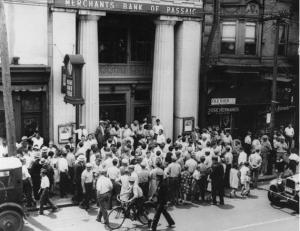 unheard of only a year ago. What has been baffling is no one has changed any laws or charters while these things keep happening. I’m not a lawyer and I don’t have the time to go poking around a lot of the charters and laws surrounding these institutions, but you have to start wondering if some of their more unconventional moves are technically legal.
I’ve been watching the Fed Open borrowing at the Discount Window and accepting some really strange collateral. The Discount Window used to be exclusive to member banks. I’ve been looking over what they now accept as collateral and am surprised. Take a look at the list and see if you’d like to be left holding the bag on some of these things. I’m not sure I want these off budget quasi agencies turning their balance sheets into dumping grounds for some of the most heinous looking gambles available on the market.
The NY Times Reporter Andrew Ross Sorkin has been poking around the charter and law concerning the FDIC. The FDIC was chartered to provide deposit insurance to bank deposits. You would think that is a fairly straight-forward task. However, when the charter was written, the size of the task at hand today was unfathomable and it seems the FDIC is tiptoeing around some of its charter provisions. The FDIC is barred from incurring any obligation greater than $30 billion and its about to take part in guarantees that would commit $1 trillion in the PPIP bank bailout program. Sorkin reports on what he calls “mission creep” here.
Now, because of what could politely be called mission creep, it’s elbowing its way into the middle of the financial mess as an enabler of enormous leverage.
In the fine print of Treasury Secretary Timothy F. Geithner’s plan to lend as much as $1 trillion to private investors to help them buy toxic assets from our nation’s banks, you’ll find some details of how the F.D.I.C is trying to stabilize the system by adding more risk, not less, to the system.
It’s going to be insuring 85 percent of the debt, provided by the Treasury, that private investors will use to subsidize their acquisitions of toxic assets. The program, extraordinary in its size and scope, is the equivalent of TARP 2.0. Only this time, Congress didn’t get a chance to vote.
These loans, while controversial, were given a warm welcome by the market when they were first announced. And why not? The terms are hard to beat. They are, for example, “nonrecourse,” which means that if an investor loses money, he owes taxpayers nothing. It’s the closest thing to risk-free investing — with leverage! — around.
Greenshoots or False Spring?
Posted: April 6, 2009 Filed under: Equity Markets, Festivities, Global Financial Crisis, U.S. Economy | Tags: altman, bernanke, cowen, Depression, greenshoot, recession, recovery, thoma Comments Off on Greenshoots or False Spring?
Miss Strawberry with the Winners of the Strawberry Bakeoff
I woke up this morning to a chill in the air. When I came back home from university today it was a chilly 60 in the house. There’s a frost warning for the North Shore and I had to put the heater back on and pull at the flannels. I walked the dog in a fleece jacket and had to put socks on. This weekend was just warm, sunny, and great and the Strawberry Festival was in full swing? WTF happened here in Southeastern Louisiana? One day I’m basking in the first hint of a warm sun enjoying fresh strawberry shortcake and the next I’m hoping that the magnolia blossoms are safe. Yes, there’s a Strawberry Queen, a Strawberry Ball, and Strawberry Royalty. If you gotta work somewhere, it might as well be the Strawberry Capitol of the Word.
So, having been raised in the Great Flyover and spent most of my childhood watching my Dad’s business sell F-150s to the local farmers, I know a lot about a false spring. That’s when Mother Nature messes with you by giving you just enough spring to think the worst of winter is over and then hits you with the cold blast of reality. Thankfully, my cold blast didn’t include the blizzard that hit the heartland, but it is a cold blast. That’s why I’m having so much fun with the economic word-de-jour. That would be Ben Bernanke’s “green shoots”. An Ivy-leaguer from South Carolina should know about about false springs. Bloomberg picks at the analogy too in Bernanke ‘Green Shoots’ May Signal False Spring Amid Job Losses.
April 6 (Bloomberg) — It will be months before it’s clear whether what Federal Reserve Chairman Ben S. Bernanke calls the U.S. economy’s “green shoots” represent the early onset of recovery, or a false spring.
The Labor Department’s April 3 report that the economy shed an additional 663,000 jobs last month, while the unemployment rate rose to 8.5 percent, will be followed by months more of bad-news headlines, economists say. The recession, now in its 17th month, has already cost 5.1 million Americans their jobs, the worst drop in the postwar era; unemployment may hit 9.4 percent this year, according to the median estimate in a Bloomberg News survey, and may top out above 10 percent in 2010.
The risk is that the jobs picture turns even more bleak than forecast or the drumbeat of bad news still to come causes consumers, whose spending has firmed up in recent months, to hunker down again.
“If something happens to spook consumers and they crawl back into their tortoise shells, that would be terrible news,” says Alan Blinder, former Fed vice chairman and now an economics professor at Princeton University.
Consumer spending, which accounts for more than 70 percent of the economy, rose 0.2 percent in February after climbing 1 percent in January, breaking a six-month string of declines.
Inquiring Minds also Blog
Posted: April 5, 2009 Filed under: Equity Markets, Global Financial Crisis, Team Obama, U.S. Economy | Tags: audit failure, bank bailout, bank failure, Elizabeth Warren, PKMG, regulator failure, Tyler Cowen Comments Off on Inquiring Minds also Blog
The two regulators who don’t appear captured by the regulated are both women. FDIC’s Sheila Bair has been quietly closely down the bankrupt quite efficiently and ensuring every one knows that the FDIC will stand by its insurance commitments. Elizabeth Warren who is the head of the group watching the TARP funds is calling this week for the ousting of derelict bank executives. This includes Citibank and AIG. Is this the beginning of High Noon on Wall Street?
Warren also believes there are “dangers inherent” in the approach taken by treasury secretary Tim Geithner, who she says has offered “open-ended subsidies” to some of the world’s biggest financial institutions without adequately weighing potential pitfalls. “We want to ensure that the treasury gives the public an alternative approach,” she said, adding that she was worried that banks would not recover while they were being fed subsidies. “When are they going to say, enough?” she said.
She said she did not want to be too hard on Geithner but that he must address the issues in the report. “The very notion that anyone would infuse money into a financially troubled entity without demanding changes in management is preposterous.”
Meanwhile, many finance and economics bloggers have looked into legal issues surrounding the Obama/Geithner bailout and believe laws are being broken. Both Boston Boomer and Sam point to this at George Washington’s Blog.
Geithner’s statements that he didn’t have the power to close down the big banks is false. Moreover, Geithner and Paulson actually broke the law which requires the government to close down insolvent banks, no matter how big.
The Prompt Corrective Action Law (PCA) – 12 U.S.C. § 1831o – not only authorizes the government to seize insolvent banks, it mandates it.
An earlier post here contains the interview with William K. Black, a senior regulator during the S&L crisis and Associate Professor of Economics and Law at the University of Missouri and Bill Moyers. Even more interesting news has appeared recently as it looks like regulators aren’t the only ones dropping the ball. Is this a repeat of the Aurthur Anderson/Enron failure of Public Accounting?
New Century, one of the country’s top subprime lenders, went bankrupt shortly after disclosing that its financial statements were misstated. Its creditors are now suing KPMG, New Century’s auditor, for at least $1 billion in damages. In the years leading up to the financial crisis, some of the nation’s largest accounting firms failed to properly examine the reserves that banks and other lenders set aside to cover losses, records from a federal oversight board show.
Jindal puts Ideology before Facts (Yet Again)
Posted: April 5, 2009 Filed under: New Orleans, U.S. Economy | Tags: Bobby Jindal, Federal Aid, Federal Stimulus, hurricane katrina, Lousiana Economy, Post katrina economy, stimulus packages Comments Off on Jindal puts Ideology before Facts (Yet Again) When I first moved down here to New Orleans I went through culture shock on many levels. I came from places where there was no viable private education because public education is so excellent that private schools are reserved for the hyper-religious or the hyper-rich with hyper-idiot children. I was used to good roads. I can’t tell you how many tires I’ve lost to the roads down here. I was used to low crime and nearly zero drug-related crime. I was also used to cities with corporate headquarters (Minneapolis, Kansas City, and Omaha) where I could make a nice living consulting. I’ve come to love it down here although I still realize we’re very third world compared to the rest of the country(at this writing anyway). I’ve just learned to relax and go with it.
Louisiana has always depended on the kindness of other states since the fall of the Oil and Gas industry in the 1980s. It has been highly dependent on the rest of the country and the world since Hurricanes Katrina and Rita devastated the bottom and richest part of the state. One of my displaced friends got a US government supplied FEMA trailer on campus. He got his dishes, pots and pans and linens from the Kingdom of Saudi Arabia. We’ve relied heavily on outside help since that awful day in August, 2005.
I know several economists here in the state that follow the local economy closely and I know we’ve had some real tough times. Fortunately, we still have two major news organization that are committed to following our recovery and they send reporters down here to do substantive stories as well as the usual “let’s traipse around the ninth ward and see what’s happening” pieces. This generally keeps the light on the problems. Our governor also attracts attention as a potential leader of the Republican Party. I’ve written about him frequently because I’d frankly like to have him some place where he cannot do so much damage to folks with his inability to separate right wing dogma and religious zealotry with governance. (I’m thinking Spaceship, co-pilot Rush, and Mars.)
Of course you’ve seen Bobby (Peyush) Jindal on TV now. You can see he talks very fast and often in ways that really don’t make sense. He’s got a very interesting background and is known for being intelligent and well-educated. He never lets that get in the way of his governing Louisiana, however. You can read more on that from a December post of mine here.
Is this ANY way to run an Economy?
Posted: April 4, 2009 Filed under: Equity Markets, Global Financial Crisis | Tags: bailout, DeLong, Depression, Financial Crisis, Krugman, Obama/Geithner Bailout Plan, recession, Stiglitz, Summers Hedge Fund Salary, unemployment 4 CommentsThe US economy is in a fragile state right now which begs the question: Why do our policy makers seem oblivious to lessons from the great meltdowns of the past? Adam Posner of the Daily Beast asks the question out right: Does Obama Have a Plan B? Posner asserts that the administration appears to be hellbent on recreating the Japanese Lost Decade. This is something that I’ve been harping on for months as has Paul Krugman and Joseph Stiglitz–two big brained economists with Nobel prizes.
So it is with some irony if not humility that we should approach Treasury Secretary Geithner’s Public Private Investment Plan presented on March 23. A number of major American banks have lost huge amounts of money, and clearly have insufficient capital if they are not literally insolvent. Why else would they be pushing so hard to change the accounting rules to avoid showing what they really have on their books instead of raising private capital? Why else is the U.S. government taking so long to perform “stress tests” and trying to get expectations of overpayment for some of the bad assets on the banks’ books before the test results are out? In short, the U.S. government is looking to shovel capital into the banks without sufficient conditions, hiding rather than confronting the actual situation.
That is just like the Japanese government in their lost decade, or the U.S. officials during the 1980s before they really tackled the savings-and-loan crisis. In those cases, the delay simply made the problem worse over time and in the end the government had to put more money into the troubled banks directly, taking over or shutting down the weakest of them. Whatever the political culture, it would seem we have not learned from experience. Or perhaps we cannot act on our learning. The universal barrier would appear to be the political difficulty of recapitalizing banks. That seems obvious, but the constraint it puts on good policy is enormous.
That is why the Geithner plan is so complex and jury-rigged, to avoid the need for public requests for more money for banks. Unfortunately, it is unlikely to succeed absent additional public money and more-intrusive government action. The plan will buy some time and certainly some appreciation in bank share prices. Current shareholders will be getting a new lease on life with subsidies from taxpayers. For that reason alone, the plan certainly will cost the taxpayer more in the end than a more direct recapitalization with public control would have.

 peej
peej Carissa
 bostonboomer
 dakinikat
 ecocatwoman
 mablue2
 Mama Lopez
 peggysue22
 quixote
 skydancingguestblogger
 Mona (aka Wonk the Vote)



 Sky Dancing
Recent Comments