
Inquiring Minds also Blog
Posted: April 5, 2009 Filed under: Equity Markets, Global Financial Crisis, Team Obama, U.S. Economy | Tags: audit failure, bank bailout, bank failure, Elizabeth Warren, PKMG, regulator failure, Tyler Cowen Comments Off on Inquiring Minds also Blog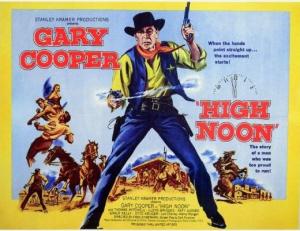
The two regulators who don’t appear captured by the regulated are both women. FDIC’s Sheila Bair has been quietly closely down the bankrupt quite efficiently and ensuring every one knows that the FDIC will stand by its insurance commitments. Elizabeth Warren who is the head of the group watching the TARP funds is calling this week for the ousting of derelict bank executives. This includes Citibank and AIG. Is this the beginning of High Noon on Wall Street?
Warren also believes there are “dangers inherent” in the approach taken by treasury secretary Tim Geithner, who she says has offered “open-ended subsidies” to some of the world’s biggest financial institutions without adequately weighing potential pitfalls. “We want to ensure that the treasury gives the public an alternative approach,” she said, adding that she was worried that banks would not recover while they were being fed subsidies. “When are they going to say, enough?” she said.
She said she did not want to be too hard on Geithner but that he must address the issues in the report. “The very notion that anyone would infuse money into a financially troubled entity without demanding changes in management is preposterous.”
Meanwhile, many finance and economics bloggers have looked into legal issues surrounding the Obama/Geithner bailout and believe laws are being broken. Both Boston Boomer and Sam point to this at George Washington’s Blog.
Geithner’s statements that he didn’t have the power to close down the big banks is false. Moreover, Geithner and Paulson actually broke the law which requires the government to close down insolvent banks, no matter how big.
The Prompt Corrective Action Law (PCA) – 12 U.S.C. § 1831o – not only authorizes the government to seize insolvent banks, it mandates it.
An earlier post here contains the interview with William K. Black, a senior regulator during the S&L crisis and Associate Professor of Economics and Law at the University of Missouri and Bill Moyers. Even more interesting news has appeared recently as it looks like regulators aren’t the only ones dropping the ball. Is this a repeat of the Aurthur Anderson/Enron failure of Public Accounting?
New Century, one of the country’s top subprime lenders, went bankrupt shortly after disclosing that its financial statements were misstated. Its creditors are now suing KPMG, New Century’s auditor, for at least $1 billion in damages. In the years leading up to the financial crisis, some of the nation’s largest accounting firms failed to properly examine the reserves that banks and other lenders set aside to cover losses, records from a federal oversight board show.
(Disclosure from me: My brother-in-law is a partner of KPMG.)
Their response?
KPMG, the country’s fourth-largest accounting firm, disputed the allegations. “Any implication that the collapse of New Century was related to accounting issues ignores the reality of the global credit crisis.” KPMG said. “This was a business failure, not an accounting issue.”
Incorrectly accounting for loan losses also was cited in a review by the FDIC Inspector General of the failure last August of Integrity Bank in Georgia [2]. The IG has promised to further address the reserve issue in its summary report covering multiple bank failures.
Mistakes involving loan loss reserves are among errors detailed in reports by the Public Company Accounting Oversight Board, a federally-funded body that conducts annual inspections of top accounting firms and disciplines trouble-prone auditors.
The records highlight two trends: the chronic failure of lenders to properly estimate loan losses – and the persistent failure of auditors to notice the problem.
It appears that a lot of people might have looked the other way in the lead up to this recent crisis. There is a basic lack of transparency in the entire bailout process that is worrying. This started in with Paulson under the Bush administration and has no appearance of clearing up under the Obama administration. A complete airing of everything that went wrong is not only necessary to ground the future laws to prevent another meltdown but as many folks are now beginning to realize, it is legally required.
Tyler Cowen in the NY Times says that Creditors Should Suffer too.
THE Obama administration’s proposals to reform financial regulation sound ambitious enough as they aim to bring companies like A.I.G. under a broader umbrella of government rule-making and scrutiny.
But there is a big hole in these proposals, as there has already been in the government’s approach to bailing out failing financial companies. Even as they focus on firms deemed too big to fail, the new proposals immunize the creditors and counterparties of such firms by protecting them from their own lending and trading mistakes.
This pattern has been evident for months, with the government aiding creditors and counterparties every step of the way. Yet this has not been explained openly to the American public.
In truth, it’s not the shareholders of the American International Group who benefited most from its bailout; they were mostly wiped out. The great beneficiaries have been the creditors and counterparties at the other end of A.I.G.’s derivatives deals — firms like Goldman Sachs, Merrill Lynch, Deutsche Bank, Société Générale, Barclays and UBS.
These firms engaged in deals that A.I.G. could not make good on. The bailout, and the regulatory regime outlined by Timothy F. Geithner, the Treasury secretary, would give firms like these every incentive to make similar deals down the road.
If we are going to prevent an A.I.G.-like debacle from happening again, institutions like these need incentives to be more wary of their trading partners. Any new regulatory plan needs to deal with them in a sophisticated way.
That’s because even smart and honest regulators can monitor a financial firm only so well. A firm’s balance sheet doesn’t always reflect its true health, and regulators do not have an inside perspective on the firms they are supposed to secure. We do need more effective regulation, but calls for regulators to “get tough” are likely to prove effective only as long as a crisis lasts.
What the banking system needs is creditors who monitor risk and cut their exposure when that risk is too high. Unlike regulators, creditors and counterparties know the details of a deal and have their own money on the line.
If you read the story, you’ll see him argue that unless all parties to the mess suffer, we will never have the strongest tool to control moral hazard. That is basically the discipline of the market. If bad decisions are punished with severe consequences, all the checks and balances implied with the invisible hand provide disincentives for future occurrences. Again, full disclosure of misdoing is necessary to prevent recurrence. We now understand that the banks were robbed because the entire process enabled it. Lax regulations, poor audit controls, and organizations too big and too risky to effectively manage must cease to exist or there will be no future incentives for this not to happen again. Why bother if every one gets a bailout and a slap on the wrist? What’s good enough punishment for the CEO of GM should be good enough for the heads of all institutions who needed the TARP funds. Also, institutions not requiring TARP funds should not be punished and forced to take them. That is lunacy. Market discipline requires weeding out of inefficient organizations. These are banks. Sheila Bair and her organization can handle them and the insured deposits. The opaque way that the Obama administration is handling the situation is undoubtedly prolong the meltdown by prolonging the drama and mystery at this point.
Will Warren’s call for heads be honored by an administration basically captured by the very industry that put us in this mess? Inquiring minds will want to know. We will be watching and we will be blogging.

 peej
peej Carissa
 bostonboomer
 dakinikat
 ecocatwoman
 mablue2
 Mama Lopez
 peggysue22
 quixote
 skydancingguestblogger
 Mona (aka Wonk the Vote)



 Sky Dancing
Recent Comments