
Are we nationalizing corporations or are they nationalizing us?
Posted: November 11, 2008 Filed under: Uncategorized 4 Comments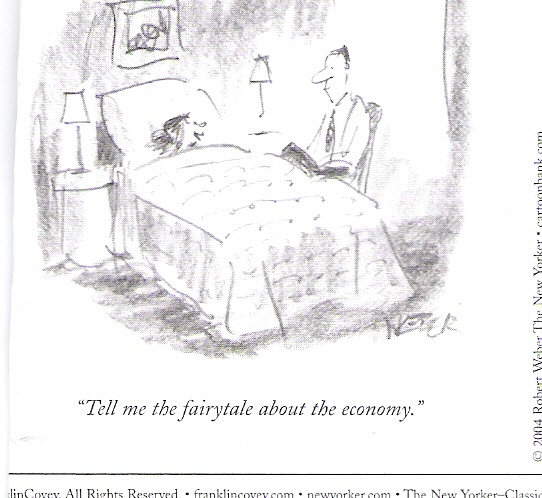 One of the big trends I’ve followed closely recently has been liberalization. A number of social democratic countries including Italy and Sweden have followed a trend started by Lady Thatcher in the 1980s by selling off large portions if not entire portions of government-owned and subsidized businesses. Utilities, communications, and transportation companies that were previously state-owned were sold off showing gains in both productivity as well as money to tax payers to free the funds up for better use. (Think schools, research and development, and personal use.) The Swedish model has been such a success that many countries try to emulate it.
Meanwhile back in the United States, we sit on the verge of nationalizing the automobile industry and we have just expanded state ownership of financial institutions to include an Insurance Company. Is this where we really want to be? Also, if we are going to place taxpayer dollars into the private sector, what about other failing markets like health and the airline industry? Is any one really thinking about the ramifications of this as well as the rules of engagement and disengagement? I don’t really think so and I’m frankly worried that our monies are not going to our national priorities. They are going to industries with more political presence that strategic.
The AIG rescue plan is putting the FED and the Treasury into a new level of market involvement–pricing of derivatives. It is likely the Fed will start buying AIG assets using a special purpose vehicle (SPV). This entity will have funding from AIG ($5 billion) and the FED ($30 billion). It’s purpose is to buy Collateralized Debt Obligations (CDOs). As explained by the Wall Street Journal there will actually be two SPVs. The second SPV will buy residential mortgages backed securities.
AIG needs help with its vast CDO exposures because it wrote insurance contracts against many of them, which pay off when the instruments default. Those insurance contracts are draining its cash.
Last March the Fed created a SPV to handle Bear Sterns’ assets and last month it created a SPV to take care of commercial paper loans for firms needing short term capital. The new AIG venture requires the Fed to actually go out to the market and buy the assets that have exposed AIG to this cash drain. This raises some interesting questions. How much are these things worth? How will the Fed price them? Can they do this without fleecing the taxpayer?
Naomi Klein in a book called The Shock Doctrine: The Rise of Disaster Capitalism asks important question that should frame the debate. Every tax paying American should discuss this before we venture further into public ownership of highly mismanaged firms. Her question is this:
“Has the Treasury partially nationalized the private banks, as we have been told? Or is it the other way around?”
Paul B Farrell suggests that the bail out is going to be continual bad news. So bad, he refers to it as a terrorist sleeper cell for Reagonomics.
While you were distracted, Wall Street privatized the U.S. Treasury, got the keys to Fort Knox and will be stealing trillions for years to come, through a secret “sleeper cell,” a “virus” installed in the $700 billion Wall Street bailout. They’re laughing: All you got was a heavily discounted paper IOU for you, your kids and generations to pay off. The winners: Paulson, Goldman, Wall Street banks and Reaganomics. The losers: America.Wall Street and its buddies in Washington (all those politicians bankrolled by 41,000 lobbyists) know two things the voters never, never learn: that no matter how incompetent they are — how greedy, how stupid and how destructive — America’s naive voters will always bail them out of a crisis.
-
United Kingdom. Prime Minister Gordon Brown negotiated “meaningful guarantees for taxpayers — voting rights at the banks, seats on their boards, 12% in annual dividend payments to the government, a suspension of dividend payments to shareholders, restrictions on executive bonuses, and a legal requirement that the banks lend money to homeowners and small businesses.” Brown took advantage of his negotiation position of strength.
-
United States.What did the American taxpayers? A bad deal negotiated by a former Wall Street CEO loaded with conflicts of interest: We got “no controlling interest, no voting rights, no seats on the bank boards and just 5% in dividend payouts to the government, while [bank] shareholders continue to collect billions in dividends every quarter. What’s more, golden parachutes and bonuses already promised by the banks will still be paid out to executives — all before taxpayers are paid back. No wonder it took just one hour for Paulson to convince all nine CEOs to accept his offer, less than seven minutes per bank for one of the sweetest taxpayer giveaways in history.
These points were also in the Klein article as outlined by Ferrell:
-
“Many of the banks appear to have no intention of wasting the money on loans.Citigroup CFO Gary Crittenden “hinted that his company would use its share of the cash, $25 billion, to buy up competitors and swell even bigger,” giving them the “possibility of taking advantage of opportunities that might otherwise be closed to us.”Merrill CEO John Thain said “it’s just going to be a cushion.”
-
And my old colleagues at Morgan Stanley are “planning to pay themselves $10.7 billion this year, much of it in bonuses.” So screw the taxpayers and Main Street homeowners.
Before we go further into this financial crisis and extend help to yet another failed industry, we need to review what we have done to date, and if it’s having the desired impact. If Klein and Farrell are correct, and I believe they are, then the FED and the Treasury need rethink what they are getting ready to do with AIG and go back and renegotiate what they have done with the banks. We can blame this one on the Republicans because the majority of this happened on THEIR watch. However, the next big thing pushed by REID, PELOSI, and OBAMA is a similar deal with the automobile industry.
You can make an arguement that the banking and financial system, because they impact nearly every aspect of our economy, require some restructuring and rescue. We can even argue that transportation (like the airlines) or the health industry are vital. How can we justify the automobile industry? When does it stop? How much money in taxes will we have to pay for some really bad management decisions of folks that have very shown deep pockets when it comes to political candidates. This is even more relevant because public financing was just decimated by the Obama campaign. I have no problem paying my taxes, but I’d rather it go to give immunizations, health care, food, and education to our children, rather than burdening them with costs attributable to moral hazard.


 peej
peej Carissa
 ecocatwoman
 mablue2
 Mama Lopez
 peggysue22
 quixote
 skydancingguestblogger
 Mona (aka Wonk the Vote)





dakinikat,
I agree with your concern about how this investment is ad hoc. Considering the growing scope of the “bail-in/bail-out”, I am boggled by the trade-off between the goods that are being acquired and those that could have been acquired, were America willing to act decisively to preempt this problem and other problems?
For example, what would 10 billion dollars of R&D do for alternate energy production?
Yours,
SM
dk: Did you have another post up at the Confluence that isn’t there now? Thought I saw one that I was going to come back to read and then it wasn’t there.
hi fred, it’s possible there’s another post out there waiting … so some one might have put it up and then seen madamaB’s … i had it scheduled to go up while I was driving home from SELU
Okie-dokie! Just threw me for a bit!!