
Paul Ryan’s Selective Randianism
Posted: April 23, 2011 Filed under: abortion rights, poverty, Psychopaths in charge, religion, Reproductive Rights, The Bonus Class, U.S. Economy, U.S. Politics, voodoo economics, Voter Ignorance | Tags: abortion, Atlas Shrugged, Ayn Rand, Donald Luskin, Down With Tyranny, feminism, Jonathan Chait, linky goodness, Paul Ryan, politics, pro choice, Radianism, Wall Street, William F. Buckley 27 Comments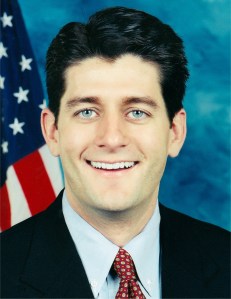
While browsing the links on Memeorandum earlier this afternoon, I came across this post at Down With Tyranny: The Inspiration For Paul Ryan’s Profoundly And Explicitly Anti-Christian Budget. As Lambert would say, it is a post filled to the brim with “linky goodness.” I read all the linked articles and I refer to a few of them in this post.
DWT discusses Ryan’s self-professed admiration for the “philosophy” of Ayn Rand.
What is the great cause for which Ryan wants to devote his political life? Unkind critics point to the unprecedented– at least in Wisconsin politics– gushers of money Ryan has solicited from the Wall Street sector and detect a correlation between the bribes he takes and the policies he espouses. And since there is nothing that holds his voting record– huge, unjustifiable bailouts for Wall Street banks coupled with the dismantling of Medicare and unconscionable tax breaks for the richest Americans coupled with privatization of Social Security– other than obeisance to a garden variety Big Business agenda, this interpretation has become widespread. What people may be missing, however, is a parallel influence on Ryan– one not unrelated, but not identical either: his devotion to the adolescent philosophy of Ayn Rand: “the virtue of selfishness,” a more direct– if somewhat off-putting to non-believers– description of a philosophy known as “Objectivism.”
DWT points out that Rand’s teachings are explicitly anti-Christian–Rand was an atheist who thought altruism was evil and poor and working people were losers and “parasites.” Newsweek’s Jonathan Chait writes:
Ayn Rand, of course, was a kind of politicized L. Ron Hubbard—a novelist-philosopher who inspired a cult of acolytes who deem her the greatest human being who ever lived. The enduring heart of Rand’s totalistic philosophy was Marxism flipped upside down. Rand viewed the capitalists, not the workers, as the producers of all wealth, and the workers, not the capitalists, as useless parasites.
John Galt, the protagonist of her iconic novel Atlas Shrugged, expressed Rand’s inverted Marxism: “The man at the top of the intellectual pyramid contributes the most to all those below him, but gets nothing except his material payment, receiving no intellectual bonus from others to add to the value of his time. The man at the bottom who, left to himself, would starve in his hopeless ineptitude, contributes nothing to those above him, but receives the bonus of all of their brains.”
Chait calls Ryan an “acolyte” of Ayn Rand, and explains at length that the deficit and the debt aren’t what’s bugging the new House superstar. Most of Ryan’s proposals don’t cut the deficit much, and besides, he includes huge new tax cuts for the rich and goodies for Wall Street in his plan. Further more Ryan was an enthusiastic supporter of the Wall Street bailout and he voted for every spending bill that came down the pike under George W. Bush. So what are the Ryan cuts all about?
Ryan’s plan does do two things in immediate and specific ways: hurt the poor and help the rich. After extending the Bush tax cuts, he would cut the top rate for individuals and corporations from 35 percent to 25 percent. Then Ryan slashes Medicaid, Pell Grants, food stamps, and low-income housing. These programs to help the poor, which constitute approximately 21 percent of the federal budget, absorb two thirds of Ryan’s cuts.
Ryan casts these cuts as an incentive for the poor to get off their lazy butts. He insists that we “ensure that America’s safety net does not become a hammock that lulls able-bodied citizens into lives of complacency and dependency.” It’s worth translating what Ryan means here. Welfare reform was premised on the tough but persuasive argument that providing long-term cash payments to people who don’t work encourages long-term dependency. Ryan is saying that the poor should not only be denied cash income but also food and health care.
OK, that part does sound like Randianism, doesn’t it? Rand admired the strong and despised the weak, and so does Paul Ryan, apparently. Rand even went so far as to praise a serial killer for his lack of empathy for his fellow human beings.
On the level of personal behavior, the heroes in Rand’s novels commit borderline rape, blow up buildings, and dynamite oil fields — actions which Rand portrays as admirable and virtuous fulfillments of the characters’ personal will and desires. Her early diaries gush with admiration for William Hickman, a serial killer who raped and murdered a young girl. Hickman showed no understanding of “the necessity, meaning or importance of other people,” a trait Rand apparently found quite admirable.
But did Rand believe that corporations should benefit from government largess? According to Rand devotee Donald L. Luskin, she didn’t.
it’s a misreading of “Atlas” to claim that it is simply an antigovernment tract or an uncritical celebration of big business. In fact, the real villain of “Atlas” is a big businessman, railroad CEO James Taggart, whose crony capitalism does more to bring down the economy than all of Mouch’s regulations. With Taggart, Rand was anticipating figures like Angelo Mozilo, the CEO of Countrywide Financial, the subprime lender that proved to be a toxic mortgage factory. Like Taggart, Mr. Mozilo engineered government subsidies for his company in the name of noble-sounding virtues like home ownership for all.
Still, most of the heroes of “Atlas” are big businessmen who are unfairly persecuted by government. The struggle of Rand’s fictional steel magnate Henry Rearden against confiscatory regulation is a perfect anticipation of the antitrust travails of Microsoft CEO Bill Gates. In both cases, the government’s depredations were inspired by behind-the-scenes maneuverings of business rivals. And now Microsoft is maneuvering against Google with an antitrust complaint in the European Union.
The reality is that in Rand’s novel, as in life, self-described capitalists can be the worst enemies of capitalism. But that doesn’t fit in easily with the simple pro-business narrative about Rand now being retailed.
Luskin seems somewhat bemused by the selective Randianism (my term) of the new Tea Party radicals like Ryan. Traditional conservatives like William F. Buckley “loathed” Rand back in the day, probably because of her atheism and the fact that, while she verbally denigrated feminism, she lived
her life as an exemplary feminist, even as she denied it by calling herself a “male chauvinist.” She was the breadwinner throughout her lifelong marriage. The most sharply drawn hero in “Atlas” is the extraordinarily capable female railroad executive Dagny Taggart, who is set in contrast with her boss, her incompetent brother James. She’s the woman who deserves the man’s job but doesn’t have it; he’s the man who has the job but doesn’t deserve it.
Rand was strongly pro-choice, speaking out for abortion rights even before Roe v. Wade. In late middle age, she became enamored of a much younger man and made up her mind to have an affair with him, having duly informed her husband and the younger man’s wife in advance. Conservatives don’t do things like that—or at least they say they don’t.
These weren’t the only times Rand took positions that didn’t ingratiate her to the right. She was an early opponent of the Vietnam war, once saying, “I am against the war in Vietnam and have been for years. . . . In my view we should fight fascism and communism when they come to this country.” During the ’60s she declared, “I am an enemy of racism,” and advised opponents of school busing, “If you object to sending your children to school with black children, you’ll lose for sure because right is on the other side.”
BTW, none of the male authors I have cited except for Luskin mentioned the abortion issue or the incongruity of the anti-abortion Ryan claiming to believe in Ayn Rand’s vision of complete individualism.
I guess the new fantasy-based Republicans like Ryan can just mentally excise much of Rand’s individualistic philosophy–taking what they want and leaving the rest–just as they do with the bible and with science. How else can Ryan and his radical colleagues rationalize idolizing Ayn Rand while voting again and again to limit the rights of women?
I just learned way more than I ever wanted to know about Michelle Bachmann
Posted: December 30, 2010 Filed under: Populism, U.S. Politics, Voter Ignorance | Tags: Burr, founding fathers, George W. Bush, Gore Vidal, Marcus Bachmann, Michelle Bachmann, snotty, William F. Buckley 11 CommentsThe first time I ever saw Michelle Bachmann was when, as a brand new Congressperson from Minnesota, she hugged and kissed George W. Bush after the State of the Union Address. She was so affectionate toward him that I almost wondered why the Secret Service guys didn’t pull her off him. Here’s a you tube clip in which she explains the incident.
The reason I was reading up on Bachmann is that I was struck by the story at TPM today about Bachmann’s claim that she used to be a liberal Democrat, but she suddenly became an extreme right wing Republican after reading Gore Vidal’s novel Burr. Here’s the transcript of a Bachmann appearance in Michigan in which she recounts the story of her abrupt conversion.
Michigan is a tough state, but I do believe that Democrats, independents, Republicans, all make up fair-minded, reasonable people. I say that because I grew up in a Democrat state, and I have to share a little secret with you: I was a Democrat when I grew up. Because in Minnesota, they stamp that on your birth certificate! You know that, that’s how it works.
I didn’t realize until I went off to college one day — this is the honest to God truth — I was going off to college, and I was reading this snotty novel. It was written by Gore Vidal, and I was maybe like a junior in college, or — yeah, I think was maybe a junior in college. I was reading this snotty novel, and he was going after our Founders. And he was mocking them. And he was making fun out of them.
I was a reasonable, fair-minded Democrat. And another secret you need to know: My husband and I met in college. We worked on Jimmy Carter’s presidential campaign. It’s true, it’s true. This is like a 12-step meeting here today, you know that. Because I am here to admit to you, I’m a Minnesotan who had “DFL” – that’s what we call Democrats in our state — stamped on my birth certificate, worked for Jimmy Carter. The first time I ever went to Washington, DC, I went to dance at Jimmy Carter’s inaugural ball! It gets worse!
Until I was reading this snotty novel called ‘Burr,’ by Gore Vidal, and read how he mocked our Founding Fathers. And as a reasonable, decent, fair-minded person who happened to be a Democrat, I thought, ‘You know what? What he’s writing about, this mocking of people that I revere, and the country that I love, and that I would lay my life down to defend — just like every one of you in this room would, and as many of you in this room have when you wore the uniform of this great country — I knew that that was not representative of my country.
And at that point I put the book down and I laughed. I was riding a train. I looked out the window and I said, ‘You know what? I think I must be a Republican. I don’t think I’m a Democrat.’
And from that moment on, I recognized that it was the Republican Party, and conservatives in particular, who really got America — who we are, what we stand for, and are unashamed about the values that the Founders lived and died and shed their blood and their treasure for.
Good Grief! I can see why someone might think Gore Vidal is “snotty” (did she mean “snooty” or maybe “snobby”?) but he isn’t any more so than, say, William F. Buckley was.
At Salon’s War Room, Alex Pareene writes:
In my perhaps unrepresentative experience, Vidal’s historical fiction — especially “Burr” and “Lincoln” — are the only things Vidal ever wrote that conservatives like. (I mean, thank god Michele didn’t pick up “Myra Breckenridge.”) But those are the conservatives who, I guess, are adult enough to read a mostly historically accurate account of the Revolution in which the Founders are portrayed as recognizably human and not become offended that the book is not a literary adaption of the Schoolhouse Rock classic “No More Kings.”
 OMG, what would have become of Bachmann if she had read Myra Breckenridge! I hate to even think about it.
Anyway, it turns out that Bachmann has been telling her silly conversion story for years. Pareene dug up several examples. The funniest one is an interview with George Will.
Bachmann, an authentic representative of the Republican base, had quite enough on her plate before politics. She and Marcus, a clinical psychologist, were raising their children — they had four then; they have five now — and, as foster parents, were raising some other people’s children, 23 of them, a few teenagers at a time.
Born in Iowa but a Minnesotan by age 12, Bachmann acquired what she calls “her family’s Hubert Humphrey knee-jerk liberalism.” She and her husband danced at Jimmy Carter’s inauguration. Shortly thereafter, however, she was riding on a train and reading Gore Vidal’s novel “Burr,” which is suffused with that author’s jaundiced view of America. “I set the book down on my lap, looked out the window and thought: ‘That’s not the America I know.’ ” She volunteered for Reagan in 1980.
Bachmann is married to a clinical psychologist? Wow, I’m going to have to take some time to digest that.
Oh wait, I just looked at his academic credentials:
Dr. Marcus Bachmann, president of Bachmann & Associates, has been a clinical therapist in the Twin Cities for more than 18 years. Marcus is a popular conference speaker with practical insights, biblical principles, and humor interwoven in his messages.
I believe my call is to minister to the needs of people in a practical, caring and sensitive way.
Dr. Bachmann received his Masters degree in education/counseling from Regent University located in Virginia Beach, Virginia. He received his Doctorate degree in clinical psychology from Union Graduate Institute located in Cincinnati, Ohio.
Are those places even accredited?

 peej
peej Carissa
 bostonboomer
 dakinikat
 ecocatwoman
 mablue2
 Mama Lopez
 peggysue22
 quixote
 skydancingguestblogger
 Mona (aka Wonk the Vote)



 Sky Dancing
Recent Comments