
Should US Congressmen be able to make Financial Bets Against the US?
Posted: July 8, 2011 Filed under: John Birch Society in Charge, Psychopaths in charge, The Media SUCKS, We are so F'd | Tags: betting against America, Eric Canttor, hedge funds, TPS 34 Comments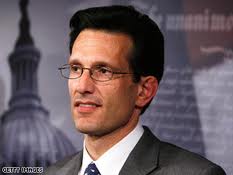 Just about the time I think I’ve seen about the worst of the worst coming out of the US congress, another Congressman finds a new bottom. The WSJ has reported that House Majority Whip Eric Cantor stands to gain financially from a U.S. default on the debt ceiling . (Basically, he’s shorted Treasuries). That’s something Cantor seems hellbent on happening. Congressman Cantor has made bets against US Treasury bonds that stand to pay if he can make it happen. Unfugginbelievable!
Putting his money where his mouth is? Eric Cantor, the Republican Whip in the House of Representatives, bought up to $15,000 in shares of ProShares Trust Ultrashort 20+ Year Treasury ETF last December, according to his 2009 financial disclosure statement. The exchange-traded fund takes a short position in long-dated government bonds. In effect, it is a bet against U.S. government bonds—and perhaps on inflation in the future.
Salon‘s Jonathan Easley looked into the potential financial windfall for Cantor right after Cantor shut down talks with Biden and other Democrats on the budget and the debt ceiling. Cantor is the House Majority Leader so he plays an important role in getting the majority to vote for any potential deal. Even if a deal can be reached, Cantor could stall it and make money.
Unless an agreement can be reached, the U.S. could begin defaulting on its debt payments on Aug. 2. If that happens and Cantor is still invested in the fund, the value of his holdings would skyrocket.
“If the debt ceiling isn’t raised, investors would start fleeing U.S. Treasuries,” said Matt Koppenheffer, who writes for the investment website the Motley Fool. “Yields would rise, prices would fall, and the Proshares ETF should do very well. It would spike.”
The fund hasn’t significantly spiked yet because many investors believe Congress will eventually raise the debt ceiling. However, since Cantor abruptly called off debt ceiling negotiations last Thursday, the fund is up 3.3 percent. Even if an agreement is ultimately reached before Aug. 2, the fund could continue to benefit between now and then from the uncertainty. (One tactic some speculators are using is to “trade the debt ceiling debate” — that is, to place short-term bets on prices as they fluctuate with the news out of Washington.)
A Completely Unofficial Blog About Eric Cantor has more information on the disclosure statements filed by Cantor that indicates he has taken multiple positions against the U.S. Government. Besides buying into a vanilla mutual fund, Cantor specifically went after investments that would pay if U.S. Government finances were troubled.
Picking individual financial products is more trouble than buying mutual funds. When Eric Cantor took the trouble to pick individual investments, he chose the following:
$1-15,000 ProShares Trust Ultrashort 20+ Year Treasury ETF (TBT)
$1-15,000 iShares Barclays TIPS Bond Fund (TIPS)
$1-15,000 WisdomTree International Basic Materials (DBN)
$1-15,000 SPDR SP Metals Mining (XME)So yeah, that acronym TIPS ring a bell? It should if you read Paul Krugman..
TIPS, as I read it is basically the interest difference between nominal U.S. Bonds and Treasury Inflation-Protected Securities.Eric Cantor’s bet on the iShares Barclay’s TIPS Bond Fund is ANOTHER bet that U.S. Treasury Bonds will lose value (relative to inflation). That story from last year is actually twice as bad as it sounds.
There are huge implications here:
1. When Eric Cantor had a spare $2,000 to $30,000 laying around, he didn’t just go and buy some extra shares of Exxon or FOX stock or gold or whatever average wingnuts buy, he actively sought out a way to bet that U.S. Treasury Bonds would decline in value. He literally bet against America.
2. Eric Cantor is in the Republican leadership, and has been making open threats that he may push the United States toward defaulting on their bond obligations. If he does this, he has set himself up to profit from it. This is a really big conflict of interest.
You can learn more about how this deal works at Seeking Alpha. Hedging and speculating with these kinds of funds is not exactly a beginning investor operation.
PoliticusUSA draws the logical conclusion.
Cantor has a history of betting against America. The difference is that in 2011, he now has the power make sure that his bets pay off.
Conflict of interest, abuse of power, it doesn’t matter what you call it. Eric Cantor’s desire to make a profit based on the pain and misery of very people that he has taken an oath to represent is just plain wrong.
Eric Cantor is the Republican House leader who can’t wait to see America fail.
In fact, he’s counting on it.
Your financial destruction will be Eric Cantor’s gain.
I guess this is what Republicans mean when they refer to one of their own as a “Real American.”
So, while the country was obsessed with sexted pictures of Anthony Wiener’s junk, Eric Cantor was putting the country in the position where could make money and the rest of us could suffer. Who has the real ethics problem here?
Update: From Amanda Terkel at HuffPo
House Democrats are circulating a resolution accusing House Majority Leader Eric Cantor (R-Va.) of having a conflict of interest in the debt ceiling debate, a move that could provide an awkward C-SPAN moment for one of the lead Republicans in the budget negotiations.
The resolution goes after Cantor’s investment in ProShares Trust Ultrashort 20+ Year Treasury ETF, a fund that “takes a short position in long-dated government bonds.”
The fund is essentially a bet against U.S. government bonds. If the debt ceiling is not raised and the United States defaults on its debts, the value of Cantor’s fund would likely increase.
The Democratic resolution, obtained by The Huffington Post from a Democratic source on the Hill, argues that Cantor “stands to profit from U.S. treasury default, which thereby raises the appearance of a conflict of interest,” and that he “may be sabotaging [debt ceiling] negotiations for his own personal gain.” It’s not clear how widely the measure was being circulated, with a House Democratic aide saying they hadn’t seen the resolution or heard it being discussed.
“Majority Leader Cantor has compromised the dignity and integrity of the Members of the House by raising the appearance of a conflict of interest in negotiations with the executive branch over raising the debt ceiling,” adds the measure.

 peej
peej Carissa
 bostonboomer
 dakinikat
 ecocatwoman
 mablue2
 Mama Lopez
 peggysue22
 quixote
 skydancingguestblogger
 Mona (aka Wonk the Vote)



 Sky Dancing
Recent Comments