
And now, a Game of Concentration
Posted: August 31, 2009 Filed under: Bailout Blues, Equity Markets, Global Financial Crisis, U.S. Economy | Tags: banking cartel, banking oligopoly, TARP Comments Off on And now, a Game of ConcentrationWhen I saw this NYT Headline, “As Big Banks Repay Bailout Money, U.S. Sees a Profit”, it really did not send me to a

Expecting customer service? Fat Chance!
happy place. You’re probably going to raise a Spock-like eyebrow and ask me to explain. Why, Kat, you’re probably saying, isn’t a 15% return on our “money” a good deal in this market? Remember finance 101, rates are relative to risk so let me tell you why I’m a concern troll on this. First, here’s what the author thought was the punch line to this story.
But critics at the time warned that taxpayers might not see any profits, and that it could take years for the banks to repay the loans.
As Congress debated the bailout bill last September that would authorize the Treasury Department to spend up to $700 billion to stem the financial crisis, Representative Mac Thornberry, Republican of Texas, said: “Seven hundred billion dollars of taxpayer money should not be used as a hopeful experiment.”
So far, that experiment is more than paying off. The government has taken profits of about $1.4 billion on its investment in Goldman Sachs, $1.3 billion on Morgan Stanley and $414 million on American Express. The five other banks that repaid the government — Northern Trust, Bank of New York Mellon, State Street, U.S. Bancorp and BB&T — each brought in $100 million to $334 million in profit.
What the author really missed was that information also comes on the back of this information last week that shows that the government has created incredible high concentration ratios in the banking market. I discussed it here in a piece where I called it a big ol’ game of monopoly. This is an ongoing policy disaster and many folks appear to be missing it.
J.P. Morgan Chase, an amalgam of some of Wall Street’s most storied institutions, now holds more than $1 of every $10 on deposit in this country. So does Bank of America, scarred by its acquisition of Merrill Lynch and partly government-owned as a result of the crisis, as does Wells Fargo, the biggest West Coast bank. Those three banks, plus government-rescued and -owned Citigroup, now issue one of every two mortgages and about two of every three credit cards, federal data show.
There are so many headlines buried in that NYT piece that you’d think it was written by ostriches. This is one alone should’ve grabbed a banner headline.
But the real profit came as banks were permitted to buy back the so-called warrants, whose low fixed price provided a windfall for the government as the shares of the companies soared.
Well, isn’t that nice, the best borrowers paid back first. Some one over there ever take any finance classes? I doubt it. Of course, that’s going to happen you twit!! It’s the implication of what that means that scares the pants off me. The fact they’ve borrowed funds allows us to regulate their actions. Now, the big ones are paying them back so they’re out of the reach of tighter TARP regulation! They like their old loosey goosey nonsense regulations especially now that they’re all set up as a de facto cartel with government blessing. They’re ready to price discriminate, restrict services, and create extraordinary profits all they want with FEW RESTRICTIONS. Just wait until we get to witness the new and improved, unregulated CEO pay schemes!
It’s similar to handing all of our energy needs and policy over to OPEC.
Yesterday, Teabagging, Today Sandbagging
Posted: April 26, 2009 Filed under: Bailout Blues, Global Financial Crisis, Team Obama | Tags: bailout, COP, Elizabeth Warren, financial system meltdown, Nancy Pelosi, TALF, TARP, Yves Smith 3 Comments I can’t tell you how disappointed I am that America’s first woman Speaker of the House has turned into a player for all seasons. First, we find out exactly how much she knew about the torture methods of the Bush Administration and when she knew about it. Then she tells a big lie about it. Rumors still abound that she was wanted Obama as POTUS because she could be the Queen Bee of Capitol Hill. His lack of knowledge and experience was certain to put her in a position of power. Too bad she is more of a demagogue than a democrat because if there was ever a chance to be the Queen of the Hill, it would’ve been with reform of the financial system.
Instead, we’re seeing her go after yet another woman who has tried to champion the voters/taxpayers over big party money. A head line from Yves Smith at Naked Capitalism says it all for you: “On Pelosi’s Duplicity and Apparent Sandbagging of Elizabeth Warren, watch dog of the TARP”. It’s a typical Capitol Hill soap opera if there ever was  one. As appears customary with everything economic coming out of the democratic wing of our congressional whores, Pelosi is siding with the financial services industry over the voters/taxpayers. Yves first reminds us of the strange dance surrounding the birth of TARP. Remember, life was supposed to be different once the Democrats retook the Congress.
Recall how instrumental Pelosi was in getting the TARP passed. The widely mentioned gambit of Paulson getting on bended knee to plead for her support was a nice bit of theater to cover how readily she fell into line. The other justification for the Democratic leadership support was the claim that Treasury had given a closed door briefing to Senate and House leadership telling them the world would end if the TARP was not passed yesterday.
Some have suggested that Treasury provided data on the potentially disastrous money market fund withdrawals around the time of the Lehman failure (recall the death of Lehman led Reserve to break the buck). but that problem had already been addressed in September in part via the Fed providing non-recourse loans to purchase asset backed commercial paper, and more fully in October via yet another Fed facility. In other words, if the money market fund panic was indeed the scare tactic, the TARP was not the remedy.
But even if we give the devil its due, the performance of the Democratic leadership was pathetic. The most heinous aspect of the bill, putting the Treasury secretary outside the reach of law, was never cut back. The first draft, a doodle on a napkin, was offensive to democratic processes, the second draft added a lot more words but was still way too thin on basics, like objectives, criteria, procedures, and the final draft loaded tons of pork in to assure passage. And the ironies kept multiplying. The bill was wildly unpopular even with the media falling into line (and in the later stages, a clearly orchestrated campaign to have financial services industry employees contact legislators to counter the groundswell of opposition). And it was Senate Republicans who were the last holdouts.
Here’s the soap opera, errr, money line.
So why are we pointing a finger at Pelosi in particular? The next chapter is her appointment of one Richard Nieman to the Congressional Oversight Panel. Under the TARP rules, the House Majority leader selects one of the oversight panel members, so this choice was completely under her control.
W(h)ither Geithner and his TALF
Posted: April 23, 2009 Filed under: Bailout Blues, Equity Markets, Global Financial Crisis, U.S. Economy, Uncategorized | Tags: banks, Elizabeth Warren, TALF, TARP, Timothy Geithner Comments Off on W(h)ither Geithner and his TALF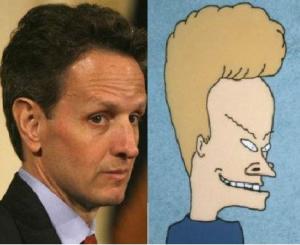 Neil Irwin of WAPO reported today that the TALF is not having the results trumpeted by the Obama administration. This is leading, again, to speculation about the relevancy of most of these plans and, of course, job security of Treasury Secretary Timothy Geithner.
In its first two months, the government’s signature initiative to support consumer lending has fallen well short of expectations, deploying only a fraction of the amount officials had hoped to extend to stimulate auto loans, student loans and credit card lending.
The slow rollout of the program has frustrated staff at government agencies working on the effort and diminished hopes that they could engineer a rapid return to healthy lending levels, according to interviews with government and industry sources. The initiative also serves as a window into the complexities of designing a giant rescue of the financial system.
The TALF is the private-public partnership that couples the funds of private investors, like hedge funds, and the FED. The hedge funds invest small amounts that are matched by much larger amounts that would presumably come from the Treasury and Tax Payers if they wind up being nonprofitable. The combined funds will supposedly purchase non-toxic, virgin, high rated rated securities to fund everything from student loans and car loans to inventory and capital loans for business. As of yet, they really have failed to do so.
Officials envisioned TALF supporting tens of billions of dollars a month in new lending, saying it could eventually total $1 trillion. But in March, when it was launched, it backed only $4.7 billion in auto loans and credit cards. For April, it logged only $1.7 billion.
Sources involved in the program said private investors have been reluctant to work with the government, which they view as an unreliable business partner. Separately, the brokerage houses that are crucial intermediaries are being exceptionally cautious in the contracts they draw up with participants in the program, in part out of wariness that any mistakes could draw the ire of Congress or the media.
In congressional testimony on Tuesday, Treasury Secretary Timothy F. Geithner said that overall progress is “pretty good” for a program in its early days. Still, he acknowledged that participation was “lower than expected” because of “concern about the conditions that come with the assistance in the program . . . and uncertainty about whether they may change in the future.”
Meanwhile, on the bank front, stupid accounting tricks abound! Which begs the question is any one stupid enough to believe the numbers? Every large financial institution appears to be jumping on the band wagon of conveniently forgetting the month of December. What does this say about the state of public accounting today and Wall Street’s gulliblity?
Punch Drunk on Tax Funded Bailouts
Posted: March 23, 2009 Filed under: Equity Markets, Global Financial Crisis, Main Stream Media, president teleprompter jesus, Team Obama, U.S. Economy, Uncategorized | Tags: bailout, Change When?, Obama, SouthPark, TARP, Timothy Geithner 4 CommentsWhile the Right Wing is off having tea parties and screaming class war, there appears to be some legitimate soul searching going on in left Blogistan about our “punch drunk” POTUS and his continual campaign like appearances. A lot of the discussion is focused on his dogged support of Turbo Tax Timmy and his bailout of the Suckers who created this bad economy for the rest of us. We’ve been overwhelmed with “heckuva-job-Timmy moments and distasteful ‘gallows humor’. When is enough enough?
Meanwhile, those of us that can’t avoid our jobs by taking a permanent vacation in TVLand are watching the economy unwind in spasms of agony and ecstasy. The market, starved for specific plans and information, provided a big thumbs 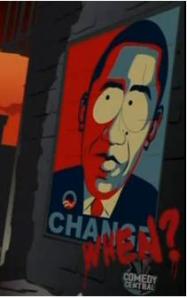 up on a bail out program that at best reheats Dubya’s. If any one was punch drunk, it was the equity markets today. The leaders were the financials, of course, who will continue to provide profits to the market while writing their costs off to the taxpayer. If you were looking for the fresh cold breath of reality, it wasn’t on Wall Street or on Pennsylvania Avenue.
Lucidity, however, is on the rise in other places. I’m finding it in interesting places like the second episode of South Park where the lampoon on the Dark Knight included this little back ground gem; a satire of the famous Obama picutre with a deer-in-the-headlights appearing Obama and the change mantra tagged by a bright red WHEN?
My answer to the when question is probably never.
Most left wing angst appears to be directed at Tim Geithner since the Light Bringer is still too new to the job to blame. We continue to learn how involved both he and his staff at the NY Fed were in the AIG Bonuses. In fact, the Obama administration is trying to scuttle the Excise tax on the bonuses while verbally denouncing executive greed on TV. We’ve also found out that Citibank has managed to insert similar language to protect its executive bonuses. Let’s see how much change we get on that one too.
Not only are right wing shrills like Fox’s Sean Hannity calling for the head of Timmy Geithner but Progressive Diva Arianna Huffington front paged the call on HuffPo today. When Hannity and Huffington carry the same headline, it’s time for more than a few campaign appearances on Leno and 60 minutes. I’m not sure where all this shock and angst is coming from because it’s been rather obvious to some of us for some time that Obama represented rather narrow interests (not ours). How can every Obama supporter be calling the AIG Bailout a travesty while knowing that the architects and enablers of AIG are continuing the task with the Light Bringer’s blessings and attaboys? Well, Obama just mustn’t realize that it’s all Timmy’s fault and we need his head on a limited edition Obama inaugural platter. But, wait, isn’t Obama the one with that great judgement ? C’mon folks reconcile all this in your mental ledger. It really isn’t that hard.
Super Heroes of Macroeconomics
Posted: March 22, 2009 Filed under: Uncategorized | Tags: AIG, bail out, Fraud, Geithner, Obama, Summers, TARP, Wealth Transfers, zombie banks 11 CommentsSomebody must have a lot of time on their hands to write a song called “Hey, Paul Krugman” but still, if the angsty, artsy fartsy creative class that foisted this POTUS on us is finally waking up, then Twitter me when the Revolution comes. I’ve even read the orange cheeto place and seems even a few of them are beginning to see the writing on their blackberries.
So, Paul is still appalled and speaking out against the Zombie Plan. I’d say this is another sfz! warning to the White House. What I can’t repeat enough is that it’s not just Paul. It’s not just me. It’s everyone with any knowledge of macroeconomics and the financial system.
Why am I so vehement about this? Because I’m afraid that this will be the administration’s only shot — that if the first bank plan is an abject failure, it won’t have the political capital for a second. So it’s just horrifying that Obama — and yes, the buck stops there — has decided to base his financial plan on the fantasy that a bit of financial hocus-pocus will turn the clock back to 2006.
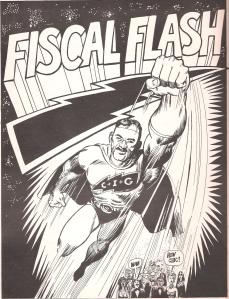 I don’t know if you’ve ever sat in an economics class, but most of you who have will attest that few economics professors are what you would call the dramatic, excitable types. However, I’ve seen more animation out of them recently than I’ve seen in all recent Marvel Comic Books.
From “Reasons Why The Obama Administration will not solve this crisis by the end of 2009” at The Underground Investor:
Consider that President-elect Obama voted FOR the horrible $700 billion bailout plan that accomplished less than zero in fixing the global economy while only transferring wealth from people that were struggling the most to the unethical financial executives that created this problem. These were my exact words in October, 2008, verbatim, about the eventual effect of the bailout plan: “Don’t believe the media spin. This will fix nothing. Even if and when the government overpays Wall Street and US banks by 300%, 500% and 1000% for their toxic assets, this temporarily recapitalizes these financial institutions but only creates A MUCH BIGGER PROBLEM for the future.” If I understood why the bailout plan would most definitely fail, as I blogged here, and the next President of the United States could not, that is a scary thought. On the other hand, if President Obama understood that the bailout plan would likely accomplish nothing but the transference of wealth from hard-working citizens to corrupt financial executives and still voted for the bill, then this action needs no further discourse.
From FT’s Willem Buiter:
Why are the unsecured creditors of banks and quasi-banks like AIG deemed too precious to take a hit or a haircut since Lehman Brothers went down? From the point of view of fairness they ought to have their heads on the block. It was they who funded the excessive leverage and risk-taking of banks and shadow banks. From the point of view of minimizing moral hazard – incentives for future excessive risk taking – it is essential that they pay the price for their past bad lending and investment decisions. We are playing a repeated game. Reputation matters.
Three arguments for saving the unworthy hides of the unsecured creditors are commonly presented:
- Unless the unsecured creditors are made whole, there will be a systemic financial collapse, with dramatic adverse consequences for the real economy.
- If the unsecured creditors are forced to take a hit, no-one will ever lend to banks again or buy their debt.
- The ultimate ‘beneficial owners’ of these securities – notably pensioners drawing their pensions from pension funds heavily invested in unsecured bank debt and owners of insurance policies with insurance companies holding unsecured bank debt – would suffer a large decline in financial wealth and disposable income that would cause them to cut back sharply on consumption. The resulting decline in aggregate demand would deepen and prolong the recession.
I believe all three arguments to be hogwash.

 peej
peej Carissa
 bostonboomer
 dakinikat
 ecocatwoman
 mablue2
 Mama Lopez
 peggysue22
 quixote
 skydancingguestblogger
 Mona (aka Wonk the Vote)



 Sky Dancing
Recent Comments