
A Bad Deal All Around?
Posted: December 9, 2010 Filed under: Democratic Politics, Elections, Surreality | Tags: Barack Obama, Bush tax cuts, Joe Biden, Paul Krugman, Suzanne Malveaux 31 Comments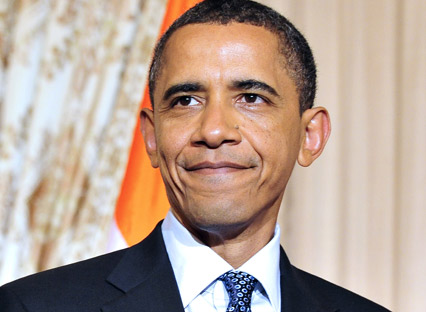
Putting on a happy face?
Maybe the rebellion of House Democrats will rescue President Obama from himself. Paul Krugman has looked at the numbers and concludes that the tax cut deal may provide some stimulus to the economy, but in the end it will likely hurt Obama’s chances of reelection in 2012. (Thanks to Dakinikat for pointing me to Krugman’s post.) Krugman writes:
Look at the Zandi estimates: they show a boost to the economy in 2011, which is then given back in 2012. So growth is actually slower in 2012 than it would be without the deal.
Now, what we know from lots of political economy research — Larry Bartels is my guru on this — is that presidential elections depend, not on the state of the economy, but on whether things are getting better or worse in the year or so before the election. The unemployment rate in October 1984 was almost the same as the rate in October 1980 — but Carter was thrown out by voters who saw things getting worse, while for Reagan it was morning in America.
Put these two observations together — and what you get is that the tax-cut deal makes Obama’s reelection less likely. Let me repeat: the tax cut deal makes Obama less likely to win in 2012.
Krugman concludes that because the stimulative parts of the bill–the unemployment extension and the cuts in payroll taxes–will expire after about a year, the economy will improve temporarily in 2011 and then go downhill before the 2012 election:
Won’t that put the Dems in a desperate position? Won’t Obama be strongly tempted to make further big concessions to get something to boost the economy for another year?
Um…is the Pope Catholic? Does a bear sh*t in the woods?
A “deal” that, due to its structure, will likely hurt the President’s re-election prospects and sets up future political battles in which the President will have an even weaker negotiating hand is simply not a good deal. There is no way to not see this as a huge political and policy win for the GOP. . . after all, their big “concession” to Obama was a payroll tax cut–a Republican idea to begin with.
Suzanne Malveaux has an interesting article up at CNN on the White House reaction to the House uprising.
The White House is putting on a brave face in the midst of a congressional revolt, led by its own party, against the president’s tax-cut deal.
In the latest move by angry Democrats, House lawmakers are refusing to bring Obama’s controversial tax bill to the floor. As some political observers saw all legislative hell breaking out, the White House continued to make painstaking efforts to paint a rosy picture.
She concludes the piece by suggesting that Obama and Biden may have eaten crow at their weekly lunch today.
I can’t help it. I’m getting my hopes up that this rebellion is more than kabuki. I’m just a born optimist.
The Detroit Free Press quotes John Conyers:
“We refuse to allow the well-being of the nation to be held hostage by those who promote the interests of millionaires and billionaires,” Conyers said today. “This truly is a fight for the heart and soul of the Democratic Party and our great country.”
But the White House is determined to save the “compromise” agreement:
It was unclear how much of the deal would have to change to meet House approval, but – with the agreement expected to be acted on soon in the Senate – Gibbs made it clear that the White House is open to change only if it’s agreeable to all parties. In the meantime, it has been gathering statements of support from across the nation, including those from Detroit Mayor Dave Bing and Michigan Gov. Jennifer Granholm.
“If we don’t get something done this year I think everyone will be blamed,” Gibbs said.
Is it possible that House Democrats really mean it this time? Is it possible that Obama might back down if he realizes the economy will hurt his reelection chances if this bill passes?

 peej
peej Carissa
 bostonboomer
 dakinikat
 ecocatwoman
 mablue2
 Mama Lopez
 peggysue22
 quixote
 skydancingguestblogger
 Mona (aka Wonk the Vote)



 Sky Dancing
Recent Comments