
Downgrade
Posted: August 5, 2011 Filed under: Economy, U.S. Economy, U.S. Politics | Tags: Standard&Poor's downgrade 28 CommentsRating agency Standard & Poor’s downgraded US debt from AAA to AA+. Additionally, the company warned of more possible downgrades in 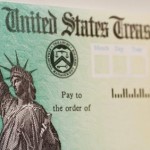 the future because of political and economic uncertainty. This basically means that I have to tell students to draw big red lines through all of their asset pricing formulas that tell them to use US treasuries as the world’s base risk free rate. I can only imagine that when the FMA meets in Denver in October that the big discussion will be should Australia, Canada or France now be considered the rate upon which all else is based?
The downgrade and negative outlook came late on Friday night, after news surfaced of a furious rearguard attempt by the White House to convince S&P that its calculations were flawed.
The move shifts long-term US government debt into the same level as Britain, Japan and other countries, but below that of Canada, Australia and France. As a rule, a lower credit rating means higher borrowing costs for debtor nations. But because of the size of the US and its deep capital markets, it remians to be seen what impact the move will have when financial markets reopen on Monday.
Republicans were quick to highlight the downgrade – the first in modern US history – as a humiliation for President Obama. But S&P’s statement explaining the move blamed both parties for the US fiscal mess – and had harsh words for the Republican party for ruling out any taxes increases.
“We have changed our assumption … because the majority of Republicans in Congress continue to resist any measure that would raise revenues,” S&P said.
S&P also said the budget savings agreed by Congress at the start of the week were too feeble, and blamed political weakness and instability for triggering the downgrade:
More broadly, the downgrade reflects our view that the effectiveness, stability, and predictability of American policymaking and political institutions have weakened at a time of ongoing fiscal and economic challenges to a degree more than we envisioned when we assigned a negative outlook to the rating on April 18, 2011.
Since then, we have changed our view of the difficulties in bridging the gulf between the political parties over fiscal policy, which makes us pessimistic about the capacity of Congress and the Administration to be able to leverage their agreement this week into a broader fiscal consolidation plan that stabilizes the government’s debt dynamics any time soon.
The credit rating agency also said the outlook on its long-term rating was negative, warning that it could lower the long-term further rating to AA within the next two years “if we see that less reduction in spending than agreed to, higher interest rates, or new fiscal pressures during the period result in a higher general government debt trajectory than we currently assume”.
Standard & Poor’s has suffered a good deal of confidence downgrade since its ratings of Credit Default Swaps in the mortgage meltdown proved less than stellar. Other raters are still considering a similar move.
U.S. Treasury bonds, once undisputedly seen as the safest security in the world, are now rated lower than bonds issued by countries such as Britain, Germany, France or Canada.
The outlook on the new U.S. credit rating is “negative”, S&P said in a statement, a sign that another downgrade is possible in the next 12 to 18 months.
The impact of S&P’s move was tempered by a decision from Moody’s Investors Service earlier this week that confirmed, for now, the U.S. Aaa rating. Fitch Ratings said it is still reviewing the rating and will issue its opinion by the end of the month.
“It’s not entirely unexpected. I believe it has already been partly priced into the dollar. We expect some further pressure on the U.S. dollar, but a sharp sell-off is in our view unlikely,” said Vassili Serebriakov, currency strategist at Wells Fargo in New York.
“One of the reasons we don’t really think foreign investors will start selling U.S. Treasuries aggressively is because there are still few alternatives to the U.S. Treasury market in terms of depth and liquidity,” Serebriakov added.
S&P’s move is also likely to concern foreign creditors especially China, which holds more than $1 trillion of U.S. debt. Beijing has repeatedly urged Washington to protect its U.S. dollar investments by addressing its budget problem.
The downgrade could add up to 0.7 of a percentage point to U.S. Treasuries’ yields over time, increasing funding costs for public debt by some $100 billion, according to SIFMA, a U.S. securities industry trade group.
This move could send a signal to the market to increase interest rates that may trigger the Fed to act in some way. Given that monetary policy is already at the zero bound and serious attention needs to be paid to fiscal policy based in reality, I’m not sure at this point if a QE3 from Helicopter Ben would even help at this point. Most corporations are profitable and liquid now. If anything, higher interest rates will further stymy consumer spending and borrowing.
Some folks believe that the S&P move was meant to pressure the Obama administration into reconsidering new regulations that will impact rating agencies. Again, rating agencies were part of the collapse of the financial system in and around 2007-2008 when they inappropriately rated many exotic instruments to be highly safe.
Welcome to the new reality in the age of the decline of the American Empire. Hold on to your seats. It’s going to be a bumpy ride.

 peej
peej Carissa
 bostonboomer
 dakinikat
 ecocatwoman
 mablue2
 Mama Lopez
 peggysue22
 quixote
 skydancingguestblogger
 Mona (aka Wonk the Vote)



 Sky Dancing
Recent Comments