
Justice And A Call For Public Hangings
Posted: January 28, 2012 Filed under: abortion rights, fetus fetishists, public hangings | Tags: abortion, North Carolina, public executions 15 Comments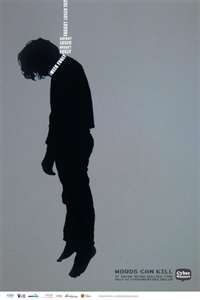
We’ve seen the Hollywood version:
The gallows is assembled. The dust is high and a sense of anticipation ripples through the air. There’s a hanging come tomorrow and it’s looking to be a good day. The condemned man manages to hoist himself to the jail window. He watches the ongoing construction. He doesn’t say anything. Fixing his jaw, he looks up at the sky and we know he’s silently wondering if he can keep it together, not cry out like a little girl. Or soil himself.
The morning of? Mothers pack a lunch because the hanging is midday and the children might get hungry. The righteous men in town think a hanging is a good, fine thing. God Almighty Hisself said it–An Eye for an Eye. And their sons, these righteous men whisper, will see what hard justice looks like then buck up, choose the straight and narrow.
The whole town turns out. Dogs bark, babies cry and the sun burns down. The condemned man turns his eyes away when the black clad minister offers up a prayer. He looks beyond the crowd as if he sees something way off, something no one else can see. Or maybe his mouth is trembling and the sweat is running in his eyes but we don’t get to see much because the thin-lipped sheriff yanks a black hood over the man’s head.
A few heartbeats later, the sheriff nods to the executioner. The lever creaks, the hatch opens. The man drops with a creaking whoosh. He drops like a stone, straight into eternity. He twitches–once, twice. But then all is still.
The crowd is quiet now. Some people look away. Some smirk. Others stare at the dead man, look right through him, only to turn with a quiet resignation and everyone, even the dogs and old timers, shuffle back to whatever they’ve left undone or are loathe to go back to.
Until the next time.
I’ve always watched these scenes and thought, Thank God, I wasn’t born back in the day when an execution was considered entertainment, a welcome respite from the hard-pressed, often dreary, short lives our ancestors lived. Cultures and mindsets change, evolve.
But sometimes they don’t.
Republican Representative Larry Pittman, District 82 from the great State of North Carolina wants to bring back public hangings. A deterrent to crime, he says, but noted abortion doctors first in line for the gallows.
I could brush this off as a joke, the product of a small, twisted mind but it turns out Representative Pittman expressed his view via a note, which he then emailed to every member of the North Carolina General Assembly. Seems like a particular prisoner really ticked Representative Pittman off, yanked his chain good, when said prisoner wrote a letter to the local paper [published by a most discriminating editor] in which he bragged about his cushy prison life and how endless appeals would keep his hide from the executioner for years on end.
According to the email, Representative Pittman’s reaction was, in part, the following:
We need to make the death penalty a real deterrent again by actually carrying it out. Every appeal that can be made should have to be made at one time, not in a serial manner,” Pittman wrote in the email. “If murderers (and I would include abortionists, rapists, and kidnappers, as well) are actually executed, it will at least have the deterrent effect upon them. For my money, we should go back to public hangings, which would be more of a deterrent to others, as well.
To be fair to Representative Pittman, I do not know the details of this prisoner’s crime. As far as I know, he may deserve to rot in prison forever. He may even deserve to swing from a rope. Personally, I’m not a huge fan of the death penalty, particularly when I read stats like this:
Since 1973, at least 121 people have been released from death row after evidence of their innocence emerged. During the same period of time, over 982 people have been executed. Thus, for every eight people executed, we have found one person on death row who never should have been convicted. These statistics represent an intolerable risk of executing the innocent. If an automobile manufacturer operated with similar failure rates, it would be run out of business.
Our capital punishment system is unreliable. A recent study by Columbia University Law School found that two thirds of all capital trials contained serious errors. When the cases were retried, over 80% of the defendants were not sentenced to death and 7% were completely acquitted.
But that’s an argument for another day.
Representative Pittman did, in fact, back pedal on sending his ‘opinion’ to every member of the General Assembly, claiming it was intended for a single member. He was fatigued, he said, hitting ‘Reply All’ in error. He also said that perhaps he’d gotten carried away when he vented his disgust and agitation, but he was over-wrought by his concern for the victim of the letter-writing prisoner. He was concerned about the family’s right to see justice done.
But I missed this part:
Oh, and you know the inclusion of abortion doctors, saying that they should be first in line for the gallows? I apologize. Because even I know that since abortion is still legal in this country, hanging a doctor who has performed a legal abortion would be . . . murder. As a State Representative of the Great State of North Carolina I would not want to give the impression that murder is a good thing or understandable when committed against Pro-Choice Physicians, even those who perform abortions. Because to do so would set a bad example to the very populace I’m pledged to represent. Sending that email was a foolish, unseemly thing to do.
Sadly, he did not write or say that.
As for public hangings acting as a deterrent to crime? Though Timothy McVeigh’s execution was viewed on closed circuit TV for family members of the deceased and rescue workers, the last public execution in the US, a hanging, occurred in 1936 in Owensboro, Kentucky. It was that particular execution, the carnival nature of the hanging and the coverage received, that convinced public officials that going public was not a good idea. We can go back further to find ample examples of public hangings, death by firing squad, horse and quartering, beheadings, etc.
And lo and behold, we still had crime, oodles of it. Frequently during those festive-like affairs, pickpockets flourished and prospered.
Executions were good for business.
I vaguely recall Phil Donahue calling for televised executions, back when the electric chair was still favored. His reasoning was not a pretense that viewable executions would deter crime but that seeing a man or woman electrocuted, the true ugliness of the act, would serve as a deterrent to the death penalty itself.
Was Donahue right? I don’t know. At the time, I thought the suggestion was crazy.
But calling for public hangings, including doctors who perform legal abortions, even from a fatigued state legislator is, in my opinion, a step too far. Maybe we should thank Representative Pittman for offering a window into his mind’s secret workings. We can theorize that since his opinion was ‘intended’ for a single legislator, Representative Pittman assumed his recipient was a kindred spirit, someone who shared his ‘frustrations.’
That makes at least one like-minded person serving in the NC General Assembly. We can only guess how many others.
Oh, and there’s this–in addition to being a NC representative? Mr. Pittman lists his occupation as: Pastor, Shipping Worker and Company Chaplain.
You cannot make this stuff up.


 peej
peej Carissa
 bostonboomer
 dakinikat
 ecocatwoman
 mablue2
 Mama Lopez
 peggysue22
 quixote
 skydancingguestblogger
 Mona (aka Wonk the Vote)



 Sky Dancing
Recent Comments