
Post Debate Slice n Dice
Posted: October 3, 2012 Filed under: 2012 elections, 2012 presidential campaign | Tags: Presidential Debate 31 Comments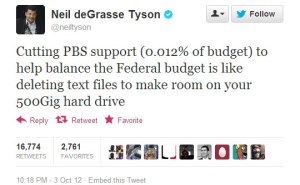 Wow. What a really weird debate. My dad the consummate Republican basically thought it was one of the worst debates he’d ever seen. I have to agree with him on that one. Here’s some post debate analysis, but of course, our own counts much more!!
Mitt Romney’s Five Biggest Lies of the First Half of the Presidential Debate
1). Mitt Romney claims he is not cutting taxes for the wealthy
Romney actually began the debate completely reinventing his tax plan. Romney claimed that his tax plan isn’t a $5 trillion tax cut. However, yesterday his own running mate Paul Ryan touted Romney’s 20% tax cut across the board.
Ryan said, “And so what we’re saying is, we’re going to lower tax rates for everybody across the board by 20%, and we can pay for that without losing revenue by closing loopholes for people at the top end of the income scale. Everybody gets lower tax rates as a result. And you can keep these preferences for middle class taxpayers and have 20% lower tax rates.”2). Romney claimed his tax plan doesn’t raise taxes on the middle class
Mitt Romney used some funny math to claim that his plan doesn’t raise taxes on middle class. However, the Tax Policy Center found that Romney’s plan, “The report by the centrist Tax Policy Center found that Romney’s tax cuts would boost after-tax income by an average of 4.1 percent for those earning more than $1 million a year, while reducing by an average of 1.2 percent the after-tax income of individuals earning less than $200,000.”
3). Romney claimed that Obama would increase taxes on the top 3% of “small businesses.”
Romney used some dubious statistics to claim that Obama would raise taxes on small businesses. What Romney didn’t tell the voters is that he and the Republican Party have a unique definition of small business.Washington Monthly explored the GOP definition of small business, “Many of those 750,000 small businesses aren’t small at all. Some, like Bechtel Corporation, are positively enormous. The Democratic and Republican figures come from the non-partisan Joint Committee on Taxation. But numerous think tanks and government organizations have examined the data and come to similar conclusions: First, that letting the Bush tax cuts on the top two brackets of “small-business” income would impact a tiny percentage of those businesses; and second, that many of the “small businesses” that would be impacted are actually giant companies — which explains why such a tiny fraction of them can account for half of small business income.”
“I’m sorry, Jim, I’m going to stop the subsidy to PBS. I like PBS. I love Big Bird. I like you too,” Romney said.

President Barack Obama and Republican rival Mitt Romney spun one-sided stories in their first presidential debate, not necessarily bogus, but not the whole truth.
They made some flat-out flubs, too. The rise in health insurance premiums has not been the slowest in 50 years, as Obama stated. Far from it. And there are not 23 million unemployed, as Romney asserted.
Here’s a look at some of their claims and how they stack up with the facts:
OBAMA: “I’ve proposed a specific $4 trillion deficit reduction plan. … The way we do it is $2.50 for every cut, we ask for $1 in additional revenue.”
THE FACTS: In promising $4 trillion, Obama is already banking more than $2 trillion from legislation enacted along with Republicans last year that cut agency operating budgets and capped them for 10 years. He also claims more than $800 billion in war savings that would occur anyway. And he uses creative bookkeeping to hide spending on Medicare reimbursements to doctors. Take those “cuts” away and Obama’s $2.50/$1 ratio of spending cuts to tax increases shifts significantly more in the direction of tax increases.
Obama’s February budget offered proposals that would cut deficits over the coming decade by $2 trillion instead of $4 trillion. Of that deficit reduction, tax increases accounted for $1.6 trillion. He promises relatively small spending cuts of $597 billion from big federal benefit programs like Medicare and Medicaid. He also proposed higher spending on infrastructure projects.
—
ROMNEY: Obama’s health care plan “puts in place an unelected board that’s going to tell people ultimately what kind of treatments they can have. I don’t like that idea.”
THE FACTS: Romney is referring to the Independent Payment Advisory Board, a panel of experts that would have the power to force Medicare cuts if costs rise beyond certain levels and Congress fails to act. But Obama’s health care law explicitly prohibits the board from rationing care, shifting costs to retirees, restricting benefits or raising the Medicare eligibility age. So the board doesn’t have the power to dictate to doctors what treatments they can prescribe.
Romney seems to be resurrecting the assertion that Obama’s law would lead to rationing, made famous by former Alaska Gov. Sarah Palin’s widely debunked allegation that it would create “death panels.”
The board has yet to be named, and its members would ultimately have to be confirmed by the Senate. Health care inflation has been modest in the last few years, so cuts would be unlikely for most of the rest of this decade.
Here are all of the NYT’s fact-checks from the first Obama-Romney debate. I find this one particularly interesting.
Mr. Romney promised to create 12 million jobs over the next four years if he is elected president. That is actually about as many jobs as the economy is already expected to create, according to some economic forecasters.

 peej
peej Carissa
 bostonboomer
 dakinikat
 ecocatwoman
 mablue2
 Mama Lopez
 peggysue22
 quixote
 skydancingguestblogger
 Mona (aka Wonk the Vote)



 Sky Dancing
Recent Comments