
A War on Public Servants
Posted: January 11, 2011 Filed under: just because | Tags: gilded age, plutocracy 31 Comments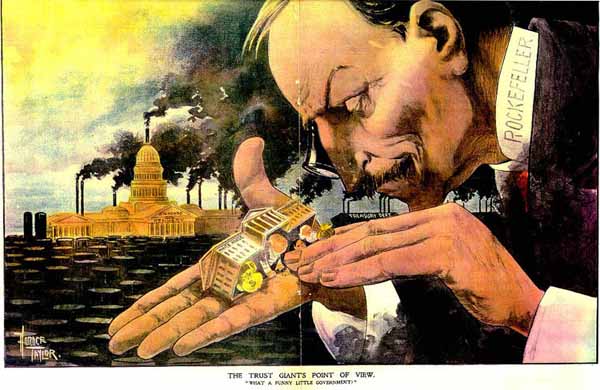
I’ve noticed a developing villager meme about the people who put out our fires, teach our children, complete the paper work to give us driver’s and hunting licenses, and paint the picnic tables at parks. Are they the new enemy or just the collateral in the War for Austerity? Are we experiencing the first shot heard round the world in the Battle against Public Servants?
If you believed the senile President Reagan, government was the problem. If you believe the current set of villagers, government workers are the problem. This actually appears to be part and parcel of a plan to tear down any sort of union where ever it possibly could sprout up. Silly government workers still want and get pensions, health care plans, and are not subject to firing on management whimsy. Their examples must be held up as source of public disgust and disgruntlement. The Power class certainly wouldn’t want their serfs getting any ideas. Therefore, we’ll just shuffle public workers into the bigger theme of they’re wasting your tax dollars and all because their unions can get them a decent work arrangement. I continue to be amazed how they get us dogs under the table to fight for scraps and bones while they continue the feast up top.
Truth-Out riffs on this them in an article called We Welcome Our New Plutocratic Overlords. It describes the new ‘ruling’ class as mostly comprised of Wall Street Bankers and Silicon Valley Geeks. Chrystia Freeland explains this concept in the cover story of Atlantic Monthly. Because these folks don’t necessarily come from wealth, they assume they are wealthy because they’re gifted and deserving. They ignore a lot to maintain that frame. The new old buzz word is Plutocracy. Freeland argues the super-rich are a nation to themselves. She explores this in a section called Winner-Take-Most. The deal, she says, is that the same thing that’s caused the rest of us to be poorer is the very same thing that’s mega-enriched the new plutocrats.
Many corporations have profited from this economic upheaval. Expanded global access to labor (skilled and unskilled alike), customers, and capital has lowered traditional barriers to entry and increased the value of an ahead-of-the-curve insight or innovation. Facebook, whose founder, Mark Zuckerberg, dropped out of college just six years ago, is already challenging Google, itself hardly an old-school corporation. But the biggest winners have been individuals, not institutions. The hedge-fund manager John Paulson, for instance, single-handedly profited almost as much from the crisis of 2008 as Goldman Sachs did.
Meanwhile, the vast majority of U.S. workers, however devoted and skilled at their jobs, have missed out on the windfalls of this winner-take-most economy—or worse, found their savings, employers, or professions ravaged by the same forces that have enriched the plutocratic elite. The result of these divergent trends is a jaw-dropping surge in U.S. income inequality. According to the economists Emmanuel Saez of Berkeley and Thomas Piketty of the Paris School of Economics, between 2002 and 2007, 65 percent of all income growth in the United States went to the top 1 percent of the population. The financial crisis interrupted this trend temporarily, as incomes for the top 1 percent fell more than those of the rest of the population in 2008. But recent evidence suggests that, in the wake of the crisis, incomes at the summit are rebounding more quickly than those below. One example: after a down year in 2008, the top 25 hedge-fund managers were paid, on average, more than $1 billion each in 2009, quickly eclipsing the record they had set in pre-recession 2007.
So, their new frame is that they did it ‘on their own’ and the rest of us are just plain lazy and insufficient. Unions are our ‘affirmative action plans’ that cripple the American Dream. Their frame also translates into the refusal to recognize obligations to the public and public goods as being part of a society. This makes public workers easy targets. Read the rest of this entry »

 peej
peej Carissa
 bostonboomer
 dakinikat
 ecocatwoman
 mablue2
 Mama Lopez
 peggysue22
 quixote
 skydancingguestblogger
 Mona (aka Wonk the Vote)



 Sky Dancing
Recent Comments