
The Hive Mentality
Posted: December 11, 2010 Filed under: just because | Tags: Charles Stross, Corporations are not People, Paul Krugman 42 Comments Wow, I get to cross reference Paul Krugman and Charles Stross in one blog post. It’s a nerd’s delight!! I also get to speak out on I why opted out of corporate life and married life despite the obvious financial benefits of both. That would be the “Hive Mentality”. I hated working in large corporations. I gradually couldn’t stand my husband more and more because he wasn’t the sweet kid that I married who adored John Lennon and Science Fiction. He is how I come to know writers like Charles Stross. The ex turned into a soldier bee that I couldn’t stand to be around. If you love your freedom and your identity more than money and power, you will die a slow, painful, agonizing spiritual death as a corporate minion. They will get to you one way or another.
Stross talks about why our politics, our society, and our people are so frigging messed up these days. He also looks at why we feel–like my neighbor Antwoine–like we vote people into office that come from various backgrounds and they invariably turn on us. Tell me truthfully, when is the last time you felt like your vote did any good?
Stross argues that the “The rot set in back in the 19th century, when the US legal system began recognizing corporations as de facto people“. I’ve actually had similar thoughts. That and I believe the recent Supreme Court decision giving them Constitutional rights essentially assigns us all to a form of serfdom. Here’s the quote that Krugman lifted from Stross’ blog that caught my attention too.
Corporations do not share our priorities. They are hive organisms constructed out of teeming workers who join or leave the collective: those who participate within it subordinate their goals to that of the collective, which pursues the three corporate objectives of growth, profitability, and pain avoidance. (The sources of pain a corporate organism seeks to avoid are lawsuits, prosecution, and a drop in shareholder value.)
Corporations have a mean life expectancy of around 30 years, but are potentially immortal; they live only in the present, having little regard for past or (thanks to short term accounting regulations) the deep future: and they generally exhibit a sociopathic lack of empathy.
I do think that my exhusband’s 20 year stint as an investment officer at Mutual of Omaha turned him into something of a Pod Person. He became part of that collective hive and its goals became his goals. He would forget to replace the milk in the refrigerator for our two small children. This would force me into the minivan–yes I had a MAZDA minivan–with hungry, whiny kids needing bundling up and buckling where I would drive miles to replace it. At they same time, he would risk life and limb to get to the Hive Collective Office that’s eaten most of historic, central Omaha in blizzards and 6 foot snow drifts. What started out as my panicked young parent self, thinking, sheesh he could die doing that eventually became, wow, he could die, I’d get the life insurance, and I’d move me and my kids to London where I could get a doctorate from the London School of Economics and they’d attend pre-school with the future kings of England. I might even wind up in Oxford with some nice Hugh Grant type tottie and a title. You can see how he eventually got on the losing side of that what-if exercise.
Even worse, however, was being part of a Hive itself. I thought–because that’s how every one thought in the 1980s–that being in my suited skirt, carrying a brief case, and being in a field surrounded with men that I would become the uberWoman role model and change the world. (Yeah, you know how THAT worked out.) What I found was a situation akin to either being oppressed or being rewarded for being the oppressor. I couldn’t take either. In my years in a corporate Hive, and then later as a consultant in Dr. Deming’s methods to some of the biggest of them (e.g. AT&T and Ford) and then state and government agencies, I found that corporations suppress innovation, data, and the human spirit in search of more power, more market, and more profit. Believe me, between my consulting and Katrina experiences, I’d turn my life over to the US Air Force or any set of government workers any day over ANY private corporation. Hence, I totally agree with Stross on this final point.
We are now living in a global state that has been structured for the benefit of non-human entities with non-human goals. They have enormous media reach, which they use to distract attention from threats to their own survival. They also have an enormous ability to support litigation against public participation, except in the very limited circumstances where such action is forbidden. Individual atomized humans are thus either co-opted by these entities (you can live very nicely as a CEO or a politician, as long as you don’t bite the feeding hand) or steamrollered if they try to resist.
In short, we are living in the aftermath of an alien invasion.
My question to you is how do we humans defeat this particularly nasty form of aliens?
Note: I’ve been over to Memorandum where they’ve featured this post and I seem to be outnumbered among those bloggers who to a man don’t agree with Stross. Typically enough of the naysayers, one is a corporate attorney, one is a Hayek fetishist, and then there’s Krugman who blames greedy individuals like the Koch brothers. Frankly, I wonder if my response is a from a mother/woman viewpoint unlike the others. Go read them. I don’t think corporations have contributed much. I think individuals contributed much until their contributions become corporations themselves. (i.e. G.E. isn’t the contributor to society; Thomas Alva Edison was) OR maybe it is JUST me.
A Bad Deal All Around?
Posted: December 9, 2010 Filed under: Democratic Politics, Elections, Surreality | Tags: Barack Obama, Bush tax cuts, Joe Biden, Paul Krugman, Suzanne Malveaux 31 Comments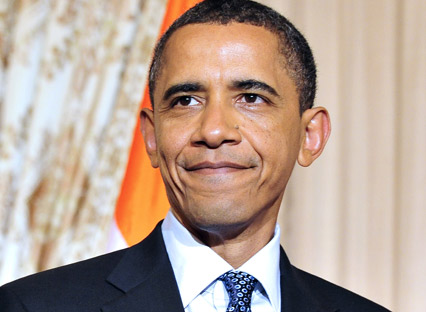
Putting on a happy face?
Maybe the rebellion of House Democrats will rescue President Obama from himself. Paul Krugman has looked at the numbers and concludes that the tax cut deal may provide some stimulus to the economy, but in the end it will likely hurt Obama’s chances of reelection in 2012. (Thanks to Dakinikat for pointing me to Krugman’s post.) Krugman writes:
Look at the Zandi estimates: they show a boost to the economy in 2011, which is then given back in 2012. So growth is actually slower in 2012 than it would be without the deal.
Now, what we know from lots of political economy research — Larry Bartels is my guru on this — is that presidential elections depend, not on the state of the economy, but on whether things are getting better or worse in the year or so before the election. The unemployment rate in October 1984 was almost the same as the rate in October 1980 — but Carter was thrown out by voters who saw things getting worse, while for Reagan it was morning in America.
Put these two observations together — and what you get is that the tax-cut deal makes Obama’s reelection less likely. Let me repeat: the tax cut deal makes Obama less likely to win in 2012.
Krugman concludes that because the stimulative parts of the bill–the unemployment extension and the cuts in payroll taxes–will expire after about a year, the economy will improve temporarily in 2011 and then go downhill before the 2012 election:
Won’t that put the Dems in a desperate position? Won’t Obama be strongly tempted to make further big concessions to get something to boost the economy for another year?
Um…is the Pope Catholic? Does a bear sh*t in the woods?
A “deal” that, due to its structure, will likely hurt the President’s re-election prospects and sets up future political battles in which the President will have an even weaker negotiating hand is simply not a good deal. There is no way to not see this as a huge political and policy win for the GOP. . . after all, their big “concession” to Obama was a payroll tax cut–a Republican idea to begin with.
Suzanne Malveaux has an interesting article up at CNN on the White House reaction to the House uprising.
The White House is putting on a brave face in the midst of a congressional revolt, led by its own party, against the president’s tax-cut deal.
In the latest move by angry Democrats, House lawmakers are refusing to bring Obama’s controversial tax bill to the floor. As some political observers saw all legislative hell breaking out, the White House continued to make painstaking efforts to paint a rosy picture.
She concludes the piece by suggesting that Obama and Biden may have eaten crow at their weekly lunch today.
I can’t help it. I’m getting my hopes up that this rebellion is more than kabuki. I’m just a born optimist.
The Detroit Free Press quotes John Conyers:
“We refuse to allow the well-being of the nation to be held hostage by those who promote the interests of millionaires and billionaires,” Conyers said today. “This truly is a fight for the heart and soul of the Democratic Party and our great country.”
But the White House is determined to save the “compromise” agreement:
It was unclear how much of the deal would have to change to meet House approval, but – with the agreement expected to be acted on soon in the Senate – Gibbs made it clear that the White House is open to change only if it’s agreeable to all parties. In the meantime, it has been gathering statements of support from across the nation, including those from Detroit Mayor Dave Bing and Michigan Gov. Jennifer Granholm.
“If we don’t get something done this year I think everyone will be blamed,” Gibbs said.
Is it possible that House Democrats really mean it this time? Is it possible that Obama might back down if he realizes the economy will hurt his reelection chances if this bill passes?
Quelle Tristesse!
Posted: December 5, 2010 Filed under: Democratic Politics, POTUS, Team Obama, Voter Ignorance | Tags: Barack Obama, Brad Delong, Democrats, Fatal Mistake, Frank Rich, Incompetence, Paul Krugman, Republicans, Right Wing 102 Comments
In what will go down as one of the most egregious acts of calumny, many smart people accused Barack Obama of being incredibly brilliant and politically savvy, in addition to having the highest IQ of any political figure ever to set foot in Washington, DC. Some of these people hung on to that defamation in the course of the first two years of the Obama administration. Every display of ineptitude and every questionable political act were justified with “he knows exactly what he’s doing”, or “he got the enemies where he wants them”, or “he’s playing eleven dimensional chess”. Now the whole experiment is taking worrisome a turn.
At this point, the verdict on the Obama presidency seems to be a variation of the same idea: He is not who his supporters thought he was and he is by miles not “the one we’ve been waiting for”.
1st School of thought: Barack Obama is an incompetent bumbler who lacks the training and probably the personality to be POTUS. Moreover, for some incomprehensible reason, he seems to be dead set on being liked be the GOP, who in turn would like nothing better than crush him. (Sub-group: Obama was never the candidate of change he pretended to be, he is the incarnation of the status quo.)
Frank Rich has a very interesting op-ed column today, detailing many of the sorry aspects of the Obama presidency so far, especially the length to which he would go to please the GOP, without success, of course: All the President’s Captors
THOSE desperate to decipher the baffling Obama presidency could do worse than consult an article titled “Understanding Stockholm Syndrome” in the online archive of The F.B.I. Law Enforcement Bulletin. It explains that hostage takers are most successful at winning a victim’s loyalty if they temper their brutality with a bogus show of kindness. Soon enough, the hostage will start concentrating on his captors’ “good side” and develop psychological characteristics to please them — “dependency; lack of initiative; and an inability to act, decide or think.”
This dynamic was acted out — yet again — in President Obama’s latest and perhaps most humiliating attempt to placate his Republican captors in Washington.
This column is a good companion to Paul Krugman’s latest in which he pretty much throws in the towel:
Mr. Obama, who has faced two years of complete scorched-earth opposition, declared that he had failed to reach out sufficiently to his implacable enemies. He did not, as far as anyone knows, wear a sign on his back saying “Kick me,” although he might as well have.
[…]
What’s even more puzzling is the apparent indifference of the Obama team to the effect of such gestures on their supporters. One would have expected a candidate who rode the enthusiasm of activists to an upset victory in the Democratic primary to realize that this enthusiasm was an important asset. Instead, however, Mr. Obama almost seems as if he’s trying, systematically, to disappoint his once-fervent supporters, to convince the people who put him where he is that they made an embarrassing mistake.
I would like to step back and address another issue: Obama’s preparedness and his personality to be POTUS.
Throughout the 2008 Primaries, Hillary Clinton kept making the point that she had garnered enough experience to get things moving in the right direction in Washington, DC. Unfortunately, that argument was ridiculed by Obama’s supporters. Now, it has become clear how detrimental Obama’s lack experience and knowledge of “Washington” is. Some of this is not necessarily Obama’s fault: Through his meteoric rise, Obama did not have the time to cultivate relationships necessary to get some things from law makers. Sadly, his cold and aloof personality just compounds the problem. Mike Allen and Jim VandeHei, political hacks from Politico, wrote a surprisingly insightful article laying some of these problems bare.
In his effort to change Washington, Obama has failed to engage Washington and its institutions and customs, leaving him estranged from the capital’s permanent power structure — right at the moment when Democrats say he must rethink his strategy for cultivating and nurturing relations with key constituencies ahead of 2012.
Then there are faux pas like these:
On their own, some gripes about Obama look like little more than trivial violations of Politics 101. But they have had the cumulative effect of leaving the president and his team isolated from many of the constituencies required for success in Washington:
— When Obama was giving the commencement address in the University of Michigan’s “Big House” stadium last May, he mingled in the home-team locker room with university deans and regents. Across the tunnel, in the visitors’ locker room, several members of Michigan’s Democratic congressional delegation — including Senate Armed Services Chairman Carl Levin and House Judiciary Chairman John Conyers Jr. — waited patiently.
Some had brought grandchildren so they could get their picture taken with the president. But they never got to see him. Obama didn’t cross the tunnel to see the lawmakers.
This is not how the President behaves towards elderly members of his own caucus. Worst of all, he is not not loyal at all.
Let’s take the case of Nancy Pelosi, who spent all her capital shepherding Obama’s agenda through the House. For that, she was vilified six ways from Sunday. Not too long ago, a poll showed that she was by far the political figure with the highest negatives. Not once did Obama come to her her defense. From the Politico article:
Rep. George Miller (D-Calif.) expressed a much deeper frustration to POLITICO: that the president never had House Speaker Nancy Pelosi’s back — and it cost both of them. “They not only failed to defend her and her accomplishments on their behalf,” said Miller of the White House, “they failed to defend themselves.”
David Bromwich, in his article The Fastidious President, published in the London Review of books noticed that:
Obama does not like to be associated with defeat. He scuttled his support for several Democratic candidates – Martha Coakley in Massachusetts, Arlen Specter in Pennsylvania, Blanche Lincoln in Arkansas – before election day when he came to believe that they would probably lose. He allowed his press secretary, Robert Gibbs, to say as early as last summer that the Democrats might well lose the House of Representatives. This degree of self-protectiveness is unpleasant in a politician, and is bound to make his party ask itself sooner or later: should we be more loyal to him than he is to us?
In Obama’s speeches the word ‘I’ (which appears frequently) and the word ‘Democrat’ (which appears rarely) are seldom found in proximity.
A combination of lack of experience and search for acceptance among the establishment is probably what explains some of his appointments. From David Bromwich:
We are learning now, from such sources as Bob Woodward’s Obama’s Wars, about the oddness of some of the president’s other appointments and his treatment of them. General James Jones, whom Obama had never met, was asked to become national security adviser. Once chosen, he hardly ever saw the president alone. To head the CIA Obama picked Leon Panetta, a former congressman who had served as Bill Clinton’s chief of staff. Panetta was a complete outsider to the world of spies: it could have been predicted that he would be overawed by the company he now kept and come to defend their actions present and past with the anxiety of someone who has to prove himself.
And there’s this:
Of all Obama’s appointments, the most damaging to his credibility with liberal supporters were Lawrence Summers and Timothy Geithner, the chief economic adviser and the secretary of the treasury. Geithner has the air of a perpetual young man looking out for the interests of older men: an errand boy. The older men in question are the CEOs of Goldman Sachs, AIG, and the big banks and money firms. Geithner at the New York Fed had enforced – or, rather, let flow – the permissive policy on mortgages that Summers pushed through in the last years of the Clinton presidency. Summers himself, renowned for his aggression and brilliance, came too highly recommended for Obama not to appoint him. (…) The Obama economic team, with its ‘deep bench’ of Goldman Sachs executives, might have done better if mixed with economists of other views like Joseph Stiglitz and Paul Krugman. Obama knew little economics, however, and he took the word of the orthodox.
2nd school of thought: Obama is and has always been a Conservative. He is friendlier and more receptive to Right-wing ideas (err, if by ideas you mean with ideas, toxic and destructive thoughts) because he agrees with them. He despises the Left and he is about to destroy the soul of the Democratic Party. Oh, and his worship of Ronald Reagan should have seriously raised the red flag long time ago.
Adherents of this school of thoughts have become much more blunt and much more vocal lately.
Here’s Yellow Dog, in a post entitled We Are the Ones We Have Been Waiting For … Because Obama Isn’t:
It’s up to us, kids. This White House cannot lead, does not follow and will not get out of the way.
Face it: we elected a conservative.
Brilliant at Breakfast Jill doesn’t mince words either:
56% of American voters were hoodwinked by a guy who’s more like the Republicans than anyone even now wants to believe; a guy who BELIEVES in torture and assassination; a guy who BELIEVES in tax cuts for the wealthy and screw everyone else; a guy who WANTS endless war; a guy who is all about doing the bidding of corporations BECAUSE HE WANTS TO; a guy who feels every bit as “icky” about Teh Gays as John Edwards did, only who lacks even the courage that a weasel like John Edwards had to admit it; a guy who WANTS to gut Social Security and Medicare; a guy who decided to become president as a kind of ruling class internship; in which he spends four years doing Wall Street’s bidding in exchange for a nice eight-figure gig upon leaving office.
This group has very good reasons to adopt that opinion or to feel reinforced in it. Since the November 2 “shellacking”, Obama and his team has been sending out worrisome signals. Democrats have noticed and have began to seriously wonder. This explains why we have been seen a slew of stories like these recently:
Democrats in Congress are largely united on the major issues before them this month: extending tax cuts for the middle class and the poor, but not the rich, before they expire Dec. 31, and giving more help to the long-term unemployed.
Yet they’re unable to enact either provision because of united Republican opposition in the Senate. The Senate plans two test votes Saturday on the Democrats’ tax-cut extension plans, and GOP resistance is expected to block both efforts until the Bush-era tax reductions are extended for every income group.
While most Democrats blame Republicans for the impasse, a lot of liberals are grumbling that President Barack Obama is hurting their cause by not fighting strongly and instead actively seeking compromise.
Top Democratic activists and lawmakers who allege that President Obama blew it by being too passive during the midterm campaign, are responding in at least two ways.
They continue to criticize the president heavily. And they’re not waiting around for the White House to ramp up anti-Republican aggression.
Many disaffected Democrats complain that the Obama administration needs to be more aggressive in advocating positions to rally the party’s base and differentiate it from the Republicans. White House officials who attended the Democracy Alliance meeting, including Austan Goolsbee, chair of the Council of Economic Advisors, and Deputy Chief of Staff Jim Messina, were pressed about the administration’s stances on taxes, job creation and the environment.
This attitude has certainly be prompted by Obama’s eagerness to give away the Democrats’ bargaining chips before Roight-wingers even show up. You just need to open any newspaper to come across articles like these:
The White House and congressional Republicans have begun working behind the scenes toward a broad deal that would prevent taxes from going up for virtually every U.S. family and authorize billions of dollars in fresh spending to bolster the economy.
Back from Afghanistan on Saturday, President Barack Obama will find on his desk a two-week stopgap spending bill, designed to keep the government running through Dec. 18 but also marking a deadline of sorts for the quick deals he needs on taxes, the START nuclear arms treaty and next year’s spending.
Each issue has its own set of variables, but all are interwoven in what’s become a major test of Obama’s ability to cope with the resurgent Republican power after November’s elections.
Democratic divisions make this task harder since the necessary compromises by Obama will almost certainly come at the expense of the left.
Many on the Left seem to have drawn the line on the tax cuts for gazillionaires. Michael Hudson wrote a terrific post at Credit Writedowns explaining what a horrible idea it is and called for a revolt. He is not alone:
Mr. Obama’s Most Recent “2%” Sellout is his Worst Yet
Now that President Obama is almost celebrating his willingness to renew the tax cuts enacted under George Bush for the super-rich ten years ago, it is time for Democrats to ask themselves how strongly they are willing to oppose an administration that looks increasingly like Bush-Cheney III. Is this what they expected by his promise of an end to partisan politics?
To better represent this group, I’ll leave the floor to my peeps at BAR. They have been the proponents of this school of thought since Obama started running for POTUS. So, take it away Glen Ford:
Obama Moves Effortlessly to the Right
Only fools should feel sorry for Obama as he prepares for a Republican-led House and weakened Democratic control of the Senate. This is Obama’s “comfort zone,” where he can continue to woo Republicans to join his grand center-right coalition. The only people Obama has no tolerance for are liberalish Democrats, who will emerge relatively stronger in the new Congress thanks to the decimation of Obama’s Republican-Lite friends in conservative Democratic ranks. By freezing federal wages, Obama signals that he has no philosophical problems with the GOP’s general aims.
True to his center-right DNA, President Obama surrendered critical political ground to the GOP even as the lame duck Democratic Congress remains in session.
What was that with the “Catfood Commission”?
On Tuesday, Obama’s Frankenstein, the budget deficit reduction commission – a monstrosity he invented on his own volition, under no pressure whatsoever from his own party and relatively little from the GOP minority – emerged from solemn conclave to announce all 18 members will vote on a “final product” on Friday, December 3. Democratic co-chair Erskine Bowles, a rich former investment banker from North Carolina, and his Republican counterpart Alan Simpson, the troglodyte former Wyoming senator, had earlier released their own, shared vision of a low corporate tax rate, barely existing safety net future. The irascible Simpson predicted that progressives will react badly when they see the end result: “We will listen now in the next few days to the same old crap I’ve been dealing with all my public life: emotion, fear, guilt and racism.” He means that people will be calling him, accurately, a hardhearted, racist bastard.
For full disclosure, I’m adherent of the 1st school of thought. However, I have noticed that 1st group is getting thinner by the day and that it’s members have either been tuning out, getting cynical, or joining the 2nd school of thought. For example here are some of the post on Brad Delong’s blog, just in the last 2 days:
The Economic Troika Seems Confused
Posted: November 28, 2010 Filed under: U.S. Economy | Tags: joseph stiglitz, Mark Thoma, Obama and Unemployment, Paul Krugman 42 Comments There are three economists that I read almost every day because I share a lot in common with their value system and their approach to the subject area. That would be Brad DeLong, Paul Krugman, and Mark Thoma. The three are probably the most visible group of liberal economists on the web with the exception of Joseph Stiglitz. All three of them just don’t seem to get why President Obama does what he does given that he said what he said during the election.
Now I admit to being a relative newcomer to academia compared to these three. I’m old and will never garner the prestige they’ve achieved. I spent most of my career in financial institutions and the FED so maybe that’s where the difference comes. I don’t know. But all three of them were on the same track today and the centralized blog theme began on Thoma’s Economist’s View where the topic germinated.
Is giving some one an overly generous portion of the benefit of the doubt something that liberals academics do? I’m beginning to wonder. All this year, the troika appeared to be baffled by the continuing not democratic, not progressive/liberal, and not wise economic policy coming out of the District. Did they listen to the same presidential primary debates that I listened to? Did they watch the appointments of folks like Austin Goolsbee and just miss something? Is it just me?
From the keyboard and fingers of Mark Thoma comes a series of not so rhetorical questions and a thought. The title of the thread is The Administration’s “Communication Problem”.
I find it incredible and disturbing that on the eve of the recent election in which Democrats got trounced, the administration was still trying to figure out if the unemployment problem is structural or cyclical.
Chiming in with a reply–even quoted by Thoma–is Delong. (They all obviously read each other too.) He titled his thread ‘Mark Thoma Watches Barack Obama and His Political Advisors Go Off Message Yet Again…Can we please get the White House back on message?’
Okay, so now we come full circle as Paul Krugman also responds to Thoma with his NYT blog and this title: Lacking All Conviction.
“Now”, I thought as I braced for the read, “we might be getting a little closer to the true source of this ‘communication’ or ‘message’ problem.” But, Krugman’s take on the meeting was concern that POTUS is just getting bad advice. I’m going to bold Krugman’s relevant assertion.
What I want to know is, who was arguing for structural? I find it hard to think of anyone I know in the administration’s economic team who would make that case, who would deny that the bulk of the rise in unemployment since 2007 is cyclical. And as I and others have been trying to point out, none of the signatures of structural unemployment are visible: there are no large groups of workers with rising wages, there are no large parts of the labor force at full employment, there are no full-employment states aside from Nebraska and the Dakotas, inflation is falling, not rising.
More generally, I can’t think of any Democratic-leaning economists who think the problem is largely structural.
Yet someone who has Obama’s ear must think otherwise.
No wonder we’re in such trouble. Obama must gravitate instinctively to people who give him bad economic advice, and who almost surely don’t share the values he was elected to promote. That’s what I’d call a structural problem.
Okay, there are two prominent Noble Prize winners that I’ve mentioned in this thread. Krugman is one and Stiglitz the other. Any truly Democratic President seeking a Roosevelt/Kennedy Style economic program would call on Stiglitz in a minute’s notice. Krugman’s the obvious choice for trade and international economics under similar policy goals. There is a rich legacy of Paul Samuelson acolytes out there. Heck, Samuelson only died a year ago, so he was even available for some time; especially during the historic ‘transition’ presidency when we even got that new fangled seal. Samuelson even went to the University of Chicago and Harvard. Samuelson was the consummate neoKeynesian. He was the yang to the Milton Friedman yin. He was friggin’ brilliant.
Now, I’m feeling a bit like Inigo Montoya here except that it’s not the word inconceivable that’s confusing me. What’s confusing me is that I keep reading these guys. These guys work with models and data. They also–of course–make assumptions. I think the models are okay, but they keep using the wrong assumptions. After two years, you have to question the assumptions when the data results keep confusing you, guys!!
Let’s start with some fresh assumptions that don’t start with he said this, yet he’s doing this, it must be the message, the adviser, or the communication style. Let’s try, he said what it took to get elected. Now, he’s doing what he believes in. If he was all that interested in being the next FDR, at least one of you and Joseph Stiglitz would be on the CEA right now. He’s just not that into you, Keynes, or unemployment unless he thinks it’s going to help in 2012.
M’kay?
Susie at Suburban Guerilla had a slightly different take but with a somewhat similar line of thought.
Obama would rather preside over a graduate seminar than make hardnosed political decisions, and that continues to be a major flaw.
I think it runs even deeper than that. I think the ‘graduate seminar’ was a public relations exercise.
Digby at Hullabaloo has a little stronger sentiment than that.
If anyone’s wondering why the administration hasn’t been able to get on message about jobs and unemployment, it might be because they just don’t know what the hell they are doing.
Well, that too.
It’s still about the Jobs!
Posted: October 2, 2009 Filed under: Global Financial Crisis, The Great Recession, U.S. Economy | Tags: discouraged workers, Paul Krugman, Robert Riech, Underemployment, unemployment Comments Off on It’s still about the Jobs! I keep repeating this like a mantra, but an economy that relies on households buying 70% of it’s production, and households that rely on wages for 67% of their income, is not going to get healthy until it creates more jobs. That’s why Robert Riech, Paul Krugman, and this Cajun Country Economist are still stuck on job creation and the unemployment rate. It appears the DJ and other stock indexes are taking notice too. This is from today’s Gray Lady.
The American economy lost 263,000 jobs in September — far more than expected — and the unemployment rate rose to 9.8 percent, the government reported on Friday, dimming prospects of any meaningful job growth by the end of the year.
The Labor Department’s monthly snapshot of unemployment dashed hopes that the pace of job losses would continue to slow as the economy clawed its way back from a deep recession. Economists had expected 175,000 monthly job losses.
“People have been celebrating that we’re through the financial crisis, but the underlying issues are all still there,” said Dean Baker, co-director of the Center for Economic and Policy Research. “We’ve lost trillions of dollars in housing wealth, and consumption’s going to be weak. It’s not the ’30s, but there’s really nothing to boost the economy.”
You’ll recall that it’s been two years since the NBER dated the beginning of this Great Recession. That means the U.S. economy has been hemorrhaging jobs for TWO years now. We’ve got it bad and that ain’t good. Robert Reich, President Clinton’s former Labor Secretary has the “Truth about Jobs” in his blog entry today.
Unemployment will almost certainly in double-digits next year — and may remain there for some time. And for every person who shows up as unemployed in the Bureau of Labor Statistics’ household survey, you can bet there’s another either too discouraged to look for work or working part time who’d rather have a full-time job or else taking home less pay than before (I’m in the last category, now that the University of California has instituted pay cuts). And there’s yet another person who’s more fearful that he or she will be next to lose a job.
In other words, ten percent unemployment really means twenty percent underemployment or anxious employment. All of which translates directly into late payments on mortgages, credit cards, auto and student loans, and loss of health insurance. It also means sleeplessness for tens of millions of Americans. And, of course, fewer purchases (more on this in a moment).
Unemployment of this magnitude and duration also translates into ugly politics, because fear and anxiety are fertile grounds for demagogues wielding the politics of resentment against immigrants, blacks, the poor, government leaders, business leaders, Jews, and other easy targets. It’s already started.
That’s right! Because of the way we actually count the unemployed, there are actually a lot more problems out there  than the unemployment rate measures. All you have to be is employed 1 hour of paid work and that dumps you into the ranks of employed. So that means if you’ve been furloughed, had your hours cut, or had to take up part time employment, you may be miserably underemployed, but your still employed. You also have to be have been actively searching for a job if you don’t have one for the last four weeks to stay in the ranks of the unemployed. You start giving up, you’re considered not in the labor force and by definition not eligible to join the numbers of the unemployed. (These are so-called discouraged workers.)

 peej
peej Carissa
 bostonboomer
 dakinikat
 ecocatwoman
 mablue2
 Mama Lopez
 peggysue22
 quixote
 skydancingguestblogger
 Mona (aka Wonk the Vote)



 Sky Dancing
Recent Comments