
Real Life Horror: The Black Dahlia Murder Mystery
Posted: February 2, 2013 Filed under: Crime, Real Life Horror | Tags: Buster the cadaver dog, Elizabeth Short, George Hodel, Paul Dostie, Steve Hodel, The Black Dahlia 15 Comments
Elizabeth Short AKA The Black Dahlia
By now, everyone who reads this blog knows that I’m fascinated by true crime stories. Years ago, I read a book by former LA Homicide detective named Steve Hodel. The book was called Black Dahlia Avenger: A Genius for Murder. It was subsequently published in an updated paperback edition. Hodel believes his father was the murderer of Elizabeth Short and that he also murdered at least nine more women in his home and then posed their bodies around LA. In his book Hodel presented some convincing circumstantial evidence to back up his claims.
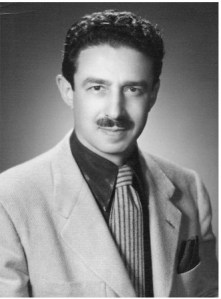
Dr. George Hodel
Hodel’s father George Hodel was a prime suspect in the Black Dahlia case, which officially has never been solved. In fact the LAPD wiretapped multiple rooms in Hodel’s house over a three-week period. But George Hodel, who was a prominent surgeon and knew many powerful people, was never arrested for the murder, although he was prosecuted and acquitted for incest with his own daughter (Steve Hodel’s stepsister).
A little background on the case from Wikipedia:
“The Black Dahlia” was a nickname given to Elizabeth Short (July 29, 1924 – c. January 15, 1947), an American woman who was the victim of a gruesome and much-publicized murder. Short acquired the moniker posthumously by newspapers in the habit of nicknaming crimes they found particularly colorful. Short was found mutilated, her body sliced in half at the waist, on January 15, 1947, in Leimert Park, Los Angeles, California. Short’s unsolved murder has been the source of widespread speculation, leading to many suspects, along with several books and film adaptations of the story. Short’s murder is one of the oldest unsolved murder cases in Los Angeles history….
The body of Elizabeth Short was found in the Leimert Park district of Los Angeles….Her remains had been left on a vacant lot on the west side of South Norton Avenue midway between Coliseum Street and West 39th Street (at 34.0164°N 118.333°W). The body was discovered by local resident Betty Bersinger, who was walking with her three-year-old daughter around 10 a.m. Bersinger initally mistook the body for a discarded store mannequin. Upon realizing it was a corpse, Bersinger rushed to a nearby house where she phoned the police.
Short’s severely mutilated body was severed at the waist and completely drained of blood. Her face had been slashed from the corners of her mouth toward her ears, creating an effect called the Glasgow smile. Short also had multiple cuts on her thigh and breasts, where entire portions of flesh had been removed. The body had been washed and cleaned and had been “posed” with her hands over her head, her elbows bent at right angles, and her legs spread. Near the body detectives found a cement sack which contained droplets of watery blood, as well as a heel print on the ground amidst tire tracks.
I won’t post links, but if you are so inclined, you can find the crime scene photos on Google images.
Believe it or not, there may be new forensic evidence forthcoming in this long-cold case. From The Daily Beast:

Buster
Last November, Hodel joined forces with former California police detective Paul Dostie and Buster, his rambunctious nine-year-old cadaver-sniffing black Labrador, for the first ever forensic search at Hodel’s former home. The property is now called the Sowden House and named after its first owner, photographer John Sowden, who had the house built for him in 1926 by Lloyd Wright, the son of architect Frank Lloyd Wright.
Buster is not just any old canine. He gained his experience the hard way, practicing at old cemeteries in Nevada. As his owner Dostie explain, decomposing bones give off a distinctive chemical mark that rises up through the soil, and Buster’s big sweaty nose can smell it even after decades have passed.
Because of his acute sniffing skills, Buster has twice gone on missions to the tiny Japanese island of Tarawa to help point out the locations of U.S. marines buried there after a 1943 battle. He has searched Belgium for Americans shot down in the Battle of the Bulge. He has scoured the land around the Barker Ranch, where Charles Manson and his cult hid after the murders of Sharon Tate and Rosemary LaBianca, searching for more buried victims. Just last month, Buster was flown to Key West, Florida, to search for remains in a 200-year-old pirate grave as well as an 1860 ship carrying 294 African slaves.
Back at the Hodel house last November, Buster was turned loose to search for scents related to human decomposition—and he perked up, or “alerted” as Dostie calls it, at several potential clues in the basement. Soil samples were taken and results are expected next week.
Read more about the results of Steve Hodel’s research at the above link.

A little more The Pasadena Star-News:
Hodel said it was clear the search would turn up something as soon as Buster was turned loose.
“Buster immediately took off … and ran to a vent located at the southwest corner of the property where he alerted, indicating he had picked up the scent of human decomposition.”Buster’s unique sense of smell led Hodel and Dostie to a vent just outside the home’s basement. Hodel said that portion of the Sowden House – designed by Lloyd Wright and built in 1926 – is largely unchanged and looks the same as it did in 1947, the year Elizabeth Short, the Black Dahlia, was slain.
Steve Hodel’s story was the subject of the first episode of Season 9 of Ghostbusters. Here’s the portion of the show dedicated to The Black Dahlia.

 peej
peej Carissa
 bostonboomer
 dakinikat
 ecocatwoman
 mablue2
 Mama Lopez
 peggysue22
 quixote
 skydancingguestblogger
 Mona (aka Wonk the Vote)



 Sky Dancing
Recent Comments