
Novelist, Screenwriter, and Humorist Nora Ephron has Died
Posted: June 26, 2012 Filed under: just because | Tags: Carl Bernstein, celebrity deaths, Dan Greenburg, Karen Silkwood, Meryl Streep, Nicholas Pileggi, Nora Ephron 13 Comments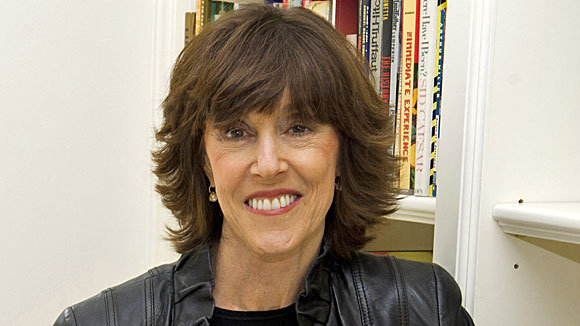
Nora Ephron, who gained a devoted following for her perceptive, deeply personal essays and parlayed that renown into a screenwriting career of wistful romantic comedies such as “When Harry Met Sally” and “You’ve Got Mail,” the marital exposé “Heartburn” and the whistleblower drama “Silkwood,” died June 26 at a hospital in New York. She was 71.
The death was confirmed by her friend Richard Cohen, a Washington Post columnist. She died of complications from the blood disorder myelodysplasia, with which she was diagnosed six years ago.
As a young woman, Ms. Ephron modeled her self-deprecating and deadpan writing style on Dorothy Parker, part of the Algonquin Round Table of sophisticated New York writers and humorists that also included Robert Benchley and S.J. Perelman. Of the philandering husband in her 1983 novel “Heartburn” — modeled on her marriage to former Washington Post journalist Carl Bernstein — Ms. Ephron wrote he was “capable of having sex with a Venetian blind.”
In time, Ms. Ephron became a social confederate of New York playwrights, filmmakers and wits, including Mike Nichols, Woody Allen and Calvin Trillin; Washington journalists including former Post executive editor Benjamin Bradlee and his journalist wife, Sally Quinn; and a Hollywood coterie that included Rob Reiner, Tom Hanks, Steve Martin and Steven Spielberg.
The New York Times calls her a “woman of letters.”
She was a journalist, a blogger, an essayist, a novelist, a playwright, an Oscar-nominated screenwriter and a movie director — a rarity in a film industry whose directorial ranks were and continue to be dominated by men. More box-office success arrived with “You’ve Got Mail” and “Julie & Julia.” By the end of her life, though remaining remarkably youthful looking, she had even become something of a philosopher about age and its indignities.
“Why do people write books that say it’s better to be older than to be younger?” she wrote in “I Feel Bad About My Neck,” her 2006 best-selling collection of essays. “It’s not better. Even if you have all your marbles, you’re constantly reaching for the name of the person you met the day before yesterday.”
Nora Ephron was born on May 19, 1941, on the Upper West Side of Manhattan, the eldest of four sisters, all of whom became writers. That was no surprise; writing was the family business. Her father, Henry, and her mother, the former Phoebe Wolkind, were Hollywood screenwriters who wrote, among other films, “Carousel,” “There’s No Business Like Show Business” and “Captain Newman, M.D.”
“Everything is copy,” her mother once said, and she and her husband proved it by turning the college-age Nora into a character in a play, later a movie, “Take Her, She’s Mine.” The lesson was not lost on Ms. Ephron, who seldom wrote about her children but could make sparkling copy out of almost anything else: the wrinkles on her neck, her apartment, cabbage strudel, Teflon pans and the tastelessness of egg-white omelets.
Ephron’s first marriage, to writer Dan Greenburg, ended after nine years. In 1976 she married Bernstein, who along with Bob Woodward had broken the Watergate scandal for the Washington Post a few years earlier. “Heartburn,” her 1996 novel, found humor in the ruins of her marriage to Bernstein, who, she said, had an affair while she was pregnant with their second son. The Bernstein-based character was played by Jack Nicholson, the Ephron-based character by Meryl Streep, in the 1986 film version.
Streep had also starred three years earlier in the Mike Nichols-directed “Silkwood,” a drama based on the real-life story of a labor organizer at a nuclear-processing plant whose whistle-blowing was abruptly ended when she died in a car accident.
Ephron’s third marriage was to journalist Nicholas Pileggi, who adapted his 1985 book “Wiseguy” into the movie “Goodfellas” (1990), directed by Martin Scorsese.
Pileggi survives her, as do her two sons from her marriage to Bernstein, Max and Jacob.
I loved Ephron’s humorous essays, and her novel Heartburn was absolutely hilarious. I had no idea she was the model for the Sandra Dee role in Take Her, She’s Mine–a romantic comedy starring Jimmy Stewart as the worried father of an attractive teenager. I wasn’t wild about some of Ephron’s sappy movies like You’ve Got Mail, but Silkwood is one of my all-time favorites. As an aside, I don’t think most people really believe Karen Silkwood’s “accident” was anything other than murder.
Rest in peace, Nora. You’ve left us far too soon.

 peej
peej Carissa
 bostonboomer
 dakinikat
 ecocatwoman
 mablue2
 Mama Lopez
 peggysue22
 quixote
 skydancingguestblogger
 Mona (aka Wonk the Vote)



 Sky Dancing
Recent Comments