
Goolsbee goes au naturel
Posted: June 5, 2011 Filed under: Economy, jobs, unemployment, We are so F'd | Tags: Austan Goolsbee, fiscal policy, jobs, natural path to recovery, the economy 20 CommentsI never thought I’d ever hear an economic adviser to a Democratic administration justify taking a natural path to recovery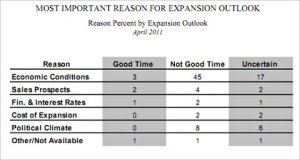 when the US economy is reeling from a basic lack of aggregate demand. The comments were just about as Chicago school as you could get. It was just another reheated bowl of smoking green shoots.
“Our effort now as a government should be to get the private sector to help them stand up and lead the recovery,” Goolsbee told “This Week” anchor Christiane Amanpour, citing efforts on regulatory review, while maintaining policies such as reduced payroll taxes through the end of the year. “We’ve got to rely on policies that are trying to leverage the private sector and give incentives to private sector to be doing the growth.”
I didn’t catch Obama economist Austan Goolsbee with Christian Amanpour on ABC which is where I got that quote. I caught up with him on Candy Crowley’s Sunday show. From what I can tell, the story line was about the same. According to Goolsbee, whatever recovery we’re experiencing from the worst financial crisis we’ve had since The Great Depression is in the hands of the private sector who just needs to appreciate the gentle nudge they’ve already gotten. Goolsbee conveniently ignored every thing going on in the recent economy except a small window’s worth of job creation. He declared that there was no downward trend in the economy. I felt like I was watching a big ol’ flaming head tell me to ignore the man behind the curtain. But, I musn’t be the only one that was watching the little man behind the curtain given that the one month’s worth of data turned into “DOW plunges into longest weekly losing streak since 2004” last week. I don’t think that’s the end of that either.
Scarecrow at FDL calls it the best speech evah given by President Romney’s chief economic adviser.
Goolsbee correctly told us that a smart economist wouldn’t get overly excited about one month’s jobs and growth numbers but would instead look at the overall trend. Of course what he wouldn’t want to concede is that GDP grew at a meager annual rate of 1.8 percent over the first three months of 2011 and so far was predicted to grow at only 2.8 percent for the next three. And the overall trend for job growth was still not enough to make a serious dent in unemployment unless you believe taking 5-10 years to get back to full employment is okay.
So Goolsbee was in denial from the opening moment because he didn’t have a decent story to tell even in his own framework. When Amanpour asked him what the Administration could or should be doing to improve conditions, he ticked off items you’d expect to hear from a typical GOP Presidential adviser: we’ve got to get the debt under control; we have a White House effort to identify and get rid of governmental regulations that are preventing the private sector from growing the economy; we should pass “free trade” agreements backed by the Chamber of Commerce; and we should leverage limited public dollars to release billions in private funding for investments.
Goolsbee’s bottom line: “It’s now up to the private sector.” That’s exactly what you’d expect from President Romney’s economic adviser.
It took Paul Krugman and Chrystia Freeland, over the absurd denials by Martin Regalia of the Chamber of Commerce, to remind ABC’s audience that business confidence and concerns about taxes and regulations aren’t the problem: business polls repeatedly show businesses aren’t expanding/hiring much because the demand for their products is weak. Demand is weak because the recession and the housing market crash depleted consumers’ wealth and they’re worried about losing their homes and jobs. You don’t need a degree in economics to grasp the logic of that. When private spending is still depressed, only government spending is keeping the economy afloat, and the stimulus is phasing out.
Now, I hate to keep writing about the same things over and over again. I know I’m not the only one. Brad DeLong has finally discovered there is no Plan B. There is only full speed ahead with deficit reduction which is a great long term goal but a disastrous short term strategy. Mark Thoma is even more straightforward.
Policymakers have been telling us to have patience for some time now, but patience ran thin long ago. We need action, not excuses to do nothing based upon Republican talking points. We have millions of people out of work, we face the prospect of a five to ten year recovery for employment, yet the administration has no plans to even try to push Congress to do more.
The percent of owners planning capital outlays in the next three to six months fell 3 points to 21 percent, a recession level reading. Money is cheap, but most owners are not interested in a loan to finance equipment they don’t need. Prospects are still uncertain enough to discourage any but the most profitable and promising investments. Four percent characterized the current period as a good time to expand facilities (seasonally adjusted), down 1 point from March and 4 points lower than January. The net percent of owners expecting better business conditions in 6 months slipped another 3 points to negative 8 percent, 18 percentage points worse than in January. Uncertainty is the enemy, and there is plenty of it to convince owners to “keep their powder dry”. Apparently consumers feel much the same way, as more customers spending more money would overcome the reluctance of owners to hire and make capital outlays. One in four still cite “weak sales” as their top business problem.
There is nothing mysterious about the fiscal policy solution to your basic lack of aggregate demand. What’s mysterious is the complete lack of concern about the significantly high unemployment rates, the continued foreclosure crisis, and the downward trends in both consumer and business confidence.
I guess I know what happens with the phone rings at 3 a.m.
No one picks it up and then some one goes on TV the next day and says we’ve done all we can do. For this they expect re-election?

 peej
peej Carissa
 bostonboomer
 dakinikat
 ecocatwoman
 mablue2
 Mama Lopez
 peggysue22
 quixote
 skydancingguestblogger
 Mona (aka Wonk the Vote)



 Sky Dancing
Recent Comments