
Mitt Romney’s Positions on Social Issues Dictated by Church Leaders
Posted: May 12, 2012 Filed under: 2012 presidential campaign, 2012 primaries, U.S. Politics | Tags: abortion rights, Church of the Latter Day Saints, John F. Kennedy, Judith Dushku, LDS, LGBT rights, Mitt Romney, Mormon church, Roman Catholic Church, Wayne Barrett 47 Comments
Mormon Temple, Salt Lake City, Utah
On January 26, I wrote a post about an excerpt from the biography The Real Romney that had just been published by Vanity Fair. The Vanity Fair article detailed Romney’s cruel treatment of women when he was a Bishop and later Stake President in Boston’s Mormon community.
In doing a little further research on one of those women, Judith Dushku, and came across an earler interview with Dushku in which she recounted a conversation with Romney in which he told her he had been given permission by his church leaders to lie about his views on abortion and LGBT rights. A few years before, Romney had cut Dushku out of his life because she supported a women who had to choose between having an abortion and losing her own life. Here’s the relevant excerpt from my post:
A few years after the friendship ended, Romney ran for the Senate in 1994 against Ted Kennedy. Dushku was very surprised to learn that Romney was running as a pro-choice candidate. Dushku:
I was pleased and called, asking to see him. I told him I suspected that we had our differences, but that maybe I could work with him if he’d come to a really good position on women and childbirth.
And he said – Yes, come to my office.
I went to his office and I congratulated him on taking a pro-choice position. And his response was – Well they told me in Salt Lake City I could take this position, and in fact I probably had to in order to win in a liberal state like Massachusetts.
Suzan Mazur: Who’s “THEY”?
Judy Dushku: I asked him the same question. And he said “the Brethren” in Salt Lake City.
In other words, Romney was consulting with his church elders before deciding his positions on the issues, and they told him to lie!
Last night The Daily Beast published a post by famed investigative reporter Wayne Barrett that adds weight to Dushku’s testimony. Barrett begins by discussing portions of another Romney biography, Mitt Romney: An Inside Look at the Man and his Politics, by R.B. Scott, a former reporter for Time and a “distant cousin” of Mitt Romney’s, as well as an adviser to Romney early on. In the book, Scott writes about
numerous trips Romney has taken to the mountaintop to square his positions on social issues like abortion and gay rights with church hierarchy….[and] he describes how Romney came away from these Salt Lake treks bolstered by a flexible understanding he reached with the brass: He was able to moderate his views during his runs for Senate and the governorship in liberal Massachusetts, yet he could still find his way back to doctrinal purity once in the governor’s mansion and safely on to his way to the White House….
Scott says that 1993 trip “established a pattern” that Romney “would follow in years to come when deliberating about whether to run for Massachusetts governor in 2002, and, especially, before announcing his candidacy for president in 2007.”
In the spring and early summer of 2005, while Romney was still Massachusetts governor and preparing to set up his first presidential PACs, he visited Salt Lake so often that one senior church official said he “basically camped out” at church headquarters, according to Scott. Gordon Hinckley, the president and prophet with decades of ties to the Romney family (he and Mitt’s father, George, went to high school together), reportedly found the frequency and “dithering,” as Scott put it, “a little tiresome.”
During the Republican primaries this year, there was much discussion about Jack Kennedy’s famous speech to Southern Baptist ministers in Dallas in 1960. Kennedy was forced by constant questioning to pledge his independence from the Roman Catholic Church–even though Kennedy never traveled to Rome to seek guidance on political issues and was never a member of his church’s hierarchy as Romney was for many years.
Why is Romney being given a pass on his lack of independence from Mormon church leaders? Why do you suppose these church leaders gave Romney dispensation to hide his “severely conservative” views from voters until he had taken office as Governor of Massachusetts? Here is Scott’s answer, as reported by Barrett (emphasis added):
In 1993, Romney went to Salt Lake with a Mormon pollster and poll results showing that he couldn’t win in Massachusetts without moderating his positions on those sorts of issues. “They realized it would serve no purpose to quibble—the greater good was to get him elected and give him a shot at realizing the victory his father booted 40 years earlier,” Scott writes. “Did they see him as a future presidential candidate? Did he? Do the statues of Angel Moroni atop every Mormon temple always face east?”
In other words, Scott is contending that the church in effect licensed Romney’s better-than-Kennedy promises on gay rights, as well as his pink flyers at the Gay Pride Parade in 2002 that beckoned: “All citizens deserve equal rights, regardless of their sexual preference.”
I won’t belabor the White Horse Prophecy myth again, but it certainly appears that Mormon church leaders very much want a man in the White House who will follow their “advice.”
Are Mitt Romney’s Lies Supported by Mormon Church Leaders?
Posted: January 26, 2012 Filed under: 2012 presidential campaign, abortion rights, Barack Obama, fetus fetishists, Mitt Romney, religion, Reproductive Rights, Republican presidential politics, U.S. Politics, Women's Rights | Tags: abortion, Bain Capital, Belmont MA Mormon temple, Eliza Dushku, Judith Dushku, lies, Masschusetts Senate race 1994, Mitt Romney, Mormon church, Mormonism, Scoop NZ, Suzan Mazur, Ted Kennedy, tithing 27 Comments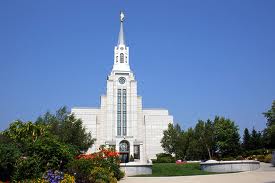
Mormon temple in Belmont, MA, completed in 2000
I realize that’s a provocative title, but please stay with me. I’ll get to the point after some background.
I’ve been reading the new biography of Mitt Romney, The Real Romney by Michael Kranish and Scott Helman. I bought the book after reading a lengthy excerpt published by Vanity Fair, which focused heavily on Romney’s treatment of women when he was a powerful leader in the Boston Mormon church. I wrote about this in a Morning news post at the time.
I was disappointed to discover that the book itself is somewhat of a fluff piece–Boston Globe reporters Kranish and Helman put as positive a spin as possible on Romney’s history and his activities as a church and business leader. However, by reading between the lines and googling names, places, and incidents from the book, I’m still getting some useful information about “the real Romney.”
One prominent Mormon woman quoted in the book is Judith Dushku, associate professor of government at Suffolk University in Boston, and incidentally the mother of actress Eliza Dushku, who played Faith in the TV shows Buffy the Vampire Slayer and Angel and has appeared in a number of popular Hollywood movies.
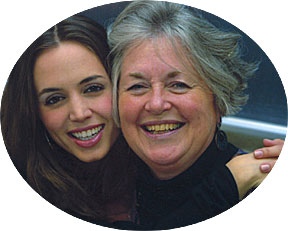
Judith Dushku with daughter Eliza
Judith Dushku is a self-described feminist and a long-time contributor to the Mormon feminist magazine Exponent II. It was in this magazine that an anonymous author published the story of the Bishop Romney’s cruel treatment of her over a life-saving abortion. From the Vanity Fair article:
In the fall of 1990, Exponent II published in its journal an unsigned essay by a married woman who, having already borne five children, had found herself some years earlier [the late 1970s] facing an unplanned sixth pregnancy. She couldn’t bear the thought of another child and was contemplating abortion. But the Mormon Church makes few exceptions to permit women to end a pregnancy. Church leaders have said that abortion can be justified in cases of rape or incest, when the health of the mother is seriously threatened, or when the fetus will surely not survive beyond birth. And even those circumstances “do not automatically justify an abortion,” according to church policy.
Then the woman’s doctors discovered she had a serious blood clot in her pelvis. She thought initially that would be her way out—of course she would have to get an abortion. But the doctors, she said, ultimately told her that, with some risk to her life, she might be able to deliver a full-term baby, whose chance of survival they put at 50 percent. One day in the hospital, her bishop—later identified as Romney, though she did not name him in the piece—paid her a visit. He told her about his nephew who had Down syndrome and what a blessing it had turned out to be for their family. “As your bishop,” she said he told her, “my concern is with the child.” The woman wrote, “Here I—a baptized, endowed, dedicated worker, and tithe-payer in the church—lay helpless, hurt, and frightened, trying to maintain my psychological equilibrium, and his concern was for the eight-week possibility in my uterus—not for me!”
Romney would later contend that he couldn’t recall the incident, saying, “I don’t have any memory of what she is referring to, although I certainly can’t say it could not have been me.” Romney acknowledged having counseled Mormon women not to have abortions except in exceptional cases, in accordance with church rules. The woman told Romney, she wrote, that her stake president, a doctor, had already told her, “Of course, you should have this abortion and then recover from the blood clot and take care of the healthy children you already have.” Romney, she said, fired back, “I don’t believe you. He wouldn’t say that. I’m going to call him.” And then he left. The woman said that she went on to have the abortion and never regretted it. “What I do feel bad about,” she wrote, “is that at a time when I would have appreciated nurturing and support from spiritual leaders and friends, I got judgment, criticism, prejudicial advice, and rejection.”
Judith Dushku had a number of run-ins with Mitt Romney during his years as Stake President and Bishop in the Boston Mormon community. In fact, Dushku confronted Romney over the incident described above, after which he “broke off their friendship.”

 peej
peej Carissa
 bostonboomer
 dakinikat
 ecocatwoman
 mablue2
 Mama Lopez
 peggysue22
 quixote
 skydancingguestblogger
 Mona (aka Wonk the Vote)



 Sky Dancing
Recent Comments