
Mostly Monday Reads: “I was entitled.”
Posted: January 8, 2024 Filed under: just because | Tags: "presidential immunity", @repeat1968, Ijeoma Oluo, Jeff Landry, John Buss, Louisiana, Mediocre Bill Ackman, Mediocre Kavanaugh, Mediocre Landry, Mediocre Trump, mediocre white man, New Orleans, Walt Handelsman my home town political cartoonist, White Christian Nationalists 11 Comments“Carry yourself with the confidence of a mediocre white man.”
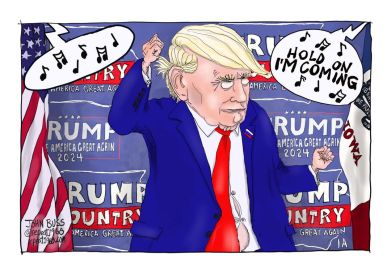
“The only thing great about a trump rally is the end. I always laugh and laugh.” John Buss @repeat1968
Good Day, Sky Dancers!
The entire eastern half of the United States seems inundated with some kind of precipitation. New Orleans has pretty much shut down while awaiting an afternoon and evening of heavy rains and likely tornadoes. I’m sitting in the very dark, quiet before the storm. It’s a bit of a metaphor for what’s going to be a tumultuous year. I started with this quote today because mediocre white men are still ruining the country. Louisiana inaugurated one as its Governor yesterday, who’s a pallbearer for the Christian White Supremacists we already have terrorizing the country. LSU–supposedly our flagship university–is already cleansing itself of professors who are experts in climate change and white-washed its student recruitment outreach through its renamed Office of Diversity and Inclusion and its Mission.
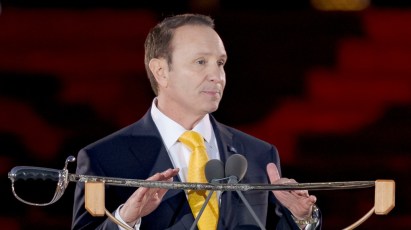
Jeff Landry with the Sword of Mediocre White Men. The sword was his prop for his inaugural speech.
Former AGA Landry, now Governor, was elected by only 10% of the Louisiana electorate. A low voter turnout handed him the office. He gave his inaugural address from behind a sword. It’s going to get ugly here. There were literally a handful of people at the ceremony. Speaker of the House Ayatollah Mike Johnson was there. So was Sleazy Steve. All the short little bully guys were there. This is from the AP.
Louisiana Gov.-elect Jeff Landry, a Republican endorsed by former President Donald Trump and known for his conservative positions on issues like abortion, was inaugurated Sunday evening — marking a political shift of leadership in a state that has had a Democratic governor for the last eight years.
During his 30-minute speech, Landry called for unity and expressed his love for the Bayou State while also laying out some of his priorities, including an aggressive response to addressing “uncivilized and outrageous” violent crime and safeguarding schools from “the toxicity of unsuitable subject matter.”
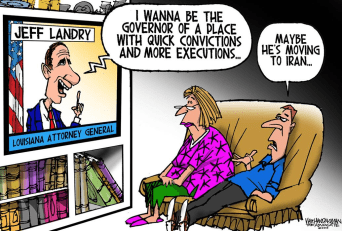
Walt Handelsman, political cartoonist for The Advocate and Times Picayune, has some really great takes on the radicalism of Landry
We know him. He hates New Orleans and will likely throw the state’s power into eliminating the independence that our charter provides. He does not want unity. He wants compliance and complacency. The First Amendment means nothing to him. You already see LSU scramble to be compliant.
Landry has vowed to call a special legislative session in his first few months in office to address the issue. He has pushed a tough-on-crime rhetoric, calling for more “transparency” in the justice system and continuing to support capital punishment. Thank goddesses that my LSU alumni daughters have left the state.
“I pledge to do all I possibly can to make our state safer and to bring an end to the misguided and deadly tolerance for crime and criminals that plague us,” Landry said Sunday.
Landry, who has served as the state’s attorney general for eight years, won the gubernatorial election in October, beating a crowded field of candidates and avoiding a runoff. The win was a major victory for the GOP, reclaiming the governor’s mansion. Edwards was unable to seek reelection due to term limits.
Landry, 53, has raised the profile of attorney general since taking office in 2016, championing conservative policy positions. He has been in the spotlight over his involvement and staunch support of Louisiana laws that have drawn much debate, including banning gender-affirming medical care for young transgender people, the state’s near-total abortion ban and a law restricting children’ access to “sexually explicit material” in libraries, which opponents fear will target LGBTQ+ books.
“Our people seek government that reflects their values,” Landry said Sunday. “They demand that our children be afforded an education that reflects those wholesome principles, and not an indoctrination behind their mother’s back.”
 Ever notice how these guys just ooze white male privilege while screaming they are the most persecuted people on the planet? WBUR interviewed author Ijeoma Oluo in 2020 to explain the Mediocre White Man Syndrome. She also explains how dangerous it is.
White male mediocrity protects the belief that white men are perceived as stronger and more successful than women and people of color regardless of skill or achievements, she says.
“It’s a system that protects mediocrity, that sets [mediocrity] as the goal,” she says. “And the idea that anything would ask for more of our systems — let alone the people within these systems — becomes a threat to the status quo and to our systems of power.”
This ideology serves as one of capitalism’s primary protections by convincing people to participate in the system, she says.
White men believe that greatness and prosperity are coming despite the realities of their financial situation or career, she says. But when the paycheck doesn’t come, white men often blame women and people of color for taking it away.
Every person deserves to feel safe and thrive, she says, but society’s leaders need to show they can make that happen.
“Who leads us and [who] we reward for their contributions should actually be making meaningful contributions that improve the lives of people in our society,” she says, “should be leaders that can effectively lead and bring prosperity to everyone, regardless of race and gender or skill or talent.”
In the book, Oluo highlights key moments to show how this system works from the way women were kicked out of the workforce after the Great Depression, to how women of color in politics are challenged for holding different views on equity than their white male colleagues.
While she says she could write 100 books on this topic, Oluo started by asking “fundamental questions about white male identity in America as a political and social construct” throughout history. She collected hundreds of stories and looked for common threads.
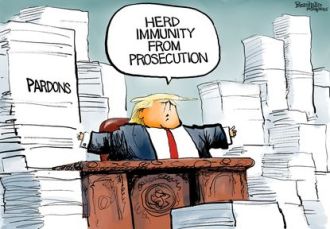 So, I buried the lede. Yes! I did. That quote up top is from the former guy for whom even mediocre is a struggle. This is from USA Today. “‘I was entitled’: Donald Trump previews his Tuesday courtroom appeal on presidential immunity. Trump is juggling court hearings in criminal and civil cases while also campaigning for the White House.”
Donald Trump is opening 2024 in what is likely to be a familiar place for him this election year: the courtroom.The former president and 2024 GOP frontrunner previewed on social media Monday his reasons why he should be shielded from charges of election interference. The crux of his argument, which his lawyers will make in a D.C. appeals court hearing Tuesday: he was president when the events occurred, so he is immune.
“Of course I was entitled, as President of the United States and Commander in Chief, to Immunity,” Trump said in a post Monday on Truth Social.
The case just one of the matter’s on Trump’s courtroom docket for the week. On Thursday, lawyers will make their closing arguments in the New York real estate fraud case in which $370 million in damages are at stake.
Don’t expect Trump himself to take the stand in either case this week. That’s for the lawyers, with lots of questions from the judges. But Trump may weigh in outside the courtroom, and most certainly will make his case on social media.
Given that, expect a fiery rebuttal Tuesday from one of Trump’s chief legal adversaries. Justice Department special counsel Jack Smith has argued that Trump’s logic would allow a president to commit crimes like bribery, murder and treason without consequence.
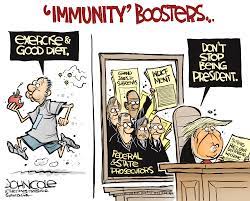 This argument is basically the mantra of the mediocre white man. This is from CNN. “Trump wants Georgia election subversion case dismissed, arguing he has presidential immunity.” If anyone would’ve thought this was a rational, legal argument, it would’ve been Richard Nixon. He just up and quit in the face of charges. Trump seems to be confused between the DOJ policy of avoiding election cycles and the U.S. Constitution. He seems to think he has a “Get out of Jail Free” card. It does appear that way with all of the things he’s done the normal person out awaiting trial would not.
Former President Donald Trump is seeking to have the sweeping criminal conspiracy case against him in Georgia thrown out by arguing he is protected from prosecution under presidential immunity.
Trump’s immunity claims in the Georgia case, filed on Monday as part of a motion to dismiss state-level criminal charges against the former president, are similar to those argued by his defense team in the federal election subversion case.
“The indictment in this case charges President Trump for acts that lie at the heart of his official responsibilities as President. The indictment is barred by presidential immunity and should be dismissed with prejudice,” the motion filed by Trump’s lawyer in the Georgia case reads.
Monday’s filing in the Georgia case reiterates what the former president’s lawyers have repeatedly asserted – that Trump was working in his official capacity as president when he allegedly undermined the 2020 election results and therefore has immunity.
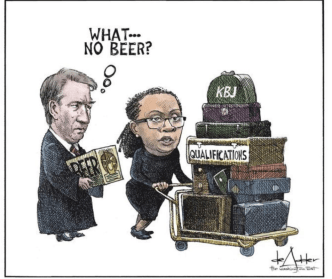 Entitlement just oozes from these guys. This is from the Washington Post. “Business Insider story on Harvard antagonist’s wife draws owner’s scrutiny. The news site’s German owner, Axel Springer, plans to review a story about alleged plagiarism by former MIT professor Neri Oxman, whose billionaire husband, Bill Ackman, sought to oust Harvard’s president for similar academic transgressions. Its editor defends the story.” The hypocrisy is evident when the spotlight is turned on them.
Business Insider and its German parent company appear to be at odds over its reporting on plagiarism allegations against the wife of a high-profile hedge fund manager.
The financial news site published two stories last week alleging that Neri Oxman, a prominent former Massachusetts Institute of Technology professor, had plagiarized repeatedly in her academic work, including lifting from Wikipedia more than a dozen times in her dissertation.
Those stories came after her husband, billionaire investor Bill Ackman, spent weeks pressuring his alma mater, Harvard University, to oust its president — initially over his contention that she had mishandled incidents of antisemitism on campus but later over reports that she had committed plagiarism earlier in her career. At one point, Ackman wrote that a Harvard student who committed “much less” plagiarism than Claudine Gay would be forced out of the university. Gay resigned from the presidency last week.
But when Business Insider raised plagiarism concerns about his wife’s work, Ackman excoriated the publication, accusing it of unethical journalism, promising to review its writers’ work and predicting that it would “go bankrupt and be liquidated.” In one social media post, he implied that Business Insider’s investigations editor (whom he called “a known anti-Zionist”) may have been “willing to lead this attack” because Oxman is Israeli.
Neither Ackman nor Oxman, whose companies didn’t respond to requests for comment, have pointed to any factual errors in the articles.
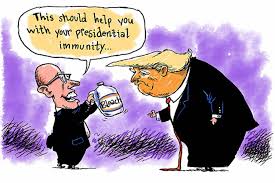 Remember this? It’s like the patented hand shake of thee Mediocre White Man Club. This is from Newsweek. “Donald Trump Moves To Cash In on Brett Kavanaugh.”
Donald Trump’s lawyer Alina Habba has said that Supreme Court Justice Brett Kavanaugh would be among the judges to throw out the decision disqualifying the former president from the ballot in Colorado as Trump “went through hell” to get him to the bench.Speaking to Fox News‘ Sean Hannity, Habba singled out Kavanaugh as one of those on the SCOTUS bench who will “step up” for Trump after the Colorado Supreme Court made a historic ruling in December to ban Trump from running for president in the state over violating the Constitution’s insurrection clause around the January 6 attack.
Trump has appealed the decision to the Supreme Court and has denied that his actions related to the Capitol riots violated Section 3 of the 14th Amendment. The section, brought in after the Civil War, states that a person who “engaged in insurrection or rebellion” after taking an oath of office to support the Constitution cannot run for office again.
The conservative majority Supreme Court bench, which includes three justices nominated to the bench by Trump—Kavanaugh, Amy Coney Barrett, and Neil Gorsuch—is expected to take on the case, and rule on whether to allow or throw out the Colorado decision.
Habba predicted that the Supreme Court would make a “slam dunk” ruling in Trump’s favor while suggesting Kavanaugh is one of the nine justices who will want to overturn the decision to ban Trump from running for office in Colorado.
“People like Kavanaugh, who the president fought for, who the president went through hell to get into place, he’ll step up,” Habba said.
“Those people will step up, not because they’re pro-Trump, but because they’re pro-law, because they’re pro-fairness and the law on this is very clear.”
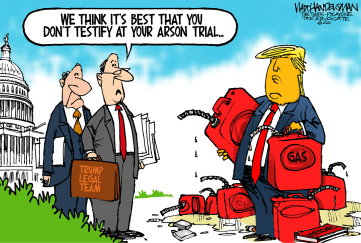 Here are legal sources with annotations on Article 2, Section 3 of the U.S Constitution on the idea of Presidential Immunity from Judicial Direction. This has been a topic considered the Court for some time. Some of the Presidents who have taken the concept to court include Richard Nixon, Bill Clinton and Andrew Johnson. These are annotations from Justia. on the Johnson case and the Nixon case. It’s elucidation in the court on Article Two, Section 3 of the U.S. Constitution about Presidential responsibilities which includes the State of the Union Address from Court Cases.
In Mississippi v. Johnson,807 in 1867, the Court placed the President beyond the reach of judicial direction, either affirmative or restraining, in the exercise of his powers, whether constitutional or statutory, political or otherwise, save perhaps for what must be a small class of powers that are purely ministerial.808 An application for an injunction to forbid President Johnson to enforce the Reconstruction Acts, on the ground of their unconstitutionality, was answered by Attorney General Stanberg, who argued, inter alia, the absolute immunity of the President from judicial process.809 The Court refused to permit the filing, using language construable as meaning that the President was not reachable by judicial process but which more fully paraded the horrible consequences were the Court to act. First noting the limited meaning of the term “ministerial,” the Court observed that “[v]ery different is the duty of the President in the exercise of the power to see that the laws are faithfully executed, and among these laws the acts named in the bill. . . . The duty thus imposed on the President is in no just sense ministerial. It is purely executive and political.”
“An attempt on the part of the judicial department of the government to enforce the performance of such duties by the President might be justly characterized, in the language of Chief Justice Marshall, as ‘an absurd and excessive extravagance.’”
“It is true that in the instance before us the interposition of the court is not sought to enforce action by the Executive under constitutional legislation, but to restrain such action under legislation alleged to be unconstitutional. But we are unable to perceive that this circumstance takes the case out of the general principles which forbid judicial interference with the exercise of Executive discretion.” . . .
“The Congress is the legislative department of the government; the President is the executive department. Neither can be restrained in its action by the judicial department; though the acts of both, when performed, are, in proper cases, subject to its cognizance.”
“The impropriety of such interference will be clearly seen upon consideration of its possible consequences.”
“Suppose the bill filed and the injunction prayed for allowed. If the President refuse obedience, it is needless to observe that the court is without power to enforce its process. If, on the other hand, the President complies with the order of the court and refuses to execute the acts of Congress, is it not clear that a collision may occur between the executive and legislative departments of the government? May not the House of Representatives impeach the President for such refusal? And in that case could this court interfere, in behalf of the President, thus endangered by compliance with its mandate, and restrain by injunction the Senate of the United States from sitting as a court of impeachment? Would the strange spectacle be offered to the public world of an attempt by this court to arrest proceedings in that court?”810
Rare has been the opportunity for the Court to elucidate its opinion in Mississippi v. Johnson, and, in the Watergate tapes case,811 it held the President amenable to subpoena to produce evidence for use in a criminal case without dealing, except obliquely, with its prior opinion. The President’s counsel had argued the President was immune to judicial process, claiming “that the independence of the Executive Branch within its own sphere . . . insulates a President from a judicial subpoena in an ongoing criminal prosecution, and thereby protects confidential Presidential communications.”812 However, the Court held, “neither the doctrine of separation of powers, nor the need for confidentiality of high-level communications, without more, can sustain an absolute, unqualified Presidential privilege of immunity from judicial process under all circumstances.”813 The primary constitutional duty of the courts “to do justice in criminal prosecutions” was a critical counterbalance to the claim of presidential immunity, and to accept the President’s argument would disturb the separation-of-powers function of achieving “a workable government” as well as “gravely impair the role of the courts under Art. III.”814
Present throughout the Watergate crisis, and unresolved by it, was the question of the amenability of the President to criminal prosecution prior to conviction upon impeachment.815 It was argued that the Impeachment Clause necessarily required indictment and trial in a criminal proceeding to follow a successful impeachment and that a President in any event was uniquely immune from indictment, and these arguments were advanced as one ground to deny enforcement of the subpoenas running to the President.816 Assertion of the same argument by Vice President Agnew was controverted by the government, through the Solicitor General, but, as to the President, it was argued that for a number of constitutional and practical reasons he was not subject to ordinary criminal process.817
Oops, I’m down a history rabbit hole now. I guess it’s time to close. I love the song “Call me Rose” by Bruce Cockburn because of it’s implied karmic rebirth of Richard Nixon as a single woman on welfare with a child.
Anyway, this week should be another show stopper. Take care! I see the rain has started here. I wonder if BB is still getting that snowstorm. Bet thing to ponder is when exactly is this Former Guy shitstorm ending?
What’s on your reading and blogging list today?

 peej
peej Carissa
 bostonboomer
 dakinikat
 ecocatwoman
 mablue2
 Mama Lopez
 peggysue22
 quixote
 skydancingguestblogger
 Mona (aka Wonk the Vote)



 Sky Dancing
Recent Comments