
America’s Housing Problem
Posted: June 15, 2011 Filed under: The DNC, unemployment | Tags: Foreclosures, home prices, US housing market, US jobs market 11 CommentsThe global financial crisis that resulted from a housing bubble may be over for U.S. banks and financial institutions but the 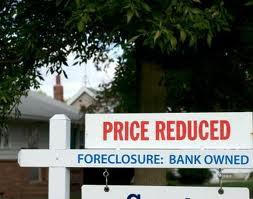 crisis is worsening for U.S. homeowners. Many mortgage holders still have underwater loans. Many home owners have absolutely no chance of selling their homes for any reasonable amount of money in a market that is now worse than the similar conditions present during The Great Depression. For many, the dream of home ownership has turned into a nightmare.
Prices have fallen some 33 percent since the market began its collapse, greater than the 31 percent fall that began in the late 1920s and culminated in the early 1930s, according to Case-Shiller data.
The news comes as the Federal Reserve considers whether the economy has regained enough strength to stand on its own and as unemployment remains at a still-elevated 9.1 percent, throwing into question whether the recovery is real.
“The sharp fall in house prices in the first quarter provided further confirmation that this housing crash has been larger and faster than the one during the Great Depression,” Paul Dales, senior economist at Capital Economics in Toronto, wrote in research for clients.
According to Case-Shiller, which provides the most closely followed housing industry data, prices dropped 1.9 percent in the first quarter, a move that the firm interpreted as a clear double dip in prices.
Moreover, Dales said prices likely have not completed their downturn.
“The only comfort is that the latest monthly data show that towards the end of the first quarter prices started to fall at a more modest rate,” he said. “Nonetheless, prices are likely to fall by a further 3 percent this year, resulting in a 5 percent drop over the year as a whole.”
Home equity has traditionally been a source of wealth and retirement savings for generations of Americans. Falling house prices not only have a negative impact on American wealth, they may be impacting the ability of American households to move where the jobs may be. The ability to move–called labor mobility by economists–is important in a recovery because it leads to stronger job markets.
Economists Colleen Donovan and Calvin Schnure have written an interesting new paper examining whether the fall in house prices since 2007 in the US — which has left many home-owners owing more on their house than it is worth — created a lock-in effect that depressed labor mobility.
This question has significance far beyond either the real estate market or the labor market, because there has been a persistent line of argument from some that the US’s current unemployment problem is not the result of insufficient demand, but is instead a “structural” problem resulting from the inability of the US economy to properly match people with available jobs. A frequent explanation for why it suddenly became difficult to match people with jobs in 2008 is that underwater mortgages have locked people in to their houses, reducing labor mobility and making job-matching more difficult.
The evidence presented in this paper indicates that the fall in house prices has indeed caused a “lock-in” effect, but has not significantly impacted labor market efficiency.
This may be an important factor in explaining persistent unemployment. There has been an argument out there that unemployment is due to ‘structural’ problems which would imply that government programs may not be effective as possible in solving job market issues. This study implies–along with recent data on falling household consumption–that the U.S. continues to have a demand problem. This means that traditional fiscal stimulus and programs could be an effective way to stop both the freefall in home prices and improve the employment outlook. Housing affordability is not an issue in this market. Home prices and mortgage interest rates are have made affordability metrics reach near-historic levels. Other factors are constraining the market.
More than four in every five mortgages now require a down payment of 20 percent, and credit history standards have tightened. At the same time, foreclosures continue at a brisk pace, pushing more supply onto the market and pressuring prices downward.
Then there is the issue of underwater homeowners—those who owe more than their house is worth—representing another 23 percent of homeowners who cannot leave or are in danger of mortgage default.
Indeed, the foreclosure problem is unlikely to get any better with 4.5 million households either three payments late or in foreclosure proceedings. The historical average is 1 million, according to Dales’ research.
We’re basically a situation where the Freddie and Fannie situation is unresolved. The historically low interest rates and high availability of cheap money means that huge institutions are making money from arbitrage and investing rather then lending and investing in non-financial projects. Small-to-medium sized businesses do not have the same funds availability of large corporations. Neither do consumers. Clearly, the Fed is going to start increasing interest rates as signs of price inflation appear on the horizon. This may wring the arbitration profit-seeking behavior of larger firms, but it will further squeeze consumers and small-to-medium businesses that have been hanging on waiting for increased demand.
This is a clear signal that the economy is experiencing demand-side problems which require fiscal policy solutions that stimulate demand. Meanwhile, Washington DC policy makers are focused on the long-term issue of fiscal sustainability. Republicans are still discussing debt default to the point that Fed Chairman Ben Bernanke made a point of mentioning the detrimental impact of that move in a recent speech. The strategy of playing chicken with the federal debt for personal political gain is a form of unpatriotic gamemanship.
Failing to raise the debt ceiling in a timely way would be self-defeating if the objective is to chart a course toward a better fiscal situation for our nation. The current level of the debt and near-term borrowing needs reflect spending and revenue choices that have already been approved by the current and previous Congresses and Administrations of both political parties. Failing to raise the debt limit would require the federal government to delay or renege on payments for obligations already entered into. In particular, even a short suspension of payments on principal or interest on the Treasury’s debt obligations could cause severe disruptions in financial markets and the payments system, induce ratings downgrades of U.S. government debt, create fundamental doubts about the creditworthiness of the United States, and damage the special role of the dollar and Treasury securities in global markets in the longer term. Interest rates would likely rise, slowing the recovery and, perversely, worsening the deficit problem by increasing required interest payments on the debt for what might well be a protracted period.
The focus of fiscal policy discussions should be to relieve downward price pressure in the housing market and provide job creation. Again, there are many ways to do this. The federal government can provide funds to states to keep up levels of public employment. They can fund law enforcement, public health, and education positions for states and municipalities to weather the prolong, slow recovery. These types of initiatives reduce the need for unemployment, medicaid, and other public services. They also maintain people in jobs that pay taxes and will feel safe enough to sustain household spending. This, in turn, creates customers for those small and medium-sized local businesses. It is clear that funding large corporations does not create local jobs. Funding small and medium-sized business through targeted loan programs in either community banks or the SBA could be used to direct monies to businesses that do hire locally rather than use their funds to expand global business.
Additionally, something must be done to help home owners in difficult positions. There appears to be no end to falling real estate prices. The government could help bottom out the market by providing more direct refinancing to under-water homeowners and those home owners who face foreclosure due to prolonged unemployment.
Clearly, the problem is political will. Nearly every administration–Republican or Democrat–facing similar poor economic conditions in the past has realized the gravity of these kinds of situation and have tailored fiscal programs to meet the challenges. This even includes the Reagan administration in the early to mid 1980s. No where in the beltway is there a discussion of policies that have been successfully used to solve these problems in the past. This isn’t even a case of dithering. This is a clear case of willful and deliberate ignorance.
Here’s a good example of the problem.
The dismal housing market news was compounded Wednesday by the National Association of Home Builders’ release of its monthly Housing Market Index. The index, which measures builder sentiment on the market, fell to a level of 13 on its 100-point scale. That’s three points below the previous month and the lowest level since September 2010. Any reading below 50 indicates negative sentiment about the market.
With fewer homes being built, fewer jobs are available and less revenue is generated for local, state and federal governments. Each new home built creates an average of three jobs for a year and generates about $90,000 in taxes, according to the group.
On the bright side, the NAHB noted that a poll it took of 2,000 2012 voters found that housing is still considered by the largest plurality of homeowners as their biggest investment.
Amid the troubling developments in housing, labor and elsewhere, the Obama administration has tried to push several new economic proposals, ranging from new training programs to tax relief.
President Obama is pleading for patience on the economy while at the same time urging the public to stay positive.
“The sky is not falling,” the president said during a stop in North Carolina two days ago.

 peej
peej Carissa
 bostonboomer
 dakinikat
 ecocatwoman
 mablue2
 Mama Lopez
 peggysue22
 quixote
 skydancingguestblogger
 Mona (aka Wonk the Vote)



 Sky Dancing
Recent Comments