
“If this is transparency, who needs it?”
Posted: June 14, 2011 Filed under: just because | Tags: Bradley Manning, government whistle blowers, Obama Administration, Thomas Drake, transparency 7 Comments“If this is transparency, who needs it?” Steven Aftergood, Director of the Project on Government Secrecy at the Federation of American Scientists, speaking of the Obama Administration’s White House visitor log policy, the results of which he labeled “very thin gruel” (Apr. 13, 2011).
“A White House official conceded the system has limitations, asserting it was designed not as an archive but ‘first and foremost to protect the first family, second family and White House staff while imposing the smallest administrative burden possible.'” POLITICO, “White House Visitor Logs Leave Out Many” (Apr. 15, 2011).
from the site “Quotes of the Month” hosted by American University’s Washington College of Law, Collaboration of Government secrecy.
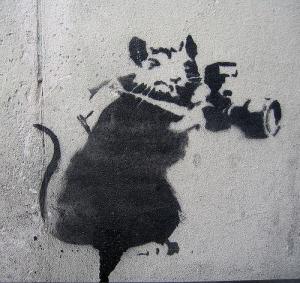 One of the major Obama campaign promises was to bring more transparency to governing. The English/international version of Speigel on line has a compelling series up this week called “Disingenuous Transparency”focusing on how government whistle blowers have suffered under the Obama administration. The series is extremely relevant given that the U.S. government has finally “officially” released the Pentagon Papers on the Vietnam War as a show of ‘openness’. The article accuses Obama and the administration of stonewalling and basically ignoring court instructions. The sad thing is that the compelling article filled with compelling examples will probably never reach a large audience.
I have been following the case of Thomas Drake–a former employee of NSA–who is accused of providing the Baltimore Sun with internal information on government wiretapping. Drake’s case predates the more famous case of Bradley Manning and Wikileaks. There have been other cases.
In May 2010, a court convicted former FBI interpreter Shamai Leibowitz was sentenced to 20 months in prison for providing government information to a blogger. Another prosecuted whistle blower of Stephen Kim who was a North Korea expert at the State Department. Kim supposedly supplied state secrets to Fox News. Another high profile case is that of former CIA agent Jeffrey Sterling who allegedly provided information to author James Risen a 2006 exposé entitled “State of War.” The Obama Justice Department has prosecuted these cases to the fullest extent possible.
The Drake case fell apart in a similar way that the charges of Oliver North fell apart during the Iran-Contra Scandal of the 1980s. It was felt that the prosecution of Drake would expose too much national security information. Drake accepted a plea of misdemeanor charges for “exceeding his authorized use of a government computer”. Again, the tie back to Daniel Ellsberg and the Pentagon Papers is relevant.
But the government withdrew the evidence supporting several of the central charges after a judge ruled Drake would not be able to defend himself unless the government revealed details about one of the National Security Agency’s telecommunications collection programs. On two other counts, documents the government had claimed were classified have either been shown to be labeled unclassified when Drake accessed them or have since been declassified. Faced with the prospect of trying to convict a man for leaking unclassified information, the government frantically crafted a plea deal in the last days before the case was due to go to trial.
The collapse of the case against Drake may have repercussions beyond just this one case.
This is the third time the government’s attempt to use the Espionage Act to criminalize ordinary leaking has failed in spectacular fashion. The first such example—against Pentagon Papers leaker Daniel Ellsberg—got dismissed when the government’s own spying on Ellsberg was exposed.
Spiegal characterizes this case as “an embarrassing setback for the White House”. It seems that the candidate that promised translucency is fighting to keep secrets at a pace previously never experienced. That says a lot given the paranoia of Nixon and the fierce defense of the so-called imperial presidency by the Bush/Cheney administration.
Under Obama, more whistleblowers are being held accountable than in all previous decades. Lucy Dalglish, executive director of the Reporters Committee for Freedom of the Press, told the Associated Press that the US government is going after whistleblowers “very, very aggressively.”
Government whistle blowers are supposedly protected by an act of Congress passed in 1989 called The Whistle Blower’s Protection Act. It was designed to encourage government employees to step forward with instances of government abuse that they’ve witnessed. You’ll notice the date roughly corresponds to the time the Iran-Contra situation was fresh. Since then, the law has been weakened.
“It is no surprise that honest citizens who witness waste, fraud and abuse in national security programs but lack legal protections are silenced or forced to turn to unauthorized methods to expose malfeasance, incompetence or negligence,” Stephen Kohn, the executive director of the National Whistleblowers Center wrote in an op-ed contribution to the New York Times on Monday.
He wrote that Congress and the executive branch would be well advised to follow the example of their predecessors. In fact, the first protective law in the US for “whistleblowers” is almost as old as the country itself — it originated in 1778.
Speigal characterizes the Obama administration as having an active policy of “stonewalling” and “blocking” any avenue that would provide a safe path for federal whistle blowers.
The Obama administration also uses other avenues for stonewalling and blocking. At times, those efforts take on grotesque dimensions, as in the case the Pentagon’s September order to pulp the entire first printing run of “Operation Dark Heart.” The memoir by army officer Anthony Shaffer over his time in the Afghanistan war contained what were alleged to be military secrets. The destruction of the 9,500 books cost taxpayers an estimated $47,300. When the second edition was released, 250 passages were blacked out.
This pressure clashes with the increasing openness of the Internet age. Four decades ago, Daniel Ellsberg had to photocopy selected passages from the “Pentagon Papers.” Today, WikiLeaks indiscriminately places tens of thousands of documents on the Web. “It revels in the revelation of ‘secrets’ simply because they are secret,” well-regarded attorney Floyd Abrams, who represented the New York Times in its “Pentagon Papers” case against the government, wrote six months ago in the Wall Street Journal.

 peej
peej Carissa
 bostonboomer
 dakinikat
 ecocatwoman
 mablue2
 Mama Lopez
 peggysue22
 quixote
 skydancingguestblogger
 Mona (aka Wonk the Vote)



 Sky Dancing
Recent Comments