
From My Ivory Tower
Posted: May 11, 2009 Filed under: Bailout Blues, Equity Markets, Global Financial Crisis, U.S. Economy | Tags: fiduciary responsibility, Financial Crisis, lend and hold mod 1 Comment(Note: I’m knee deep in end of the semester stuff so I thought I’d share with you my standard academic speech on the current financial meltdown. 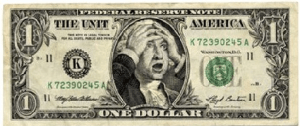 Don’t fall asleep now!)
While the underlying causes of the current mortgage and housing crisis cannot be perfectly elucidated at the moment, there appear to both micro and macroeconomic factors at work. The macroeconomic factors can be traced to a prolonged period of excess global liquidity. The was induced by relatively low interest rates set by the Federal Reserve Bank and other central banks following the US recession in 2001 and the events of 9/11/2001. This excess liquidity went into the demand for residential investment and triggered large increases in housing prices.
The roots of microeconomic crisis can be found in industry practices by financial intermediaries including the ‘originate and distribute’ lending model. Other factors included poor regulation of Fannie Mae and Freddie Mac, major players in the residential housing markets, and the loosening of underwriting standards for loans and leverage requirements for investment banks. This encouraged banks to provide house loans to folks ill-suited for them that were securitized to meet an increasing demand. The inherent risk in these loans was mispriced. The loan origination process was especially weak as many mortgage originators were more concerned with producing volume to ensure bonuses than soundness. Agents securitizing these mortgages did not audit individual loans for soundness. Additionally, rating agency models seemed completely unable to discover underlying default risk. Prudent auditing practices were missing at all levels of the lending process.
As the demand for houses increased, prices of those homes increased which increased the number of construction companies building homes and speculation in the housing market. Many of the people that bought homes did so at inflated house prices. Given the lax lending standards, these folks did not necessarily have down payments or the credit history and income to pay for these loans as the economy slowed and interest rates began to rise. Many did not even care about the terms of the loans since they were not planning on holding them very long. Regulators missed the build-up of vulnerabilities as much of the risk was perceived to be transferred to other, unregulated securities markets. Home buying and financing became a speculative activity with many buyers that were unaware of the risk and unprepared to handle the consequences of a downturn.
At the time of the failure of Fannie and Freddie, they were leveraged at a level of 150 and poorly capitalized to handle loan losses. Since many of the loans originated at this time were packaged and sold on the secondary market, an increasing default rate brought down the value of these bonds as well as other types of derivatives created from mortgage related assets. Since it is difficult now to value these assets and there appears to be no bottom set in the market, banks are now reluctant to lend to each other in the interbank markets and prefer to maintain high liquidity to cover potential losses and deposit withdrawals. At the moment, we’re seeing governments injecting capital into banks as well as the end of investment bank as a standalone entity. While this situation should be temporary, banking laws should be changed to prevent any future occurrence.
Regulations are likely to change as the crisis winds down. Both Fannie and Freddie require a complete overhaul, something that was tried in 2000 by the Clinton Administration and then by Congress in 2003 and 2005. It is unseemly in a market economy that extraordinary profits be privatized while losses resulting from bad management and accounting practices should be turned over to the taxpayer.
Additional Regulation over the derivatives market is also likely to result. These markets have largely been ignored until the meltdown. The government should ensure that sound underwriting practices are not undermined to achieve ‘affordable’ housing—especially not by the GSEs and other organizations that carry implicit taxpayer guarantees. Encouraging old fashioned “lend and hold” banking would help this. Affordable Housing initiatives most likely require target funds and programs that ensure transparency in the origination process and place borrowers in appropriate loans. Additionally, secondary markets must be more transparent, more standardized, and more accountable. It is possible that a revision of the mark to market accounting practices will be narrowed to asset classifications that are rich with asset valuation information only. It is also possible that certain short-selling practices may see restrictions.
Past crises have also show that regulation in the U.S. is reactionary. One example is the reaction to the bank runs during the Great Depression. A further example is the thrift crises in the 1980s. Sophistication of the markets, increased options for saving and investing, and borrowing went farther than the Fed’s ability to monitor and manage bank performance. As these crises occur, regulators respond and frequently must wait until laws catch up. The current crisis is no different.
One of the most significant studies of systemic banking crises has just been produced by the IMF this fall. Laeven and Valencia (2008) identified 124 systemic banking crises over the period of 1970 to 2007. Their study evaluates crisis resolution policies put in place to contain the crisis as well as the challenge of long-run system stabilization. They have found that nonperforming loans tend to be high during the onset of a banking crisis. During a Crisis in Chile in 1986, non-performing loans peaked at 36% of total loans. These were the result of unsound banking practices such as a high level of connected loans. The authors found that the percentage of non-performing loans ran as high as 75% of the total loans in one country and averaged about 25% across country. They also found that banking crises were frequently preceded by credit booms. This was also the case in Chile where the average annual growth of private credit to GDP prior to its crisis was as high as 34.1 percent.
In the case of Turkey in 2000, the trigger of the crisis was the collapse of the interbank loan market. It especially failed in loans from large to small banks. Any bank that depended heavily on overnight funding failed. Authors pointed out that Turkey widely exhibited problems in macroeconomic factors. At the time, inflation was growing at 80 percent per annum in the 1990s. The government also ran high fiscal deficits. There was large public debt, high current account deficits and a generally weak financial system. Because of these macro vulnerabilities, the banks had exposure through holdings of government securities. There were also the micro risks of maturity and exchange rate mismatches coming from market risk. It is possible that these factors are present in the current global financial crisis. This could extend the period of crisis beyond normal expectations.

 peej
peej Carissa
 bostonboomer
 dakinikat
 ecocatwoman
 mablue2
 Mama Lopez
 peggysue22
 quixote
 skydancingguestblogger
 Mona (aka Wonk the Vote)



 Sky Dancing
Recent Comments