
Just Don’t Take Mine
Posted: January 15, 2011 Filed under: Federal Budget, U.S. Economy | Tags: Federal Budget, Federal Debt, Federal Deficit, Federal Spending 13 CommentsI wrote a little on the disturbing level of economic illiteracy I see throughout the country yesterday. A CBS Poll came 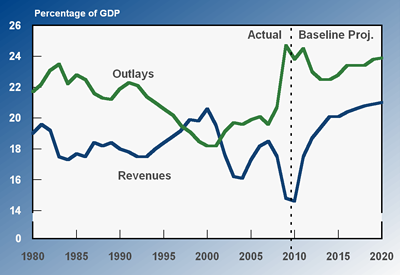 out on what Americans want done with Federal Spending and it just screams stupidity. The overwhelming majority of people want spending cuts in the Federal Budget, but they can’t name many things that they want cut. It seems like there’s this resounding chorus out there of give me my taxes back and do cuts on imaginary spending. Then, it’s just don’t cut anything I use or think is important. I’m going to cite this last paragraph in the article . It’s probably the most relevant. (There’s more discussion links on this at Memeorandum.)
Most Americans do not know exactly how the government spends its money. For example, when asked what percent of the budget goes to earmarks, 41 percent said they make up less than 20 percent of the budget, 13 percent said 20-50 percent, 4 percent said more than 50 percent and 42 percent didn’t know. Earmarks actually make up less than one percent of the budget.
I always hear students say they want to quit giving money away to other countries too. We give less than one half percent of our budget to other countries. The best place to look for budget information is the Congressional Budget Office website. That’s where I got the graph you see in the upper right hand corner. That’s a comparison of Federal Spending (green) and Federal Incomes (blue) since 1980. The gap between the two at any one point in time is the federal deficit for that year.You can distinctly see the period during the Clinton Budget Surpluses because that’s where the blue lines is above the green line. All other periods show more spending than revenues. The Reagan and Bush years were years of explosive spending growth. You can also see the huge gap that started around 2008 when the Great Recession took hold. Nearly each of the down turns recently has been due to huge tax breaks combined with bad economies.
A pie chart shown on a Examiner.com breaks down the expenditures by the funded Department. It also adds Social Security into the mix which is the number one federal outlay. (Ryan Witt’s chart analysis here. Read the comments and embrace the number of people that need to go back to school.) Social Security–however–is sustained at the moment by more revenues than outlays. The Department of Defense comes after that. It gets about 19% of the overall budget. Right now, because of the ‘cyclical’, mandatory spending that occurs due to our bad economy and our high unemployment, you can see that unemployment/welfare payments mandated by law come after that (16%), followed by Medicare which is also offset by payroll taxes at the moment (13%) then Medicaid/SCHIP funding (8%). The Department of Health and Human Services gets about 8%.
The next biggest expenditure is paying the interest on the National Debt. Thankfully, interest rates are low so that amounts to around 5% currently. You can compare this pie chart to the one below and see how lower interest rates combined with higher outlays really helped to push that percentage down.. The next most noticeable part is the Transportation department that gets about 2% of the budget. Most of the remaining major Departments like Homeland Security, Energy, Education, etc. get some where around 1-1 and 1/2%. Veteran’s Affairs gets a fairly noticeable slice too albeit not huge.
 I’ve also put a pie chart of Federal Outlays for 2009 to the left that is some what more general. Notice how huge the Treasury budget was because of TARP (now mostly paid back) and the other bailouts. There are several reasons that the budget deficit has been so bad the last few years. The primary reason is the bad economy because that forces revenues down and outlays up. The second reason is the Bush taxes cuts that were just extended and expanded for the next two years. We’re basically spending at relative levels right now that we’ve not seen since World War 2. We are of course funding two occupations/wars and a ‘war’ on Terror. Some people want to conveniently forget that. When the economy finally improves and we do actually shut down Iraq and Afghanistan, a lot of our budget headaches will go away.

 peej
peej Carissa
 bostonboomer
 dakinikat
 ecocatwoman
 mablue2
 Mama Lopez
 peggysue22
 quixote
 skydancingguestblogger
 Mona (aka Wonk the Vote)



 Sky Dancing
Recent Comments